Barcelona with Teenagers: Gaudí, Football Energy and Beach Time Without Tour Resistance

Updated
The strongest Barcelona plan with teenagers is not a greatest-hits sprint. Start with one Gaudí interior, ideally Sagrada Família, then change the voltage: sea air, football energy, food, or a short city walk that feels discovered rather than assigned. This works because Barcelona can move quickly from sacred architecture to the beach grid, especially if you treat the Sagrada Família to Barceloneta reset as a real hinge rather than an afterthought. The clearest exception is a teenager who is genuinely architecture-obsessed; for that traveler, a second Gaudí stop can earn its place, but only if the route is built around contrast, not repetition.
The thesis is simple: Barcelona with teenagers works best when Gaudí supplies the meaning and the city’s public energy supplies the momentum. One serious interior gives the day adult substance; a beach reset and a football-fluent rhythm stop the outing from becoming a lecture with better façades. A useful local cue is the Verdaguer transfer: from Sagrada Família, the L5-to-L4 link can put you toward Barceloneta without making the family feel trapped in a cross-city museum march. With a private guide, this is also the moment when the tone can shift from “listen to this” to “notice this,” which is the difference between a teenager tolerating Barcelona and actually entering it. For a focused start, Orange Donut Tours can shape the morning around a private Sagrada Família visit before the day changes texture.
The Barcelona teenager-resistance ladder: what to keep, trim and cut
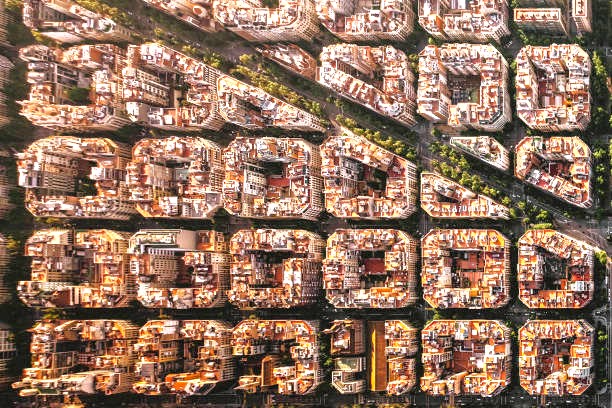
The best teen day in Barcelona should be ranked by attention cost, not by fame. Some stops ask teenagers to stand still, decode symbolism and absorb crowds. Others let the city do the work: football shirts, scooter traffic, beach light, shopfronts, plaza noise and the sudden visual logic of Eixample blocks giving way to older streets. The mistake is to stack the high-attention stops first and then wonder why the afternoon feels brittle.
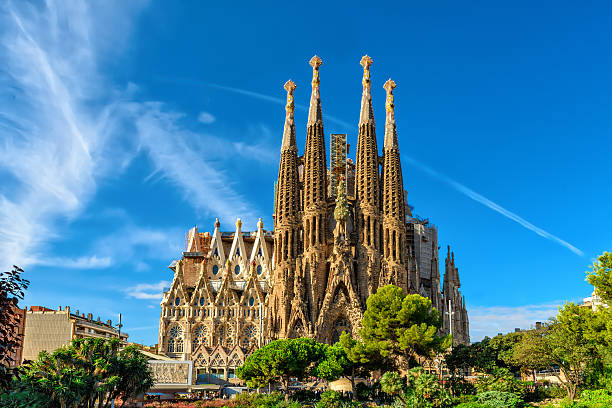
- 1. Keep one major Gaudí interior. Sagrada Família is the best first anchor for most families because it is visually overwhelming enough to win reluctant attention quickly. It also justifies expert interpretation: the building is not self-explanatory unless someone can turn structure, light and symbolism into a compact story.
- 2. Use a real reset after the interior. The Sagrada Família to Barceloneta reset is the cleanest mood change for many first-time families: from stone, glass and interpretation to sea air, a looser lunch and space to move without asking teenagers to keep admiring things.
- 3. Add football or street energy when attention starts to dip. Barcelona’s football culture works best as a current running through the day, not always as a stadium-centered detour. A match-day pulse, shirts in the street, local conversation and a well-placed sports stop can make the city feel alive to teenagers who do not respond to art-history framing.
- 4. Keep old town precise. Do not make the Gothic Quarter the default long afternoon. Choose one short slice: a Roman wall moment, Plaça del Rei, El Call, Santa Caterina, or a controlled walk toward El Born. Old-town blur is one of the fastest ways to lose teen buy-in.
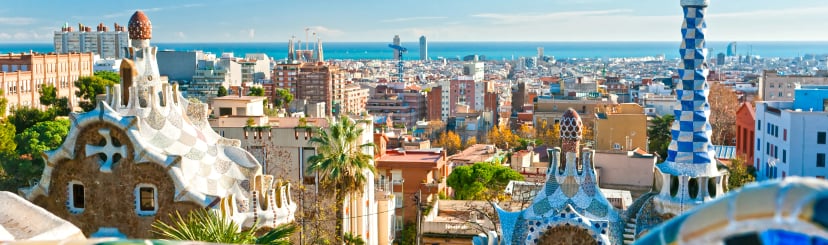
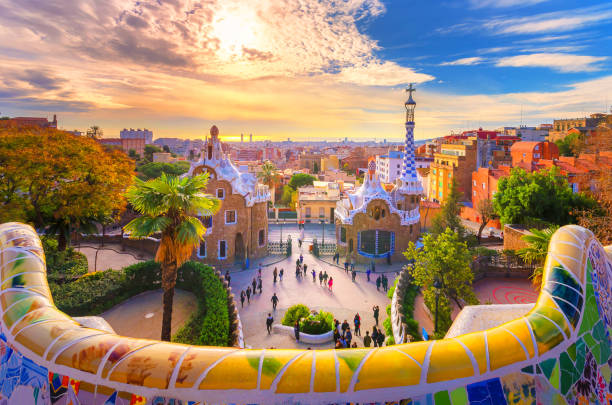
- 5. Add Park Güell only when it solves a specific desire. Park Güell is not the automatic second Gaudí stop with teenagers. It earns the day when the family wants hillside views, outdoor space, photographs and a break from interiors; it loses value when it becomes another timed obligation after Sagrada Família.
The counterintuitive correction is that the second famous Gaudí stop is often the overvalued choice. With younger children, repetition can sometimes work because the world still feels new. With teenagers, repeated instruction can feel like control. Skip a second Gaudí stop when the first interior has already taken serious attention and the next stop would be another timed entry rather than a different kind of city energy. Premium access does not fix a day that feels like a lecture.
How much Gaudí is enough in Barcelona with teenagers?
For most families with teenagers, one serious Gaudí interior is enough in a single day. That does not mean one glimpse, one photo, or one rushed pass-by. It means one visit with enough context to make the building matter, followed by a change in pace before the group starts protecting itself from more explanation. Sagrada Família is the strongest choice when this is a first Barcelona trip because its scale and light give teenagers an immediate reason to look up, even when they arrive skeptical.
The practical sequence is to make Sagrada Família the morning’s intellectual peak. Confirm ticketing through Sagrada Família official tickets (https://sagradafamilia.org/en/tickets-individuals) or through your arranged private visit, avoid building the day around speculative availability, and do not assume that a tower add-on improves the teen experience. The towers may excite some families, especially those who like height and photography, but they can also turn a well-paced interior visit into a longer, more regulated block of time. With teenagers, the question is not “can we do more?” It is “will the extra layer change the day’s energy for the better?”
Park Güell is the tempting second stop, but it is also where many families accidentally turn a promising day into a negotiation. The park sits uphill from the beach-and-center rhythm; reaching it from Sagrada Família is not hard, but it changes the body load of the day. You introduce slopes, another arrival window, more walking under open sky and a different kind of crowd navigation. If the family wants outdoor Gaudí, panoramic photographs and a looser visual experience, it can be excellent. If the teenager is already done with symbolism, mosaics and the adult insistence that this is “important,” Park Güell will not rescue the mood simply because it is outdoors. Check Park Güell official tickets (https://parkguell.barcelona/en/buy-tickets) if you decide it belongs, but decide first whether it belongs at all.
A strong alternative is to keep the Gaudí layer to Sagrada Família plus a lighter Eixample pass. A short look along Passeig de Gràcia, with Casa Batlló or La Pedrera treated as street theater rather than another interior, gives the adult planner a sense of completion without asking teenagers to re-enter the same mode. This is where a private Gaudí-focused route can be shaped with restraint: the guide can read the family’s attention and decide whether the next sentence should be about structure, politics, craft, or simply where to stand for two minutes so the façade makes sense.
The do-not-stack-these-icons rule is firm: do not combine Sagrada Família, Park Güell, a full Passeig de Gràcia interior and a long Gothic Quarter walk in one teen day. That is not a richer Barcelona day; it is four different demands disguised as efficiency. If the trip is short and the family is first-time, choose Sagrada Família as the non-negotiable, turn Passeig de Gràcia into an exterior-and-context moment, and let Barceloneta or a football-fluent city hour carry the afternoon.
Use the Sagrada Família to Barceloneta reset before resistance hardens
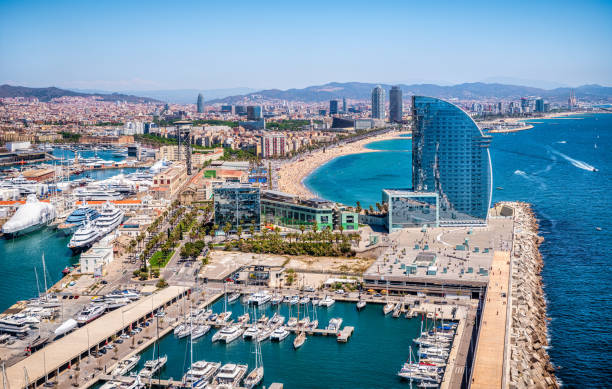
The Sagrada Família to Barceloneta reset works best immediately after the main interior, not after teenagers have already been dragged through a second monument. The reason is physical and emotional. Sagrada Família asks for stillness, upward looking, crowd awareness and symbolic decoding. Barceloneta asks for the opposite: horizon, informal movement, food, light and a sense that nobody is being tested on what they just saw. That contrast is why the reset belongs in the middle of the day.
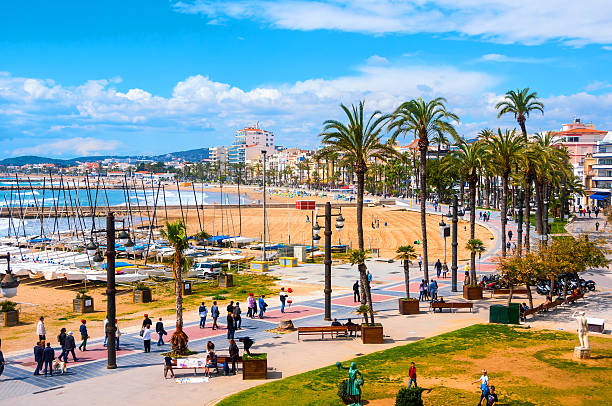
Do not think of Barceloneta as “beach time” only in the swimming sense. For comfort-first families, it can be a shoes-off hour, a seafood lunch, a boardwalk pause, a beach-club-style drink for adults while teenagers walk ahead, or simply a stretch where nobody is being asked to admire stone. The value is not that Barceloneta is calmer than the center; it is not always calm. The value is that it changes the rules. The grid and crowds around Sagrada Família compress attention. The seafront releases it.
The route consequence matters. From Sagrada Família, you are not naturally drifting to the beach on foot; you must choose the reset. That choice is helpful because it creates a clean break in the family’s mind. A taxi can make sense if heat, hunger, or a younger sibling is starting to fray the group. The metro can work well for older teens who like moving like residents, especially via Verdaguer toward the L4 and Barceloneta station. Walking the whole way is usually false economy. It may look satisfying on a map, but in real city conditions the extra pavement turns the reset into a delayed reward.
This is also where the beach-versus-center tradeoff should be explicit. Staying near the water can sound appealing to teenagers, but Barceloneta is not always the smoothest base for Gaudí days, late dinners, or old-town returns. Eixample comfort often beats old-town atmosphere for families who want easier pickups, wider pavements, quieter hotel returns and less nighttime noise right outside the room. For a first trip, treat the beach as a planned reset rather than the organizing principle of every day unless your family is genuinely sea-led. For a deeper discussion of the sea’s place in a first stay, see where Barceloneta belongs after Gaudí.
Barcelona does something specific to the body: it disguises load as variety. One block is flat Eixample pavement, the next is a crowded entry area, then a metro stair, then beach glare, then narrow old-town stone underfoot. Teenagers often do not complain because the sights are bad; they complain because the plan keeps changing physical demands without admitting it. A planned reset reduces heat load, standing fatigue and queue drag before they become the story of the day.
When football energy helps, and when it becomes another forced stop
Football helps a Barcelona teen day when it gives the city a pulse, not when it becomes one more adult-managed obligation. Some teenagers will want Barça above everything else. Others only care because football gives them a language for the place: shirts in shop windows, match talk in cafés, local identity, rivalry, the way a city’s mood changes when a fixture is near. Treat those as different traveler types, not as one universal “teen interest.”
If your teenager is a real football follower, give the subject dignity. Do not tack it on as a bribe after four cultural stops. Build the day so football has a clean place: perhaps Sagrada Família in the morning, Barceloneta for lunch, then a football-themed hour later when the family has recovered. Depending on current fixtures, venue access and the family’s level of interest, that could mean a stadium-related visit, a guided conversation about Barça and Catalan identity, or simply an evening plan that lets the teenager feel the city’s sports energy rather than being told it is culturally significant. Because fixtures and stadium operations change, confirm the official details close to travel rather than relying on an old blog or a copied itinerary.
If your teenager is only lightly interested, do not overbuild the football piece. A private guide can use football as connective tissue: why shirts matter, how local loyalties surface, what match-day movement does to restaurant timing, why some neighborhoods feel different when the city is watching the same thing. This is often more effective than a formal football stop for mixed-interest families. It lets the teenager feel seen without forcing everyone else into a detour that only one person wanted.
Football energy also works as a pacing tool because it changes the kind of attention being requested. Sagrada Família asks for reverence. A football conversation asks for opinion. Teenagers often respond better when they can disagree, compare, predict, or explain something themselves. A good guide knows when to stop presenting Barcelona as a sequence of masterpieces and start using the city as a set of clues. That shift protects the mood more than another upgrade ever will.
The wrong-fit case is a family that tries to use football as a cure-all. If the day is already too full, adding a stadium-style stop can create the same resistance as adding another monument: entry timing, transit, waiting, gift-shop drag and a return leg that feels longer than expected. Cut football first when no one in the family truly cares. Keep it when it gives at least one teenager a real point of ownership over the day.
How to avoid old-town overload with teenagers in Barcelona
The safest way to include old Barcelona with teenagers is to make it short, specific and consequential. The Gothic Quarter can be memorable, but it is a poor place for vague wandering after a major Gaudí morning. Its streets narrow, the visual cues repeat, group movement slows, and the line between atmosphere and fatigue can disappear quickly. Teenagers who were alert in Sagrada Família may go quiet in the old town not because they dislike history, but because the route stops giving them a reason to keep choosing in.
Choose one old-town purpose. If the family likes layered history, use Plaça del Rei and the Roman wall logic around the cathedral edge. If food is the better bridge, use Santa Caterina or a short El Born route rather than a long La Rambla drift. If identity and memory matter, a compact El Call moment can work, but it should not become a dense heritage lecture unless the teenagers have asked for that depth. For families comparing old-town possibilities beyond this teen-specific plan, a Barcelona day beyond Gaudí without old-town fatigue gives a broader planning frame.
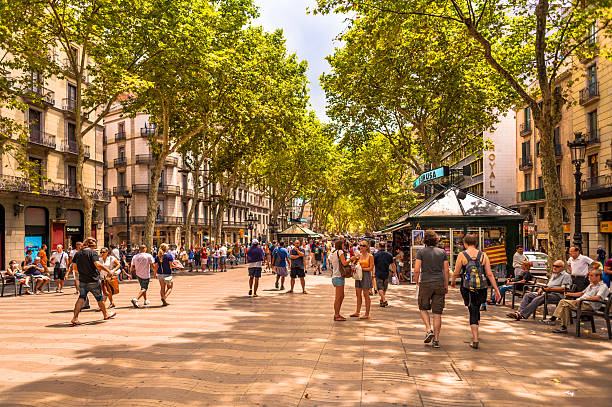
The old-town mistake is to start at La Rambla because it is famous and then improvise. That often produces the worst version of the afternoon: heavy foot traffic, uncertain direction, too many souvenir edges and too few moments that feel chosen. La Rambla can be crossed or contextualized, but it should not be the spine of a teen day unless the family has a specific reason to use it. The better spine is a controlled entry and exit: know where you begin, know what you are trying to show, and know how you will leave before the group starts asking when the walk ends.
One useful Barcelona correction is that El Born often works better than the Gothic Quarter for older teens who want city texture without feeling sealed inside a medieval maze. It has narrow streets, but the energy changes faster: boutiques, bars, design shops, Santa Maria del Mar, the market structure, and routes that can spill toward the park or the waterfront. That does not mean El Born is automatically calmer. It means the teenager gets more signals that the city is still being lived in, not only interpreted.
Old-town overload has a mood consequence. It flattens the day. The morning’s awe becomes the afternoon’s compliance, and the evening starts with everyone slightly guarded. A shorter old-town slice does the opposite: it leaves the family with a sense that Barcelona has layers still available, rather than a feeling that they have already been made to consume them all. When a parent wants “just one more lane,” that is usually the moment to stop.
The age-band split: 13 is not 17, and siblings change the Barcelona route
Teenagers should not be planned as one audience. A 13-year-old, a 15-year-old and a 17-year-old may all resist tours, but they resist different things. Younger teens often struggle with being managed in public: waiting, being told where to stand, being corrected, being photographed too much. Middle teens may resist anything that feels performative or childish. Older teens often want autonomy, better food, sharper conversation and some control over the day’s rhythm. A good Barcelona route gives each age band a way to participate without making the whole family orbit one teenager’s mood.
For 12 to 14, keep the day visually obvious. Sagrada Família works because the interior does not require prior knowledge to impress. The guide should use short interpretive bursts, not a continuous lecture. After that, Barceloneta is valuable because the body can move and the family hierarchy loosens. Let the teenager choose part of the reset: beach walk, lunch mood, ice cream, shop pause, or whether the next hour is old town or football energy. The choice can be small and still change the tone.
For 15 to 16, avoid anything that feels like a children’s activity disguised for older kids. This age band often responds to insider framing: why a building was controversial, how tourism changes neighborhoods, how football and identity overlap, why Eixample looks orderly but still produces long walking days. They do not need everything gamified. They need the guide to stop speaking to them as if they are six. This is where private guiding is especially useful: the interpretation can become a conversation rather than a performance.
For 17 to 19, treat the day almost like a compact adult itinerary with a stronger rhythm edit. Older teens can handle more context but are less forgiving of wasted time. They may prefer one excellent interior, a serious lunch, a design or street-culture angle, and an evening that does not feel compromised by family exhaustion. They can also tolerate a second Gaudí stop if they have chosen it. The important distinction is consent: a 17-year-old who chooses Park Güell experiences it differently from one who is told it is mandatory.
This is not the stroller problem of younger-family Barcelona. The issue is not whether the route can physically accommodate a stroller; it is whether the route gives adolescents enough agency while still satisfying adults who came for architecture, history and food. Mixed siblings complicate the plan. If one child is still young and another is deep into teen resistance, keep the route shorter and use Barceloneta as the shared reset. The younger child gets space; the teenager gets relief from being managed; adults get a day that still contains one serious Barcelona encounter.
Weather, beach timing and the honest return leg
The beach reset should be timed for energy, not just sunshine. In warm months, open pavement, exposed Park Güell paths and beach glare can compound quickly. In cooler or windy conditions, Barceloneta can still work as a reset, but it may need to become a lunch-and-walk moment rather than a long seaside pause. In rain, replace the beach hour with a lower-friction interior or food-led reset near the center, but keep the principle: after Sagrada Família, change the mode before asking for more interpretation.
High summer requires the firmest editing. If the family is traveling when the city feels hot by late morning, do Sagrada Família early, avoid adding an exposed hillside unless it is a genuine priority, and keep the old-town slice short. A chauffeured element can earn its cost when it removes exposed transfers, solves Park Güell access, or protects a dressed-up evening after a beach or Gaudí day. It does not earn its cost when the itinerary itself is overloaded. A comfortable vehicle can reduce heat and transfer strain, but it cannot make four attention-heavy stops feel like two.
Should you swim? Only if it does not create a logistics problem for the rest of the day. Swimming sounds like the perfect teenage reset until the family has to manage wet clothes, valuables, showers, sand, sun exposure and a dinner reservation. For many comfort-first travelers, the better version is controlled beach time: shoes off, sea air, a proper lunch, a walk toward Port Vell, then a clean return to the hotel before the evening. If the hotel is not near the water, build in the return deliberately. The beach is refreshing; the post-beach logistics can undo it.
The return leg is where many Barcelona teen days are won or lost. After Barceloneta, do not assume the family will happily re-enter dense sightseeing. Decide whether the next move is hotel, a single old-town slice, or a later football-led evening. A hotel return in Eixample can be a strategic choice, not a defeat. Teenagers who get privacy, a shower and a pause are often more willing to rejoin dinner, a market walk, or a match-night atmosphere later. Teenagers who are kept out all day often become physically present and emotionally absent.
This is the day’s mood logic: a plan that feels shorter usually gets more out of the teenager. Not because it contains less Barcelona, but because it gives the family clean transitions. Sagrada Família creates awe. Barceloneta releases pressure. Football or street energy returns ownership. One old-town slice adds depth without blur. A hotel reset before dinner keeps the evening from becoming damage control.
Where private guiding changes the tone from lecture to discovery
A private guide earns the most with teenagers when the guide controls tone, not just access. Timed entry and efficient routing matter, but the bigger value is social. Teenagers are quick to detect when they are being performed at. They respond better when the guide asks sharper questions, connects the city to something they already understand, and knows when silence, observation or a change of street will do more than another paragraph of explanation.
At Sagrada Família, this means turning a vast building into a sequence of discoveries: why the columns feel forest-like without saying only that they resemble trees, how light changes the mood of the nave, why exterior symbolism can be sampled rather than decoded exhaustively, and where to stand so the teenager sees structure rather than only decoration. A guide who reads the family well will stop before the explanation becomes proof of expertise. The goal is not to empty the building of meaning; it is to leave the teenager wanting one more answer rather than begging for one fewer.
Between stops, private planning changes the day’s emotional temperature. The guide can decide whether the family should go straight to Barceloneta, pause along Avinguda Gaudí for a lighter transition, use a vehicle to avoid heat, or skip the old-town layer because the group is already saturated. That is the difference between a template and a family day. It also lets adults keep the trip’s substance without making teenagers feel as if their only role is endurance.
This is where Orange Donut Tours’ tailor-made approach fits naturally. A family with a football devotee, a design-curious older teen and parents who care deeply about Gaudí should not receive the same Barcelona day as a family with two younger teens who mainly need beach air and a controlled old-town taste. The itinerary can still contain Sagrada Família, Barceloneta and a sense of the historic city, but the emphasis changes. For a broader first-time frame, a private Best of Barcelona route can be adapted around teen energy rather than run as a fixed checklist.
If your main concern is keeping the evening intact for dinner, celebration plans, or simply a family mood that has not soured by 6 p.m., ask for the route to be built around one serious morning and one deliberate afternoon release. That is the point at which a private guide stops being a luxury extra and becomes the editor of the day. For a custom Barcelona plan shaped around your teenagers, hotel location, food preferences, football interest and tolerance for Gaudí depth, Inquire now. The most useful version is rarely “more access.” It is the right amount of access, with the right exits.
A workable day shape for Barcelona with teenagers
The strongest one-day shape is a controlled arc: Sagrada Família, reset, city energy, then a short cultural finish or a clean hotel return. It is not a generic itinerary; it is a sequence designed to prevent resistance. The exact times should depend on tickets, season, hotel location and dinner plans, but the order should remain disciplined.
Morning: one serious interior
Begin with Sagrada Família and give it real attention. Arrive with tickets settled, keep the interpretation selective, and avoid turning every façade into a full seminar. If the family wants more Gaudí, let the morning include one light exterior cue afterward rather than another long entry. This keeps the adult sense of Barcelona’s architectural importance without consuming the teenager’s full attention budget before lunch.
Midday: the Barceloneta release
Move to Barceloneta before the day feels tired. Choose lunch, beach air, a promenade walk, or a short waterfront pause based on weather and the family’s comfort needs. Do not make this segment too complicated. Its job is to change posture and mood: from looking up and listening to walking, eating, talking and seeing the horizon. This is the cleanest place to let teenagers regain a sense of control.
Afternoon: football, El Born or a hotel reset
After the beach, choose only one afternoon direction. If football is meaningful, use it here or save it for evening energy. If the family still has curiosity, choose El Born or a short Gothic Quarter slice with a defined endpoint. If the group has dinner plans or has already absorbed enough, return to the hotel. The hotel reset is often the most elegant choice for families who care about the evening; it lets teenagers reappear as better dinner companions rather than passengers who have been touring since breakfast.
Evening: keep it socially easy
The evening should not repay the afternoon with another heavy cultural assignment. Food works. A short paseo works. A match-night atmosphere can work if it is relevant and logistically sane. A formal tasting menu with exhausted teenagers is usually a fragile bet unless the teenagers are food-serious and the day has been deliberately light. Families building a bespoke stay can use a tailor-made Barcelona plan to protect this evening from the morning’s ambitions.
What to cut first when the plan starts getting too full
Cut the second Gaudí interior first, unless the teenager specifically asked for it. This is the clearest mistake-prevention rule for Barcelona with teenagers. Adults often add Casa Batlló, La Pedrera or Park Güell because they fear missing the city’s architectural identity. But Sagrada Família already gives the day a powerful Gaudí core. The second stop should earn its place by changing the experience, not by repeating the category.
Cut the long Gothic Quarter wander second. Keep a precise old-town slice if the family wants history, but drop the “let’s just wander” plan when the day is full. The old town is seductive on paper because it seems flexible. In practice, flexibility can become drift: unclear turns, repeated lanes, crowded corners and a teenager who senses there is no endpoint. A short, guided old-town moment beats an hour of atmospheric uncertainty.
Cut the beach swim third, not the beach reset. This distinction matters. The reset is valuable because it changes the day’s pressure. Swimming may or may not be worth the logistics. If the family is staying near the water, swimming can be easy. If the hotel is in Eixample and dinner matters, swimming can create more friction than relief. Keep the sea air; be selective about the full beach operation.
Cut formal food ambition if the teenagers are not food-led. Barcelona is excellent for food-and-wine travelers, but a family teen day does not need to prove itself through a long lunch or an elaborate evening. A well-chosen casual meal after Sagrada Família can do more for the family mood than an over-managed reservation. Save the more serious dining for a night when the day has been lighter, or when the teenagers are old enough and interested enough to enjoy it.
Finally, cut any upgrade that exists only to make the day sound premium. Better seats, faster transfers and private interpretation are valuable when they remove real friction. They are not valuable when they help you do too much. A premium Barcelona teen day should feel edited, not inflated.
FAQ
Is Barcelona good with teenagers?
Yes, Barcelona is very strong with teenagers when the day is not built as a monument checklist. The best plan uses one major Gaudí interior, a beach or waterfront reset, and a dose of football, food, shopping, street life or old-town texture that gives teenagers some ownership of the day.
How much Gaudí should we plan with teenagers in Barcelona?
Plan one serious Gaudí interior in a single day, usually Sagrada Família for a first visit. Add a second Gaudí stop only if your teenager is interested in architecture, photography, design, or hillside views; otherwise, use an exterior pass or save Park Güell for another day.
Should we visit Sagrada Família or Park Güell with teenagers?
Choose Sagrada Família first if this is the family’s first Barcelona trip. Park Güell is better as an outdoor, view-led add-on for families who specifically want photographs, open air and hillside Gaudí, but it is not the automatic second stop after Sagrada Família.
Where does beach time fit in a Barcelona teen itinerary?
Beach time fits best after Sagrada Família and before old-town or evening plans. The Sagrada Família to Barceloneta reset changes the day’s physical and emotional rhythm, giving teenagers sea air and movement after a high-attention interior.
Is Barceloneta the best beach area for families with teenagers?
Barceloneta is the most useful beach reset for many first-time families because it is close enough to the central sightseeing pattern to work as a midday change of pace. It is not always the calmest beach atmosphere, so use it for access, lunch and energy rather than assuming it will be quiet.
Should we include a football stop in Barcelona with teenagers?
Include football if at least one teenager genuinely cares or if match-day energy will make the city feel more alive to the family. Do not add a football stop as a generic bribe; when no one is truly interested, it becomes another scheduled obligation.
How do we avoid tour resistance with teenagers in Barcelona?
Limit the day to one major interpretive stop, build in a real reset, give teenagers small choices and avoid long unstructured old-town wandering. A private guide helps most when the tone becomes conversational and discovery-led rather than lecture-led.
What should we skip first if our Barcelona day with teenagers is too packed?
Skip the second Gaudí stop first unless a teenager specifically asked for it. Then shorten the Gothic Quarter, keep the beach reset but drop the full swim if logistics are awkward, and avoid any premium upgrade that only helps you add more stops.
If you’re interested in any private tours of Barcelona, please reach out to us.








 So if you are looking for the absolute best in Barcelona & surroundings with authentic local fully-licensed native guides whose English you can actually understand and with an exclusive and amazingly fun itinerary













