Gràcia for a Second Barcelona Stay: Plaças, Workshops and an Evening That Feels Local

Updated
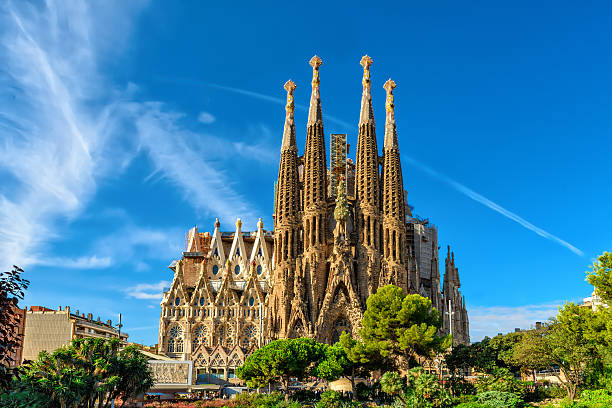
Gràcia is best for a second Barcelona stay when you want a half-day that feels composed rather than monumental: plaças, independent workshops, small design stops and an unforced evening within easy reach of Eixample. It works because the district gives you short walking intervals, frequent pauses and a natural north-to-south route back toward dinner, especially if you use Fontana or Diagonal as the hinge rather than treating the neighborhood as a vague wander. The clearest exception: do not make Gràcia the anchor of a first Barcelona trip if Sagrada Família, Park Güell, the Gothic Quarter or the sea still need their place.
The thesis is simple: Gràcia is not Barcelona’s replacement stage; it is the district that makes a repeat stay feel lived-in, provided the route is edited around one Gràcia plaça-to-workshop sequence and a soft exit toward dinner. That sequence matters. Start near Plaça de la Virreina, move through the smaller streets toward Carrer d’Astúries or Carrer de Verdi, pause for a ceramics, textile, jewelry or paper-led workshop visit, and then let Plaça del Sol or Plaça de la Vila de Gràcia decide whether the evening stays in Gràcia or slips down toward Eixample. This is the difference between a neighborhood day that feels intentional and one that becomes three pleasant but unmemorable hours.
For Orange Donut Tours guests, Gràcia usually belongs after the first Barcelona stay has already covered the city’s headline architecture. A private guide can make the neighborhood’s texture legible: why the village grid feels different from Eixample’s blocks, why the slope toward Travessera de Dalt changes energy, why a seemingly minor plaça can be a better rest point than a famous avenue, and how to keep the evening from becoming a late cross-town recovery. For a more focused version, the Gracia Private Tour is the cleanest next step.
Should you plan Gràcia as a half-day on a second Barcelona stay?
Plan Gràcia as a half-day if you have already seen Barcelona’s first-time icons and want design, neighborhood life and a gentler evening without committing to a museum-heavy day. It earns its place when the traveler is no longer asking “What must we see?” and has moved into the more interesting question: “Where can Barcelona feel specific without becoming logistically tiring?”
The district is strongest for repeat visitors, couples, design-minded travelers, families with older children, small groups who like craft and food stops, and celebration travelers who do not want every special moment to happen at a grand address. It suits people who enjoy looking closely: ironwork on a balcony, a small studio window, a neighborhood noticeboard, a plaça changing pace between late afternoon and early evening. It does not suit travelers who need every hour to deliver a major monument, a formal museum, a famous shopping street or a sea view.
The reason Gràcia works in real city conditions is that Barcelona can be deceptively tiring when you keep chasing “one more” famous sight. Sagrada Família, Park Güell, Montjuïc, Barceloneta and the Gothic Quarter do not sit in one smooth line. Each transfer adds a reset: taxi doors, metro platforms, heat exposure, a new crowd pattern and the mental cost of reorienting. Gràcia avoids that if you give it a compact spine. The body experiences the day as a series of manageable intervals rather than a sightseeing campaign.
The district also changes the mood of a second stay. A morning of Gaudí or a museum visit often leaves travelers impressed but sharpened: alert, full, slightly saturated. Gràcia lets the trip exhale. The plaças give you places to stop without “doing” a stop. Workshops give the day a tactile center. The evening feels shorter, calmer and more conversational because you are not fighting your way back from the waterfront or from a hilltop viewpoint after everyone is already hungry.
The first mistake is assuming that “local” means unplanned. In Gràcia, random wandering can work for a resident with no deadline; it is less satisfying for travelers with one precious afternoon, dinner plans and different walking tolerances within the group. The better version has a light route, a few locked anchors and permission to ignore anything that does not serve the evening.
Use Gràcia when:
- You have already covered the first-stay icons and want a Barcelona day that feels residential, stylish and low-pressure.
- You want small workshops, independent boutiques and design-led browsing without committing the day to luxury retail.
- You are staying in Eixample and want an evening that can end without a long return.
- Your group includes travelers who enjoy breaks, cafés, plazas and short walking segments more than back-to-back sites.
Keep Gràcia as an evening add-on when:
- You only have two Barcelona days and still need Sagrada Família, Park Güell, the Gothic Quarter or Montjuïc.
- Your main objective is fine dining, not neighborhood texture.
- You are staying far from Eixample and would need a late cross-town return after dinner.
- Your group expects big-ticket sightseeing every hour and may read a quiet plaça as “nothing happening.”
This is the editorial call: Gràcia is one of Barcelona’s best second-stay half-days, but it is overvalued when travelers use it to compensate for an unfinished first trip. Do the icons first. Then let Gràcia give Barcelona back its smaller scale.
The route hinge that keeps Gràcia from feeling like random wandering
The best Gràcia route uses a north-neighborhood start and a southward exit, or the reverse if dinner is already fixed in the upper Eixample. The practical hinge is not glamour; it is movement. Fontana, Lesseps, Joanic and Diagonal each create a different day, and choosing the wrong one can turn a pleasant neighborhood into a small maze with a tired finish.
For most second-stay travelers, a Fontana or Diagonal hinge is easier than starting at Park Güell and “walking down into Gràcia.” That downhill idea looks attractive on a map, but it often borrows energy from the wrong part of the day. Park Güell brings timed-entry logic, slopes, crowds and a different rhythm. By the time many travelers arrive below Travessera de Dalt, Gràcia becomes the leftover rather than the point. The counterintuitive correction is to stop forcing Park Güell into a Gràcia afternoon unless the whole day is built around hills. If Gaudí still owns the morning, read this as a separate routing problem, not an automatic add-on; the private Gaudí day sequencing guide is a better place to solve that.
The cleanest Gràcia half-day starts with a defined meeting point, not a vague instruction to “meet in Gràcia.” Plaça de la Virreina works well because it gives the neighborhood an immediate human scale. From there, you can move toward Carrer d’Astúries, Carrer de Verdi or smaller cross-streets where the workshop texture begins to matter. Plaça del Sol can be a later social pause, while Plaça de la Vila de Gràcia adds civic context without turning the afternoon into a history lecture. These are not checklist stops. They are pacing devices.
A one Gràcia plaça-to-workshop sequence should feel almost too simple on paper. First, meet in or near a plaça where the group can settle and the guide can explain Gràcia’s former village logic. Second, walk a short design-and-craft corridor rather than sampling every shop window. Third, choose one workshop-style stop that creates a tactile memory: ceramics, leather, textile, illustration, paper, jewelry or a small maker-led space when access is appropriate. Fourth, pause again in a different plaça to decide whether the evening stays in Gràcia or moves down toward Eixample.
That last decision is where the route earns its value. If the group is energized, you can continue toward dinner in Gràcia. If one traveler is fading, you can descend toward Diagonal and a more polished Eixample dinner. If there is a Michelin-level reservation later, the afternoon should taper, not expand. The Michelin Guide: Barcelona starred list (https://guide.michelin.com/us/en/catalunya/barcelona/restaurants/all-starred) is useful for checking the current starred landscape, but it will not solve the route question for you. A serious dinner changes how much neighborhood wandering belongs beforehand.
The body consequence is real. Gràcia’s slopes are not dramatic like Montjuïc or Tibidabo, but the district rises as you move north, and Barcelona heat can make even modest inclines feel more expensive than expected. Add uneven attention, narrow pavements, school-hour movement and the stop-start rhythm of browsing, and a “short” route can feel longer than its distance. A good plan reduces repeated crossings of Travessera de Gràcia and avoids bouncing between distant plaças just because they look close on a map.
For private touring, the gain is not only information. It is judgment. A guide can read whether the group wants another workshop, a shaded pause, a taxi edge, a wine bar, a design detour or an earlier dinner. Without that reading, the neighborhood can become a sequence of charming fragments. With it, Gràcia becomes a second-stay answer: Barcelona at human scale, arranged around how the travelers actually move.
What to prioritize: plaças, workshops, design streets and one evening decision
Prioritize one social plaça, one workshop corridor, one flexible drink pause and one dinner direction; do not try to turn Gràcia into a complete sightseeing district. The value of Gràcia is not the number of places you can name afterward. It is the way the afternoon keeps its shape without becoming formal.
Choose the plaça for the mood you want, not because it is the most famous
Plaça de la Virreina is often the best opening move because it feels contained. It gives couples and small groups a calmer beginning, and it makes the transition from Eixample or a hotel pickup feel deliberate. Plaça del Sol is more social and can work better later, especially if the evening is meant to stay in Gràcia. Plaça de la Vila de Gràcia has a civic quality and a stronger sense of neighborhood identity, useful when the guide is explaining Gràcia’s relationship to the rest of Barcelona.
The mistake is treating all plaças as interchangeable. They are not interchangeable for travelers. An early crowded plaça can make a family feel scattered. A too-quiet stop at the wrong hour can make a celebration group wonder why they came. A more civic square may be better for context; a more social one may be better for easing into dinner. The guide’s job is to choose the square that fits the group’s energy, not simply the one that photographs best.
Use workshops as the day’s spine, not as a shopping hunt
Workshops and small maker-led stops are the reason Gràcia works for design travelers. They give the afternoon a tactile center and keep it from dissolving into café-and-boutique blur. The best stops are not always the most expensive ones. A quiet ceramic shelf, a small textile studio, a design-led paper shop or a maker who can explain materials for five minutes can be more memorable than a polished retail appointment with no neighborhood connection.
Booking premium shops does not replace the need for neighborhood pacing. This is where premium spend does not help or does not earn its cost: paying more for a shopping stop will not make Gràcia feel coherent if the route is scattered, the group is hungry or the dinner exit is poorly placed. Spend changes the day when it buys privacy, expert interpretation, smoother access, translation, shipping help or an appointment that genuinely fits the traveler. It does not change the day when it is used to disguise weak sequencing.
If shopping is a stronger objective than neighborhood texture, connect Gràcia with a dedicated style route rather than forcing the district to do everything. The Shopping Private Tours page is the better fit when the priority is sourcing, styling, gifts or a more deliberate buying brief. Gràcia can still be part of that day, but it should not be asked to replace Passeig de Gràcia’s flagship logic or El Born’s denser boutique-and-old-town rhythm.
Let one street carry the design arc
Choose a corridor rather than ricocheting. Carrer d’Astúries can support a softer browse. Carrer de Verdi gives a lively neighborhood spine. The streets around Plaça de la Virreina create a more intimate craft-and-café feel. Gran de Gràcia is useful for orientation and transit, but it can flatten the mood if you stay on it too long; it behaves more like a connector than the reason to come.
This is one of the district’s subtler route truths. Gràcia rewards small turns but punishes indecision. Three side streets chosen well feel like discovery. Eight side streets chosen because the group cannot decide feel like drift. For travelers paying for a guided private day, the editorial discipline is part of the premium: fewer stops, better fit, cleaner exits.
Decide the evening direction before the first drink
Gràcia is better when the evening is chosen before the group gets too comfortable. Staying in the district gives the night a local feel: slower, less formal, more conversational. Moving down toward Eixample gives more polish, easier hotel returns and a stronger fit for travelers who prefer a refined dining room after a casual afternoon. Neither is universally better. The wrong choice is waiting until everyone is hungry and then trying to improvise across Barcelona.
If dinner is a tasting menu, the afternoon should not overfeed the group. If dinner is tapas-led, a late afternoon drink in Gràcia can be part of the arc. If the group includes older parents or travelers sensitive to noise, the evening should avoid turning into an open-ended plaça search. If the trip is a celebration, use Gràcia for intimacy before dinner, not as a substitute for the celebration meal itself.
When Gràcia should stay an evening add-on rather than a half-day
Gràcia should stay an evening add-on when the daytime plan still needs a major Barcelona anchor or when your group’s patience for small-scale browsing is limited. This is not a downgrade. Sometimes the district is better in a two-hour pre-dinner role than as the main event.
Keep it short if you are coming from Sagrada Família in the late afternoon and already feel architecturally full. A direct move into Gràcia can work beautifully, but only if the route is edited to one plaça, one short street and dinner. Do not add a workshop circuit, multiple squares and a long drinks stop unless the group is still fresh. The consequence of overfilling is not just sore feet; it is a mood change. The day starts to feel like homework after beauty.
Keep it short if Park Güell has been part of the same day. The temptation is to frame Gràcia as the natural descent after the park. In practice, the park often uses more attention than travelers expect. Timed entry, viewpoint movement, stairs or slopes, taxi coordination and the visual intensity of Gaudí’s forms can leave the group ready for a pause, not a full district strategy. In that case, Gràcia should be an easy dinner-side landing, not a second chapter.
Keep it short if your hotel is far from Eixample, especially if late returns are an issue. Barcelona can be easy by taxi, but late-night logistics still affect comfort. A family staying near the waterfront, a cruise-linked party watching next-morning timing, or older travelers who prefer a simple return may enjoy Gràcia more if it is paired with an early dinner and a prearranged pickup edge. Private planning matters most when the return is part of the comfort, not an afterthought.
Keep it short if your travelers are highly purchase-driven. Gràcia’s workshops can be wonderful, but it is not the district for every luxury-shopping objective. If the day’s success depends on specific brands, fittings, inventory or a tightly curated buying list, the plan should lean toward a shopping specialist and perhaps combine Gràcia with Eixample or Passeig de Gràcia. The article on Passeig de Gràcia, El Born or Gràcia for a design-and-shopping day is the better comparison when shopping is the central decision.
And keep it short if you have only one Barcelona evening left. Gràcia can be lovely, but a final evening may need a more iconic frame: a sea-adjacent dinner, an old-town walk, a flamenco-linked plan or a restaurant chosen for the occasion. A second-stay traveler can be selective. The goal is not to prove that the district is “authentic.” The goal is to choose the setting that gives that particular night the best aftertaste.
How to connect Gràcia with dinner or nearby Eixample
The smoothest Gràcia evening either stays inside the district for informality or descends toward Eixample for a more polished dinner and simpler hotel return. Decide this before you build the afternoon, because the dinner direction changes the route, the drink stop and the walking load.
Staying in Gràcia is the better choice when the travelers want the evening to feel local, conversational and less dressed. It works well for couples who have already had a formal dining night, families with teens who prefer movement over ceremony, and small groups who like sharing plates, neighborhood energy and a less staged sense of place. The consequence is mood: the night feels like it belongs to the district rather than to the itinerary.
Descending to Eixample is the better choice when the group wants a more comfortable landing: broader streets, more predictable taxi access, hotel proximity and a wider range of refined dining rooms. This is especially useful after a workshop-led afternoon, when travelers may want the evening to become simpler rather than more exploratory. Eixample also makes sense for guests staying near Passeig de Gràcia, Rambla de Catalunya or the upper grid, because the return does not feel like a separate operation.
A practical route might begin at Plaça de la Virreina, move through a workshop corridor, pause near Plaça del Sol and then angle down toward Diagonal. That creates a natural transition from village scale to Eixample order. Another version starts near Diagonal, climbs lightly into the district for a compact circuit, and returns south when dinner is fixed outside Gràcia. The first feels more immersive; the second is safer for groups with tighter dinner timing.
Food-and-wine travelers should be especially careful with the afternoon. Gràcia can tempt you into small bites, drinks and second stops before dinner. That may be perfect for a tapas-style night. It is a poor lead-in to a long tasting menu. If you are considering a destination dinner, check the restaurant’s own details directly. For example, Disfrutar’s official menu (https://www.disfrutarbarcelona.com/en/menu) is the right source for its current menu structure, not a neighborhood guide. Gràcia can set up that kind of evening only if it leaves enough appetite and attention intact.
The cleanest celebration version uses Gràcia as the intimate prelude. Meet in the district, build a short design-and-plaça route, include one personal-feeling stop, then move to Eixample for dinner. The celebration does not need to announce itself at every step. A small workshop visit can make a birthday, anniversary or family trip feel personal before the more formal meal begins.
The cleanest comfort-first version does the opposite: finish dinner in Gràcia and arrange a simple exit. This avoids the feeling of being pulled out of a local evening just when the district is starting to make sense. It suits travelers who do not want to dress up, who value conversation over ceremony, or who have had several high-profile meals already. The risk is noise and unpredictability around busier squares, so the route should choose the final area with the group’s tolerance in mind.
For guests trying to connect Gràcia with a broader local-feeling Barcelona day, the Barcelona like a Local Private Tour can carry the district into a wider plan without turning it into a checklist. The point is not to make every corner “hidden.” It is to make the day feel selected.
What a private guide changes in Gràcia
A private guide changes Gràcia by turning small details into a route with judgment, not by adding more stops. This is the natural conversion moment for the district: its value is obvious when edited and surprisingly easy to dilute when unguided.
With a guide, the former-village texture becomes readable. The group can understand why Gràcia’s plaças feel different from Eixample’s strict geometry, why Carrer de Verdi behaves as a neighborhood spine, why Gran de Gràcia is useful but not always charming, and why the route should not keep climbing north if the evening belongs south. These are small decisions with direct consequences: less backtracking, fewer energy dips and better dinner timing.
A guide also protects the group from mismatched interests. One traveler wants ceramics. Another wants fashion. A third wants a drink. Someone else is quietly watching the walking load. In an unguided afternoon, the most assertive preference often wins. In a guided route, the preferences can be sequenced: context first, workshop second, pause third, dinner direction fourth. The group feels accommodated without every traveler needing to negotiate every corner.
For families, the value is pacing and translation. Children or teens may not care about “neighborhood atmosphere” as an abstract idea, but they may respond to a maker’s process, a design object, a lively plaça or a short walk with a clear endpoint. For older parents, the value is avoiding unnecessary climbs and choosing quieter pauses. For couples, it is the confidence that the afternoon will feel intimate rather than aimless. For small celebration groups, it is the ability to make one personal-feeling moment happen without turning the day into a production.
Where premium spend changes the day is in customization: a guide who can adapt the route, a chauffeured edge when mobility or heat makes it worthwhile, private timing, appointment-style stops when appropriate, and a clean handoff to dinner. Where it does not change the day is in trying to buy authenticity as a product. Gràcia feels local because the route respects its scale, not because the plan has been made expensive.
This is also why the broad Private Tours in Barcelona page can be useful for travelers still deciding how Gràcia fits the whole stay. If the district is the second-stay texture, the rest of the trip may still need Gaudí timing, a market morning, Montjuïc, a coast reset or a wine-country day. Gràcia works best when it has one precise job inside that larger design.
A guide is most useful in Gràcia when:
- The group wants local texture but does not want to gamble the afternoon on random wandering.
- There is a dinner reservation afterward and the route needs to taper rather than expand.
- Travelers have different interests: design, food, photography, history, shopping or slower breaks.
- The group includes older travelers, children, teens or anyone who benefits from shorter walking intervals.
- The trip is a celebration and the afternoon needs one personal moment, not a public spectacle.
If Gràcia is the afternoon that will make your second Barcelona stay feel more personal, the right help is not a louder itinerary. It is a guide who can keep the district small enough to feel real and structured enough to feel worth the time. Inquire now
A Gràcia half-day that actually works
A successful Gràcia half-day has four movements: enter cleanly, establish the village scale, give the afternoon one tactile anchor, then choose the evening exit before fatigue makes the decision for you. The exact stops should change with the traveler, but the structure should not drift.
Movement one: start with orientation, not shopping
Begin at a meeting point that lets the group settle. Plaça de la Virreina is a strong choice for a calmer start; Diagonal is better when the day needs a cleaner Eixample connection; Fontana works when public transit or a northern approach matters. The first 15 minutes should orient the group to Gràcia’s scale and explain what the afternoon is not trying to do. It is not a Gaudí day, not a luxury-shopping sprint, not a Gothic Quarter replacement and not a food crawl unless that is the explicit brief.
This opening prevents a common disappointment. Travelers arrive expecting “local Barcelona,” then start measuring the district against the drama of Sagrada Família or the shopping power of Passeig de Gràcia. Gràcia loses that comparison because it is the wrong comparison. Its strength is smaller: continuity, rhythm, materials, resident life and an evening that does not need to impress by force.
Movement two: use two plaças, not five
Two plaças are enough for most visitors. The first establishes context; the second changes the tempo. More than that can make the route feel repetitive unless the guide has a clear historical or social point to make. Plaça de la Vila de Gràcia can explain civic identity; Plaça del Sol can show the social evening; Plaça de la Virreina can hold the softer beginning. Choose by function.
The consequence of too many squares is subtle but important. Travelers stop noticing differences. What began as neighborhood texture becomes “another plaza.” That is the moment to cut. A private route should protect attention as carefully as it protects walking time.
Movement three: make the workshop stop count
One workshop-style stop should be enough unless the traveler is specifically design-focused. The goal is not to buy something; the goal is to give the district a material memory. A ceramics-led stop changes how travelers see tiles and tableware. A paper or illustration stop changes how they notice graphic language. A textile or leather stop changes the conversation about craft and use. The best workshop moment is short, specific and connected to the route around it.
This is where a guide’s local judgment matters more than a list. Small businesses change, hours shift, owners travel, private access varies and a beautiful stop on one day may be wrong for a particular group on another. Rather than pretending there is one permanent “best” workshop, the stronger plan defines the role of the stop and then chooses the live fit when arranging the day.
Movement four: taper toward dinner
The last hour should reduce decisions. If the group is staying in Gràcia, move toward the dinner area and let the final drink or walk sit nearby. If dinner is in Eixample, stop adding side streets and begin the southward transition. If the group is unsure, use Plaça del Sol or a nearby pause as the decision point, not the whole neighborhood.
This taper is what preserves the evening mood. A day that keeps expanding until dinner often arrives with everyone slightly late, slightly hungry and slightly over-walked. A day that tapers makes dinner feel like the natural next scene. That is especially important for couples and celebration travelers, where the emotional quality of the evening matters more than squeezing in another street.
What to cut first if the day is getting too full
Cut the extra famous add-on first, not the pause. In a second-stay Gràcia plan, the pause is not filler; it is how the neighborhood works. The expendable piece is usually the forced monument, the second workshop, the unnecessary taxi hop or the idea that Park Güell, Passeig de Gràcia shopping and Gràcia dinner should all fit into one smooth afternoon.
Cut Park Güell if the group has already had a Gaudí-heavy trip or if timed-entry pressure would make Gràcia feel like an afterthought. Cut a second shopping zone if the day is supposed to feel local rather than acquisitive. Cut the long pre-dinner drink if the evening is a tasting menu. Cut the late return across town if the next morning has an early departure or a day trip. These cuts do not weaken the plan. They let Gràcia do its specific job.
Do not cut the first orientation pause. Without it, the district can feel like a cluster of pleasant streets with no interpretive frame. Do not cut the dinner decision point. Without it, the group will likely make the most important comfort choice at the worst moment. Do not cut the route logic. The difference between a premium Gràcia afternoon and a generic one is not the price of the stops; it is the discipline of the sequence.
One of the most common overpacked versions begins with Sagrada Família, adds a late Park Güell slot, descends into Gràcia for shops, then tries to reach a high-profile dinner. It looks efficient because the places appear geographically related. It often feels crowded because each piece asks for a different kind of attention. Sagrada Família asks for awe. Park Güell asks for movement and timed logistics. Gràcia asks for small-scale noticing. Fine dining asks for appetite and composure. Put all four together and the emotional register keeps changing too fast.
If the trip needs a broader Barcelona day beyond Gaudí, consider whether another district solves the problem better. Montjuïc may be stronger for art and views. El Born may be stronger for old-town density and boutiques. Eixample may be stronger for polished design and hotel returns. Gràcia wins when the brief is softer: repeated Barcelona, neighborhood texture, workshops, plaças and a local-feeling evening.
How Gràcia differs from the Barcelona neighborhoods repeat visitors usually consider
Gràcia beats the usual repeat-visitor neighborhoods when the goal is village scale and a soft evening, not when the goal is maximum shopping power, old-town density or a sea reset. This comparison matters because many travelers choose Gràcia for the wrong reason: they have heard it is “local” and assume that makes it automatically better.
Choose Gràcia if the day should feel tactile and residential. It is the best fit for plaças, small workshops, independent design browsing and a dinner that can stay informal. The tradeoff is that it does not deliver Barcelona’s biggest visual hit.
Choose Eixample if the day needs polish and easier logistics. It is better for hotel returns, broader pavements, architecture-led context and a more refined dinner handoff. The tradeoff is that it can feel less intimate if the route never leaves the grander grid.
Choose El Born if the group wants old-town density and boutique energy. It gives more immediate historic layering and tighter streets, but it can also bring more crowd drag and old-town blur.
Choose Passeig de Gràcia if the day is primarily luxury shopping or major Modernisme. It is more efficient for flagship retail and architectural landmarks, but it is not a substitute for Gràcia’s village rhythm.
For second-stay travelers, the winning criterion should be consequence, not reputation. Ask what the neighborhood does to the day. Does it reduce transfers? Does it help the evening? Does it match the group’s walking tolerance? Does it create a memory that is not already covered elsewhere in the itinerary? Gràcia answers yes when the day needs texture. It answers no when the day still needs spectacle.
This is why Gràcia pairs well with nearby Eixample. Eixample gives structure before or after; Gràcia gives relief. You can move from the ordered grid into smaller streets, then return toward dinner without a major cross-city reset. That contrast is more useful than pretending Gràcia alone should carry every aspect of a premium Barcelona day.
Travelers staying in Eixample have the strongest practical case. A Gràcia afternoon can begin after a morning elsewhere, avoid a long transfer, and end with a choice between neighborhood dinner and a polished return. Travelers staying in the Gothic Quarter or by the sea can still make it work, but the return must be planned more carefully. The farther your hotel is from the upper center, the more Gràcia needs a defined endpoint.
FAQ
Is Gràcia worth visiting on a second trip to Barcelona?
Yes. Gràcia is worth visiting on a second Barcelona trip if you want neighborhood texture, small design stops, workshops, plaças and a gentler evening after the first-stay icons are already covered. It is less useful if you still need Sagrada Família, Park Güell, the Gothic Quarter or the waterfront to anchor the trip.
How long should I spend in Gràcia?
Most discerning travelers should plan two and a half to four hours in Gràcia, plus dinner if the evening stays in the district. Use the shorter version when Gràcia follows Gaudí or Park Güell; use the longer version when workshops, design browsing and a slow pre-dinner pause are the point of the afternoon.
Should Gràcia be a half-day or just an evening?
Make Gràcia a half-day when you want a structured second-stay neighborhood experience with plaças and workshops. Keep it as an evening add-on when the daytime plan already includes a major sight, when the group is tired, or when dinner timing is the real priority.
Can Gràcia replace Barcelona’s first-time attractions?
No. Gràcia should not replace Barcelona’s first-time attractions. It works best after the major icons have had their place. Treat it as a repeat-visitor district that adds texture, not as a substitute for Sagrada Família, Park Güell, the Gothic Quarter, Montjuïc or the sea.
What is the best way to connect Gràcia with Eixample?
The smoothest connection is to build the route with a southward exit toward Diagonal, Passeig de Gràcia or upper Eixample dinner plans. This lets the afternoon shift from village scale to broader streets and easier hotel returns without making the evening feel like a separate transfer.
Is Gràcia good for shopping?
Gràcia is good for independent design browsing, workshops, small makers and gifts with a more personal feel. It is not the best district for flagship luxury shopping or a purchase-driven itinerary. For that, combine it carefully with Eixample or Passeig de Gràcia rather than asking Gràcia to do everything.
Do I need a private guide for Gràcia?
You do not need a private guide to enjoy Gràcia, but a guide makes the district much more effective when time is limited. The value is route judgment: choosing the right plaças, avoiding scattered wandering, fitting the workshop stop to the travelers and connecting the afternoon cleanly with dinner.
Is Gràcia good for couples and celebration travelers?
Yes. Gràcia is especially good for couples and celebration travelers who want an intimate, less formal Barcelona afternoon before dinner. The strongest version includes one personal-feeling workshop or design stop, one calm plaça pause and a clear dinner direction before the evening loses focus.
If you’re interested in any private tours of Barcelona, please reach out to us.








 So if you are looking for the absolute best in Barcelona & surroundings with authentic local fully-licensed native guides whose English you can actually understand and with an exclusive and amazingly fun itinerary













