Barcelona for Roman and Medieval Layers: Barcino Walls, Santa Maria del Mar and El Born in One Focused Day

Updated
Plan this day as a Roman-to-medieval line from the Barcino wall to Santa Maria del Mar, then let El Born close the story; do not treat it as a general Gothic Quarter wander. The route works in real Barcelona conditions because it keeps the time periods visible: walls and gates first, civic and episcopal power second, La Ribera’s maritime church third, and El Born’s buried streets last, without repeatedly crossing Via Laietana or burning energy on atmospheric lanes that do not add meaning. The clearest exception is a first Barcelona stay with no separate Gaudí time: in that case, keep Sagrada Família for another day, or give this route a shorter half-day version instead of forcing both into one heritage arc.
The thesis is simple but important: Barcelona’s oldest center becomes legible when you move east from the Roman perimeter toward the medieval merchant quarter, not when you try to collect every old street between La Rambla and the Parc de la Ciutadella. One mildly counterintuitive cue helps: Plaça de Ramon Berenguer el Gran, just above Via Laietana, is more useful than many prettier Gothic lanes because you can read Roman wall, medieval chapel, countly memory and city edge in a single turn of the head. That is the kind of hinge that makes a private heritage day feel interpreted rather than merely walked.
For travelers who want a guided version of this focused old-town route, Orange Donut Tours can shape it through the Gothic Quarter and Old Town private route while keeping Barcino, Santa Maria del Mar and El Born as the spine rather than drifting into a generic old-city circuit.
How to see Barcino walls and El Born in one day without old-town blur
The best version is a three-part sequence: read the Roman city first, use Santa Maria del Mar as the medieval hinge, then finish in El Born because the neighborhood turns architecture into lived history. This is not a route that rewards adding everything nearby. Barcelona’s historic center is compact enough to tempt overpacking, and that is exactly where many good trips flatten. When every lane is “historic,” the traveler stops understanding what changed from Roman colony to medieval city to early modern conflict.
Begin near Plaça Nova or the Cathedral side of the Gothic Quarter, where the line of Barcino is easiest to introduce. The official Barcelona City Council overview of Roman Barcino (https://www.meet.barcelona/en/visit-and-love-it/barcelona-history/roman-barcino) is useful because it confirms the route’s premise: the Roman walls still embrace the old heart of the city, and the colony belongs to Barcelona’s earliest urban story. Your purpose on the day, however, is not to audit every Roman remnant. It is to make the shape of the city visible before the medieval layer takes over.
From there, move toward Plaça del Rei and the Cathedral surroundings, but keep that middle stretch disciplined. Plaça del Rei can help explain civic power and the medieval palace setting; Carrer del Paradís can add the Temple of Augustus columns if your group is patient with a small detour; Carrer de la Tapineria and Plaça de Ramon Berenguer el Gran bring the wall back into view before the route crosses toward La Ribera. The practical consequence is real: if you spend the whole morning inside the tightest Gothic Quarter lanes, Santa Maria del Mar arrives as “another church” rather than the answer to a different Barcelona.
Then cross the mental border as much as the physical one. Via Laietana is not a romantic street, but it is useful because it marks a modern cut through the old city. A guide who can explain that edge prevents a common mistake: assuming the Gothic Quarter and El Born are simply two adjacent old neighborhoods with the same story. They are close on foot, but they do different work. The Gothic Quarter is where Roman walls, episcopal presence and civic authority compress. La Ribera and El Born are where medieval commercial life, maritime ambition, workshops and later memory come forward.
That is why Santa Maria del Mar should sit near the middle of the day, not as a casual stop after shopping or lunch. The basilica’s own official site introduces it as a fourteenth-century building and a defining example of Catalan Gothic architecture, which is helpful basic confirmation; the planning value is that it changes the mood and meaning of the route. Use Santa Maria del Mar’s official site (https://www.santamariadelmar.barcelona/en/) for current visit details, but use the church itself as the turn in the day: from fortified city and institutional power to a maritime parish built for a neighborhood with its eyes toward trade, craft and the sea.
The last section belongs to El Born, not because it is fashionable, but because the archaeological and neighborhood layer makes the day land. The official tourism listing for El Born Centre de Cultura i Memòria (https://www.barcelonaturisme.com/wv3/en/museu/22468/el-born-centre-de-cultura-i-memoria.html) confirms the site’s role as a culture-and-memory space, but its value in this route is more specific: it prevents the medieval day from ending as architecture alone. If you stand above the exposed urban remains in the old market hall after Santa Maria del Mar, the route has moved from walls to worship to households, streets and civic disruption. That is a better close than another pretty lane.
Where Barcino still reads clearly
Barcino reads most clearly where the Roman perimeter interrupts the modern city, so prioritize visible edges over scattered curiosities. The temptation is to hunt every ancient clue in the Gothic Quarter; the better heritage day gives travelers enough Roman evidence to recognize the city’s first frame, then moves on before the lesson becomes small-fragment archaeology.
Start with the idea of a walled colony, then show it. Plaça Nova is useful because the old city announces itself near the Cathedral entrance zone, even if the surrounding space can feel busy and visually mixed. The modern “Barcino” letters help some travelers orient, but they should not become the point. The point is that the Roman city had a perimeter, gates, defensive logic and a grid that still distorts the way the Gothic Quarter behaves. Once a traveler has that in mind, the narrow streets stop feeling merely charming and start feeling constrained by older bones.
Then use Plaça de Ramon Berenguer el Gran for the stronger read. Here, the Roman wall and medieval overlay can be understood without needing a museum case. The official tourism page for the wall and defence towers of Barcino at Plaça Ramon Berenguer (https://www.barcelonaturisme.com/wv3/en/page/479/wall-and-defence-towers-of-the-roman-city-of-barcino-placa-ramon-berenguer.html) is the kind of primary support worth checking before a serious heritage day, but the practical value is immediate: this is where a group can stand, look up, look across and understand that Barcelona did not replace itself neatly. It reused, leaned on, patched, absorbed and reinterpreted its earlier city.
If your group is especially history-minded, add the Temple of Augustus columns on Carrer del Paradís or the MUHBA underground route around Plaça del Rei. If your group includes children, older parents, a celebration party or travelers who have a late dinner, choose one of those, not both. The difference is not intellectual quality; it is attention. Roman fragments demand interpretation. Without context, the columns can feel like a five-minute curiosity and the underground archaeology can overextend a morning. With context, one well-chosen Roman stop can carry the rest of the day.
This is also where a private guide earns the day. The guide’s task is not to recite dates at every wall fragment; it is to keep asking what the traveler can now see that they could not see five minutes earlier. At Plaça Nova, that may be the gate logic. At Plaça de Ramon Berenguer el Gran, it may be the stack of Roman defense and medieval power. At Carrer del Paradís, it may be the strange survival of ancient authority inside a dense urban block. The value comes from sequencing, not accumulation.
Cut-first rule: if you are running late, do not cut Santa Maria del Mar to save an extra Roman fragment. Cut the fragment. A Barcino-focused day still needs a medieval release, and Santa Maria del Mar is where the route stops being a defensive map and becomes a civic human story. The travelers most likely to regret overdoing Barcino are not casual travelers; they are the culturally serious ones who underestimate how quickly fragments begin to compete with each other when seen back-to-back.
Why Santa Maria del Mar changes the meaning of the day
Santa Maria del Mar should be the emotional and interpretive hinge because it shifts the day from the defended Roman city to the medieval city of builders, merchants, sailors and neighborhood identity. If Barcino explains Barcelona’s first urban frame, Santa Maria del Mar explains why the medieval city does not feel like a museum of rulers only.
This is the moment to slow down. The basilica’s scale can be read quickly, but its effect needs a little quiet. Travelers who have already seen Sagrada Família may assume another major church will compete for the same mental space. It does not. Sagrada Família is visionary, vertical, symbolic and modern in its construction story; Santa Maria del Mar is civic, disciplined, materially restrained and rooted in a medieval neighborhood. Putting the two too close together can be unfair to both. Santa Maria del Mar needs the Roman wall behind it and El Born ahead of it, not a rushed comparison with Gaudí.
On a focused day, the church changes the meaning in three ways. First, it gives La Ribera a center of gravity. Without it, El Born can be reduced to boutiques, tapas and a pleasant after-museum wander. Second, it gives medieval Barcelona a non-palatial face. Instead of only Cathedral, bishops and royal spaces, the traveler sees a church whose power is tied to a neighborhood’s maritime and commercial life. Third, it creates a mood shift. After walls, gates and civic stone, the basilica’s interior gives the day air.
The body feels that shift, too. Barcelona’s old center is not a hill city like Granada or Lisbon, but it makes travelers tired in a different way: hard paving, small turns, frequent stops, looking up at walls and down at archaeological remains, and repeated attention resets at crossings such as Via Laietana. Santa Maria del Mar provides a pause without sending the group back to the hotel. It lets older parents sit, gives teenagers a single large space rather than another alley lecture, and gives couples or celebration travelers a calmer interval before the denser memory work of El Born.
Do not rush the approach. Carrer de Montcada can be useful if you want to bring in palatial facades and the museum street logic of La Ribera, but it can also distract the day toward Picasso if you are not careful. Passeig del Born gives a more direct sense of the neighborhood’s public life, especially when used as a transition rather than a browsing break. The better sequence is not “church, then shops.” It is “church, then neighborhood evidence.” That small distinction is what keeps El Born from becoming an afterthought.
This is also the point where the route differs from a sacred-art itinerary. Travelers who want a church-led day can reasonably compare Santa Maria del Mar, the Cathedral and Sagrada Família; that is a different planning question, and ODT treats it separately in the sacred-art day guide. Here, Santa Maria del Mar is not included because it is another major church. It is included because the Barcino wall to Santa Maria del Mar transition makes the medieval city legible.
When El Born should replace a wider Gothic Quarter wander
El Born should replace a wider Gothic Quarter wander when the traveler already has enough old-town atmosphere and needs the day to become more precise. A broad Gothic Quarter circuit can be lovely, but on a Roman-and-medieval day it often becomes the enemy of clarity. The strongest choice is not always more old streets; it is the old street that explains why the previous stop mattered.
Use these scenario bullets before adding another Gothic lane, Cathedral-side detour or museum hour:
- Second-stay history travelers: choose El Born over a wider Gothic Quarter wander because it gives a different Barcelona after the wall and Cathedral zone. You are not repeating the old center; you are moving into La Ribera’s merchant and memory layer.
- First-time visitors with one old-town morning: keep the Gothic Quarter tight, then still go to Santa Maria del Mar. The day will feel more complete than a long Gothic wander that never explains why El Born matters.
- Families or mixed generations: use El Born when attention needs a visible payoff. The old market hall and archaeological remains are easier to grasp than another sequence of narrow streets where the story depends entirely on narration.
- Couples and celebration travelers: end in El Born when you want the day to taper into a good evening mood. The neighborhood can lead naturally toward a drink or dinner without forcing a transfer back across the city.
- El Call-focused travelers: do not try to make this day carry the whole Jewish Quarter story as well. If El Call is the priority, build around it deliberately through the Jewish Quarter private tour rather than tucking it into a Roman-to-El Born route.
The practical reason is routing. A wide Gothic Quarter wander often loops west and south, pulling the day toward La Rambla, Plaça Sant Jaume or extra Cathedral-side lanes. Those are not wrong; they are simply expensive in attention. Every extra loop delays the eastward move and increases the chance that Santa Maria del Mar becomes a late stop. Once that happens, El Born loses its role as conclusion and becomes optional filler.
El Born also changes the trip mood. A day that stays too long inside the Gothic Quarter can become visually intense: stone, shade, tourists, turns, plaques, fragments, repeat. Ending east of Via Laietana opens the plan. Passeig del Born, the Santa Maria del Mar frontage, the old market hall and the Ciutadella edge give the group a sense that the city has expanded. The day feels shorter because it has changed texture. That is not a luxury flourish; it is a practical way to keep cultural travel from feeling like homework.
The honest counterpoint is that El Born is not the answer when your group wants one classic postcard Gothic walk and does not care about layers. If the goal is atmosphere, photos and a relaxed old-town stroll, a wider Gothic Quarter route may satisfy more quickly. But if the question is Roman and medieval Barcelona in one focused day, El Born is the stronger ending because it completes the eastward historical movement.
The one-day route: what to keep, what to shorten and what to leave out
A focused Roman-and-medieval day should feel like one argument in motion: Barcino defines the frame, the Gothic Quarter shows institutional continuity, Santa Maria del Mar shifts the story east, and El Born gives the human and memory layer. Keep that arc intact even if you shorten individual stops.
Morning: Barcino first, but not all of Barcino
Start early enough that the old center has room to breathe, but do not obsess over being first at every site. This is not a ticket-window day in the same way a Gaudí day can be. Begin with the visible wall logic near Plaça Nova, then move to Plaça de Ramon Berenguer el Gran. If the group is alert, add one deeper Roman cue: the Temple of Augustus columns on Carrer del Paradís or the MUHBA underground archaeology around Plaça del Rei. If the group is slower, skip the deeper cue and spend the saved attention on explanation.
The traveler consequence is subtle but important. A morning overloaded with Roman fragments makes the city feel smaller and more technical. A morning that uses two or three strong cues makes the Roman city available for the rest of the day. When you later stand near Santa Maria del Mar, the traveler can still imagine the older walled city behind them. That is the desired effect.
Late morning: Gothic Quarter, but only the part that advances the route
Use the Gothic Quarter as a bridge, not as a full chapter. Plaça del Rei, the Cathedral surroundings, Carrer del Bisbe or Plaça Sant Jaume may all be valid depending on the guide’s route, but the day should not drift into a municipal history survey. The question to ask at each corner is: does this help the traveler understand the move from Roman Barcino to medieval Barcelona? If the answer is no, leave it for a different walk.
This is where some travelers become their own worst planners. Because the distances are short, they keep adding. “We are already nearby” becomes the most expensive sentence in the old city. Nearby does not mean low-cost when the cost is attention, standing time and narrative blur. The more discerning move is to keep the Gothic Quarter sharp and let the day earn El Born.
Midday: Santa Maria del Mar before lunch, not after fatigue
Place Santa Maria del Mar before the longest meal break if the route begins in the morning. The church deserves fresh eyes, and it also gives the day a natural pause. If you leave it until after lunch, especially with wine or a slow meal in the mix, it can become a dutiful interior rather than the hinge that changes the day’s meaning.
For comfort-first travelers, this sequencing matters more than it sounds. Old-town lunches can stretch, and El Born’s dining streets can pull attention toward the evening before the heritage arc is complete. See the church, let the guide connect it to La Ribera, then eat. After lunch, El Born’s archaeological and memory layer will feel like a continuation rather than a restart.
Afternoon: El Born, then stop before the day becomes another neighborhood crawl
After Santa Maria del Mar and lunch, give El Born a focused afternoon rather than an open-ended wander. Use Carrer de Montcada if it helps explain medieval palaces and museum reuse. Use Passeig del Born for public space and neighborhood rhythm. Use the El Born Centre de Cultura i Memòria when the group wants a visible archaeological close. Then stop. Do not turn the afternoon into Barceloneta, the beach, the Picasso Museum and the Parc de la Ciutadella unless you are deliberately designing a different day.
Estació de França and the Ciutadella edge are useful orientation cues if your group needs pickup or a graceful exit. A chauffeur may help at the end of the route, especially for older parents or a celebration group dressed for dinner, but a car does not improve the core old-town walking logic. The most meaningful movement here is on foot, because the short eastward transition is the story.
What this plan should not include, even when it is famous
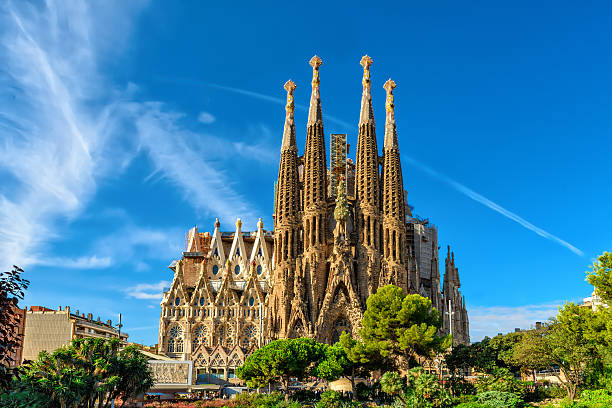
The first thing to leave out is Sagrada Família if this day is meant to make Roman and medieval Barcelona clear. This heritage day should not include Sagrada Família when the purpose is to follow Barcino, Santa Maria del Mar and El Born as one historical line, especially if you already have a separate Gaudí day or if the only available ticket time forces a cross-city interruption. Use Sagrada Família official tickets (https://sagradafamilia.org/en/tickets-individuals) for the Gaudí day itself, not as a reason to fracture this older route.
There is one exception: if a traveler has only one full day in Barcelona and may never return, Sagrada Família may outrank this focused route. That is a valid first-timer choice. But it should be made honestly. You cannot fully honor Barcino, Santa Maria del Mar, El Born and Sagrada Família in one calm day without turning the middle into transfer logistics and attention triage. If Gaudí is non-negotiable, do a shorter old-town heritage walk and save the deep Roman-to-medieval route for a second stay.
The second thing to be cautious with is the Picasso Museum. It is close to the route, and that proximity is exactly the trap. A serious museum visit changes the day’s subject. If you include it, El Born starts to compete with art history, timed entry, museum stamina and a different kind of looking. For travelers who love Picasso, build a separate art day or a shorter museum-led route. For this article’s planning question, the museum is usually the first sophisticated cut.
The third caution is El Call. Jewish Barcelona is important, and the old Jewish Quarter deserves more than being used as a side alley on a Roman-to-El Born day. If you want the heritage decision between El Call and the wider Gothic Quarter, read the El Call or wider Gothic Quarter planning guide and design that day on its own terms. In this route, El Call can be acknowledged if the path naturally passes nearby, but it should not become the center unless you are willing to change the day’s thesis.
The fourth caution is premium transportation. A car can improve hotel pickup, post-tour departure, cruise timing or a dinner transfer. It does not make the Barcino wall easier to understand, and it cannot replace the walking sequence between the Gothic Quarter, Santa Maria del Mar and El Born. Premium spend does not help when the problem is interpretive rather than logistical. Private touring adds little if the guide merely walks streets without explaining the layers.
Where extra spend does earn its cost is in the guide’s judgment: knowing which Roman evidence to show, when to stop explaining, how to pace the church, how to prevent a group from over-collecting Gothic lanes, and how to close in El Born before attention goes flat. That is the difference between a more expensive walk and a better-designed heritage day.
Why expert context matters more than one more old-town stop
For this route, expert context is the upgrade that changes the day; another nearby stop is usually just more stone. The route’s success depends on interpretation, proportion and restraint. A self-guided traveler can certainly see walls, Santa Maria del Mar and El Born. What is harder is understanding when the city has already made the point and when a small detour will sharpen rather than dilute it.
This is especially true for small private groups. Couples often want depth without the day becoming academic. Families need visible evidence and shorter interpretive bursts. Celebration travelers need the route to feel elegant enough that it does not sabotage the evening. Food-and-wine travelers need the heritage portion to finish with enough appetite and attention for lunch or dinner, not after a forced checklist of old-town stops. A good guide reads those signals in real time.
The short-stay optimization is not “see less.” It is “make fewer stops do more work.” In Barcelona, that means letting the Barcino wall establish the first city, letting Santa Maria del Mar change the social and emotional register, and letting El Born end the route with urban memory rather than souvenir atmosphere. If you want this shaped around your hotel, dinner plans, mobility needs or a second-stay cultural focus, Inquire now.
ODT can also fold this route into broader private tours in Barcelona when it belongs inside a multi-day stay, but the article’s recommendation remains deliberately narrow: on the Roman-and-medieval day itself, do not broaden the route until the core line is secure.
Comfort, timing and hotel-base consequences
The best hotel base for this day is not necessarily inside the old town. Eixample often gives a calmer start and cleaner return, while the Gothic Quarter or El Born can reduce the first transfer but increase nighttime noise and tight-street logistics. The right base depends on the rest of the trip, not this heritage day alone. If you are deciding where to sleep, keep this route as one input among Gaudí days, dinners and departure plans.
If you are staying in Eixample, start with a short transfer to the Cathedral or Plaça Nova side and walk east. Do not begin in El Born just because it feels more relaxed. Reversing the route can work for a casual neighborhood walk, but it weakens the historical argument. The traveler should feel Barcelona moving from Roman boundary to medieval mercantile life. Eastward sequencing carries that movement more naturally.
If you are staying in the Gothic Quarter, be careful not to start too casually. The danger of an old-town hotel is that the day begins in fragments: a pretty lane, a coffee, a church facade, an unplanned detour. That can be pleasant, but it steals the first clear explanation. Meet your guide at a deliberate point such as Plaça Nova, Plaça del Rei or Plaça de Ramon Berenguer el Gran, not “somewhere near the hotel.” A precise start prevents the day from becoming atmosphere before argument.
If you are staying near the beach or Barceloneta, do not confuse proximity to El Born with route quality. The sea-facing base can be appealing for evenings, but it is not the right reason to start with El Born. Begin where the Roman city reads, then end closer to your base if that suits the evening. For some travelers, that makes the day feel pleasantly one-way; for others, especially in warmer months, it prevents the late-afternoon return from feeling like a chore.
The city does something specific to the body on this route. It is not long-distance walking, but it is high-frequency walking: stop, look, turn, listen, cross, enter, exit, reorient. The stones are firm underfoot, the lanes can feel close, and a group may spend more energy standing than moving. Build one seated pause near Santa Maria del Mar or after lunch in El Born. The route will feel more polished, and the guide’s explanations will land better.
The planning judgment that keeps the day premium without making it precious
The premium version of this route is not the most exclusive version; it is the clearest one. A discerning traveler does not need velvet-rope access to understand Barcino and medieval Barcelona. They need the right order, fewer weak add-ons, a guide who can interpret without over-talking, and an exit that leaves the evening intact.
That is why the final planning judgment is firm: for a focused Roman-and-medieval Barcelona day, Barcino wall to Santa Maria del Mar to El Born wins over a wider Gothic Quarter wander. The wider wander is attractive but blurrier. The Sagrada Família add-on is famous but structurally disruptive. The Picasso add-on is cultured but changes the subject. The El Call add-on is meaningful but deserves its own center. The route wins because each stop changes what the traveler understands next.
For a couple on a second Barcelona stay, this can be the city’s most satisfying non-Gaudí day because it makes the old center feel newly organized. For families, it works when the guide keeps the Roman fragments visible and the church pause real. For small groups, it works when the route has one clear leader and a disciplined finish. For food-and-wine travelers, it works when lunch and the evening are placed after the day has already made its point, not used to compensate for a route that dragged.
Leave the day while it still has shape. If you finish in El Born and everyone still has energy, that is not a failure of planning. It is the sign that the route stopped before the city blurred. Barcelona rewards travelers who know when to keep walking, but it rewards culturally serious travelers even more when they know when the story is complete.
FAQ
Can you see Barcino walls, Santa Maria del Mar and El Born in one day?
Yes. The best route starts with visible Barcino wall evidence in the Gothic Quarter, moves east to Santa Maria del Mar, and finishes in El Born. The day works best when you avoid turning it into a full Gothic Quarter circuit.
Where does Barcino still read clearly in Barcelona?
Barcino reads most clearly around Plaça Nova, Plaça de Ramon Berenguer el Gran, Carrer del Paradís and the Plaça del Rei area. For a focused day, choose the strongest two or three cues rather than hunting every Roman fragment.
Why is Santa Maria del Mar important on a Roman and medieval Barcelona route?
Santa Maria del Mar changes the day from Roman walls and institutional Gothic power into the medieval life of La Ribera, with its maritime, commercial and neighborhood identity. It gives the route emotional space before El Born.
Should El Born replace the Gothic Quarter on this heritage day?
El Born should replace a wider Gothic Quarter wander when the goal is Roman-to-medieval clarity. Keep the Gothic Quarter focused on Barcino and civic power, then use El Born to complete the route with La Ribera and urban memory.
Should this day include Sagrada Família?
No, not if the purpose is a focused Roman and medieval heritage day. Include Sagrada Família only if this is your sole Barcelona day and Gaudí outranks the old-city route; otherwise keep it for a separate Gaudí plan.
Is this route good for a second visit to Barcelona?
Yes. It is especially strong for second-stay travelers who have already seen the major Gaudí icons and want the old city to make more historical sense. The route gives Barcelona depth without becoming a generic old-town walk.
Is a private guide worth it for Barcino and El Born?
A private guide is worth it when they explain the layers, control the sequence and prevent overpacking. It is not worth it if the guide simply walks the streets and describes old buildings without connecting Barcino, Santa Maria del Mar and El Born.
How long should the route take?
Plan it as a focused half day to relaxed full day depending on whether you add a museum interior, lunch and a deeper El Born stop. The key is not the exact duration; it is preserving the Roman-to-medieval sequence without adding unrelated sights.
If you’re interested in any private tours of Barcelona, please reach out to us.








 So if you are looking for the absolute best in Barcelona & surroundings with authentic local fully-licensed native guides whose English you can actually understand and with an exclusive and amazingly fun itinerary













