Barcelona to Girona With Luggage: When the Transfer Day Beats a Round Trip

Updated
Use Girona as a transfer day from Barcelona when luggage is already moving north and the next base is the Costa Brava or inland Empordà; that is when the day beats a round trip. It works because Girona’s best visit is compact but not frictionless: a proper Girona old-town drop-off with luggage keeps bags out of the Barri Vell, lets the guide start near the Onyar crossings, and avoids turning the train station to cathedral walk into a suitcase exercise. The clearest exception is simple: if you are sleeping in Barcelona that night, or if your next hotel needs a clean early arrival, a round trip or a direct transfer is cleaner.
The thesis for this route is deliberately narrow: Girona earns transfer status only when luggage handling protects the old-town walk and the next base, not when a private car merely turns a cultural stop into an overstuffed road day. A dedicated private Girona route can be excellent, but the win comes from sequence, not from adding distance for its own sake.
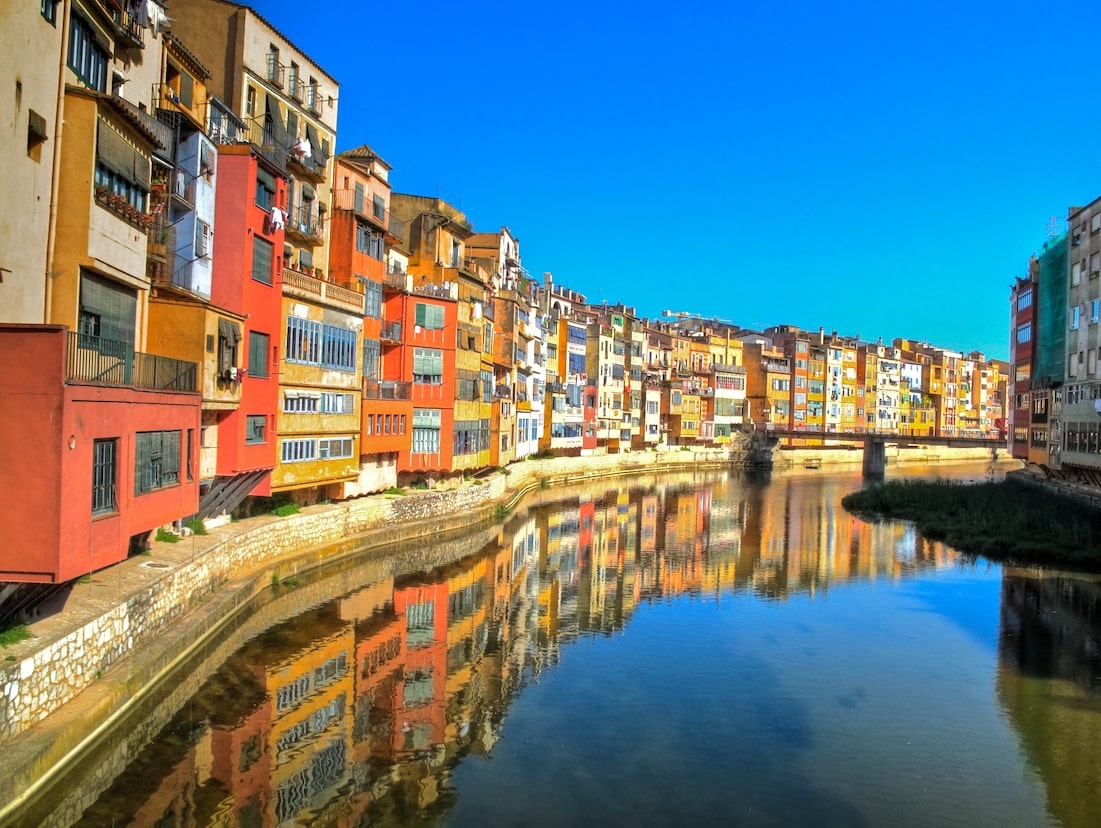
The non-obvious hinge is the space between arrival and the first real old-town step. Girona’s station is practical, but it is not the same experience as starting near the Pont de Pedra, crossing the Onyar without bags, and entering the older streets with hands free. That small geographic difference changes the day for couples, families, and older parents because the Barri Vell soon asks for stone lanes, steps, bridges, and decisions about how high to climb.
The counterintuitive correction is that the more glamorous-looking add-on is often the weaker one. A coast lunch can be lovely, and Figueres can be rewarding on a separate cultural arc, but neither should be bolted onto a Barcelona-to-Girona transfer by default. If the next hotel arrival becomes rushed, the upgrade has failed its job.
This guide deliberately ignores the generic “what to see in Girona” question. It assumes Girona is already interesting to you and asks the more expensive planning question: should the city be used to improve a moving day, or should it be protected as its own excursion? That distinction matters for travelers who care about guided context, lunch quality, and a first evening at the next base that still feels like a beginning.
Is Girona better as a transfer day or a day trip from Barcelona?
Girona is better as a transfer day when it replaces a wasted moving day rather than competing with a full Barcelona day. If your bags must leave Barcelona anyway, the question is not whether Girona is worth seeing. The question is whether stopping there improves the route north without stealing the arrival at the next base.
Use this early comparison before you lock transport, lunch, and hotel timing:
- Use Girona as the luggage-supported transfer day when you check out of Barcelona in the morning, continue toward the Costa Brava or inland Empordà afterward, and want one guided old-town walk plus lunch without returning south.
- Keep Girona as a round trip from Barcelona when you are sleeping in Barcelona again, your hotel change is not part of the route, or you want the freedom to use rail and keep the evening anchored in Eixample, the Gothic Quarter, or El Born.
- Skip Girona on the transfer when the next base has a meaningful arrival window, the group is tired after several Barcelona days, or the plan depends on adding Figueres, a long coast detour, and a late check-in in the same breath.
The third option, skipping Girona on the transfer, is not a defeat. It can be the most adult decision in a trip that already has a strong Barcelona chapter and a hotel on the coast worth enjoying from the first afternoon. A transfer day should not be judged only by how many places it names; it should be judged by whether the group arrives in better shape than it would have after a simple drive.
The best transfer version is not a greatest-hits race. It is Barcelona checkout, direct movement north, bags handled away from the walking route, Girona explored with a guide, lunch placed before fatigue peaks, and a continued drive to the next hotel with enough margin to arrive like guests rather than evacuees.
The best round-trip version is different. It treats Girona as the main outing of a Barcelona stay, lets you return to a familiar hotel, and keeps dinner geography simple. If your Barcelona base is strong, especially around Eixample or Passeig de Gràcia, a same-day Girona outing can be cleaner than making your luggage the organizing principle.
The mistake is trying to get the comfort of a transfer, the depth of a day trip, and the reach of a two-town excursion at once. Girona is compact enough to fit between bases, but it is not so weightless that it can absorb every extra ambition without consequence.
Why luggage can make Girona easier, not harder
Luggage makes Girona easier only when it is removed from the walking problem. The city’s old core is not a place where you want rolling bags, repeated curb decisions, or a group splitting attention between history and belongings. With a driver, the bags stay with the vehicle while the visit begins near the old-town edge; without that, the station-to-old-town segment becomes part of the day’s physical load.
The most useful Girona visit usually lives around the Onyar river crossings, the Rambla de la Llibertat, the Jewish Quarter streets around Carrer de la Força, the cathedral area, and a decision about whether the city walls deserve the climb. None of those pieces is hard in isolation. The trouble comes when they are layered onto checkout, luggage, lunch, road time, and a second hotel arrival.
Barcelona Sants is a capable rail hub, and the train can be the correct answer for a light traveler. But once luggage, a second base, and a hotel arrival enter the plan, the station solution often stops being elegant. You may save road structure and then spend the savings in taxi decisions, storage questions, and the mental drag of moving the group twice.
For a family, that means fewer “where are the bags?” interruptions. For older parents, it means the energy is spent on the old town, not on getting from a station concourse to the first meaningful stop. For celebration travelers, it keeps the day from feeling like an errand dressed as culture. For food-and-wine travelers, it makes lunch feel chosen rather than squeezed between transport chores.
Barcelona also matters here. A checkout morning in Eixample is usually easier to manage than a departure from a Gothic Quarter hotel buried in lanes where vehicles cannot always approach the door. A beach-side or Barceloneta base can add its own departure drag because the route must first clear the city before it can move north. This is why the plan should begin with the actual hotel door, not with a generic “Barcelona to Girona” label.
There is a body consequence to this choice. Girona asks for repeated small efforts: bridge crossings, cobbled lanes, cathedral approaches, possible wall steps, and the alertness required for narrow old streets. Barcelona before departure may already have asked for block-scale walking in Eixample or crowd navigation near Sagrada Família. When luggage is handled correctly, the body spends its limited energy on the old town; when it is not, the day starts spending energy before the visit has even begun.
The route consequence is equally concrete. If the next base is on the Costa Brava, the Barcelona-Girona stop can sit logically along the northward move before the road bends toward the coast. If the next base is not north or northeast of Barcelona, Girona begins to look like a detour rather than a hinge. The words “with luggage” should sharpen the route, not excuse a wandering day.
Where lunch and old-town walking fit
Lunch belongs after the core old-town walk, not before it, unless the group is arriving late or traveling with children who need an earlier pause. Girona is most rewarding when the first real hour is guided and unencumbered: river edge, bridges, old-town orientation, Jewish Quarter context, and the climb decision made before everyone is seated and softened by lunch.
A strong transfer-day rhythm is old town first, lunch second, then a shorter post-lunch choice. The pre-lunch walk gives the guide the group’s best attention. Lunch then becomes the hinge between cultural focus and the onward transfer. After lunch, choose one modest finish: a short riverside return, a gentle lane sequence, or a viewpoint if the group still has legs. Do not save the entire cathedral area, Jewish Quarter, and wall walk for after the meal.
A guide can also use the first walking hour to read the group. If the old-town lanes are landing well and the steps feel manageable, the walk can stretch upward. If the group is slow after Barcelona, the route can stay lower around the river, the Rambla, and the Jewish Quarter edges. That kind of adjustment is harder after lunch, when appetite has been solved but momentum has softened.
The lunch choice should match the onward drive. A long, formal lunch can be perfect if the next hotel is close and arrival is flexible. It is a poor choice if the coast base sits farther east, if check-in matters, or if dinner is important that same night. If you are returning to Barcelona for a serious restaurant evening, read the restaurant’s official menu (https://www.disfrutarbarcelona.com/en/menu) before pretending a Girona lunch will be just a light snack; the day’s food weight matters as much as the road time.
For many private groups, the most elegant lunch is not the most elaborate one. It is the meal that lets the Barri Vell land in memory without making the drive onward feel like a punishment. Couples can handle a longer lunch if the next hotel is settled and dinner is light. Families tend to do better with a clearer meal and a clean exit. Small groups celebrating a birthday or anniversary should decide in advance whether Girona is the centerpiece or a cultured pause before the coast.
Old-town walking should also be capped with intention. The Pont de Pedra and Onyar views are easy wins. The Jewish Quarter rewards a guide who can prevent the lanes from blurring. The cathedral steps and the city walls are where ambition must meet knees, shoes, temperature, and time. If the group is already tired from Sagrada Família, Park Güell, or several Barcelona museum days, Girona’s high points may be better admired selectively than conquered.
One Barcelona-specific trap is trying to squeeze in a final major Gaudí interior before departure because the route begins in the city. If Sagrada Família genuinely belongs that morning, confirm the visit directly through Sagrada Família official tickets (https://sagradafamilia.org/en/tickets-individuals) and build the Girona stop around that fixed time. Otherwise, do not let a monument window steal the calm that makes the transfer day valuable.
When a Girona round trip from Barcelona is cleaner
A Girona round trip is cleaner when Barcelona remains your sleeping base and you want the old town without a second hotel arrival. In that case, luggage does not add value; it only adds a problem to solve. The return to a known hotel can be worth more than the theoretical elegance of turning the outing into a transfer.
This is especially true when the Barcelona stay is short. If you have only two or three nights in the city, Girona should not automatically consume the same day as checkout, hotel change, and a coast move. You may be better served by making Girona a deliberate cultural day from Barcelona, then using the actual transfer day for a simpler move. The broader day-trip comparison in which private day trip from Barcelona fits a bespoke stay is useful when you are still deciding whether Girona should beat Montserrat, Penedès, or the coast.
The best round trip can feel more relaxed precisely because it gives up the transfer-day trick. Your luggage remains in the room, the evening plan can be chosen in Barcelona, and the Girona visit can end when the group is satisfied rather than when the next hotel clock demands it. That can be a better luxury than door-to-door transport for travelers who have already chosen a Barcelona hotel they love.
The round trip also wins when rail is the cleanest tool. A traveler staying near good city connections may prefer to go to Girona without the cost and structure of a full private driver day, then return to Barcelona for dinner. That can be the wiser choice for couples who travel light, independent-minded guests who enjoy stations, or groups that do not need door-to-door handling.
It also wins when the next base is emotionally important. If the Costa Brava hotel is the beginning of the “holiday” portion of the trip, arriving late and tired can flatten the mood. A transfer stop should not steal the first swim, the first terrace drink, or the simple pleasure of unpacking before sunset. A round trip on a different day may let Girona be richer and the coast arrival be calmer.
Girona should be a separate day rather than a transfer stop when you want deeper Jewish Quarter context, time for the walls without watching the clock, a more serious lunch, and an unhurried return to familiar Barcelona rooms. It should also be a separate day when a traveler in the group moves slowly on steps or when heat, rain, or several previous walking days make the old-town climb feel like a tax.
The mood consequence is easy to underestimate. A good transfer day feels like the trip has gained a chapter without adding a burden. A bad one makes Barcelona feel unfinished, Girona feel abbreviated, and the coast feel like a late arrival. The same stop can either lengthen the pleasure of the itinerary or make the whole day feel shorter than it looked on paper.
The Figueres temptation: what to cut first
Cut Figueres first if the day is already carrying Barcelona checkout, Girona, luggage, lunch, and a Costa Brava arrival. This is the most reliable mistake-prevention rule in the route. Figueres can be excellent when Dalí is the point of the day; it is rarely the quiet extra that travelers imagine when they add it to a transfer plan.
The reason is not that Figueres lacks merit. The reason is that it changes the geometry. Girona sits more naturally as an old-town pause on a northbound route. Figueres pulls the day farther, adds another cultural frame, and makes the next hotel arrival more vulnerable. If the group is heading to Cadaqués, the temptation can look efficient on a map, but the road reality and the desire to arrive well often argue for restraint.
There is also a context problem. Girona’s Jewish Quarter, medieval lanes, cathedral area, and river crossings ask for a kind of attention that is different from Dalí’s theatrical museum world. Pairing both in one day can work as a dedicated cultural arc from Barcelona; Orange Donut Tours already treats that as a different planning question in Figueres and Girona from Barcelona. It should not be imported automatically into a luggage-supported transfer.
Private transport does not justify adding Figueres if the next hotel arrival will suffer. Paying for a better vehicle, a better driver, or a more polished handoff does not change the fact that attention, daylight, lunch, and arrival energy are finite. Premium spend does not help when it buys a longer itinerary that weakens the first night at the next base.
The better cut-first hierarchy is clear. Cut Figueres before cutting the Girona old-town walk. Cut the city walls before cutting lunch if the group needs a seated pause. Cut a final Barcelona interior before cutting the margin needed to arrive well. Cut a coast detour before cutting the chance to unpack without watching the clock.
If Dalí is a genuine priority, give that day its own architecture. If Girona is the transfer hinge, keep it honest. The traveler who tries to have both often gets the weakest version of each: too little time for Girona’s lanes, too little absorption for Figueres, and a late arrival that makes the next hotel feel like an afterthought.
What a private driver should change
A private driver should change the sequence, not merely the seat. The value is strongest when the driver collects at the Barcelona hotel, carries luggage securely while the guide works through Girona, positions the group near the old-town edge, and continues to the Costa Brava or Empordà without forcing a return to Barcelona. That is a different product from hiring a car to imitate a round trip.
The driver is not a magic wand for old-town access. Girona still has a historic core with streets meant for walking, not for being chauffeured from doorway to doorway. The better plan accepts that the vehicle belongs at the edges and the guide belongs inside the story. This is why the Girona old-town drop-off with luggage matters more than the brand of vehicle.
The road sequence should be named, not waved away. A typical northbound move follows the AP-7 corridor before the route splits according to the next base, with different consequences for a hotel near Girona, a village around the Baix Empordà, or a deeper coastal address. The farther east the next hotel sits, the more disciplined the Girona stop must become.
Hotel geography at the far end deserves the same respect as the old town at the middle. A property near Girona or the lower Empordà leaves more room for a longer lunch. A coast hotel beyond the medieval villages asks for sharper discipline, because the final road segment is where tired travelers stop enjoying the cleverness of the plan. The more special the next hotel is, the less sense it makes to arrive after the welcome has lost its ease.
This is also where group size changes the answer. Two adults can absorb a tighter transfer if they are decisive and travel light. A family needs more bathroom, snack, and shoe-change tolerance. A small celebration group needs the day to feel hosted, not negotiated at every corner. The same Girona stop can be graceful for one couple and too compressed for six relatives with different walking speeds.
Where the spend earns its cost is in the protected transitions: hotel checkout once, bags loaded once, no station storage decision, no taxi scramble after lunch, no return south, and no debate about how to move from Girona to the next base. For travelers heading to Begur, Palafrugell, Pals, or a rural Empordà property, that can make the difference between a cultured travel day and a chopped-up logistics day.
Where the spend does not earn its cost is in adding more geography without improving the human experience. A bigger vehicle does not make cathedral steps shorter. A driver does not make a long lunch digest faster. A private car does not make a late coast arrival feel earlier. If the sequence remains overloaded, comfort becomes upholstery rather than judgment.
For travelers comparing Girona with a coast-first move, the adjacent planning question is covered in Barcelona before a Costa Brava transfer. This article’s narrower answer is different: Girona wins when the old-town stop is the cultural value of the moving day and when luggage handling makes that stop easier than a return trip.
If the day needs to be built around a next-base arrival rather than a fixed tour template, a private plan should begin with the hotel geography at both ends. That is where Costa Brava transfer planning and Girona guidance begin to overlap: not in adding attractions, but in deciding what the first coast evening should feel like.
A transfer-day sequence that feels composed
The cleanest Barcelona-to-Girona transfer day starts with fewer promises. It names the hotel pickup, the luggage plan, the old-town drop-off area, the lunch logic, the onward route, and the latest acceptable arrival at the next base before anyone adds a second town or a final Barcelona sight.
A well-built sequence usually looks like this:
- Morning pickup in Barcelona. Leave from the hotel with bags already loaded, ideally after avoiding a complicated old-town vehicle approach if the hotel sits deep in the Gothic Quarter.
- Direct northbound move. Do not begin with a beach loop, a shopping errand, or a final museum unless that item is genuinely more important than the Girona stop.
- Girona old-town edge arrival. Start the guided walk near the river and historic core, with luggage away from the walking route.
- Focused Barri Vell walk. Prioritize the river crossings, Jewish Quarter context, cathedral area, and one climb decision rather than trying to cover every lane.
- Lunch before the group fades. Let lunch act as the day’s hinge, not as a delayed reward after too much walking.
- One post-lunch finish. Choose a gentle old-town return, a view, or a short specialist stop, then leave before the onward drive feels like a chore.
- Next-base arrival with margin. Arrive in time for check-in, unpacking, and the first evening to belong to the new base.
Before booking, ask three questions in this order. What time do we want to arrive at the next hotel? What part of Girona would we regret missing if lunch ran long? What is the first thing we want to feel at the next base: cultural momentum, seaside arrival, or simply the relief of being settled? Those answers are more useful than adding another pin to the map.
If food is one of the reasons for the stop, decide whether lunch is the day’s anchor or the day’s recovery point. An anchor lunch can be longer, more local, and more deliberate, but then the walking plan must be tighter. A recovery lunch is shorter and placed to restore the group before the drive, which usually suits travelers who care more about the first coast evening than the meal itself. Both versions can be premium; the weaker version is the undefined lunch that expands because no one named its job.
Keep one weather-sensitive adjustment in reserve. In warmer months, make the early walk do the interpretive work and save the flatter river edges for later. In wet conditions, avoid promising a wall walk that will become slippery or joyless. Girona is not a city that needs to be conquered from the highest point to justify the stop; the route should be shaped around the travelers you actually have that day.
The transfer day is strongest when it resists the urge to prove how much can be done. Girona’s old town has enough texture for a focused visit; the point is to carry that texture into the next chapter of the trip, not to arrive with everyone too tired to notice the new hotel.
For a first Catalonia itinerary, this sequence often sits inside a broader Barcelona-plus-coast plan. The Barcelona–Costa Brava split-stay brief can help decide whether Girona belongs on the moving day, as a standalone day from Barcelona, or not at all. The answer changes with the number of nights, the hotel locations, and whether the coast is meant to be active or restorative.
A private plan earns its keep when it makes the day shorter in feeling, not longer in ambition. If you want Girona folded into a multi-base Catalonia trip with a guide, driver, luggage handling, and a next-base arrival that still feels considered, Inquire now.
FAQ
Can I visit Girona from Barcelona with luggage?
Yes, Girona can work well with luggage when the bags stay with a private vehicle and the old-town walk begins near the historic core. It works poorly when travelers expect to roll luggage through the Barri Vell or treat the station-to-old-town walk as effortless.
When does a Barcelona to Girona transfer beat a round trip?
It beats a round trip when you are already moving from Barcelona toward the Costa Brava or inland Empordà and Girona sits naturally on the route. If you are returning to the same Barcelona hotel that night, the round trip is usually cleaner.
Should Girona be a stop on the way to the Costa Brava?
Girona should be a stop on the way to the Costa Brava when the old-town visit replaces dead transfer time and still leaves enough margin for a calm arrival at the coast. It should not be added if it turns the first coast evening into a late, tired check-in.
Is Girona better by train or private driver from Barcelona?
Train can be better for a simple round trip from Barcelona, especially if you travel light and sleep in Barcelona again. A private driver is better when luggage, hotel checkout, Girona walking, lunch, and onward movement to another base all need to work as one sequence.
Where should lunch fit on a Girona transfer day?
Lunch usually fits after the main old-town walk and before the onward drive. That sequence gives the guide the group’s best attention first, then uses lunch as the bridge between Girona and the next hotel.
Should I add Figueres to a Barcelona to Girona transfer?
Add Figueres only when Dalí is a central priority and the next hotel arrival can still remain comfortable. Do not add it by default to a luggage-supported Girona transfer, because it often weakens Girona and the first evening at the next base.
How much Girona walking is realistic on a transfer day?
A realistic transfer-day walk covers the river crossings, old-town orientation, Jewish Quarter context, cathedral area, and one carefully chosen climb or viewpoint. Trying to include every lane, wall section, and extra museum can make the onward transfer feel heavier than planned.
Who should avoid using Girona as a transfer stop?
Travelers should avoid it when the group is already tired, when the next hotel arrival is important, when mobility on steps is limited, or when the plan depends on adding multiple extra stops. In those cases, keep Girona as a separate day or transfer directly.
If you’re interested in any private tours of Barcelona, please reach out to us.













 So if you are looking for the absolute best in Barcelona & surroundings with authentic local fully-licensed native guides whose English you can actually understand and with an exclusive and amazingly fun itinerary