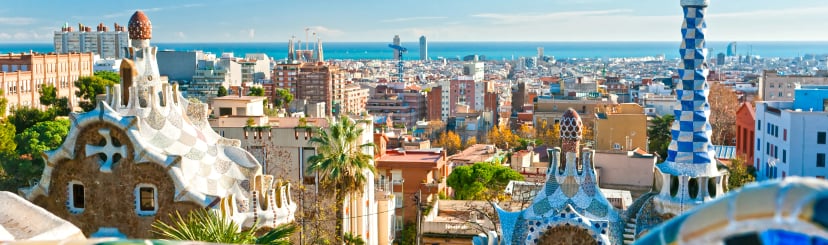
Barcelona Before a Costa Brava Transfer: Eixample, Girona or a Coast-Lunch Stop?

Updated
The best Barcelona-to-Costa Brava transfer day is usually a restrained one: a calm Eixample morning before departure, then either a single Girona stop or one coastal lunch, not both. That works because Eixample hotel checkout, luggage loading, Barcelona’s northbound exit, and your Costa Brava hotel arrival all sit on the same clock. The clearest exception is a first-time visitor who has already seen Barcelona’s essential interiors and genuinely wants Girona’s medieval texture more than a seaside lunch.
The useful question is not whether Eixample, Girona, or the Costa Brava is “better.” It is what your transfer day can carry without making your first coastal evening feel like an afterthought. Barcelona’s grid makes Eixample easy to leave from, but the city’s old quarters and beach edges are more awkward with bags, timed reservations, and a driver circling narrow streets. Girona is rewarding when it is treated as the cultural stop. A coast-lunch stop is rewarding when lunch is the pause, not the beginning of a second itinerary. For the broader split-stay decision, keep the Barcelona–Costa Brava split-stay brief separate from this narrower transfer-day choice.
The route hinge: use the transfer, but do not overload it
Use the transfer day for one polished addition, not a compressed day trip with luggage. The mistake is assuming that a chauffeured car turns the Barcelona-to-Costa Brava move into a free sightseeing day. It solves luggage handling, privacy, pickup timing, and fewer transfers. It does not remove the physical cost of hotel checkout, cultural walking, lunch pacing, heat exposure, or late check-in at the coast.
The three real candidates behave differently. Eixample keeps the day urban and controlled before departure. Girona adds history, walking, and a stronger sense of Catalonia beyond Barcelona. A coast-lunch stop gives you sea air and a softer arrival rhythm. Each can be excellent. Combining them is where the day starts to fray.
Transfer-day triage
- Choose Eixample before departure when you have a late checkout, a serious lunch or shopping errand in central Barcelona, older travelers, children, or a hotel on or near Passeig de Gràcia, Rambla de Catalunya, or the wider Dreta de l’Eixample. It is the cleanest option when comfort matters more than adding one more destination.
- Choose Girona when your group wants a real cultural interlude and is willing to trade a slower coastal lunch for a focused walk through the old city. Girona works best as the day’s one major stop, especially for travelers drawn to Jewish heritage, medieval streets, city walls, and riverfront context.
- Choose a coast-lunch stop when your priority is arriving in the Costa Brava mood before you reach the hotel. This is strongest for couples, celebration travelers, and food-and-wine travelers who would rather have a well-paced meal near the sea than a second round of urban sightseeing.
- Go direct when arrival timing matters, your coast hotel check-in is important, you have dinner booked, the group is tired, or you are moving with children, older parents, or multiple bags. The direct transfer is not a failure of planning; it is often the most elegant plan.
The default winner for a discerning transfer day is Eixample plus one restrained onward move: either direct to the coast or a single lunch stop. The runner-up is Girona when culture is the day’s priority. The wrong fit is trying to add Girona and a coastal lunch because the car makes it look possible. A chauffeured transfer does not justify adding Girona and a coastal lunch if hotel arrival becomes rushed.
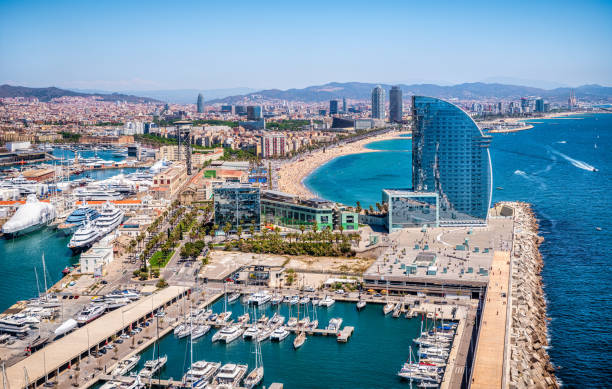
There is a counterintuitive correction here: the beachy Barcelona finale is often overvalued before a Costa Brava transfer. Barceloneta can sound emotionally right, but with luggage already loaded and a northbound journey ahead, dropping into the beach edge can mean slower access, more street-level bustle, and a less efficient exit than staying in Eixample. The smarter glamour is often not one more sea view in Barcelona; it is reaching the actual Costa Brava without flattening the evening.
When to stay in Eixample before departure
Stay in Eixample before departure when the day needs control, luggage simplicity, and a clean northbound exit. This is the least dramatic answer, which is exactly why it works. Eixample is not only a hotel district; it is a transfer-day machine. Wide blocks, easier pickup points, hotel porters who are used to timed departures, and direct access from central avenues make the morning less fragile than a last wander through the Gothic Quarter or a beachside detour.
The micro-location matters. An Eixample hotel checkout near Passeig de Gràcia, Rambla de Catalunya, or Provença gives you a smoother handoff than a hotel buried in the old city. Your bags go from room to lobby to car without negotiating stone lanes or pedestrian-heavy corners. The driver can usually stage more predictably than around Plaça Reial, the Cathedral, El Born’s narrower streets, or the Barceloneta waterfront. That difference feels small at breakfast and large when one guest has a carry-on, another needs a pharmacy stop, and the hotel wants the room released.
Eixample also lets you spend the morning without beginning a second trip. A short Modernisme-focused walk, a final coffee, a design errand, a restrained Gaudí exterior sequence, or a single interior booked with proper breathing room can all sit before departure. For travelers who still need a Barcelona-focused morning, an Eixample private route is the natural fit because it keeps the guide, driver, hotel, and luggage logic aligned rather than scattering the party across the city.
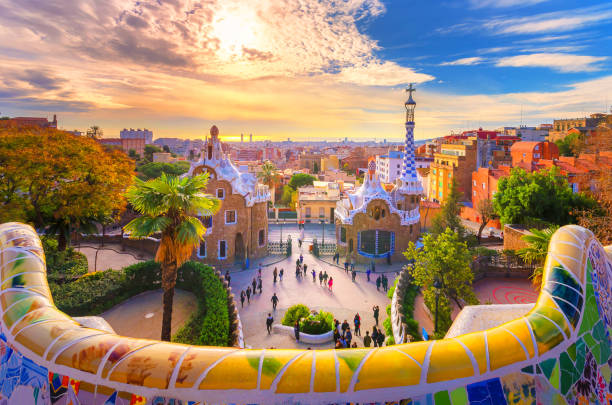
The key is to avoid making Eixample a holding pen. A polished transfer morning is not three rushed façades and a hurried lunch. It is one compact urban chapter that closes Barcelona gracefully before the coast takes over. If you are staying near Passeig de Gràcia, Casa Batlló and La Pedrera sit within a manageable Eixample rhythm, but an interior visit must be chosen carefully. Sagrada Família is more powerful than another façade, but it introduces timed-entry pressure and a site-specific exit. Park Güell is the wrong departure-day upgrade for many groups because its hillside setting and ticket-window logic can pull the morning away from the hotel and toward a more complicated transfer.
The city does something very specific to the body on this kind of day. Eixample’s blocks look rational on a map, but they are long, sun-exposed, and repetitive when you are dressed for travel rather than touring. Add a lobby wait, bags in the car, a coffee stop, and one timed interior, and the morning can feel longer than the itinerary suggests. Old-town lanes add harder surfaces and more stop-start walking. A hillside add-on adds climbing. The most comfortable transfer day reduces those resets before the car ever leaves Barcelona.
Eixample is also the best option when the next hotel matters. Many Costa Brava properties reward arriving with time to settle: room orientation, terrace, pool, beach path, dinner planning, or a first sunset. If the transfer day consumes every attractive hour before arrival, the coast becomes a bed-change rather than a destination. Staying in Eixample before departure preserves your ability to arrive at the Costa Brava with enough appetite for the place you chose.
When Girona is worth the detour on a Barcelona to Costa Brava transfer
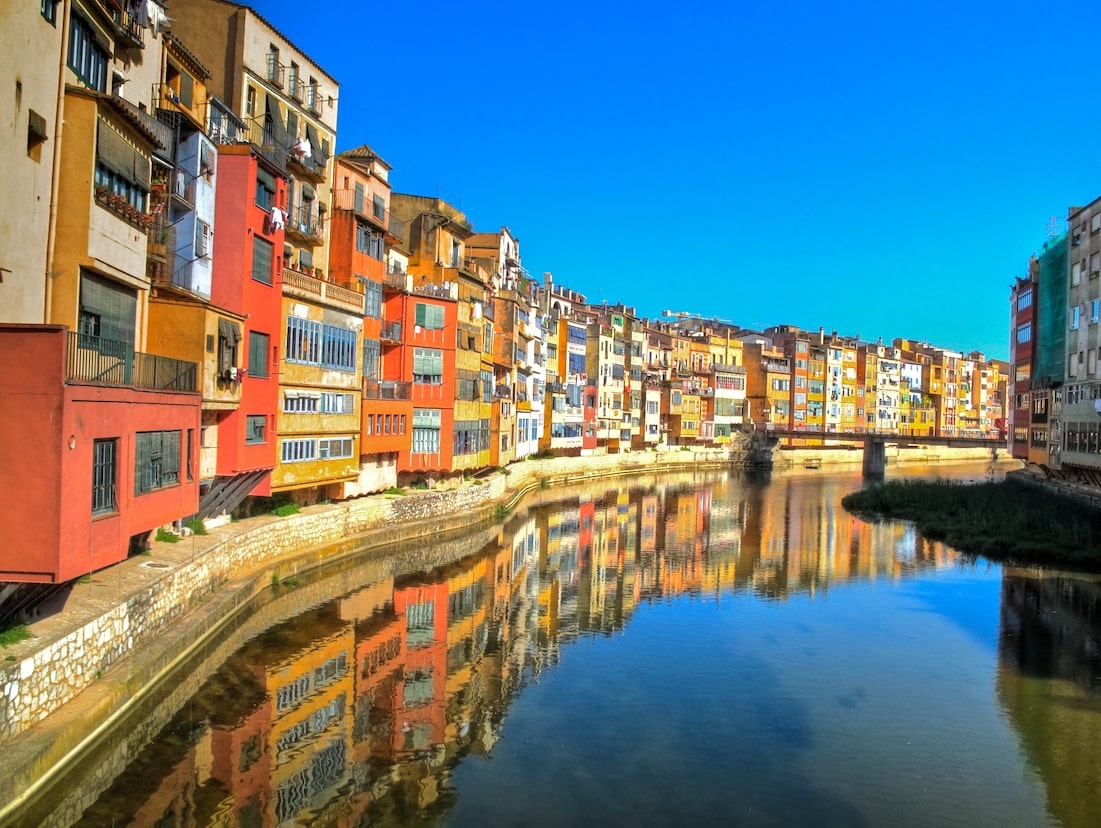
Girona is worth the detour when it is the day’s one cultural centerpiece, not a bonus stop squeezed between checkout and lunch. It is the strongest choice for travelers who want Catalonia to deepen between Barcelona and the coast. Girona gives you a different urban scale: river façades along the Onyar, the old city rising behind them, the Cathedral steps, the Jewish quarter’s tight lanes, and city-wall views that feel far from Barcelona’s broad Eixample grid.
Girona suits travelers who can enjoy walking with purpose. The reward is not a single monument checked off from the car. It is the way the city layers Roman, medieval, Jewish, ecclesiastical, and riverfront geography within a compact old center. That compactness is an advantage, but it is not effortless. The Barri Vell includes slopes, steps, stone paving, and narrow passages where a group naturally slows down. Older parents, guests with knee concerns, or families with restless children may enjoy Girona more on a dedicated private day than as a luggage-linked transfer stop.
The strongest Girona transfer plan is simple: leave Barcelona after a settled checkout, reach Girona for a focused guided walk, keep lunch nearby and unforced, then continue to the coast. Do not add Figueres, do not add a beach lunch, and do not pretend the city walls are a quick add-on for every traveler. If Dalí, Girona, Jewish heritage, and lunch all sound important, that belongs in a dedicated cultural arc such as Figueres and Girona from Barcelona, not in the narrow space of a hotel-to-hotel move.
A private guide changes Girona most when the visit is selective. Without guidance, many travelers treat the old city as a pretty maze and leave with photographs rather than understanding. With a guide, the Jewish quarter can be read as a lived urban fabric, not just a cluster of narrow lanes; the Cathedral approach can be paced so the climb is worth it; the Onyar crossings can become orientation points rather than backdrop. The guide’s value is not to make the stop bigger. It is to make the stop smaller and better.
The routing consequence is important. Girona pulls the day inland, while many Costa Brava hotels pull you back toward a specific coastal pocket. Depending on where you are staying, Girona may align beautifully or add a dogleg that feels heavier than expected. That is why Girona is not the default for every Costa Brava transfer, even though it is culturally richer than a casual coast lunch. The planner’s question should be: will Girona make the arrival day more meaningful, or will it make the first coastal evening shorter and more tired?
Girona is best for couples who enjoy history, small groups that can walk at the same pace, and families with older children who respond to walls, legends, and layered streets. It is weaker for celebration travelers who picture a long lunch, linen, sea air, and a soft landing at the hotel. It is also weaker when the group has already had a dense Barcelona morning. Cultural appetite is not unlimited; a Sagrada Família interior followed by Girona followed by a coast arrival is not elegant just because each piece is worthwhile.
For travelers who do want Girona as the main transfer-day chapter, a private Girona visit can be shaped around the exact onward hotel plan rather than treated as a standard day trip. That distinction matters. A day trip can afford a late return to Barcelona. A transfer stop has a different endpoint: a new hotel, new luggage delivery, and the mood of arrival.
When a coast-lunch stop is enough
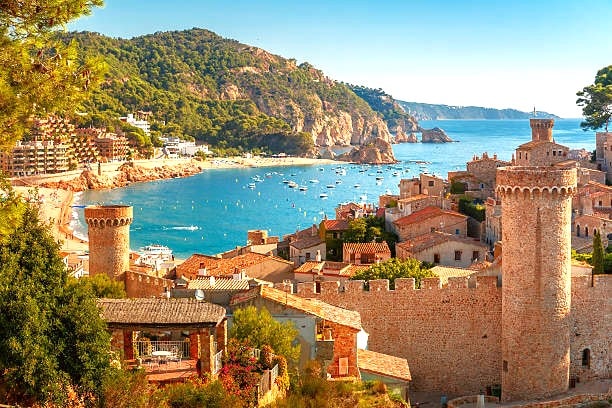
A coast-lunch stop is enough when the goal is to begin the Costa Brava gently rather than consume it before check-in. This is often the most satisfying choice for couples, celebration travelers, and food-and-wine travelers who already gave Barcelona the attention it deserved. The meal becomes the hinge between city and coast: one view, one table, one stretch of sea air, and then a calm continuation to the hotel.
The phrase “coast lunch” needs discipline. It should not mean chasing the prettiest village, the most famous beach, and the most elaborate menu in the same transfer. It means selecting a stop that fits the actual route to your hotel, the group’s energy, the parking and walking reality, and the meal style you want. A restaurant with a beautiful setting can still be the wrong choice if it requires awkward access, a long walk from the car, or a lunch that runs so late that arrival becomes compressed.
This is where primary-source checking matters without cluttering the day. For serious food travelers, an official menu (https://www.disfrutarbarcelona.com/en/menu) is useful when planning a Barcelona-based tasting-menu day, and the Michelin Guide’s Barcelona starred list (https://guide.michelin.com/us/en/catalunya/barcelona/restaurants/all-starred) is a useful reference for city dining context. But those sources do not mean a transfer day should become a fine-dining chase. A long tasting menu before a coastal drive can dominate the entire move. If the meal is the centerpiece, make it the centerpiece and reduce the rest. If the coast is the destination, lunch should support arrival, not steal it.
A coast-lunch stop works especially well when your Costa Brava hotel is not ready early, when the group wants a scenic pause but not a full tour, or when you are arriving for a romantic or celebratory stay and the first emotional note should be sea, not stone. It can also work for families if the stop is simple: easy parking, direct table, bathrooms, shade, and no fragile walk afterward. For older travelers, the right lunch stop can be more restorative than Girona because it reduces climbing and keeps the body in one comfortable rhythm.
The local consequence is that the Costa Brava is not one single coastline. Inland roads, coves, village access, and hotel approaches vary. A lunch that is ideal for one coastal base can be inefficient for another. The most elegant stop is rarely the one with the most dramatic detour; it is the one that feels inevitable on the way. When the stop asks you to overshoot your hotel, backtrack, or enter a tight old center at the wrong moment, the day starts to feel managed rather than graceful.
A coast-lunch transfer also changes the trip mood. Eixample plus direct transfer keeps the day tidy. Girona makes it intellectually textured. A coastal lunch makes the move feel like a threshold. Done well, everyone arrives with the sense that the holiday has changed tempo. Done poorly, the group reaches the hotel full, late, sun-worn, and slightly unsure why the expensive arrival property has become a place to sleep rather than enjoy.
The cut-first rule is simple: if you are choosing a coast lunch, cut the cultural stop first. Do not cut the hotel arrival buffer. Do not cut the time needed for luggage, check-in, and a first look at the property. The Costa Brava rewards unhurried arrival more than it rewards a transfer day filled with proof that you saw everything on the map.
What luggage and hotel timing change
Luggage and hotel timing turn this from a sightseeing question into a sequencing question. A beautiful plan can fail because bags are in the wrong place, the first hotel needs the room released, the second hotel cannot absorb a late arrival smoothly, or the group is stuck between lunch clothes, walking shoes, and coastal evening expectations.
The first constraint is checkout. Eixample hotel checkout is not just a time on paper; it determines when bags are collected, when the driver can load, when guests can use the lobby, and whether the morning feels composed. A late checkout can make an Eixample morning exceptionally easy. A strict checkout can make an ambitious Barcelona add-on feel clumsy. If the hotel is near Passeig de Gràcia, a final short route is easy. If the hotel is in the Gothic Quarter or El Born, pickup may require more walking, a less direct staging point, or a slightly less predictable exit.
The second constraint is the onward hotel. Some travelers imagine the arrival hotel as passive: a room waiting at the end. In practice, the first afternoon at a Costa Brava property often carries value. You may need time for room orientation, luggage delivery, beach access, pool timing, dinner location, or simply the psychological shift from city to coast. The more premium the hotel experience, the more costly it is to arrive late and tired.
The third constraint is bag confidence. With a private driver, luggage can remain with the vehicle when the stop is planned correctly, which is one reason a transfer stop can work well. But luggage confidence is not a license to wander freely. It affects where you can stop, how long the driver can wait, whether the car can remain accessible, and how much walking the group can comfortably do before returning to the vehicle. A narrow old-town route with a distant pickup point can become less attractive when the car is holding passports, formalwear, children’s items, or medication.
The fourth constraint is clothing and weather. Transfer days sit between identities. You are not fully in city-tour mode, but not yet in resort mode. Barcelona pavement, Girona stone, and coastal sun ask different things from shoes, layers, and stamina. A plan that looks charming in linen and loafers can feel punishing on a hot day if it adds Girona’s steps, a lunch terrace, and a late hotel arrival. In shoulder season, the same plan may work because the body is under less heat load.
Private touring earns its cost when it reduces these frictions: one pickup, luggage handled, a guide who understands where to compress the walk, a driver who knows the onward timing, and a planner who refuses the extra stop that would make the day look richer but feel worse. It does not earn its cost when the itinerary becomes a trophy chain. Paying more changes comfort, privacy, and precision; it does not make a rushed Girona plus coastal lunch plus hotel arrival feel like a slow day.
For guests who want the car to do more than transfer but less than overtake the day, a chauffeured Barcelona plan can be useful only when the stop selection is restrained. The driver is not the strategy. The strategy is choosing the one stop that makes the transfer better.
The three plans that usually work
The best transfer-day plans are shaped by what you refuse to add. A private Barcelona-to-Costa Brava move can be elegant in several ways, but each plan needs a boundary. Here are the three patterns that consistently make sense.
Plan A: Eixample morning, direct coast arrival
This is the smoothest plan for comfort-first visitors. Stay in Eixample after breakfast, keep bags at the hotel until the driver arrives, add one short guided or self-guided chapter, then drive directly to the Costa Brava. It works for families, older parents, travelers with dinner plans, and anyone staying at a coast hotel where the first afternoon matters. It is also the best choice after an intense previous day in Barcelona.
The advantage is emotional as much as logistical. The day has a beginning, middle, and arrival. You close Barcelona rather than reopening it. You reach the coast with enough time to unpack, walk, swim, or simply understand the property before dinner. The mood stays unforced.
Plan B: Barcelona checkout, Girona focus, coast arrival
This plan works when Girona is the reason for the detour. Leave Barcelona with bags loaded, stop in Girona for a focused walk, keep lunch modest or nearby, then continue onward. It suits culture-driven couples and small groups who prefer one strong historical chapter to a scenic meal. It is also a smart way to avoid turning Girona into a separate round-trip day from Barcelona.
The boundary is that Girona gets the day’s attention. Do not add Figueres unless the entire plan changes. Do not chase a long coast lunch afterward unless your hotel arrival is intentionally late and everyone accepts the tradeoff. Girona gives more when the visit is interpreted and selective, not when it is treated as a scenic errand.
Plan C: Barcelona checkout, coastal lunch, hotel arrival
This is the best plan for travelers who want the transfer to feel like the first act of the coast. Leave Barcelona without lingering too long, stop for one well-chosen meal, then arrive at the hotel before the day collapses. It suits couples, celebration travelers, and food-and-wine travelers who are not trying to prove cultural productivity on a travel day.
The boundary is lunch scale. A long formal meal can be wonderful, but then it becomes the day’s event. A lighter, scenic, well-timed lunch leaves more room for the hotel. The more complex the meal, the less you should ask of the rest of the transfer.
For travelers building the coast portion itself, Costa Brava private touring belongs after you have settled, not necessarily inside the transfer. A transfer stop can hint at the coast; it should not try to replace a properly paced coastal day.
When the transfer should be kept direct
Keep the transfer direct when the day’s hidden costs are already high. This is the recommendation many travelers resist because it seems to waste a private car. In reality, it often protects the part of the trip you paid most to enjoy: the first unhurried evening on the Costa Brava.
Go direct when the Barcelona morning already includes a timed interior, when checkout is early and the group is slow to move, when your coast hotel has a meaningful arrival experience, when you have dinner reserved, when anyone is managing mobility limits, or when children are likely to unravel after lunch. Also go direct when weather would make walking feel expensive. Heat, glare, and stone surfaces can turn Girona from delightful to draining. Sea air can help, but a beachside stop without shade, bathrooms, or easy pickup can become just as tiring.
Go direct when luggage anxiety is high. Multiple rooms, celebration clothing, medical items, children’s equipment, and shopping bags all increase the mental load of a transfer stop. A private driver reduces that load; it does not erase it. Some groups never fully relax while their belongings are in motion, even when they are secure. Those groups are happier reaching the new hotel first and touring later.
Go direct when the group is split. If one person wants Girona, another wants lunch by the sea, and someone else wants to arrive early, the compromise is not to do all three badly. The better answer is usually a direct transfer, followed by a tailored first coastal evening or a proper private day later. A transfer day should not become the place where every unresolved preference gets negotiated.
The firm editorial judgment: do not add both Girona and a coast-lunch stop unless the day is deliberately designed as a long, active transfer and everyone accepts a late, lighter arrival. For most private travelers, that is not the premium version of the day. It is the overpacked version with nicer upholstery.
How a private guide or driver should change the day
A private guide or driver should make the transfer more selective, not more crowded. The value is not in proving how much can be inserted between Barcelona and the Costa Brava. The value is in choosing the right hinge and then smoothing everything around it: hotel pickup, luggage, route, walking length, lunch pacing, and arrival time.
With Eixample, the guide’s job is to keep the Barcelona farewell compact and meaningful. That might mean reading the grid and Modernisme details without dragging the group across half the city. It might mean choosing one interior rather than three exteriors. It might mean telling the family that Park Güell belongs on another day because the hillside would distort the transfer. Those are planning judgments, not sales flourishes.
With Girona, the guide’s job is interpretation and compression. The city’s old quarter can feel like atmosphere without a guide; with the right guide, it becomes a coherent stop. The route can be shaped around the Cathedral approach, the Jewish quarter, the Onyar bridges, and a return path that does not make older travelers feel trapped uphill. The best guided Girona stop has a strong beginning and a clean exit.
With a coast-lunch stop, the planner’s job is restraint. Choose a meal that suits the route and the day’s energy. Check whether the restaurant’s own materials support the kind of meal you imagine. Confirm the official menu when the meal itself is central. Then protect the onward arrival. A private driver makes the transfer useful only if the stop selection is restrained; otherwise the car simply makes a crowded day more expensive.
That is the natural moment to involve Orange Donut Tours. The question is not “Can we stop?” but “Which one stop improves the transfer without stealing the coast?” For a transfer day shaped around your hotel, luggage, pace, and appetite, Inquire now.
How to choose between Eixample, Girona, and a coast-lunch stop
Choose by the first thing you want to feel when you reach the Costa Brava. If you want to feel composed, choose Eixample and a direct transfer. If you want to feel that the journey added cultural depth, choose Girona and keep the rest simple. If you want to feel the city fall away over a meal, choose a coastal lunch and protect hotel arrival.
The most reliable criteria are not attraction rankings. They are checkout timing, luggage volume, walking tolerance, hotel arrival value, lunch ambition, and whether the group has already had enough city density. A couple on a celebration trip may find a coast lunch more memorable than Girona because the meal sets up the evening. A family with teenagers may prefer Girona if the guide can make the old city vivid and the lunch short. Older parents may do best with Eixample and a direct transfer because fewer surfaces, fewer steps, and fewer resets preserve the day.
Barcelona-specific geography should keep you honest. Eixample is a good departure platform because the blocks and hotels are legible. The Gothic Quarter is atmospheric but less forgiving with a car and luggage. Barceloneta sounds aligned with a coastal transfer but can be a distracting urban beach edge when the actual coast is still ahead. Park Güell is beloved, but its hillside logistics are rarely the best last move before loading into a northbound transfer. Girona is compact but vertical enough to matter. The Costa Brava is beautiful but not friction-free; coves and villages can add access complexity.
Use one final test. If removing a stop makes the day feel calmer and does not meaningfully reduce the trip, remove it. If removing a stop makes the day lose its point, that stop is the centerpiece and everything else should shrink around it. That is the difference between a curated transfer and a crowded one.
FAQ
Is Girona worth stopping at between Barcelona and the Costa Brava?
Yes, Girona is worth stopping at when it is the day’s main cultural focus. It is not worth adding as a quick extra after a busy Barcelona morning or before a long coastal lunch, because its old city rewards walking, context, and time.
Should I stay in Eixample before leaving Barcelona for the Costa Brava?
Yes, Eixample is usually the easiest Barcelona area for a transfer morning. It works especially well when your hotel checkout, luggage loading, and pickup are near Passeig de Gràcia, Rambla de Catalunya, or the wider central grid.
Is a Costa Brava lunch stop better than Girona on transfer day?
A Costa Brava lunch stop is better when you want the day to shift gently into coast mode. Girona is better when cultural depth matters more than a relaxed meal. The wrong plan is usually trying to do both on the same transfer.
Can we visit Sagrada Família before transferring to the Costa Brava?
You can, but it should be treated as the one major Barcelona commitment before departure. Use the official Sagrada Família tickets (https://sagradafamilia.org/en/tickets-individuals) page for current ticket planning, and avoid pairing the visit with Girona or a long coastal lunch unless the day is intentionally ambitious.
Should we add Park Güell before the Costa Brava transfer?
Usually not. Park Güell can be wonderful on the right Barcelona day, but its hillside setting and timed-entry planning often make it a poor final stop before luggage, a driver, and a northbound transfer. Check official Park Güell tickets (https://parkguell.barcelona/en/buy-tickets) if it remains a priority.
When should the Barcelona to Costa Brava transfer be direct?
Keep it direct when the group is tired, luggage is complicated, the coast hotel arrival matters, you have dinner plans, or you are traveling with children or older parents. A direct transfer can be the most comfortable and polished choice.
Does a private driver make it easy to add both Girona and a coastal lunch?
A private driver makes luggage, pickup, and route timing easier, but it does not make an overfilled day feel restful. Adding both Girona and a coastal lunch only works for active travelers who accept a late or compressed hotel arrival.
How many internal stops should a Barcelona-to-Costa Brava transfer day include?
One meaningful stop is the right limit for most discerning travelers. Choose Eixample before departure, Girona, or a coastal lunch, then let the Costa Brava arrival have enough space to feel like the start of the next stay.
If you’re interested in any private tours of Barcelona, please reach out to us.











 So if you are looking for the absolute best in Barcelona & surroundings with authentic local fully-licensed native guides whose English you can actually understand and with an exclusive and amazingly fun itinerary