Barcelona for Design Buyers After the Museums: Eixample, El Born and Shipping Time in One Smarter Route

Updated
Lead with Eixample, not El Born, when the afternoon is for design buying after a museum morning. In Barcelona, that order works because the Eixample design-and-architecture corridor lets you move from architectural context to serious objects before old-town lanes, taxi resets and delivery decisions start draining attention. The clearest exception is a traveler whose purchases will be light and whose real goal is atmosphere; then El Born can become the late browse, not the procurement engine. The thesis is simple: a serious Barcelona design route should treat Passeig de Gràcia as orientation, Eixample as the buying base, El Born as the mood finish, and shipping time as an appointment rather than an afterthought.
The small local hinge is the drop from the clean Eixample grid toward Plaça de Catalunya, Urquinaona and Via Laietana. It looks short on a map, but the day changes character there: wider blocks and easier vehicle logic give way to narrower streets, more pedestrian hesitation, more shop-to-shop improvisation and a slower return to the hotel. That is why a design-buying afternoon should not begin in El Born just because it feels more charming. Charm is useful later. Buying needs sequence.
This guide solves one planning question only: how to build one smarter Barcelona design-buying route after museums without turning the day into a boutique listicle or a citywide hunt. It is for travelers who have already given the morning to art, architecture or a major interior and now need a plan that respects attention, walking load, object decisions, hotel logistics and the evening. For a fully tailored route with sourcing, pacing and guide-led context, Orange Donut Tours can shape the day through Barcelona shopping private tours, but the planning logic below stands on its own.
The ranked ladder: what controls a design-buying route after museums
The right route is not the route with the most shops; it is the route that protects decision quality after the museum has already spent part of the day. Use this ladder before adding any stop, neighborhood or lunch detour.
- First priority: Eixample while attention is still sharp. If you are choosing furniture, lighting, ceramics, objects, fashion with architectural relevance or pieces that may need shipping, begin in the Eixample design-and-architecture corridor rather than below Plaça de Catalunya.
- Second priority: one museum, not museum accumulation. A design-buying day should not include a major museum when the visit would leave only the tired part of the afternoon for decisions, measurements, delivery questions and tax paperwork.
- Third priority: shipping time before the last browse. Any item larger than a carry-on decision needs a pause for packaging, delivery address, concierge coordination or store follow-up. That time belongs in the route, not after dinner.
- Fourth priority: El Born after the functional work is done. El Born is excellent later in the day when you want texture, smaller finds and a transition toward dinner, but it is a poor first base for buyers who need a controlled arc.
- Fifth priority: a calm evening exit. The last stop should make dinner or a hotel return easier, not prettier on paper. A buying route that ends with everyone carrying bags across old-town lanes has already lost its advantage.
The counterintuitive correction is that Passeig de Gràcia is overvalued as the whole answer. It is the city’s most useful design orientation corridor, especially for Modernisme context, but it should not become the entire shopping day unless your goal is branded browsing rather than buying with judgment. In a route shaped for design buyers, Passeig de Gràcia introduces proportion, façades, materials and the rhythm of the city; the buying logic usually spreads into the surrounding Eixample blocks, then only later drops toward El Born.
1. When Eixample should lead after a museum morning
Eixample should lead when the purchases are consequential, the group is already museum-tired, or the day needs architecture to make the shopping feel intelligent rather than transactional. This is especially true after a morning at a Gaudí interior, a focused Modernisme route, a Picasso-heavy art visit or a Montjuïc museum that has already asked for attention and walking.
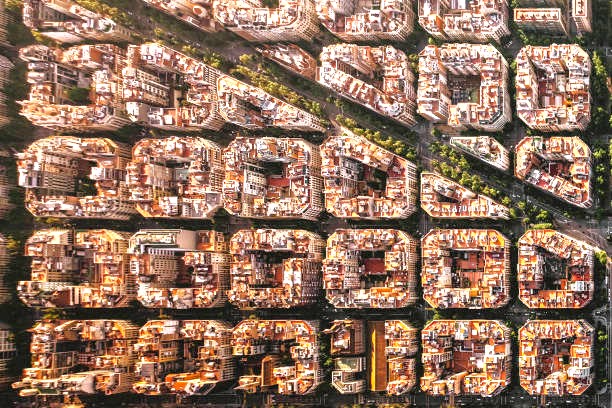
The value of Eixample is not only elegance; it is control. The grid gives travelers wider pavements, clearer blocks, easier meet-up points and a less frantic sense of progression than the old city. A private guide can move you through architectural context around Passeig de Gràcia, Carrer de Mallorca, Carrer de Provença and the upper edges near Diagonal before the route turns to materials, studios, design showrooms or object-led browsing. This is where Eixample private tour planning overlaps naturally with design buying: the architecture explains why the objects feel Barcelona-specific, rather than leaving each purchase to stand alone.
For buyers, the first hour after the museum is the hour to make the hard choices. That is when you still remember what moved you in the galleries or interiors, and before the day becomes a blur of bags, receipts, street crossings and lunch decisions. If you start in El Born at this point, the route often drifts. One person wants ceramics, another wants fashion, another wants coffee, and suddenly the group is improvising through lanes near Santa Caterina or Carrer de la Princesa before anyone has solved the big buying question.
Eixample also has a better relationship with hotel logistics. Many luxury hotels and apartment-style stays are either in Eixample, near Passeig de Gràcia, around Rambla de Catalunya, or close enough that a short return can be built into the plan. That matters when a traveler needs to drop a coat, retrieve measurements, check a luggage allowance, call a concierge, or avoid carrying purchases into the evening. A shopping day that ignores the hotel is not more spontaneous; it is simply moving the inconvenience later.
The firm editorial call: if the route has one serious buying window, spend it in Eixample first. El Born can still have a role, but it should not receive the best decision energy unless your purchases are small and your priority is atmosphere over selection.
2. How Passeig de Gràcia helps, and where it stops helping
Passeig de Gràcia works best as a design spine, not as a complete procurement plan. It gives the day a Barcelona-specific frame: Casa Batlló, Casa Milà, the chamfered corners of Eixample, the scale of the avenue, and the immediate contrast between high-visibility façades and quieter side streets. That frame is useful before shopping because it gives travelers a vocabulary for proportion, craft, surface, light and ornament.
The mistake is letting the famous boulevard consume the whole route. It can make the day feel polished, but a buyer route has to go beyond recognition. If the group only moves up and down the avenue, the day risks becoming a sequence of obvious windows with little time for deeper comparison, object handling or delivery questions. The glamorous base complicates the trip when it encourages backtracking: up to Diagonal, down toward Plaça de Catalunya, sideways for a lunch, then back again because someone remembers a piece seen earlier.
Use Passeig de Gràcia for three jobs. First, let it calibrate the eye after the museum. Second, use it to decide whether the group wants Modernisme context, contemporary design, decorative objects, fashion or home pieces. Third, let it anchor the route before you step into narrower or less predictable streets. Once those jobs are done, move on. Travelers comparing Passeig de Gràcia, El Born and Gràcia as broad shopping moods can read the broader Barcelona design-and-shopping guide; this article is narrower because it is about buyers after museums, not a general neighborhood choice.
There is also a comfort consequence. The avenue’s width can make the day feel easy, but the blocks are long enough that a casual “let’s just pop back” becomes expensive in energy. The city does not punish you with steep hills here; it punishes you with repetition. Long Eixample blocks, repeated crossings, warm pavement, traffic noise and the mental drag of deciding while walking can flatten the afternoon. A good route reduces repeated movement, not just total distance.
Premium spend changes the experience when it buys better guidance, a calmer vehicle transfer at the right hinge, or a route that screens options before the group arrives. Premium spend does not earn its cost when it merely adds more stops to the same poorly ordered day. Buying more does not fix poor route order or neglected shipping time.
3. When El Born belongs later, not first
El Born belongs later when the route has already handled the serious buying decisions and the group wants texture, smaller-scale discovery and a graceful transition toward the evening. It is not a demotion. It is a better use of the neighborhood.
The area around Santa Maria del Mar, Passeig del Born, Carrer de la Princesa and the lanes toward the Picasso Museum has the right mood for the late part of the day. The streets narrow, the pace changes, and the design conversation becomes less about comparing large pieces and more about taste, stories, gifts, accessories, small objects or a final browse before dinner. For couples and celebration travelers, that shift can be exactly right: the day starts with architecture and decisions, then ends with atmosphere.
The reason not to lead with El Born is practical. Getting from Eixample into El Born usually means crossing the psychological boundary of Plaça de Catalunya or Urquinaona and then working across Via Laietana. Once below that line, the route becomes more pedestrian and less forgiving of second thoughts. If someone wants to return to an Eixample piece, check a measurement at the hotel, or arrange a pickup, the move back uphill into the grid can drain the remaining afternoon. It is not a dramatic journey, but it is enough to turn a refined plan into a staggered one.
El Born also intensifies split attention. The same details that make it appealing, including intimate lanes, historic stone, independent-feeling fronts and the pull of cafés, make it harder for a group to hold a buying brief. Families start separating. Friends pause at different windows. One traveler wants a church stop, another wants a leather or object stop, another wants a drink. That mood is pleasant when the main buying is done. It is costly when the main buying has not begun.
Use El Born later if the group is still curious but no longer wants to compare major pieces. Use it first only when the museum morning was very light, the hotel is already close to the old city, or the day is intentionally about atmosphere and small finds. If the trip includes older parents, children, or anyone who dislikes narrow-street crowding, build a short El Born edit rather than a long wander. A good finish there can feel like Barcelona; an overextended one can make the city feel smaller, hotter and more tiring than it needs to.
4. The museum to cut is the one that steals decision energy
Cut the museum that leaves your buying window too late, too hot, too hungry or too dependent on a perfect transfer. This is the planning move that separates a buyer route from a sightseeing route with shopping attached.
Barcelona makes over-planning tempting because art, architecture and design sit close enough to seem combinable. A traveler sees Sagrada Família, Casa Batlló, La Pedrera, the Picasso Museum, Miró, MNAC, Palau de la Música and El Born on the same map and assumes the day can carry one more cultural stop. The problem is not only time. The problem is the quality of attention left after the visit. Design buying is not passive looking; it asks for comparison, touch, proportion, budget comfort, delivery thinking and sometimes the confidence to walk away.
A design-buying day should not include a major museum when that museum pushes the first real buying conversation into the weakest part of the afternoon. If a morning museum is already fixed, do not add a second major museum before Eixample. If a Gaudí interior has a timed entry, check official planning pages such as Sagrada Família official tickets (https://sagradafamilia.org/en/tickets-individuals) or Park Güell official tickets (https://parkguell.barcelona/en/buy-tickets) before assuming the rest of the day is open. Treat those windows as route architecture, not as isolated reservations.
The cut-first rule is clear: remove the second museum before you remove shipping time, hotel-return logic or the Eixample buying window. If the group is art-driven and the museum is the point of the day, keep the museum and downgrade the buying route to a short El Born browse. If the group is buying-driven, keep one cultural anchor and protect the afternoon. The regret usually comes not from skipping one more gallery, but from realizing at 5:30 that the piece everyone loved needs measurements, shipping details or a return visit that the route no longer allows.
For travelers building a separate museum day, the better move is to give art its own structure. The Barcelona art-day pacing guide is useful when the central question is Picasso, Miró or Montjuïc. This route is different: it accepts that the museum has already happened and asks what a buyer should do next.
5. Shipping time is the hidden appointment
Shipping time should be planned before the route reaches its most atmospheric stretch. If it is left to the end, it steals the evening, creates hotel friction or turns an elegant purchase into a string of messages after the trip.
For a design buyer, “shipping” is broader than international freight. It can mean arranging a local delivery to the hotel, asking whether packaging will survive onward travel, confirming dimensions, photographing the item and label, getting the correct receipt, deciding whether the hotel can receive or hold a package, or clarifying whether a piece needs follow-up after the traveler leaves Spain. None of those tasks is glamorous, and all of them become worse when handled in a doorway while the rest of the group waits.
The most sensible place for this work is after the primary Eixample buying window and before the route drops fully into El Born. That may mean a seated pause, a hotel return, a store-arranged call, or a guide-coordinated handoff. The route should make room for it in plain sight. If you buy first, browse later and dine after that, the day feels coherent. If you browse first, buy late and solve shipping after dinner, the trip begins to feel like administration.
The hotel matters more than travelers expect. A stay near Passeig de Gràcia or Rambla de Catalunya can absorb a short return without breaking the day. A stay deep in the Gothic Quarter or by the beach changes the calculation because every return has more friction. If you are staying in Barceloneta, for example, adding a hotel drop between Eixample and El Born may turn the day into a triangle. If you are staying near the Gothic Quarter, El Born may be an easier finish but a worse start. The route should follow the logistics of the purchase, not only the beauty of the neighborhood.
There is a mood consequence too. When shipping is solved before the old-town finish, El Born feels like reward: a glass of wine, a final small object, a church façade, a dinner approach. When shipping is unsolved, the same lanes feel like delay. The group is technically still in a beautiful part of Barcelona, but everyone is half-thinking about closing times, receipts, messages or whether the hotel concierge understood the request. That is how a day that looked abundant starts to feel cluttered.
How to avoid shopping-day sprawl in Barcelona
Avoid shopping-day sprawl by choosing one buying base, one mood finish and one logistics pause. Do not add Gràcia, Barceloneta, Montjuïc or a second old-town loop unless they solve a specific problem the route cannot solve already.
Sprawl often begins with a harmless phrase: “Since we are already nearby.” In Barcelona, nearby is deceptive. Eixample to El Born is reasonable. Eixample to El Born to Gràcia to a beach dinner is not a design-buying route; it is a citywide zigzag with bags. Montjuïc after an Eixample buying window can work only if the museum or view is the day’s reason, not an add-on. Barceloneta can be a lovely later reset, but it pulls the day away from the hotel logic that buyers often need.
The city does specific things to the body. Eixample asks for block-scale walking and sun exposure on broad pavements. El Born asks for slower footwork, more turns and more attention to uneven old-town surfaces. The move across Via Laietana or around Urquinaona can feel more tiring late in the day than it looks at breakfast. In warmer months, the heat load is less about one heroic climb than about repeated standing, crossing and deciding without a proper pause. That is why the route should create one meaningful rest before the old-town finish.
Sprawl also changes the mood of the trip. A well-ordered route makes Barcelona feel generous because each neighborhood has a role: Eixample gives structure, Passeig de Gràcia gives context, El Born gives evening texture. A sprawling route makes the city feel oddly inefficient. The group remembers the transfers more than the objects, and dinner becomes recovery instead of pleasure. For celebration travelers, that is the hidden cost: the day may still be full, but the evening loses lift.
Here is the practical filter. If a stop does not improve selection, context, comfort, shipping, a hotel return or the dinner approach, cut it. Do not keep it because it is famous, nearby, or liked by someone on social media. This article is deliberately not a list of boutiques because store lists age quickly and can mislead travelers into chasing names instead of building the right arc. The better question is not “Which shop should I add?” It is “What does this stop do to the route?”
A smarter route in three buyer modes
The same Eixample-to-El Born logic can flex by buyer seriousness. Choose the mode before the day begins, because the wrong mode creates the wrong expectations.
The serious buyer mode
Use this when the traveler may purchase objects, home pieces, art-adjacent design, lighting, ceramics, textiles or fashion that requires comparison or shipping. Keep the museum morning focused and contained. Move into Eixample while attention is still clear. Use Passeig de Gràcia and nearby Modernisme context to sharpen the eye, then give the main buying window enough space to breathe. Build in a logistics pause before the old-city drop. End in El Born only if the major decisions are finished.
This mode suits couples furnishing a home, design professionals on a sourcing trip, celebration travelers buying a meaningful object, or families who want one substantial purchase rather than a suitcase of small things. It does not suit travelers who want to collect impressions from every atmospheric street. It asks for restraint, but it creates the cleanest outcome.
The museum-led mode
Use this when the morning’s museum or Gaudí interior is the emotional center of the day. Keep Eixample shorter and more interpretive. Let the design buying become selective rather than comprehensive. The route might include one or two targeted stops, a coffee or lunch pause, then an El Born finish if the group still has energy. The key is honesty: if the museum is the priority, the buying route cannot also behave like a serious sourcing afternoon.
This mode suits art-first travelers, second-time visitors who care more about context than acquisition, and groups with mixed interest. It is also the right mode after a demanding Montjuïc morning, because the transfer back into the center already asks for patience. Trying to force a major buying arc after a long museum visit is how the day becomes impressive in theory and thin in memory.
The atmosphere-first mode
Use this when purchases will be small and the evening matters more than selection. You may still begin with a short Eixample orientation, but El Born can carry more of the day. The route becomes less about procurement and more about taste, old-town texture, small objects, aperitif timing and dinner proximity. Shipping time is minimal because the purchases are carryable, but a hotel-drop decision still matters if the group dislikes carrying bags into dinner.
This mode suits travelers who have already shopped seriously elsewhere, couples who want a stylish but low-pressure afternoon, and guests who prefer sensory variety to deep comparison. It is the least efficient mode for buyers, but it may be the most enjoyable mode for non-buyers. The mistake is pretending it is both. If you choose atmosphere-first, enjoy it as atmosphere-first.
Where a private guide changes the outcome
A private guide changes this route most when design browsing needs to become a curated sequence with architecture context, not when the traveler simply wants someone to point at shops. The value is in editing, pacing, translation of taste, and knowing when to stop.
In Eixample, a guide can make the architecture do real work. Instead of treating Casa Batlló, La Pedrera and Passeig de Gràcia as postcard scenery, the route can use them to explain Barcelona’s relationship to craft, patronage, surfaces, ironwork, tile, light and domestic ambition. That context helps buyers understand why a piece feels local, why another feels generic, and why not every attractive object deserves a place in the suitcase or home.
A guide also helps protect the group dynamic. In small groups, design buying can become delicate because taste, budget and patience differ. One traveler may want to compare quietly; another may want stories; a teenager may tolerate one buying window but not four; an older parent may need a seated pause before Via Laietana. Good guiding turns those differences into a route rather than a negotiation on the pavement.
The practical upgrade is not excess access. It is fewer wrong turns, fewer repeated blocks, better timing around the museum, a cleaner bridge into El Born, and shipping decisions handled before the day becomes an evening problem. That is why this route is well suited to tailor-made Barcelona private tours: the best version depends on what you buy, where you stay, how much museum time you have already used, and how you want the night to feel.
If the afternoon should become a guided design-buying route with architecture context, a hotel-aware pause and an El Born finish that does not run too late, Inquire now.
How to place dinner after a design-buying route
Dinner should sit after the logistics pause, not after an unresolved buying errand. This is especially important for food-and-wine travelers who have chosen a serious reservation or a longer tasting experience.
The best dinner plan depends on where the route ends. If the final mood is El Born, keep dinner within an easy old-town or nearby Eixample return so the group does not need to cross the city after carrying purchases. If the route ends near Passeig de Gràcia because shipping or a hotel return takes longer than expected, do not force an El Born finish just to honor the original map. The correct ending is the one that leaves people composed at the table.
When dinner is a major part of the trip, read the restaurant’s official menu (https://www.disfrutarbarcelona.com/en/menu) or booking materials before building an overloaded shopping afternoon. The point is not to turn this guide into a dining article; it is to remember that a demanding dinner deserves guests who have not spent the last hour solving delivery details by phone. In Barcelona, a late dinner can rescue a light day, but it rarely rescues a badly ordered buying day.
FAQ
Should Eixample or El Born come first for design shopping after a museum?
Eixample should usually come first if the day involves serious buying, comparison or shipping. El Born works better later, once the main decisions are complete and the group wants atmosphere, small finds and a smoother approach to dinner.
Is Passeig de Gràcia enough for a Barcelona design-buying day?
Passeig de Gràcia is enough for orientation and high-visibility browsing, but it is rarely enough for a full buyer route. Use it to frame the eye, then let the surrounding Eixample blocks and a later El Born finish carry the more useful sequence.
When should a design-buying day cut a museum?
Cut a museum when it pushes the first real buying window too late or leaves no time for shipping, hotel-return planning or a calm dinner. Keep one strong cultural anchor, then protect the afternoon for decisions.
Can El Born be the main design-shopping neighborhood?
El Born can be the main neighborhood when purchases are small and the goal is atmosphere. It is weaker as the first base for serious buyers because narrow streets, split attention and harder return logistics make comparison and shipping decisions more awkward.
How much time should be left for shipping or hotel logistics?
Leave a visible pause before the final browse. The exact length depends on the item, store process and hotel arrangement, but the important rule is to solve shipping before dinner rather than treating it as an afterthought.
Is a chauffeured route necessary for this shopping day?
A chauffeur can help at the route hinges, especially between a museum, Eixample, the hotel and El Born, but it does not replace good order. Poor sequencing with a car still wastes energy; a focused route with the right pauses usually matters more.
What should families or mixed-interest groups do differently?
Families and mixed-interest groups should shorten the buying window, add one seated pause, and keep El Born as a compact finish rather than a long wander. The route works best when non-buyers know when the decisions end.
What is the biggest mistake design buyers make in Barcelona?
The biggest mistake is treating Barcelona design shopping as a list of boutiques instead of a route with museum fatigue, Eixample scale, El Born mood and shipping time built in. The order matters more than the number of stops.
If you’re interested in any private tours of Barcelona, please reach out to us.









 So if you are looking for the absolute best in Barcelona & surroundings with authentic local fully-licensed native guides whose English you can actually understand and with an exclusive and amazingly fun itinerary













