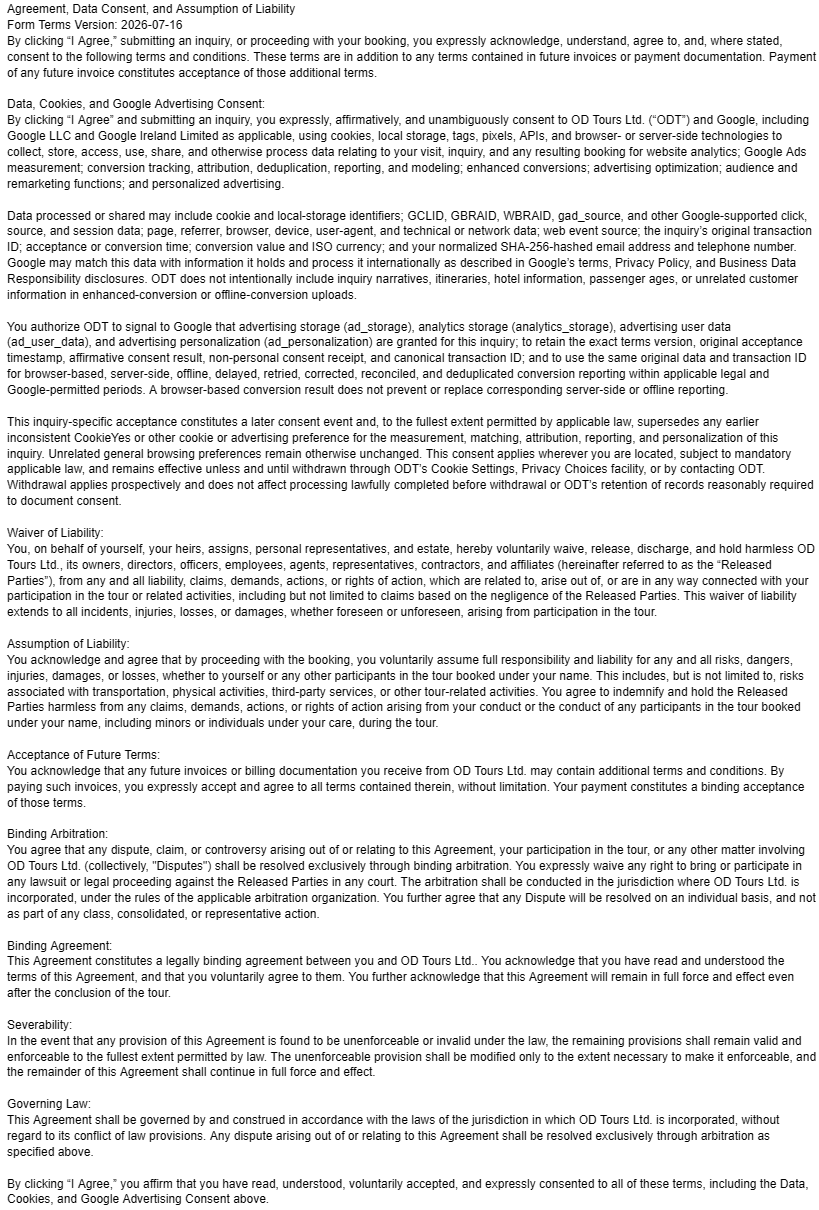
Barcelona Before a Late Train: Sants Luggage, Eixample Timing and One Last Gaudí Interior

Updated
The best final move before a late train from Barcelona Sants is not a last full sightseeing loop; it is one controlled Eixample choice: a timed Gaudí interior, a slow lunch with a short Passeig de Gràcia walk, or a direct station-side reset. Sants station timing should set the day because Sants sits west of the sightseeing core, while Sagrada Família and Casa Batlló depend on timed entry, luggage handoffs, and the Eixample to Sants departure window rather than on wish-list importance. The clearest exception is simple: if luggage cannot stay safely at your hotel, with your driver, or in confirmed storage, do not book one last Gaudí interior before the train.
In Barcelona, departure day is less about adding Gaudí and more about choosing the one building whose entry time, exit route, and station buffer will not make the city feel larger than it is. A counterintuitive correction belongs here early: the Gothic Quarter and Barceloneta can be worse final-day bases than a calmer Eixample hotel, even if they feel more atmospheric, because they add an east-west reset before you ever face Sants.
Can you visit one last Gaudí interior before a late train from Sants?
Yes, one last Gaudí interior can work before a late train from Sants when the day is built backward from the station rather than forward from the attraction list. The winning plan is narrow: keep luggage handled before the visit, choose an Eixample stop that does not require a second cross-city move, and leave enough margin for the station transition itself. This is why Casa Batlló often beats a more ambitious Gaudí pairing on a rail day, and why Sagrada Família belongs only when its timed entry sits comfortably inside the morning or early afternoon.
- Choose one interior if your base is central Eixample. Around Passeig de Gràcia, Rambla de Catalunya, Pau Claris, Mallorca, Provença, or Aragó, Casa Batlló can sit naturally between checkout, a composed lunch, and the move to Sants. Sagrada Família can also work from the eastern Eixample, but only if the ticket time is early enough that the exit does not become a countdown.
- Choose lunch and a walk if the luggage plan is imperfect. A good last lunch near Enric Granados, Rambla de Catalunya, or the lower Eixample is more satisfying than spending the day returning to the wrong hotel, hunting for storage, or checking phones while standing in a timed-entry queue.
- Skip the interior if your morning already contains a transfer reset. A family leaving from Barceloneta, a couple staying deep in the Gothic Quarter, or a small group split between two hotels should not pretend the day begins at the attraction door. It begins when bags leave the room and everyone is actually moving in the same direction.
The rail-day mistake is treating a late train as a bonus vacation day. It is not. It is a travel day with a usable cultural window. The question is not “what can we still see?” but “what can we see without turning the final hours into storage, traffic, and platform anxiety?” If you want a fuller Gaudí sequence on a non-departure day, the logic changes; that is where a broader private Gaudí day in Barcelona without queue burnout is a better planning frame.
Why Sants station timing should choose the final stop
Sants should choose the final stop because it is the fixed piece of the day. Timed entries can sometimes move, lunch can move, and a walk can shrink; the train will not adjust itself because a visit ran long. Barcelona Sants is not tucked into the Gothic Quarter or beside the main Gaudí houses. It sits west of the Eixample’s most visited Modernisme spine, which means that even a simple final morning has a directional logic: east for Sagrada Família, central for Casa Batlló, west for Sants.
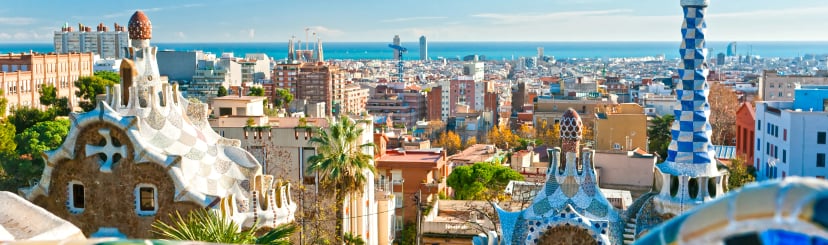
This matters more than many first-time visitors expect. From the Eixample, the city can look comfortably gridded and almost effortless, especially around the chamfered corners of the Cerdà plan. But the grid hides long block-scale walking, wide crossings, and a habit of making “just a few blocks” feel longer when one person is pulling a case, another is looking for a taxi, and a third is trying to preserve a timed entry on a phone. The final stop should reduce those little frictions, not multiply them.
Think of the day as three doors, not one attraction. The first door is the place where luggage leaves your control or returns to it. The second is the entrance to the final experience. The third is the station door at Sants, often approached from a busy urban edge rather than from a quiet hotel forecourt. If those three doors line up along the same broad route, the day feels controlled. If they zigzag between Old Town, Eixample, and Sants, the final hours become a series of resets.
A station buffer is not just minutes on a map. It includes collecting bags, loading them, navigating drop-off points, entering Sants, reading the departure information, finding the platform area, handling restrooms or water, and absorbing the small human delays that appear when people are tired. Couples can sometimes move quickly through this. Multigenerational families and small groups cannot. The more people and bags involved, the more the last stop needs to be simple, central, and already aimed toward Sants.
This is also where premium planning earns its keep. Paying for a private guide does not make Barcelona smaller; it makes the sequence cleaner. A good guide can keep the explanation focused, end the visit in the correct direction, and prevent the last hour from being swallowed by “one more façade.” A driver can remove the taxi hunt and hold luggage when arranged in advance. But both only help when the route respects the train. When the route ignores Sants, a higher spend only makes the mistake more polished.
Which Eixample bases make a last Gaudí interior practical?
The most practical Eixample bases for a last Gaudí interior are the ones that keep the morning between the hotel, the chosen building, and the westward move to Sants. The best zone for Casa Batlló is around Passeig de Gràcia, Rambla de Catalunya, Pau Claris, and the nearby streets of Mallorca, Provença, Consell de Cent, Aragó, and Diputació. From there, the final plan can be compact: checkout, luggage handoff, interior visit, lunch or coffee, collect bags if needed, then Sants.
Casa Batlló’s location on Passeig de Gràcia is the reason it often performs so well on departure day. It does not ask you to climb into a hillside, cross into the beach districts, or enter the tighter medieval lanes before returning west. Its practical value is not that it is “better” than Sagrada Família; it is that it can sit cleanly inside an Eixample morning without turning the station into an afterthought. For travelers already staying along the Passeig de Gràcia corridor, this can be the most elegant final cultural stop in the city.
Sagrada Família is a different case. It is also in the Eixample, but it is east of the most hotel-heavy luxury spine and has its own gravity. If your hotel is around Avinguda Diagonal near the basilica, or in the eastern Eixample with easy access to Carrer de Mallorca and Carrer de Provença, the visit can work beautifully. If your hotel is near the Gothic Quarter, the beach, or the far western Eixample, Sagrada Família becomes less of a “last stop” and more of a distinct excursion that still has to be followed by a westward departure.
The lower or western Eixample can also work, but for a different reason. Around Avinguda de Roma, Josep Tarradellas, or the streets that already lean toward Sants, the station move becomes easier, while the Gaudí interior becomes the part that needs discipline. This is a good base for travelers who prefer a lunch-and-walk finale, a design-focused Eixample stroll, or a short Modernisme exterior route rather than a timed entry that pulls the group east.
The bases to treat carefully are the ones that feel wonderful at night but awkward with a train clock: deep Gothic Quarter lanes, Barceloneta, and upper Gràcia. The old town can add taxi-access complications and pavement fatigue. Barceloneta adds a beach-to-city-to-station angle that is often more romantic in theory than useful with luggage. Gràcia has character, but the final rail-day route can feel like it starts one neighborhood too far north unless the train is genuinely late and the luggage is already solved. For the larger hotel-base question, see where to stay in Barcelona for a tailor-made first visit.
For a private route that stays inside the grid rather than widening into a full city day, an Eixample private tour can be shaped around façades, interior context, design stops, and a final lunch without forcing the guide to sprint the group across town. That is the difference between using the Eixample as a coherent final chapter and treating it as a shortcut between luggage problems.
Sagrada Família or Casa Batlló before Sants: which interior belongs in the window?
Casa Batlló is usually the smarter final interior before Sants when the departure window is limited, while Sagrada Família is the stronger choice only when its timed entry is comfortably early and the route is already aimed around it. This is an editorial judgment about rail-day fit, not a ranking of Gaudí. On a normal sightseeing day, Sagrada Família may deserve the deeper visit. On a rail day, Casa Batlló often behaves better.
The reason is exit control. Casa Batlló sits on a boulevard where the next move is legible: step out, walk briefly, eat nearby, return to a nearby hotel or meet a driver, then go west. Sagrada Família has a larger emotional and physical footprint. The basilica can absorb attention, slow people down, and make the group less willing to leave at the exact moment the train clock asks them to. If it is the final great interior of the trip, it deserves mental space, not a platform countdown.
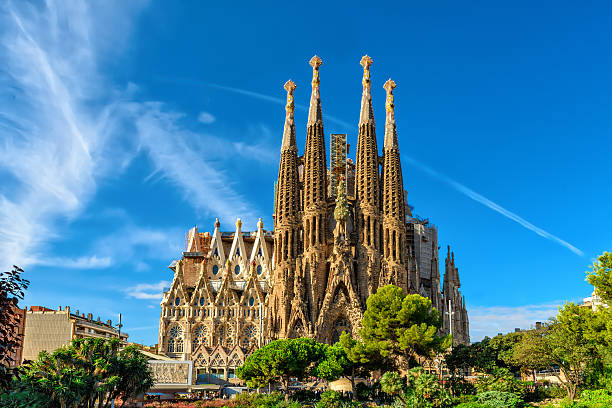
Sagrada Família still has a clear place before a late train when three conditions align. First, the group has secured the correct timed entry through Sagrada Família official tickets (https://sagradafamilia.org/en/tickets-individuals) or through a properly arranged guided visit. Second, luggage is not returning the group to a distant neighborhood. Third, the visit ends early enough that lunch, transfer, and Sants buffer all remain calm. When those conditions are present, a Sagrada Família private tour can be a strong final act because the guide can keep the visit focused on meaning rather than letting the route sprawl.
Casa Batlló is the better last stop when you want a polished interior experience without making the day feel heavy. It is especially sensible for couples, design-minded travelers, and families who have already seen Sagrada Família earlier in the trip. It also suits celebration travelers who want the morning to feel complete without arriving in the next city tired, hungry, or faintly resentful. The practical win is that the visit can be paired with a refined Eixample lunch and a short walk instead of requiring a second major cultural destination.
Do not try to pair Sagrada Família and Casa Batlló on the same late-train day unless the train is very late, everyone is fresh, luggage is fully controlled, and you are comfortable sacrificing the lingering lunch. Even then, the plan often feels like a compressed version of the day you should have done earlier. The final day is where travelers should cut the second interior first. Two timed Gaudí visits before Sants create the illusion of efficiency while removing the part of Barcelona that makes the ending satisfying: time to absorb, eat, and leave cleanly.
How luggage storage changes the Barcelona rail-day choice
Luggage storage changes the answer because the final stop must be chosen around the bag handoff, not only around the attraction entrance. A last Gaudí interior is practical when bags are already settled in the same directional flow as the visit and the station. It becomes fragile when the group has to return to a hotel in the wrong neighborhood, gamble on unconfirmed storage, or carry bags into a day that requires timed entry and standing.
The easiest case is an Eixample hotel that will hold luggage after checkout. If the hotel is near Passeig de Gràcia or Rambla de Catalunya, Casa Batlló becomes straightforward: leave bags, visit, lunch, collect, depart. If the hotel is closer to Sagrada Família, the basilica can work with a morning ticket and a direct departure afterward. The key is not whether the hotel is five-star; it is whether it sits in the same movement pattern as the final plan.
The second easy case is a confirmed driver-held luggage plan. This can make Sagrada Família much more comfortable, because the group is not returning to the hotel and is not dragging the day back through reception. It also helps families and small groups who do not want the last hour to depend on finding multiple taxis. But the driver-held plan has to be arranged as part of the route. It should not be a vague hope that someone will solve bags while the group is already late.
Station-side storage changes the mood differently. If luggage is stored at or near Sants first, the group has already spent part of the day moving west. Going back east to Sagrada Família after that can feel like doubling back, especially if the train is not very late. In that case, a west-leaning Eixample lunch, a short walk, or a simple Casa Batlló visit only makes sense if the timing is generous and the return to Sants is direct. The moment station storage becomes the center of the plan, the cultural ambition should shrink.
The most frustrating case is old-town luggage. A hotel in the Gothic Quarter can be wonderful during the stay and awkward on departure day. Taxi access may be less direct, streets can feel tight with bags, and the old-town-to-Eixample-to-Sants sequence makes every stop depend on the previous handoff. This is where travelers often overestimate what a private car can fix. A car helps at the edge of the route; it does not eliminate the time needed to retrieve bags, gather people, load properly, and enter the station with a margin.
Confirm the exact luggage plan before committing to a timed interior. That means knowing where the bags will be, who has the claim details, whether large pieces are accepted if using a storage service, and how the group will reunite afterward. The decision is not glamorous, but it is the hinge of the day. When luggage is handled early, the final hours feel cultural. When luggage is unresolved, Barcelona becomes a map of errands.
When lunch and a walk beat another timed entry
Lunch and a walk beat another timed entry when the train day already contains uncertainty, mixed energy, or a luggage return. This is not settling for less. In Barcelona, a strong final Eixample lunch followed by a short Passeig de Gràcia or Rambla de Catalunya walk can preserve the best feeling of the city while removing the pressure of an entry slot. It is often the better choice for couples moving on to Madrid, families continuing through Spain, and travelers who know the next city begins the moment they board.
Choose lunch and a walk when checkout has taken longer than expected, when one person is tired, when children are resisting another headset-and-queue experience, or when the weather makes wide avenues feel exposed. Barcelona is not a punishing walking city in the way a hill town can be, but the Eixample’s scale still matters. Wide crossings, long blocks, bright pavement, and the station transition can load the body slowly. Add luggage retrieval and a timed interior, and the final hours can become more tiring than the map suggests.
This is especially true after several days of Gaudí. By the last morning, the marginal value of one more interior may be lower than the value of leaving the city well. If you have already seen Sagrada Família, Park Güell, and one of the Passeig de Gràcia houses, a fourth Gaudí stop can flatten the memory rather than sharpen it. A final lunch gives the trip a different texture: conversation, a last look at the Eixample façades, and a departure that does not feel like a race.
The mood consequence is as important as the routing consequence. A clean Eixample lunch and a single walk make the final morning feel like Barcelona closes in an orderly way: you remember façades, shade, and a last coffee rather than the sound of suitcase wheels on pavement. A forced interior does the opposite. It makes every conversation about the clock and every photo about whether the bags are safe.
Lunch and a walk are also the better choice when the train is late but not late enough. That middle zone tempts travelers into overplanning. It feels wasteful to leave hours empty, yet it is not generous enough for a major interior plus a slow meal plus the station buffer. In that case, the correct move is to make the day deliberately smaller. Stay in the Eixample, keep the walk short, and leave the hotel or lunch table before the group starts negotiating with the clock.
A good final walk does not need to become a neighborhood tour. It can be a few blocks along Passeig de Gràcia to compare façades, a shaded pause along Rambla de Catalunya, or a quieter route through Enric Granados if the hotel and restaurant placement allow it. The point is not to collect sites. The point is to leave Barcelona with one coherent city image and no unfinished logistics hanging over the train.
The cut-first rule: Park Güell, beach detours and second interiors
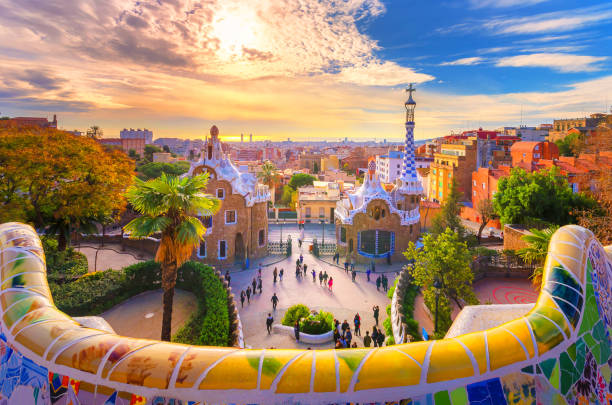
The first thing to cut on a Sants rail day is any stop that pulls the group away from the Eixample-to-station axis. Park Güell is the clearest example. It is famous, photogenic, and often a memorable part of a Barcelona stay, but it sits on a hillside north of the main departure route and depends on its own entry planning through Park Güell official tickets (https://parkguell.barcelona/en/buy-tickets). On a late-train day, that combination can turn a supposedly simple final stop into a hill-and-buffer problem.
This is the counterintuitive part: a chauffeured car does not automatically make Park Güell a good final add-on. The car can reduce walking to and from the hill, but it cannot remove the appointment logic of a timed site, the time needed to enter and exit, or the fact that the group still has to end at Sants. Premium spend does not help when the plan itself is wrong: a car cannot solve a final stop that ignores timed entry, luggage and Sants buffer.
The second thing to cut is a beach detour. Barceloneta has emotional appeal on a last day, especially for travelers who feel they have spent the trip in stone, tile, and stained glass. But the beach creates a different city geometry. You move toward the water, then back through the city, then west to Sants. With luggage in the picture, that arc can feel loose rather than liberating. If sea air matters, it usually belongs on a non-departure afternoon or in a separate coastal plan, not wedged before a train.
The third thing to cut is a second interior. Two interiors sound efficient when both are in the broad Gaudí universe, but timed-entry buildings do not behave like exterior viewpoints. Each one has its own arrival rhythm, audio or guide flow, bottlenecks, gift-shop gravity, and exit lag. If the first visit is Sagrada Família, the second interior will likely make lunch feel transactional. If the first visit is Casa Batlló, adding another house can make the day feel like an architectural checklist rather than a graceful ending.
Old Town browsing is the fourth cut when the schedule tightens. The Gothic Quarter rewards slow wandering, but it does not reward a group watching a departure clock. Narrow streets make orientation slower, taxis may require a short walk to a more accessible edge, and the route back to luggage can turn a charming detour into a practical annoyance. If the old town has not been visited properly earlier in the stay, it deserves its own focused route, not the residue of a rail day.
The better cut-first rule is this: remove the stop that changes the direction of travel. If the final route should flow from hotel to Eixample to Sants, do not add a hill, beach, old-town maze, or second timed interior. Cut the glamorous complication before you cut the station margin. That rule sounds severe, but it is what makes the final experience feel generous rather than defensive.
How a private final route earns its place
A private final route earns its place when it turns the departure window into a controlled sequence rather than a storage problem. This is not about filling every hour. It is about choosing the one cultural stop, the one meal, and the one transfer pattern that let the group leave Barcelona with composure. The value is strongest for families, celebration travelers, older parents, and small groups whose day can be distorted by luggage, split attention, or different walking speeds.
For a Sagrada Família finale, the private value is interpretive and protective. The guide can hold the visit to the agreed focus, explain what matters without making the group stand too long, and end at the right moment. For a Casa Batlló finale, the value is in sequencing: knowing when to arrive, how to pair the interior with a nearby walk, and when to stop adding. For a lunch-and-walk finale, the value is restraint. A guide who knows Barcelona well should be willing to say that the best final hour is not another monument.
A driver changes the day when luggage and transfer uncertainty would otherwise dominate. It is useful when bags need to travel with the group, when the hotel is not in the ideal Eixample band, when older travelers need fewer street-to-station transitions, or when a celebration group wants the final hours to feel deliberate rather than improvised. A chauffeured Barcelona private tour can make the last route smoother, but it should still be designed around the train buffer, not used to justify a route that was too wide from the beginning.
When Orange Donut Tours designs this kind of short-stay departure window, the question is not how to squeeze Barcelona into the remaining hours. It is how to make the final Barcelona movement feel intentional: one Eixample decision, one clean luggage plan, one station arrival that does not depend on luck. For a tailored departure-day route with guide, driver, or both, Inquire now.
The strongest plans often look simple in writing. Eixample hotel, luggage held. Casa Batlló or Sagrada Família if the ticket timing is right. Lunch nearby. Transfer to Sants with margin. The sophistication is in refusing the extra stop that would make the plan look richer and feel worse. That is the Barcelona rail-day standard to use: choose the final move that keeps the body relaxed, the group together, and the station clock boring.
FAQ
Can I visit Sagrada Família before a late train from Barcelona Sants?
Yes, you can visit Sagrada Família before a late train from Sants if the timed entry is early enough, luggage is already handled, and the transfer to Sants is planned with a clear buffer. It is not a good final stop if the visit would end close to the departure window or require returning to a distant hotel for bags.
Is Casa Batlló a better last Gaudí interior than Sagrada Família on departure day?
Casa Batlló is often better on departure day because it sits on Passeig de Gràcia in the central Eixample, making it easier to pair with lunch, a short walk, luggage collection, and the westward move to Sants. Sagrada Família is stronger when it has a comfortable early ticket time and the group is not rushing.
Should I store luggage at Sants before sightseeing?
Store luggage at or near Sants only if that storage is confirmed and the remaining plan stays realistic. Once you have moved luggage to the station area, going back across the city for a major timed site can waste the advantage; lunch, a short Eixample walk, or a compact final stop may be wiser.
Which Eixample hotel area is best before a Sants departure?
The most practical Eixample hotel area before a Sants departure is around Passeig de Gràcia, Rambla de Catalunya, or the streets near Mallorca, Provença, Aragó, and Diputació. This keeps Casa Batlló, lunch options, and the route to Sants in a cleaner sequence.
When should I not book one last Gaudí interior before the train?
Do not book one last Gaudí interior before the train if luggage storage is uncertain, the group is staying deep in the Gothic Quarter or by the beach, the entry time is too late, or anyone in the group is already tired. In those cases, lunch and a short walk usually produce a better final day.
Does a private driver make Park Güell practical before Sants?
A private driver can reduce some walking and transfer strain, but Park Güell is still a hillside, timed-entry stop north of the clean Eixample-to-Sants route. It is usually the first famous Gaudí stop to cut on a rail departure day.
How early should I arrive at Barcelona Sants for a train?
Build a station buffer that includes luggage collection, the transfer, entering Sants, finding departure information, and handling small group delays. The exact margin depends on your train type, luggage, mobility, and comfort level, so confirm operator guidance and avoid planning the final visit close to departure.
What is the best final Barcelona plan before a late train?
The best final Barcelona plan before a late train is an Eixample-based route chosen backward from Sants: one timed Gaudí interior if the entry and luggage plan are secure, or a composed lunch and short walk if the day contains any storage, energy, or transfer uncertainty.
If you’re interested in any private tours of Barcelona, please reach out to us.








 So if you are looking for the absolute best in Barcelona & surroundings with authentic local fully-licensed native guides whose English you can actually understand and with an exclusive and amazingly fun itinerary