Paris Before a Late Eurostar: Left Bank Lunch, Louvre Time or a Seine Reset?

Updated
The verdict at the Gare du Nord handoff
For a late Eurostar from Paris, the best default is a properly staged Left Bank lunch, followed by either a short Seine hour or a very selective Louvre visit, with the Gare du Nord handoff treated as the real final appointment of the day. This works because Paris is not hard to enjoy in a half-day; it is hard to enjoy while you are pretending luggage, cross-river routing, and international rail departure formalities are minor details. The clearest exception is the traveler who has a specific Louvre room, timed entry, and luggage already solved before lunch; for that person, a narrow Louvre visit can beat the river.
The thesis is simple but not generic: the last Paris day before a late Eurostar should be built backward from Gare du Nord, not forward from one more famous sight. A couple lingering near Saint-Germain-des-Prés, the Odéon edge, or Quai Malaquais may feel close to everything on a map, yet the northbound crossing to the station still controls the afternoon. The non-obvious hinge is not the distance from the Louvre to the river; it is the transfer from the Left Bank or central Right Bank into the Gare du Nord international departure flow, where the final few blocks around Rue de Dunkerque and Boulevard de Denain can turn a polished day into a clock-watch.
The three choices in departure-day language
Choose by what you need the last hours to do, not by which Paris landmark sounds most important. Left Bank lunch is the default winner when you want the day to feel complete without gambling the train. Louvre time is the runner-up when art is the reason you came to Paris and you can keep the visit deliberately small. A Seine reset is the right answer when the trip has already been full, the bags are awkward, or the group is more interested in arriving calm than in extracting one final cultural proof point.
Left Bank lunch: best for couples, food-and-wine travelers, and comfort-first visitors who want a final Paris memory that does not depend on a queue, a cloakroom, or a perfect transfer. It works especially well when lunch is placed before the northbound crossing, not after a fragmented morning.
Louvre time: best for travelers with pre-booked access, a guide who can narrow the museum intelligently, and no unresolved luggage. It fails when it becomes a vague promise to “just see the highlights” after a long lunch.
Seine reset: best for families, older parents, tired couples, and small groups who need Paris to slow down. It is less about sightseeing and more about restoring the group before the station.
The wrong fit: a full museum sweep, a Champagne detour, or a shopping loop across both banks. Those are separate days, not graceful late-Eurostar tactics.
This is also the first counterintuitive correction: the Louvre is not automatically the cleverest final-day use of central Paris. It is the most tempting one. On a departure day, the famous choice often has the highest penalty for drift, because every extra wing, exit corridor, and post-visit crossing consumes the buffer that should belong to lunch and Gare du Nord. If you want a broader private design beyond this single departure window, the planning logic sits naturally beside Private tours in Paris, but the final-day answer remains narrower: stage the meal, control the bags, and decide whether the afternoon needs art or air.
Why Left Bank lunch usually wins before a late Eurostar
A Left Bank lunch usually wins because it gives the day a center before the transfer begins. The Left Bank is not just a mood label here; it is a routing decision. Lunch around Saint-Germain-des-Prés, the Odéon side, or the river-facing edge near Quai de Conti lets the morning stay compact, gives the group a seated pause, and prevents the last meal from becoming something grabbed near the station because the museum ran long.
The micro-location matters. A Left Bank lunch before crossing north allows the afternoon to have one clean movement: Left Bank to the river or Louvre area, then north toward Gare du Nord. A lunch placed after a museum, after luggage collection, or after a last-minute shopping errand often creates three separate emotional departures: leaving the restaurant, leaving the sight, and leaving Paris. The consequence is not only timing. It changes how the final hours feel. Couples stop talking about the trip and start negotiating whether they should check the time again.
The better meal is not necessarily the longest meal. On a Eurostar day, lunch should be satisfying, reserved, and paced with an exit in mind. It should not be a tasting-menu-style commitment unless the train is very late and every other variable is already resolved. Food-and-wine travelers sometimes assume the final Paris meal must be the grandest one. More often, the strongest finish is a confident Left Bank lunch that leaves room for a river walk, a calm car transfer, or a short guided coda rather than forcing the last conversation to happen over a phone timer.
Where luggage changes the plan
Luggage changes the plan the moment it is not either stored securely or moving directly with you. A Paris departure day can look elegant in the abstract until someone has to return to the hotel in the 7th, wait for bags in the 6th, or cross the city twice because the group planned the Louvre from one map and the luggage from another. The correct question is not “Can we fit the Louvre?” It is “Where are the bags while we are trying to enjoy the Louvre?”
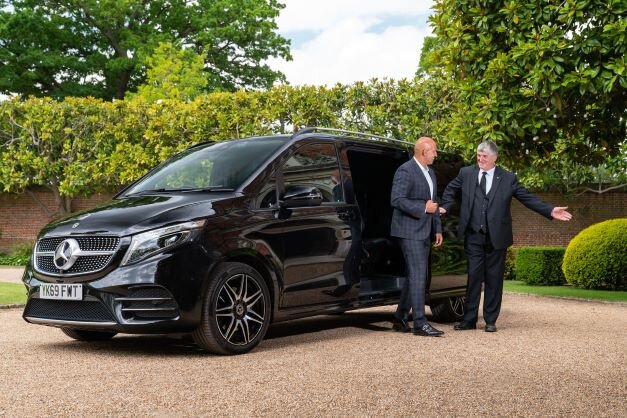
If your hotel can hold luggage and you are staying on or near the Left Bank, lunch plus a compact Seine or Louvre window can work beautifully. If your luggage is at a hotel far from the lunch area, the plan should shrink. If the bags are with a driver, the day can be more fluid, but the driver is not a magic exemption from Paris geometry. A vehicle can smooth the final movement to Gare du Nord, yet it cannot make a late lunch, a museum exit, and a station buffer occupy the same half-hour.
For families and small groups, luggage is also a mood issue. Once bags are visible, the day feels like departure, even if the train is hours away. That is why a clean storage decision early in the day matters more than adding one more address. A private guide can keep the morning feeling like Paris rather than a series of bag checks, but only if the plan has already assigned luggage a home. Without that, even a beautiful route across Pont des Arts or along the Quai Voltaire becomes a logistical conversation disguised as sightseeing.
If your hotel base is far from the Left Bank
If your hotel is not on the Left Bank, the lunch-first verdict still can hold, but the morning should be simpler. Travelers staying in the 8th, around the Louvre, near Opéra, or in Le Marais often assume they should eat near the hotel because it feels safer. Sometimes that is true. But if the lunch itself is the final Paris memory, moving to the Left Bank before eating can still be cleaner than returning there after a museum or shopping errand.
The routing test is whether the day creates a triangle. Hotel to Left Bank, Left Bank to Louvre, Louvre back to hotel, hotel to Gare du Nord is a triangle with too many emotional exits. Hotel to luggage storage, Left Bank lunch, Seine or Louvre, Gare du Nord is a line. Paris rewards lines on departure days. It punishes triangles because each point requires another gathering of the group, another wait for a car, another check that everyone has passports, phones, coats, bags, and the right mood.
Right Bank hotels can support a different answer when luggage retrieval is unavoidable. In that case, lunch near the Louvre, Palais Royal, or the lower 1st can be more practical than a Left Bank meal, provided the transfer north is protected. The point is not to fetishize the Left Bank. The point is to stop the final day from splintering. If the hotel base makes Left Bank lunch create a messy loop, choose a closer meal and use the Seine or a short guided coda as the Paris finish.
When is the Louvre too risky before a late Eurostar?
The Louvre is too risky before a late Eurostar when the visit has no hard edge. A timed entry, a guide, and a narrow route can make it work; a vague plan to “dip in” after lunch usually does not. The museum’s scale is the problem. Even when entry is smooth, the building asks for decisions at every turn: which entrance, which wing, which masterpiece, which exit, and how much time to leave for the walk or drive north.
For an art-centered couple, a late Eurostar can support a focused Louvre visit if lunch is early, luggage is settled, and the museum plan is limited to a small sequence. That might mean one historically coherent route rather than the whole canon. The official Louvre hours and admission page (https://www.louvre.fr/en/visit/hours-admission) is the right place to confirm current opening patterns and admission details before anchoring a departure day to the museum. The planning judgment, however, is not outsourced to the opening hours: the museum works only if it is treated as a controlled chapter, not a final exam.
The cut-first rule is firm: if lunch starts late, luggage is unresolved, or anyone in the group is already tired, cut the Louvre for lunch and a calmer Gare du Nord buffer. This is not anti-museum advice. It is pro-departure-day advice. A rushed Louvre hour can flatten the memory of the collection and contaminate the station arrival with anxiety. A well-paced lunch and river reset can leave the trip feeling longer, even though the itinerary is technically shorter.
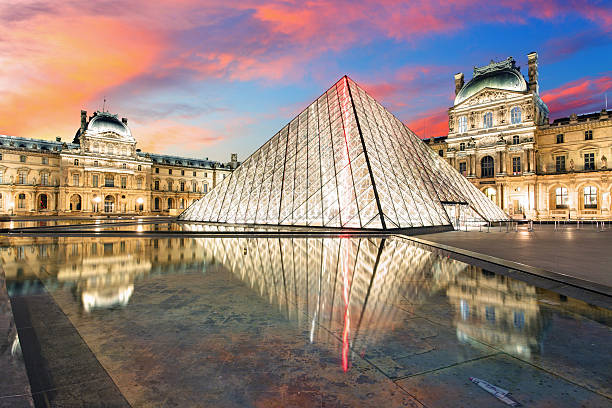
There is one more practical consequence. The Louvre is on the Right Bank, but it is not the same thing as being “near the train.” From the museum zone you still need to leave the building, reassemble the group, possibly retrieve bags or meet a driver, and move through central Paris toward Gare du Nord. That northbound handoff is exactly where a final-day plan loses its polish if the museum visit has been allowed to sprawl. Travelers planning a more deliberate art morning should compare the departure-day version with a true Louvre private tour, because those are different products in the life of a trip.
What a Seine reset solves that another attraction cannot
A Seine reset solves the part of the day that attractions rarely solve: decompression. After several days of museums, dinners, palace corridors, boutique stops, and private cars, the group may not need another interior. It may need a Paris hour that lets everyone breathe without making another set of decisions. The Seine gives you movement, orientation, and a sense of farewell without the same entry friction as a major site.
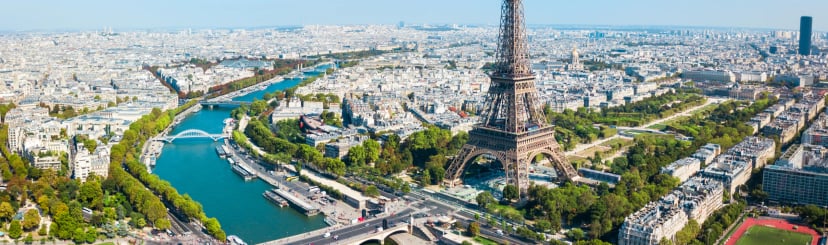
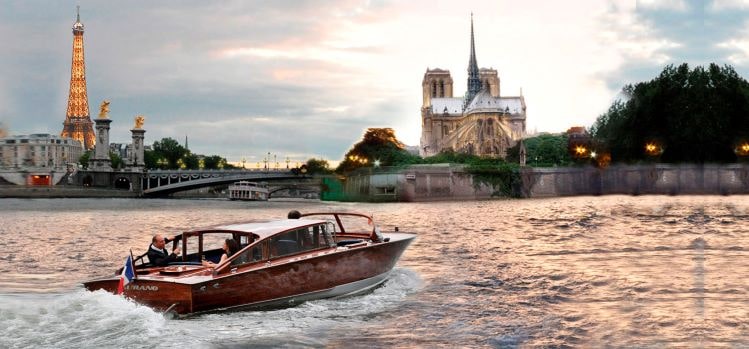
The exact version can be modest. It might be a guided walk from the Institut de France toward Pont des Arts, a river-facing pause near the Louvre colonnade, or a private river experience when the schedule and weather support it. The point is not to treat the Seine as filler. The river is a useful final-day tool because it keeps the city legible. Left Bank, Right Bank, Île de la Cité, the Louvre frontage, the bridges, and the northbound exit all become easier to understand in one gentle line.
For couples, the Seine also protects the chemistry of the last afternoon. A mood-preserving decision is to leave space for conversation after lunch rather than march straight into a museum crowd. A mood-killing mistake is to turn the last two hours into a performance of efficiency: one person checking the train, one person checking the luggage, and both pretending the view still feels romantic. The river works when it gives the day a slower final paragraph before the station.
The Seine reset is not automatically better than the Louvre. It is better when the group is full, the bags are awkward, the weather is kind, or the trip has already included enough cultural weight. When the river belongs at the center of a first-visit plan rather than just a departure-day breath, the deeper companion is Paris by the Seine for a first visit. On this specific day, use the river because it reduces decision fatigue and keeps the route clean.
How to stage the final meal
The final meal should be staged as the anchor, not the reward for surviving the morning. That means choosing the lunch area before choosing the last sight. If the train is late enough to allow a relaxed lunch, put the meal where it supports the route: Left Bank first when the morning is literary, riverside, or Saint-Germain-based; Louvre-side only when the museum is the main event; station-adjacent only when the buffer has already become the priority.
A strong lunch plan has three features. It is reserved or otherwise low-risk, it has a natural end time, and it is close enough to the next movement that the group does not need a second reset after eating. That last point is often missed. A beautiful lunch that requires a cross-city transfer to reach the river, then another transfer to the hotel, then another move to Gare du Nord is not elegant. It is fragmented in expensive clothing.
Food-and-wine travelers should treat the last meal as a memory-making constraint. Choose fewer courses, better timing, and a calmer return rather than forcing a culinary crescendo that makes the station feel like a penalty. Families should eat before children are over-tired. Older parents should avoid a plan that requires standing again immediately after a long lunch. Celebration travelers should resist the temptation to add a Champagne country flourish. Champagne Taittinger visits in Reims (https://www.taittinger.com/en/visits-reims) belong to a dedicated Champagne day with its own transfer logic, not to a final Paris window before a late Eurostar.
The priority ladder: what to keep, compress, and cut
The cleanest late-Eurostar day uses a priority ladder rather than a wish list. Keep the elements that preserve the train buffer and the final mood. Compress the elements that add value only when conditions are already smooth. Cut the elements that create a second luggage problem or a late station arrival. This gives the day authority without making it rigid.
- Keep: luggage settled early, a real Left Bank lunch, a northbound transfer buffer, and a clear Gare du Nord handoff.
- Compress: the Louvre into one focused route, the Seine into one elegant hour, and shopping into one short address if it sits directly on the route.
- Cut: full museum coverage, cross-city shopping, palace-hotel detours for symbolism, and any day trip outside Paris.
The ladder also prevents the most common high-end mistake: paying to keep too many pieces alive. A chauffeur, a private guide, and restaurant coordination can improve the day when they simplify the sequence. They do not improve the day when they are used to justify a plan that still ignores where the luggage is and how the group will enter Gare du Nord without rushing.
This is where a private departure-day plan earns its commercial logic. The guide is not there to add one more attraction. The guide is there to build backward from the train, decide what the final meal should do, protect the buffer, and keep the group from spending the last Paris afternoon in a series of small negotiations. For visitors comparing tour lengths, half-day, full-day, and multi-day private tours can be useful, but the departure-day version should still remain deliberately narrow.
How Paris affects the body on the last day
Paris departure days are physically deceptive because the city looks flat, close, and walkable on a central map. In practice, the body feels the repeated transitions: hotel lobby to taxi, taxi to pavement, pavement to museum entrance, museum corridors to lunch, lunch chair to bridge, bridge to car, car to station concourse. None of these moves is dramatic alone. Together they become the weight of the final day.
The Louvre amplifies that weight because the walking is internal as well as external. A traveler may not register the difference between a riverside walk and a museum route until the group is already inside a vast building with hard floors, visual noise, and the pressure to make the visit worthwhile. The Seine, by contrast, gives a simpler bodily rhythm: sit, walk a little, pause, look, and move on. The Left Bank lunch gives the body something equally important: a real seated interval before the final transfer.
Weather also changes the answer without needing to become the whole article. In summer heat, a long open-air walk after lunch can be draining; a shaded river edge or short car-assisted move may be wiser. In rain, the Louvre becomes more tempting, but it also becomes more crowded in feel and more equipment-heavy, with coats, umbrellas, and bags to manage. In winter, earlier darkness can make the Seine feel cinematic, but only if the station buffer is not being sacrificed to chase one last view.
How the route changes the mood of the departure day
The final Paris day should feel like a closing scene, not an extraction. Mood is not a soft concern for discerning travelers; it is the difference between remembering the last lunch and remembering the scramble after it. A late Eurostar creates the illusion of abundance, but the last hours are psychologically shorter than they look because every choice is shadowed by the train.
Left Bank lunch protects the day’s mood by giving the group a civilized center. The Louvre can elevate the mood when art is truly the shared priority, but it can also make the afternoon feel like a test if one traveler is more invested than the others. A Seine reset changes the mood by lowering the need to perform. Nobody has to prove they used Paris properly. They can simply inhabit it for an hour before leaving.
This is particularly important for couples and celebration travelers. The last day is often when fatigue, spending decisions, and route disagreements surface. A quiet lunch near the Left Bank, a short bridge crossing, and a clean Gare du Nord handoff can keep the relationship inside the trip rather than outside it, managing the trip. The mood-killing mistake is not choosing the wrong landmark; it is making every landmark conditional on whether the station still feels manageable.
What better support can and cannot rescue before the train
Better support can rescue pacing, interpretation, and handoffs. A private guide can meet you after checkout, keep the Louvre route tight, choose a Seine pause that fits the weather, coordinate with a driver, and build the day backward from Gare du Nord instead of simply adding one more attraction. That is the natural moment to ask Orange Donut Tours to shape the day around the actual departure, group energy, and final meal rather than around a generic last-day list. Inquire now
Better support cannot rescue denial. A private guide cannot compensate for ignoring luggage and the Gare du Nord transfer window. Premium spend does not help when the plan depends on the museum ending perfectly, lunch running short, traffic staying kind, and every traveler moving at the same speed after several full days in Paris. The value of a private plan is not that it makes Paris frictionless. It is that it chooses which frictions are worth accepting and which should be removed before the day begins.
Spend earns its cost when it buys clarity: a guide who can edit the Louvre without guilt, a driver who knows the handoff time rather than waiting for an improvised call, or a meal plan that leaves room for the station. Spend does not earn its cost when it is used for symbolic detours: a palace lobby because it sounds grand, a distant boutique because it was mentioned by a friend, or a Champagne-region idea because the train is late and the map looks possible. On this day, the luxury is not more. The luxury is a cleaner ending.
Two sample sequences for a late Eurostar
The best sequence depends on the train time, luggage location, and traveler appetite for interiors. These examples are not meant to replace live scheduling; they show the order of decisions. In both, the day is built backward from the Gare du Nord handoff, with the final transfer treated as a fixed appointment rather than a flexible afterthought.
Sequence one: Left Bank lunch plus Seine calm. Begin with luggage settled at the hotel or with a driver. Keep the morning close to Saint-Germain-des-Prés, the river, or a nearby private walk. Sit for a well-paced Left Bank lunch. Afterward, take a short Seine hour by foot or boat, depending on weather and timing. Move north with a deliberate buffer and avoid adding another interior after the river.
Sequence two: Left Bank lunch plus selective Louvre. Settle luggage first. Eat earlier than you would on a normal Paris day. Enter the Louvre with a narrow route and a pre-agreed exit time. Skip shopping afterward unless it is directly on the transfer path. Move to Gare du Nord before the day starts to feel tight, not after the first person says it does.
A third version exists, but it is a fallback rather than a prize: lunch, hotel reset, and station. It is the right version when the group is tired, the weather is poor, or the previous days have been heavy. Some travelers resist this because it feels like doing less. In practice, it often produces a more polished departure than a last-minute museum attempt, especially for families, older parents, and couples who care about the emotional finish of the trip.
What to avoid on this final Paris day
Avoid any plan that makes the final hours depend on three separate punctualities. For example, do not rely on a long lunch ending early, a museum entry being smooth, and the station transfer being fast. One uncertainty is manageable. Two require discipline. Three turn the late Eurostar into a stress test. The fact that the train leaves late does not mean the day has room for everything you did not do earlier.
Avoid treating Gare du Nord as merely a pin on the map. The station is central, but it is not emotionally neutral at the end of a refined Paris stay. The area can feel busy, the approach can be slower than expected, and the international departure process changes the mood from strolling to processing. That is why the handoff matters. You want the group to arrive prepared, not abruptly converted from lunch guests into passengers.
Avoid broadening the day into a mini version of a full Paris itinerary. No Montmartre after the Louvre, no Le Marais shopping after a late lunch, no last-minute Eiffel Tower exterior unless it was already part of a compact morning route. If a first-day rail arrival is the problem instead of a departure, the mirror-image planning question is covered in Paris after a Eurostar arrival. Before a late train, the logic is stricter: each added stop must make the departure calmer or more meaningful, not merely fuller.
When the Louvre should stay in the plan
The Louvre should stay in the plan when the visit is the emotional reason the final day exists. Some travelers would rather leave Paris with one superbly interpreted hour in front of a small set of works than with a longer lunch or a river glide. That is a valid preference. The point is to honor it honestly by giving the museum enough structure, not by squeezing it into a day that has already chosen food and logistics as the winners.
The Louvre works best before the day becomes socially tired. If the group includes one art lover and one tolerant companion, keep the visit short and guided. If the group includes teenagers, older parents, or travelers who have already had multiple museum days, choose a route that avoids collection sprawl. If the group is celebrating, decide whether the museum supports the celebration or merely proves seriousness. A departure day has little patience for obligation.
When the museum remains, the Seine should become shorter, not vanish into a guilty afterthought. A brief river view after the Louvre can release the pressure of the interior before the station. What should vanish is the unnecessary add-on: the extra boutique, the far-flung pastry stop, the “quick” hotel-area detour that is quick only in the imagination. The Louvre can be excellent before a late Eurostar, but only if the rest of the day agrees to be smaller.
When the Seine should become the main event
The Seine should become the main event when the trip needs coherence more than another ticketed experience. This is common on the last day of a multi-city itinerary, especially if Paris has followed London, preceded another rail segment, or capped a longer European trip. By then, the traveler may not be short on culture. They may be short on ease.
A river-first ending also suits visitors who have used Paris intensely: Versailles one day, a major museum another, perhaps a food-and-wine route, shopping, or a Champagne day earlier in the stay. When the itinerary has already delivered substance, the final afternoon should not compete with it. The Seine ties the pieces together. It lets the eye move from the Left Bank to the Right Bank, from bridges to façades, from the Louvre’s exterior scale to the practical reality of leaving.
For a private version, the river can be woven into a guided walk, a chauffeured sightseeing arc, or a boat plan when conditions are right. The crucial decision is whether the river simplifies or complicates the handoff. A Seine experience that ends conveniently for the northbound transfer can be excellent. A river idea that sends the group west only to return east and north can become just another detour. The best private river planning is not generic romance; it is geography aligned with the station clock, as in a focused Seine River private tour when the timing supports it.
The final call
For most late-Eurostar departures, choose Left Bank lunch as the anchor, add a Seine reset if the group needs air, and keep the Louvre only when the museum has a narrow, pre-planned role. The final day should not be judged by how many Paris names it contains. It should be judged by whether the last meal, the last view, the luggage, and the Gare du Nord handoff belong to the same plan.
The planning question is not “Left Bank lunch, Louvre time, or a Seine reset?” as if each were equal in every circumstance. The better question is what the last Paris hours need to protect. If they need atmosphere, lunch wins. If they need cultural focus, a small Louvre route can win. If they need composure, the Seine wins. If they need all three, the plan must become smaller, not more expensive.
A useful final check is to ask what would still make the day feel successful if one element disappeared. If the Louvre ticket failed, would lunch and the river still feel like a worthy goodbye? If rain shortened the Seine, would the meal and station handoff still hold? If the group slowed down, would the plan still arrive calmly? A resilient departure day has one anchor and one optional grace note. A fragile one has three anchors and no honest place to cut.
FAQ
Can you visit the Louvre before a late Eurostar from Paris?
Yes, but only with luggage settled, a timed or otherwise organized entry plan, and a narrow route through the museum. If lunch is late or the group is tired, cut the Louvre and keep the station buffer.
Is the Left Bank a good area for lunch before Gare du Nord?
Yes. The Left Bank works well when lunch is planned before the northbound move, especially around Saint-Germain-des-Prés, Odéon, or the river edge, because it gives the day a graceful center before the station transfer.
What does a Seine reset mean on a Paris departure day?
A Seine reset is a short river-based pause, walk, or boat experience that lowers decision fatigue before the train. It works best when it keeps the route toward Gare du Nord clean rather than sending the group away from the station.
Where should luggage be during a final Paris day before Eurostar?
Luggage should be stored securely at the hotel, held by a coordinated driver, or otherwise settled before touring begins. If luggage requires a separate return across Paris, the sightseeing plan should be reduced.
How early should you head to Gare du Nord for a Eurostar?
Use the guidance provided with your Eurostar booking and build a private buffer around it. The article’s planning point is that the Gare du Nord handoff should be treated as fixed, not squeezed after lunch or the Louvre.
Is a private guide worth it before a late Eurostar?
Yes, when the guide is used to edit the day, coordinate the route, and build backward from the train. It is not worth it if the plan still ignores luggage, group energy, and the transfer window.
Should a final Paris lunch be a long fine-dining meal?
Usually no. A final lunch should be memorable but controlled, with a natural exit time and a route that supports the station transfer. Save longer tasting-menu pacing for a non-departure day.
What should you cut first if the day is running late?
Cut the Louvre first unless it is the main reason for the day. Keep lunch, luggage control, and the Gare du Nord buffer because those determine whether the departure feels calm or rushed.
If you’re interested in any private tours of Paris, please reach out to us.


 So if you are looking for the absolute best in Paris & surroundings with authentic local fully-licensed native guides whose English you can actually understand and with an exclusive and amazingly fun itinerary













