Paris for Families Who Want Art Without a Full Museum Day

Updated
Plan one serious art dose, not a full museum day: one Louvre wing or one Musée d’Orsay focus, then step into a Tuileries reset before the visit hardens into endurance. This works in Paris because the Louvre, Tuileries, Musée d’Orsay and Seine sit close enough to create contrast without another cross-city transfer. The exception is a family with one art-obsessed teen or a once-in-a-lifetime Louvre priority; then a longer Louvre route can be worth it, but it should replace a second museum, not lead into one.
The local hinge matters. From the Louvre’s Cour Carrée or the Arc de Triomphe du Carrousel, the garden is not a vague “nearby park”; it is the pressure valve that keeps the art stop from becoming the whole day. From Musée d’Orsay, the Passerelle Léopold-Sédar-Senghor gives you a short, legible crossing toward the same Tuileries reset. In Paris, a family art day succeeds when the museum is a concentrated chapter inside the river corridor, not the entire plot.
This guide solves one planning question: how should a family see meaningful art in Paris without sacrificing the day to museum fatigue? For a broader first-visit structure with Eiffel Tower and river time, use Paris with kids for a tailor-made first trip. Here, the job is narrower: choose the right art dose, place the outdoor reset correctly, and cut the adult itinerary pieces that make children leave Paris believing museums are a punishment.
The museum dose decides whether children leave curious or resistant
The best Paris family art plan is usually one of four doses: one Louvre wing, one Musée d’Orsay focus, a Rodin-plus-garden hour, or an outdoor Tuileries and Seine art reset with no ticketed museum at all. The important correction is that shortening an adult museum tour is not the same as designing a child-friendly art route. A trimmed adult route often keeps the same logic, the same masterpiece chase, and the same long internal walks; a family route changes the story, the room sequence, the exit strategy, and the recovery space.
One Louvre wing
Choose one Louvre wing when the adults care deeply about the Louvre and the children are old enough to follow a story for 75 to 120 minutes. This is not the moment to “do the Louvre.” It is the moment to choose a single thread: ancient Egypt for younger children who respond to objects and symbols, myth and sculpture for children who like bodies and drama, or a tight masterpieces route for older children who can handle crowds around famous works. The Louvre’s official family information is worth checking before finalizing the plan because family resources, stroller guidance and activity formats can change by date and season: Louvre family visit resources (https://www.louvre.fr/en/visit/visit-as-a-family).
One Musée d’Orsay focus
Choose one Musée d’Orsay focus when the children are old enough to connect trains, clocks, dancers, color, city life and landscape. Orsay’s former railway-station scale gives families a visual hook before anyone has to decode the paintings. For many 7- to 13-year-olds, this makes it a stronger first art dose than the Louvre, especially when the adults can accept that “less famous” may produce a better family memory. Check the museum’s family page when planning the current visit: Musée d’Orsay family information (https://www.musee-orsay.fr/en/families).
Rodin-plus-garden hour
Choose a Rodin-plus-garden hour when the family wants art but not a dense museum interior. This is strongest for children who respond to sculpture, movement and outdoor space, and weakest for adults who secretly want a major collection. It can work beautifully after a light Left Bank morning, but it should not become the prelude to Orsay and the Louvre. Its value is its smallness.
Tuileries and Seine outdoor reset
Choose a Tuileries and Seine outdoor reset when children are under six, jet-lagged, or already overloaded by another Paris icon. The art is not absent: sculpture, palace façades, axes, bridges, river views and the old garden geometry all give a guide enough material to create a short cultural route. The Louvre’s own Tuileries Garden information is the practical place to check seasonal garden details before you rely on the reset: Tuileries Garden visitor information (https://www.louvre.fr/en/explore/the-gardens).
Which art stop fits different ages?
The cleanest age split is not “museum or no museum”; it is how long a child can stay interested before the adults lose the afternoon trying to recover the mood. A four-year-old and a twelve-year-old may both love Paris art, but they need radically different proof that the visit is worth their attention.
Ages 4 to 6: skip the full Louvre plan, even if the adults feel guilty
For this age band, the strongest art day is usually outdoor-first or sculpture-first, with a museum used only as a short, pre-agreed experiment. If the family has a stroller, Paris does not become impossible, but museum movement becomes slower and more tactical. Lifts, security checks, cloakroom decisions, crowded thresholds and long corridors all turn a “quick” stop into a negotiation. A child at this age may remember a fountain chair in the Tuileries, the shadow of a statue, the river boats on the Seine, and the pyramid glass more vividly than a painting everyone else flew across the Atlantic to see.
Skip the Louvre on a first Paris visit when children are under six, jet-lagged, heat-sensitive, or when the adults are only going because they believe every first trip must include it. That is not anti-Louvre advice; it is pro-family-memory advice. The Louvre can be magnificent later, and the first encounter with Paris does not need to start with a dense interior.
Ages 7 to 10: one story line, one exit, one reward that is not a bribe
Children in this range can handle a real art encounter when the route has a plot. At the Louvre, that might mean gods, monsters, queens, animals, armor, mummies, or the journey from palace to museum. At Musée d’Orsay, it might be the station building, the clock, painters changing how light behaves, or the way Paris itself enters the canvases. The story needs to be narrow enough that the child can retell it at dinner. If the adults cannot summarize the route in one sentence, it is probably too broad.
The exit matters as much as the entrance. A Louvre route that ends in the Tuileries lets children decompress without being told to behave in another gallery. An Orsay route that crosses toward the garden or follows the river for a few minutes gives the body a different rhythm. When the reset is built into the plan, the museum feels like an achievement. When the reset is improvised after fatigue has already peaked, the same garden can feel like a forced march.
Ages 11 to 13: Musée d’Orsay often wins because it gives faster visual payoff
For many pre-teens, Musée d’Orsay is the better first art dose because the building explains itself quickly. The great central nave, the clock, the old railway bones, and the compact concentration of Impressionist and Post-Impressionist works create a visible arc. A guide can move from architecture to painting to Paris streets without asking the child to absorb the scale of a royal palace first.
This does not make Orsay “better” than the Louvre; it makes Orsay easier to convert into a satisfying family chapter. The Louvre is larger, denser and more symbolically loaded. That can be thrilling for a child who loves history, mythology or ancient worlds, but draining for a child who needs frequent visual changes. The family consequence is simple: Orsay usually leaves more usable energy for lunch, the river, or a calm evening; the Louvre often needs a more protected after-plan.
Teenagers: give them agency or choose a different anchor
Teenagers rarely resist art itself as much as they resist being moved through someone else’s obligation list. A teen who chooses the Louvre for antiquities, fashion history, power, mythology or a famous work can handle more than a younger child. A teen who has no stake in the choice may flatten the mood for the whole group after the first crowded room.
The best teen art plan gives a real choice and a clear limit. “Would you rather do one Louvre wing, Orsay for color and modern Paris, or a shorter outdoor sculpture-and-Seine route?” is more useful than “We are doing a museum because we are in Paris.” For teens who already care about art, consider a more focused Louvre structure through a Louvre private tour or the deeper planning logic in a curated Louvre day without museum fatigue. For teens who do not care yet, start smaller and let Paris do some of the persuading outside.
Should families choose the Louvre or Musée d’Orsay without a full museum day?
Choose the Louvre when the family has a specific reason; choose Musée d’Orsay when the family wants the highest chance of a complete, satisfying art stop. This is the firm editorial call: Orsay is often the better family art dose for a first short museum visit, even though the Louvre is the more famous museum. Fame does not reduce walking load, crowd pressure, or decision fatigue.
The Louvre rewards purpose. It is the right choice when the children are drawn to ancient Egypt, Greek sculpture, palace history, royal scale, or a small number of famous works. It is the wrong choice when the adults want to prove they did Paris properly and assume children will be grateful later. Inside the Louvre, distance is part of the content: staircases, long galleries, changes of wing, security rhythm, and the psychological weight of “we cannot miss this” all accumulate. Even with a guide, the building asks a lot of a family.
Musée d’Orsay rewards concentration. Its Left Bank position on the Seine, near Rue de Lille and the Solférino crossing, makes it easier to connect the visit to a garden or river reset. The museum still requires restraint; trying to cover every floor turns it into a smaller version of the same adult mistake. But a focused Orsay route can give children a fuller sense of having seen something whole: a train station transformed into a museum, a clock, a painterly revolution, and enough color to keep visual interest alive.
The counterintuitive planning mistake is thinking the area around the Louvre automatically makes the Louvre easier. The Right Bank location is central, but the centrality can tempt families into stacking too much: Louvre, Tuileries, Place de la Concorde, Champs-Élysées, Seine, shopping, dinner. That sequence looks efficient on a map and feels excessive in a child’s body. The wiser plan is to use the Louvre’s location to exit cleanly, not to keep adding famous names.
The Tuileries reset is the hinge, not filler
The Tuileries reset should be planned as part of the art day, not treated as a consolation prize after the museum. This is especially true because the garden solves a Paris problem that premium planning often underestimates: children do not only need fewer sights; they need a change of surface, volume and permission.
After the Louvre, the family can leave the intensity of galleries and glass through the Carrousel side or the garden edge, then move into open space without decoding another attraction. The gravel paths, long allées, sculpture, chairs and broad perspective toward Place de la Concorde give adults a continued sense of Paris while children get a different kind of freedom. After Orsay, crossing the Seine by the Passerelle Léopold-Sédar-Senghor or Pont Royal creates a short transition that feels like movement rather than transfer. That distinction matters: a transfer says “we are not done yet”; a transition says “the day is changing shape.”
Paris is physically tiring in ways that are easy to miss from a hotel desk. The drag is not just distance. It is museum stone underfoot, security pauses, warm rooms, stairs, gravel, river steps, crowded crossings, and the repeated discipline of asking a child to stay close. Add one unnecessary cross-city hop from the Louvre to Montmartre, or from Orsay to the Eiffel Tower, and the family may spend the late afternoon managing thirst, shoes, bathroom timing and frayed patience instead of noticing Paris.
The mood consequence is just as important. A family that leaves a museum into air, chairs and a visible river often remembers the art as a successful beginning. A family that leaves a museum into another reservation can start to treat the paintings as the reason everyone is tired. The Tuileries reset changes the story of the day: it makes the museum feel shorter, the adults feel less apologetic, and the children feel that Paris has space for them.
Do not over-program the reset. A guided five-minute explanation of the garden axis can be enough. A slow look at sculpture can be enough. A pause facing the Louvre façade can be enough. The reset fails when adults turn it into another lesson or when the family marches all the way across the garden because the map makes the line look neat. Stop before the children need to ask to stop.
What to cut from an adult Paris art itinerary
Cut the second major museum first. If the day already contains the Louvre or Musée d’Orsay, do not add the other because it appears nearby on a map. Proximity is not the same as capacity. Adults often imagine the second stop as “just an hour”; children experience it as another security line, another set of rules, another silent interior, and another delayed snack or hotel return.
Cut the Mona Lisa bottleneck if the child’s age, mood or crowd tolerance makes it a poor exchange. Some families should absolutely include it; others pay for it with the emotional budget of the entire day. A guide can make the context richer, but no guide can make a crowded viewing moment feel spacious for every child. If the adults know the child will only remember being pressed into a crowd, choose a different Louvre story.
Cut the palace-hotel-shopping drift that sometimes follows a Louvre morning. The 1st and 8th arrondissements can look elegant and convenient, but a family that exits the museum tired is not improved by being walked through more polished streets just because they are close. If shopping matters, put it on a different day. If dinner matters, protect the return leg. If the family is staying on the Left Bank, do not pretend a late Right Bank wander is neutral.
Cut adult food-and-wine ambition from the same block. A serious lunch, a major museum, a pastry stop and a river plan can be delightful for adults and too many behavior settings for children. Even Champagne Taittinger visits in Reims (https://www.taittinger.com/en/visits-reims), which can be an excellent adult or older-teen excursion on the right trip, belongs in a separate decision, not as a mental model for how much culture a family should absorb in one Paris day.
Cut the idea that skip-the-line access makes a family museum marathon wise. Premium spend does not earn its cost when it buys only a longer museum block or a faster door. Skip-the-line access does not solve child-level museum fatigue by itself. It can reduce one kind of waiting, but it does not reduce the internal walking, the density of looking, the need for bathrooms, the hunger curve, or the mood cost of asking children to behave like adults for too long.
The do-not-stack rule is clear: do not combine the Louvre, Musée d’Orsay, a full Seine cruise, an Eiffel Tower ascent and a dressed-up dinner in the same family art day. Choose the art anchor, choose one outdoor recovery space, and let the evening remain usable. If the family wants a river element, make it a light Seine edge or a separate river hour planned with the same restraint as the museum; the logic in the Paris Seine reset applies especially well after art.
When a private guide matters most
A private guide matters most when the family needs translation, pacing and triage, not when the adults simply want someone to recite more information. The most valuable guide is not the one who can cover the most rooms; it is the one who can decide which room to skip when a child’s attention changes.
For a child-friendly route, the guide should build a sequence around looking, movement and recovery. That might mean starting with a dramatic object before explanation, using a gallery threshold as a reset, turning one painting into a question rather than a lecture, or choosing a less famous work because the child can actually see it. The adult version of the tour often asks, “What are the masterpieces?” The family version asks, “What will keep this group curious for the next 20 minutes, and where do we go when that curiosity drops?”
This is where tailoring changes the day. A family with a stroller and a five-year-old needs a different Louvre than a family with two drawing-obsessed pre-teens. Grandparents traveling with children may need fewer stairs, more seating and a cleaner return leg. Celebration travelers may want the art stop to feel special without spending the evening recovering from it. A private art route can absorb those realities before the first gallery, which is very different from simply making an adult museum tour shorter.
Private guidance also helps with family politics. One parent may want the Louvre because it feels non-negotiable; another may know the children will last longer at Orsay. A good guide can convert that tension into a plan with a firm limit, a visible payoff and a graceful exit. The children do not need to know there was a planning compromise; they need to feel that the day was designed for them as well as for the adults.
If you want a Paris art route shaped around your children’s ages, your hotel location, your must-see work and a realistic reset rather than a museum marathon, Orange Donut Tours can build the visit as a private family plan. Start with Paris family private tours or Inquire now.
Three route shapes that keep the day short but not thin
The best route is the one that ends before the family starts bargaining. These three shapes work because they keep the art stop in one river corridor, avoid a second major interior, and make the return leg honest.
Louvre wing, Tuileries reset, easy Right Bank return
This is the right shape when the Louvre is genuinely important. Start with one wing or one story. Keep the route tight enough that the child can name what they saw. Exit toward the Tuileries rather than deeper into the Right Bank. Use the garden to soften the shift from museum rules to Paris space. If the hotel is in the 1st, 8th or near the river, this can end cleanly with a return before lunch or a very light lunch nearby. If the hotel is across town, consider whether the adults are willing to make the return the next real event rather than pretending there is still room for another sight.
The weak version of this route is Louvre plus every nearby icon. The strong version is Louvre plus decompression. A family that leaves wanting more has won. A family that leaves with one child refusing the next day’s plan has not.
Musée d’Orsay focus, Seine crossing, Tuileries chairs
This is the right shape when the adults want art and the children need a faster sense of completion. Orsay gives the family a strong building story before the collection even begins. A guide can connect the railway station past, the clock, Impressionist light and Paris modernity in a way that feels more compact than a Louvre survey. Afterward, the river crossing becomes the reset. The family sees the Seine, changes sides, and reaches the Tuileries without needing a car or a metro transfer.
This route is especially useful for families staying on the Left Bank or near Saint-Germain who do not want the day to become Right Bank-heavy. The return leg can be simple: either stay Left Bank after the museum and skip the garden, or cross only if the children still have the appetite for open air. Do not cross just because the plan looked elegant when written down.
Outdoor art arc: Louvre exterior, Tuileries, Seine
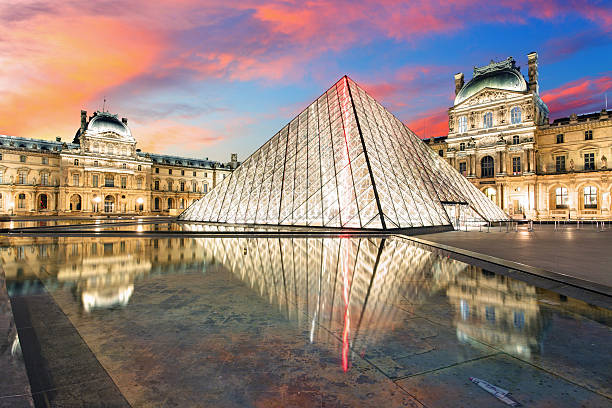
This is the right shape when children are young, weather is pleasant, or the family has already had a heavy sightseeing day. Start outside the Louvre with the palace and pyramid as objects to read. Move through the Carrousel and Tuileries as an open-air art and power route. Use sculpture, axes, garden design and the Seine to give the adults cultural substance while children keep more freedom of movement.
This is not a second-best day for the right family. It is often the plan that makes children more willing to enter a museum later in the trip. The mistake is apologizing for it. A child who enjoys a short outdoor art arc may become curious about what is inside the palace. A child forced through a major museum too early may resist every cultural plan that follows.
Weather, strollers and the return leg
Rain and stroller logistics should change the museum dose, not merely the order. On a wet day, families often try to compensate by adding more indoor time. That can work for adults, but for children it may remove the very reset that makes the art stop successful. A better rain pivot is usually a shorter museum focus, a covered pause where possible, and an earlier return to the hotel or lunch. Do not turn rain into a reason for two museums.
With a stroller, the Louvre and Orsay are both possible, but possible does not mean effortless. The key decision is whether the stroller supports the child or becomes the day’s central object. If the family will need frequent lifts, cloakroom decisions, snack timing and bathroom stops, choose the smaller dose and avoid routes that require repeated bank crossings. If a guide or planner suggests a route that sounds elegant but requires the stroller to move through several crowded thresholds, ask what gets cut when movement slows.
The return leg is where many family art days are won or lost. A chauffeured pickup can help when the hotel is not close, when grandparents are traveling, when weather is poor, or when the day continues to a timed lunch. It does not help much if the route is already compact and the family simply needs to walk from Orsay to a Left Bank base or from the Louvre to a nearby hotel. For a more detailed spend judgment on cars and museum days, see when a chauffeur changes a Paris museum day.
Families staying near the Louvre, the 8th or the palace-hotel corridor should beware of overvaluing proximity. Being close to major sights can seduce adults into filling every gap. Families staying on the Left Bank should beware of treating every Right Bank return as minor; after a museum, a river crossing and garden gravel, the last 20 minutes can feel longer to children than the first hour felt to adults. The hotel return is not dead time. It is often what preserves the evening.
The family art day should feel complete before it feels impressive
A Paris family art day without a full museum day should leave everyone with one vivid cultural memory and enough energy to enjoy the rest of Paris. That is the measure. Not the number of masterpieces, not the total rooms covered, not whether every adult priority was technically touched.
For most families, the best plan is one strong dose: Musée d’Orsay for a compact first art encounter, the Louvre only with a defined reason, or an outdoor Tuileries and Seine route when children are too young or tired for a major interior. The Tuileries reset is the hinge because it changes the body and the mood at the right moment. The cut-first rule is the second museum. The premium-spend rule is equally clear: pay for judgment, pacing and adaptation; do not pay to make an overlong plan look more polished.
Handled this way, Paris art does not have to compete with family comfort. It can become the part of the trip that proves children can handle culture when the city is paced with their attention, not against it.
FAQ
Can families enjoy Paris art without spending a full day in a museum?
Yes. The strongest plan is usually one focused art dose, such as one Louvre wing or one Musée d’Orsay focus, followed by an outdoor reset in the Tuileries or along the Seine.
Is the Louvre too much for children on a first Paris visit?
The Louvre is too much when the family treats it as mandatory and tries to cover the highlights without a narrow route. It can work well for older children or teens when the visit is limited to one wing, one story and a clear exit.
When should a family skip the Louvre in Paris?
Skip the Louvre when children are under six, jet-lagged, already tired from another major sight, or when the adults have no specific Louvre priority beyond feeling that they should go.
Is Musée d’Orsay better than the Louvre for families?
Musée d’Orsay is often better for a short family art visit because the building, clock, railway-station scale and concentrated collection give faster visual payoff. The Louvre is better when the family has a specific interest in its collections.
How long should a family museum visit last in Paris?
For younger children, plan about 45 to 75 minutes of real looking. For older children and teens, 90 minutes to two hours can work if the route is focused and followed by a reset rather than another major attraction.
Does skip-the-line access prevent museum fatigue for kids?
No. Skip-the-line access can reduce waiting at the entrance, but it does not solve child-level museum fatigue inside the museum. The route, pacing, room choices, snack timing and exit strategy matter more.
What is the best outdoor reset after a Paris museum with kids?
The Tuileries reset is the most useful after the Louvre and also works after Musée d’Orsay via a short Seine crossing. It gives children air, movement and a change of rules without adding another cross-city transfer.
Can a private guide make a museum visit more child-friendly?
Yes, when the guide designs a child-specific route rather than shortening an adult tour. The value is in choosing the right rooms, adjusting the pace, cutting when attention drops and ending the visit before the family mood turns.
If you’re interested in any private tours of Paris, please reach out to us.



 So if you are looking for the absolute best in Paris & surroundings with authentic local fully-licensed native guides whose English you can actually understand and with an exclusive and amazingly fun itinerary