A Low-Vision London History Day: Tactile Collections, Verbal Description and Shared Routes at the British Museum and Westminster Abbey

Updated
The workable answer: give each institution a different job
A strong low-vision history day in London should not treat the British Museum and Westminster Abbey as two interchangeable sightseeing stops. The British Museum is the better tactile anchor because it publishes defined touch routes, handling opportunities and a substantial audio-description library. Westminster Abbey is the stronger spatial and narrative counterpoint: a historic building in which scale, acoustics, changing light, memorial geography and the movement from public nave to more enclosed chapels can carry meaning when they are described with discipline. The day works when those different strengths are planned in advance and shared by the whole family.
The most reliable sequence is resource-led rather than prestige-led. When a guided British Museum touch tour has been confirmed, place that appointment at the centre of the morning and visit the Abbey afterwards with a timed entry and an audio-described route. When there is no fixed museum appointment and the low-vision guest is particularly affected by crowd noise, changing light or dense wayfinding, consider Westminster Abbey at opening on a weekday, then use the British Museum’s self-guided touch material later. The institution with the least flexible access condition should determine the order.
Low vision is not a synonym for total blindness, and a useful plan should never assume one uniform visual experience. A guest may use central vision but have a restricted field, see large forms but lose detail, read high contrast at close range, struggle with glare, or rely on vision differently as light changes. Before choosing a route, ask what helps: close viewing, strong contrast, controlled lighting, magnification, audio description, tactile information, human guiding, or some combination. The traveler should also decide how much assistance companions provide. The aim is not to turn a family member into a continuous narrator; it is to create enough common evidence that everyone can discuss the same history.
For context on how this sensory-focused day sits within a larger collection itinerary, see broader London museum-day planning. This article takes a narrower position: two or three objects understood through touch, verbal geometry and historical consequence are worth more than a long circuit of cases that only the sighted companions can properly read.
What is verified at the British Museum
The British Museum currently publishes unusually concrete resources for blind and partially sighted visitors. Its free audio-descriptive guide contains 153 object descriptions and gallery overviews, and it can be heard through SoundCloud without creating an account. The museum also lists free daily object-handling sessions from 11.00 to 16.00, subject to availability. Most importantly for this route, it offers free touch tours in Room 4, the Egyptian Sculpture gallery, and Rooms 18 and 18b, the Parthenon galleries. These may be taken as guided or self-guided experiences. The official details are on the British Museum accessibility page.
The guided touch tours require advance contact by email at least two weeks before the visit. The museum asks for contact details, the number of blind and partially sighted people, the number of access companions, and the preferred date and time. This is not a minor booking note. It changes the architecture of the day: until a guided slot is confirmed, it should be treated as a request rather than an appointment.
The self-guided provision is specific enough to support a serious fallback. In Room 4, the published touch route covers nine highlight objects and is supported by an audio-descriptive guide, a large-print guide, and a braille book with raised tactile drawings available from the Information Desk in the Great Court. In Rooms 18 and 18b, the route has 12 stops introducing key Parthenon sculptures, with audio description, large print, and tactile drawings with braille information. A family does not need to complete all nine or all 12 stops. In fact, a selective route will usually produce a better shared conversation.
The museum recommends advance booking for entry during busy periods and says visitors with accessibility needs may speak to a Visitor Welcome colleague about skipping the queue. It has step-free approaches at both Great Russell Street and Montague Place, although the internal route from each entrance differs. Most lifts include audio announcements, controls and braille signage. Seating is available in selected galleries and public areas, and a limited number of folding stools can be borrowed. Those facts matter even when the guest has no mobility impairment: low-vision navigation becomes harder when a group is tired, standing in a moving crowd, or trying to listen while searching for the next landmark.
Editorial route judgment: the British Museum should be planned as one tactile sequence plus a small number of audio-described additions, not as a general highlights tour with accessibility layered on afterwards. The Great Court is a useful orientation and regrouping space, but its scale and intersecting traffic can make verbal directions such as “over there” or “beside the shop” almost useless. Use fixed references: the Information Desk, a named gallery entrance, a particular lift bank, or a numbered room.
What is verified at Westminster Abbey
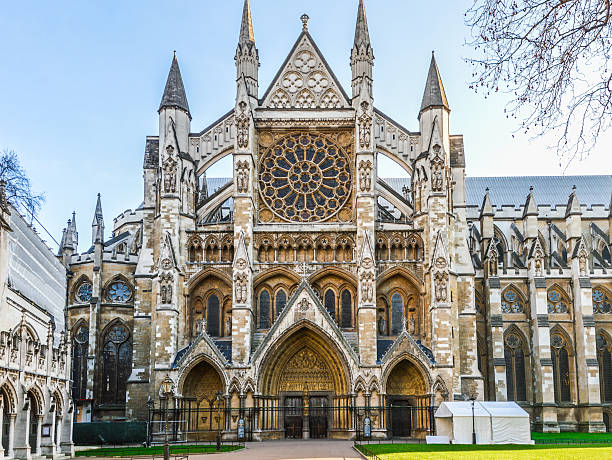
Westminster Abbey offers a different access proposition. Its official accessibility page, last reviewed on 10 June 2026, states that disabled visitors and one essential companion receive free admission. During busy visitor periods, queues may exceed an hour, and advance timed admission provides fast-track entry. Blind and partially sighted visitors can use an audio-described tour created with VocalEyes, either on a device supplied by the Abbey or as a shortened version downloaded to a phone or tablet. The Abbey also runs touch tours at dates across the year, but the published information does not present them as a daily walk-in resource. Current operational details should be checked on the Westminster Abbey accessibility page.
That distinction is central. At the British Museum, a visitor can build a dependable self-guided tactile core from the standing Room 4 and Parthenon resources. At the Abbey, a touch tour should be regarded as a dated programme unless the institution confirms otherwise. The durable everyday resource is the audio-described tour, reinforced by careful human interpretation and a route that uses the building itself as evidence.
The Abbey lists step-free entry at the North Door and Great West Door, with the wheelchair-accessible door at the North Door. Most of the self-guided visitor route is step free, but several historically important spaces involve steps: the Lady Chapel and royal tomb areas, side chapels in the ambulatories, the Chapter House, the Pyx Chamber and the internal route into the Cloisters all have particular level changes. A low-vision guest may be entirely comfortable with stairs, but the combination of marked or unexpected steps, dimmer medieval spaces and a moving visitor flow deserves advance discussion. For a broader comparison of visit formats, compare ways of visiting Westminster Abbey.
Permanent benches and other seating are available through the Nave and South Transept. The Abbey identifies weekday mornings as generally the quietest period. It also describes the Cloisters as a calmer, open-air area with natural light, reachable by a step-free route through Dean’s Yard when the internal stepped connection is unsuitable. The Cloisters are therefore more than an architectural extra: they are the clearest place for the whole group to reduce acoustic load without abandoning the historical setting.
Editorial route judgment: Westminster Abbey is most legible when described as a sequence of spatial changes rather than a catalogue of monuments. Begin with the long axis of the Nave, establish where the group is in relation to the Great West Door and High Altar, and then explain how royal ceremony, burial and national commemoration accumulate in increasingly dense zones. A low-vision guest who understands the building’s geometry can place individual tombs and memorials in a meaningful structure; a guest who only receives names may hear an impressive list without gaining a map.
Choose the order by the hard constraint
Sequence A: British Museum first when a guided touch tour is confirmed
This is the preferred sequence when the museum has supplied a definite touch-tour time. Arrive near opening rather than entering at the busiest middle of the day. Use the Great Court only long enough to establish orientation, collect any requested tactile or large-print material, confirm the touch-tour meeting point, and agree where the group will regroup if someone needs the toilet, a seat or staff assistance.
After the tactile route, add no more than two or three audio-described objects elsewhere. The museum’s library of 153 descriptions makes it tempting to build a long playlist. Resist that. A tactile stop requires time to understand boundaries, material, orientation and detail; an audio-described stop requires silence and control of playback. Too many items convert access into endurance. The group should leave the museum with a few shared historical propositions, not a list of famous names.
Take a seated break before crossing London. The transfer from Bloomsbury to Westminster is not interpretive time; it is a recovery and reorientation interval. A prearranged car or licensed taxi can reduce platform changes and keep the group together, although central traffic makes journey time variable. Public transport may be efficient for a traveler who prefers independent urban navigation, but it adds station entrances, crowd flow and the need to reset orientation at the other end. Westminster station is the Abbey’s nearest step-free Underground station, while the Abbey also permits a designated drop-off outside the Great West Door for visitors arriving by taxi or accessible transport.
At the Abbey, use the timed entry, settle first in the Nave seating if needed, and treat the audio-described guide as the backbone rather than an optional supplement. Keep the route to a coherent set of spaces. If energy is good, continue into the more intricate eastern parts of the church. If the interior is crowded or the lighting changes are becoming tiring, move the whole family to the Cloisters through the step-free Dean’s Yard approach rather than splitting into “those who can continue” and “the person who needs a break.”
Sequence B: Westminster Abbey first when crowd friction is the greater risk
Use this order when no guided British Museum slot is fixed and the traveler benefits materially from a quieter Abbey. A weekday opening visit gives the best chance of hearing the audio-described material without as much competing speech and of understanding the Nave before visitor density builds. It also places the more acoustically and visually variable institution at the start of the day, when attention is freshest.
After the Abbey, pause outside the main flow before moving to Bloomsbury. The British Museum can then be approached as a deliberately reduced afternoon visit: one self-guided touch route, not both, plus perhaps one audio-described object selected in advance. The Egyptian Sculpture route is the better choice when the guest values large, solid forms and wants a compact tactile argument about monumentality, kingship and carved stone. The Parthenon route is stronger when the family wants to explore relief, sequence, bodies in motion and the relationship between sculpture and architecture.
This reversal has one risk: the British Museum is commonly busier in the middle of the day, and its official guidance identifies the first hour and late afternoon as quieter than the central part of the day. Do not solve that by adding more galleries while waiting for crowds to thin. Use the Great Court as a controlled pause, check conditions with staff, and proceed only to the preselected route. On a day when the museum is too dense for useful listening or touch, deepen the Westminster portion rather than forcing a second major institution merely because it was on the original plan.
How to select objects for touch, scale and verbal description
The right object is not simply the most famous object that happens to have an accessibility resource. It should reward the sense through which the visitor is meeting it. A tactile object needs readable boundaries, a comprehensible orientation and features that can be explored without the hand being hurried. A verbally described object needs a shape that can be built in stages, a manageable number of visual relationships and a historical question that gives those details purpose.
Arts Access Victoria’s practical guidance for touch tours recommends describing the scale, lighting, activity and main features of a space on arrival, continuing to describe surroundings while moving, and limiting a guided tactile session to roughly three to five objects. That is excellent discipline for London’s large collections. The full guidance is available in Get the Facts: Touch Tours.
Use six tests when choosing the core stops:
- Permission: the item or tactile representation must be explicitly available for touch. Never infer that a robust-looking sculpture can be handled.
- Readable form: the object should have an outline, relief, texture or sequence that can be understood through the available tactile access.
- Scale: the guide should be able to relate its size to the visitor’s hand, body, room or architectural setting without relying on vague adjectives.
- Material consequence: stone, metal, wood, cloth or a replica surface should lead to a point about making, use, durability or status.
- Historical leverage: the object should explain more than itself. It might open a discussion of state power, religious practice, civic identity, ancient architecture or the politics of collecting.
- Shared value: sighted companions should gain something from the tactile and verbal method rather than waiting for it to finish.
At the British Museum, the Room 4 and Parthenon routes already solve the permission problem. The planning work is to reduce them. Three Egyptian stops may be enough to compare mass, carved surface and the way a monumental figure presents authority. Three or four Parthenon stops may be enough to understand low and high relief, repeated movement and how fragments once belonged to an architectural whole. The family can then compare what the hand learns directly with what verbal description adds: posture, missing sections, relative placement and the relationship between figure and background.
At Westminster Abbey, do not attempt to simulate a museum touch route if no confirmed tactile programme is operating. The building offers other forms of nonvisual evidence: the length of a walk along the Nave, the change in reverberation between open and enclosed areas, the shift in floor and light, the compression of memorials, and the difference between a broad ceremonial space and a small chapel threshold. None of those should be romanticised as a substitute for touch. They are a different access mode, valuable when the description is precise and the guest controls the pace.
Verbal description that creates a map rather than a monologue
Good verbal description is selective. It does not say everything visible, and it does not replace visual detail with a stream of interpretation. It gives the listener a stable whole, places the important parts within that whole, and then explains why those parts matter. For this day, use a consistent five-part sequence.
- Locate: name the room or architectural zone and the group’s direction of travel.
- Frame: give the overall shape, scale, light and level of activity.
- Build: describe the object or space from the largest form to smaller details, using a direction system the traveler prefers.
- Interpret: separate what is visibly or tactually present from the historical argument drawn from it.
- Return control: pause for questions, touch, closer viewing, magnification or replay before moving.
At the British Museum, a useful description might begin with the object’s orientation and complete silhouette before moving to a carved face, garment fold or line of figures. At the Abbey, it might establish the Nave as a long, high corridor of stone with repeated vertical supports, then place memorials and ceremonial focal points along that axis. Relative language is often stronger than unsupported measurements: shoulder height, a handspan of relief, several body lengths away, above the doorway, or across the width of the aisle. Exact numbers are useful only when they are known and meaningful.
Do not assume clock-face directions work for everyone. Some low-vision travelers use them readily; others prefer left and right from their own body, cardinal directions, or a simple “near side, far side, centre” framework. Ask once and remain consistent. Likewise, identify changes in lighting before the guest crosses into them. “The next chapel is markedly dimmer, with one step at the threshold” is actionable. “It is atmospheric in there” is not.
The companion’s role should be agreed, not assigned by habit. One person can manage orientation and practical changes, while the professional guide or designated narrator handles historical description. Children can join by offering one concrete observation after the formal description: the strongest shape, the most surprising texture, or the detail that changes their interpretation. This creates a shared inquiry rather than a one-way service delivered to the low-vision family member.
Research published in 2025 on interactive tactile museum interfaces found that customizable audio controls and clear tactile feedback improved usability, perceived independence and satisfaction for blind and partially sighted visitors. The direct lesson for this itinerary is modest but important: preload descriptions, make playback controls easy to reach, let the traveler control volume and speed, and avoid a setup in which a companion must constantly start, stop or interpret the device. The study record is available through the University of Haifa research portal.
The British Museum route in practical detail
Arrival and orientation
Choose the entrance in advance and tell the whole party which one it is. Great Russell Street and Montague Place lead into different internal positions, so “meet inside” is not a sufficient plan. On arrival, identify the Information Desk in the Great Court as the primary staff point and a second fixed location as the family regrouping point. Collect any braille, tactile or large-print material before entering the galleries rather than sending a companion back later.
Give a short description of the Great Court: its overall scale, the roof above, the central mass of the former Reading Room, the direction of the chosen gallery and the current level of activity. This is not the moment for a full architectural history. The purpose is to make the building navigable. Use the same terms on the return: “back at the Great Court, on the Information Desk side,” rather than introducing a new description when everyone is tired.
Room 4 as the compact tactile core
Room 4 suits a first tactile sequence because Egyptian monumental sculpture makes questions of scale, frontal presentation and carved mass immediately available. Use three to five official touch-route stops, not all nine by default. At each stop, establish where the object begins and ends, which surfaces are intended for exploration, and whether the material under the hand is original, a cast, a replica or another approved tactile element when that information is supplied. Do not let sighted companions jump ahead with identification before the low-vision guest has formed an initial impression.
One productive pattern is “form, technique, power.” First ask what bodily or geometric form can be understood. Then explain how carving, relief or polish creates that form. Finally connect it to an historical function: royal image, sacred presence, public inscription or the projection of authority. This gives each tactile encounter a purpose and prevents the guide from burying the guest in names and dates detached from sensory evidence.
Rooms 18 and 18b as a sequence of bodies and architecture
The Parthenon route is less about isolated mass and more about relation. Relief sculpture asks the visitor to follow edges, overlap, rhythm and changes in depth. Begin by explaining what a frieze or architectural sculpture does: it belongs to a building and unfolds across space. Then use selected tactile stops to compare a single figure with a group, stillness with movement, or deeper carving with shallower background.
For sighted relatives, the temptation is to scan the entire gallery while the tactile work proceeds. Keep the group together for the first few stops and ask everyone to describe the same relationship after the guest has explored it. The resulting conversation is often richer than a conventional lecture because family members must distinguish what is actually present from what they assume a classical sculpture should look like.
Object handling as a bonus, not the spine
The museum’s hands-on desks can add genuine material variety, and the published daily window is useful. Yet the sessions remain subject to availability. Do not build the day around waiting for one to appear. Ask at the Information Desk, note the likely location and time, then continue with the confirmed touch route. If a handling session fits naturally, treat it as an additional encounter. If not, the day should still feel complete.
This is where a private guide can be useful only when the service is correctly scoped. A guide should not claim control over museum resources or imply that an unconfirmed handling session will occur. The value lies in preselecting the accessible objects, integrating the official audio descriptions with historical context, maintaining a shared pace and knowing when to stop adding content. For a dedicated museum format, see a privately guided British Museum visit.
The Westminster Abbey route in practical detail
Arrival: remove uncertainty before interpretation
Use a timed entry and arrive knowing which door has been advised for the guest’s needs. If coming by car or taxi, the designated drop-off outside the Great West Door can reduce the final approach. If arriving from Westminster station, explain the character of the approach before the group enters the Parliament Square environment: multiple road crossings, traffic noise, open sightlines and several monumental buildings competing for attention. The guide should identify the Abbey by position and mass, not by saying that it is “the obvious church.”
Once inside, pause before starting the audio-described route. Confirm device controls, headphone comfort, preferred volume and whether the traveler wants the shortened mobile version or the supplied device. Establish the main axis of the building and point out the nearest seating. This two-minute orientation prevents repeated corrections later.
The Nave: architecture before names
The Nave is the place to build the mental model. Describe the long central space, the repeated supports, the height above, the side aisles and the direction of the High Altar. Explain that the Abbey is simultaneously a church, a setting for state ceremony, a burial place and a national memorial landscape. Those functions overlap physically; the visitor is not moving through separate museums of monarchy, religion and literature.
Use the permanent seating. A seated description can be more precise because the group is not blocking circulation and the listener is not dividing attention between orientation and content. From one stable position, introduce the building’s verticality, the sound of the space and the way monuments gather more densely in particular zones. Then move with a clear destination rather than narrating continuously along the aisle.
Poets’ Corner and memorial density
Poets’ Corner is effective for a shared family group because the subject is not a single object but a cultural practice: how Britain commemorates writers, performers and makers in a sacred national building. Begin with the shape and density of the memorial field. Then choose a small number of names relevant to the family rather than reciting every recognizable figure. Explain the difference between burial and commemoration when it matters, and make clear which details are visible, inscribed or historically inferred.
For a low-vision guest, inscriptions may be inaccessible even at close range. Reading every inscription aloud can become numbing. Select the wording that reveals tone, status or historical change, and paraphrase the rest. Sighted companions can help identify a familiar name, but the guide should preserve the larger question: who receives space here, how later generations add meaning, and why a church becomes an archive of national memory.
Royal and eastern spaces: decide whether the steps are worth it
The eastern chapels and royal tomb areas contain some of the Abbey’s most concentrated history, but they also introduce steps, narrower circulation and changing light. The group should decide in advance whether these spaces are essential. Low vision alone is not a reason to exclude them. The relevant questions are whether the guest is comfortable identifying level changes, whether a companion can guide in the preferred manner, whether the visitor flow allows pauses, and whether the resulting content justifies the added navigation.
If the answer is yes, describe the next level change before reaching it and keep the party compact. If the answer is no, do not frame the omission as a lesser visit. Interpret the royal burial landscape from an accessible point, using the building map and verbal relationships to explain what lies beyond. The Abbey’s history remains coherent without every chapel. Families combining low vision with balance, fatigue or other mobility considerations may also find easier routing at London’s step-heavy icons useful.
The Cloisters and Dean’s Yard: the best shared bailout
The Cloisters are the Abbey’s most useful pressure-release space because they preserve continuity with the building rather than ejecting the family into a completely different environment. Use the step-free approach through Dean’s Yard when needed. Natural light and open air can help after the Abbey’s variable illumination and reverberation. The historical conversation can continue at a lower intensity: monastic routine, enclosure, movement between church and community, and the difference between ceremonial and daily space.
If the interior has become too crowded for effective audio description, let the Cloisters be the conclusion rather than a temporary pause followed by another attempt. A well-finished visit is better than a final half hour spent navigating around groups while the guide compresses the most important material.
Where the friction actually occurs
“Move slowly” is not a plan. The useful question is where a low-vision traveler is likely to need different information, more control or an alternative route. The friction points at these two institutions are not identical.
At the British Museum
- Entrance ambiguity: two public entrances create different internal routes. Name the entrance and meeting point before travel.
- Security and queues: advance entry planning and an early conversation with Visitor Welcome staff can prevent unnecessary standing in a visually confusing line.
- Great Court scale: a large open space with multiple flows requires fixed landmarks rather than gesture-based directions.
- Gallery clusters: visitors gathering around cases or famous displays can interrupt a straight route and make audio harder to hear.
- Resource collection: tactile drawings, braille material and large print should be collected at the start, not discovered after the group reaches the gallery.
- Seating inconsistency: seating exists, but not at every desired stopping point. Plan rests around known public areas and available benches rather than assuming a seat beside each object.
Between Bloomsbury and Westminster
- Mode choice: a car reduces wayfinding but may be slowed by traffic; public transport may be quicker but adds station and interchange demands.
- Group reset: the traveler needs to know not only where the next site is, but what kind of environment comes next: open square, security line, stone interior, reverberation and changing light.
- Food and fatigue: a seated break should happen before the group is depleted. Do not make lunch conditional on “finishing one more gallery.”
At Westminster Abbey
- Busy-period queues: the Abbey warns that waits can exceed an hour. A timed entry is an access tool, not merely a convenience.
- Variable lighting: bright windowed areas and dim medieval spaces require advance verbal warning and may affect how much useful vision the guest has from one zone to the next.
- Reverberation: the building’s acoustics can blur guide speech and audio-guide content when several groups overlap.
- Level changes: some chapels and historic areas involve steps. State them before arrival and again before the threshold.
- Narrow decision points: do not stop the group where others must squeeze past. Use Nave or South Transept seating for longer interpretation.
- Rejoining: if any companion briefly takes an optional stepped detour, use a named bench or doorway and a definite time. “Meet near the tombs” is not adequate.
Fallbacks that keep the family on one history day
If the guided British Museum touch tour is unavailable
Use the published self-guided route in either Room 4 or Rooms 18 and 18b. Download the relevant audio in advance, collect the supporting tactile or braille material at the Information Desk, and choose three to five stops. A private guide can add historical context, but the official tactile route should remain the access foundation. Do not replace a denied guided slot with a general gallery sprint.
If object handling is not running
Continue immediately. Handling desks are valuable but conditional. The family should already have a complete tactile plan that does not depend on them. This is also why the guide should never advertise “hands-on access” without distinguishing the standing touch routes from the availability-dependent handling sessions.
If an Abbey touch tour is not scheduled
Use the audio-described guide and a spatially disciplined route through the Nave, Poets’ Corner and whichever eastern spaces are appropriate. The Abbey’s touch events are an enhancement when available, not the only route to a meaningful visit. The guide’s job is to make scale, light, sound, memorial placement and historical function explicit without pretending that words reproduce touch.
If Westminster Abbey is too crowded to interpret well
Take the first available seated pause, reduce the route and move to the Cloisters through Dean’s Yard if the group needs quieter conditions. If the crowd prevents useful listening throughout, end the interior visit and continue together outside with a concise account of the Abbey’s relationship to Parliament Square, royal ceremony and the surrounding institutions. This preserves the history day without asking the low-vision guest to endure a space that has ceased to be intelligible.
If the British Museum becomes the only major interior
Deepen rather than replace. Complete one tactile route, add one object-handling encounter if available, and use two or three of the museum’s audio-described objects to connect Egypt, Greece and the history of collecting. End in the Great Court with a recap of how material, scale and architectural setting changed the group’s understanding. A full shared museum visit is preferable to inserting an unverified alternative simply to preserve the appearance of a two-venue itinerary.
If Westminster becomes the only major interior
Give the Abbey the time normally lost to transfer and museum orientation. Use the Nave, Poets’ Corner, the most suitable royal or chapel zone, and the Cloisters as four distinct chapters. The family can then take a short exterior route through Dean’s Yard and the edge of Parliament Square, concentrating on the relationship between church, monarchy and government. Keep the route compact and use safe, agreed crossing points; the exterior portion is interpretation, not a test of independent wayfinding.
How to prevent companions from splitting into two experiences
The common failure is subtle: the low-vision guest receives an access product while sighted relatives continue with the “real” tour. That can happen even in a well-intentioned family. One person listens to a separate audio track, another photographs labels, children drift toward the next famous object, and the guide alternates between two audiences. By the end, everyone has visited the same building but not shared the same history.
Use a stop rhythm that reunites the group:
- Begin with a shared question, such as how a ruler communicates authority or how a building turns memory into space.
- Let the low-vision guest explore the approved tactile resource or control the audio description without interruption.
- Ask sighted companions for one observation that has not already been supplied.
- Add the historical interpretation and distinguish evidence from inference.
- End with a choice: another detail, a replay, a question, or movement to the next stop.
For children, assign roles that do not make them responsible for the adult traveler’s safety. A younger child can listen for material words or identify repeated shapes. A teenager can manage the family’s object list, but the low-vision traveler should control personal audio whenever possible. For older companions, put the longer interpretive passages at seated points. A family route should not be optimized for the fastest walker or the most visually confident person.
Rejoining plans matter even when the intention is to stay together. Agree on one staff point at each institution, one fixed seat or doorway in the active route, and a communication plan if mobile reception or noise makes calling difficult. Describe the meeting location in nonvisual terms: “the Information Desk in the Great Court” or “the Nave bench nearest the Great West Door,” not “beside the large monument.”
A concise pre-visit access brief
The following checklist is short enough to send to a guide, travel planner or family group before the day:
- Ask the low-vision traveler which visual conditions and forms of assistance are useful, and which are not.
- Request a British Museum guided touch tour at least two weeks ahead; do not treat the request as confirmed until the museum replies.
- Choose Room 4 or Rooms 18 and 18b as the primary tactile route, with three to five priority stops.
- Download or bookmark the relevant British Museum audio descriptions and test playback controls before travel.
- Book a timed Westminster Abbey entry and review the current accessibility information, companion admission and door advice.
- Confirm whether an Abbey touch event coincides with the date; otherwise plan around the audio-described guide.
- Choose the sequence according to the fixed appointment or the institution where crowd and lighting friction matter most.
- Name the exact entrance, staff point, seating point and regrouping location at both sites.
- Carry the traveler’s preferred optical aids, headphones, charging equipment and any cane or mobility aid normally used.
- Plan a seated break before the cross-city transfer and define the one-venue fallback before the day begins.
Access information can change. The operational facts in this guide were checked against the institutions’ published pages on 17 October 2026. Reconfirm touch-tour bookings, entry arrangements, programme dates and downloadable resources close to travel, especially when a particular service is essential to the day.
When private coordination becomes materially useful
This is one of the London days in which private coordination can change the result, but only when it begins before the meeting time. The useful work is not ornamental. It is securing or verifying access resources; selecting a small set of tactile and audio-described objects; preparing verbal geometry; choosing the order around a confirmed appointment or a quieter entry; briefing companions; and carrying a fallback that keeps the group together if a handling session, touch event or interior route does not perform as hoped.
A capable private guide should also know the limits of the service. The guide cannot promise museum resources controlled by the institution, cannot treat low vision as a single condition, and should not improvise touch where none is authorized. The contribution is expert interpretation and group coordination: turning official access provision into one shared historical argument. Travelers considering a fully integrated day can review tailor-made London private touring and Inquire now.
If you’re interested in any private tours of London, please reach out to us.
















 So if you are looking for the absolute best in London & surroundings with authentic local fully-licensed native guides whose English you can actually understand and with an exclusive and amazingly fun itinerary













