When State Ceremonies Reshape Westminster: Road Closures, Entry Dependencies and a London Route That Still Works

Updated
At 08:00, Westminster can look like the Westminster a visitor expected: taxis moving through Parliament Square, pedestrians crossing between St James’s Park and Whitehall, and timed admissions appearing to sit only a short walk apart. By late morning, the same map may be divided by barriers, managed crossings, police cordons and crowds whose direction of travel matters more than the distance between landmarks. The visible ceremony may last minutes. Its operational footprint can begin much earlier, extend beyond the processional streets and outlive the moment people came to watch.
State Opening of Parliament shows why the timing matters. According to UK Parliament’s official public sequence, the procession begins just before 11:00, travels from Buckingham Palace along The Mall, through Horse Guards Parade, down Whitehall and Parliament Street, and reaches the Palace of Westminster at about 11:15. That is a short ceremonial movement through a long chain of connected spaces. A group booked into Westminster Abbey, the Churchill War Rooms or another fixed appointment does not merely need to know when the procession passes. It needs to know which side of that chain it will be on, whether its intended crossing remains available and how much of the approach depends on a vehicle reaching a particular curb.
This guide is for private groups with fixed Westminster entries and little schedule slack. The aim is not to turn a state ceremony into the whole day. It is to preserve one important visit, understand what can change around it, and keep a credible London alternative ready if the security perimeter makes the original sequence unsound.
Begin with the trigger, not the annual calendar
Westminster does not have one reusable “ceremony closure pattern.” Different occasions produce different combinations of processional movement, protected arrivals, crowd management, vehicle restrictions, station pressure and temporary pedestrian control. Annual familiarity is useful for recognising risk, but it is not enough for route design. A date remembered from a previous year, a photograph of an earlier barrier line or a driver’s experience of another ceremony cannot establish what will be open on the day in question.
State Opening of Parliament
State Opening has the most legible ceremonial spine in this planning problem: Buckingham Palace, The Mall, Horse Guards Parade, Whitehall, Parliament Street and the Palace of Westminster. Its public sequence gives visitors an intelligible route, but the practical consequence is broader than the procession itself. The Mall and Whitehall are not isolated viewing avenues. They are major seams between St James’s, Trafalgar Square, Parliament Square and the Westminster attractions to the south and west. A managed crossing at the wrong moment can separate a group from a timed admission even when the destination is geographically close.
Coronations, state funerals and exceptional national ceremonies
These are not enlarged versions of an ordinary ceremonial morning. They can involve a much wider security and crowd-management operation, longer-duration restrictions and changes that should be treated as event-specific. In its account of the 2023 Coronation, the Metropolitan Police described officers lining the processional route, managing crowds and road closures, protecting high-profile individuals and conducting specialist searches. That example is useful as evidence of the operational categories involved, not as a map for a future occasion.
State visits, major commemorations and rehearsals
These can affect parts of the same royal and governmental geography without reproducing the State Opening route. The Mall, Horse Guards Road, Whitehall, Parliament Square, Birdcage Walk, Constitution Hill and approaches to Buckingham Palace may enter the planning watchlist, but they should never be printed into an itinerary as predicted closures without an official notice. Rehearsals can also matter because they may use early hours or temporary traffic holds that intersect with hotel departures and first admissions.
Routine ceremonial activity
Changing the Guard, military movements and regular ceremonial duties can create dense pedestrian flows around Buckingham Palace, The Mall and Horse Guards. Their effect is usually different in scale from an exceptional state occasion, yet a group can still lose time by approaching through the most crowded edge. The practical distinction is important: routine crowding is often managed with a better approach and a modest buffer, while an exceptional security perimeter may require moving the day to another district.
For readers whose priority is the ceremony itself, one London ceremony morning deals with viewing, St James’s geography and the palace buffer. The present task is different: it asks whether Westminster’s other commitments remain viable before, during and after the ceremonial movement.
Read Westminster as a set of corridors
A visitor’s map presents Westminster Abbey, the Houses of Parliament, the Churchill War Rooms, Horse Guards Parade and Buckingham Palace as nearby points. An operational map presents them as points divided by corridors. The difference explains why a ten-minute-looking walk can become the weakest part of the day.
The palace-to-Parliament spine
The Mall, Horse Guards Parade, Whitehall, Parliament Street and the Palace of Westminster form the most important ceremonial axis for State Opening. When movement is controlled along this line, the relevant question is not simply whether Whitehall is closed to traffic. It is whether pedestrians may cross the line, where they may cross, and whether the crossing will be held while a procession or protected movement passes.
The St James’s seam
St James’s Park appears to offer soft, flexible movement between Buckingham Palace and Westminster. On an ordinary day it often does. On a ceremonial day, however, the park’s exits and the streets on its edges can funnel people toward a limited number of crossings. Horse Guards Road, Birdcage Walk, Storey’s Gate and the approaches to The Mall can become more consequential than the park path itself. A scenic shortcut is not resilient if it delivers the group to a closed gate in the security line.
The Parliament Square core
Parliament Square, Broad Sanctuary and the streets around Westminster Abbey sit where parliamentary, royal, religious and transport functions overlap. Bridge Street and Westminster Bridge connect the north bank to the South Bank; Victoria Street leads west toward Victoria; Whitehall and Parliament Street lead north; Millbank and Abingdon Street run south. A restriction on one edge can displace vehicles and pedestrians to the others, so congestion is often an indirect consequence rather than evidence that the destination itself is inaccessible.
The vehicle ring
A car route is more fragile than a pedestrian route because it depends on legal access, traffic direction, stopping permissions and a safe place for the group to alight. A driver may be able to reach Victoria, Millbank, Trafalgar Square or the Embankment while being unable to reach the precise Westminster curb imagined in the itinerary. The useful unit of planning is therefore an arrival zone with a pedestrian handoff, not a promise of front-door delivery.
Parliament’s own operating calendar can create separate access and crowding considerations even without a state ceremony. Planning Westminster while Parliament is sitting is a useful companion when the group’s interest includes the institution as well as the surrounding ceremonial geography.
Choose one protected commitment
A ceremony-affected day becomes easier to manage when one admission is explicitly designated as the anchor. Everything else should either support that visit, sit on the same side of the likely perimeter or remain replaceable. Two fixed entries on opposite sides of a ceremonial corridor are not twice as productive; they are a chain in which the first delay can invalidate the second.
Editorial route judgment: for most private groups, the anchor should be the visit with the strictest admission terms, the greatest interpretive value and the fewest equivalent substitutes. It should not automatically be the first booking made or the most famous building.
Westminster Abbey
The Abbey’s location makes it deeply relevant to a ceremonial day and unusually sensitive to one. Its official terms state that online tickets are valid for the specified date and time, that entry is not guaranteed when the ticket is not used at that date and time, and that an unadvertised or short-notice closure may prevent a visit. The wording should be checked directly in Westminster Abbey’s official ticket terms before travel because admission conditions are operational facts, not evergreen assumptions.
The Abbey is a strong anchor when the group’s historical priorities are royal ceremony, coronation, burial, worship and national memory. It is a weak anchor if the plan gives it no protected arrival window and expects the group to cross Whitehall or The Mall immediately beforehand. A better sequence approaches from the same side, allows for security and treats any ceremonial viewing as an optional addition rather than a prerequisite.
There is also a substantive choice between worship, general admission and a guided encounter. Choosing the right form of a Westminster Abbey visit helps determine whether the booking itself matches the group’s purpose before the route is protected around it.
Churchill War Rooms
The Churchill War Rooms can be an excellent anchor for a group interested in wartime government and political decision-making, but its access should be treated as timed and controlled rather than casually interchangeable. For visits from 2 September 2026 through 31 March 2027, the Imperial War Museums booking page for Churchill War Rooms states that visitors may arrive during the first 30 minutes of their booked timeslot and that entry before the timeslot cannot be guaranteed. That dated policy is useful for a 2026–27 visit, but it should be rechecked for later travel rather than carried forward by habit.
The War Rooms sit close to Whitehall in distance and close to St James’s Park in appearance, yet their practical approach can be affected from either side. A group should know the current permitted approach to the entrance, not merely the nearest landmark. It should also avoid building a second hard commitment immediately after the museum unless the onward route stays outside the ceremonial pressure zone.
Groups deciding whether the War Rooms deserve the anchor position can use this comparison of London’s principal war-history visits to match the museum to the depth and geography of the day.
What not to protect
Do not protect a vague wish to “see Westminster” at the expense of a real admission. Do not protect a restaurant reservation on the far side of a closure if an equally suitable meal can be kept nearer the anchor. Do not protect an exact vehicle drop-off when a five- or ten-minute pedestrian handoff would make the route more reliable. And do not protect a ceremony-viewing position if reaching it puts the anchor booking at risk.
Seven days out: design the day from verified conditions
The seven-day check is the point at which a draft itinerary becomes an operational plan. The objective is not to predict every barrier. It is to identify whether the day can still be built around the intended anchor, which corridors may be sensitive and which commitments should be removed before they become liabilities.
Start with official sources. Check the relevant ceremony or institution page, police notices where a major operation is involved, venue admission information and Transport for London. TfL’s major works and events page says its information is updated regularly, directs road users to traffic status by date, provides journey-planning tools and advises affected passengers and road users to leave extra time. That makes it a necessary live source, but not a substitute for the venue’s own status or a ceremony-specific notice.
- Confirm the trigger. Establish whether the occasion is State Opening, a state visit, a national commemoration, a rehearsal, routine ceremonial activity or an exceptional event. The category influences the scale of uncertainty.
- Confirm the anchor. Recheck the ticket date, entry time, named visitor requirements, security instructions and any closure notice. Save the official contact route as well as the booking confirmation.
- Mark the likely corridors. Note whether the plan depends on The Mall, Horse Guards, Whitehall, Parliament Square, Westminster Bridge or a vehicle approach through the core.
- Choose the side of approach. Decide whether the group will come from Victoria and the west, Trafalgar Square and the north, Millbank and the south, or the South Bank and the east. Avoid crossing the ceremonial spine simply because the map shows the shortest line.
- Remove one fragile commitment. If two timed visits are connected by a closure-sensitive transfer, release or move one while there is still time to do so.
- Name the fallback district. Select a real alternative outside the likely perimeter, with enough cultural substance to stand as the day rather than feel like consolation.
A useful seven-day classification is green, amber or red. Green means no material official disruption is identified and both approaches remain plausible. Amber means a ceremony is confirmed or restrictions are expected, but the anchor remains open and one same-side route appears sound. Red means the venue status is uncertain, the only approach crosses a protected corridor, or the group’s mobility and timing cannot absorb the unknowns. Red is not an instruction to wait and hope; it is the moment to activate the alternative.
Verified fact versus planning judgment: an official notice can establish a closure, route, time or admission rule. It cannot decide whether a particular family, executive group or mixed-mobility party should accept that risk. The green-amber-red classification is an editorial planning method, not an official status system.
Twenty-four hours out: lock the route, not the theory
The 24-hour check has a different purpose. Seven days out, the itinerary can still be redesigned. One day out, the group needs one primary route, one fallback and one decision owner. This is when broad awareness becomes practical instruction.
- Reopen every official page. Do not rely on a saved screenshot, cached map or forwarded message. Look for updated times, added restrictions, station advice and venue notices.
- Check the date-specific transport picture. Review TfL service status, planned works and road information for the travel date. A functioning Underground line does not guarantee that the most convenient station exit or street approach is unaffected, so read ceremony-specific advice as well.
- Verify the first handoff. Confirm the hotel departure time, vehicle collection point or meeting location. If a driver is involved, agree an edge-of-zone drop rather than insisting on a curb that may be inaccessible.
- Confirm the pedestrian approach. Give the group a route described by streets and landmarks, not only a dropped map pin. Include the last dependable regroup point before the controlled area.
- Set the abandon point. Decide in advance what condition triggers the fallback: a venue closure, an official warning that the approach is blocked, a delay beyond the group’s admission buffer or a mobility issue that makes the revised walk unreasonable.
- Issue one version. The group leader, guide, driver and hotel should not be working from different drafts. A single short instruction is more useful than several speculative options distributed to everyone.
At this stage, avoid trying to preserve every element. A 24-hour plan is credible when it can lose an optional stop without losing coherence. It is brittle when every meal, admission, vehicle movement and ceremonial glimpse depends on exact timing.
Build two approaches to the anchor
Each protected visit should have a primary approach and a secondary approach from a different side. The second route is not a tiny variation around the same closure. It should avoid the same dependency.
Approaching Westminster Abbey
A west or south-west approach can use the Victoria side of Westminster, moving toward Broad Sanctuary without first coming down Whitehall. This is often more resilient when the palace-to-Parliament spine is the sensitive corridor, though Victoria Street and the Abbey’s immediate surroundings still require live checking. Great Smith Street and the streets south of the Abbey may provide orientation points, but no article can guarantee that a specific final segment will be open during a protected operation.
A north or north-east approach through Trafalgar Square, Whitehall and Parliament Square is visually direct and historically satisfying. It is also highly exposed to the very corridor most likely to be controlled during State Opening. Use it only when official information and on-the-ground management indicate that the intended pedestrian movement is permitted with enough time to spare.
Approaching Churchill War Rooms
The apparent approaches are from Whitehall or from the St James’s Park side. Both can be affected by ceremonial control. A route from Trafalgar Square down Whitehall is vulnerable to Whitehall restrictions; a route across the park is vulnerable if Horse Guards Road, Storey’s Gate or nearby crossings are managed. The secondary route should therefore begin from a genuinely different arrival zone, often using the Victoria or Westminster side rather than another path from the north.
Because the War Rooms entrance is less visually obvious than Parliament Square or the Abbey, the group should carry the exact official entrance information and identify a regroup point before the final approach. “Meet near St James’s Park” is too imprecise when gates, paths and road crossings may be channelled.
Do not make Westminster Bridge the hidden dependency
A hotel or morning visit on the South Bank can look conveniently close to Parliament Square. Yet Westminster Bridge is itself a strategic crossing and can become part of a security or crowd-management plan. If a timed entry depends on crossing the river at one precise bridge, the itinerary needs an earlier decision point and another route. Crossing at a different bridge may add substantial walking or transport time; it should not be improvised after the admission window has begun.
Use buffers that reflect the group, not the map
Map estimates assume continuous movement. Ceremonial conditions introduce pauses, diversions, bag checks, crowd compression, closed crossings, uncertainty and the simple time cost of keeping a private group together. The relevant buffer is not “extra traffic time.” It is the allowance for the slowest operational dependency.
ODT route judgment: the following are planning allowances, not official journey times or guarantees.
- Same-side pedestrian approach with no announced restriction: add at least 20 minutes beyond the normal mapped walk for orientation, regrouping and entry procedures.
- One potentially managed crossing: add 30 to 45 minutes, and retain a route that avoids the crossing altogether if the hold becomes prolonged.
- Mixed mobility, children, a larger private group or a precise vehicle handoff: add 45 to 60 minutes where the approach remains viable. More time is not always the answer; if the route still relies on an uncertain crossing, redesign it.
- Exceptional national ceremony or broad security operation: do not attempt to solve the problem by adding an ever-larger buffer. Move the anchor outside the affected district or activate the fallback.
These allowances should sit before the ticket time, not after another commitment. A group arriving early can use a nearby sheltered pause, a short contextual walk or a planned refreshment stop outside the controlled edge. A group arriving late cannot recover the admission window by pointing to a road closure.
Vehicle buffers
For a vehicle-supported day, separate the driving plan from the pedestrian plan. The driver’s responsibility is to reach an agreed legal set-down zone; the group’s responsibility is to complete the final approach with the guide or leader. The itinerary should identify:
- the preferred drop zone outside the most likely closure line;
- a secondary drop zone on another side of the district;
- the maximum reasonable final walking distance for the group;
- the point at which the driver should stop circling and reposition for the later pickup;
- a pickup zone that does not require the vehicle to re-enter the same controlled corridor.
This matters especially for older travelers, wheelchair users, families with young children and groups carrying more than day bags. A theoretical five-minute drop-off advantage is worthless if the vehicle spends 25 minutes trying to reach it. The more exact the curb promise, the more vulnerable the plan.
Group buffers
Private groups lose time differently from independent pairs. They pause for headcounts, security preparation, comfort needs and uneven walking speeds. A ceremonial crowd can also split the front and rear of the party at a crossing. Assign one person to lead and one to watch the back of the group. Give everyone the anchor name, entry time and regroup point in writing. When the party includes children or travelers who may become disoriented in crowds, use a distinctive but discreet visual identifier and make clear that no one crosses after the group has been divided.
Four decision branches that keep the day coherent
1. The ceremony is confirmed, but the anchor is later and accessible
Keep the anchor. Observe the ceremony only from a position that does not force the group across the protected route afterward. Leave the viewing edge before crowd release if the admission buffer requires it. Build the remainder of the day on the anchor’s side of Westminster. For an Abbey visit, that may mean approaching from Victoria and continuing south or west rather than attempting an immediate move through Whitehall. For the War Rooms, it may mean a St James’s or Trafalgar continuation only after the official crossing picture is clear.
2. The ceremony divides the route, but the anchor remains open
Discard the geographically shortest approach and use the same-side route. Move the vehicle drop to the edge of the district. Cancel a pre-anchor stop rather than compressing the admission buffer. If the group is already on the wrong side of the perimeter, do not rely on a police-held crossing reopening at a convenient moment; use the designated open route or activate the fallback.
3. The anchor is open, but its entry viability is doubtful
Contact the venue through its official channel and ask a precise question: whether the booked timeslot remains valid, whether an alternative arrival instruction has been issued and what happens if the public route is restricted. Do not ask a hotel concierge, driver or social-media account to interpret the venue’s admission terms. If the answer does not provide a realistic arrival path, treat the booking as at risk and protect the rest of the day.
4. The security perimeter overwhelms the purpose of the day
Move out of Westminster. This is the correct decision when the group’s interests are broader than the ceremony, when mobility makes long diversions unreasonable, when children are unlikely to tolerate waiting or when the anchor itself has closed. A private day should not become several hours of standing beside barriers simply because Westminster was on the original plan.
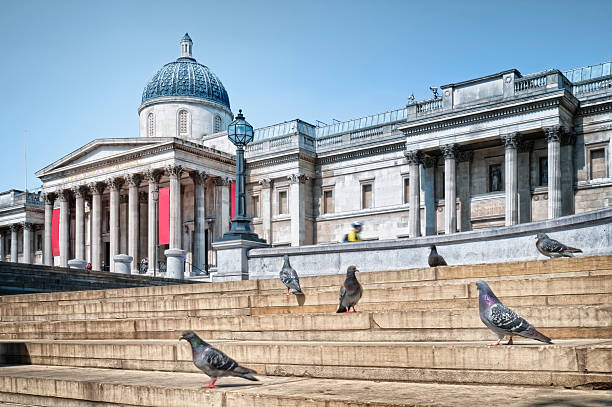
The alternative should be chosen by intellectual continuity, not mere availability. A royal-history group might move to Kensington Palace or the Wallace Collection. A political-history group might choose the Imperial War Museum in Lambeth if access from the group’s starting point is sound, or shift to the City’s institutions and architecture. An art-focused group could use the National Gallery only if Trafalgar Square is outside the affected operation; otherwise the Wallace Collection, Courtauld Gallery or a South Kensington collection may be more reliable.
A fallback should feel deliberate, not second-best
The best non-ceremonial fallback is geographically insulated from the Westminster perimeter, substantial enough to carry several hours and compatible with the group’s original interests. It should be selected before the 24-hour check, with opening information and any necessary booking confirmed independently.
For groups based in Mayfair or Marylebone
The Wallace Collection offers decorative arts, paintings, arms and armour in a contained setting that works well for a private group seeking historical richness without crossing central London. Marylebone’s quieter streets also allow a measured lunch or short walk without depending on the royal-processional spine. This is often a better fallback than forcing a route south to Westminster and then retreating north again.
For groups based in Bloomsbury or Covent Garden
The British Museum can absorb a focused object-led visit, while Sir John Soane’s Museum or the Courtauld can support a more specialist day if their current access arrangements suit the group. The National Gallery is geographically tempting from Covent Garden, but Trafalgar Square’s relationship to Whitehall means its suitability must be checked against the exact operation. “Nearby” is not the same as insulated.
For groups based in South Kensington
The Victoria and Albert Museum, the Natural History Museum and the Science Museum create a strong indoor district with multiple levels of depth. A group can remain in the west, avoid an uncertain cross-city transfer and preserve a serious cultural day. This is particularly sensible when the Westminster booking was one component of a longer London stay rather than the only opportunity to understand the city.
For groups already south of the river
Tate Modern, the South Bank and the Imperial War Museum can form alternatives, but only if the route does not depend on Westminster Bridge. Use the group’s actual starting point. A South Bank fallback is sensible for a group already there; it is less persuasive for a Mayfair group forced to cross the centre during a major operation.
Building an indoor London pivot without losing the day offers a related way to compare museum depth, geography and the cost of changing districts. The weather problem is different, but the planning discipline is similar: choose a coherent alternative before conditions remove the choice.
Special cases require earlier decisions
Wheelchair users and travelers with limited mobility
A closure can turn a level-looking route into a long detour with additional kerbs, gradients, crowded pavements and fewer opportunities to pause. Confirm the accessible entrance of the anchor, the step-free status of any intended station and the final walking distance from both vehicle drop zones. Do not use St James’s Park as an assumed accessible shortcut without checking the exact gates and street crossings needed that day. If the official route information remains vague, the responsible response is to move the visit rather than ask the traveler to absorb the uncertainty.
Older travelers
Standing time can be more demanding than walking distance. Ceremony crowds often involve stationary waiting followed by sudden movement, which can be harder than a continuous ten-minute walk. Build in a seated pause before security, avoid a route with repeated speculative crossings and keep the fallback in one compact district. The day should not require an older guest to prove that they can keep pace with a moving cordon.
Families with children
Children may enjoy ceremonial colour but find barriers, waiting and compressed crowds difficult. Keep viewing optional, identify toilets and a calm regroup point, and protect the admission that provides the day’s real content. The parent or leader should know when to leave the crowd rather than waiting for a perfect view that erodes the museum or Abbey window.
Executive and multigenerational groups
These groups often have different definitions of success. One person may value the ceremony, another the Abbey, another a fixed lunch or afternoon meeting. Resolve the hierarchy before the day. A concise group brief should state the protected commitment, the optional element and the condition that triggers the fallback. Without that agreement, operational changes become negotiations conducted on the pavement.
Groups with luggage or an airport or rail connection
Do not place luggage in the ceremonial route problem. Leave it securely at the hotel, with an appropriate service or in the onward vehicle only when the vehicle can remain operationally separate from the group. A day that also ends at Heathrow, St Pancras or another hard departure point should have an earlier Westminster exit and a pickup outside the closure-sensitive core. The final transfer must not depend on a road reopening at an estimated time.
The compact operational brief
A well-coordinated Westminster day can be summarized on one page. More detail may exist behind it, but the group-facing plan should contain only what people need to act.
- Trigger: the named ceremony or condition that may affect movement.
- Anchor: the protected venue, entry time and official booking terms.
- Primary approach: starting point, drop zone or station, street sequence and target arrival time.
- Secondary approach: a route from a different side that avoids the primary route’s main dependency.
- Regroup point: a named, easily recognised place before the final controlled area.
- Decision owner: one person authorised to abandon viewing, change the drop or activate the fallback.
- Fallback: a named district and first venue, not a vague instruction to “find another museum.”
- Recheck times: seven days before and 24 hours before, with a same-morning check when official guidance remains live.
This is where private coordination has real value. The service is not the presence of a vehicle or guide for its own sake. It is the ability to keep the guide, driver, hotel, venue booking and group brief aligned when the public route changes. The material outcomes are a protected admission, fewer unnecessary crossings, a realistic mobility plan and an alternative that can begin without a new round of research on the street.
Recheck before committing the group
State ceremonies make Westminster memorable because they animate the relationship between monarchy, Parliament, armed service, public space and national ritual. They also expose the weakness of itineraries built only from map distance. A procession that takes minutes can divide the district for long enough to invalidate a timed entry; a road that is closed to vehicles may remain passable on foot, while a pedestrian crossing that appears open may be held at the exact moment the group needs it.
The durable method is to separate what is known from what must be rechecked. The known structure includes the ceremonial corridors, the location of the Abbey and War Rooms, the consequences of timed admission and the value of a same-side approach. The volatile layer includes the date, police operation, barriers, crossing points, transport status, venue instructions and final vehicle access.
Seven days out, verify the occasion, the anchor and the fallback. Twenty-four hours out, reopen the official notices, lock one approach and issue one version to the group. On the morning itself, follow the live instruction rather than the remembered pattern. For a private Westminster day in which fixed entries, hotel pickups and group mobility must survive a changing security perimeter, private London tours can be planned around the protected visit and its fallback rather than around a brittle street sequence. Inquire now
If you’re interested in any private tours of London, please reach out to us.















 So if you are looking for the absolute best in London & surroundings with authentic local fully-licensed native guides whose English you can actually understand and with an exclusive and amazingly fun itinerary













