South Kensington for Two Generations: A Shared London Museum Day With a Rollator User and a Young Child

Updated
The workable answer: one principal museum, one selective second act
Yes, South Kensington can support a genuinely shared museum day for a grandparent using a rollator and a museum-curious young child. The workable version is not an attempt to cover two vast collections. It is a compact sequence built around one principal museum, one deliberately short second museum visit, a seated meal, and a named exit that can be used without debate. The district helps because the Natural History Museum and the Victoria and Albert Museum sit close together. It also misleads: two nearby buildings can still mean two security checks, two entrance decisions, multiple lifts, long internal corridors, uncertain seats, toilets, food queues and a child who may need movement just when the older traveler needs stillness.
The strongest shared route begins at the Natural History Museum, where the young child receives an immediate sense of occasion, then crosses to the V&A for a smaller object-led sequence with more deliberate sitting. Kensington Gardens is not an automatic third attraction. It is the outdoor release valve when the child needs air and the rollator user still has enough walking reserve for a short, chosen segment. If that reserve has gone, the better fallback is a pre-agreed vehicle pickup rather than a hopeful walk toward the park.
This is an editorial route judgment, not a claim that every rollator user has the same capacity. A rollator may provide support and a seat, yet the user can still be affected by gradient, thresholds, repeated standing, the effort of controlling the aid on a ramp, the distance from entrance to first bench, and the need to fold or position it at a café table. “Step-free” therefore answers only one question. It does not tell you whether the route is low-effort, short, quiet or reliably seated.
Families planning a wider first visit can place this day inside a broader London plan for young children. For this specific South Kensington day, however, the success measure is narrower: both generations should share the important moments, neither should spend the day waiting for the other, and the group should be able to stop after either museum without feeling that the plan has collapsed.
Two stamina patterns, one shared route
The young child and the rollator user do not necessarily tire at the same speed or in the same way. A child may resist a corridor yet become animated by one enormous specimen, a moving image or a task with a clear answer. The older traveler may remain intellectually engaged while physical effort accumulates through standing, queuing, lift-finding and repeated turns. A good route therefore alternates different kinds of load rather than merely shortening the day.
- Walking load: the distance from vehicle or station to security, from security to the first worthwhile object, and from one lift bank to another.
- Standing load: entrance queues, bag inspection, café ordering, waiting for lifts and listening to explanations without a seat.
- navigation load: deciding which door, floor or corridor is correct while supervising a child and protecting the rollator user from crowd pressure.
- attention load: asking a young child to absorb too many objects, labels or adult conversations before receiving a clear visual reward.
- recovery quality: whether a pause includes a real seat, toilet access, water and a simple next decision, rather than merely stopping in a busy circulation space.
The route should give both generations a reason to stop in the same place. A bench beside a major object is better than a bench reached only after the child’s interest has disappeared. A portable stool can make a gallery conversation possible, but it is not a substitute for a stable meal seat or a clear route to toilets. A child-interest anchor is most useful when the adult can interpret it from sitting or from a very short standing interval.
Do not treat accessibility labels as a complete personal assessment. A route described as wheelchair accessible may still include a gradient that is demanding for someone controlling a rollator. Conversely, a route not described as wheelchair accessible might be physically possible for a particular rollator user, but that does not make it a sensible default for a family day. The relevant question is not “Can this person technically pass?” It is “What energy will remain after entry, security and the first gallery?” The same distinction matters elsewhere in London; our London planning guide for older parents develops it across larger sightseeing days.
Decide the entrances before deciding the exhibits
For this family profile, the entrance is part of the itinerary. It determines the first gradient, the first queue, the first lift search and often the mood of the next hour. Choose it before leaving the hotel or residence, then check the official operational page again close to the visit for temporary changes. A timed admission does not remove bag inspection, and a step-free door does not guarantee a short wait.
Carry as little as the family reasonably can. Security staff may inspect bags at both museums. A large family bag can add standing time, make the rollator harder to control in a queue and create an extra task when the child wants immediate attention. Divide essentials so that one adult can present the bag while another stays beside the rollator user and child. If there is only one accompanying adult, the plan needs fewer objects, one fewer optional branch and a meal arrangement that does not require that adult to carry several trays while supervising everyone.
Before arrival, agree four named points: the entrance to use, the first seated point inside, the meeting point for any five-minute child branch, and the exit to use if the day ends early. “By the lift” is not precise enough in a large museum. Use an entrance lobby, a specific café threshold, a major named object or a particular information desk shown on the official map. Screenshots of the relevant floor and lift route are useful because mobile reception and attention can both be unreliable inside monumental buildings.
The Natural History Museum’s official visual guide maps floors, lifts, stairs, cafés, toilets and baby-changing facilities. The V&A likewise provides printed and digital navigation information. These are not merely pre-visit reassurance documents. For this route they are working tools: they let the family identify where a seated recovery can happen before the group commits to another wing or floor.
Natural History Museum: choose the entrance by gradient and lift logic
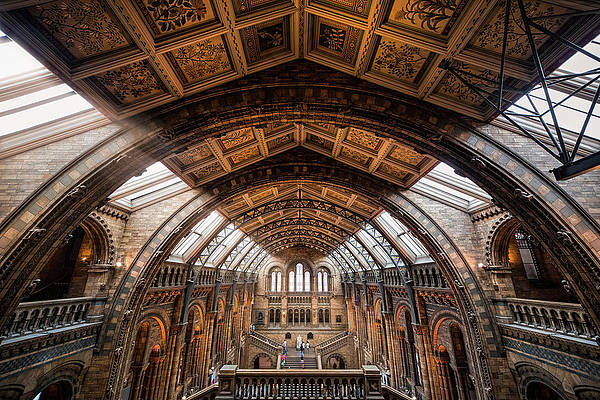
The Natural History Museum should usually be the first stop because it can give the child a high-impact opening while the older traveler’s walking reserve is at its best. The decision is not simply “main entrance or side entrance.” The museum’s official access information distinguishes routes that have materially different consequences for a rollator user.
Verified fact: the museum says staff can fast-track visitors with access requirements, while bags may still be searched on arrival. Its Central Entrance is step-free by a steep ramp. The East Entrance includes steps and has a lift from its lobby. The official visual guide also describes lift and security arrangements at the East and West entrances. These details are set out on the Natural History Museum accessibility page.
Route judgment: the Central Entrance should not be selected merely because “step-free” sounds simplest. A steep ramp can be a poor exchange for a rollator user who has limited braking confidence, reduced balance, painful shoulders or little reserve for an incline before the museum visit has begun. It may be perfectly suitable for another user. The choice belongs to the traveler, informed by the verified gradient warning, not to a generic accessibility assumption.
The East Entrance can be useful when the family wants lift-supported access from the lobby, but the presence of steps and the exact sequence to the lift need to be understood in advance. The West Entrance may suit the day’s direction or current operating arrangements, yet it should be checked against the museum’s visual guide rather than chosen from memory. In every case, tell staff clearly that the visitor uses a rollator and has an access requirement. Ask about the current shortest route to the intended gallery and the nearest suitable lift. Fast-tracking can reduce a standing burden, but it should not be interpreted as a promise that screening disappears.
Vehicle arrival changes the calculation. The best drop is the one that serves the chosen entrance, not the most photogenic façade. The group should be ready to exit the vehicle in order: first the accompanying adult who can secure the space and take a bag, then the rollator, then the user, with the child kept close to the remaining adult. If the rollator folds, practice the mechanism before the day; an unfamiliar latch at a busy curb is an avoidable source of delay and stress.
Once through security, resist the instinct to begin interpreting immediately. The first task is orientation: locate the first lift if needed, toilets, the agreed seated point and the exit that would be used if the visit ended within thirty minutes. Only then begin the museum content. That short operational pause protects the shared experience because nobody is listening well while wondering where the next seat is.
A child-interest sequence that does not require prolonged standing
The Natural History Museum contains far more than this family should attempt in one morning. Select one large-scale opening, one story-rich gallery and one optional child branch. The exact galleries should follow current opening information, but the method remains durable.
Start with scale, not labels
A young child usually understands “enormous,” “ancient,” “has teeth,” “flies,” or “lives under the sea” before understanding a long scientific taxonomy. Begin with a visually commanding object or hall that can be appreciated quickly. The older traveler does not need to stand beside every label. One adult can position the rollator user at a stable viewing point while another brings the child a few metres closer, then both return for a shared question: What is the first thing each person noticed? That creates a common conversation without requiring identical physical positions.
Use a three-object limit
Choose three objects or displays before entering the next gallery. The child’s task might be to find one animal adapted to water, one sign of defence and one surprising material. The grandparent can hold the “mission” from a seat or portable position, receiving the child’s report after each find. This converts wandering into rejoining. It also gives the older traveler a meaningful role rather than making them the person everyone is waiting for.
Allow one short satellite loop
A satellite loop is a five- to ten-minute branch by the child and one adult, beginning and ending at a named seat or object. It is useful when the child wants motion and the rollator user wants stillness. It should not cross floors, depend on a lift or end at a vague meeting point. One well-designed branch can preserve the shared day; repeated separations usually turn the visit into parallel outings.
For children roughly three to five, make the anchor sensory and immediate: size, sound, shape, colour or an animal behaviour. For children roughly six to nine, add one comparison or design question: why might this body, tool or structure have this form? These are planning ranges, not developmental rules. The child’s known interests should override age shorthand. The important operational point is that the question can be answered in a few minutes and discussed while seated.
End the Natural History Museum segment before the child’s interest or the rollator user’s reserve is exhausted. A useful stopping signal is the completion of the preselected three-object sequence, not the edge of a floor plan. If the group leaves while everyone can still recall a favourite object, the second museum remains possible. If it leaves only after a long search for “one more thing,” the transfer itself may consume the remaining goodwill.
The transfer between museums is a real stage, not empty space
The Natural History Museum and V&A are close enough that many itineraries treat the transfer as negligible. For this group, it includes exit navigation, possible crowds near the entrances, road awareness, a second bag check and the emotional work of asking a child to leave one exciting building for another. Treat it as a planned transition.
Before leaving the first museum, use toilets, refill water and sit for a defined interval. Do not make the decision about the V&A while standing on the pavement. Ask two concrete questions: Can the rollator user comfortably manage another security process and at least one lift? Can the child accept a smaller, object-led visit rather than another high-energy attraction? If either answer is no, end the museum sequence and move directly to the meal, vehicle or garden option already chosen.
When continuing, use the entrance that best fits the direction of travel and the user’s access needs. The Exhibition Road side can reduce backtracking from the Natural History Museum, while the Cromwell Road side may suit a vehicle arrival or departure. The correct choice can change with temporary works, lift status and crowd management, so the family should use the V&A’s current access information rather than relying on an old route memory.
South Kensington also works well as a base precisely because museums, green space and return routes can be combined without crossing central London. Families deciding whether to stay here can use the South Kensington family-base comparison to understand the wider neighborhood tradeoff.
V&A access: select a verified step-free door, then build around seats
The V&A is the better second act when the family treats it as a small sequence of designed objects rather than a second encyclopedic conquest. Its access information supports a clear entrance choice and offers more explicit tools for seated looking.
Verified fact: the V&A lists step-free entrances on Cromwell Road and Exhibition Road, and taxi ranks on both roads. Its Tunnel entrance is not wheelchair accessible. Lifts are signposted and shown on the digital map. These points appear on the V&A disability access page.
For a rollator user, the Tunnel statement should be interpreted carefully. It does not by itself prove that every rollator user cannot use that route. It does show that the route is not the sensible family default when the purpose is to minimize uncertainty, stairs and separation. Choose one of the verified step-free entrances unless the traveler has personally assessed another option and wants it.
Verified fact: the museum’s visual story says bags may be inspected at entrances, maps are available, lifts and stairs support navigation, and places to sit plus portable stools are available near gallery entrances. The same resource identifies the Main Café as a hot-food option. See the V&A South Kensington visual story.
Route judgment: the portable stools are especially valuable because they let the group bring sitting into the interpretation rather than making sitting a separate activity in a distant café. Ask where to obtain one before entering the first gallery. A rollator seat may already provide a perch, but the user may prefer a stable museum seat, and another adult may need the stool. Keep the rollator within reach and out of the main circulation line; never assume the user is comfortable having it moved away.
At entry, identify the lift bank needed for the chosen gallery and the nearest place where the full group can sit. Do not begin with a gallery on a distant floor simply because it sounds ideal on paper. The second museum should have a low start-up cost. If the desired gallery requires a complicated lift sequence or a long internal approach, substitute a nearer object cluster with the same interpretive purpose.
A V&A route built around three conversations
The V&A can engage a young child without prolonged standing because its objects invite questions about use, pattern, materials and making. The group does not need specialist vocabulary. It needs three strong conversations that can happen from a seat or within a compact area.
Conversation one: what was this made to do?
Select one object with an immediately legible purpose: clothing, furniture, a vessel, a piece of transport design or a room element. Ask the child to guess who used it and what problem it solved. The grandparent can add a memory or comparison from their own life. This creates an intergenerational exchange rather than a one-way lesson.
Conversation two: how was it made?
Choose an object where material and technique are visible. Look for joins, repeated motifs, carving, weaving, glazing or metalwork. The child can find the repeated pattern while the older traveler remains seated. One adult can photograph a detail, where permitted, and bring it closer on the screen rather than asking the rollator user to edge into a crowded case.
Conversation three: why is it so large, small or elaborate?
Large-scale sculpture and architectural displays can work well because their impact is immediate. The Cast Courts are an obvious candidate when current access and gallery status suit the visit, but they should not become an obligation. The purpose is to end with a memorable question about scale and representation, not to reach a particular room at any physical cost.
Give the child a bounded role in each conversation: spot an animal, choose the most useful object, find two versions of the same shape, or decide which material would feel warmest. Then return to the shared seat and let the grandparent make the final comparison. This keeps the older traveler at the center of the experience while allowing the child short bursts of movement.
If the V&A already feels too large at the planning stage, do not force it merely because it is nearby. A later day built around a smaller collection may be better; the smaller-museum comparison explains when scale should determine the museum choice.
Seated meal logistics: reduce decisions, queues and tray handling
The meal is the day’s most important recovery period, but only if it is operationally easy. A crowded café with a long counter queue, no visible table and several trays can be harder than another gallery. The family should decide before the day whether the meal is a continuation point inside the V&A, a brief museum café stop before departure, or the formal end of the outing elsewhere.
The V&A’s Main Café is useful because the official visual story identifies hot food and because eating inside avoids another street crossing and another entrance process. It is not guaranteed to be quiet or immediately seated. On arrival, one adult should find a suitable table before the other joins a counter queue, provided the child remains supervised and the rollator user is comfortable. Select a table with enough clearance for the rollator to remain beside the user without blocking circulation. Do not park it several tables away simply to create space.
Keep the order simple. A meal that requires multiple return trips to the counter defeats the recovery purpose. One adult can carry food while the other stays with the child and rollator user; if only one adult is accompanying them, consider a lighter order that can be carried safely in one trip or ask staff what assistance is available. Do not assume table service unless it is explicitly offered.
Use the meal to make one decision only: continue to a final object cluster, move to Kensington Gardens, or leave by vehicle. Avoid reopening the entire day. The rollator user should be asked about leg fatigue, hands and shoulders as well as general tiredness; controlling a mobility aid can create strain that is not obvious. The child should be asked to choose between two concrete options, not whether they want to “keep going,” which often produces an enthusiastic answer disconnected from actual attention.
If the Natural History Museum visit has already required more standing than expected, take the meal before attempting the V&A galleries. Enter through the selected step-free door, pass security, and use the café as the first destination. The museum visit can then be reduced to one conversation after lunch. That sequence preserves a shared cultural moment without asking the older traveler to earn the seat through another long route.
Kensington Gardens: a controlled fallback, not an automatic extension
Kensington Gardens can solve one part of the family problem: a child who needs open air and movement after interiors. It can also create a new mobility problem if the group treats the park as “just outside,” enters without a destination, and discovers that the next useful seat, exit or pickup point is farther than expected. The fallback should therefore be a short, named park segment or no park at all.
Verified fact: the Royal Parks states that Kensington Gardens opens at 06:00 and closes at dusk, with current hours and temporary notices published online. Its official FAQ also identifies two disabled parking spaces at Queen’s Gate. Check the Kensington Gardens FAQ before relying on the park late in the day or during operational changes.
The park option works best when the family has already chosen an edge, a short path and an exit. Queen’s Gate is relevant because it connects the museum district with the garden’s eastern side and offers a recognisable place for planning, but disabled spaces are limited and should never be assumed available. Parking provision is not the same as permission for a vehicle to wait indefinitely. A driver or taxi plan must follow current road and stopping rules.
Use the garden when the child needs ten to twenty minutes of movement and the rollator user can still manage the selected surface and return distance. One adult can remain with the grandparent at a bench or agreed point while the child explores a nearby bounded area with another adult. The rejoining point must be visible and specific. Do not let the child branch pull the family progressively deeper into the park.
Do not use the garden when weather, fading light, hand fatigue, pain or uncertain vehicle access makes the return harder than the benefit. Outdoor space is not inherently restful for a rollator user. Wind, uneven surfaces, wet leaves, long distances between seats and the need to monitor a child can increase effort. In those conditions, an indoor seated finish followed by a direct pickup is the more inclusive choice.
Vehicle exits and bailout points that preserve the day
A bailout is not a failure. It is an exit designed early enough that the family can use it while the rollator user is still steady and the child can still cooperate. The day needs several possible endpoints, each tied to a location rather than a vague intention.
- After Natural History Museum security: if the entrance process has consumed too much energy, use the first mapped seated point, see one major object, then exit from the same entrance. Do not cross the building in search of a “better” exit.
- After the first Natural History Museum sequence: use toilets and decide indoors whether to cross to the V&A. A direct vehicle departure is preferable to standing outside while the family debates.
- At the V&A entrance: if the second security process reveals that the group is finished, go to the café or leave. Admission to the building does not create an obligation to tour.
- After lunch: choose one final conversation only if the rollator user can manage the lift and return route. Otherwise use the Cromwell Road or Exhibition Road side that best matches the vehicle plan and current operations.
- At Kensington Gardens: keep the outing to the preselected edge and exit. Use Queen’s Gate as a planning reference when appropriate, while confirming legal pickup arrangements and current park notices.
The V&A’s official access page lists taxi ranks on Cromwell Road and Exhibition Road, which makes the museum a practical controlled endpoint. A pre-booked private vehicle can add value when the family needs a known meeting point, room for a folded rollator and the ability to end after either museum. It does not eliminate the need for precise instructions: specify the road, entrance side, passenger name, rollator, likely departure window and a secondary contact method. “Meet outside the museum” is too vague for a building with several doors.
If the vehicle cannot reach the preferred point because of temporary restrictions, the family needs a secondary pickup that does not require crossing back through the museum district. That contingency should be confirmed before the first entry. The material benefit is not prestige; it is avoiding a late-day curbside search while one adult supervises a tired child and another supports the rollator user.
A relative-time plan that can absorb real delays
Fixed clock times can create false precision because admission slots, security and lift waits vary. A relative plan is more useful. Set the first museum’s booked entry as zero, then place decisions around it.
- Twenty minutes before entry: arrive at the chosen entrance area, assemble the rollator, reduce bags to the security-ready arrangement and confirm which adult is managing the child.
- Entry to plus fifteen minutes: complete screening, tell staff about the access requirement, locate the first seat, toilets, lift and chosen exit. Do not count this as exhibit time.
- Plus fifteen to plus sixty minutes: complete the first major-object sequence and two of the three child tasks. Use sitting inside the interpretation rather than as an afterthought.
- Plus sixty to plus eighty minutes: optional satellite loop or one additional object, followed by toilets and a real seated decision.
- Plus eighty to plus one hundred minutes: exit and transfer only if both generations meet the continuation test. Otherwise end the museum portion.
- Second entry to plus twenty minutes: security, map, stool or seating arrangements and either the café or first V&A conversation.
- Next forty to sixty minutes: two or three V&A conversations, with no requirement to change floors more than once.
- Meal decision: eat inside, leave by vehicle, or use a short Kensington Gardens segment. Do not combine all three by default.
The plan deliberately leaves unscheduled capacity. A five-minute lift wait, a toilet queue or a child’s fascination with one object should not force the family to rush the next stage. The route has succeeded if it produces shared attention, not if it reaches every planned room. Because the day is built around decision points, a delay removes an optional object rather than destabilising the whole outing.
When one museum is the better shared day
Two museums are appropriate only when the second adds a different kind of engagement without imposing a disproportionate access cost. There are several conditions under which the family should choose one museum from the outset.
- The rollator user finds steep gradients, prolonged hand braking or repeated lift transfers particularly difficult.
- The child is likely to become distressed by a second security check or by leaving the first museum before seeing a favourite area.
- Only one adult is available to supervise the child, carry food, communicate with staff and assist with the rollator.
- The visit falls on a day when temporary entrance, lift or gallery changes make the verified route uncertain.
- The meal needs to happen within a narrow medical, medication or energy window.
- The family wants deeper interpretation rather than a change of building.
In that case, choose the Natural History Museum for a child-led day with a strong visual opening, or choose the V&A for a calmer object-and-design day with portable stools and a hot-food café available within the building. The gardens or vehicle exit can remain the second act. This is not a reduced version of the “real” day. It may be the more genuinely shared version because both generations can remain present for the same material.
A one-museum plan should still have an internal limit. At the Natural History Museum, select one thematic cluster and one optional satellite loop. At the V&A, select three conversations and one meal. The absence of a second museum does not justify filling every available hour with galleries.
Coordination details that prevent repeated separation
Shared touring depends on role clarity. Before entry, assign one person as route lead and one as child lead. The route lead holds the map, speaks to staff about lifts and preserves the exit plan. The child lead keeps the child close during screening and uses the pre-agreed gallery tasks. These roles can switch after the meal, but they should not be renegotiated in every corridor.
The rollator user should control decisions about gradient, braking, whether the aid can be moved and when sitting is needed. Family members may be eager to help, yet taking hold of a rollator without warning can destabilise the user. Ask before folding, lifting or repositioning it. At a seat, park it on the side the user prefers and keep personal items accessible.
For rejoining, use a “stay or return” rule. The grandparent remains at the named point; the child and accompanying adult return to it. The grandparent should not set out to find them if they are delayed. The route lead carries the phone and the exact meeting description. This rule is especially useful in large halls where sightlines can be interrupted by cases, columns and crowds.
Carry a small written summary with the chosen entrances, source links, mobility notes, emergency contact, medication timing if relevant, and vehicle details. This is not because the day is inherently risky. It reduces the amount of information one person must remember while managing security, a young child and a mobility aid.
A verified access checklist for the final planning pass
Use this checklist shortly before the visit. Operational details can change even when the overall access framework remains stable.
- Confirm the Natural History Museum entrance and review the steep-ramp warning for the Central Entrance.
- Review the East and West entrance lift and security descriptions in the museum’s visual guide.
- Identify the first seat, toilets, lift and same-door exit at the Natural History Museum.
- Select three child-interest objects or themes, plus only one short satellite loop.
- Choose either the V&A Exhibition Road or Cromwell Road step-free entrance.
- Do not use the Tunnel as the default accessible route; assess it separately if the rollator user specifically prefers it.
- Locate the V&A lift bank, seating, portable stools and Main Café before choosing galleries.
- Set the vehicle pickup by road and entrance side, not simply by museum name.
- Check Kensington Gardens’ current closing time and notices before using it as a late-day fallback.
- Define the stop conditions: pain, hand fatigue, inability to find a seat promptly, child distress, lift disruption or loss of a clear exit.
The checklist should produce a route with fewer decisions, not a longer itinerary. Every added gallery must justify its walking, standing and navigation cost. Every pause should have a purpose: recovery, food, toilets, rejoining or a decision about the next stage.
Where bespoke pacing becomes materially useful
This day becomes harder when a timed entrance, a particular child interest, the rollator user’s gradient tolerance, a meal window and a vehicle departure all need to align. A private guide or planner is valuable only when those elements are coordinated into one shared sequence: confirming the entrance logic, choosing objects that can be interpreted from sitting, keeping the child’s short branch bounded, and moving the group toward the correct exit before fatigue makes the decision urgent.
The useful service is not continuous commentary or an attempt to fill every minute. It is active group coordination. The guide can interpret to the seated grandparent while another adult completes a brief child loop, then bring the family back together at the next object. A driver can be positioned around a realistic departure window and a named curbside point, with room for the rollator, rather than summoned only after the group has already reached its limit.
For a family that wants those moving parts arranged around the actual traveler rather than a standard museum circuit, begin with a private London family tour and share the rollator user’s preferred gradients, the child’s strongest museum interest, the meal window and the point at which the day should end rather than expand. Inquire now
If you’re interested in any private tours of London, please reach out to us.
















 So if you are looking for the absolute best in London & surroundings with authentic local fully-licensed native guides whose English you can actually understand and with an exclusive and amazingly fun itinerary













