Billingsgate, Smithfield or New Covent Garden? Choosing a London Working-Market Study by Product, Access and Hour

Updated
Which London wholesale market should a culinary traveler study: Billingsgate for fish, Smithfield for meat, or New Covent Garden for fruit, vegetables and flowers? The names invite a simple comparison, but the useful answer depends on four separate decisions. What product system do you want to understand? How early are you genuinely willing to begin? What access has actually been confirmed? And where must the rest of the London day happen after the trading energy fades?
These are working markets, not three versions of the same visitor attraction. Their purpose is to move perishable goods through professional supply chains. A good visit therefore observes the market on its own terms: buyers collecting orders, merchants handling stock, vehicles arriving, and products being sorted, priced or dispatched. A poor plan treats a commercial floor as scenery, assumes that public entry includes interviews or back-of-house access, and arrives after the most revealing work is finished.
The operational details below were verified against official and institutional pages on 31 October 2026. Hours, security rules, photography permissions and individual trader availability can change, so every serious visit should be checked again shortly before travel. The comparison is designed to choose the right study subject and route; it is not a promise of unrestricted access at any market.
Begin with the learning objective, not the market’s fame
A working-market study is most rewarding when the visitor arrives with a defined question. “I like food” is too broad. “I want to see how a city receives and distributes highly perishable seafood” points toward Billingsgate. “I want to understand how carcass, cut, portion size and trade demand become a wholesale meat offer” points toward Smithfield. “I want to compare seasonal produce, imported supply, florist demand and overnight logistics” points toward New Covent Garden Market.
The distinction matters because the visible evidence differs. At Billingsgate, species, condition, format and cold-chain handling dominate the visual field. At Smithfield, the language is more likely to be cut, weight, specification, boxed product, poultry, provisions and the needs of professional kitchens or retailers. At New Covent Garden, the intellectual interest lies in breadth, seasonality, ripeness, packaging, supplier relationships and the parallel but distinct rhythms of produce and flowers.
Before choosing, decide which of these four forms of study you actually want:
- Product literacy: learning to distinguish species, cuts, varieties, grades, pack sizes or seasonal signals.
- Trade observation: seeing how buyers and sellers communicate, compare, collect and move goods in a compressed operating window.
- Supply-chain interpretation: connecting ports, farms, importers, storage, delivery and London’s professional kitchens.
- Purchasing: intending to buy, which raises practical questions about quantity, carrying, storage, preparation and onward transport.
One market may satisfy two of these aims but not all four. A visitor can learn a great deal from the front of a stall without entering a service corridor. A buyer can purchase without receiving a tutorial. A prearranged specialist conversation can be more educational than an hour of unstructured wandering. The most valuable choice is therefore not necessarily the market with the broadest public reputation; it is the market whose normal trade reveals the subject you care about.
Three markets, three product ecologies
Billingsgate: fish, seafood and the discipline of perishability
Billingsgate is the strongest subject when the core interest is marine species, seafood sourcing or the logistics required to move an exceptionally perishable product. The City of London’s official market overview describes it as the United Kingdom’s largest inland fish market. It records early-morning arrivals from UK ports and overseas, more than 40 merchants, and a range extending beyond fish itself to fish products, trade sundries and catering supplies.
That breadth creates a useful study of London as a receiving and redistributing city. The market is inland, yet its daily identity is made by coastlines, ports, road transport, import channels, ice, refrigeration and rapid professional judgment. The educational question is not merely “What fish is here?” It is “Why is this species here today, in this form, from this origin, at this stage of preparation, for this type of buyer?”
A seafood-focused traveler can examine contrasts between whole fish and prepared formats, domestic and imported supply, familiar menu species and less familiar trade stock, or small-volume specialist products and high-throughput staples. The visible market can also sharpen later conversations about seasonality and provenance. A restaurant menu often presents a polished final noun; a wholesale market reveals the inventory, variability and handling decisions behind that noun.
Billingsgate is less useful when the traveler mainly wants a leisurely tasting experience. It is a place of procurement and movement. The wet-floor environment, footwear rules, carrying restrictions and early finish are part of the subject, not inconveniences added to it. For a serious study, those conditions help explain why seafood retail and professional buying work as they do.
Smithfield: meat as specification, cut and professional demand
Smithfield is the better subject when the visitor’s questions concern meat, poultry, butchery specifications, boxed trade and the relationship between wholesale cuts and London cooking. The market’s centrality can make it look easier than the other two, but its value is not simply that it is near the City. Its value is the concentration of specialist meat businesses and the chance to read product through cut, weight, preparation and intended use.
The Smithfield Market Tenants’ Association states that the public may buy meat, poultry and provisions and that some traders specialize while others carry broader ranges. It also notes that prices are not normally displayed in the way a conventional retail shopper may expect. That changes the study dynamic. Instead of browsing a fixed shelf label, the visitor encounters a market culture in which asking, comparing and understanding the day’s offer matter.
For a culinary traveler, Smithfield can illuminate why two apparently similar cuts behave differently in a kitchen, how trade customers specify quantity and preparation, and why wholesale packaging may not suit a visitor with no refrigeration or cooking plan. It can also provide context for nose-to-tail cooking, game, offal and the distinction between a chef’s conceptual interest in whole-animal use and the commercial reality of what suppliers stock, portion and sell.
Smithfield is not automatically the best choice for everyone interested in meat. A visitor seeking a calm butchery demonstration may learn more from a booked session with a specialist butcher than from a live trading floor. The market is strongest when the interest includes trade behavior itself: how buyers arrive, ask, select, collect and depart during a short, practical window.
New Covent Garden: produce, flowers and two clocks on one site
New Covent Garden Market is the most complex of the three because it contains distinct product systems. The Fruit and Vegetable Market and the Flower Market do not simply sell different goods; they operate on different clocks and respond to different professional customers. A traveler interested in produce must decide whether the subject is overnight wholesale distribution, seasonal variety, chef supply, florist supply, or the relationship between food and floral businesses on a large commercial site.
The official New Covent Garden Market visitor page separates the hours for fruit and vegetables from those for flowers. Its prose says the produce operation opens at 10:00pm for deliveries and at midnight for customers, while the published hours table lists the fruit-and-vegetable window as 10:00pm to 6:00am Monday to Friday and 10:00pm to 5:00am on Saturday. The same page lists the Flower Market as 4:00am to 10:00am Monday to Friday and 4:00am to 9:00am on Saturday. It explicitly advises customers to call their wholesaler or supplier because opening hours may vary.
That wording is not a minor administrative detail. It shows why New Covent Garden requires the most precise planning. “Going to the market at dawn” could mean arriving near the end of produce trading but near the beginning of flower trading. A 6:30am visit may still be visually rich for flowers while missing the overnight produce sequence a chef or supply-chain specialist hoped to study.
New Covent Garden is therefore the strongest choice for travelers who want to understand how London’s hospitality economy receives fresh produce at scale, or how a specialist flower market serves florists, designers and event businesses. It is weaker for anyone expecting the historic piazza, street performance and retail atmosphere of Covent Garden in the West End. The name survives, but the working market is in Nine Elms and its identity is commercial, logistical and deliberately early.
Product focus decides what evidence you will actually see
The three markets can all be described as places where professionals buy perishable goods, but that broad description hides the most important differences. Fish, meat and produce do not merely occupy separate halls. They create different kinds of evidence, different questions for merchants and different limits on what an unaccompanied visitor can understand.
At Billingsgate, visible variety can be immediately impressive, yet interpretation is essential. Without some knowledge of species, capture region, farming, season, preparation and expected condition, the hall can become a succession of names and boxes. A specialist can turn the display into a study of why certain fish appear whole, why others are filleted or portioned, how imported supply complements UK landings, and how buyers judge a product whose quality declines with time and mishandling.
At Smithfield, the challenge is almost the reverse. The product may look less taxonomically varied to a non-specialist, but the distinctions in cut, trim, weight, maturation, packaging and customer specification are highly consequential. The market rewards visitors who can ask why a particular cut is sold in a particular form and what kind of kitchen, retailer or caterer would buy it. It is an excellent place to connect culinary language with commercial form, provided the visitor does not expect stallholders to stop active trade for a long lesson without prior arrangement.
At New Covent Garden, abundance must be read through timing. A produce market tells a different story at 1:00am, when customer activity and vehicle movement are central, than it does near the end of the published window. The Flower Market begins later and offers another layer of seasonality, design demand and event-driven purchasing. The visitor who wants to study “freshness” should define whether that means biological condition, speed from supplier to buyer, variety at a particular moment, or the buyer’s ability to obtain exact products in useful volume.
This is where editorial judgment matters. Billingsgate offers the most concentrated single-product study. Smithfield offers the most direct connection between wholesale form and classical culinary technique. New Covent Garden offers the broadest systems study, but only when the chosen product division and hour are explicit. Those are interpretive conclusions, not official rankings. A seafood buyer, butcher, florist, chef, food historian and curious diner would reasonably choose differently.
Access is part of the subject, not a box to tick
Wholesale markets are governed by health, safety, hygiene, traffic and commercial priorities. The question is not simply whether the public may enter. It is what kind of presence is permitted, where, at what hour, under what conditions, and whether the activity you want to undertake requires a separate conversation.
Billingsgate visitor rules
The current City of London Billingsgate visitor page lists regular trading after the August 2026 exceptions as Tuesday to Saturday, 4:00am to 8:30am. It states that children under 12, including babies in buggies or harnesses, are not permitted on the market floor. Dogs are barred throughout the site except accredited assistance dogs. Wheeled items such as suitcases, trolleys and folding carts are not allowed on the market floor, and suitable non-slip footwear is advised; open-toed or otherwise unsuitable shoes are not permitted.
These rules have immediate planning consequences. Billingsgate does not belong on an airport-transfer morning with luggage. It is not a family option for a group including a child under 12. A visitor dressed for a later formal appointment needs to plan footwear and perhaps a change. Buying more than can be comfortably and hygienically carried is impractical unless collection and storage have been arranged.
Public-facing rules should not be read as permission to photograph freely, interview merchants at length, enter cold rooms, inspect service areas or bring a private group onto operational space. Those activities need specific confirmation. For a product-led study, the strongest request is narrow: identify the learning aim, group size, preferred time, photography needs and whether the visitor intends to buy. A precise request is easier for market administration or an individual merchant to assess than a vague request for “behind-the-scenes access.”
Smithfield public buying and operational boundaries
Smithfield is the most explicit of the three about public purchasing. The Tenants’ Association visiting and buying page says anyone may buy meat, poultry and provisions and advises arriving before 7:00am to find the full range of stalls open. It also distinguishes the central Buyers’ Walk from service corridors. Protective clothing is not required in the central walk, while hard hats and white coats are required when collecting orders from service corridors at the rear. Eating and drinking are prohibited within the market.
The same page directs photography and filming requests toward the City of London press process. That means a visitor carrying professional camera equipment, planning a commercial shoot or expecting to document traders closely should not rely on casual discretion. A phone in a pocket does not erase the need to respect permission, people and active work.
Smithfield also has 24-hour security and CCTV, according to the City of London’s official Smithfield page. This should reassure visitors that the market is managed, but it should not encourage entitlement. Security staff are present to support safe operation. A study group should be compact, responsive and ready to move when cases, trolleys or workers need space.
There is a useful accessibility nuance. The Tenants’ Association describes the market as being on one level with a wide central Buyers’ Walk, but warns that cases of meat are moved through the working environment and suggests that some disabled visitors may find a companion helpful. The lesson is that step-free geometry and ease of use are not identical. Live trade creates moving obstacles, noise, cold conditions and demands for rapid spatial awareness.
New Covent Garden’s traffic and age rules
New Covent Garden’s official page is especially direct about commercial-site safety. It says under-16s and dogs, apart from assistance dogs, are not allowed on the market. It warns that the site is busiest overnight, when forklift trucks and delivery vehicles are moving, and instructs pedestrians to use marked walkways. Photography or filming requires contact with the Communications Team and an application for permission.
This makes New Covent Garden unsuitable for many family groups even when the children are mature and interested in food. It also changes the character of a private visit. A guide cannot remove the market’s age rule or substitute personal supervision for official permission. The value of specialist planning lies in checking the rule early, selecting an alternative when necessary and avoiding a predawn journey that ends at a gate.
For adult travelers, the traffic environment is part of the intellectual value. Forklifts, delivery schedules, parking areas and pedestrian routes reveal that the market is a distribution system, not a collection of picturesque stalls. Yet that same system limits where a visitor can pause, how a group can gather and whether detailed interpretation is possible without a prearranged host.
The hour changes both the market and the rest of London
Start time is not a secondary preference. It changes the available product, the density of trade, the practicality of public transport, the traveler’s alertness and the shape of the following day. A visitor who says “early morning” may mean 7:30am. For these markets, that can be late.
Smithfield’s official sources illustrate why a single opening-time line is insufficient. The City page says most stalls operate between 3:00am and 9:00am, with the busiest period from 3:00am to 6:00am and an official close at midday. The Tenants’ Association displays Monday-to-Friday hours of midnight to 7:00am, says the market opens for business from 2:00am in its question-and-answer material, and repeatedly advises arrival before 7:00am. Rather than treating these formulations as a contradiction to be solved from a desk, a visitor should use them as a planning warning: confirm the intended traders and arrive during the active period, not at the outer edge of a nominal closing time.
Billingsgate offers a somewhat later official window, 4:00am to 8:30am Tuesday to Saturday. That can make it more feasible for travelers who cannot function at 2:30am, but an 8:00am arrival should not be assumed to deliver the same product range or trading intensity as an earlier one. The official close describes the boundary of operation, not a guarantee that every merchant and every learning opportunity remains equally available until the final minute.
New Covent Garden separates the overnight produce rhythm from the dawn flower rhythm. For produce, the most revealing activity may occur while most of London is asleep. For flowers, a 4:30am or 5:00am arrival can catch a more legible beginning without requiring a midnight departure from the hotel. The correct time therefore depends on whether the subject is fruit and vegetables, flowers, or the relationship between the two.
As an editorial route judgment rather than an access guarantee, three study windows are often the most intelligible starting points for planning:
- Smithfield: roughly 3:30am to 5:30am when the aim is to see the market active, followed by a planned pause before daytime City sites open.
- Billingsgate: roughly 4:30am to 6:30am for fish-market activity without relying on the final part of the published session.
- New Covent Garden: after midnight for a produce-distribution study, or from about 4:30am for a flower-focused visit, always subject to supplier confirmation.
Those windows should be adjusted for the date, trader and purpose. They also expose the real cost of the experience: sleep. A dawn market is rarely improved by a late theatre evening, a long tasting menu or an arrival day affected by jet lag. Serious culinary travelers sometimes overestimate the value of fitting both a major dinner and a wholesale-market start into the same twelve hours. Fatigue reduces observation, patience and safe movement around an operational site.
Predawn transport must be checked for the exact day. London’s Underground and rail services should not be assumed to deliver a 3:00am or 4:00am arrival from every hotel district. Weekend overnight service, engineering work, station opening and line geography all vary. A licensed taxi or prearranged car may be the practical solution for a small group, especially when the route begins before normal public transport or when wet weather and specialist footwear are involved. That is not an argument for chauffeured travel as a universal upgrade; it is a response to a specific access window.
Geography decides whether the market strengthens or fractures the day
The markets occupy three very different positions in London. Smithfield sits in the historic City near Farringdon, the Barbican, St Paul’s and the legal and mercantile quarters. Billingsgate is east of the center in the Docklands orbit, with Poplar, Blackwall and Canary Wharf as the relevant transport geography. New Covent Garden is in Nine Elms, close to Vauxhall and the Battersea Power Station area, south of the Thames.
Smithfield has the easiest central handoff
For travelers staying in Mayfair, Marylebone, Bloomsbury, Covent Garden or the City, Smithfield usually creates the shortest predawn transfer and the cleanest return to central sightseeing. Its nearby stations are useful later in the morning, and the surrounding area supports a coherent City sequence. The problem is not distance after the market; it is the dead interval between the end of active trade and the opening of museums, churches or other daytime institutions.
That interval should be designed, not ignored. Breakfast, a quiet architectural walk, or a return to the accommodation may be sensible, but the choice depends on the group’s energy and the first timed entry of the day. Packing Smithfield directly against a 9:00am major visit can work for a disciplined adult group, yet it leaves little tolerance for a longer merchant conversation, weather, breakfast service or a slower traveler.
Smithfield also combines naturally with a later study of London’s game calendar, but the two should not be conflated. The market shows commercial meat supply; a seasonal interpretation explains regulation, provenance, species and menu timing. For that supporting subject, see London’s game-season study.
Billingsgate rewards an east-London continuation
Billingsgate makes most sense when the traveler accepts that the day begins in east London. The official visitor page places Poplar and Blackwall DLR stations about a five-minute walk away and Canary Wharf Underground about ten minutes away. Those walking estimates are useful after the early rush, but they do not solve every predawn arrival. The exact first service and the route from the hotel still require a date-specific check.
Once the market visit is complete, the strongest continuation is usually eastward or river-related rather than an immediate cross-city leap. Canary Wharf can provide breakfast and a controlled pause. Docklands history or Greenwich can follow later, depending on opening times and the group’s appetite for movement. Returning directly to Westminster or Kensington is possible, but it turns the market into an isolated excursion and increases the chance that the rest of the day feels overextended.
For seafood travelers, Billingsgate can also serve as the wholesale chapter in a wider provenance study rather than the entire story. An estuary, fishmonger or oyster-focused discussion supplies ecological and coastal context that the trading hall alone cannot. The supporting guide London oysters from bed to bar develops that chain from source to specialist selection.
New Covent Garden belongs to a south-bank or westward plan
New Covent Garden’s Nine Elms location creates a different handoff. The official page describes the market as less than a five-minute walk from Nine Elms and Battersea Power Station Underground stations and about ten minutes from Vauxhall. Those connections make the site easier to leave once normal service is running, but a produce visit beginning around midnight is a separate transport problem from a flower visit beginning at 4:00am.
A later continuation can move toward Battersea, Chelsea, Westminster or the South Bank without crossing the entire city immediately. The market is less naturally paired with an early City appointment or an east-London day. Its advantage is that the flower schedule can end at a civilized enough hour to continue into a west or central London program, while the produce schedule may require a deliberate sleep strategy rather than conventional sightseeing.
New Covent Garden is also the market most likely to justify a narrowly arranged specialist appointment. The site’s scale, traffic and split product divisions can make unguided observation diffuse. A produce buyer, wholesaler, florist or market representative who knows the learning objective can direct attention toward seasonality, sourcing, storage or customer demand. Without that focus, the visitor may see movement without understanding the commercial logic behind it.
Choose by condition, not by an abstract ranking
Choose Billingsgate when fish is the non-negotiable subject
Billingsgate is the most coherent choice when the traveler wants marine product literacy, seafood supply or a strong visual concentration of one perishability problem. It suits adults who can arrive before dawn, wear practical footwear, move attentively and accept that the market’s work takes priority over their questions. It is especially persuasive when the rest of the day can remain in Docklands or move toward Greenwich rather than immediately crossing London.
It becomes less suitable when the party includes a child under 12, luggage, open-toed footwear, a need for a gentle late start, or a later appointment on the opposite side of London. It is also a poor choice when the real desire is a tasting-led seafood morning. In that case, a specialist fishmonger session, seafood class or provenance-led meal may provide more explanation and less operational friction.
Choose Smithfield when meat and central geography carry equal weight
Smithfield is the most efficient choice for travelers interested in meat who also need the day to remain central. Its public-buying guidance is unusually clear, its Buyers’ Walk offers a defined visitor space, and the surrounding City can support a coherent onward route. It is particularly useful for chefs, committed home cooks and food historians who can translate visible cuts and trade formats into questions about cooking, season, demand and waste.
It becomes less suitable when the traveler will not arrive before 7:00am, wants a long explanatory demonstration without an appointment, plans to eat or drink while walking through the market, or needs extensive photography. It is also less compelling for someone whose interest is livestock history rather than the present meat trade; the current market should not be used merely as a backdrop for a historical lecture.
Choose New Covent Garden when produce, flowers or logistics are the real study
New Covent Garden is the best match for a traveler interested in fresh-produce distribution, florist supply, wholesale variety or the interaction between product and overnight logistics. It rewards visitors who can distinguish the produce schedule from the flower schedule and who are prepared to confirm a wholesaler, supplier or host rather than rely on generic site access.
It becomes less suitable for anyone under 16, for groups uncomfortable around commercial traffic, for visitors expecting the West End’s Covent Garden, or for travelers who say they want produce but will not consider an overnight start. A flower-focused dawn visit can be a strong compromise, but it should not be presented as equivalent to observing the fruit-and-vegetable trade at its most active.
Choose none of the three when the real goal is explanation without operational exposure
There is no loss of seriousness in deciding that a working market is not the right setting. Some travelers need seating, warmth, controlled sound, step-free certainty, daytime hours or a slower interpretive pace. Others want to taste, handle or prepare products rather than watch them move through a wholesale system. A booked class, merchant appointment, specialist shop visit or curated public-market study may answer those needs better.
The key is to preserve the learning objective. Replacing Billingsgate with a general food walk is weak if the original interest was fish species and cold chain. Replacing Smithfield with an elegant lunch is weak if the interest was cuts and trade specification. Replacing New Covent Garden with a flower display is weak if the interest was overnight produce logistics. The substitute should retain the subject even when it changes the environment.
Conditions that can reverse an otherwise sensible choice
Age and family composition
Age rules are decisive. Billingsgate bars children under 12 from the market floor. New Covent Garden does not allow under-16s on the market. Smithfield’s supplied visitor guidance does not present an equivalent age threshold, but it remains a working environment with moving cases and active trade. A multigenerational family should not assume that the market with the least explicit age restriction is automatically a comfortable family activity.
For families, the better question is whether every member can participate safely and understand why the visit begins so early. Splitting the party can create its own logistical burden. A daytime food study shared by the whole group may be more valuable than a specialist dawn visit attended by only one adult while the rest of the day must be reorganized around it.
Mobility, balance and sensory tolerance
Step-free access does not eliminate moving hazards, wet surfaces, cold temperatures, bright industrial lighting, vehicle noise or the need to react quickly. Billingsgate’s non-slip footwear guidance is a clear signal about surface conditions. Smithfield’s one-level Buyers’ Walk may help, but the movement of cases remains relevant. New Covent Garden’s forklifts, vehicles and marked pedestrian routes make spatial awareness essential.
Travelers with limited balance, slower reaction time, low vision, hearing difficulty or sensitivity to smell and cold need a market-specific assessment. A companion or private guide can help with orientation and communication, but cannot make an operational site still. When the environment itself conflicts with the traveler’s needs, a controlled appointment is the more respectful choice.
Photography and professional documentation
A small number of personal images should never be assumed to carry the same permissions as a planned photographic study. Smithfield directs filming and photography requests through a permit process. New Covent Garden asks prospective photographers and filmmakers to contact its Communications Team. Billingsgate visitors should also verify current policy before bringing professional equipment or planning identifiable portraits of traders.
Photography can alter behavior and obstruct work, particularly when a group stops in a narrow or active area. A market study built around images should state that purpose during access discussions. If permission is not available, the intellectual value of the visit should stand without a camera.
Buying and carrying
Wholesale buying can be tempting because the range is unfamiliar and the prices may reflect trade conditions, but a traveler must think beyond the transaction. How much is the practical quantity? Can it be refrigerated immediately? Is the accommodation able and willing to store it? Will the product be cooked that day? Is the visitor carrying it through another appointment?
Billingsgate’s prohibition on wheeled trolleys and suitcases on the market floor makes this especially concrete. Smithfield’s large or trade-oriented formats may exceed a visitor’s needs even when a stall sells to the public. New Covent Garden’s products may be packed for professional customers rather than a hotel guest. Buying is not proof of a successful visit; sometimes the disciplined choice is to observe and arrange a later retail purchase in a form suited to the traveler.
Day of week
The calendar can settle the comparison before product preference does. Billingsgate’s regular schedule is Tuesday to Saturday. Smithfield’s Tenants’ Association lists Monday to Friday and closure on weekends and bank holidays. New Covent Garden lists Monday-to-Saturday windows for produce and flowers, with Sunday closure. A Saturday study may therefore favor Billingsgate or New Covent Garden. A Monday rules out Billingsgate under the stated regular schedule. A Sunday requires a different plan entirely.
Bank holidays and exceptional dates deserve separate verification. Working markets may close, shift hours or reduce participation around holidays even when the broader city is busy. The recheck should happen before transport is booked, not at the end of an itinerary already built around a dawn arrival.
The evening before and the appointment after
A serious dinner the previous night and a market start in the early hours compete for the same attention. The combination can be justified for a chef or researcher with limited time, but it should be acknowledged as a demanding professional-style schedule. For most culinary travelers, one major evening meal followed by a 3:00am departure weakens both experiences.
The following appointment matters just as much. A market visit can leave clothing exposed to cold, moisture and strong food aromas. It can run longer when a useful conversation develops. Building a tightly timed museum entry, business meeting or formal lunch immediately afterward removes the flexibility that made specialist access worthwhile. The route should include time for breakfast, changing if needed and recovering concentration.
Better substitutes when market access is unsuitable
A fallback should preserve the original question while changing the setting. It should not pretend that a public market, meal or class reproduces wholesale trade. The aim is to retain the product knowledge, specialist conversation or supply-chain context that motivated the visit.
For a Billingsgate interest
A booked seafood-training session or fishmonger-led appointment is the strongest substitute because it can provide species identification, quality assessment and preparation in a controlled environment. Availability must be confirmed; the existence of training activity at Billingsgate does not grant access to a particular class or market tour. A specialist retail fishmonger can also explain buying quantities and domestic preparation more usefully than a busy wholesaler during peak trade.
A provenance-led oyster or seafood study can add the coastal and ecological context that an inland wholesale hall cannot supply on its own. It should be explicit about what has changed: the traveler is studying origin, selection and use rather than observing the wholesale market’s operating rhythm. A dedicated London oyster provenance study is a useful supporting route.
For a Smithfield interest
A specialist butcher appointment can be superior when the primary goal is cut identification, seam butchery, maturation or cooking application. The setting permits sustained explanation and, where offered, demonstration. A meal at St John Smithfield can provide a separate culinary lens on cuts, offal and whole-animal thinking, but it remains a dining interpretation rather than a wholesale-market study. The value lies in comparing the language of the market with the decisions visible on the plate.
Travelers interested in cheese, provisions or affineur judgment should not force Smithfield to answer a question it only touches at the edges. A dedicated cheese study offers more depth on milk, season, rind and selection. See how London affineurs read British farmhouse cheese for that more focused alternative.
For a New Covent Garden interest
When the overnight produce schedule is too severe, a supplier, greengrocer, chef or market professional may be able to explain seasonality and sourcing during a daytime appointment. The key is to ask for evidence: varieties, origins, changes across the year, customer requirements and the effect of weather or transport on availability. A decorative produce display without trade interpretation is not an equivalent substitute.
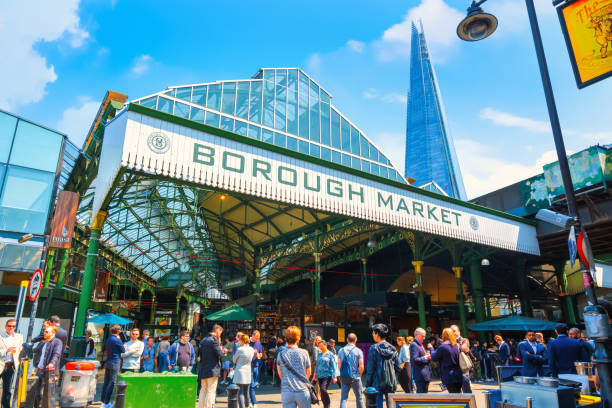
Borough Market can function as a public-facing comparison because it allows daytime access to specialist produce traders and food businesses. It should be used carefully. Borough is a destination for public shopping and eating, while New Covent Garden is a wholesale distribution environment. The useful study compares how products are presented to consumers after the wholesale stage, rather than claiming the two markets perform the same role.
For travelers whose main objective is to integrate specialist food knowledge into a comfortable London day, the broader planning guide how to plan a curated London food-and-wine day offers a daytime alternative with more control over pacing and geography.
A practical handoff for choosing the market
Write down four answers before making any booking. First, name the product question in one sentence. Second, state the earliest acceptable departure time from the accommodation, not the aspirational one. Third, identify every rule that could stop the visit: age, mobility, footwear, luggage, photography, group size or unconfirmed trader access. Fourth, name the first fixed commitment after breakfast and locate it on the map.
Then choose conditionally. Select Billingsgate when seafood is the central subject, the group meets the floor rules and an east-London dawn supports the day. Select Smithfield when meat, cuts and buying behavior matter and central geography is valuable. Select New Covent Garden when produce, flowers or supply logistics justify either an overnight start or a precisely timed dawn visit. Replace the market when the environment would prevent the group from learning safely or when access cannot be confirmed.
For a simple observational visit, the official pages and direct contact with the relevant market may be sufficient. For a deeper study, the planning burden rises: identify a merchant or specialist, obtain any necessary photography permission, confirm the live operating window, arrange predawn movement and protect the first half of the day from over-scheduling. That is the point at which private service has a material purpose. It coordinates access and route decisions that affect whether the experience is illuminating at all; it does not manufacture privileges the market has not granted.
Travelers ready to turn a product interest into a verified, workable London route can review private tours in London and Inquire now.
If you’re interested in any private tours of London, please reach out to us.





















 So if you are looking for the absolute best in London & surroundings with authentic local fully-licensed native guides whose English you can actually understand and with an exclusive and amazingly fun itinerary