When the Seine Rises in Paris: River Operations, Museum Dependencies and a Higher-Ground Fallback Plan

Updated
What to do when the Seine is rising
When the Seine rises, do not cancel a Paris day simply because a water-level headline appears. First establish which operating layer has actually changed. The river gauge may be rising while museums, bridges and normal street-level routes remain open. Low quays may close while a museum visit still operates. A cruise may sail on a modified course while its usual boarding instructions no longer apply. The useful question is therefore not “Is Paris flooding?” but “Which commitment now depends on a river-edge access point, a supplier decision or a protective measure?”
For an executive delegation with fixed museum, dining and river commitments, the safest sequence is to check four things in order: the official river trend, the City of Paris closure status, the individual operator or institution, and the route connecting the group to its next fixed reservation. Preserve the least replaceable anchors first. A timed Louvre visit and a formal dining reservation usually carry more consequence than a riverside walk; a private cruise may be equally important, but only the cruise operator can confirm its route and boarding position. Once those anchors are ranked, move the flexible content inland rather than improvising one isolated substitute at a time.
The durable fallback is an inland right-bank arc around Palais-Royal, the covered passages and the Grands Boulevards. It stays close enough to the Louvre–Tuileries area to protect a museum commitment, gives a group weather-sheltered and interpretive material, and avoids building the day around low-quay access. “Higher ground” here is a planning description relative to the river embankments, not a guarantee that every street will be unaffected. Official notices still govern.
The operating principle is straightforward: a rising Seine creates a chain of dependencies, not one all-or-nothing closure. Read that chain from upstream authority to local commitment, then confirm it again before each river-sensitive movement.
Source date: The volatile operating pages cited in this guide were verified on August 14, 2026. They document the published position on that date; they do not replace a fresh check before travel or before a river-dependent commitment.
The first facts that change
Paris uses the Seine level measured at Paris-Austerlitz as a central reference. On the City of Paris flood information page verified for this guide on August 14, 2026, the city says the river is monitored continuously there. The published operating sequence states that municipal services enter vigilance at 2.50 metres, low quays begin progressive closure at 3.00 metres, and the low-quay section between Pont Royal and Pont de l’Alma closes at 3.20 metres. Those figures are useful because they show the order in which exposure changes: municipal readiness first, low riverbank access next, then a defined central segment.
They should not be treated as permanent travel rules. They are current official operating references tied to a named gauge, and they can be revised or supplemented by a newer notice. A level quoted in an old article, a photograph of a previous flood or a screenshot sent between colleagues is not enough to confirm today’s access. The source page and the current river information must be reopened when a commitment is about to be made.
The national starting point is Vigicrues, France’s official flood-risk information service. It provides territory-level information and options to subscribe to bulletins or warnings. For a Paris planner, the value is not merely the displayed number. The direction and context matter: whether the level is rising, stable or falling; whether vigilance language has changed; and whether a fresh bulletin supersedes the information used earlier in the day. A single number without its timestamp and trend can create false confidence.
The first operational distinction is therefore between information and restriction. A rising gauge is information. A municipal notice closing low quays is a restriction. A cruise company changing a route is a supplier action. A museum activating a protection measure is an institutional action. They can occur at different moments, and one does not automatically prove the others.
A practical trigger sequence
- Gauge and vigilance: establish the current Paris-Austerlitz reading, trend and official vigilance context.
- Municipal access: check whether low quays, tunnels or defined riverbank sections are being progressively closed.
- Supplier status: obtain the cruise operator’s current route, boarding and timing instructions rather than assuming the published normal itinerary still applies.
- Institution status: verify the museum itself, the relevant entrance and any department-specific restriction.
- Movement status: check the streets and public-transport lines actually needed between the group’s fixed anchors.
This order prevents two common planning errors. The first is cancelling too much because the gauge has risen. The second is preserving a river-dependent sequence after the city, operator or museum has already changed the conditions that made it workable.
River conditions do not affect every Paris segment in the same way
The Seine cuts across the visitor geography of central Paris, but its operational consequences are highly local. A useful plan divides the river into working segments rather than referring to “the Seine” as one uniform attraction. For most private itineraries, three zones matter: the western boarding and Eiffel area, the Louvre–Tuileries central edge, and the islands/eastern sightseeing loop around Notre-Dame and Île Saint-Louis.
The western boarding area: Eiffel Tower to Pont de l’Alma
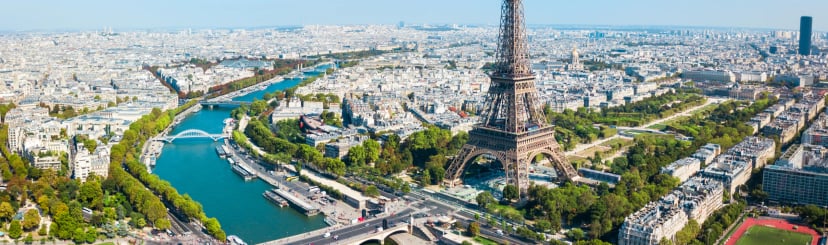
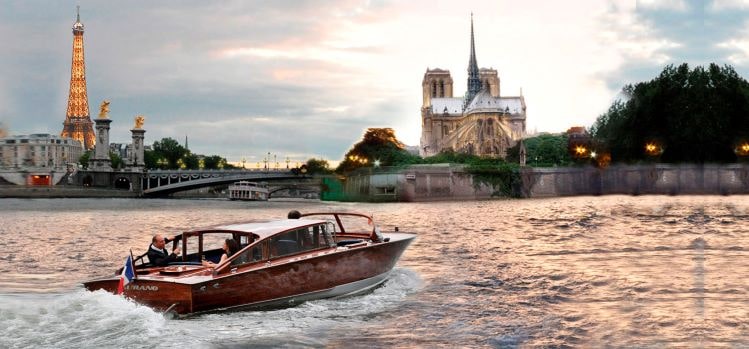
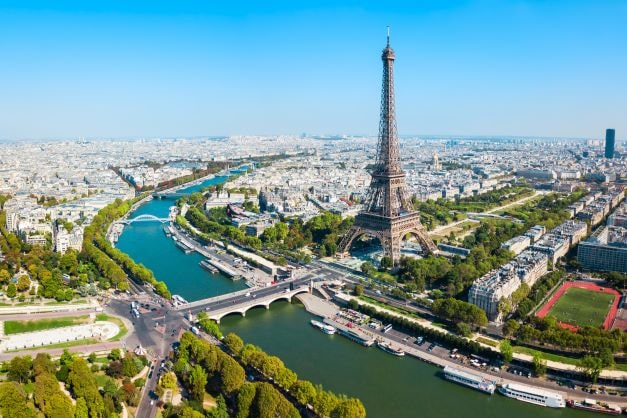
The Eiffel Tower area functions as a departure point for major sightseeing services, including Bateaux Parisiens, and the western river edge is often combined in visitor plans with Trocadéro viewpoints, an Eiffel commitment or a cross-river transfer. In normal conditions this can look like one compact cluster. During a rise, the cluster should be broken into separate dependencies: the monument or viewpoint, the bridge crossing, the riverside approach, the boarding point and the sailing itself.
A low-quay closure does not, by itself, mean that every nearby bridge or street-level attraction is closed. Conversely, a normal-looking bridge does not prove that the boarding access below it remains available. The relevant confirmation is the operator’s current instruction. Bateaux Parisiens, for example, describes normal sightseeing routes from the Eiffel Tower and Notre-Dame toward Île Saint-Louis, while its questions and answers page states that routes may be modified without prior notice during a Seine flood. That is a supplier-specific fact, not a statement about all cruise companies.
For a delegation, the consequence is more important than the wording. A cruise can remain operational yet cease to perform the itinerary the organizer expected. A route change may reduce the eastern reach, alter the order of landmarks or affect how much time is available before the next reservation. The group should be told what has been confirmed: “the sailing operates on a modified course,” for example, rather than “the river is fine.”
Boarding instructions deserve their own check. Even when a cruise operates, the approach can become the fragile part of the plan. A group arriving in several vehicles, carrying presentation materials or moving with limited walking tolerance needs one confirmed assembly point at street level and one person responsible for receiving any operator update. Sending participants independently toward a familiar quay creates an avoidable risk of late arrivals.
When the cruise is not the fixed anchor, the western fallback should remain above the embankment. Trocadéro, the Champ de Mars perimeter or an inland transfer can preserve the Eiffel context without relying on a descent to the river. The exact choice depends on current access and the group’s next commitment; none should be represented as universally unaffected.
The central edge: Pont de l’Alma, Pont Royal and the Louvre–Tuileries zone
The central river edge is where the city’s published low-quay sequence becomes especially relevant. The official page identifies the low-quay section between Pont Royal and Pont de l’Alma as a defined closure segment at a stated Austerlitz level. For planners, this does not mean that every institution between those bridges closes. It means that a familiar riverside movement corridor can disappear before the street-level cultural district does.
That difference changes the geometry of a Louvre day. A normal sequence might combine a museum exit, a Tuileries edge, a low-quay walk, a vehicle pickup near the river and a cruise. When the low banks close, four activities that appear adjacent on a map are no longer one continuous route. The museum can remain viable while the river walk and low-level pickup fail. The correct response is to rebuild the sequence from Rue de Rivoli and Palais-Royal rather than trying to force every component back toward the water.
For a protected Louvre window, an inland approach is operationally cleaner. Palais-Royal provides an obvious assembly district away from the low quays, and the covered passages north toward Galerie Vivienne and the Grands Boulevards create a credible continuation if the river portion is removed. This is also why a detailed museum plan should be built around the institution rather than the embankment; a curated Louvre day with one protected museum window remains useful even when the river-edge material is stripped away.
The Tuileries Garden and the Louvre precinct should still be checked in their own right. “Above the quay” does not mean “automatically open,” and crowd control, protective operations or local access changes can affect how a group enters and exits. The planning benefit of the inland arc is not a promise of immunity; it is that more of its value comes from street-level cultural geography than from one vulnerable riverbank corridor.
Vehicle coordination also changes here. When a riverside road or quay is unavailable, a driver cannot be treated as a movable waiting room beside the group. A replacement pickup must be confirmed on a legal, reachable street, and the walking route from the museum exit to that point must be understood by the whole party. For a large delegation, one additional block can be immaterial; an ambiguous curb can cost the next reservation.
The islands and eastern loop: Notre-Dame to Île Saint-Louis
The eastern sightseeing loop is often sold visually as an uninterrupted sequence of cathedral views, bridges and island façades. Operationally, it mixes several layers: street-level access on Île de la Cité, low riverbanks, boat clearances and routing decisions made by individual operators. A river rise can therefore shorten or alter a cruise’s eastern reach without making Notre-Dame or the island streets themselves unavailable.
The same discipline applies here: do not infer the status of one layer from another. A modified sailing does not prove a cathedral-area closure. An open cathedral area does not prove that low riverside steps are accessible. A bridge visible from a vehicle is not evidence that the coach can stop where the group expected. Each fact should be attached to the authority that controls it.
For a group already committed to Notre-Dame or Sainte-Chapelle, the practical fallback is to preserve the timed cultural anchor and remove the low-edge connective tissue. Arrival and departure should be planned through street-level routes, with a single inland assembly point. If a cruise remains confirmed later, reconnect to it using the operator’s current boarding instruction rather than by following the original walking sequence.
This is one reason a pre-cruise plan should never be written as a chain of mandatory riverfront steps. The choice between Île de la Cité, the Tuileries and a Left Bank walk before a Seine cruise is best treated as a set of interchangeable modules. During rising water, the module that depends least on low-quay access becomes more valuable, while the cruise itself stays provisional until reconfirmed.
Museums have their own flood dependencies
A museum beside the Seine is not simply “open” or “closed.” Its flood response can involve protective preparation, a department-level restriction, an entrance change or a full closure. For a delegation with timed admission, those distinctions matter. A valid reservation does not guarantee that every gallery in the intended visit is available, and a partial restriction does not necessarily invalidate the entire museum commitment.
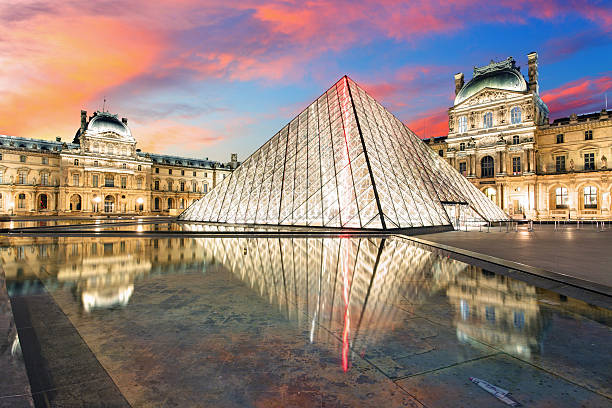
The Louvre provides a documented example. In its January 24, 2018 flood-protection notice, the museum recorded the Seine at 5.12 metres and closed the lower level of the Islamic Art department as a preventive measure. The notice also recalled that the whole museum had closed for four days during the June 2016 flood. These are historical cases, not reusable thresholds for predicting a future Louvre decision. Their planning value is to show that institutional response can be partial, preventive and different from the status of the city outside.
That history suggests three separate questions for any museum day:
- Is the institution admitting visitors? Check the museum’s own current notice, not only the citywide river page.
- Is the intended content available? A department, lower level or route through the building may be restricted even when the museum remains open.
- Is the planned entrance and group assembly still workable? Protective measures and local access can change the practical arrival.
For the Louvre, the organizer should define the visit’s essential content before the day. If the purpose is a leadership delegation’s first encounter with the collection, the essential anchor might be a concise route through major works that remain available. If the purpose is specialist study in a specific department, a department-level closure can defeat the purpose even though the building is technically open. That is a different decision and should be made explicitly.
The same logic applies to Musée d’Orsay and other river-adjacent institutions, but their status must be checked independently. The Louvre’s plan does not predict Orsay’s operation, and one institution’s preventive action is not evidence of another’s closure. A professional itinerary should name the institution, the exact visit purpose and the source of the current status.
Preserve museum time by placing replaceable content around it. If the Louvre is confirmed, remove the uncertain river approach and use Palais-Royal as the pre-visit or post-visit frame. If the museum is not confirmed, activate an inland alternative that does not pretend to be the same experience. The covered passages, Opéra district and Grands Boulevards can sustain a coherent Paris narrative about commerce, architecture and modern urban life; they are not a substitute collection, but they can preserve the day’s intellectual shape.
Bridges, roads and public transport require separate judgments
One of the least helpful assumptions during a river rise is that “the bridges will be closed” or, at the opposite extreme, that open bridges mean cross-city movement is normal. The city’s published early actions focus on low quays and defined riverbank sections. A bridge crossing, its approaches, nearby curb access and the traffic pattern feeding it are distinct operational questions.
Verified fact should be kept separate from route judgment. The official source may state that a low quay is closed. The route judgment is that displaced traffic can make an otherwise open street slower or less reliable for a group transfer. That judgment must remain conditional because the effect varies by time, location and the wider road network. It is a reason to add margin and simplify crossings, not a claim that a named bridge is blocked.
For a delegation, count crossings rather than merely measuring distance. A schedule that moves from a Left Bank hotel to the Louvre, back to the Left Bank, then west to an Eiffel-area cruise creates several opportunities for disruption. When water is rising, the better plan may keep the morning on one side of the river and make one deliberate crossing for the most important later commitment. This is an editorial route choice, not an official instruction.
Public transport should also be checked by line and mode. RATP’s traffic information page provides current information for the Metro, RER, bus, tramway and Transilien networks and directs travelers to verify whether their line is disrupted. A general statement that “the Metro is running” is too broad for a timed group. The useful confirmation names the line, the direction, the transfer and the time checked.
Road and rail information should not be blended into one message. A bus route may depend on surface streets while a nearby Metro service remains normal; a rail line can have an unrelated disruption on the same day. The organizer’s update should specify the chosen movement mode and the fallback mode. For example: “The group will walk from Palais-Royal to the Louvre; vehicles will meet inland after the visit; Metro is the contingency only after a fresh line check.”
Mobility needs make this more consequential. A low-quay route may involve ramps, steps or longer approaches even in normal conditions. When access changes, a short geographic detour can become a substantial physical demand. The group’s route lead should confirm walking distance, surfaces and the actual pickup point rather than describing the change only in minutes.
Build the higher-ground fallback around fixed anchors
A useful fallback does not replace Paris with a generic indoor day. It preserves the day’s essential commitments and rebuilds the flexible hours around inland geography. For the Louvre–Tuileries sector, the most reliable editorial spine is Palais-Royal to the covered passages and Grands Boulevards, with Opéra available as a further continuation when timing and access allow.
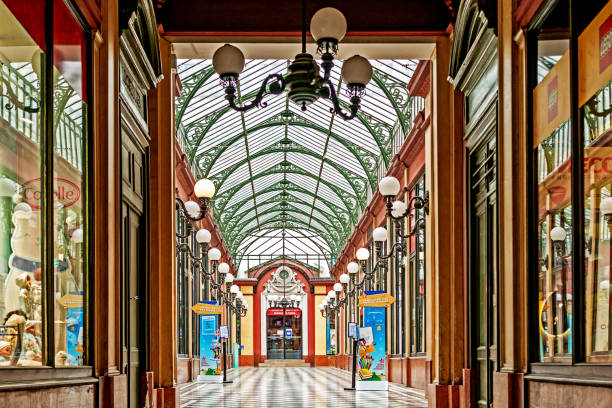
This arc works because its components are close enough to support a museum day yet independent enough to stand when the low quays are removed. Palais-Royal can hold a short architectural and political introduction; Galerie Vivienne and neighboring passages shift the narrative toward nineteenth-century consumption and urban shelter; the Bourse and Grands Boulevards broaden it into finance, spectacle and Haussmann-era circulation. None requires a river view to make sense.
The fallback should be designed in modules of different lengths rather than as one rigid replacement:
- Brief orientation: an inland assembly around Palais-Royal before a confirmed Louvre entry.
- Compact module: Palais-Royal plus one or two covered passages, ending near an achievable vehicle or walking connection.
- Extended module: a fuller arc through the passages toward the Grands Boulevards or Opéra, with the endpoint chosen around the next reservation.
- Large replacement block: an inland cultural sequence combined with a confirmed museum, private appointment or formal meal, without promising a river component.
These module sizes are editorial planning devices, not published operating categories. Their purpose is to let the organizer activate only the amount of alternative content needed. If a cruise is delayed rather than removed, use the brief module. If the operator changes the route but keeps the departure, preserve the cruise and adjust the interpretation around it. If the river commitment becomes unavailable, expand the inland module and protect the fixed dining reservation.
Evening geography deserves particular attention because a late decision can cascade into a formal meal. A Seine-side dining address, a Left Bank dining room and an 8th-arrondissement reservation do not create the same movement problem from Palais-Royal. Paris dining geography around the Seine, the Left Bank, Le Marais and the 8th can help determine which afternoon fallback keeps the party on the correct side of the city.
Do not preserve symbolic variety at the cost of reliability. A museum, a cruise, two river crossings, an island walk and a formal dinner may look balanced on paper, but during changing conditions every transfer becomes a separate point of confirmation. A narrower geographic plan can feel more complete because the group spends its time in interpreted places rather than in repeated contingency calls.
Fallback A: Louvre remains open, cruise becomes uncertain
Keep the museum at its confirmed time. Assemble inland at Palais-Royal, enter through the museum’s currently instructed access, and remove the low-quay walk. After the visit, use the covered passages as the flexible module. Recheck the cruise before committing the group west or east. If it is reconfirmed, travel to the operator’s stated boarding point; if it is not, continue inland and keep the dining reservation intact.
Fallback B: cruise operates on a modified route
Decide whether the cruise’s value lies in being on the water, seeing a particular eastern or western segment, or serving as transport between parts of the day. If the essential value is the river perspective, a modified route may still satisfy the commitment. If the delegation expected a specific landmark sequence or hosted presentation, the change may be material. State the difference plainly and adjust the surrounding route so that the altered sailing does not create a late transfer.
Fallback C: museum operation changes
Identify whether the change affects the whole institution, the intended department or only the arrival route. If the visit still meets its purpose, preserve it. If it does not, move to the prepared inland cultural module rather than searching for a same-day museum replacement with no relation to the group’s interests. A different collection can be worthwhile, but it should be chosen for content and availability, not merely because it is indoors.
Fallback D: the river element is removed for the day
Do not spend the day repeatedly returning to the water to see whether conditions have improved. Confirm the removal, communicate it once, and use the inland sequence. A river hour can be revisited on another date or left out entirely. The wider trip plan may offer another opening; the three-day Paris itinerary framework is useful for relocating a flexible river component without displacing the trip’s major cultural anchors.
One party-wide operating plan is more valuable than isolated substitutions
Executive groups are vulnerable not only to a poor fallback, but to different participants following different versions of it. In a fragmented setup, the host may hold the museum confirmation, the driver an old pickup point, the guide a new cruise message, and participants the original program. Rising water magnifies the consequence of that fragmentation.
The organizer should designate one live plan and one decision owner. The plan needs five fields: current source check, confirmed commitments, removed or modified elements, assembly point, and next decision time. It can be concise, but it must be the same for everyone. A message such as “river rising; plan adjusted” is not sufficient because it does not tell a participant where to go or a driver which curb is reachable.
Roles should be explicit:
- Organizer: protects the fixed museum and dining commitments and approves any material change.
- Guide or route lead: controls the walking sequence, interpretation and participant assembly.
- Vehicle lead: confirms reachable pickup and drop-off points, then reports changes to the organizer rather than directly creating a second itinerary.
- Cruise operator: controls sailing status, route and boarding instructions.
- Museum: controls admission, entrances and protective restrictions within the institution.
This is where private route and group coordination becomes materially useful. Its value is not theatrical reassurance or a promise to defeat city conditions. It is the ability to connect official river information, supplier instructions, museum access, vehicles and fixed reservations into one sequence before the group moves. For organizations considering that level of support, Orange Donut Tours’ private Paris planning and touring options provide the relevant commercial next step.
The communication rule is equally important: describe only what is known and identify what will be checked again. “The low quays are closed; the Louvre is currently admitting visitors; the cruise operator will confirm the route at the agreed check time” is more useful than either alarm or reassurance. It separates fact from pending information and gives the party a clear next decision point.
A recheck schedule for a day with fixed commitments
River information is volatile even when the general planning framework is evergreen. A page reviewed during itinerary design cannot confirm the day of operation. The recheck schedule should follow the commitments, not a single morning briefing.
Several days before
Use Vigicrues and the City of Paris page to understand whether the river is becoming an operational issue. At this stage, avoid cancelling based on one reading. Identify every river dependency in the itinerary: low-quay walking, cruise boarding, river-adjacent vehicle staging, museum entrances and unnecessary crossings. Prepare the inland module and assign the decision owner.
The evening before
Reopen the official river and city sources. Confirm the museum’s current status and contact the cruise operator through its current operational channel. Check whether the day still contains more crossings than it needs. Send the group only the confirmed morning assembly point; do not distribute an elaborate provisional sequence that may be obsolete by breakfast.
Before the first departure
Check the current river trend, any municipal closure update, the museum notice and the transport lines actually being used. Verify the vehicle staging point. The route lead should know which part of the program can be shortened without touching the first fixed commitment.
Before each river-dependent commitment
Reopen the official level and closure information, then obtain the operator-specific confirmation. This is the core recheck trigger. A cruise status received the previous evening may not describe the route or boarding conditions several hours later. The same rule applies after any new municipal notice, sharp change in the observed trend, supplier message or change to the group’s timing.
Before the final cross-city movement
Check RATP for the named line or confirm the current road route with the vehicle lead. Revalidate the dining arrival time and location. Once the party has left the central district, do not assume that a later return to the river remains practical simply because it was present in the original schedule.
This cadence may appear repetitive, but the checks answer different questions. Vigicrues describes the flood-risk context. The City of Paris publishes municipal operating information. The cruise company controls its service. The museum controls its building. RATP controls current network information. None can substitute for all the others.
A worked Paris day: preserve the museum and dinner, make the river conditional
Consider a delegation with a morning Louvre visit, a late-afternoon Seine cruise and a fixed dinner in the 8th arrondissement. The original plan includes a Tuileries walk, a river-edge transfer and free time near the boarding area. When the Seine is rising, the objective is not to produce an equally photogenic copy. It is to keep the Louvre and dinner stable while giving the cruise a clear confirmation point.
The group assembles at Palais-Royal rather than on the river edge. The guide uses the square and arcades for a short orientation, then follows the Louvre’s current entrance instruction. The museum brief distinguishes essential works from optional content, so a department-level change can be assessed without turning the visit into an improvised search. Before the group exits, the operations lead checks the city closure page and receives the cruise operator’s latest route and boarding message.
If the cruise is confirmed as planned, the party proceeds to the stated boarding point using a checked street-level route. If it is operating on a modified route, the organizer decides whether the water perspective still meets the group’s purpose. If the boarding position or route no longer fits the timing, the guide activates the covered-passages module and continues toward the Grands Boulevards. The vehicle meets at a confirmed inland point and takes the group to dinner with one deliberate cross-city move.
The important feature is not the specific choice of passage or boulevard. It is the timing of the decision. The cruise is not allowed to pull the whole party west until its operation and access are confirmed. Nor is it removed too early merely because low quays have begun to close. The group gets a coherent Paris afternoon in either case.
A second configuration may reverse the priorities. If the cruise is the hosted centerpiece and the Louvre is a flexible cultural component, confirm the sailing first, move the museum to another slot if possible, and build the inland material around the actual boarding point. The same dependency logic applies, but the anchor hierarchy changes. This is why a one-size fallback fails: the schedule must reflect what the delegation cannot replace.
For trips with several days in Paris, the river can sometimes be moved rather than lost. The decision should account for the next day’s museum closures, out-of-city commitments and dining geography. Relocating the cruise into a day already built around the Seine can reduce duplicated movement, while forcing it into a Versailles or Champagne day would create a new problem. The fallback remains a trip-level decision, not just an afternoon substitution.
What not to infer from a rising river
- Do not infer a citywide shutdown from a rising gauge. Wait for the authority or operator that controls the specific commitment.
- Do not infer normal river access from an open museum. Street-level institutions and low quays have different dependencies.
- Do not infer a normal cruise route from a sailing confirmation. Ask whether the course, duration and boarding point are unchanged.
- Do not infer bridge closure from low-quay closure. Verify the crossing and its approaches separately.
- Do not infer that yesterday’s message still applies. Recheck before the next river-sensitive commitment.
- Do not turn high water into spectacle. Operational restrictions protect people, collections and infrastructure; the article’s purpose is continuity, not flood sightseeing.
These limits matter because they keep the plan evidence-led. They also prevent an organizer from giving certainty where only a conditional judgment is available. “The inland route is less dependent on the low quays” is defensible. “Palais-Royal will be unaffected” is not a promise a planner should make.
The evergreen fallback in one sequence
Start inland at Palais-Royal. Protect the confirmed Louvre window or another fixed museum commitment. Remove low-quay walking as soon as the city closes the relevant segment. Treat the cruise as a supplier-controlled commitment whose route and boarding instructions require direct confirmation. Use the covered passages and Grands Boulevards as expandable content. Reduce unnecessary crossings. Place the final vehicle or transit check before the movement that leads to dinner or the next formal reservation.
The fallback is deliberately modest. It does not attempt to predict the peak, assign a universal safe water level or name an always-open curb. It creates a day that still has Paris-specific depth when the river component contracts. It also gives the organizer a controlled way to restore the cruise if conditions and the operator allow it.
Before confirming the day, reopen Vigicrues, the City of Paris flood page, the relevant museum notice, the cruise operator’s current instructions and the named RATP line or road route. Once one party-wide fallback connects those sources to the museum, vehicles and reservations, Inquire now
If you’re interested in any private tours of Paris, please reach out to us.



 So if you are looking for the absolute best in Paris & surroundings with authentic local fully-licensed native guides whose English you can actually understand and with an exclusive and amazingly fun itinerary













