Saint-Germain, Le Marais or the 8th After Check-In? Paris Hotel Geography for a Calmer First Evening

Updated
After check-in, the best first evening in Paris is usually Saint-Germain if your dinner is on the Left Bank or near the Seine, Le Marais only if your hotel or reservation is already close, and the 8th arrondissement if you need the shortest, most polished return to a palace-area base. This works because the first-night walk is not a sightseeing trophy; it is an energy decision made after airport transfer, luggage, shower, and the quiet shock of finally being in the city. The clearest exception is a late dinner booked across town: then the best walk is the one that protects dinner energy, even if it means skipping the more famous first-night route.
Paris hotel geography matters most after 5 p.m., when a beautiful idea can turn into two river crossings, a taxi stand delay, and a dinner table reached already tired. A Saint-Germain to Seine edge loop can feel unmistakably Parisian without becoming a full tour, especially if you keep the arc between Boulevard Saint-Germain, Rue de Seine, Pont des Arts, and the riverbanks short. The article-specific thesis is simple: in Paris, the first evening should orient you to your hotel side of the river, not prove that you have already conquered the city.
The arrival-evening priority ladder
The calmest Paris first evening is chosen by a ladder, not by a list of famous neighborhoods. Start with your hotel base, then dinner location, then walking tolerance, then only finally the mood you want. That order prevents the classic mistake of choosing Le Marais because it sounds lively, Saint-Germain because it sounds romantic, or the 8th because it sounds prestigious, without checking whether the route will still feel good after a flight and check-in.
Choose Saint-Germain when your hotel is in the 6th, 7th, lower 5th, near the Louvre-facing Left Bank, or when dinner is around Saint-Germain-des-Pres, Odeon, Rue du Bac, Rue de Seine, or the Seine edge. It is the best default for couples and first-time visitors who want one atmospheric walk, a graceful river moment, and no cross-city ambition.
Choose Le Marais when you are staying on the Right Bank near the 3rd or 4th, when dinner is already in or near the Marais, or when your group is alert enough for narrower streets, mixed pedestrian flow, and a more textured neighborhood arrival. It is the runner-up because it can be wonderful, but it asks more of tired travelers.
Choose the 8th arrondissement when your hotel is near Avenue Montaigne, Rue du Faubourg Saint-Honore, the Champs-Elysees, Parc Monceau, or the palace-hotel corridor and you value the simplest return. It is the right answer when comfort, timing, and a clean dinner transition matter more than a storybook first walk.
Cut first the Eiffel Tower detour, a Louvre exterior loop, or a cross-river taxi hop added only because it feels insufficient to stay near the hotel. The first evening is not the night to collect distant icons; it is the night to make tomorrow easier.
The counterintuitive correction is that the 8th arrondissement can be the most practical base and still be the wrong first walk for some travelers. Its broad avenues, luxury retail edges, and longer blocks can make a short outing feel less intimate than the map suggests. If you are based near the Champs-Elysees and craving old-street texture, do not solve that by forcing Le Marais after a long-haul arrival; solve it by keeping the first evening short and saving the Right Bank village texture for a guided half-day, such as Le Marais with context when your energy is back.
Why hotel geography beats the iconic first-night fantasy
Hotel geography beats the iconic first-night fantasy because Paris makes short distances feel different depending on the river, bridge, boulevard, and return path. A hotel near Saint-Sulpice can make a Saint-Germain-to-Seine loop feel almost effortless. A hotel near Avenue George V can make the same idea require a car, a bridge crossing, a decision about where to be dropped, and another decision about how to return after dinner.
This is why a private arrival evening should not be judged by how many celebrated names it touches. The practical question is whether the route leaves you better oriented for the next morning. A guest staying near Rue du Bac who walks toward the Seine, sees the line of the Louvre across the water, and learns how the Left Bank relates to the Right Bank has gained usable knowledge. A guest staying in the 8th who rides across town to wander Le Marais for 35 minutes before a late dinner may have gained atmosphere but lost the calm that makes the dinner land well.
The city also does something physical to the body. Jet lag, dry cabin air, uneven paving, hotel-room delay, stairs in older buildings, and the stop-start rhythm of crossings make a route feel longer than its measured distance. A short walk around Rue Jacob, Cour du Commerce Saint-Andre, and the Seine can feel restorative because it has natural pauses. A zigzag from the 8th to the Marais, then back toward a dinner near the hotel, can flatten the evening before the meal begins.
For travelers arriving through Charles de Gaulle or Orly, the arrival sequence often includes a transfer, check-in formalities, luggage unpacking, a shower, and some form of wardrobe reset before dinner. That sequence leaves less useful energy than the calendar implies. For airport support and a first-night handoff that avoids turning the evening into logistics, airport arrival planning in Paris belongs in the conversation before the walking route does.
When Saint-Germain is the calmest first evening
Saint-Germain is the calmest first evening when you want Paris to feel immediate without making the route large. It suits hotels in Saint-Germain, the 6th arrondissement, the 7th near Rue du Bac or Musee d’Orsay, the lower Latin Quarter, and some Louvre-adjacent stays where a bridge crossing is part of the pleasure rather than a transfer reset. Its advantage is not that it is prettier than every other neighborhood; its advantage is that it can be edited down without feeling thin.
The best first-night version is not a complete Saint-Germain walk. It is a short arc: hotel, cafe-lined street, one literary or art-market cue, then the Seine edge. From Saint-Germain to Seine edge, the route can brush Rue de Buci or Rue de Seine, move toward the Institut de France or Pont des Arts, and give the traveler a first view across the river without committing to the Louvre, the Tuileries, or a long Right Bank loop. That is enough. The view does the orientation work; the shortness keeps the evening intact.
Saint-Germain also preserves mood for couples because it lets the first evening breathe. The mood-preserving decision is to leave some white space between walk and dinner: no rushed museum exterior, no “just one more bridge,” no taxi gamble after a glass of wine. The mood-killing mistake is making the first evening perform like a proposal scene on a schedule. Paris is not more romantic because you covered more ground; it is more pleasant when neither traveler is quietly calculating how far the hotel is.
Families and small groups can use Saint-Germain well, too, if the group is staying nearby and dinner is not late. The streets around Saint-Sulpice, Rue Bonaparte, and Boulevard Saint-Germain give enough movement and landmarks to orient adults, while allowing a clean retreat if children fade. The area is less ideal if your hotel is deep in the 8th or upper Right Bank and everyone is already tired; in that case, the transfer to reach Saint-Germain may cost more comfort than the walk earns.
When Le Marais is right, and when it is too much for a first evening
Le Marais is right after check-in when your hotel, dinner, or guide handoff is already close to the 3rd or 4th arrondissement. It is a strong first-evening choice for travelers staying near Place des Vosges, Rue de Turenne, Saint-Paul, Arts et Metiers, or the eastern edge of the central Right Bank, because it offers texture quickly: courtyards, layered streets, Jewish quarter context, boutiques, and a neighborhood rhythm that does not depend on a single monument.
Le Marais is too much for a first evening when you are staying far west in the 8th, when dinner is back on the Left Bank, when your group includes a traveler who fades after check-in, or when you are trying to use it as both a neighborhood walk and a food crawl. The narrow lanes that make it rewarding in daylight can feel busy and decision-heavy at night. The area can also tempt visitors into too many turns: Rue des Rosiers, Place des Vosges, Rue Vieille du Temple, the Saint-Paul side, and the northern galleries are not one short orientation if you are tired.
This is the honest counterpoint many arrival plans skip: Le Marais is often overvalued as a first-night fix because it photographs and sounds like the Paris visitors want. But as an arrival-evening move, it asks more navigation from the body and more focus from the mind. If your first meaningful Paris hour is supposed to calm the trip, a dense quarter with multiple micro-routes may be less useful than a smaller loop near the hotel.
The better use of Le Marais is to save it for a time when context can deepen it rather than compete with fatigue. A short private orientation can work if you are already nearby, but a fuller heritage or neighborhood walk belongs later, when the stories of the Jewish quarter, aristocratic mansions, covered passages nearby, and shifting Right Bank life can be heard properly. For a trip that wants neighborhood texture without arrival-night overload, compare Le Marais with another village-style half-day before assigning it to the first evening.
When the 8th arrondissement is the wiser first-night answer
The 8th arrondissement is the wiser first-night answer when your hotel is already there and your priority is a controlled, elegant evening with minimal return risk. Travelers staying near Avenue Montaigne, the Champs-Elysees, Rue du Faubourg Saint-Honore, Parc Monceau, or the western edge of the Tuileries often underestimate how valuable a short return becomes after dinner. The 8th may not deliver the intimate old-street feeling of Saint-Germain or Le Marais, but it can deliver a first evening that does not unravel.
This choice is especially strong when dinner is near the hotel, when a celebration trip includes wardrobe changes, or when one traveler is clearly more tired than the other. A gentle loop might touch Avenue Montaigne, the Seine-facing edge near Pont de l’Alma, or a shorter Champs-Elysees-adjacent walk without committing to the full avenue. The point is not to make the 8th pretend to be a village. The point is to use its hotel geography, car access, and broad-street clarity to protect the first night.
There is a limitation. If you came to Paris craving bookshops, tiny streets, and Left Bank cafe texture, the 8th can feel too composed on night one. Paying for a more ambitious private plan does not help if the traveler needs sleep and a short orientation. Premium spend is useful when it reduces transfer uncertainty, secures a smoother handoff, or adapts the route to the actual dinner plan; it does not earn its cost when it simply adds more stops to a body asking to stop.
The 8th also has a geography trap: the map can make the Seine, the Eiffel Tower, the Louvre, and the Champs-Elysees look temptingly combinable. They are combinable on a designed half-day, not necessarily after check-in. If your hotel is in the 8th and you want a proper 8th-Louvre-Seine day later, the better match is a planned private route such as an 8th, Louvre and Seine day rather than a first-night improvisation.
Which hotel bases point to Saint-Germain, Le Marais or the 8th?
Your hotel base should decide the first filter: Left Bank bases point to Saint-Germain, central Right Bank bases can point to Le Marais, and western luxury bases often point to the 8th. This is not about loyalty to a neighborhood. It is about avoiding the transfer reset that happens when you leave the side of Paris where your hotel, dinner, and tomorrow morning already sit.
Choose Saint-Germain from hotels in the 6th, from the 7th when you are closer to Rue du Bac than to the Eiffel Tower, from the lower 5th when dinner is west of the Latin Quarter, or from a Louvre-side hotel if you can cross once and stay near the Seine. The bridge matters: Pont des Arts, Pont Neuf, and Pont Royal can turn orientation into pleasure if they sit naturally between hotel and dinner. They become a burden when they are added only because the evening needs a “river moment.”
Choose Le Marais from hotels in the 3rd or 4th, from the eastern 1st if dinner is nearby, from the Bastille or Saint-Paul side if you want a brief neighborhood landing, and from some central Right Bank addresses where walking east is easier than transferring west. Be careful from the Louvre-Rivoli area: the Marais looks close, but the walk can become a long, shopfront-heavy corridor before the neighborhood texture begins. If you are already tired, that approach may feel longer than expected.
Choose the 8th from hotels near Avenue Montaigne, George V, Franklin D. Roosevelt, Madeleine, Parc Monceau, or the west side of the Right Bank when dinner is in the same broad zone. The 8th is also the practical answer for travelers with a serious dinner reservation, evening wardrobe considerations, or a family group that needs a clean return. For broader base decisions before booking, compare Left Bank, Le Marais and the 8th as hotel bases separately from the after-check-in evening decision.
How dinner timing changes the answer
Dinner timing changes the answer because a first walk before an early dinner is a warm-up, while a first walk before a late dinner is a pacing problem. If dinner is within walking distance and begins early by Paris standards, choose the closest atmospheric loop and keep it simple. If dinner is late, the route should be lighter, not larger, because waiting hours after arrival often makes travelers overfill the gap and arrive at the table already spent.
With dinner booked in Saint-Germain, the answer is usually Saint-Germain unless your hotel is far away and the restaurant is the only Left Bank element in the evening. Arrive to the area once, walk lightly, then stop. A short pre-dinner arc toward the Seine works better than trying to add Notre-Dame, the Louvre courtyard, or the Eiffel Tower. If dinner is near Odeon or Rue de Seine, a compact walk through the neighborhood can be enough before sitting down.
With dinner booked in Le Marais, the answer depends on where you sleep. If you are already on the Right Bank nearby, Le Marais can be the evening. If you are sleeping in the 8th or deep Left Bank, do not build a roaming Marais plan before dinner unless everyone is clearly alert. Make the transfer once, arrive early enough to avoid rushing, and keep the walk to one or two nearby streets. A dinner reservation does not justify turning the whole quarter into a self-guided tour on arrival night.
With dinner booked in the 8th, the strongest answer is often to stay in the 8th, even for travelers who usually prefer more intimate neighborhoods. This is especially true for tasting menus, celebration meals, or any dinner where you care about arriving composed. A longer pre-dinner walk can seem harmless, but it changes the mood: the conversation becomes about time, shoes, traffic, and whether to go back to the hotel. If the dinner matters, let it be the evening’s anchor.
The short-night rule after a hard arrival
Keep the first night very short when the arrival has already taken more from the group than expected. The signs are easy to read: one traveler stops making decisions, children become snack-focused, someone wants to change shoes twice, or the hotel room itself feels unusually hard to leave. In that case, the correct Paris plan is not a smaller version of the ambitious plan; it is a different plan entirely.
The short-night version is hotel, air, orientation, dinner or light meal, return. In Saint-Germain, that might mean reaching the Seine edge and turning back before the bridges pull you farther. In Le Marais, it might mean one small circuit around Place des Vosges or Saint-Paul rather than a full northern-southern sweep. In the 8th, it might mean a polished stroll near the hotel and a clean return before the body realizes how late it feels.
This rule matters because Paris can disguise fatigue as possibility. The light on the stone, the river, the cafe terraces, and the sense that everything is finally beginning can persuade sensible travelers to keep adding. But the body is keeping its own account: extra steps, extra crossings, extra waits, extra decisions. When that account runs negative, the next morning pays for it.
A private guide can be valuable here precisely because the plan is small. The right guide does not need to make arrival night bigger; they can turn a short acclimation walk into useful orientation, point out which bridge or boulevard matters tomorrow, help the group understand Left Bank versus Right Bank routing, and stop before the evening becomes a tour. For a custom first-evening handoff, Inquire now.
What Paris does to the body after check-in
Paris after check-in asks for more from the body than the itinerary page admits. Even gentle neighborhoods involve curb cuts, cobbles, stairs to riverbanks, uneven older sidewalks, narrow shopfront pinch points, and the stop-start rhythm of waiting at crossings. The city is walkable, but walkable does not mean weightless after a flight.
Saint-Germain is forgiving because it offers frequent natural pauses. You can stop near a cafe, slow down by a gallery window, or use the Seine as a visual endpoint. Le Marais is more intricate: the pleasure comes from turns, layers, courtyards, and streets that invite wandering. That intricacy is rewarding when you are rested and irritating when you are trying to conserve energy. The 8th has broader pavements in many areas, but its scale can stretch a “short” walk into a more formal march.
River crossings are another body detail. A single crossing can be wonderful; two crossings can become a hidden transfer. From Saint-Germain, the Seine edge is part of the neighborhood logic. From the 8th, a river move toward the Left Bank can be beautiful but may create return fatigue. From Le Marais, the river is close on the southern edge, but if your hotel sits north or west, the return can feel like a separate phase rather than the end of the same walk.
Shoes matter more than style on the first evening, but the deeper issue is sequence. Do not schedule the most delicate shoes for the one night with the most uncertainty. Do not plan a long pre-dinner route before you know whether the room is ready, whether luggage arrived smoothly, or whether the group wants a shower or sleep. This is where premium planning helps: not by removing Paris from Paris, but by matching the route to the body that arrives, not the body imagined months earlier.
What the neighborhood choice does to the trip mood
The neighborhood choice shapes the mood of the whole arrival because it teaches the group what Paris will ask of them. A calm first evening says, “We can move through this city intelligently.” An overfull first evening says, “Every beautiful thing must be captured before we rest.” That second message is exhausting, especially for couples and families trying to enjoy a special trip rather than manage a checklist.
Saint-Germain tends to preserve connection because it creates easy conversation. The walk has enough Paris cues to feel meaningful without demanding constant explanation. Le Marais can energize the right travelers because it has edge, layering, and street life, but it can also fragment a tired group: one person wants boutiques, one wants dinner, one wants Jewish quarter context, one wants to sit. The 8th can feel composed and adult, but if chosen for the wrong traveler, it may seem too polished and not intimate enough.
For celebration travelers, the best mood decision is often restraint. Let dinner carry the occasion. Let the walk prepare the evening rather than compete with it. A first-night route that ends with everyone feeling fresh at the table is more successful than a scenic marathon that leaves the best-dressed traveler quietly wishing they had stayed closer to the hotel.
For food-and-wine travelers, the same logic applies. The first evening is rarely the right moment for a serious tasting crawl unless arrival was easy and the hotel is perfectly placed. Save deeper food routing for a day when appetite, timing, and neighborhood logic can work together. If your trip includes fine dining later, use the arrival evening to understand where your hotel sits relative to the Seine, the Left Bank, Le Marais, and the 8th, not to preview every dining district.
Where private planning changes the evening, and where it does not
Private planning changes the evening when it reduces decisions, shortens uncertainty, and turns a modest route into useful orientation. It helps when someone has already checked the hotel base, dinner address, likely return path, walking tolerance, and whether the first-night plan should be guided, chauffeured, self-guided, or almost entirely skipped. It also helps when the group has competing needs: one traveler wants a beautiful first walk, another wants dinner, another wants sleep.
Private planning does not help when it is used to justify overreach. A more ambitious private plan does not help if the traveler needs sleep and a short orientation. A chauffeur does not make a too-large first evening emotionally smaller if the route still asks for multiple stops, photo pauses, and dinner pressure. A guide does not improve arrival night by adding facts to a fading group. The premium move is knowing when not to add.
Where spend can earn its cost is in the handoff. A guide meeting the family near the hotel for a compact orientation can prevent the “where are we, where do we eat, how do we get back” spiral. A driver can help if dinner is away from the hotel or if mobility is limited. A tailor-made plan can decide in advance whether Saint-Germain, Le Marais, or the 8th should be the evening’s frame, then adjust on the day if the flight, traffic, or check-in changes the energy.
For travelers who want a small but intelligent first-night walk, a Paris like a Parisian private route can be shaped around hotel geography rather than built as a generic neighborhood stroll. For a longer stay, the better planning question is how that first evening sets up the next day: museums, Seine time, shopping, or a day trip should not all compete with the arrival night.
Three first-evening route shapes that actually work
The best route shape after check-in is a loop, not a line. A line creates a second logistics problem at the far end; a loop returns confidence to the group. For Saint-Germain, the working version is hotel to Boulevard Saint-Germain or Rue Jacob, then toward Rue de Seine, then Saint-Germain to Seine edge, then back toward dinner or hotel. The endpoint is the river, not the entire Right Bank.
For Le Marais, choose one pocket rather than the whole district. If dinner is near Saint-Paul, keep the walk near Saint-Paul and Place des Vosges. If dinner is farther north, do not also force the southern Jewish quarter. If the guide is adding context, let the story choose the route: aristocratic Marais around Place des Vosges is a different first-evening mood from the Jewish quarter around Rue des Rosiers, and mixing both after check-in can blur the experience.
For the 8th, use the hotel as a strength. A route might stay near Avenue Montaigne and the Seine-facing edge, or near Madeleine and Rue du Faubourg Saint-Honore, or around Parc Monceau if the hotel sits north. Avoid turning the Champs-Elysees into the main event unless it is genuinely near your hotel and dinner. The avenue is famous, but fame does not automatically make it the most pleasant first-evening walk for discerning travelers.
The route shape that fails most often is the triangle: hotel in the 8th, walk in Saint-Germain, dinner in Le Marais; or hotel in Saint-Germain, Eiffel Tower view, dinner in the 8th. Triangles look efficient on a planning map because each point is attractive. In the city, they become three separate transitions. On arrival night, two points are usually enough: hotel side plus dinner side, with one small orientation in between.
How to handle a late dinner without flattening the evening
A late dinner should make the first walk smaller, not bigger. Travelers often see a 9 p.m. reservation as permission to add a neighborhood, a river walk, and a drink beforehand. After arrival, that gap can become dangerous because the body has enough time to dip and not enough time to recover fully. The smarter plan is a short walk, a seated pause, and a clean arrival at dinner.
If dinner is late and near Saint-Germain, use the neighborhood as a low-pressure glide. Walk to the Seine, return through one or two streets, then stop. If dinner is late and in Le Marais, arrive to the quarter with margin, but do not wander until you lose appetite or orientation. If dinner is late and in the 8th, consider making the hotel the base of the evening: dress, short walk, dinner, return. That may sound less adventurous, but it often produces a better first night.
The danger with late dinner is not only physical fatigue; it is emotional drift. A couple may start the walk delighted, then become quiet as hunger, time, and navigation press in. A family may begin with curiosity and end with bargaining. A small group may split between those who want another drink and those who need the hotel. Once that mood shifts, the city feels harder than it is.
When dinner timing is uncertain or likely to change, avoid prepaid complexity before it. Do not book a major timed interior, a long cruise, or a cross-town guided route before a first-night dinner unless the arrival day is unusually easy. If you want a river experience, consider placing it on a day when the schedule can breathe, using a focused Seine plan rather than attaching it to arrival. The first night should not carry every Paris symbol.
What to save for tomorrow instead
Save anything that requires attention, tickets, or cross-city movement for tomorrow. The Louvre, Musee d’Orsay, Sainte-Chapelle, the Eiffel Tower, Montmartre, and a serious Le Marais heritage walk all deserve a better version of you than the post-check-in version. This is not a downgrade; it is quality control.
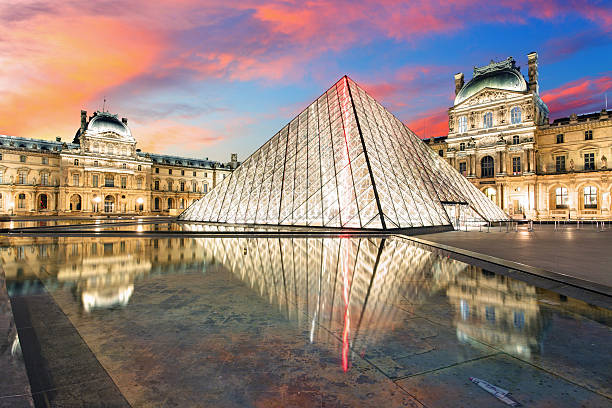
Tomorrow is when a guide can layer context, manage museum pacing, and build a route that does not compete with dinner fatigue. A first-night glimpse of the Louvre from across the Seine can be more satisfying than an exhausted walk through the courtyard. A view toward the Eiffel Tower can be enough without making the tower a destination. A single street in Le Marais can preview the district without pretending to explain it.
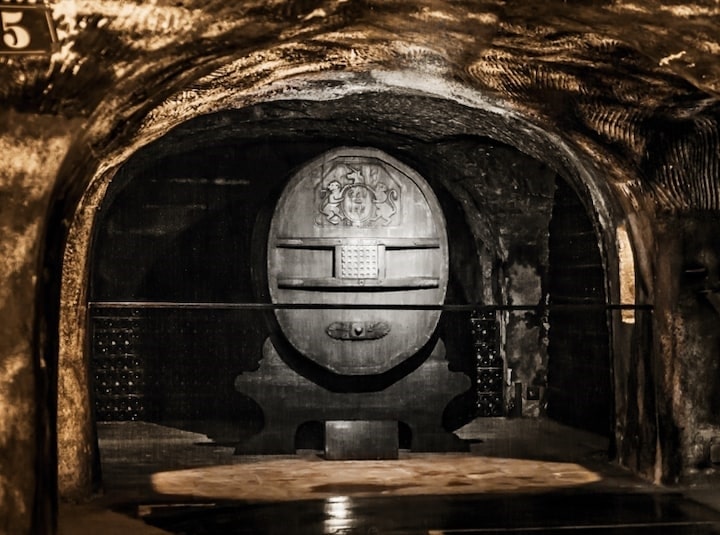
Also save major food-and-wine ambitions for a clearer day. A serious market morning, pastry route, or fine-dining day works best when appetite and timing are designed together. If Champagne is part of the stay, do not attach it mentally to arrival night; keep it as a separate day-trip decision. Official Champagne Taittinger visits in Reims (https://www.taittinger.com/en/visits-reims) are the kind of experience that belongs in its own planned day, not as a thought competing with a first evening in Paris.
If the trip includes Versailles, Champagne, Giverny, or Normandy, the first evening has an even clearer job: make the city base legible before the out-of-town days begin. A calm arrival night near the hotel can do more for a multi-day stay than a heroic first-night sightseeing push. For day-trip calibration later in the itinerary, compare private day trips from Paris after the city rhythm is set.
FAQ
Should I choose Saint-Germain, Le Marais or the 8th after checking into a Paris hotel?
Choose Saint-Germain if your hotel or dinner is on the Left Bank or near the Seine, Le Marais if you are already based near the 3rd or 4th arrondissement, and the 8th if your hotel and dinner are in the western luxury-hotel zone and you want the easiest return.
Is Saint-Germain a good first evening in Paris after a flight?
Yes, Saint-Germain is often the best first evening after a flight because it can be kept short while still feeling distinctly Parisian. A compact Saint-Germain to Seine edge walk gives orientation, atmosphere, and an easy retreat before dinner.
When is Le Marais too much for the first night in Paris?
Le Marais is too much when your hotel is far west in the 8th, dinner is on the Left Bank, or your group is already tired. Its layered streets reward attention, but that same density can feel like work after check-in.
Is the 8th arrondissement boring for a first evening?
The 8th arrondissement is not boring when it matches your hotel geography and dinner plan. It can be the smartest first-night choice for travelers who value a polished short walk, a simple return, and enough energy for dinner.
How long should the first evening walk be after hotel check-in?
Keep the first evening walk short enough that dinner still feels easy. In practice, that usually means one compact neighborhood loop, one river or landmark cue if it is nearby, and no cross-city add-on unless energy is unusually strong.
Should I go see the Eiffel Tower on my first night in Paris?
Only go to the Eiffel Tower on the first night if your hotel, dinner, or route already makes it easy. If it requires a separate transfer, save it for a planned morning or evening when it will not drain arrival energy.
Does a private guide make sense for a short first evening?
Yes, a private guide can make sense if the goal is orientation, not a full tour. The best version is a compact hotel-adjacent walk that explains the neighborhood, the river logic, and tomorrow’s routing without overloading arrival night.
Should dinner location or hotel location decide the first evening?
Hotel location should set the first filter, and dinner location should refine it. If the two are far apart, choose the plan that reduces movement before dinner and makes the return simple.
The calmer first evening is the one that gives tomorrow back
The best first evening in Paris is not the one with the most famous backdrop. It is the one that makes the hotel feel well placed, lets dinner happen without a rush, and gives the group a first mental map of the city. Saint-Germain wins when a Left Bank or Seine-edge loop is natural. Le Marais wins when you are already close and alert enough for texture. The 8th wins when the most valuable luxury is an easy return.
The firm editorial call is this: do not force Le Marais or the Eiffel Tower into arrival night from an 8th arrondissement hotel just to make the first evening feel more Parisian. Do not leave Saint-Germain for a distant Right Bank walk if your dinner and hotel already make the Left Bank elegant and easy. Do not pay for complexity when the real upgrade is restraint. Paris will still be there tomorrow, and you will meet it better after one calm night.
If you’re interested in any private tours of Paris, please reach out to us.



 So if you are looking for the absolute best in Paris & surroundings with authentic local fully-licensed native guides whose English you can actually understand and with an exclusive and amazingly fun itinerary













