Paris with Kids for a Tailor-Made First Trip: A Comfort-First Plan for the Eiffel Tower, a Seine Cruise and One Museum

Updated
Start with the tower, let Port de la Bourdonnais do the work, and add a museum only if the day is still alive
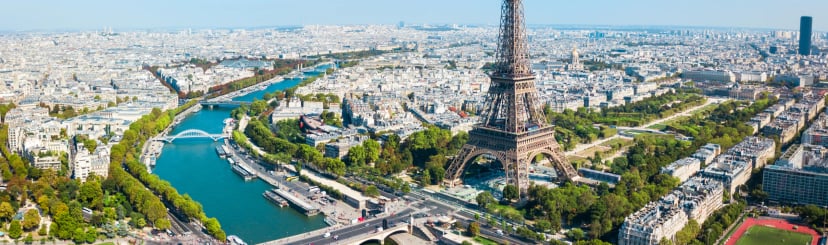
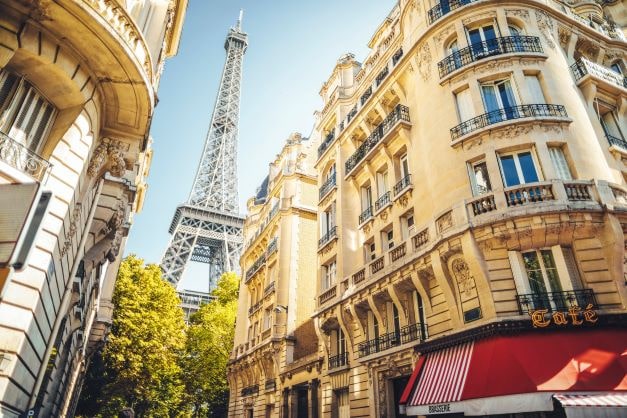
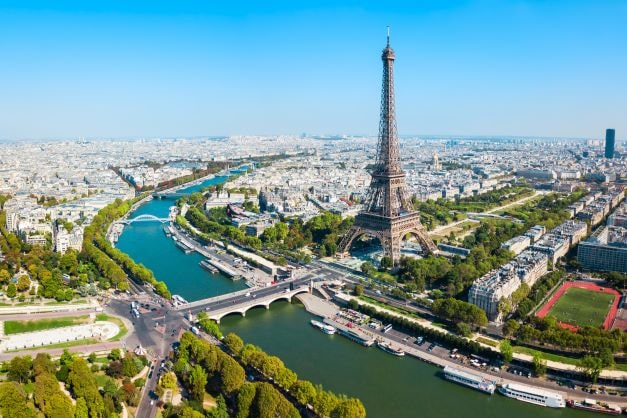
For a first Paris trip with kids, build the day around the Eiffel Tower and the embarkation stretch at Port de la Bourdonnais: tower first, Seine second, one museum only if the family still has appetite. In Paris, the river is not filler between family sights; it is the hinge that keeps a first trip from feeling like a relay of lines. That sequence works in real city conditions because Port de la Bourdonnais turns the post-tower energy dip into seated sightseeing instead of a second draining queue, while Champ de Mars and later the Jardin des Tuileries give children real space before you ask them to focus again. The clearest exception is a family with museum-driven teens or older grade-schoolers who genuinely care about art; for them, the Louvre can become the day’s intellectual center rather than a guilty add-on.
That may sound like modest advice for a city as dense with famous places as Paris, but it is exactly the point. Parents often plan Paris as if one major queue should naturally be followed by another. In practice, the stronger ladder is one big sight, one deliberate reset, and one easy win in each half-day. That is why the tower plus river plus carefully rationed museum beat the adult-first urge to add Trocadéro, the Arc de Triomphe, or another indoor blockbuster simply because the map suggests they are close.
If you want this day to feel looked after rather than improvised, the value usually comes from judgment more than from volume. Families who prefer tighter routing, calmer transitions, and a guide who knows when to stop pushing often do best with private family touring in Paris, because the real upgrade is not more commentary. It is deciding what to skip before the city makes that decision for you.
The second famous stop is where many family days in Paris go wrong
After the Eiffel Tower, most families should not stack another paid icon.
The most useful cut-first rule in Paris is brutally simple: when the day starts to look overfull, cut the second paid attraction before you cut the river or the garden. Parents are often reluctant to do that because the second famous stop is what makes the plan look complete on paper. In reality, the first big queue has already spent much of the family’s focus budget. The tower is not just a view. It is anticipation, security, vertical movement, weather exposure, waiting, bathroom timing, snack timing, and a sensory high that is wonderful when managed well and tiring when followed immediately by more performance.
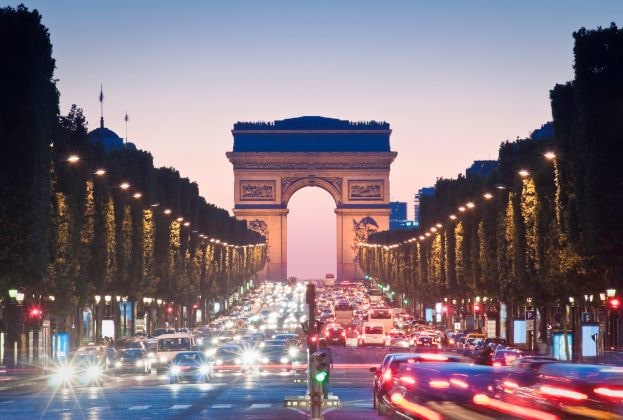
The classic Paris must-see that is usually the wrong second big-ticket stop on this kind of family day is the Arc de Triomphe. It is famous, it promises another panorama, and it looks efficient in adult itineraries because it sits on the same mental checklist as the tower. For children, though, it often delivers the worst kind of duplication: another viewpoint after they already had a viewpoint, another queue after they already queued, another effort-heavy block after the part of the day that already asked the most patience. You do not need a second triumphal finish to prove that your family saw Paris well.
Trocadéro is the quieter trap. The postcard logic is irresistible: the tower is there, the plaza is opposite, so families assume the pair belongs together in one uninterrupted block. The consequence is that Pont d’Iéna and the Trocadéro side can become a crowd-and-crossing project at precisely the moment when children would benefit more from coming down emotionally, having a drink, or sitting on a boat. If you want a Trocadéro photo, make it a brief tactical pass or a separate short outing. Do not treat it as the next great family activity after the tower.
What deserves protection instead is the sequence itself. Keep the Eiffel Tower as the single non-negotiable morning anchor. Keep the river as the release valve that changes the physical rhythm of the day. Keep one open-ground pause, whether that is a breather on Champ de Mars after the tower or later space in the Jardin des Tuileries. If anything has to go, let it be the extra trophy stop that adults wanted because Paris sounded incomplete without it.
If the tower is the emotional center of the day, make your most careful planning decision there rather than spreading your effort thinly across five famous names. A well-shaped visit usually matters more than a crowded checklist, which is why families often get better value from private Eiffel Tower planning than from trying to improvise a tower visit and then rescue the rest of the day afterward.
For operational details, tickets, and anything that may have changed since you first started planning, check the official Eiffel Tower site (https://www.toureiffel.paris/en) and let that fixed point determine the rest of your schedule. The rest of the day should flex around the tower, not the other way around.
- Keep: the tower, the Seine, and one deliberate breathing space.
- Cut first: the second paid icon, especially another viewpoint-heavy stop.
- Do not force: a cross-river photo mission just because the map makes it look adjacent.
- Let go early: the idea that a first family day in Paris must prove cultural seriousness by fitting everything in.
How to choose one museum in Paris with kids: full, lite, or none
The right museum answer is almost never “whatever we can squeeze in after lunch.”
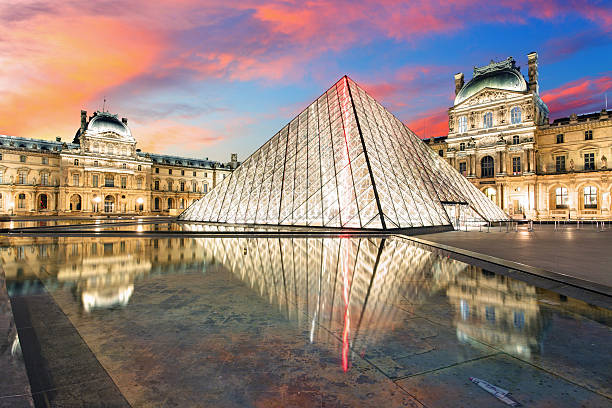
On this exact first-trip family route, the Louvre is the museum that most naturally belongs in the conversation because it pairs with the river and the Jardin des Tuileries better than most alternatives. That does not mean it belongs in every version of the day. It means that if you are going to use one museum to round out a first Paris experience, the Louvre gives you the cleanest urban logic: a famous collection, a central location, and a nearby reset zone that allows you to step out before the day curdles.
The most important distinction is not between the Louvre and every other museum. It is between a real museum block, a museum-lite version, and the mature decision to skip the museum completely. Families often talk about this as if it were a cultural choice. It is mostly a stamina choice. Paris punishes vague museum planning because you can lose a surprising amount of time to the friction before the art even begins: regrouping, restroom needs, cloakroom choices, ticket checks, and the emotional shift from outdoor freedom to indoor behavior. If you do not decide the museum mode in advance, the city will charge you for that indecision in patience.
No museum is often the right answer
No museum is the right answer for many families with toddlers, preschoolers, jet-lagged children, or one adult who is quietly already carrying the trip. There is no prize for dragging everyone through the Louvre because Paris supposedly requires it. If the tower is the fixed dream and the Seine is the calm-down zone, skipping the museum can produce a much more successful first day than forcing a short, resentful indoor finish. The family still gets the skyline, the river, the sense of arrival, and the emotional satisfaction of having seen Paris. What it avoids is converting the last workable hour into crowd management.
This option especially suits families whose children still nap, families traveling with a stroller that is already carrying snacks and layers, and families who know from experience that transitions are the real stress point. In those cases, the afternoon victory is not another cultural box ticked. It is ending the day with enough goodwill left for dinner, bedtime, and tomorrow.
Museum-lite is the sweet spot for many first-timers
Museum-lite is the most useful compromise for families with interested but not yet deeply committed children. Think of it as a focused, time-boxed Louvre encounter rather than a proper museum day. The goal is not to “do the Louvre.” The goal is to let the family feel the scale of the place, see a handful of works or rooms with intention, and leave while curiosity is still ahead of exhaustion.
For many grade-school families, museum-lite means roughly an hour, one strong story line, one bathroom opportunity, one clear adult expectation, and one easy exit into the Jardin des Tuileries. It might be the right move when children are old enough to enjoy the idea of a famous museum but young enough that too much choice instantly becomes friction. It is also the best answer when adults care about culture but understand that the first family day is about building affection for Paris, not about proving endurance.
If this is the museum lane you want, do not improvise it inside the building. Pick the level of commitment in advance, decide what success looks like, and stay disciplined about leaving while the day still feels buoyant. Families who want the museum part handled with more intention can pair this article with our curated Louvre day guide, which goes deeper on how to shape the visit without turning it into an art march.
A real Louvre block works only when the children actually want it
A fuller museum block can absolutely work for older grade-schoolers, teens, and mixed-age families with a genuine art motive. The key is honesty. If the Louvre is there because one child is excited, because a teen studied something at school, or because the adults know the family enjoys museums when expectations are clear, then a longer visit can be rewarding. If the Louvre is there because Paris feels incomplete without the word “Louvre” on the itinerary, it is probably the wrong use of energy on this day.
When the museum is real rather than symbolic, let it become the afternoon’s main effort. Do not tack on the Arc de Triomphe afterward. Do not pretend that the museum is a small side stop before a long cross-city dinner reservation. And do not confuse proximity on the map with emotional capacity in the family. A serious Louvre block can work beautifully with the tower and the river, but only if the river and the Tuileries are allowed to absorb the stress before and after it.
The strongest editorial judgment here is simple: for this specific first-trip family day, the Louvre wins not because it is the most famous museum in Paris, but because it is the museum whose exit gives you the cleanest recovery options. That is what matters. A museum that strands tired children without a forgiving next move may be excellent in the abstract and still be the wrong call in practice.
Do not let one bridge crossing become the fourth attraction
In central Paris with children, a short taxi hop is often a better upgrade than more walking or more metro.
Families who do Paris well on a first trip are often less ambitious than they expected and more tactical than they imagined. The tactical question is not “Can we get there?” It is “What will that transfer feel like after the tower?” Around the Eiffel Tower and central Paris, that answer changes quickly based on age, weather, stroller use, and whether the next stop is the river, the Louvre, or the hotel.
The good walking news is real. The immediate move from the tower zone to Port de la Bourdonnais is manageable for most families because it still feels like part of the same sight cluster. A calm stretch on or near Champ de Mars can also work because everyone is still emotionally inside the tower experience. The bad walking news is just as real: what looks like a tidy additional stroll on a map can feel completely different after one queue, one security check, and one emotionally loaded headline sight. That is when Paris stops being charming and starts becoming legwork.
Pont d’Iéna is the obvious crossing, which is part of the problem. It tempts families into thinking that if something is visible across the Seine, it is naturally the next move. Visibility is not the same as suitability. Crossing only because another landmark is across the river often produces the kind of stop-start fatigue children register long before adults admit it. The most exhausting part of a Paris family day is often not the sight itself. It is the unmanaged stretch between sights, especially when every adult is trying to conserve money, salvage timing, and keep the mood from slipping at the same time.
Metro logic also flatters adult brains. On paper, a quick ride can look cleaner than a taxi. In family reality, the station approach, the stair decision, folding or steering a stroller, and the pressure of a tired child in a public system can cost more mood than the saved minutes are worth. That does not mean never use the metro. It means do not default to it just because Paris is a big-city capital and you feel virtuous for taking public transport.
The body consequence is sharper in Paris than many first-time family travelers expect. This city does not usually crush you with steep hills on the core tourist axis, but it wears you down through stop-start effort: queue drag, weather exposure on open plazas, the long walk that follows a “short” crossing, museum entry friction, and the mental tax of repeated decisions. Children feel this in their legs first and in their behavior second. Adults feel it in shortened patience and the strange sense that the day was busy without feeling full.
- Walking wins when the next move is still part of the Eiffel Tower cluster, the weather is mild, and the children are old enough that the stroll feels like continuation rather than duty.
- Taxi wins when the family is leaving the tower zone for the Louvre or the Jardin des Tuileries, when a stroller is involved, when one child is already fraying, or when saving the evening matters more than saving a fare.
- Metro wins only when the family already travels that way comfortably and the station work is unlikely to cost more than the ride saves.
A lightweight foldable stroller can still be a good tool on this day, but its value is misunderstood. It earns its keep outdoors, on Champ de Mars, around the Tuileries, and when a child suddenly needs a moving seat. It earns less when the plan relies on repeated station changes or when adults assume it makes every step of the day automatically easier. In crowded, transition-heavy Paris, the stroller is best thought of as an energy reserve, not a full mobility solution.
One more corrective point is worth making because affluent travelers often hear the opposite. A full chauffeured day inside the center of Paris can be overbought for this specific plan. Cars still meet Paris traffic, and a vehicle waiting nearby does not eliminate tower queues, museum thresholds, or the need to decide when a child is simply done. For many central family days, one or two strategic taxi hops do more than a glamorous transport wrapper that cannot change the basic rhythm.
Why the Seine and the west end of Jardin des Tuileries are not filler
The river and one garden pause are the reason this family day still feels good at the end.
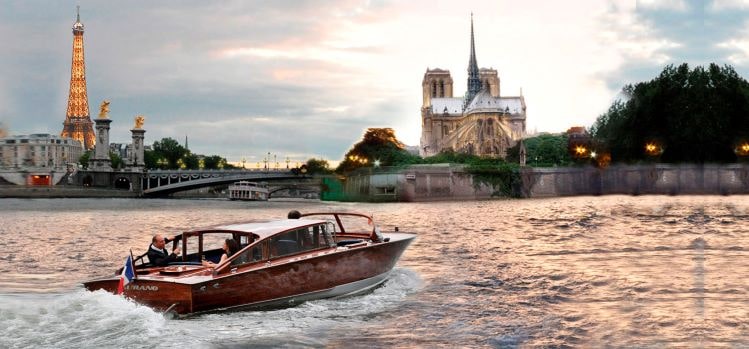
The Seine matters here because it changes not only what you see, but how the family sees. After the Eiffel Tower, children have usually spent a meaningful chunk of their concentration on anticipation and waiting. On the river, sightseeing happens while they are sitting down, moving, and no longer being asked to prove interest. Even if your cruise is a round-trip rather than a transport tool, it still performs a critical job: it turns the next hour from effort into reception. That is exactly why the stretch at Port de la Bourdonnais is so useful. It lets the river replace a second queue-heavy stop at the moment when that replacement does the most good.
The practical consequence is larger than it sounds. A family that leaves the tower and goes straight into another demand-heavy attraction often experiences the rest of the day as management. A family that leaves the tower and lets the river absorb the next phase experiences the rest of the day as Paris. That difference is what makes adults feel that the trip is being enjoyed rather than administered. It is also why a structured private Seine cruise plan can be more valuable for a first family day than another famous monument, even though the monument may look more impressive on a checklist.
The Jardin des Tuileries performs a different but equally important task. For this route, the west end of the Jardin des Tuileries is not just pretty open space; it is a pressure-release point with very good timing. Near Place de la Concorde, it gives you long sightlines, room to breathe, a sense of being central without being trapped, and an easy place to judge the family honestly before committing to more museum time, more shopping, or the trip back to the hotel. That is why this garden works so well in a family-first version of central Paris. It does not ask children to do anything except recover.
There is also a deeper mood consequence here, and it is one families tend to notice only in hindsight. Paris can feel either gracefully memorable or oddly tiring depending on whether the adults still have emotional margin by late afternoon. A river hour after the tower lowers the supervisory temperature. A garden pause in the Tuileries lets children stop performing interest and adults stop narrating logistics. That is what preserves the evening. Not in a vague lifestyle sense, but in a concrete one: dinner remains pleasant, the walk back feels possible, and tomorrow still sounds exciting.
If your family ends up loving the Louvre, wonderful. If your children end up remembering the boat, the open ground, and the freedom to move after the tower, that is wonderful too. The mistake is assuming that the parts which look like “downtime” on an adult itinerary are the least important pieces. In family Paris, they are often the parts holding the entire day together.
This is also where many parents feel the route click into place for the first time. Champ de Mars is your spillout field after the tower. Port de la Bourdonnais is your seated recovery hinge. The Louvre is optional based on energy. The west end of the Jardin des Tuileries is your honest check-in before one last effort or a graceful exit. Once you see the day through that ladder, Paris stops feeling like a test of ambition and starts feeling like a city that can meet children halfway.
Toddlers, grade-schoolers, and teens should not use the same Paris formula
The skeleton of the day can stay the same, but the demand level cannot.
Toddlers and preschoolers: tower, river, space, and no guilt about skipping the museum
With toddlers and preschoolers, the right answer is usually the most stripped-down one. Keep the Eiffel Tower if it matters deeply to the adults or fascinates the child. Follow it with the Seine while everyone is still contained and receptive. Then choose open space over culture unless weather forces a different move. Champ de Mars helps because children can decompress immediately after the tower. A stroller remains useful because the emotional drop after a headline sight often arrives suddenly. And a taxi is more likely to feel like a smart family investment than another push across the center.
The real danger in this age band is not boredom. It is transition overload. A toddler who handled the tower surprisingly well can still unravel on the bridge, in the station, or fifteen minutes into a museum the family added because the morning went better than expected. The mature Paris decision at this age is often to bank the win. Let the river count as enough. Let the garden count as enough. Paris is still Paris even if the Louvre waits for another trip or another day.
Grade-schoolers: this is the age for museum-lite and one chosen story
Grade-schoolers often fit the article’s ideal shape best. They are usually old enough to understand the thrill of the tower, the idea of the Seine, and the prestige of the Louvre, but still young enough that overloading the plan backfires quickly. For this age band, the winning formula is often tower first, river second, museum-lite third, and Tuileries as the safety valve before the day tips into too much structure.
The trick is to let grade-schoolers feel agency without handing them the whole schedule. Give them one concrete thing to look forward to after the tower. Let them know the boat is coming. Let them know the museum is short and specific, not endless. Then give them open ground afterward so the day does not end in a whisper-heavy indoor mood. The adults get Paris. The children get momentum, one clear next step, and a sense that the day is moving rather than being imposed.
This is also the age band where many families are tempted to add “just one more famous thing” because the children seem game. Resist that temptation. The point is not to exploit every moment of good behavior. It is to stop before the city starts taking more than it gives.
Teens and mixed-age families: the museum can become real, but only if you protect the return leg
Teens can handle more complexity, but they also punish hollow tourism faster than younger children. If a teen wants the Louvre, give the museum proper status instead of pretending it is a side note. That may mean keeping the tower and the river but dropping any thought of a second major view or shopping detour. It may also mean reversing the order on a bad-weather day and letting the museum happen when energy is highest. What teens usually dislike is not effort itself. It is effort that feels unearned.
Mixed-age families need an even firmer editor. When one child is teen-ready and another is six, the answer is almost never to scale the whole day up to the oldest child’s stamina. It is to preserve the same skeleton and lower the demand inside the museum. That may mean museum-lite for everybody, or it may mean one adult stepping out earlier with the younger child while the older one gets a fuller look. The day still works because the route itself is coherent. You are not improvising from scratch at each handoff.
The return-leg logic matters most in this age band. If you are staying on the Right Bank or somewhere central that naturally connects to the Louvre and the Tuileries, this westward-to-eastward shape is especially kind because the hardest work happens earlier and the day can end closer to dinner or the hotel. If you are staying on the Left Bank around Saint-Germain or the 7th, the route can still work beautifully, but you should be even more ruthless about making the museum optional rather than mandatory. Crossing the Seine with purpose is fine. Crossing it repeatedly just because the family kept going is how the day gets flattened.
That point is easy to underestimate when booking a hotel. A beautiful address helps. Good service helps. But route logic helps more once children are involved. Paying more for the fanciest address does not solve family fatigue if the route still crosses the city twice.
Spend on timing and routing, not on deluxe wrappers that do not change the day
In Paris with kids, money works best when it removes one real friction point.
The best premium spends on this specific first-trip family day are the ones that simplify decisions you would otherwise have to make while tired: secured tower timing, expert guidance that knows when to keep moving and when to stop, one or two strategic taxi hops, and a hotel location that does not force a celebratory day to finish with a draining commute. Those are the spends that alter the lived experience of Paris.
What does not reliably earn its cost is glamour that leaves the underlying route unchanged. A higher room category with a thrilling view does not help if the family is still dragging across the city at the wrong hour. An all-day vehicle does not automatically help if most of the stress is happening at entrances, crossings, and attention thresholds rather than in transit itself. Extra spending only matters when it removes a specific point of friction that you can name before the day begins.
This is exactly why a private guide can be so effective for a family first trip in Paris. The guide is not just there to narrate the Eiffel Tower or the Louvre. The guide can handle timed entries, lines, routing, pace changes, and the less visible work of protecting child energy before it collapses. A good guide knows when Champ de Mars has done enough, when Port de la Bourdonnais is the right next move, when a taxi is smarter than the metro, and when the family should stop performing ambition and take the win. That is not decorative luxury. It is practical editing.
If that is the kind of help you want, this is the point in the planning process where it makes sense to ask for it rather than trying to engineer every transition yourself. Inquire now
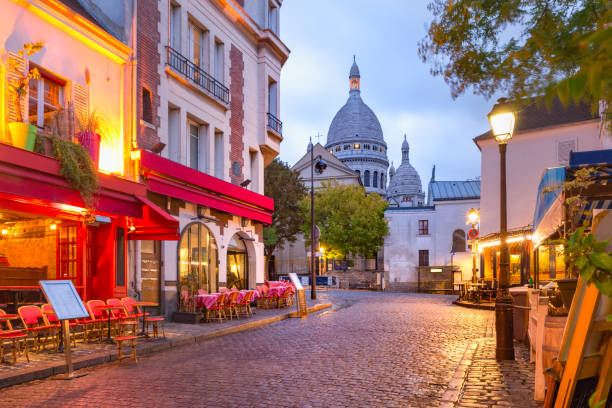
One last planning discipline matters here. If this family day sits inside a longer first trip, do not let it carry the burden of every other Paris dream as well. Versailles, Montmartre, long market lunches, and other heavyweight ambitions need their own place. If you are still working out how much room Paris needs overall, use a proper trip-length plan and keep this family day focused on doing one cluster beautifully instead of doing the whole city badly.
FAQ
Should families do the Eiffel Tower in the morning or in the evening?
Morning is usually easier for a first family day because it lets you spend your highest-focus energy on the tower, then use the Seine and a garden pause to soften the rest of the schedule. Evening can be magical, but it also asks children to stay regulated later and can turn the return to the hotel into the hardest part of the day.
Is the Louvre worth it with young children on a first Paris trip?
Only when the family is choosing the right version of the Louvre. With toddlers and many preschoolers, the best answer is often no museum at all. With grade-schoolers, museum-lite is usually the sweet spot. With teens who truly care, a fuller Louvre block can be excellent if you do not stack another major icon around it.
Is a stroller worth bringing for Paris if we are doing the tower and central sights?
Yes, often, but mainly as an outdoor energy tool rather than a guarantee of effortless movement. It is most useful on Champ de Mars, around the Tuileries, and whenever a child suddenly runs out of steam. It is less useful when the day depends heavily on repeated metro transfers or when adults assume the stroller makes every transition simple.
Should we use taxis or the metro between the Eiffel Tower and the Louvre area?
Taxis are usually the better family upgrade when children are under seven, a stroller is part of the day, or the tower has already taken more patience than expected. The metro can work, but families often underestimate how much mood is spent before the train ride even begins.
Should we add Trocadéro or the Arc de Triomphe on the same day as the Eiffel Tower?
Usually not. Trocadéro is often overvalued immediately after the tower, and the Arc de Triomphe is commonly the wrong second paid icon for a family day. Both can make sense elsewhere in the trip, but this particular day is stronger when the second major effort is the river or the museum, not another viewpoint.
Where should we stay in Paris if we want this day to feel easier with kids?
Choose a base that reduces unnecessary cross-city returns more than one that simply sounds prestigious. For many first-timers, central neighborhoods that connect cleanly to both the Eiffel Tower day and the Louvre/Tuileries zone are easier than glamorous addresses that look impressive but complicate the route. Our guide to where to stay in Paris for a first visit is the best next read if hotel choice is still open.
What if it rains on our Eiffel Tower day?
Rain is the clearest condition that can flip the order. If the tower matters but the weather is unpleasant, keep the day flexible enough to make the Louvre more central and treat the river as optional rather than guaranteed. What you should not do is force both a weather-stressed tower experience and an overlong museum afterward just because the original plan looked elegant when the forecast was dry.
How many days should a family spend in Paris before adding Versailles or another big day out?
Most first trips feel better when Paris itself has enough breathing room before a major day trip enters the picture. Families usually enjoy the city more when the tower-river-museum day is allowed to stand on its own rather than competing with Versailles too soon. If you are balancing both, our guide to how many days in Paris you really need will help place the heavier outing more sensibly.
If you’re interested in any private tours of Paris, please reach out to us.



 So if you are looking for the absolute best in Paris & surroundings with authentic local fully-licensed native guides whose English you can actually understand and with an exclusive and amazingly fun itinerary













