Paris When Notre-Dame Is Back in the Plan: Île de la Cité, Sainte-Chapelle and the Seine in One Calm Arc

Updated
Verdict: Put Notre-Dame back into a central Paris day, but treat it as the island anchor, not the entire morning. The calmest arc is Île de la Cité to the Seine: start with the cathedral context and parvis, let Sainte-Chapelle be the timed interior that sets the clock, then leave toward the river while attention and legs are still fresh. This works because the distances are short but the friction is not: security checks, forecourt crowding, bridge crossings and the Boulevard du Palais pinch point decide how the day feels. The exception is a traveler whose main dream is a deep cathedral interior visit; in that case, Notre-Dame should have its own focused slot and Sainte-Chapelle should move, not be squeezed.
The point of this route is not to celebrate a reopening headline. It is to rebuild the most central Gothic-and-river sequence in Paris around current visitor reality, without letting one famous monument turn the day into a queue audit. Notre-Dame, Île de la Cité, Sainte-Chapelle and the Seine sit close enough to feel simple on a map, but the real hinge is the courthouse-side security environment around Sainte-Chapelle and the tight movement between Pont au Double, Place Jean-Paul II, Cité station and Boulevard du Palais. That small island geography is why a private Notre-Dame-focused walk, such as Notre Dame Private Tours, earns its value through pacing and interpretation as much as through access planning.
Use this guide when you want one refined central Paris arc, not a general first-day itinerary. The winning sequence is cathedral context, Sainte-Chapelle, then Seine. The first correction is counterintuitive: the most famous Seine boat departures near the Eiffel Tower are not automatically the right finish for this particular day, because sending a group west after the island can turn a graceful morning into a transfer problem. For this arc, the Seine is first a release valve at the edge of the island, and only then, if the day still has appetite, a cruise or private river moment.
How to visit Notre-Dame, Sainte-Chapelle and the Seine in one calm Paris route
The cleanest route is a priority ladder, not a checklist: Notre-Dame gives the day its historical center, Sainte-Chapelle gives it its timed commitment, and the Seine gives it air after the densest part of the morning. That order matters because the island is compact, but the sites do not behave the same way. Notre-Dame asks for crowd judgment and spiritual tact. Sainte-Chapelle asks for a ticket, a time slot and patience with security. The river asks for a choice between a walk, a scheduled boat, a private cruise or a simple visual exit.
The priority ladder for the day is simple:
- First: Use Notre-Dame to orient the story of Paris, even if the visit remains exterior and contextual.
- Second: Fit Sainte-Chapelle around its timed-entry logic, because it is less flexible than the parvis.
- Third: Let the Seine come after the Gothic interiors, when the group needs light, movement and a less compressed atmosphere.
- Fourth: Cut nearby add-ons before you cut breathing room; the island punishes overstuffing more than it rewards one extra monument.
Official planning checks are worthwhile here, because the friction points are operational, not theoretical. Notre-Dame’s own visitor information (https://www.notredamedeparis.fr/en/visit/) frames cathedral access as free, with practical sections for individuals, families, groups, the Treasury and exterior visits. Its official reservation page (https://resa.notredamedeparis.fr/en/tickets) describes free reservation as optional and intended to smooth admission, not as a commercial fast-track product. Sainte-Chapelle is different: its official practical information (https://www.sainte-chapelle.fr/en/visit/practical-information) and ticketing page (https://tickets.monuments-nationaux.fr/en-GB/families?site=2035141861660400306) make the time-slot logic central to the visit, including the 30-minute entry window and a second security check before entering the monument.
The practical consequence is that Notre-Dame should not automatically be booked, bought and controlled the way travelers handle Sainte-Chapelle. The cathedral belongs early because it gives shape to the island and sets the tone. Sainte-Chapelle belongs wherever its ticket window allows the least awkward wait. The Seine belongs after both, because it changes the body language of the day: the group stops funneling through thresholds and starts moving along open edges.
Where Notre-Dame belongs in the day now
Notre-Dame belongs near the beginning of the day, but it does not always need to be the day’s anchor. For a first-time cultural visit, it should be the opening act because it explains why this island matters before the itinerary disappears into stained glass, courthouse walls and riverbanks. Start on or near the parvis, read the west front from a respectful distance, then decide whether the interior belongs in the plan based on that day’s access reality and the travelers’ energy, not only on desire.
The best Notre-Dame moment is often shorter than travelers expect. A strong guide can connect the parvis, the façade, the sculptural program, the rebuilt skyline and the island’s medieval role without forcing everyone to stand in one exposed crowd for too long. From the parvis, the short move toward Pont au Double or the riverside edge also shows why Notre-Dame is not just a monument but a compass. The Seine sits immediately below; the Left Bank is close enough to tempt a detour; Sainte-Chapelle is close enough to look easy. That temptation is exactly why the sequence needs discipline.
Notre-Dame should be exterior and context only when the group has a hard Sainte-Chapelle slot, limited standing tolerance, a late lunch reservation, children who are already fading, or older travelers who will not recover well from two consecutive security and waiting experiences. It should also be exterior-only when the day is meant to include a calm river finish rather than a deep cathedral visit. That is not a lesser version of the day. It is often the more elegant one, because the cathedral’s meaning is legible from the parvis, bridges and river edge when the guide knows what to point out.
The exception is a traveler who has come to Paris specifically for the restored cathedral interior, liturgical atmosphere, sacred art or a personal connection to Notre-Dame. In that case, do not pretend the day can still hold every nearby attraction gracefully. Give Notre-Dame a protected slot, keep Sainte-Chapelle on the same half-day only if the timing is clean, and make the Seine a lighter ending rather than a scheduled obligation. A cathedral-first traveler needs depth; a first-time city traveler usually needs sequence.
Why Sainte-Chapelle changes the timing more than Notre-Dame
Sainte-Chapelle changes the day because it is small, timed and security-sensitive. It is also the stop most likely to punish casual planning. The chapel sits within the Palais de la Cité and beside the active courthouse environment, so the approach from Boulevard du Palais is not like strolling into a freestanding church. Even with a reservation, the emotional rhythm is threshold, check, wait, enter, adjust to low light, climb or move into the upper chapel, then slow down enough to let the stained glass register.
This is where many otherwise polished Paris days lose their calm. Travelers assume that because Notre-Dame and Sainte-Chapelle are close, they can float between them. The walking distance is not the problem. The problem is that Sainte-Chapelle is a timed interior with concentrated demand, and its beauty is fragile under rushed conditions. If the group arrives with ten minutes of buffer after lingering at Notre-Dame, the chapel begins as stress. If the group arrives too early without a plan, the waiting time can flatten the morning before the main interior even begins.
The better move is to let Sainte-Chapelle set the hour and build Notre-Dame around it. If the ticket is mid-morning, begin with a measured Notre-Dame exterior and island context, then arrive at Boulevard du Palais without having to cut through the group. If the ticket is late morning, add the Square Jean XXIII side, the Pont de l’Archevêché view or a short Conciergerie exterior explanation, but do not add a full secondary visit. If the ticket is early, make Sainte-Chapelle first and let Notre-Dame follow as a broader, calmer reflection rather than a frantic prelude.
For art-sensitive travelers, Sainte-Chapelle is the interior that deserves the freshest attention. Notre-Dame carries emotional scale; Sainte-Chapelle demands visual concentration. The stained glass is not a quick “look up and leave” experience if the visit is meant to be memorable. A guide who can read the chapel’s royal, biblical and architectural layers can make a compact visit feel rich, but no guide can make rushed eyes feel rested. This is one reason a broader Paris planning page such as skip-the-line planning in Paris should be read with realism: time slots and security can smooth a day, but they do not suspend the city’s rules.
When to add the Seine after Notre-Dame and Sainte-Chapelle
Add the Seine after Sainte-Chapelle when the group needs openness more than one more interior. This is the strongest river moment of the day because the island has just given you compressed stone, glass, security and history. The river changes the sensation immediately. From the courthouse side, Pont Neuf opens the western tip of the island; from Notre-Dame, Pont au Double and Petit Pont pull the eye toward the Left Bank; from Quai de la Corse, the north bank gives a cleaner move toward the Right Bank without forcing the group into a long museum transfer.
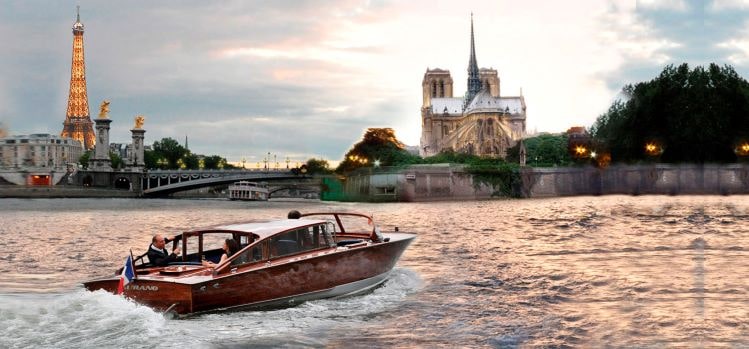
The right Seine choice depends on what the day still has to do. If this is a half-day ending before lunch, choose a riverbank walk or a short guided exterior sequence along the quays. If this is a celebration day, a private boat or carefully placed cruise can turn the island story into a graceful finale. If this is a first Paris day after a long-haul arrival, the river should be a gentle decompression rather than a scheduled crossing to a crowded departure point. The Seine is not automatically better because you board a boat; it is better when it lowers the day’s pressure.
Scheduled Seine cruises can work beautifully, but they should be chosen for route fit, not only for brand familiarity. Bateaux Parisiens, for example, describes its sightseeing cruise as a one-hour commentary experience on its official cruise page (https://www.bateauxparisiens.com/en/cruise-tours/guided-tour.html). That can be useful on a different Paris river day or when the Eiffel Tower area is already in the plan. For this island arc, however, transferring west just to board can cost more calm than the cruise returns. The more central the day remains, the more the river can feel like a natural exhale instead of a second itinerary.
The mood consequence is easy to underestimate. When the Seine comes after Sainte-Chapelle, the day feels as if it opens outward: the group has earned light, movement and a broader view of Paris. When the Seine is forced before the chapel, the group often arrives back on the island watching the clock, and the river becomes another item consumed rather than a release. The same river can make the day feel shorter or longer depending on where it sits.
The traveler-fit clusters that should shape the route
The full Notre-Dame, Sainte-Chapelle and Seine arc suits travelers who want a concentrated central Paris experience with one great interior, one great cathedral context and one open-air finish. It is less suited to travelers who measure value by the number of entries. The route’s strength is cohesion. Its weakness is that it can look too light to someone who is still planning from a list of famous names.
Best fit: first-time culture travelers who want Paris to make sense
This route is strongest for couples, families with older children, small groups and comfort-focused first-timers who want the historical core of Paris to become legible without a long museum day. Notre-Dame explains the island’s public and sacred weight. Sainte-Chapelle gives a jewel-box interior with a very different scale. The Seine ties the story to the city’s geography. For these travelers, the day feels premium because it is edited, not because it is overloaded.
Modified fit: families and older parents who need fewer thresholds
Families with younger children and older parents should keep the route but reduce entries. The best version is often Notre-Dame exterior context, Sainte-Chapelle if the timing is clean, then a river edge rather than a full cruise. Standing still is usually harder than walking here. The island has stone surfaces, security queues, tight approaches and limited patience zones. A guide can keep the story moving, but the body still registers every stop-and-start moment.
Special-occasion fit: couples who want the river to do emotional work
For an anniversary, proposal-adjacent trip, birthday or small celebration, the Seine belongs after the Gothic sequence, not as a random evening extra. The shift from Sainte-Chapelle’s stained glass to open water gives the day a natural arc. If dinner is important, do not let the river moment run too late or too far west unless the restaurant plan also sits west. The romance here is not more champagne in the schedule; it is a day that does not arrive at dinner with everyone tired and slightly late.
Wrong fit: travelers trying to add the Louvre, Le Marais and the Latin Quarter
This arc breaks down when travelers try to attach a Louvre highlights tour, a full Le Marais walk and a Latin Quarter lunch wander. The map makes those temptations look reasonable; the body disagrees. Each add-on creates a new threshold, a new direction and a new decision. If the day must include the Louvre, use a dedicated museum plan such as a curated Louvre day without museum fatigue and stop pretending the island route can carry the same weight.
What to skip nearby when the island starts to feel full
The first thing to skip is the “because it is right there” stop. Around Île de la Cité, proximity is seductive and often misleading. The Conciergerie, the Latin Quarter, Shakespeare and Company, Île Saint-Louis, the Louvre courtyards and Le Marais can all look like harmless additions. Some are excellent in the right plan. In this plan, they can make the day lose its shape.
Cut the Conciergerie first if Sainte-Chapelle is already your chosen interior. The Conciergerie has serious historical value, especially for travelers interested in the medieval palace and the French Revolution, but pairing it with Notre-Dame, Sainte-Chapelle and a Seine finish often turns a clean Gothic-river arc into a courthouse complex day. That is not wrong; it is simply a different article. If the group includes legal-history enthusiasts or repeat visitors, keep it. If the group is trying to preserve wonder and ease, skip it.
Do not force Île Saint-Louis as a dessert detour unless the group truly wants a soft ending on foot. The island is lovely, but crossing there after Notre-Dame can pull the route east when the cleaner river logic often points west toward Pont Neuf or outward along the quays. Likewise, do not let the Left Bank bookshop-and-café impulse consume the post-cathedral window unless lunch is deliberately planned there. A charming drift can still be a drift, and drift is expensive when Sainte-Chapelle has a fixed slot.
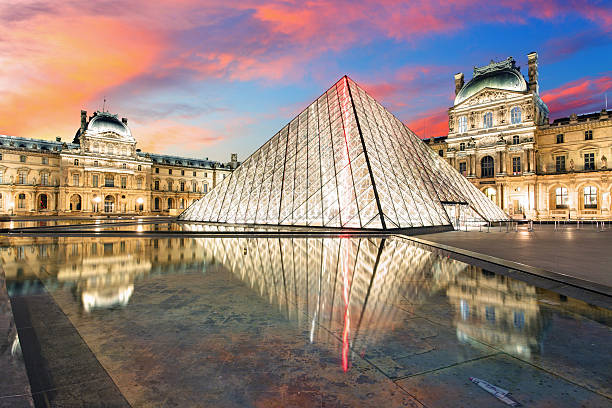
The Louvre is the major stop to keep out of this route. It is nearby enough to tempt ambitious planners and large enough to dominate everything around it. Entering the Louvre after Sainte-Chapelle is usually a mistake for travelers who care about comfort, because it stacks visual intensity on visual intensity and makes the Seine feel like a recovery tactic rather than a chosen finish. If the Louvre matters, give it its own morning or evening. If the island matters, protect the island.
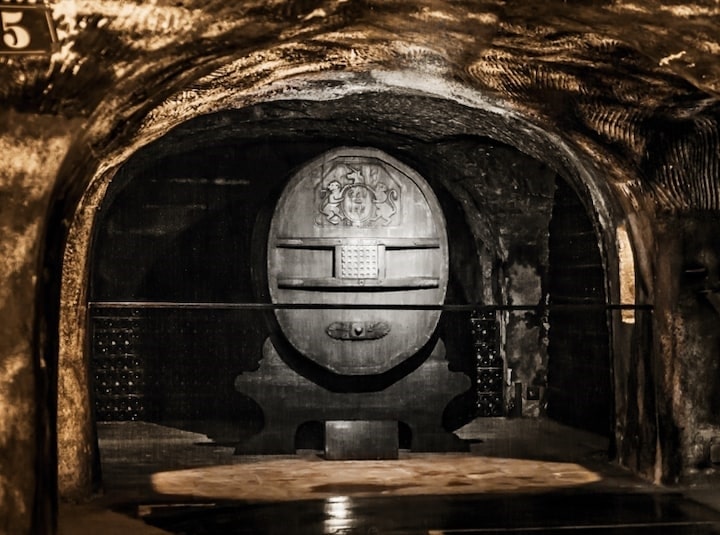
The same restraint applies outside Paris. Champagne Taittinger visits in Reims (https://www.taittinger.com/en/visits-reims) can be a superb dedicated day when Champagne belongs in the trip, but they do not belong before or after this Île de la Cité route. Reims is a separate decision with train or chauffeur logistics, cellar timing and a different appetite for tasting. Combining it with Notre-Dame, Sainte-Chapelle and the Seine would not feel abundant; it would feel misfiled.
What Paris does to the body on this short route
This route is short in distance and surprisingly demanding in standing load. Paris does not make this arc hard through hills. It makes it hard through compression: waiting on stone, shifting through security, crossing bridges with crowds, pausing for guide context in exposed areas, and deciding repeatedly whether to keep moving or hold a place. The body notices the difference between walking freely along a quay and waiting in a slow line outside a security checkpoint.
The most tiring part is often not the distance from Notre-Dame to Sainte-Chapelle, but the rhythm of interruption. A group stands on the parvis, moves around a crowd, stops for context, crosses or skirts a bridge approach, queues near Boulevard du Palais, adjusts to the chapel interior, then descends back into the street. None of those actions is dramatic alone. Together they can leave travelers feeling as if the morning was heavier than the map promised.
For older parents, travelers with knee or back sensitivity, and families with children, the answer is not always a car. A chauffeur can help with hotel arrival and departure, but a car cannot elegantly solve the few hundred meters between the island stops. The better comfort upgrade is route discipline: fewer entries, better buffers, a guide who chooses where to stand, and a river exit that does not require doubling back. For cross-city days, a chauffeur can be powerful; for this island arc, over-reliance on a vehicle can create waiting and pickup friction at the very moment walking would be cleaner.
Premium spend does not help when the official security line, a liturgical moment, a full time slot or a crowded forecourt sets the boundary. Paid access or guiding cannot remove every crowd or access constraint. What premium planning can do is prevent the avoidable mistakes: arriving at Sainte-Chapelle in the wrong mood, treating a free Notre-Dame reservation as a guaranteed fast lane, or choosing a Seine departure that adds a transfer just because the boat name is familiar.
How a private guide changes the day without overpromising access
A private guide changes this route by making judgment calls in real time. The value is not only commentary; it is deciding whether Notre-Dame should be interior, exterior or deferred; whether Sainte-Chapelle needs a longer buffer; whether the river should be a walk, a cruise, or simply a view from the quays; and where a family should pause without being swallowed by the crowd. This is why the strongest version of the day is tailor-made rather than merely pre-booked.
The guide’s first job is context control. Notre-Dame can become an 860-year history lecture, a restoration discussion, a Gothic architecture lesson, a sacred-space visit or a city-origins story. It should not become all of those at once. A discerning visitor needs the layer that serves the day. With families, that might mean façade symbols, the fire and restoration in clear terms, and a short bridge view. With art travelers, it might mean the relationship between Notre-Dame’s Gothic scale and Sainte-Chapelle’s Rayonnant precision. With celebration travelers, it might mean keeping the story elegant and making the river finish feel unforced.
The guide’s second job is timing defense. If the Sainte-Chapelle slot is soon, the guide trims the cathedral exterior. If the group is early, the guide chooses a nearby contextual pause that does not burn energy. If the parvis is too congested, the guide changes the angle rather than insisting on the most obvious view. That kind of adjustment is difficult to buy as a standalone ticket, but it is exactly what keeps a premium day from feeling managed by the slowest queue.
The guide’s third job is exit design. Ending on the Seine can mean a short walk toward Pont Neuf, a private river arrangement, a scheduled cruise, a Left Bank lunch, or a return to the hotel before a serious dinner. Each choice changes the rest of the day. Orange Donut Tours can fold the island sequence into a broader private plan, from a focused cathedral morning to a river-led afternoon or a lighter first-day route through private tours in Paris. When the concern is current access reality, Sainte-Chapelle timing and a graceful river exit, the clean next step is Inquire now.
A calm sample arc from Île de la Cité to the Seine
The best sample plan begins on the island rather than treating it as a place to pass through. Meet near Notre-Dame or Cité station, depending on the hotel approach and the day’s crowd pattern. Use the first view to set the story: the cathedral, the parvis, the river’s two banks and the reason this small island still carries so much of Paris’s identity. Keep the opening focused. The first thirty to forty minutes should make the day legible, not exhaust the cathedral.
If Notre-Dame interior access is smooth and the group wants it, enter with restraint and let the visit remain purposeful. If access looks slow or the group’s energy is better held for Sainte-Chapelle, keep Notre-Dame exterior and contextual. That decision should not feel like a failure. It should feel like a professional edit. The island gives excellent exterior context from several angles, and the point is to preserve the arc rather than win a contest of entries.
Move to Sainte-Chapelle with enough buffer that security does not define the emotional tone. On the way, the guide can frame the Palais de la Cité, the Conciergerie exterior and the royal logic of the chapel without adding a second formal visit. Inside Sainte-Chapelle, slow down. Let the eye adjust before explaining too much. The upper chapel is small enough that over-talking can crowd the experience as much as other visitors do.
After Sainte-Chapelle, resist the urge to ask, “What else is nearby?” Ask instead, “What would make the day feel complete?” For many travelers, the answer is the Seine. Walk toward Pont Neuf if the group wants a broader river perspective, or return toward the Notre-Dame side if the mood calls for a softer Left Bank edge. If a private river element is part of the day, this is the moment to let it feel like a continuation, not a relocation. The same logic appears in a Seine River Private Tour: the river works best when it is placed to solve movement and mood, not when it is pasted onto a full day.
How to decide between a walk, cruise or no river add-on
Choose a river walk when the group needs flexibility, a cruise when the day needs a defined finale, and no river add-on when Sainte-Chapelle and Notre-Dame have already taken the emotional space. The worst choice is not skipping the Seine. The worst choice is adding it out of guilt when the group would be happier with lunch, a hotel pause or an unhurried transfer to dinner.
Choose a river walk when timing is uncertain
A walk along the Seine is the safest option when Notre-Dame access, Sainte-Chapelle security or lunch timing is uncertain. It requires no new ticket, no boarding point and no anxious clock-watching. It also lets the guide control the amount of context: bridges, sightlines, medieval island geography and the relationship between Right Bank and Left Bank can be explained in motion.
Choose a cruise when the river is the emotional finish
A cruise belongs when the day is a celebration, a multigenerational trip, or a first Paris visit where seeing the city from the water matters more than adding another interior. It should be timed so that boarding does not steal the calm created by the island sequence. For couples and small groups, a private or carefully selected river experience can feel like a natural finale. For families, a scheduled cruise can work well if it replaces, rather than follows, one more monument.
Choose no river add-on when the next commitment is more important
Skip the formal river piece when lunch, dinner, a museum slot or hotel recovery is the real next priority. The Seine can still appear as a view and a short edge-of-island release. Not every river moment has to be monetized. Sometimes the most polished choice is ten minutes on the quay and a clean departure.
The final editing rule for this Paris arc
The final rule is to protect the arc from “nearby” decisions. Notre-Dame, Sainte-Chapelle and the Seine form a naturally calm sequence only when each part has a job. Notre-Dame orients. Sainte-Chapelle concentrates. The Seine releases. Add-ons should be admitted only if they strengthen one of those jobs. Otherwise they turn a coherent Paris morning into a cluster of famous addresses.
For travelers planning a broader first stay, this island route pairs best with separate days for the Louvre, the Eiffel Tower area, food-and-wine neighborhoods or a serious day trip. It also works well as a recovery day between heavier experiences, because it gives Paris substance without requiring cross-city fatigue. The route is not small because it lacks ambition. It is small because central Paris rewards precision.
A skeptical planner may ask whether this is enough. For the right traveler, yes. Notre-Dame, Île de la Cité, Sainte-Chapelle and the Seine give a more memorable half-day than a crowded sequence of five addresses because the story has a beginning, a crescendo and an exit. The day stays calm not by avoiding famous places, but by refusing to let fame decide the order.
FAQ
Can you visit Notre-Dame and Sainte-Chapelle on the same day?
Yes, Notre-Dame and Sainte-Chapelle work very well on the same day because they are close on Île de la Cité, but Sainte-Chapelle should usually set the timing because it relies on a ticket and time-slot logic.
Should Notre-Dame be first or should Sainte-Chapelle be first?
Notre-Dame should usually come first for context, unless your Sainte-Chapelle slot is early. If the chapel ticket is early, visit Sainte-Chapelle first and use Notre-Dame afterward as a broader island and cathedral story.
Is Notre-Dame worth visiting if you only see the exterior?
Yes. Notre-Dame can be highly worthwhile as an exterior and contextual visit, especially when a guide uses the parvis, river edges and bridge views to explain the cathedral’s role in Paris without adding another wait.
When should the Seine come into the plan?
The Seine is best after Sainte-Chapelle and Notre-Dame, when the group needs open air and a calmer ending. It can be a walk, a private river moment or a scheduled cruise depending on the rest of the day.
Should you add the Conciergerie to this route?
Add the Conciergerie only if medieval palace history or French Revolution history is a priority. Otherwise, skip it before you cut breathing room from Notre-Dame, Sainte-Chapelle or the Seine finish.
Can a private guide skip every line at Notre-Dame or Sainte-Chapelle?
No. A private guide can improve timing, context, routing and decision-making, but official security checks, crowd conditions, liturgical use and timed-entry rules can still shape the visit.
Is this route enough for a first-time Paris half-day?
Yes, for travelers who want a focused cultural half-day rather than a checklist. Notre-Dame, Île de la Cité, Sainte-Chapelle and the Seine give a complete central Paris arc when the sequence is protected.
If you’re interested in any private tours of Paris, please reach out to us.



 So if you are looking for the absolute best in Paris & surroundings with authentic local fully-licensed native guides whose English you can actually understand and with an exclusive and amazingly fun itinerary













