Paris During a Heat Alert: Museum Commitments, Shaded Transfers and a Plan That Can Change by Noon

Updated
The Paris day that fails between the reservations
The difficult heat-alert day is rarely the one with nothing booked. It is the day with a museum entry in the morning, another fixed cultural commitment in the afternoon, and a dinner whose time and geography are not negotiable. On paper, the route may look elegant: Louvre, Tuileries, a Seine crossing, Île de la Cité, then the 8th arrondissement. Under verified high-heat conditions, the same sequence can become a chain of exposed pavements, uncertain queues, hot platforms, bridge crossings and outdoor pauses that were never counted as part of the program.
The failure usually begins with a reasonable but static assumption: preserve every stop and merely walk more slowly. That does not solve the operational problem. A slower pace lengthens exposure, makes transfer margins less reliable and can leave a heat-sensitive traveler reaching the second commitment already depleted. The answer is to protect the anchors while changing the connective tissue around them. Outdoor interpretation becomes selective. The transfer mode becomes conditional. A garden or river segment loses its automatic place. The plan is allowed to change by noon without treating the morning as a mistake.
For heat-sensitive executives, the relevant unit is not the number of sights completed. It is the number of fixed commitments reached in good condition, with enough attention left for the art, the conversation and the evening. That standard changes how Paris should be read. The Tuileries may be visually irresistible yet operationally expendable. A short direct transfer may be more valuable than a scenic line across the river. An indoor fallback may reduce exposure without guaranteeing cool conditions. Even a major museum cannot be assumed to offer uniform air-conditioning across every gallery.
This guide therefore uses a trigger-based method rather than a fixed summer itinerary. It separates official conditions from editorial route judgment, identifies the live dependencies that can invalidate a plan, and shows how to rebuild the Louvre–Tuileries axis, Île de la Cité and the 8th arrondissement corridor without abandoning the reservations that justified the day.
Begin with three verifications, not the temperature on a phone
A heat-alert plan starts with official risk information, then moves to the institutions and networks that control the actual day. The first check is Météo-France Vigilance. Its department-level system covers the current day and the following day, uses four colors to express the maximum forecast risk, and is updated at least at 06:00 and 16:00, with additional updates when conditions require. The practical consequence is important: the morning bulletin is the planning base, not a guarantee that the afternoon will resemble the morning. The official explanation is available through the Météo-France Vigilance methodology.
The second check is the City of Paris heat-response page. It is useful for two different reasons. First, it translates a weather condition into behavioral guidance, including avoiding physical exertion, prioritizing time in cool places and favoring shade for activity that remains outdoors. Second, during an active episode it can publish temporary cooled spaces and link to the city’s cooling-island resources. Those listings are operational and volatile: they should be used on the day, not memorized as permanent facilities. The current reference point is the City of Paris heat-measures page.
The third check belongs to each fixed venue. A confirmed admission time does not prove that every intended room, entrance or internal route will be operating normally. On 2 August 2026, the Louvre’s visit page warned that some spaces might close that day because not all galleries were air-conditioned; the same page directed visitors to its schedule of room closures. That dated notice should not be projected onto every future visit. It demonstrates the planning principle: verify the institution’s own page on the day and treat the collection route as adjustable even when the admission itself remains valid. See the Louvre visit and current-conditions page.
These three checks answer different questions. Météo-France tells you the official hazard context. The city tells you what public measures and cooled resources are active. The venue tells you whether the cultural anchor can be experienced as intended. None substitutes for the others. A lower official level does not certify a comfortable museum interior, and an open museum does not make the exposed transfer to the next stop sensible.
- At the start of the day: read the official alert, the City of Paris response page and every fixed venue’s current notice.
- Before leaving the first anchor: recheck the next venue, the chosen transport mode and the traveler’s real tolerance after the morning.
- Before a discretionary outdoor segment: confirm that it still serves the day rather than merely preserving the original wording of the itinerary.
What materially changes under a heat alert
Heat does not merely reduce walking speed. It alters the reliability of the spaces between commitments. A ten-minute route can contain a five-minute queue in direct sun, a broad crossing without shade, a bridge with reflected heat from stone and water, or a station entrance that adds stairs and platform time. Conversely, a longer route may be more tolerable when it begins and ends indoors, uses a shaded arcade, or removes an exposed wait. Distance is therefore a weak proxy. The better measure is cumulative exposure plus uncertainty.
The first material change is that outdoor content becomes a reserve, not an entitlement. The Tuileries, the quays, Place de la Concorde, Pont Neuf and the forecourt spaces around Île de la Cité may all be central to the visual story of Paris. Under difficult conditions, they should be edited into brief, purposeful views at favorable hours rather than used as default connectors. The cultural meaning can still be explained indoors, from a vehicle, or at a shaded threshold. What disappears is the obligation to earn every transition on foot.
The second change is that entry and exit become part of the visit design. A museum slot may be fixed, but the moments immediately before and after it often are not. Waiting outside because the group arrived too early can be more burdensome than a slightly longer transfer with confirmed cabin conditions. Leaving a museum into an exposed square without a confirmed next step can undo the benefit of the indoor period. A heat-alert itinerary assigns a holding place, a pickup logic or a verified short route before the group reaches the exit.
The third change is that indoor does not automatically mean cool. Historic buildings, glass-roofed spaces, crowded halls and partially conditioned institutions can vary markedly from room to room. The Louvre’s dated warning is a strong reminder that “museum day” is not synonymous with “air-conditioned day.” An indoor alternative is valuable because it can reduce sun exposure, distance and open-ended waiting. Its thermal conditions and current operations still require verification.
The fourth change is that the afternoon must be allowed to shrink. A strong plan preserves the museum reservation and dinner, then removes the weakest middle segment. It does not respond to rising heat by shortening every element equally. A forty-minute garden walk may be deleted entirely so that a ninety-minute museum visit remains worth having. This is why a well-curated collection route matters: a focused Louvre visit built around attention rather than coverage becomes even more useful when thermal comfort is uneven.
Build an exposure allowance between fixed commitments
An exposure allowance is an editorial planning tool, not an official health threshold. It asks how much unshaded movement, standing and transfer uncertainty the day can responsibly contain after accounting for the traveler, clothing, business or social obligations, and the importance of the evening. It should be conservative for anyone who already knows that heat changes concentration, mobility or recovery.
Begin by marking the immovable points: admission windows, timed appointments, dining commitments, train departures and any return deadline. Then identify every transition that the original itinerary treated as incidental. In central Paris, those transitions often carry most of the exposure. Walking from the Louvre through the Tuileries to Place de la Concorde is not merely a line between two points; it is a substantial outdoor segment whose shade varies by exact path and hour. Crossing from the Right Bank to Île de la Cité is not just geographic continuity; it introduces bridge exposure and may add security or entry waiting at the destination.
Next, classify each transition by what can go wrong. A short walk has weather risk but little traffic risk. A vehicle has traffic and pickup risk but can substantially reduce walking and bridge exposure. The metro can avoid road congestion, yet it introduces station access, stairs or lifts, platform conditions and line disruptions. A river service adds boarding access, waiting and operator variability; it should not be used as the only way to reach a fixed reservation. The aim is not to identify one superior mode. It is to choose the mode whose failure is least damaging at that moment.
Finally, set a deletion order before the day begins. The order should usually remove discretionary outdoor interpretation first, then optional cross-city content, while retaining the strongest indoor anchor and the evening geography. This is different from improvising under pressure. Everyone already knows which part will disappear if the conditions or operations deteriorate. The decision can be made calmly at 11:45 rather than debated on a sunny pavement at 13:10.
A useful test is to ask whether the day still works if the second outdoor segment vanishes. When the answer is no, the route is structurally dependent on favorable weather. Rebuild it before departure. A heat-resilient Paris day remains coherent when the garden, quay or river portion becomes a view, a short shaded passage or nothing at all.
Vehicle, metro or a short walk: choose by failure mode
Use a vehicle when the exposed link is the real risk
A car is most valuable when it removes a material amount of walking, avoids an exposed Seine crossing, preserves formal clothing before a meeting or dinner, or gives a heat-sensitive traveler a predictable seated interval between fixed anchors. It is especially relevant for the Louvre–8th arrondissement corridor and for movements between a Right Bank museum and Île de la Cité when the alternative requires a broad outdoor approach.
Yet “door to door” should never be assumed in central Paris. Curb access, security perimeters, one-way streets, congestion and the exact entrance can leave a final walk. A vehicle plan therefore needs a named pickup side, a realistic waiting arrangement and a fallback if the car cannot stop where expected. The best transfer is not the one with the shortest map time; it is the one that minimizes exposed waiting at both ends. The distinction is explored further in when a chauffeured transfer materially changes a Paris museum day.
Use the metro when station adjacency beats road uncertainty
The metro can be the better choice when both endpoints sit close to suitable stations, the route is direct, the travelers can manage the station access comfortably and the network is operating normally. It can also protect a fixed arrival time when surface traffic is unreliable. But the relevant calculation includes the walk to the entrance, stairs or lift availability, platform waiting, crowding and the final walk from the destination station. A two-stop ride with awkward access may create more exertion than a shaded street-level transfer.
Check the network immediately before committing. RATP’s official page provides a timestamped overview, a route-specific disruption check and links to ongoing and upcoming works across the network. That live status matters in summer, when planned works may change the practical value of a line that looked ideal during advance planning. Use the RATP traffic-information page, then evaluate the exact station-to-door path rather than the line alone.
Walk only when the exposure is genuinely bounded
A short walk remains useful when it is direct, substantially shaded, free of a bridge crossing, unlikely to involve a queue and easy to abandon. “Short” should be defined operationally, not optimistically. Five calm minutes from an indoor exit to an indoor entrance may be preferable to waiting for a car. Ten minutes that begin with a crowded forecourt and end at an uncertain security line may not be.
The strongest short-walk fallback has a visible destination, a shaded side of the street, a known entrance and an immediate alternative. It does not rely on discovering a café, shop or lobby along the way. On a high-heat day, serendipity is not a contingency plan. The route should be understood before the group leaves the cool or comparatively protected space it already has.
The Louvre–Tuileries axis: preserve the museum, edit the promenade
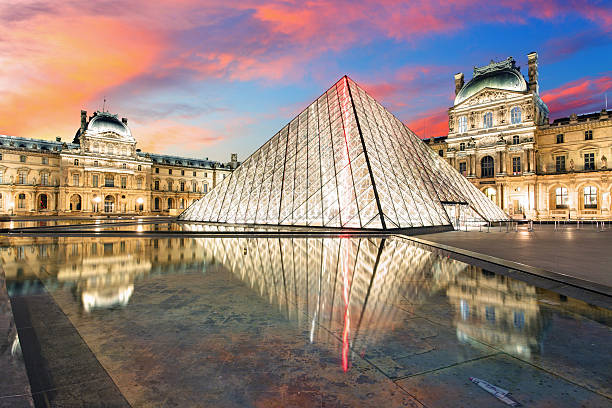
The Louvre–Tuileries axis is where a heat-alert plan can look most counterintuitive. The garden is integral to the urban composition, and on an ordinary day it offers a natural transition toward Place de la Concorde and the 8th arrondissement. During difficult heat, that same openness is the weakness. The route is long enough to accumulate exposure, and the temptation to add photographs, sculpture stops and a terrace pause makes its duration unpredictable.
Protect the Louvre as the anchor, but narrow the museum route to the works and rooms that matter most. This is not only about energy. If current conditions produce gallery closures, the interpretation needs a second path that can still express the intended theme. A plan centered on one masterpiece is fragile; a plan centered on a question, period or patronage story can move across available rooms. Verify the museum’s current notice again shortly before arrival and ask staff about same-day room availability once inside.
After the visit, choose one of three exits from the axis. The first is a direct transfer to the next fixed commitment. The second is a verified nearby indoor stop that holds the group within the same geography. The third is a very short shaded passage that preserves one essential urban view without turning the Tuileries into a crossing. The full garden traverse should remain conditional, particularly around the middle of the day.
Nearby cultural names such as the Musée de l’Orangerie, the Musée des Arts Décoratifs and the Bourse de Commerce can function as geographic alternatives, but not as automatic substitutes. Admission availability, current opening, internal conditions and the route between doors must all be checked. Their strategic value lies in keeping the day around the 1st arrondissement rather than forcing a cross-city move. An unscheduled museum is useful only when entry and comfort are more certain than the segment it replaces.
When the Louvre is one of two fixed admissions, the sequencing problem deserves its own treatment. This two-reservation Louvre and Sainte-Chapelle plan provides a useful parent route; under a heat alert, its outdoor connective sections should be compressed and its transfer mode decided from live conditions.
Île de la Cité: the crossing matters as much as the monument
Île de la Cité concentrates major monuments within a small area, but “small” can be misleading in heat. Every approach requires a river crossing or an arrival near the island, and the bridges offer limited protection from sun. Stone surfaces and open sightlines make the landscape visually clear while leaving little uncertainty about exposure. A plan that treats the island as an easy add-on after the Louvre may underestimate the cost of getting there, waiting and then leaving again.
When Sainte-Chapelle, the Conciergerie or Notre-Dame is fixed, preserve that commitment and remove the casual perimeter walk. The Place Dauphine pause, the western tip of the island, the lower quays and the long photographic approach can all be shifted to another day. The strongest arrival is the one that places the group near the verified entrance with a small buffer, not a large buffer spent standing outside.
A vehicle can be appropriate when it avoids a bridge crossing on foot and offers a controlled seated interval. The metro can be appropriate when the station access is manageable and network conditions are clear. A short walk can be appropriate from a nearby Left Bank or Right Bank holding point when shade and entry timing are known. None should be chosen merely because it is the usual recommendation. The live question is which method creates the least exposed uncertainty before a timed admission.
If an island commitment becomes unavailable or impractical, keep the fallback on one bank. On the Right Bank, the Marais can offer indoor cultural possibilities such as the Musée Carnavalet or the Shoah Memorial, subject to current operations and the purpose of the day. On the Left Bank, an already verified museum or reserved lunch may be stronger than crossing twice for a replacement. The editorial principle is geographic containment: do not compensate for one lost stop by creating two more heat-heavy transfers.
The 8th arrondissement corridor: let the evening determine the final move
The 8th arrondissement often matters because the traveler’s hotel, meeting or dining commitment is there, not because every cultural stop must also be there. Under a heat alert, that distinction becomes useful. Once the day reaches the 8th, avoid leaving the district for a minor final attraction and then returning through traffic or exposed streets. The late afternoon should converge on the evening rather than orbit it.
Petit Palais is particularly relevant as an example of why live city information matters. On the City of Paris page inspected on 2 August 2026, its collections route was listed among episode-specific cooled museum spaces. That is a dated operational fact, not a permanent promise. On a future heat-alert day, recheck the city page and the museum itself before using it as a cooling stop. Other nearby institutions, including Musée Jacquemart-André, Musée Cernuschi and Musée Nissim de Camondo, may offer culturally meaningful indoor alternatives, but each requires its own same-day verification.
For a fixed dinner in the 8th, the best late-afternoon plan may be one substantial museum followed by a direct return to the hotel or an indoor appointment nearby. That pause is not inserted as a generic luxury ritual; it earns its place when formal clothing, concentration or a non-movable evening would otherwise be compromised by another exposed transfer. The relevant broader guide is how dinner geography should shape the final Paris movement.
Use three editorial operating states, separate from official alert colors
The following states are planning categories, not Météo-France classifications. They help translate verified conditions into route choices without inventing temperature thresholds. Always begin with the official bulletin and venue notices; then select the state that best describes the actual day.
State one: anchors stable, outdoor tolerance limited
Both fixed venues are operating normally, the transport network is serviceable and the traveler remains comfortable after the morning. Keep the reservations, but front-load any essential outdoor interpretation and shorten it. Use one direct transfer in place of the longest exposed walk. Keep a nearby indoor alternative ready, yet do not add it merely to fill time. The day can remain ambitious in content as long as its exposed links are few and bounded.
State two: one live dependency has deteriorated
A venue announces partial closures, a chosen metro route is disrupted, a pickup point becomes impractical, or the traveler’s tolerance is lower than anticipated. Preserve the most valuable fixed anchor and rebuild around its geography. If the Louvre remains viable but some rooms close, alter the internal route and remove the Tuileries crossing. If Île de la Cité remains fixed, approach it directly and abandon the quay sequence. If dinner is the immovable endpoint, stop adding anything that requires leaving its corridor.
This state rewards prepared alternatives. The replacement should already be grouped by district and checked for current operation. Searching the whole city for the “best” substitute is usually the wrong task; the best substitute is the one that preserves meaning while reducing movement and uncertainty.
State three: the connective plan is no longer credible
Multiple dependencies are failing at once: venue conditions are reduced, transport is disrupted, outdoor exposure is clearly burdensome, or the timing margin has collapsed. Keep only the commitment whose cancellation would have the greatest consequence, then move directly to a verified indoor or private holding environment near the evening. Do not use the river as an improvised rescue route and do not add a distant museum because it appears available online. At this point, the quality of the day comes from decisive subtraction.
These states make a noon change legitimate. The morning plan was based on verified information available at the time. The noon plan responds to new evidence: actual traveler condition, updated venue notices, transport status and the observed difficulty of the first transfer. Good planning is not loyalty to an obsolete sequence.
The noon re-sequencing moment
Noon is not a magical meteorological threshold. It is the moment when the day has produced enough evidence to challenge the original plan while there is still time to protect the afternoon and dinner. The review should happen indoors, seated, and before the group commits to the next exposed movement.
- Recheck the next fixed venue: current opening, entry instructions, any heat-related notice and the availability of the intended rooms or route.
- Recheck transport: live RATP status, vehicle pickup feasibility and the amount of walking at both ends.
- Recheck the traveler: concentration, willingness to stand, tolerance for another outdoor interval and the importance of preserving the evening.
- Recheck the optional segment: determine whether the garden, quay, bridge or river portion still adds more than it costs.
- Commit to one geography: choose the Louvre–Tuileries area, Île de la Cité and one bank, or the 8th arrondissement corridor rather than continuing to zigzag.
This is also the point at which private coordination can materially change the outcome. When admission windows and dining times cannot move, someone must verify live conditions, revise the interpretive sequence, communicate the new pickup, and keep the group from waiting outside while those decisions are made. That is the practical relevance of a bespoke guide-and-transport plan, not a decorative upgrade. Orange Donut Tours’ approach to private Paris touring shaped around live constraints is designed for that kind of day. Inquire now.
The conversion is justified only when the coordination burden is real. A simple museum morning near the hotel may need no vehicle and little intervention. A Louvre admission, an island commitment and a fixed dinner across the city create a different problem: several independent systems must remain aligned, and the most valuable service is the ability to change the sequence without losing the substance.
Two example rebuilds for a day that changes by noon
Louvre morning, Île de la Cité afternoon, dinner in the 8th
Assume a reserved Louvre morning, a fixed afternoon admission on Île de la Cité and dinner in the 8th arrondissement. In ordinary conditions, the plan might include a Tuileries walk, a river approach, time around the island and a later transfer west. Under verified heat stress, begin by reducing the Louvre to a coherent ninety-minute or two-hour theme rather than an open-ended survey. Confirm the rooms that support that theme and identify an alternate internal route.
After the museum, remain indoors for lunch or a seated pause within the same district rather than entering the Tuileries by default. At the noon review, check the island venue and RATP. If both are stable and a direct metro route has manageable station access, use it. If station conditions, stairs or line works make that unattractive, use a coordinated vehicle with a confirmed drop point and minimal final walk. Arrive close enough to the admission window that the buffer is useful but not spent exposed.
After the island commitment, omit the quays and extended bridge views. Move directly toward the 8th. If the traveler is still comfortable and a verified indoor stop near the dinner geography is genuinely worthwhile, add one. Otherwise, end the cultural program there. The preserved achievements are the two fixed experiences and an evening reached with attention intact. The deleted elements are scenic connectors that can be enjoyed on another day.
8th arrondissement morning, Louvre afternoon, fixed Left Bank dinner
Assume the day begins near a palace hotel or appointment in the 8th, continues to a reserved Louvre admission and ends with dinner on the Left Bank. The heat-sensitive mistake is to add Place de la Concorde, a full Tuileries crossing and a Seine promenade because they appear to form one continuous line. The map is continuous; the exposure is cumulative.
Keep the morning within the 8th, ideally with one verified indoor cultural stop or appointment. Transfer directly to the Louvre entrance appropriate to the booking and current operations. Do not arrive so early that the group waits in the forecourt. Inside, use a focused route and remain alert to same-day room closures. At the exit, make the noon or mid-afternoon decision: cross to the Left Bank once, or remain near the Louvre until a later direct transfer.
If dinner is near Saint-Germain-des-Prés, a direct vehicle can reduce the exposed bridge and quay sequence, but traffic and curb access must be considered. A metro route can be effective when station access is comfortable and the live network is clear. A short walk belongs only when the destination is genuinely close, the route is shaded and there is no pressure to extend it along the river. The Seine remains part of the city’s geography without having to become a long segment of the day.
Why a river service is an optional experience, not a heat fallback
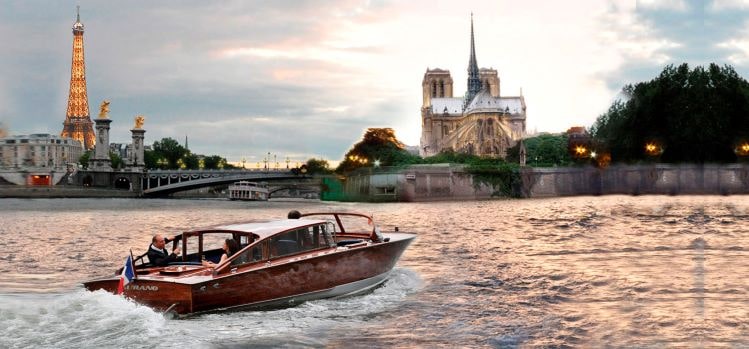
A boat can appear to solve several problems at once: seated movement, major views and a route along the Seine. The difficulty is that access to the landing, waiting conditions, boarding intervals and service changes all sit outside the fixed museum schedule. Some vessels may be enclosed or glazed; that description alone does not prove comfortable thermal conditions. A river service should therefore be selected as a verified experience, never assumed to be air-conditioned transport.
Batobus provides a useful dated illustration. For 4 June through 19 September 2026, its information page listed first and last Eiffel Tower departures of 10:00–19:00 Sunday through Wednesday and 10:00–20:00 Thursday through Saturday. It also stated that departure times were informational and could be modified. Those details are period-specific and must be rechecked, but the operating lesson is durable: published service windows do not create a guaranteed connection between two fixed admissions. See the Batobus general-information page.
Use the river only when the boarding point, wait, service status and arrival geography have all been verified, and when missing a departure would not threaten the next commitment. On a heat-alert day, a short cruise may replace an outdoor walk because it offers a worthwhile view with less movement. It should not replace a robust transfer plan. The moment the boat becomes essential to punctuality, the itinerary has acquired a dependency it cannot fully control.
Evergreen indoor alternatives, organized by geography
The point of a fallback list is not to collect every museum in Paris. It is to keep a meaningful alternative close to the existing route. Each name below is an evergreen geographic candidate, not a claim of same-day availability, cool internal conditions or admission. Verify the institution and the transfer immediately before use.
Around the Louvre and Tuileries
Musée de l’Orangerie can support an Impressionist or modern-art thread without leaving the western edge of the garden, while the Musée des Arts Décoratifs can extend a design, fashion or decorative-arts inquiry beside the Louvre complex. Bourse de Commerce offers a contemporary-art alternative within the broader central district. The operational advantage is containment: the group can remain in or near the 1st arrondissement rather than crossing the city after a changed Louvre visit.
The geographic caution is that “nearby” still needs a transfer plan. Crossing the Tuileries at midday may defeat the purpose of selecting the Orangerie. A direct vehicle, a bounded shaded walk or a different indoor option beside the current exit may be better. Choose the door-to-door exposure, not the museum name in isolation.
Around Île de la Cité and the central Marais
The Conciergerie can preserve the island’s political and architectural context when another island element changes, subject to current admission and operations. On the Right Bank, Musée Carnavalet can sustain a Paris-history narrative, while the Shoah Memorial serves a distinct and serious historical purpose that should never be treated as casual filler. These are alternatives only when they fit the day’s interpretive aim and the travelers are prepared for the subject.
The main rule is to avoid crossing and recrossing the Seine. If the fixed island commitment remains, select a fallback on the bank where the next obligation lies. A Left Bank dinner argues for a Left Bank holding point; an 8th arrondissement dinner argues for a direct westward move. The fallback should reduce transitions, not merely replace one attraction with another.
Within and near the 8th arrondissement
Petit Palais, Musée Jacquemart-André, Musée Cernuschi and Musée Nissim de Camondo offer different strengths: municipal fine arts, a historic private collection, Asian arts and an intact decorative-arts setting. Their value on a heat-alert day is not interchangeable. Petit Palais may appear on an episode-specific city list; Jacquemart-André may suit a compact art-and-interiors visit; Cernuschi and Camondo can support specialist interests. Current opening, admission, room access and internal comfort still govern the decision.
When dinner or the hotel is in the 8th, staying in this corridor usually creates a stronger afternoon than adding a distant “must-see.” The city remains culturally rich even when the route becomes geographically narrow. In fact, the narrower route often allows a deeper conversation because time is no longer being spent recovering from transfers.
On the Left Bank
Musée d’Orsay, Musée Rodin, the Musée de Cluny and the Monnaie de Paris can serve different themes without sending the group back to the Right Bank. They should not be stacked as an emergency museum marathon. Select one institution whose content advances the day, confirm its conditions and place it near the final commitment. The indoor alternative succeeds when it removes uncertainty and adds meaning; it fails when it simply fills the hours released by a canceled walk.
A verification sequence for the day before and the day itself
The plan should be prepared in layers so that volatile facts are checked close to use while durable route logic remains stable. The day before, confirm all fixed admission windows and dining times, map the exact entrances, identify one indoor alternative in each relevant district and preselect the deletion order. Do not rely on the river, an unreserved museum or a long garden crossing as the only connection between anchors.
On the morning, read the Météo-France alert and bulletin after the scheduled 06:00 update, then check the City of Paris heat page, each venue and the intended transport. Confirm whether the Louvre or another major institution has posted a high-temperature notice, whether room availability changes the interpretive route, and whether RATP works or disruptions alter the metro option. A driver or guide should receive the final first-leg instructions only after those checks.
Before noon, verify the second anchor again. This is the recheck trigger even when the official alert color has not changed. A venue may update operations, a line may be disrupted, the first museum may take longer, or the traveler may respond differently than expected. The question is no longer “Can the original itinerary still be completed?” It is “Which version now best protects the fixed commitments and the evening?”
- Official Vigilance level and accompanying bulletin reviewed.
- City heat measures and episode-specific cooled spaces reviewed.
- Current venue notices, entrances and room availability reviewed.
- RATP or vehicle transfer checked from exact door to exact door.
- Outdoor segment retained only if its exposure is bounded and its value is clear.
- One geographic fallback confirmed before leaving the present indoor location.
- River service treated as optional unless current operations and timing leave ample margin.
The source pack behind this framework was verified on 2 August 2026, but several operational pages are intentionally live and may change. The enduring method is to recheck official and institutional sources; the dated details are examples of why that method is necessary.
The plan is successful when it can change without losing its purpose
A Paris heat-alert day should not collapse into an indiscriminate series of indoor stops. The city’s geography, art and history still deserve a coherent argument. What changes is the amount of exposure accepted to connect them. Preserve the museum admissions and dining commitments that cannot move. Keep interpretation deep but portable. Remove the garden, bridge or quay segment that asks the traveler to absorb the greatest risk for the least irreplaceable value.
The most resilient itinerary has one morning anchor, one afternoon anchor, one evening geography and several ways to move between them. It knows when a vehicle reduces exposure, when the metro provides a more reliable arrival, and when a five-minute shaded walk is simpler than either. It also knows that a museum may be open without every room being comfortable or available, and that a river operator’s published hours do not guarantee a fixed connection.
Before publication, departure and every major transfer, verify the official heat alert, the City of Paris response, the current venue notice and the live transport status. Recheck again before committing to the afternoon. The day does not need to resemble the itinerary printed the night before; it needs to preserve the reasons the traveler came to Paris.
If you’re interested in any private tours of Paris, please reach out to us.



 So if you are looking for the absolute best in Paris & surroundings with authentic local fully-licensed native guides whose English you can actually understand and with an exclusive and amazingly fun itinerary













