Paris Before a Serious Tasting Menu: Market Morning, Museum Hour or Hotel Reset?

Updated
Verdict: before a serious Paris tasting menu, the best day is a market morning, a light cultural hour if it fits the route, and a non-negotiable hotel return before dinner. This works in real Paris conditions because the dinner reservation as route setter changes the whole map: a table near Palais-Royal, Le Marais, Saint-Germain or the 8th makes some “nearby” afternoon ideas slower than they look once river crossings, security lines, shoes, weather and a formal change are involved. The clearest exception is simple: if you arrived tired, have a long tasting menu such as Kei – Tastings & Menus (https://restaurant-kei.fr/en/pages/degustations-et-menus), or need to dress properly, the correct answer is the hotel reset rather than another Paris stop.
The article-specific rule is this: Paris rewards appetite-building mornings and punishes ego-driven afternoons before a major dinner. A Marché d’Aligre wander can sharpen the palate; a one museum hour can give the day meaning; a late cross-town sprint from the Left Bank to a Right Bank dinner can flatten the evening before the first glass is poured. If the reservation sits near the Louvre–Les Halles edge, for example, crossing from Saint-Germain over Pont Neuf after a museum-heavy afternoon may sound romantic, but it can become a Châtelet-adjacent timing problem when everyone is dressed, hungry and slightly too warm. For a wider view of how the table location should shape the route, keep Paris dinner geography around the Seine beside this guide.
The traveler-fit ladder before a tasting menu
- Best appetite builder: a market morning with restraint. Choose it when you want the day to feel food-led without turning lunch into a second event.
- Best cultural add-on: one museum hour. Choose it when the museum is already near the dinner route or hotel route, and stop while you still want more.
- Most important luxury: the hotel reset. Choose it whenever the evening matters more than proving you used every hour in Paris.
- Wrong fit: a heavy lunch, a major museum block, or a late shopping-and-transfer loop. These choices make the dinner compete with the day instead of crowning it.
Build the day backward from the reservation, not forward from breakfast
The dinner reservation should set the route before anything else goes on the calendar. A serious tasting menu is not only a meal; it is a long evening with pacing, service, wine, conversation, and attention. If you treat it as the final item after a full sightseeing day, you risk arriving with the wrong kind of hunger: impatient, overheated, dehydrated, or too fatigued to enjoy small courses and slower service. The better method is to decide how you want to feel at the table, then remove anything that threatens that state.
Start with three practical questions. Where is dinner in relation to your hotel? How formal is your change of clothes? How late does the meal realistically end for your group? A couple staying on the Left Bank with dinner in Saint-Germain can carry a lighter afternoon than a family staying near the Champs-Élysées with dinner in Le Marais. A small group with one guest who wants to photograph every room in the Louvre needs a harder stop than two repeat visitors who only want a focused look at one wing. The map matters because Paris distances often feel compressed until a river crossing, a taxi stand, a metro stair, or a wet pavement walk appears at the least useful moment.
The counterintuitive correction is that the most glamorous base is not always the most useful base before dinner. The 8th can be excellent when your restaurant, hotel and evening clothes all sit in that orbit, but it can be overvalued for a food-led day if it forces you to shuttle between Avenue Montaigne polish, Le Marais texture, and a Left Bank museum hour. Paying for a beautiful address does not shorten the emotional distance between a crowded afternoon and a delicate dinner. It can even make the day feel more fragmented if every stop becomes a transfer back to formality.
A better dinner budget cannot fix a day that ruins appetite, energy, or dress logistics. Premium spend changes comfort when it buys guidance, timing discipline, a short transfer at the right moment, or a plan that lets you choose less. It does not earn its cost when it is used to stack one more museum, boutique, or tasting stop into the final two hours before dinner.
This is where a private plan becomes valuable in a way that is not decorative. The guide’s job is not to make the day bigger; it is to protect the evening by cutting the wrong things early. A tailored food-and-culture morning can carry a market, a short walk, and a single cultural focus without turning the day into a checklist. For a food-led version of that lighter arc, see Paris food and wine private tours. When you want help building the day around the dinner instead of around a generic list of stops, Inquire now.
When a market morning helps appetite before a tasting menu
A market morning helps most when it is used as a sensory warm-up, not as lunch in disguise. Paris markets are excellent before a major dinner because they wake up the palate: fruit, herbs, cheeses, poultry, flowers, rotisserie smells, fish stalls, seasonal vegetables, and the ordinary rhythm of shoppers choosing ingredients for later. The mistake is turning that pleasure into a grazing marathon. Before a serious tasting menu, you want appetite, not conquest.
Choose a market morning if the dinner is the main food event of the day and your group enjoys context. Le Marais works well for travelers who want boutiques, history and small food stops without straying too far from the Right Bank. The Left Bank works when the morning can fold into Saint-Germain, the river, or a later Orsay or Rodin hour. Marché d’Aligre is the bolder choice: more textured, more local-feeling, and useful for travelers who already know central Paris, but it sits farther east near the Bastille and Gare de Lyon side of the city. That eastern pull can be wonderful in the morning and awkward if you then try to add a museum on the opposite bank before changing for dinner.
The market should be placed early because it has the right kind of energy then. Stalls feel more purposeful; the group is still fresh; a guide can turn ingredients into a story of French regions, Parisian shopping habits, and dinner expectations without making anyone stand in a museum queue. By late morning, the market can still work, but you need more restraint. One pastry, one small savory taste, or a coffee pause is enough. A cheese board, charcuterie spread, oysters, wine, and dessert become a second meal, and the tasting menu loses its edge.
The body consequence is real. Paris makes visitors walk more than they think: stone sidewalks, metro stairs, museum standing, riverbanks, courtyards, and the stop-start rhythm of narrow streets. A market morning lets that movement happen while energy is high and shoes are still comfortable. It also gives the body time to metabolize small tastes before a long seated dinner. A heavy lunch does the opposite. It makes the afternoon sleepy, shortens patience, and turns a refined evening into an endurance exercise.
The mood consequence is just as important for couples and celebration travelers. A market morning gives the day a shared private language before dinner: the apricots someone loved, the spice a guide explained, the cheese you decided not to overdo, the neighborhood corner that made Paris feel lived-in rather than staged. A mood-killing mistake is to keep sampling past the point of pleasure because the market feels abundant. The dinner then begins with negotiation rather than anticipation: who is still full, who needs water, who wants to go back, who wishes the day had stopped earlier.
If the core question is which market belongs before a serious dinner, the companion guide Paris market morning before a serious dinner goes deeper into Left Bank, Le Marais and Marché d’Aligre tradeoffs. Here, the decision is narrower: the market is worth it only when it preserves evening appetite and does not force a sprawling afternoon.
Market morning, museum hour or hotel reset: the priority order
The priority order is market first, hotel reset last, and museum only if it stays disciplined. Think of the day as a ladder, not a menu. The lower rungs are light, social and appetite-building. The upper rung is the dinner itself. Anything that tries to become a second headline should be cut.
First rung: morning market. This is the safest Paris add-on before a tasting menu because it happens early, carries local texture, and can be ended gracefully. It also works for different traveler types. Couples get a relaxed shared morning. Families get motion and variety without requiring silent attention. Food-and-wine travelers get vocabulary and context for the evening. Comfort-first visitors get a sense of Paris without committing to a physically heavy day.
Second rung: a short museum or garden-adjacent cultural hour. This should never be the full Louvre, the full Orsay, and a bonus church. It should be one chosen frame. The best use is a museum hour that connects to the dinner geography: Orsay if you are already on the Left Bank and can return easily; the Louvre if you have a tightly curated reason and confirm current visit information on the Louvre visit information (https://www.louvre.fr/en/visit) page; Rodin if sculpture, garden air and a shorter emotional arc suit the group better than a major collection. The hour should leave everyone feeling sharpened, not educated into silence.
Third rung: hotel reset. This is the part travelers most often underrate because it sounds unambitious. In practice, it is the move that allows the evening to feel expensive in the right way. A reset is not only a shower and change of shoes. It is water, quiet, phone charging, a route check, a pause from being perceived, and the chance to arrive at dinner with attention restored. It also prevents the small conflict that often appears before a special meal: one person wants one more stop, the other wants to be done, and both arrive slightly resentful.
The cut-first rule: cut the late-afternoon museum expansion before you cut the reset. If the morning ran long, keep the hotel return and remove the cultural hour. If the museum entry is delayed, keep the dinner prep and shorten the visit. If the market became more satisfying than expected, do not compensate by racing to a second neighborhood. The day has already done its job.
This is also where the Paris map gets stricter. A Left Bank morning, a Le Marais boutique pass, an Orsay hour, and an 8th-arrondissement hotel return might look elegant on a page, but the sequence crosses the city’s attention zones too many times. Boulevard Saint-Germain, Rue de Rivoli, the Seine bridges, the Tuileries edge, and the Champs-Élysées orbit all have their own pace. Combining them before a long dinner makes the day feel less curated, not more complete.
The one museum hour before dinner: where culture should stop
One museum hour is enough before a tasting menu when the museum is chosen for focus rather than prestige. The hour works because it gives the day intellectual shape without draining the appetite, feet or conversation. It fails when it becomes a “since we are in Paris” obligation.
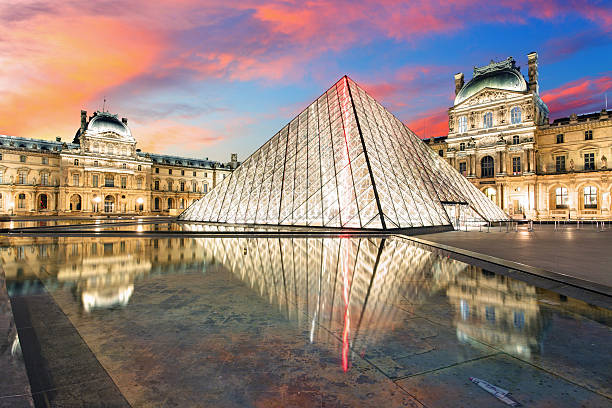
The Louvre is the most dangerous museum before a serious dinner because it has gravity. Even a disciplined traveler can lose time in approaches, security, orientation, stairs, galleries, and the psychological pull of “just one more room.” That does not mean the Louvre is wrong. It means it needs a narrower mission than most people give it. A single wing, one artist thread, or one historical question can work. A greatest-hits sprint before a tasting menu rarely does. For a deeper decision on that timing, the guide to Louvre at night or first thing in Paris is the better next read.
Musée d’Orsay is often easier to humanize within an hour because the building, the Seine-side location, and the collection can be framed tightly. It is still not a casual “drop-in” if your group is tired or if your dinner sits across town. Confirm current visitor details through the official Musée d’Orsay (https://www.musee-orsay.fr/en) site, then treat the visit as a single mood: one floor, one movement, one conversation. The aim is to leave with color and context, not with museum legs.
Rodin is the softer cultural hour when the group needs air. It suits couples who want sculpture, garden movement and a calmer Left Bank tempo. It also suits travelers who become impatient in large museums but still want the day to feel Paris-specific. The tradeoff is that Rodin may not satisfy travelers who came for major paintings or a canonical first-visit moment. That is fine. The dinner day is not the day to satisfy every art ambition.
The strongest museum hour ends before the group starts bargaining. You should not hear, “We have already come this far, so let’s do the other wing.” That sentence is the warning sign. It means the cultural hour is becoming a pride project. Before a serious tasting menu, cultural pride is expensive. It costs foot comfort, mental clarity, and the ability to notice subtle service later.
For families or mixed-age groups, the museum hour should be even tighter. Children and teenagers may behave beautifully through the visit and still spend their patience budget before dinner. Older parents may not complain about standing, then quietly fade during the meal. A private guide helps most by setting an elegant endpoint before the group realizes it needs one.
Where the hotel reset belongs in the day
The hotel reset belongs after the day has already delivered one meaningful Paris experience and before the evening begins demanding polish. For many travelers, that means returning between the late afternoon and early evening, not squeezing in one more stop because the reservation is “not until later.”
A good reset has three parts. First, it removes physical residue: market bags, museum coat-check decisions, walking shoes, rain gear, heat, or the dust of stone streets. Second, it restores social ease: everyone can be quiet, check messages, rest, and rejoin the evening without performing enthusiasm. Third, it protects logistics: outfit, shoes, route, driver or taxi timing, and the mental buffer between daylight Paris and dinner Paris.
The correct answer is a hotel reset rather than another Paris stop when any of these conditions is true: the dinner is the trip’s headline meal; the group has already crossed the Seine twice; the weather has created heat, rain or wind fatigue; someone needs formal shoes; the hotel is not close to the restaurant; or the morning included more standing than expected. The reset also wins when the group is celebrating. A birthday, anniversary or proposal-adjacent evening should not begin with a rushed change in a restroom or a tense ride from a museum exit.
Hotel geography matters. If you are staying on the Left Bank and dining on the Left Bank, the reset can be later because the return is simple. If you are staying in the 8th and dining in Le Marais, the reset needs more space because the evening transfer crosses a different tempo of the city. If you are staying near the Louvre or Palais-Royal and dining nearby, you can keep the day more compact, but you still need quiet time. Proximity solves movement; it does not automatically solve energy.
The most common overreach is a late boutique loop. Le Marais shops after a market morning can seem harmless, especially along Rue Vieille du Temple, Rue des Francs Bourgeois or around Saint-Paul. But shopping creates decisions, bags, changing-room heat, and the temptation to keep walking. On the Left Bank, Saint-Germain browsing can do the same thing along Boulevard Saint-Germain and the smaller streets toward the river. Shopping belongs earlier or on another day, unless the hotel is close and the group genuinely wants a very short pass.
A reset should not feel like defeat. It is part of the evening design. In Paris, the difference between arriving at dinner merely on time and arriving ready is often a full hour of invisible care: no rushing over Pont Royal, no arguing about whether to take the metro in formal shoes, no trying to refresh makeup in a moving car, no realizing the jacket is back at the hotel after you have already reached the Right Bank.
Traveler-fit clusters for the day before a serious Paris dinner
The right choice depends less on the restaurant’s prestige than on the traveler’s appetite, energy and tolerance for transition. The clusters below are more useful than a universal itinerary because they show what each traveler should protect.
Food-and-wine travelers
- Choose the market morning as the main daytime event.
- Add one short neighborhood walk if it clarifies Paris food culture.
- Skip the heavy lunch, the second tasting, and the late pastry crawl.
- Keep the hotel reset even if the group feels energetic at 3 p.m.
Food-and-wine travelers often have the highest risk of overdoing the day because every stall, shop and glass feels relevant. The discipline is to let the market educate appetite, not consume it. A few tastes can make dinner more interesting because you understand seasonality, texture and regional references. Too many tastes make dinner less vivid. If you want a separate sweet-focused day, keep it away from the tasting menu day; Paris sweets private tour belongs better when the evening is lighter or when dessert is the day’s main pleasure.
Couples and celebration travelers
- Choose a market morning plus one beautiful pause, not a museum marathon.
- Prioritize the return-to-hotel mood over another famous address.
- Use the museum hour only if it creates conversation rather than fatigue.
- Avoid the mood-killing mistake of arriving at dinner having negotiated all afternoon.
For couples, the most important decision is not romantic scenery; it is preserving generosity. Paris gives you many chances to become slightly irritated: a queue that moves slowly, a taxi that cannot stop where you expected, a bridge crossing in uncomfortable shoes, a partner who wants one more gallery while the other wants water. The better day leaves room for the evening to be the shared experience, not the recovery period.
Comfort-first families and small groups
- Choose the market if the group likes movement and short explanations.
- Use the museum hour only with a clear endpoint and a guide who can edit in real time.
- Return to the hotel earlier than the most energetic person thinks necessary.
- Do not let the fastest walker set the dinner-day pace.
Small groups need a plan that respects the slowest reset. One person may need a nap; another may need time to dress; another may want to call home; another may simply want quiet. The group consequence of ignoring this is visible at dinner: conversation narrows, wine decisions feel harder, and the meal becomes something to get through. The better group plan chooses fewer stops and arrives with more capacity.
Three sample arcs that keep the evening the highlight
The strongest dinner-day arcs in Paris are compact, not empty. They give the day a point of view, then stop before that point of view becomes pressure. Use these as planning shapes, not fixed itineraries.
Arc 1: Le Marais market texture, short walk, early hotel return
This arc suits travelers dining on the Right Bank or staying within easy reach of Le Marais, Palais-Royal or the 8th. Begin with a market-led or food-led morning, then keep the walk within the neighborhood’s natural scale: old streets, courtyards, a short design or history thread, and perhaps a coffee pause. Do not add Montmartre, the Eiffel Tower, or a major museum just because the morning felt easy. Le Marais can seem central enough to justify everything, but its small-street charm disappears when it becomes a launchpad for cross-city ambition.
The payoff is mood. The day feels Parisian without becoming formal too early. The group has enough texture to discuss at dinner, but no one arrives already overstimulated. The risk is shopping creep, especially around Rue des Francs Bourgeois and the northern edge of the neighborhood. If shopping begins to extend the morning, remove the museum hour. Do not remove the reset.
Arc 2: Left Bank market, Orsay or Rodin hour, hotel reset
This arc suits travelers staying or dining on the Left Bank, or those who want the day to feel artful without entering the Louvre’s orbit. A morning around Saint-Germain or a nearby market can lead into a tightly held Orsay or Rodin hour. The route should stay river-aware: do not bounce from Boulevard Saint-Germain to the Tuileries to Le Marais and back unless the hotel and dinner geography truly support it.
The payoff is coherence. Food, streets, art and dinner all speak to each other. The risk is that the Left Bank encourages lingering. Bookstores, galleries, cafés and museum gardens all seem harmless. Together they can delay the hotel return by exactly the amount that would have made the evening feel calm. When in doubt, keep the museum hour and cut the extra café, or keep the café and cut the museum. Do not keep both if dinner is the main event.
Arc 3: Marché d’Aligre in the morning, no major museum, longer reset
This arc suits repeat visitors, food-focused travelers, and guests who want a more textured market experience before a polished dinner. Marché d’Aligre has a different energy from the more central market choices: it is vivid, practical and less concerned with looking like a postcard. That is exactly why it can be excellent in the morning. It is also why the rest of the day should become simpler.
The payoff is appetite and contrast. You begin with real market movement and end with a composed tasting menu. The risk is geography. From the Aligre side of Paris, adding the Louvre, Orsay, Saint-Germain shopping and an 8th-arrondissement hotel return creates too many transitions. If Marché d’Aligre is the morning choice, the afternoon should be lighter: a short pause, a direct return, and perhaps no museum at all. This is the clearest example of choosing the stronger morning and protecting the evening by refusing a famous afternoon.
What to skip before a serious tasting menu in Paris
Skip anything that competes with the dinner in appetite, attention or logistics. This does not mean the day should be bare. It means the day should have hierarchy. The dinner is the summit; the rest is approach.
Skip the heavy lunch first. Paris makes this hard because lunch can be beautiful, and a long lunch is one of the city’s pleasures. But a serious tasting menu after a long lunch often becomes an expensive contradiction. The palate is dulled, the body is slow, and wine pairings become less appealing. A light lunch or a small market taste is not deprivation; it is dinner strategy.
Skip the major museum block unless the museum is the reason for the trip and the dinner is secondary. A full Louvre or Orsay visit can be magnificent on the right day. Before a tasting menu, it often spends the same attention the meal needs later. Museum fatigue is not only tired feet. It is decision fatigue, visual saturation, and the quiet feeling that you have already received enough beauty for one day.
Skip the cross-town prestige add-on. The Eiffel Tower, Montmartre, Avenue Montaigne, Île de la Cité, Saint-Germain and Le Marais can all be right on other days. They do not all belong before one dinner. Paris cross-city transfers quietly eat a short stay because they are not only minutes in motion; they are exits, waits, traffic lights, stairs, security checks, wrong-side-of-the-street pickups, and the need to reorient after each arrival. A chauffeured car can soften some of this, especially for longer hops, but it cannot make an overpacked route feel restful.
Skip the late “just one drink” unless it is deliberately tiny and close to the restaurant. A pre-dinner glass can be lovely when it is part of the evening geography. It becomes a problem when it adds another reservation, another bill, another transfer, and another chance to misjudge appetite before a long menu. If the restaurant has a serious beverage program, let the evening begin there.
Where premium service changes the outcome
Premium service changes the outcome when it edits the day, holds the timing, and reduces transitions. It does not change the outcome merely by adding expensive components. The most valuable upgrade before a tasting menu is not more access; it is better restraint.
A private guide can make a market morning more useful by choosing the right stalls, explaining what matters, preventing over-ordering, and translating the day’s food context into the evening’s anticipation. The guide can also read the group. If a couple is lingering happily, the museum hour can shrink. If a family is fading, the hotel return can move earlier. If a food-and-wine traveler wants depth, the guide can provide it without turning every taste into a meal.
A driver or chauffeured transfer helps when the route includes real distance, formal clothing, mixed mobility, rain, heat, or a hotel-to-restaurant link that would otherwise drain patience. It helps less inside tight historic zones where walking is still the most direct and graceful choice. This is especially true in parts of Le Marais, around Saint-Germain side streets, near museum entrances, and along river edges where the nearest elegant drop-off is not always the nearest useful door. For a fuller look at that distinction, see when a chauffeur changes a Paris museum day.
Premium planning also changes the outcome for groups because it gives one person permission not to be the enforcer. Without a guide, the traveler who cares most about the dinner often becomes the one saying no: no more shopping, no more galleries, no more cheese, no more walking. With a private plan, those limits are built into the day before they become social friction. The result is not a more lavish day; it is a calmer table.
The wrong upgrade is paying for another special access moment in the late afternoon. Private access, a last-minute tasting, or a boutique appointment can be wonderful on a different day. Before a serious dinner, the upgrade that earns its cost is the one that protects freshness. Less can be the more luxurious choice when the evening is the reason the day exists.
How to choose between market, museum and reset when the plan is already crowded
When the plan is already crowded, keep the hotel reset, choose either market or museum, and remove the other. The crowded-day mistake is trying to shrink every component rather than cutting one cleanly. Paris does not respond well to four half-experiences before a long dinner.
If the traveler lens is food-and-wine, keep the market and cut the museum. The market gives the day a direct relationship to the evening, and the museum can be moved to another day when attention is stronger. If the traveler lens is art, keep one museum hour and make breakfast simple. If the traveler lens is celebration, keep whichever daytime experience creates the best mood and remove the one that requires the most negotiation. For many couples, that means a market plus reset; for some art-focused couples, it means Orsay or Rodin plus reset; for tired travelers, it means breakfast, a short walk and the hotel.
If the dinner is late, do not assume the day can stretch endlessly. A late seating often tempts travelers to fill the afternoon, but a later dinner also means a later finish. The cost of the overfilled day appears at the end of the night: tired ride home, shoes that hurt, conversation that thins, and a next morning that starts weaker than planned. The companion guide to the Paris late-dinner day is useful when the reservation time itself creates a long middle stretch.
If the dinner is early or the menu is especially serious, the reset must move earlier. The day may feel shorter, but the evening will feel better. This is the core tradeoff: do you want more daytime Paris in memory, or do you want the dinner to land fully? There is no virtue in arriving at a major table with the pride of having done more and the capacity to enjoy less.
The cleanest Paris dinner-day plan
The cleanest plan is a morning with appetite and context, a short cultural choice only if it sits naturally on the route, and a hotel return that nobody has to defend. It looks restrained on paper and generous in the body. It lets Paris build toward dinner rather than compete with it.
For many travelers, that means market morning first. Le Marais if the day belongs on the Right Bank; the Left Bank if the hotel, museum or dinner makes that side easier; Marché d’Aligre if food texture matters more than central convenience and you are willing to simplify the afternoon. The market gives the day scent, season and movement without asking the evening to fight for attention.
Then decide whether the museum hour adds clarity or only status. One museum hour can be enough. In fact, it is often better than a full museum visit because it leaves appetite for conversation. The hour should be chosen with a hard edge: one theme, one collection, one endpoint. If the group would feel cheated by stopping after an hour, save the museum for another day. The tasting-menu day is not the day for museum completion.
Finally, treat the hotel reset as part of the reservation. Put it on the itinerary with the same seriousness as the table time. The reset belongs before the evening’s first decision, not after the group has already become tired. The most polished Paris dinner days often feel surprisingly simple: a morning that gives the city texture, an afternoon that refuses to overreach, and an evening that begins with everyone ready to notice what they came for.
FAQ
Should I visit a Paris market before a tasting menu?
Yes, if you keep it light. A market morning can build appetite and context before a tasting menu, but it should not become a heavy lunch or a long grazing route.
Is one museum hour in Paris really enough before a serious dinner?
Yes. One focused museum hour is often better than a full museum block before a serious dinner because it gives the day cultural shape without spending the attention and energy the evening needs.
When should I choose the hotel reset instead of another Paris stop?
Choose the hotel reset when dinner is the main event, when you need to change clothes, when the hotel and restaurant are not close, when the group is tired, or when the day has already included a market and substantial walking.
Is Marché d’Aligre a good choice before a fine-dining dinner?
Marché d’Aligre can be excellent for food-focused repeat visitors, but it works best when the afternoon is simplified. Because it sits farther east, it should not be paired with a major cross-city museum push before dinner.
Should I plan a heavy lunch before a Paris tasting menu?
No. A heavy lunch is the first thing to cut before a tasting menu. Choose a light bite, a small market taste, or a simple pause so dinner remains the day’s main food experience.
Does a private guide help on a tasting-menu day?
Yes, when the guide helps you choose less. The value is in pacing, route discipline, market context, museum editing and a calm return before dinner, not in adding more stops.
Should I do the Louvre before a serious dinner in Paris?
Only if the visit is tightly curated and short. The Louvre can easily become too large for a dinner-focused day, so choose one theme or save the full visit for a different day.
What is the best default plan before a serious Paris dinner?
The best default is a market morning, a restrained afternoon, and a hotel reset before dinner. Add one museum hour only when it fits the route and can end cleanly.
If you’re interested in any private tours of Paris, please reach out to us.



 So if you are looking for the absolute best in Paris & surroundings with authentic local fully-licensed native guides whose English you can actually understand and with an exclusive and amazingly fun itinerary













