Medieval Paris by Light and Sequence: Cluny, Notre-Dame and Sainte-Chapelle in One Evidence-Led Arc

Updated
How should a traveler place the Musée de Cluny, Notre-Dame de Paris and Sainte-Chapelle in one day when the intellectual order points one way, a timed admission points another and the quality of daylight refuses to behave like a reservation?
These three anchors sit close enough to look effortless on a map. They are not interchangeable. Cluny is strongest when it gives names, dates and material vocabulary before the eye meets a cathedral at full scale. Notre-Dame is strongest when its portals, façade, transepts and restored interior can be read as a building made across several centuries rather than as a single medieval image. Sainte-Chapelle is strongest when its glass arrives as the resolution of an argument about sacred narrative, royal power and the deliberate reduction of masonry in favor of light.
The practical challenge is that the most satisfying interpretive order is not automatically the easiest operational order. Sainte-Chapelle normally carries the firmest entry constraint. Notre-Dame permits spontaneous visits, yet its official guidance recommends reserving a time to reduce waiting. Cluny can absorb more or less attention, but a specialist visitor can easily spend the day there and weaken everything that follows. The right plan therefore begins by separating three questions: what must happen at a fixed time, what needs usable daylight and what can be shortened without breaking the historical argument.
Three sites, three different kinds of evidence
The day works because each place supplies evidence the others cannot. Treating all three as “medieval monuments” flattens the distinctions that make the route valuable.
Cluny establishes chronology at object scale
The Musée de Cluny allows the eye to work at close range. Metalwork, sculpture, architectural fragments, textiles and devotional objects reveal how medieval makers handled surface, color, precious material, narrative and authority. The museum’s own suggested masterpieces route states that it covers roughly 1,000 years in an hour and a half, and it identifies the Golden Rose as a fourteenth-century anchor. That makes the official route a useful ceiling rather than a command to see everything: the Musée de Cluny’s official masterpieces itinerary gives both a chronological span and a practical stopping point.
Cluny also prepares the transition to Notre-Dame in a more literal way. Sculptural heads from the cathedral’s Gallery of Kings, now detached from their original architectural setting, can be studied at human height. Their displacement makes two ideas visible before the cathedral visit begins. First, monumental sculpture was designed as part of an architectural and theological system, not as an isolated work. Second, what visitors call “the medieval building” is often a composite of surviving fabric, losses, rediscoveries and later reconstruction.
Notre-Dame turns objects into an urban and ecclesiastical structure
At Notre-Dame, the scale changes. Carved figures become portals; biblical and royal imagery becomes a public façade; ribs, supports, openings and buttresses become a system for organizing space. The cathedral’s official architectural history dates the main façade and its portals to 1208–1225, while later transept work extends from 1250 to 1296. Those dates matter because they prevent a common blur: the west front encountered on arrival and the transept elevations do not represent one simultaneous design decision.
The same official history describes the approximately twenty-year nineteenth-century restoration led by Eugène Viollet-le-Duc, including the recreated Gallery of Kings and other highly visible interventions. The cathedral must therefore be read through at least three layers: medieval campaigns, nineteenth-century restoration and the conservation and reconstruction undertaken after the 2019 fire. The official source is especially useful here because it makes the chronology explicit: Notre-Dame’s architectural history.
Sainte-Chapelle makes light part of the structure
Sainte-Chapelle is neither a smaller cathedral nor merely a room with exceptional stained glass. It was a royal palace chapel built under Louis IX, and its upper chapel gives glass an architectural role of unusual intensity. A peer-reviewed study of the glazing identifies the nave windows with the chapel’s thirteenth-century construction and the western Apocalypse rose as a late-fifteenth-century replacement. It also explains the larger structural effect: the glazing takes over much of the visual work normally carried by wall mass. That distinction can be followed in the scholarly study of Sainte-Chapelle’s glazing.
This is why Sainte-Chapelle gains meaning when it comes after Cluny and Notre-Dame. Cluny supplies the object vocabulary. Notre-Dame shows how sculpture, liturgy and structure operate in a civic cathedral. Sainte-Chapelle then compresses royal patronage, relic culture, biblical narrative and architectural daring into a space where light itself appears to carry the imagery.
Fix the day around the admission that moves least
Before choosing a route, identify the commitment that cannot drift. For most visitors, that is the Sainte-Chapelle time slot. As verified on August 3, 2026, the monument’s official practical page scheduled opening from 9:00 to 19:00 from April through September and from 9:00 to 17:00 from October through March, with last access thirty minutes before closing. It also stated that admission holders must reserve a time slot and warned that security checks can create delay. These are operational facts and should be checked again for the actual travel date on Sainte-Chapelle’s official practical information page.
Notre-Dame is more flexible, but not frictionless. Its official access guidance states that spontaneous entry is permitted while a reserved time is recommended to reduce waiting. It also identifies the Portal of the Last Judgment as the entrance and lists Cluny–La Sorbonne, Cité and Saint-Michel among nearby Métro or RER access points. The relevant source is Notre-Dame’s official access page.
Those two policies create a useful hierarchy. Sainte-Chapelle is the fixed point. Notre-Dame is a managed variable. Cluny is the expandable or compressible component. The sequence should be built backward from Sainte-Chapelle, not forward from breakfast, hotel location or the assumption that the closest first stop is automatically the best one.
Daylight is the second fixed condition, although it cannot be booked. It is better to think in terms of a light budget than a promise of sunshine. A winter slot near closing risks a dimmer upper chapel and little recovery time after security delay. A summer slot has a broader daylight margin, but glare, cloud and crowd density can still affect how comfortably the glass can be read. Direct sun is not always superior: diffuse light can make the overall narrative field more even, while sharp sun may produce dramatic color in one zone and deep contrast in another.
The main sequence: Cluny, then Notre-Dame, then Sainte-Chapelle
Once the slot and daylight window are secured, the most coherent order for a medieval-art traveler is usually Musée de Cluny → Notre-Dame de Paris → Sainte-Chapelle. This is not simply chronological. It is a progression in scale and in the kind of attention demanded.
- Cluny: identify materials, iconographic habits, sculptural types and a usable timeline.
- Notre-Dame: see those elements embedded in a cathedral whose fabric has medieval, nineteenth-century and post-fire layers.
- Sainte-Chapelle: watch architecture push toward a luminous narrative envelope in a royal rather than cathedral setting.
The geography supports the argument. From the Musée de Cluny near Boulevard Saint-Michel and Boulevard Saint-Germain, the direct northward approach toward the Seine leads naturally to the south edge of Île de la Cité. Crossing by Petit-Pont brings the west front of Notre-Dame into the route without a contrived detour. From the cathedral parvis, cross Rue de la Cité and follow Rue de Lutèce west to Boulevard du Palais and the Sainte-Chapelle entrance within the Palais de Justice complex.
Allow more than the pure walking time. A reasonable planning allowance is about fifteen to twenty minutes from Cluny’s exit to a settled position before Notre-Dame’s west façade, and another fifteen to twenty-five minutes from leaving the cathedral to being ready for Sainte-Chapelle security. These are editorial allowances, not published transit times. They include orientation, crossings, photographs, queue recognition and the fact that a short distance on a map can still contain two separate entry systems.
A vehicle rarely improves the movement between these three points. The distances are compact, curb access is not the interpretive problem and a car introduces pickup coordination into a route already governed by pedestrian entrances. Transport support becomes relevant only for a mobility requirement, luggage issue or a hotel transfer before or after the sequence. Within the medieval arc itself, walking preserves both time and geographic continuity.
Travelers whose priority is a calmer island visit rather than a specialist object-to-glass argument may prefer a Notre-Dame, Sainte-Chapelle and Seine plan centered on Île de la Cité. The present route is more demanding because Cluny is not an optional preface; it is the place where the later architecture becomes legible.
Build Cluny as a five-part argument, not a survey
The greatest risk at Cluny is not lack of material but abundance. The museum occupies a site where the ancient Roman baths, the medieval Hôtel des Abbés de Cluny and modern museum circulation already create several historical layers before the collection is considered. A specialist can spend a rewarding half-day here. In this sequence, however, Cluny has a defined job: establish enough chronology and visual vocabulary to sharpen the two monuments that follow.
The museum’s ninety-minute official masterpieces route is a useful maximum for the standard day. Within that time, select five kinds of evidence. Exact display locations can change, so the categories matter more than a rigid room-by-room script.
1. One early-medieval treasury object
Begin with one object in precious metal, ivory or another high-value material from the early medieval centuries. The purpose is not to master a dynasty. It is to establish that sacred and political authority could be concentrated in portable things: reliquaries, liturgical fittings, book covers, crowns, crosses or similar objects whose material value was part of their meaning. This becomes essential at Sainte-Chapelle, where the building’s royal purpose cannot be separated from the relics and treasure it was designed to honor.
Do not spend twenty minutes comparing every technique in the case. Ask three questions: who could commission this, where would it have been used and how does material create authority? Once those questions have concrete answers, move on.
2. One Romanesque-to-Gothic sculptural comparison
Choose a capital, portal fragment or figure that makes the transition from architectural support to narrative sculpture visible. Look for the relationship between body and frame: whether a figure bends to fit an arch, emerges from a column, stands with increasing independence or uses drapery to imply weight. The point is not to declare one style primitive and another naturalistic. It is to notice how sculptors negotiated the architecture around them.
This comparison prepares the portals of Notre-Dame. At the cathedral, hundreds of figures compete with distance, hierarchy and the curve of archivolts. Without the close-range museum encounter, the façade can collapse into decorative texture. Cluny gives the eye a rehearsal.
3. The heads associated with Notre-Dame’s Gallery of Kings
When accessible on display, the heads from the Gallery of Kings are the most direct bridge in the route. At the cathedral, the gallery reads as a long horizontal band high above the portals. In the museum, the surviving medieval fragments reveal individual carving, damage and scale. They also introduce the problem of identification. The gallery represents biblical kings, yet the figures were attacked during the French Revolution as though they embodied French monarchy. The mistaken identification became part of the objects’ later history.
Keep one visual detail in memory: a treatment of hair, beard, eyelid or broken surface. At Notre-Dame, compare that remembered fragment with the restored façade ensemble. The comparison turns “original versus copy” into a more useful question about how a building regains visual coherence after loss.
4. The Golden Rose as a dated fourteenth-century anchor
The Golden Rose gives the middle of the route a precise chronological marker. The museum’s official itinerary identifies it as a fourteenth-century work, allowing the visitor to place its refined metalwork after the principal west façade campaign at Notre-Dame and after Sainte-Chapelle’s original thirteenth-century glazing. That ordering matters. Medieval art is not a single style moving steadily toward realism; different media, patrons and settings develop along intersecting lines.
Use the rose to study how a precious object can imitate nature while remaining unmistakably ceremonial. Then carry that tension into Sainte-Chapelle, where vegetal ornament, architectural pattern and colored light also transform natural references into courtly and sacred order.
5. The Lady and the Unicorn only as a late-medieval coda
The Lady and the Unicorn tapestries are among Cluny’s most compelling works, but they can consume the timetable because they reward sustained looking. In this sequence, treat them as an optional coda rather than the organizing center. They demonstrate how late-medieval art can envelop a viewer through scale, surface, flora, animals and repeated color. That sensory density is a useful prelude to Sainte-Chapelle, but the tapestries belong to a later cultural and material world than the main thirteenth-century comparison.
If the Sainte-Chapelle slot is tight, view one tapestry closely rather than circling the whole ensemble. If the schedule has margin, allow the full group to close the museum visit. The stopping rule is reached when the visitor can articulate five things: one form of portable authority, one sculptural relationship to architecture, one Notre-Dame fragment, one securely placed fourteenth-century object and one example of late-medieval immersive surface. At that point, more Cluny is likely to reduce the attention available for the monuments ahead.
At Notre-Dame, distinguish fabric from image and restoration from invention
The approach from the Left Bank should end squarely before the west façade, even when the entry line encourages immediate movement. The official access route through the Portal of the Last Judgment creates an unusual advantage: the required entrance is also one of the building’s principal interpretive texts.
Read the portals before joining the interior flow
Begin with the three portals as a coordinated façade rather than three separate picture books. The central Portal of the Last Judgment addresses judgment, salvation and the ordering of souls. The Portal of the Virgin and the Portal of Saint Anne extend the Marian and Christological program. Figures occupy tympana, lintels, jambs and archivolts according to both narrative and hierarchy. The architecture does not merely frame sculpture; it controls how the story is distributed and how the visitor’s body approaches it.
Cluny’s sculptural fragments should now pay off. Look again at how bodies fit curved archivolts, how jamb figures establish a human scale at the threshold and how damage or replacement changes the reading of an ensemble. The west façade’s 1208–1225 date range places this program before Sainte-Chapelle and before the later transept work at Notre-Dame itself.
Use the Gallery of Kings to discuss absence
Above the portals, the Gallery of Kings provides the day’s clearest lesson in loss and reconstruction. The fragments at Cluny carry the physical evidence of medieval carving and revolutionary destruction. The figures on the cathedral restore the horizontal rhythm of the façade through nineteenth-century work. The useful question is not whether the present gallery is “authentic” in a single yes-or-no sense. Ask instead what survives, what was replaced, what evidence guided replacement and how the restored band affects the façade’s legibility.
This is where Viollet-le-Duc’s long campaign belongs in the narrative. His work was not a neutral cleaning. It recreated missing elements and shaped the cathedral image inherited by modern Paris. The post-2019 restoration adds another layer, with contemporary conservation, reconstruction and safety decisions acting on a building already transformed by earlier centuries. A careful visit names those layers rather than allowing the restored whole to masquerade as untouched medieval fabric.
Compare west façade and transept chronology
After the west front, the later transept campaigns provide a second chronological checkpoint. The official architectural history’s 1250–1296 range for transept work places those elevations after Sainte-Chapelle’s original construction. This does not mean one building copied the other in a simple line. It means Paris in the later thirteenth century was exploring increasingly ambitious relationships among tracery, glazing, structure and monumental image across different institutions.
If time and access permit, use one exterior angle to see a transept rose and the buttressing system together. The rose is not a floating ornament. It depends on the distribution of loads through masonry, arches and supports. That structural fact prepares Sainte-Chapelle, where the walls appear to withdraw even further but never cease to be engineered.
Inside, read one structural bay rather than every chapel
Once inside, resist the impulse to inventory every side chapel, memorial and furnishing. Stand where one nave bay can be read from floor to vault. Follow the sequence from arcade to upper levels, then trace a pier upward into ribs. Note how repeated bays create direction toward the east and how the scale differs from Cluny’s object rooms. The cathedral’s meaning lies partly in repetition: the building teaches the body where to move and where to look.
The restored interior also demands discipline. Newer-looking surfaces, cleaned stone and reconstructed elements can tempt a visitor either to dismiss the result as too new or to forget the recent work entirely. Neither response is adequate. Separate the medieval spatial system, the nineteenth-century image of the cathedral and the twenty-first-century restoration outcome. The building now makes those histories coexist.
A sixty- to seventy-five-minute Notre-Dame block is usually enough for this sequence: fifteen to twenty minutes outside, the remainder inside, plus entry friction. Leave when four readings are complete: portal hierarchy, Gallery of Kings and its replacement history, the difference between west façade and transept campaigns, and one interior bay understood structurally. If the queue consumes the buffer before a fixed Sainte-Chapelle slot, preserve the exterior reading and shorten the interior. The portals and façade carry more of this route’s argument than a hurried circuit of side chapels.
Let Sainte-Chapelle complete the argument rather than merely climax it
Sainte-Chapelle will feel spectacular even without preparation. The aim of the sequence is to make it intelligible as well as memorable. Entering after Cluny and Notre-Dame changes what the eye notices: not only color, but the transformation of objects, imagery and structure into a royal architectural program.
Use the lower chapel as a deliberate compression chamber
The lower chapel should not be treated only as a queueing space beneath the famous room. Its lower proportions, denser supports and painted surfaces establish weight and enclosure. Pause long enough to register that physical condition. The ascent to the upper chapel then becomes an architectural comparison rather than a simple reveal.
The contrast also clarifies hierarchy. The upper chapel belonged to the royal and relic-centered purpose of the complex; the lower space served a different community within the palace. The movement upward therefore joins social order, sacred value and architectural effect. That is more informative than describing the upper room as “jewel-like,” a phrase that captures brilliance but not the institutional logic behind it.
First see the whole field, then choose one narrative zone
On entering the upper chapel, take one complete visual circuit before moving close to individual panels. The first task is spatial: identify how narrow masonry supports, tall windows and repeated verticals create the impression that colored glass replaces much of the wall. This is the structural and perceptual effect highlighted by the scholarly glazing study.
Only then choose one bay or one limited group of scenes. Medieval stained glass was not designed for modern visitors to decode every panel during a single standing visit. Distance, height, restoration history and crowd movement all limit close reading. A specialist visit gains more from following one narrative sequence carefully than from claiming mastery of the entire biblical program.
Look for three levels of information. At the largest scale, identify the window as an architectural bay. At the middle scale, see how medallions or scene compartments organize narrative. At the smallest practical scale, notice gesture, repeated color and the lead network that both separates and joins the images. This three-level method prevents the glass from becoming a continuous field of red and blue without syntax.
Keep the western rose chronologically separate
The western Apocalypse rose should be treated as a later layer, not folded into the original campaign. The scholarly source identifies it as a late-fifteenth-century replacement, while the nave glazing belongs to the thirteenth-century construction. This difference is especially valuable after Notre-Dame, where the visitor has already practiced separating building campaigns and restoration phases.
Stand where the west end can be seen without losing the long axis of the chapel. Compare the rose’s format and visual density with the tall lancet windows. The aim is not to rank them. It is to recognize that a medieval monument can contain a major later-medieval intervention that has become integral to the experience.
Plan for usable light, not an idealized beam of sun
Stained glass depends on exterior light, but the planning consequence is more nuanced than “go when sunny.” Strong direct light can intensify particular colors and throw them into the interior, yet it may also make one window brilliant while another recedes. Overcast light often produces a more even field and can make the narrative easier to scan. Rain does not automatically ruin the chapel; very low late-winter light and a slot close to closing are more serious concerns.
Season changes the margin. From April through September, the official 19:00 closing gives more room to place the chapel after the other two sites, though security and crowding still argue against using the final admissible window. From October through March, the 17:00 closing compresses the day. A mid-afternoon slot is generally safer than a late one because a delay at Notre-Dame cannot be recovered after sunset or closing.
Orientation can guide attention without becoming a guarantee. Morning light may favor eastern zones; stronger daytime light can animate southern glazing; later light can increase attention at the west end. Cloud, season, adjacent buildings and the sun’s angle complicate those tendencies. Treat them as looking prompts, not promises attached to a clock time.
Forty-five to sixty minutes in the chapel is usually enough after the two earlier sites. The stopping rule arrives when the visitor has experienced the lower-to-upper contrast, understood how glazing reduces the visual mass of the wall, followed one narrative zone and distinguished the thirteenth-century windows from the later western rose. Staying longer can be rewarding, but after a dense Cluny and Notre-Dame sequence the marginal gain often falls quickly.
Build backward from the Sainte-Chapelle slot
A relative timetable is more reliable than a single set of clock times because museum opening days, cathedral access conditions and seasonal light vary. Let T be the reserved Sainte-Chapelle entry time.
- T minus 3 hours 45 minutes: enter Cluny with a five-part object plan already chosen.
- T minus 2 hours 15 minutes: leave Cluny, even if an additional room remains tempting.
- T minus 1 hour 55 minutes: begin the Notre-Dame façade and portal reading.
- T minus 1 hour 30 minutes: enter Notre-Dame if the line and reserved access permit.
- T minus 35 minutes: leave the cathedral, cross Rue de la Cité and follow Rue de Lutèce west.
- T minus 20 minutes: be at the Sainte-Chapelle security approach, not merely on the surrounding block.
- T: enter with enough attention left for a full lower- and upper-chapel reading.
This template assumes approximately ninety minutes at Cluny, sixty to seventy-five minutes at Notre-Dame and a deliberate security buffer. It is an editorial planning model, not an assurance that entry queues will behave. A traveler who has reserved Notre-Dame should align that time within the middle block; a traveler relying on spontaneous entry should be ready to shorten the interior rather than sacrifice Sainte-Chapelle.
A winter version
In the shorter October-to-March schedule, place T early enough that the upper chapel is not the final gamble of the afternoon. A slot in the early or middle afternoon usually gives the cleanest balance: Cluny can still open the day, Notre-Dame can occupy late morning and the chapel retains a daylight cushion. Avoid building the route around last access. Last access is an operational boundary, not a recommended viewing time.
A summer version
In the longer April-to-September schedule, a later Sainte-Chapelle slot can work, but only when the rest of the day remains intentionally narrow. Do not use the wider opening window as permission to add another major museum, a long lunch and extensive shopping before the chapel. The interpretive arc depends on continuity. A late-afternoon chapel can be excellent when Cluny and Notre-Dame remain the only substantial cultural commitments.
A compressed half-day
When only about three hours are available, reduce Cluny to sixty minutes, keep Notre-Dame to the west façade plus one interior bay, and allow at least forty-five minutes for Sainte-Chapelle after security. At Cluny, prioritize the Notre-Dame heads, one earlier object and the Golden Rose; make the Lady and the Unicorn optional. At Notre-Dame, omit a full transept circuit. At Sainte-Chapelle, preserve the lower-to-upper comparison and one narrative reading. This shorter branch still carries an argument, whereas trying to “see everything faster” produces three disconnected impressions.
For travelers combining Sainte-Chapelle with another fixed museum commitment rather than Cluny, the two-reservation Sainte-Chapelle and Louvre plan addresses a different problem: protecting the day from two hard admissions rather than building one medieval sequence.
The hidden cost is not distance but transition
On a map, the route is compact. In practice, each transition has four costs: physical movement, access friction, attention reset and schedule uncertainty.
Cluny to Notre-Dame
The walk is straightforward, but the visitor leaves a controlled museum environment and enters a busy river crossing and cathedral forecourt. The mental shift is substantial. In Cluny, labels and cases isolate objects. At Notre-Dame, the façade is large, elevated and visually crowded. Use the walk to name the three details worth recovering on arrival: a portal-sculpture relationship, the Gallery of Kings heads and one chronological date. Without that reset, the museum information remains behind in the galleries.
Do not schedule a full seated lunch in this transition unless the Sainte-Chapelle slot leaves a generous margin. A meal on the Left Bank can easily expand through seating, ordering and payment, while the cathedral and chapel then become compressed. For a tightly built specialist day, eat before Cluny, use only a brief food pause outside the secured monuments or plan the main meal after Sainte-Chapelle.
Notre-Dame to Sainte-Chapelle
The pure walk is short, yet the operational shift is sharp. Leaving a large cathedral crowd, finding the correct approach within the Palais de Justice setting and passing security are separate actions. The official warning about security delay should be treated as real schedule weight. Arriving on the island fifteen minutes before the slot is not the same as being positioned at the correct security line fifteen minutes before the slot.
The interpretive reset matters too. Notre-Dame has just presented a public cathedral shaped by long building and restoration histories. Sainte-Chapelle is a royal palace chapel with a more concentrated program. Before entry, state the change in one sentence: the next building uses some of the same Gothic ambitions for a different patron, institution and scale of audience. That sentence prevents the chapel from becoming merely “more Gothic, but smaller.”
Why one continuous walking arc is preferable
A break back at a hotel or a vehicle transfer across central Paris interrupts the argument more than it improves comfort for most mobile travelers. The three sites occupy a coherent Left Bank-to-island corridor. Continuity lets the remembered Cluny fragment survive into Notre-Dame and the cathedral’s structural vocabulary survive into Sainte-Chapelle. A pause after the chapel is more effective because the interpretive work is then complete.
For a wider Paris stay, the medieval half-day can be placed inside a three-day Paris itinerary with private guiding and major sights, but the three anchors should remain together rather than scattered across separate days. Their value comes from comparison while visual memory is fresh.
Change the order only for a named constraint
The Cluny-to-Notre-Dame-to-Sainte-Chapelle order is an interpretive preference, not a rule immune to conditions. Change it when a specific constraint outweighs the loss in sequence, and state what the revised order is meant to accomplish.
Branch one: Sainte-Chapelle first when winter light or availability demands it
If the only viable chapel slot is early, use Sainte-Chapelle → Notre-Dame → Cluny. The argument changes from preparation and culmination to experience and analysis. At Sainte-Chapelle, take a broad visual inventory without trying to resolve every question. At Notre-Dame, examine how a cathedral handles portals, structure and glazing on a civic scale. At Cluny, use the heads from the Gallery of Kings, the Golden Rose and selected objects to explain what the morning’s architecture compressed.
This reverse sequence is especially defensible in winter because it protects the light-dependent site. Its cost is museum fatigue at the end and a less dramatic conclusion. Counter that by using a seventy-five-minute Cluny limit and treating the museum as a focused debrief, not an open-ended collection visit.
Branch two: Notre-Dame first when the cathedral reservation is fixed
If a Notre-Dame reservation is available only early, do not create a large backtrack merely to preserve the ideal sequence. Use Notre-Dame → Cluny → Sainte-Chapelle when the Sainte-Chapelle slot is late enough. At Notre-Dame, frame two unresolved questions: what did the original Gallery of Kings look like at close range, and how did precious objects and portable sacred authority relate to monumental architecture? Cluny then answers those questions before Sainte-Chapelle recombines them.
The geographical cost is modest but real because the route returns from the island to the Left Bank and then crosses back. Add a transition allowance and keep Cluny close to the core five-part plan. This branch remains cumulative because the museum serves as evidence between two buildings rather than as a disconnected interlude.
Branch three: keep the standard order on an overcast day
Cloud alone is not a reason to reverse the route. Diffuse daylight can support an even reading of the glass, and a hoped-for sun break is not a strong enough reason to sacrifice a carefully coordinated entry sequence. Protect against very low light and closing time, not against the absence of cinematic sunbeams.
Rain may increase the value of the compact route because the two island monuments are close, but it also slows crossings and concentrates visitors at sheltered entrances. Add time to the transitions. Do not assume that a wet day creates empty interiors.
Branch four: shorten Notre-Dame when its queue threatens the chapel
When spontaneous access at Notre-Dame is slower than expected, keep the façade reading and reduce the interior. The west portals, Gallery of Kings and visible restoration layers already carry the route’s strongest bridge from Cluny. Missing the Sainte-Chapelle slot would damage both the operational plan and the final interpretive step more seriously than omitting a full cathedral interior circuit.
Branch five: shorten Cluny when the day starts late
If arrival at Cluny slips, do not compress every site equally. Reduce the museum to three anchors: the Notre-Dame heads, one earlier treasury or sculptural object and the Golden Rose. This retains the sequence’s chronology and material vocabulary. Keep Notre-Dame’s exterior reading and Sainte-Chapelle’s light window intact.
What should not be added by default is the Conciergerie simply because it shares the Palais de la Cité setting. It is historically important, but it introduces another interior, another interpretive period and more access time. Add it only when the day’s subject expands from medieval art to the political history of the palace and later revolutionary memory. Proximity is not enough to justify a fourth anchor.
Use one stopping rule across all three sites
The best way to protect the day is to define completion by answered questions rather than by rooms covered or minutes endured. The sequence is complete when the visitor can answer the following:
- At Cluny: how do material, scale and portability create sacred or royal authority?
- At Notre-Dame: how do sculpture and structure organize a public cathedral, and which visible layers belong to medieval, nineteenth-century and post-fire work?
- At Sainte-Chapelle: how does a royal chapel convert narrative glass into an architectural field, and which glazing belongs to the original thirteenth-century campaign versus the later western rose?
Once those questions are answered, the day has reached its intellectual destination. Additional rooms, chapels or nearby monuments may still be enjoyable, but they no longer strengthen the central argument at the same rate. This is the moment to stop before visual saturation turns carved figures and glass scenes into undifferentiated pattern.
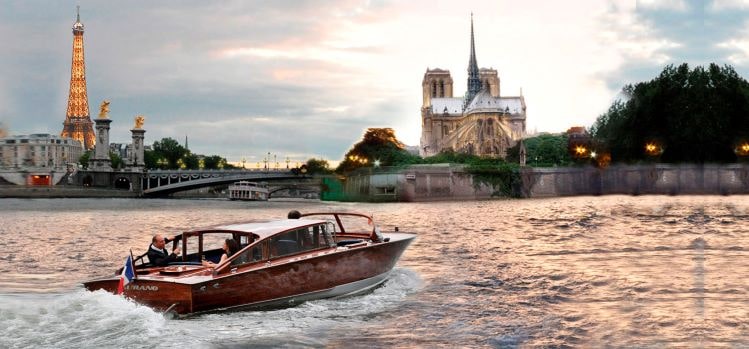
A river walk can be a better next step than another admission because it restores distance and lets the island’s geography become visible. A Seine hour instead of another museum explains when that change of scale improves a Paris day. The medieval sequence should end with enough energy to remember it, not with a fourth interior added out of proximity.
Where continuous specialist interpretation changes the result
The value of a private specialist here is not that the three sites are difficult to locate. It lies in carrying the same set of questions across objects, cathedral fabric and stained glass while adjusting the cuts when access conditions change. A guide can select the Cluny works that best prepare the façade, distinguish medieval fabric from Viollet-le-Duc’s interventions at Notre-Dame and choose a manageable narrative zone at Sainte-Chapelle rather than delivering three unrelated monument talks.
Coordination also protects the fixed point. When Notre-Dame runs slower than expected, someone must decide whether to shorten the interior, reduce a transition pause or change the Sainte-Chapelle looking plan. The useful service is a single interpretive line combined with live sequence judgment. That is the natural place for a bespoke day: not as an ornamental upgrade, but as a way to preserve comprehension when timed entry and daylight impose competing demands. Orange Donut Tours’ broader Paris private touring options provide the commercial next step for travelers who want that continuity.
Practical handoff
Start with the Sainte-Chapelle slot and the season’s light margin. Build backward by three hours and forty-five minutes. Give Cluny a five-part object plan and a ninety-minute ceiling. Approach Notre-Dame from the west, use the Portal of the Last Judgment as part of the visit, and separate medieval campaigns from nineteenth-century restoration and post-fire work. Reach Sainte-Chapelle early enough for security, use the lower chapel as a comparison and stop after one sustained reading of the upper glass rather than attempting every scene.
Keep the three anchors together, walk the route unless mobility or luggage creates a real reason not to, and cut from the expandable site rather than from the light-dependent one. For one specialist to coordinate the admissions and carry the same historical argument from Cluny’s objects through Notre-Dame’s fabric to Sainte-Chapelle’s glass, Inquire now.
If you’re interested in any private tours of Paris, please reach out to us.



 So if you are looking for the absolute best in Paris & surroundings with authentic local fully-licensed native guides whose English you can actually understand and with an exclusive and amazingly fun itinerary













