Grower Champagne or Grande Marque? Choosing Cellar Appointments from Paris by Cuvée, Village and Travel Pace

Updated
What are you really choosing when you book a Champagne cellar appointment?
Should a day from Paris begin beneath the monumental chalk cellars of a famous house, or at a smaller estate where the conversation may stay close to one village, one family and a compact range of wines? The question sounds like a choice between recognition and discovery, but that framing is too blunt for a serious buyer. A grande marque can illuminate the art of blending across years and villages, the construction of a durable house style and the infrastructure required to mature wine at scale. A grower can make vineyard ownership, parcel selection and local decisions easier to see. Either can offer a technically rigorous tasting; either can also deliver a polished but fairly general visitor experience. The name above the door does not determine the depth of the appointment.
The more useful choice begins with the evidence you want to examine. Are you trying to understand how reserve wines stabilize a non-vintage cuvée, how Pinot Noir from a Montagne de Reims village changes with élevage, or how Chardonnay from the Côte des Blancs moves from youthful tension toward mature breadth? Do you want a reference-point house wine that you can find again internationally, or bottles whose interest lies partly in their limited origin and availability? Add the practical questions: how much time is actually available after the Paris transfer, whether the appointment is a fixed public tour or a focused tasting, and whether the route keeps the group in one coherent sector.
This article treats producer model, cuvée evidence, village geography and travel pace as one decision. That approach is more useful than selecting names first and trying to force them into a day afterward. It also helps distinguish a purposeful Champagne excursion from a sequence of labels. Before choosing producers, it is worth deciding whether the region merits a full day in the wider Paris plan; this guide can help you decide whether Champagne deserves a full day from Paris.
The grower-house split is useful, but it is not the whole classification
“Grower” and “grande marque” are convenient visitor terms, not a complete legal map of Champagne production. The initials on a bottle give a firmer starting point. The Comité Champagne’s official FAQ defines a négociant-manipulant, or NM, as a producer that may use fruit from its own vines and also buy grapes, must or wine to make Champagne on its premises. It defines a récoltant-manipulant, or RM, as a producer making its own-label Champagne exclusively from grapes grown in its own vineyards. The same official source identifies cooperative and récoltant-coopérateur models, which is why a binary reading can mislead. An estate name may signal direct vineyard ownership without telling you every detail of pressing, vinification or bottling.
Grande marque is best treated as a cultural and commercial description of an established house brand, often associated with broad sourcing, substantial reserves, long continuity and organized visitor infrastructure. It is not a promise that every visit will be private, nor that every cuvée is a broad blend. Conversely, grower Champagne does not automatically mean a single parcel, a single grape or a deliberately austere style. Growers may blend several plots, varieties or years; houses may release village, vineyard or vintage-specific wines. The useful distinction lies in what resources the producer controls and what the selected appointment makes visible.
Before confirming a cellar, compare six points rather than reputation alone:
- Sourcing: estate fruit, purchased fruit, cooperative input, and the number of villages or parcels represented.
- Blend logic: continuity of a house style, expression of a harvest, or definition of a village or site.
- Cuvée range: whether the tasting creates a meaningful progression rather than several wines that answer the same question.
- Aging evidence: time on lees, reserve-wine practice, vintage policy and disgorgement information when available.
- Visitor format: public tour, technical tasting, vineyard component, language, group size and likely host.
- Geography: how the address fits the rest of the day, not merely its distance from Paris.
These criteria keep the comparison honest. A house may be the stronger appointment when the learning goal is blending and continuity. A grower may be stronger when the goal is to trace a small number of vineyards through several cuvées. Sometimes the best day uses one of each, but only when the route and tasting sequence make the contrast legible.
What a grande marque appointment can teach especially well
A house visit is often at its most valuable when it explains Champagne as an act of composition. Large or historically established houses can draw on wines from many origins and, in many cases, multiple reserve years. That breadth allows the cellar team to show how a non-vintage wine can remain recognizable despite changing harvest conditions. The point is not that consistency erases place. It is that the blender decides how place, grape variety, reserve wine, texture and maturity should combine to express a chosen style. For a buyer accustomed to evaluating still wine by vineyard and vintage, that is an important shift in thinking.
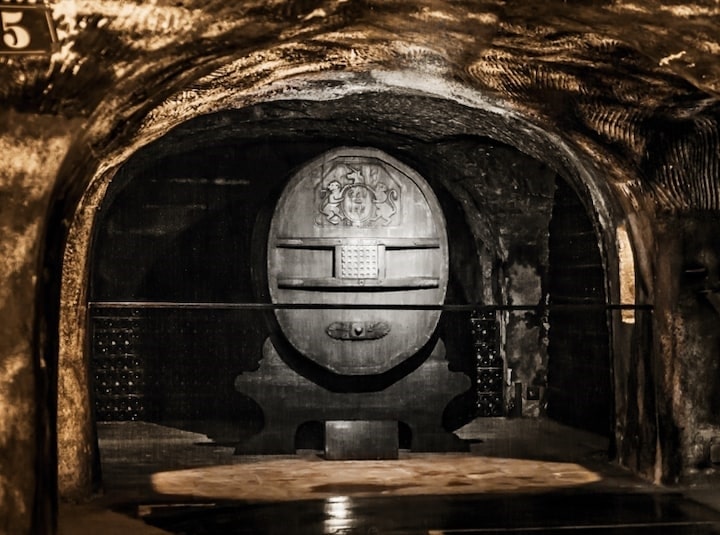
The physical setting can also reveal why scale matters. Reims contains major cellar sites where chalk extraction created deep underground spaces suited to storage. The official Ruinart directory entry gives the address as 4 Rue des Crayères and describes galleries and ancient chalk pits more than 30 metres underground, with visits by reservation. Ruinart is one example rather than a ranking: the value of such an appointment is the connection between architectural heritage, long maturation and a house’s public explanation of its style. Other Reims houses, including Veuve Clicquot and Taittinger, have their own formats and current booking conditions, which should be assessed separately rather than assumed equivalent.
A well-chosen house tasting gives the group a benchmark. Ideally, it includes the signature non-vintage wine, then at least one cuvée that changes a major variable: vintage, grape composition, rosé method, extended aging or a more limited origin. That sequence lets a buyer test whether the house’s identity survives the change. It also creates a vocabulary for a later grower visit. Terms such as reserve wine, dosage, lees aging and house style become sensory rather than abstract.
The tradeoff is visitor structure. Major houses often operate timed departures, defined routes and standardized tasting tiers. A beautiful cellar tour may devote more time to history and process than to detailed sourcing. A “private” booking may mean a private guide within the house’s established itinerary, not unrestricted access to production areas or archives. Ask exactly which wines are poured, how many participants are expected, whether questions can extend beyond the script and whether the selected experience is designed for beginners, collectors or trade-level visitors. Brand recognition is not enough to answer those questions.
What a grower appointment can teach especially well
A grower visit can tighten the line between land, decision and bottle. When the estate works its own vines and makes wines under its own label, the conversation can move quickly from pruning, harvest and pressing choices to the way specific plots enter a blend. The strongest appointments do not simply celebrate smallness. They show how limited acreage creates both identity and constraint: fewer sources to buffer a difficult year, less room to maintain a broad range, and a more direct relationship between vineyard work and the final cuvée. That makes the visit useful for buyers who want to understand why two producers in the same village can make markedly different wines.
The official directory entry for Champagne Brigitte Beaufort offers a concrete Montagne de Reims example. It identifies the estate as a grower in Bouzy and describes micro-vintages drawn entirely from Bouzy, vintage-dated and aged for more than seven years, with annual production listed at 6,000 bottles. The importance of the example is not rarity for its own sake. It shows how a grower appointment can be organized around a precise chain of evidence: one village, selected estate grapes, long aging and a deliberately small release. A buyer can then ask how those choices affect texture, maturity and purchasing decisions.
Small scale does not guarantee that the winemaker will host, that every cuvée will be open or that the visit will be highly technical. Vineyard work, harvest, bottling and cellar operations can take precedence over hospitality. Language options may be narrower, and some estates welcome visitors only in specific windows. A tasting room may be modest, which can be an advantage when the conversation is focused, but it may offer fewer mobility accommodations than a major visitor site. These are operational differences, not quality judgments.
Grower appointments are most rewarding when the wines form a comparison. A non-vintage or multi-year blend can establish the estate’s baseline. A vintage wine can isolate the harvest. A single-village, single-parcel or single-grape cuvée can narrow the origin further. The buyer should know which contrast is expected before arriving. Without that preparation, a small-production tasting can become a pleasant sequence of unfamiliar labels rather than an investigation of how the estate thinks.
Read the cuvée before you read the reputation
The cuvée is the working file for the appointment. Its name may be evocative, but the useful evidence sits behind it: grape varieties, villages, parcels, harvest years, reserve-wine proportion, fermentation choices, time on lees, dosage and disgorgement. Not every producer publishes every detail, and some figures change by release. The aim is not to demand a laboratory sheet from every host. It is to identify which variables the tasting can genuinely compare. A famous cellar with three wines that differ mainly by dosage may be less useful for a particular buyer than a modest estate showing one blend across two vintages and a parcel bottling.
Start with the distinction between non-vintage and vintage. A non-vintage cuvée commonly uses more than one harvest to preserve or build a recurring style; a vintage wine is tied to one harvest year. Then ask whether the wine is a blanc de blancs, a blanc de noirs, a rosé or a multi-grape blend. Those terms describe composition, not a guaranteed flavor profile. Chardonnay from different sectors and ages can behave differently; Pinot Noir can contribute more than simple power; Meunier should not be treated as merely secondary. The appointment earns its value by connecting such categories to actual wines and origins.
Aging needs equally careful reading. The Champagne AOC specification homologated on 31 July 2025 sets a minimum of 15 months from tirage before release to the consumer and 36 months for vintage Champagne. Those are legal floors, not quality rankings. Many producers keep wines longer, but additional time is meaningful only in relation to the wine’s structure, reserve components, cellar conditions and intended style. “Long aged” should lead to another question: long compared with what, and with what sensory result?
Disgorgement is another useful marker because it separates time on lees from time after the sediment is removed and the final dosage is added. Exact dates are not always printed, but when they are available they can help explain why two bottles of the same cuvée show differently. Ask whether the tasting bottle reflects the current commercial release, a library bottle or a special format. For purchasing, that distinction matters: the wine tasted in the cellar may not be the bottle available for immediate sale.
Sourcing and blending are the core comparison, not opposing virtues
House sourcing and grower ownership are often presented as moral opposites, when they are better understood as different production resources. A house that buys grapes or wines can assemble across villages, exposures and years. That breadth can support continuity, complexity and volume. It also creates a responsibility to explain selection: which sectors contribute, how reserve wines are managed and what the blend is trying to preserve. An estate working only its own vineyards has direct control over farming and a narrower source base. That can sharpen local identity, but it also means the producer must work within what its holdings and the harvest provide.
The official Champagne specification describes assemblage as combining musts or wines with different characteristics. It also explains the role of reserve wines from previous harvests in bringing mature elements to non-vintage blends. This is why “blended” should not be shorthand for anonymous. Blending can be the central creative act of Champagne, whether the components come from many villages or several parcels within one estate. The buyer’s task is to ask what the blend is designed to do: reproduce a recognizable house profile, express a year’s conditions, balance grape varieties, or translate one village through different sites.
Single-village and single-parcel wines answer a different question, but they do not eliminate interpretation. The producer still decides harvest timing, pressing fraction, vessel, fermentation, malolactic conversion, tirage, lees aging and dosage. A narrow origin can make those choices easier to perceive because there are fewer geographic variables, yet it can also tempt visitors to attribute every sensory detail to terroir. A serious appointment separates what is known about origin from what the cellar team has shaped.
For comparison, ask both producer types parallel questions. Which vineyards or villages form the wine? Which years are represented? What is the oldest reserve component, if disclosed? Which grape or site sets the structure? What changes between the entry cuvée and the next wine? When the same questions are posed on both sides of the grower-house divide, the day becomes coherent. You are no longer judging scale; you are comparing how each producer converts available resources into style.
Village geography decides what the day can actually teach
Champagne is not one compact cellar district. Reims, Épernay, the Montagne de Reims villages and the Côte des Blancs form distinct anchors and corridors. The official Comité Champagne overview identifies the Montagne de Reims and Côte des Blancs among the region’s principal winegrowing areas, while the AOC specification places them within a wider landscape of slopes, valleys and chalk-related formations. For the traveler, that geography has an immediate consequence: two appointments that look close on a regional map may belong to different learning arcs and require a transfer at the exact moment the day should be slowing down for lunch, discussion or purchasing.
A coherent route normally favors one urban anchor and one vineyard sector, or one vineyard sector alone. Reims pairs naturally with major house cellars and the northern or eastern side of the Montagne de Reims. Épernay is a practical base for its Avenue de Champagne houses and for movement toward the Marne Valley or Côte des Blancs. Crossing from a Reims cellar to a southern Côte des Blancs grower can be worthwhile, but the appointment pair should justify the movement through a strong contrast in producer model or grape focus. It should not be done merely to collect two famous place names.
Geography also determines resilience. Fixed cellar slots leave little tolerance for delayed trains, city traffic, road works or a tasting that runs long. Harvest periods can reduce grower availability because vineyard and press work take priority. Winter can shorten daylight and make vineyard components less informative, while historic cellars remain cold throughout the year. A day that stays within one corridor has more capacity to absorb these conditions than a route that relies on several precise crossings.
Travelers who want Reims, Épernay, a Montagne village and the Côte des Blancs in one trip should consider whether the real answer is more time rather than faster movement. The planning consequences are set out in the case for one night in Champagne after Paris. An overnight is not automatically superior, but it changes the comparison from “which appointment must be dropped?” to “which two sectors deserve separate attention?”
The Montagne de Reims and Côte des Blancs answer different buyer questions
Use the Montagne de Reims for village and Pinot-led contrasts
The Montagne de Reims is especially useful when the buyer wants to compare village identity, Pinot Noir emphasis and the relationship between estate wines and house sourcing. Bouzy, Ambonnay, Verzenay and Verzy are among the names that recur in serious Champagne conversations, but a village name should not be treated as a flavor guarantee. Exposure, parcel, vine material, farming and cellar decisions all intervene. The better question is how the producer describes the role of its holdings: structural base, aromatic lift, red-wine component for rosé, or the complete origin of a cuvée.
A house-and-grower pairing can work well here. A Reims house may show how fruit from several sectors contributes to a blend; a grower in Bouzy or another Montagne village can then narrow the frame. The contrast is strongest when the wines share one variable, such as Pinot Noir or extended aging. It is weak when the first visit pours an introductory brut and the second pours unrelated prestige bottlings without sourcing detail. The route should be built around a question that survives both appointments.
Use the Côte des Blancs for Chardonnay, village sequence and aging
The Côte des Blancs is a focused choice for buyers interested in Chardonnay and in how neighboring villages, reserve practice and maturation alter its expression. Avize, Cramant, Le Mesnil-sur-Oger, Oger, Chouilly and Oiry appear among the communes eligible for grand cru presentation in the current AOC specification. That legal status does not rank individual producers or guarantee a particular style. It simply provides part of the geographic context. The appointment still needs to show what comes from the stated village and how the cuvée was built.
Two grower appointments in the same Côte des Blancs corridor can produce more information than a cross-region day because the group can hold grape variety relatively constant while comparing site selection, vintage, fermentation and aging. A house appointment in Épernay followed by one Côte des Blancs grower can also work, especially when the house’s blanc de blancs provides a broad reference before the village narrows. Once producer fit and geography matter at this level, specialist selection and coordinated movement become more useful than adding a third tasting. The private Champagne framework is outlined at Orange Donut Tours’ private Champagne day-trip page. For a tailored producer shortlist, realistic routing and a driver who is not tasting, Inquire now.
Reims and Épernay are different logistical anchors
Reims is the easier rail gateway for many Paris day trips and the stronger urban anchor when major house cellars, cathedral history and a compact city component matter. The Épernay tourism office’s planning page gives approximate journey times of 45 minutes by TGV from Paris Gare de l’Est to Reims, about 1 hour 20 minutes by direct train to Épernay, and roughly 30 minutes by regional train between Reims and Épernay. These figures are useful for orientation, not a substitute for checking the actual timetable and transfer margins for the chosen date.
Rail is most convincing when the day stays urban: one or two Reims house appointments, or an Épernay program centered on the town and Avenue de Champagne. Stations are close enough to the central districts to make walking or a short local transfer plausible. Rail becomes less self-sufficient when the appointment is in Bouzy, Verzenay, Avize, Cramant or another vineyard village. A train may deliver the group efficiently to the region while leaving the most important last miles unresolved.
Épernay feels more immediately connected to the vineyard landscape. It is smaller than Reims, and several major houses are concentrated around the Avenue de Champagne. It also points naturally toward the Côte des Blancs and nearby villages. That does not mean Épernay is always the better grower base: the selected producer addresses, appointment times and return plan decide. Reims can be more efficient for a Montagne route; Épernay can be more efficient for a southern corridor.
Private transport is materially useful when it links fixed appointments in villages, carries purchased bottles securely and removes any expectation that a tasting participant will drive. It should not be used to justify a more crowded schedule. A professional driver creates safety and timing control; the editorial gain comes from using that control to preserve a coherent route, not to increase the number of pours.
Appointment design is part of the wine decision
Two producers with equally interesting bottles can offer very different visits. A fixed public cellar tour is usually designed to communicate history, production stages and a house narrative to a mixed audience. A themed or private tasting may spend less time walking and more time comparing cuvées. A grower appointment may combine cellar, vineyard and conversation, but it may also be a direct tasting in a small reception space. None of these formats is inherently better. The format must match the buyer’s purpose and the group’s physical and linguistic needs.
Ask what is confirmed, not what is implied. Is the booking private to your party or simply a reservation on a scheduled departure? Which wines are included, and are substitutions possible? Who normally hosts? How long is the cellar portion, how many steps are involved, and is there a lift or alternative for reduced mobility? Ruinart’s official directory, for example, describes a staircase descending to chalk pits more than 30 metres underground and states that access is by reservation. Similar practical details vary across houses and should be checked directly.
For a grower, ask whether the visit includes the vineyards, the working cellar or only a tasting room. Confirm language, expected duration and whether the producer is receiving visitors during the relevant agricultural period. Do not assume that “appointment only” means exclusive access, and do not assume that a family name on the label means a family member will host. Private cellar rooms, library wines, base-wine samples and production access are specific privileges that must be explicitly arranged.
The bottle list deserves the same attention as the room. A visit advertised with “two tastings” may offer a useful contrast, while a longer tier may add wines that are more expensive but not more relevant to the day’s question. Request the likely cuvée sequence when possible. If the producer cannot confirm exact bottles far in advance, ask for the categories: non-vintage, vintage, blanc de blancs, blanc de noirs, rosé, single-village or extended-aging release. That is enough to judge whether the appointment complements the rest of the day.
Three day shapes from Paris are more useful than a long producer list
A house benchmark followed by one Montagne de Reims grower
This is the balanced option for a first serious Champagne day. Begin in Reims with a house appointment that establishes blending, reserve wines and cellar maturation. Continue to one grower in a Montagne village whose cuvées make the contrast precise. The second tasting should revisit at least one variable introduced in the morning, such as Pinot Noir, vintage or aging. Lunch belongs between the appointments, with enough time to write notes and reset the palate. The day is successful when the group can explain how the producer models changed the wines, not when it can report the largest number of bottles.
Two growers in one vineyard corridor
This is the specialist option for repeat visitors, buyers already familiar with house Champagne or travelers researching a particular grape or village. Choose either the Montagne de Reims or Côte des Blancs and keep the addresses close enough that the route does not dominate. The producers should differ in a controlled way: one may emphasize multi-parcel blending and the other a narrower site; one may foreground non-vintage continuity and the other vintage releases; one may age in steel while the other uses wood for part of the range. The comparison needs a hypothesis before the first glass.
One major house and an unhurried city anchor
This is the lower-complexity option for mixed-interest groups, first-time visitors or a day that must return to Paris at a dependable hour. A substantial Reims house visit can be combined with cathedral and city time, or an Épernay house with the Avenue de Champagne and a measured lunch. It sacrifices direct grower comparison but may produce a better overall day for companions who do not want two technical tastings. The house appointment should therefore be selected for the quality of its explanatory arc, not merely for name recognition.
A fourth shape, Reims plus Épernay by rail, is possible but often thin. The tourism office notes that the cities can be combined in a day, while also warning that one day gives only a brief introduction to both. For a buyer focused on cellar appointments, the transfer can consume the time needed to compare wines or visit a vineyard sector. It makes more sense when the objective is urban orientation rather than producer depth.
Whichever shape is chosen, keep the responsible return plan explicit. No tasting participant should be expected to drive. Spitting is normal in a serious tasting and allows closer comparison; water and a proper meal are part of the schedule, not optional decoration. Leave margin before the Paris return, especially when carrying purchases or connecting to an evening commitment. If the wider trip still has competing add-on days, compare Champagne with Versailles and Giverny before assigning the extra day.
Buying goals should shape the tasting order
A buyer seeking bottles for near-term drinking needs different evidence from a collector building a cellar. For immediate use, dosage, disgorgement recency, current drinking window and food context may matter more than scarcity. For longer keeping, the conversation should include structure, acidity, reserve content, vintage conditions, producer guidance and storage. Neither house nor grower has a monopoly on ageworthy Champagne. The relevant question is whether the specific cuvée has the balance and provenance to meet the intended use.
Start the day with the wine that creates a stable reference. At a house, that is often the signature non-vintage cuvée. At a grower, it may be the estate blend. Then change one variable at a time where the lineup allows: vintage, origin, grape, aging or dosage. Tasting the most concentrated or mature wine first can make subtler wines difficult to read later. Likewise, stacking several rosés or low-dosage wines without a baseline may exaggerate style differences while obscuring sourcing.
Availability must be separated from tasting quality. A producer may pour a library wine that is not sold, a cuvée limited to allocation, or a bottle available only in a different disgorgement. Ask what can actually be purchased, in what quantity and under what transport or shipping conditions. Do not plan the day around an assumed private allocation. If purchases will return by vehicle, keep bottles shaded and stable; if they will travel by rail, consider weight and handling before buying a case.
The Champagne day also belongs within the broader food-and-wine rhythm of the Paris stay. A late, demanding dinner after multiple tastings can dull both experiences. A lighter Paris day before or after the excursion may be more valuable than another reservation. For sequencing ideas, see how to place a serious Paris food-and-wine day around the excursion.
Several conditions change the answer
Choose a house-led day when this is the first technical encounter with Champagne. A strong house visit can explain the production sequence, reserve wines, blending and cellar maturation in a clear framework. Add a grower only if the group has the energy and the second appointment repeats a useful variable. For travelers who mostly know Champagne by brand, the house benchmark gives later estate wines a context.
Choose a grower-led day when the buyer already has a reference vocabulary. Repeat visitors, wine professionals and focused collectors may gain more from two estates in one sector than from another broad introductory tour. The producer selection should be based on holdings, cuvée design and appointment depth, not on how difficult the bottle is to find. Rarity is a distribution fact, not a tasting conclusion.
Choose one urban appointment when the group has mixed interests or limited mobility. Historic cellars can involve cold temperatures, long walking routes and substantial stairs. A city-based tasting with confirmed access may be better than a village circuit that forces some guests to wait or separate. The wine buyer can still request a focused cuvée progression while the day retains architecture, history and an easier return.
Choose one village corridor when geography is the research subject. A Montagne de Reims day can compare Pinot-led decisions, rosé components or village sourcing. A Côte des Blancs day can compare Chardonnay, reserve practice and aging across nearby villages. Do not add Reims or Épernay simply because they are famous. Add an urban house only when it gives the village wines a useful counterpoint.
Choose an overnight when the desired appointments sit in different sectors or when buying matters. More time allows each tasting to breathe, creates room for a cellar lunch or vineyard component, and reduces pressure on the return. It also gives the group a better chance to revisit notes before the second day’s wines. An overnight is not required for quality, but it is often the honest solution to an itinerary that otherwise asks one day to cover two distinct Champagne geographies.
Change the plan when operations change. Harvest, producer work, seasonal closures, private functions, rail engineering and revised visitor programs can all affect confirmed ideas. Operational details are volatile even when the underlying producer comparison is evergreen. Reconfirm appointment time, address, included wines, mobility conditions and return transport before departure. A substitute producer should preserve the same learning purpose rather than merely occupy the vacant slot.
Decision recap: choose the evidence you want to leave with
The grower-or-grande-marque question has no universal winner because the two models illuminate different parts of Champagne. Choose a grande marque when the central subject is blending breadth, reserve-wine continuity, house style, deep-cellar heritage or a structured introduction. Choose a grower when the central subject is estate fruit, village identity, parcel logic, farming decisions or a compact range that can be read in detail. Choose one of each when the appointments share a comparison point and the route stays geographically disciplined.
- For a first serious visit, use one house as the benchmark and one well-matched grower as the close reading.
- For a repeat buyer, hold the grape or village relatively constant and compare two producers in one corridor.
- For a mixed-interest group, favor one substantial urban cellar and leave room for Reims or Épernay beyond the tasting room.
- For a collector, confirm cuvée, release, disgorgement, availability and purchase conditions before treating access as meaningful.
- For a one-day Paris return, protect lunch, transfer margin and a non-driving plan before adding any extra pour.
The final test is simple to apply even when the producer list changes. Ask whether each appointment adds a distinct piece of evidence about sourcing, blending, origin or aging; ask whether the geography lets that evidence be understood without rushing; and ask whether the bottles poured are relevant to what you may buy or remember. A day that answers those questions will be more valuable than a prestige sequence, because it leaves you with a method for choosing Champagne long after the cellar doors close.
If you’re interested in any private tours of Paris, please reach out to us.



 So if you are looking for the absolute best in Paris & surroundings with authentic local fully-licensed native guides whose English you can actually understand and with an exclusive and amazingly fun itinerary













