Stonehenge and Bath in Winter: Planning a London Excursion Around Daylight

Updated
The winter excursion starts with a daylight allowance, not a mileage estimate
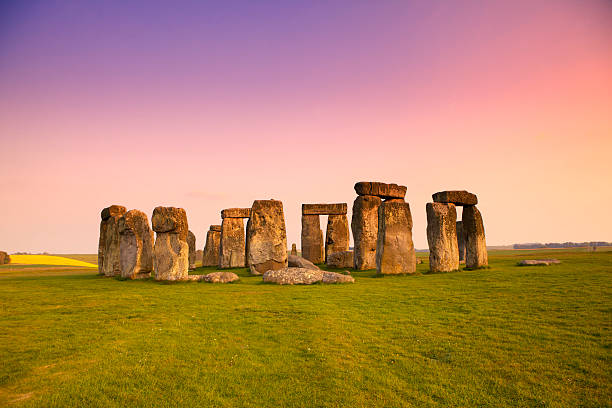
On a winter morning, the London departure can happen before the city is fully light. The first meaningful daylight may arrive on the road west, the most exposed part of the day belongs to Stonehenge, and the return from Bath is likely to be after dark. That sequence matters because Stonehenge and Bath do not use daylight in the same way. Stonehenge is an outdoor monument whose scale, horizon, earthworks and relationship to the wider landscape are part of the evidence. Bath has a major archaeological visit that is substantially sheltered, but its urban value also depends on seeing the pale stone, street geometry and larger architectural compositions outside.
The shortest-day benchmark makes the constraint visible. In the HM Nautical Almanac Office table for 21 December 2024, London sunrise and sunset are listed as 08:04 and 15:54. Salisbury, the appropriate published reference for Stonehenge, is listed at 08:08 and 16:03, with civil twilight ending at 16:42. Bristol, a useful published proxy for the Bath area rather than an exact Bath calculation, is listed at 08:14 and 16:04, with civil twilight ending at 16:44. The official table is available in the HM Nautical Almanac Office rise, set and twilight document.
Those figures yield two practical conclusions. First, travelling west from London gains only about nine or ten minutes at sunset on that reference date; it does not create another afternoon. Second, civil twilight is not a substitute for direct daylight. It can preserve some visual orientation and an atmospheric city walk when conditions are clear, but it is a weak basis for reading Stonehenge’s landscape or Bath’s architectural detail. Low cloud, rain or fog can make the usable light feel shorter than the astronomical table suggests.
A substantive two-anchor winter excursion is therefore possible only when the day is built backwards from three fixed points: an early Stonehenge admission, a Bath arrival that preserves enough exterior light, and a Roman Baths admission that remains valid within the published opening regime. The combination should never be treated as an automatic full-day loop. It is a conditional plan with a clear moment at which Bath is removed.
The Bath threshold: target 14:00, reconsider after 14:00, drop after 14:30
For the shortest part of winter, use 14:00 as the target arrival in central Bath and 14:30 as the drop line for a genuinely substantive Stonehenge-and-Bath day. This is an editorial planning threshold derived from the official daylight benchmark, not an operating rule issued by either attraction.
- Arrive by 14:00: the plan retains roughly two hours before the Bristol-area sunset benchmark of 16:04. That is enough to orient in Bath, see a compact exterior sequence and use a confirmed Roman Baths admission without treating every transition as expendable.
- Arrive between 14:00 and 14:30: the day is conditional. Keep Bath only when the Roman Baths slot is confirmed, the group accepts that much of the city will be seen in dusk or darkness, and no further delay is showing on the road. This can still be a satisfying archaeology-led visit, but it is no longer a balanced reading of both city and monument.
- Arrive after 14:30: drop Bath when the stated aim is a substantive two-anchor excursion. Less than about ninety-five minutes remain before the reference sunset, and arrival, unloading, walking and admission formalities consume part of that interval. Civil twilight should not be used to disguise the loss.
The threshold should move with the date. The durable rule is to target arrival at least two hours before local sunset and to abandon the balanced two-destination plan when projected arrival falls below ninety minutes before sunset. The 14:00 and 14:30 marks are the shortest-day translation of that rule. In early November or late February there is more latitude, but the extra light should be verified for the exact date rather than assumed from the word “winter.”
There is one legitimate alternative definition of success. Some travelers may care almost entirely about the Roman Baths and be content to see Bath’s streets after dark. For them, a later arrival can still work if the official admission and closing regime allows it. That is a different day: Stonehenge plus an evening archaeological visit in Bath, not a daylight-balanced excursion through two places. Naming the difference prevents a late, compressed visit from being described as more complete than it is.
Three clocks govern the route
The solar clock
The solar clock determines when outdoor evidence can be read. At Stonehenge, the circle is only one component. The wider landscape, the separation between visitor facilities and monument, the earthworks and the horizon all require time outside. At Bath, the solar clock affects the city’s visual argument: the relationship among streets, squares, crescents, facades and topography. Artificial light may make a winter evening attractive, but it cannot restore the same architectural legibility.
The admission clock
The admission clock is controlled by the operators, and it can change. The English Heritage Stonehenge visitor page describes a visit that includes the outdoor Stone Circle, Neolithic houses, the wider Stonehenge landscape and an exhibition, and it presents general admission as pre-booked. The exact winter opening and admission availability must be checked for the travel date. An early slot is not merely convenient; it protects the daylight-critical anchor of the day.
The official Roman Baths visit page asks visitors to arrive before their booked time and advises allowing up to fifteen minutes for entry from that slot. At the research checkpoint on 27 September 2026, the page displayed 09:00 to 18:00 hours, with last admission at 17:00, for 1 September through 31 October, but the evidence did not establish a complete later-winter regime. Those autumn hours must not be carried forward into November, December, January or February by assumption. A Bath plan is real only when the exact date’s opening times, last admission and slot are published and confirmed.
The road clock
The road clock is the least controllable. A London-to-Stonehenge-to-Bath sequence often uses the M3 and A303 toward Wiltshire, then roads toward Bath, with the M4 a common part of the return to London. The exact route can change with incidents, works, local disruption and weather. Map estimates are therefore inputs, not promises. For the intercity decision, use the live estimated arrival in Bath plus a contingency margin; do not use the optimistic time that appeared when the day was first drafted.
The three clocks must all pass. Spare daylight cannot rescue an unavailable admission. Confirmed admissions cannot overcome a closure or a major road incident. A clear road cannot make Stonehenge’s landscape legible after the useful light has gone. The route works only where these systems overlap.
Why Stonehenge normally comes first
From London, Stonehenge first is the defensible winter order because it assigns the best available daylight to the place that needs it most. It also places the more weather-sensitive visit before the day has accumulated road delay. Bath is more adaptable later because its principal archaeological attraction includes substantial interior interpretation and because the urban center can still function after sunset, albeit in a different form.
The order is also interpretively coherent. Stonehenge asks the visitor to understand a prehistoric monument through landscape, material, alignment, scale and long chronology. The exhibition can establish context, but the outdoor circle and surrounding terrain are not optional scenery. A rushed circuit that reaches the monument late, in dim light, after a full Bath morning may preserve the name of the site while losing much of what makes it intelligible.
Winter can reward an early Stonehenge visit. Low light may sharpen relief and make the monument’s silhouette unusually clear when the sky cooperates, but that visual benefit is not guaranteed. Wind, rain, fog and saturated ground may slow movement, shorten comfortable outdoor attention or obscure the horizon. The right plan does not assume picturesque winter weather; it reserves enough time for the monument under ordinary, imperfect conditions.
General admission and special Stone Circle access are not interchangeable. They can involve different availability, timing and visit logic. Anyone considering an access format outside the standard daytime pattern should first compare standard admission with Stone Circle access before choosing the morning slot. A special-access arrangement may alter the sequence, but it should not be inserted into a standard two-destination timetable without rebuilding the whole day around it.
Bath first is defensible only in narrower circumstances: a date with materially longer daylight, a confirmed later Stonehenge arrangement that is itself the priority, or a weather forecast showing a clear improvement in Wiltshire later in the day. Even then, the plan must be tested against Stonehenge’s actual admission and the expected arrival before useful light fades. In deep winter, Bath first usually places the least flexible site in the most vulnerable position.
What counts as enough time at Stonehenge
There is no universal visit length because interest, mobility, weather and access format differ. The operational mistake is to calculate only the minutes beside the stones. A credible allowance must include arrival, admission, movement through the visitor operation, the exhibition, the monument, the landscape component that matters to the group, and the return to departure. If the group has a strong archaeological interest, the exhibition and landscape should not be sacrificed merely to defend Bath.
For a two-anchor winter day, the Stonehenge visit should be designed around a departure condition rather than an arbitrary duration. Before leaving London, calculate the latest Stonehenge departure that still produces a buffered Bath arrival by 14:00. Recalculate on reaching the site. If delays have moved the projected Bath arrival into the 14:00 to 14:30 conditional zone, decide what will be shortened before beginning the visit. If the projection passes 14:30, remove Bath immediately and let Stonehenge expand to the depth it deserves.
This discipline matters because the most expensive error is not spending longer at Stonehenge. It is spending the entire Stonehenge visit under pressure, leaving unsatisfied, and still reaching Bath too late for a meaningful second anchor. Once the Bath threshold is missed, continuing to chase the original plan produces two abbreviated experiences rather than one complete one.
Weather affects the correct allocation. In clear, cold conditions, more of the visit may belong outside. In persistent rain or strong wind, the exhibition may carry more interpretive weight, while the landscape circuit may be reduced. In fog, the monument can remain powerful at close range but its relationship to the horizon may be compromised. The relevant planning question is whether the essential evidence of the site will remain available and whether the group’s pace will remain compatible with Bath.
Bath is flexible, but it cannot be compressed without changing the day
Bath is often treated as the easy second stop because it is a city and because the Roman Baths provide a weather-resilient core. That flexibility is real, but it has limits. A visit consisting only of arrival, admission and immediate departure may satisfy someone with a narrow interest in the Roman site. It does not explain Bath as an urban composition, nor does it give the city a weight comparable to Stonehenge.
A substantive short Bath visit needs three layers. The first is orientation: enough daylight to understand the compact center and its relationship to the surrounding hills. The second is the Roman Baths itself, with a confirmed slot and sufficient unhurried time inside. The third is a concise exterior sequence that reveals why Bath’s later architecture became central to its identity. Depending on the exact route and mobility of the group, that might involve the area around Bath Abbey and the Roman complex, the river edge and Pulteney Bridge, or a focused look at the Circus and Royal Crescent. Trying to include all of them in a late winter arrival is usually counterproductive.
The Roman Baths admission should anchor the Bath segment rather than float as a hopeful possibility. Because the operator asks visitors to arrive before the booked time and notes that entry may take up to fifteen minutes from the slot, the route needs a local arrival margin. Reaching Bath at the admission time is not punctual in operational terms. The group still has to reach the entrance from the vehicle or station area, orient itself and absorb any queueing within the operator’s stated window.
A practical editorial allowance is to aim to be in central Bath at least forty-five minutes before the booked Roman Baths time. That is not an operator rule; it is a planning margin that absorbs arrival, walking and the stated entry process. If the booked time is so late that a forty-five-minute local buffer pushes the exterior city sequence entirely beyond sunset, the day should be described honestly as Roman Baths after Stonehenge, not as a full Bath visit.
Travelers who discover that Bath is the deeper priority should not force it into the second half of a winter Stonehenge day. They may be better served by a Bath-only day or by reconsidering whether the city belongs as an overnight. The analysis in whether Bath deserves a separate day or overnight is the more useful next step when architecture, social history or a slower urban pace matters more than combining names.
A shortest-day sequence that can survive ordinary delays
A winter plan should be expressed as gates rather than as a minute-perfect itinerary. The exact opening hours and road conditions remain date-specific, but the sequence below shows how to protect the essential decisions.
- Before departure: confirm the Stonehenge admission, the Roman Baths admission and the published opening regime for both. Record the exact local sunset and civil twilight for the date. Check the weather warning picture and live road conditions. Leave central London early enough to reach Stonehenge with a real pre-entry margin, which may require a pre-sunrise start during the shortest weeks.
- At Stonehenge arrival: calculate a new Bath arrival using live conditions and add a corridor buffer. If that result is already after 14:30 on a shortest-day plan, remove Bath before entering. If it falls between 14:00 and 14:30, decide whether the group accepts an archaeology-led Bath visit after dusk.
- During the Stonehenge visit: protect the circle, the essential landscape reading and the exhibition. Do not cut the core content in small increments while pretending the full combination remains intact. Either keep Bath under the threshold or release it.
- Before leaving Stonehenge: recalculate again. A new incident or weather deterioration can change the answer. The commitment to Bath should be made at this point, not assumed because an admission was purchased.
- On Bath arrival: preserve the Roman Baths entry margin. Use the remaining direct light for the exterior element that matters most, not for a sprawling checklist. If arrival is in the conditional zone, one coherent urban sequence is better than several rushed transfers.
- For the return: treat the journey to London as an evening road leg. Avoid placing an inflexible London performance, formal dinner or airport movement immediately after the excursion. A winter day trip can be well planned without pretending that the final road segment is exact.
This structure gives the day two chances to make the Bath decision: once before London departure and again before leaving Stonehenge. That is intentional. Weather and roads are too volatile for a single morning calculation to govern the entire day.
When a fixed London stay leaves only one winter day for the excursion, the practical value of a privately coordinated plan is not speed for its own sake. It is the ability to anchor the early Stonehenge admission, monitor the Wiltshire-to-Bath corridor and make the Bath decision before the day has already failed. For a route built around confirmed admissions and a single-destination alternative, Inquire now.
How the plan changes from November to February
“Winter” covers materially different days. A late-November or early-January plan near the solstice has little tolerance for a late start. A February date may offer a noticeably larger daylight envelope, but that does not automatically solve admission or road dependencies. The correct method is to apply the same two-hour target and ninety-minute drop line to the exact sunset for the date.
Early winter
After the clocks have changed and through November, daylight contracts quickly. A plan that worked earlier in the month may no longer work at the end. The principal risk is using a familiar departure time while the Bath exterior window has shortened. Recalculate rather than reusing a previous itinerary.
The solstice period
Around the shortest days, the 14:00 target and 14:30 drop line are most relevant. Stonehenge must hold the early daylight. Bath becomes a tightly framed second anchor whose success depends on a confirmed admission and a disciplined city route. The westward gain in sunset compared with London is too small to rescue a delayed start.
Late winter
By February, the later sunset can make the combination more forgiving. The extra light should be spent improving depth, not simply adding more stops. A later Bath arrival may pass the two-hour test, but road disruption, opening regimes and the group’s pace still apply. Winter weather can remain disruptive even when the astronomical constraint has eased.
The most important seasonal lesson is that daylight is a dated operational input. It is not a mood. A planner should be able to state the exact sunset, the intended Bath arrival, the margin between them and the point at which Bath disappears from the plan.
Weather changes interpretation before it changes access
Travelers often ask whether bad weather will cancel Stonehenge. Closure is only one possible outcome, and it is not the first question. The earlier question is whether the conditions still allow the kind of visit being planned. Rain may be manageable while reducing comfort and pace. Wind may shorten the time a group can concentrate outside. Fog may preserve the immediate drama of the stones while removing the long views needed to discuss landscape and horizon. Ice or snow can affect roads before an attraction changes its own operation.
The Met Office warnings and advice page provides current UK warnings for rain, thunderstorms, wind, snow, lightning, ice, extreme heat and fog, with location-specific information available through the service. For this excursion, the relevant geography is not just London or Bath. Check London, the Stonehenge area in Wiltshire and Bath, because conditions can differ across the corridor.
A weather warning should trigger a route review, not an automatic attempt to preserve every element. Ask four questions. Will Stonehenge operate? Will the outdoor evidence remain legible enough for the group’s purpose? Will road speeds and incident risk make the Bath threshold unrealistic? Is Bath’s confirmed admission still usable if the first leg slows? A negative answer to any one may be enough to change the day.
Forecast uncertainty also matters. A plan made several days ahead should contain a declared fallback. On the evening before departure, the forecast may support the full combination. On the morning itself, fog or ice may change the movement calculation. The group should know in advance whether Stonehenge or Bath is the protected anchor, so the fallback does not become an improvised argument at the hotel entrance.
When a first-time visitor’s defining aim is the prehistoric monument, protect Stonehenge and release Bath when conditions delay the route but do not undermine the site itself. For travelers whose priority is archaeology with more shelter, Georgian urban history or a slower city day, protect Bath and remove Stonehenge when weather makes the outdoor visit poor or the Wiltshire road leg unreliable. There is no universally correct anchor; there must be a declared one.
Road buffers should be attached to decisions, not hidden in the schedule
Winter road planning fails when contingency is represented as empty time that can later be filled. A buffer has a purpose. The London-to-Stonehenge buffer protects the timed admission. The Stonehenge-to-Bath buffer protects the daylight threshold and Roman Baths slot. The Bath-to-London buffer absorbs uncertainty on the return. When each margin has a job, it is harder to spend it casually.
The National Highways live travel updates page provides current incident, disruption and delay information, alerts for active major incidents and advance notice of full closures through its daily closure reporting. It should be checked before departure and again before committing to Bath. It does not remove the need for local awareness on roads beyond the strategic network, so live routing and operator communication remain relevant.
For editorial planning, add at least thirty minutes to the live Stonehenge-to-Bath estimate before applying the 14:00 target or 14:30 drop line. On a day with active warnings, reported incidents or a group that moves slowly between vehicle and entrance, use a larger margin. This is not a prediction of delay. It is a guard against making the Bath decision on the best possible outcome.
Suppose live navigation at Stonehenge shows central Bath at 13:50. A plan that ignores contingency calls this safe. A plan with a thirty-minute buffer treats it as a 14:20 arrival and therefore conditional. That difference is precisely what the threshold is meant to reveal. If the group still chooses Bath, it does so knowingly, with a confirmed Roman Baths admission and acceptance of a limited exterior visit.
A private vehicle can reduce some transfer friction, keep the group together and make a fallback easier to execute. It cannot create a clear A303, reopen a closed road, extend an attraction’s admission or produce daylight. The material advantage is coordination: one party monitors the three clocks and acts when the agreed threshold is crossed. That is especially valuable for time-constrained travelers who have no second day available to recover the missed site.
Single-destination alternatives should feel complete, not punitive
Stonehenge only
A Stonehenge-only day is not the failed version of a combined excursion. It can be the more intelligent plan when the monument is the priority, winter conditions are reasonable in Wiltshire and the Bath projection falls beyond the threshold. The added time can support a fuller exhibition visit, a more attentive reading of the circle and the wider landscape, and a less pressured return to London.
The key is to remove Bath cleanly. Do not keep a provisional Bath dash in the background while rushing Stonehenge. Once the threshold is crossed, cancel the second anchor and reallocate the day. The group may return to London early enough for a flexible indoor visit or a relaxed evening, but that should remain optional rather than becoming another fixed dependency.
Bath only
A Bath-only day is the stronger fallback when Stonehenge’s outdoor value is materially reduced by weather, when the attraction’s operation changes, or when the group’s real interests center on Roman and Georgian Bath. The city can absorb a full day through the Roman Baths, a coherent architectural route and appropriate interior visits, subject to current openings.
Keeping only Bath also removes the need to spend the best daylight at Stonehenge. The arrival can be earlier, the Roman Baths slot can be chosen for interpretive flow rather than rescue, and the exterior city can be read before dusk. For travelers already considering a deeper stay, this is also the moment to revisit whether Bath belongs outside a same-day return to London.
London instead of the road
When weather warnings, road disruption and uncertain openings combine, the evergreen fallback is to remain in London. This choice should be available before departure, not discovered after hours on the road. A museum or historical day in London may be less dramatic than the planned excursion, but it is preferable to a corridor-bound day with no reliable anchor. The broader comparison in comparing Bath, Windsor, Stonehenge, Oxford and the Cotswolds as London day trips can help determine whether another destination is more resilient for the available date.
A good fallback preserves the trip’s purpose. If the purpose was prehistoric Britain, Stonehenge remains the protected choice whenever access and conditions allow. If the purpose was layered urban history, Bath can stand alone. If the purpose was simply to spend one day beyond London, a different destination may be more rational than forcing this particular pair.
The verification sequence for a real travel date
Operational facts in this route are volatile even though the planning logic is evergreen. The article’s source review was completed on 27 September 2026. That date does not authorize any traveler to assume that opening times, admission inventory, closures or road conditions remain unchanged. Verification belongs at several points.
When reserving
- Confirm the exact Stonehenge admission type, date and entry time on the official English Heritage page.
- Confirm the Roman Baths date, entry time, published closing time and last admission on the official visit page.
- Look up sunrise, sunset and civil twilight for the exact date and relevant locations. Use the two-hour Bath target and ninety-minute drop line.
- Decide which destination is protected if the combination fails.
- Record the cancellation and amendment conditions attached to both admissions and the transport arrangement.
Seventy-two to forty-eight hours before
- Check the Met Office warning picture for London, Wiltshire and Bath.
- Review planned road closures and major incidents on National Highways.
- Confirm that the attractions have not changed the operating regime for the date.
- Recalculate the route with realistic winter traffic and the chosen arrival margins.
- Tell every traveler the Bath threshold and the approved fallback.
The evening before
- Repeat the weather and road review.
- Confirm the London departure time and the latest acceptable Stonehenge departure.
- Check whether the forecast changes the interpretation quality at Stonehenge, not only whether the site is open.
- Remove any inflexible London evening commitment that depends on an exact return.
On the morning and at Stonehenge
- Check live incidents before leaving London.
- Recalculate Bath arrival on reaching Stonehenge.
- Recalculate again before departing Stonehenge.
- Apply the agreed rule without moving it merely because the original combination was emotionally appealing.
The recheck triggers are clear: a change in daylight date, an updated opening regime, a new operator notice, a weather warning, a major road incident or any delay that moves Bath across the threshold. When exact winter hours are not published, the evergreen response is not to guess. Reserve one destination or postpone the combination until both admissions can be confirmed.
Mobility, family pace and specialist interest can move the threshold earlier
The 14:00 target assumes a group that can transfer from vehicle to attraction, orient itself and walk a compact Bath route without unusual delay. It should be moved earlier when the group includes a wheelchair user, someone who needs frequent seated pauses, young children, or travelers who process interpretation more slowly. The point is not to exclude anyone from the combination. It is to recognize that transition time is part of the experience, not a defect to be compressed.
Specialist interest can also move the threshold. A traveler with a deep interest in Neolithic archaeology may need more time at Stonehenge and should treat Bath as optional. A traveler focused on Roman urbanism or Georgian architecture may prefer Bath only. A family seeking recognizable highlights may accept a more concise Bath sequence, but the Roman Baths admission and daylight arithmetic still apply.
For a mixed-interest private group, agree on the protected anchor before the day. Without that agreement, the group may split conceptually at Stonehenge: some want a fuller landscape reading while others are watching the Bath clock. A bespoke sequence earns its value by resolving that conflict in advance and by making the consequences of each choice explicit.
Winter also magnifies the cost of indecision. Ten minutes spent debating whether to leave Stonehenge can consume a meaningful portion of Bath’s remaining direct light. For a group that predictably needs twenty additional minutes at each vehicle-to-entrance transition, move the Bath target and drop line twenty minutes earlier rather than trying to recover that time inside the attractions. The route then reflects the group that is actually traveling.
Where the excursion belongs in a London stay
This is a demanding day even when it works. It should not follow a late transatlantic arrival, sit immediately before a long-haul departure, or compete with a fixed evening performance. Place it after the travelers have adjusted to London and before the final day, so a weather-driven change does not threaten a flight or rail connection.
For visitors with only three London days, the opportunity cost deserves scrutiny. One day on the road can displace Westminster, the Tower, a major collection or a neighborhood sequence. The framework in planning a focused three-day London stay helps reveal whether the excursion is central enough to justify that trade.
When the excursion is central, use the London days around it intelligently. Keep the preceding evening calm, avoid a fixed late return engagement, and put weather-resilient London content on the day that can absorb a swap. This creates a real contingency rather than a theoretical one.
Travelers ready to have the combined route coordinated can review a private Stonehenge and Bath excursion from London. The useful question is not whether both names appear in the itinerary. It is whether the confirmed admissions, date-specific daylight and live corridor conditions make both places worth the day.
A practical handoff for the planner
Begin with the exact travel date. Record local sunset for the Stonehenge and Bath areas, then set Bath’s target arrival two hours earlier and its drop point ninety minutes earlier. For the shortest-day benchmark used here, that becomes a 14:00 target and a 14:30 drop line.
Next, secure the earliest workable Stonehenge admission and a Roman Baths admission that remains useful within the published operating regime. Build a local Bath arrival margin around the operator’s instruction to arrive before the booked time and its allowance of up to fifteen minutes for entry. Then test the road sequence using live estimates plus contingency, not optimistic map time.
Finally, name the protected anchor and write the fallback into the day. Stonehenge only is the right answer when the prehistoric monument is essential and Bath slips beyond the threshold. Bath only is the right answer when weather or access undermines the outdoor visit, or when the city is the deeper interest. London is the right answer when warnings, closures and uncertain operations remove confidence from both road anchors.
The winter combination succeeds through restraint. It asks Stonehenge to hold the best light, Bath to remain conditional until the road proves it can be reached in time, and the planner to abandon the combination before delay turns two important places into two brief appearances. With that discipline, one winter day outside London can hold both sites. Without it, the itinerary is only a promise made before the clocks, the weather and the road have had their say.
If you’re interested in any private tours of London, please reach out to us.

















 So if you are looking for the absolute best in London & surroundings with authentic local fully-licensed native guides whose English you can actually understand and with an exclusive and amazingly fun itinerary