Crossness, the Brunel Museum or Tower Bridge? Choosing a London Engineering Visit

Updated
The choice in one minute
Choose Crossness Pumping Station when the group’s central interest is large-scale steam pumping, municipal systems and the physical drama of a beam engine house. It offers the richest encounter with heavy machinery of the three, but it is also the least interchangeable with a fixed London diary. Crossness opens on selected dates, and its visit formats are materially different: on a Steaming Day, Prince Consort is scheduled to run under steam; on a guided-tour day, the engine does not steam and the emphasis shifts to a film, model explanation and a walk through the site. That distinction should be treated as a design condition, not a footnote. A technically minded group that wants reciprocating motion, flywheels, beam geometry and the relationship between pumping plant and metropolitan sanitation should arrange the day around Crossness rather than insert it casually between central appointments. The official Crossness visit page is the operational source to check for the exact date and format.
Choose the Brunel Museum when the engineering question is how a tunnel was conceived and driven beneath a working river, and when the available slot is compact. The museum is small, but its evidence is unusually concentrated: the former pedestrian shaft, the Engine House and the continuing rail use of the Thames Tunnel place visitors at the construction site rather than merely in front of a biography. This is the strongest option for civil engineers, tunnelling specialists, project leaders interested in innovation under failure risk, or a mixed executive party that can give the subject about an hour but cannot surrender half a day. It does not offer a working nineteenth-century engine, and the original pumping machinery is no longer in the Engine House. Its value lies in spatial evidence, construction method and the afterlife of infrastructure.
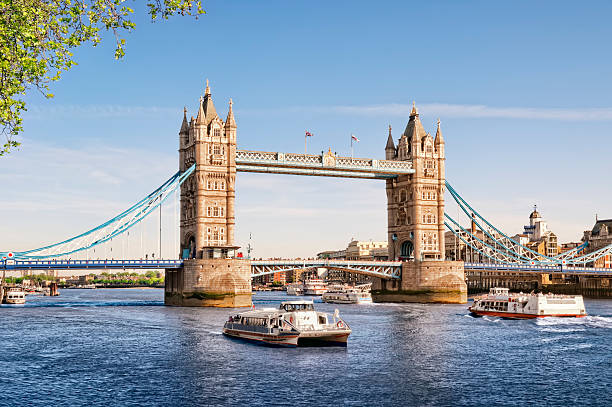
Choose Tower Bridge when schedule certainty, central geography and group accessibility matter almost as much as engineering depth. The standard visit gives broad evidence: the Towers, high-level Walkways and Victorian Engine Rooms, with the original steam-era plant preserved as part of the story. It is the easiest of the three to place around City, Tower Hill or South Bank commitments, and it can turn a necessary river crossing into the visit itself. Yet the most technically exclusive spaces are not part of ordinary admission. The Control Cabin, Machinery Room and Bascule Chambers belong to limited behind-the-scenes tours, and those should never be implied unless separately secured. Tower Bridge is therefore the safest diary choice, but not automatically the deepest machinery choice.
The practical answer is to rank the desired evidence before the landmark: moving pumping machinery points to Crossness; tunnel construction and shaft geometry point to the Brunel Museum; bascule design, hydraulic history and a central cross-river route point to Tower Bridge. When movement cannot be confirmed, Crossness remains valuable as an engine house and systems story, while Tower Bridge remains valuable as a structural and operational bridge even if no lift occurs during the visit. The Brunel Museum is least dependent on a demonstration because the tunnel, shaft and urban context are themselves the evidence.
Three sites, three different engineering problems
These visits are often grouped under “Victorian engineering,” but that label is too broad to make a good choice. Each site addresses a different systems problem. Crossness asks how a rapidly growing city moved wastewater when gravity alone could not complete the job. The Brunel Museum asks how engineers created a stable working face beneath a tidal river, managed inflow and converted a dangerous experiment into reusable infrastructure. Tower Bridge asks how a major road crossing could coexist with maritime traffic, using counterbalanced moving spans and a power system capable of repeated operation. The machinery, structural evidence and interpretive questions are therefore not substitutes. They are three chapters in the engineering of London’s relationship with the Thames.
Crossness: lifting a city’s waste
Crossness belongs to the scale of metropolitan networks. Joseph Bazalgette’s intercepting sewers carried sewage east from the crowded centre; at the southern outfall, pumping plant raised the flow into a covered reservoir so that it could be released on the ebb tide. The essential engineering idea is not simply “a steam engine.” It is the coupling of gradient, storage, pumping capacity, tidal timing and public-health infrastructure. The Beam Engine House made a hidden urban process legible through immense moving components. Its four original engines—Victoria, Prince Consort, Albert Edward and Alexandra—were part of an installation designed as civic architecture as well as plant. The ornate ironwork is not decoration detached from function; it shows how nineteenth-century authorities presented sanitary engineering as a public achievement.
For a specialist group, Crossness supports discussion of steam expansion, conversion from single-cylinder arrangements to triple-expansion working, reciprocating motion, pump geometry and capacity growth. It also exposes an infrastructure truth: systems are altered in place. Later boilers, pumps and power technologies did not erase the original fabric at once. The site records adaptation, redundancy, near loss and restoration, making it valuable to executives concerned with asset life cycles and maintenance culture as well as invention.
The Brunel Museum: making a tunnel face controllable
The Brunel Museum’s subject is construction under uncertainty. Marc Isambard Brunel’s tunnelling shield divided the working face into cells so excavation could proceed in controlled increments while the lining followed behind. The Thames Tunnel, built between 1825 and 1843, is identified by Historic England as the world’s first bored tunnel beneath a river and the earliest shield-driven tunnel. The engineering significance is therefore methodological: a way of controlling ground and water pressure that became foundational to later urban tunnelling. Historic England’s official list entry also records the role of the Engine House, which originally contained steam-driven pumps used to keep the works clear of water.
The visit is strongest when the group looks at the shaft as a construction instrument, not merely an atmospheric chamber. Its cylindrical form, sinking method and relationship to the tunnel line help explain how access, excavation, spoil removal, ventilation and pumping were organised before modern tunnel-boring machines. The tunnel itself is not walked as part of museum admission; trains have used it since the nineteenth century. That exclusion is intellectually useful. It forces a distinction between the preserved construction site, the museum’s interpretation and the still-operational transport asset beneath. For engineers accustomed to separating project delivery from operating life, the transition from failed carriage ambition to pedestrian attraction and then railway infrastructure is one of the visit’s richest themes.
Tower Bridge: balancing road continuity and river passage
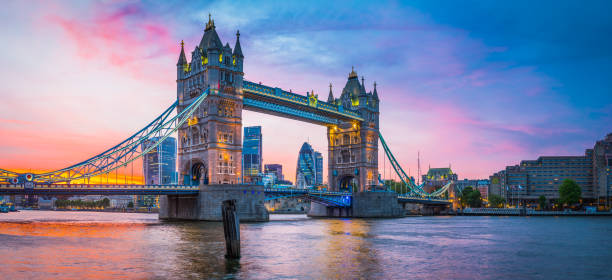
Tower Bridge is an operational compromise made monumental. Its central leaves are bascules: moving spans balanced by counterweights so that comparatively modest input can rotate very large masses. The original power system used steam engines, hydraulic pumps and accumulators; the preserved Engine Rooms show the historic machinery that once powered the lifts. The present visitor sees engineering distributed across the whole structure: foundations and towers, elevated walkways that preserved a pedestrian route when the roadway opened, the bascules themselves, and the power history in the Engine Rooms. Unlike Crossness, where the machine dominates the room, Tower Bridge requires the group to assemble the system mentally from separated components.
This makes interpretation decisive. A casual visit can become a sequence of views and glass floors. A technical visit should instead follow energy and force: power generation, pressure storage, transmission, actuation, bascule rotation and counterweight movement. It should also ask why the bridge looks medieval while embodying late nineteenth-century mechanical and civil engineering. The architectural envelope gave the new crossing a visual relationship with the nearby Tower of London, while the steel structure and moving machinery answered industrial requirements. For executives concerned with public acceptance of infrastructure, Tower Bridge is as much a case study in civic presentation as in mechanics.
What the group actually sees—and what it does not
Compare the sites by visible evidence, not reputation. “Steam,” “Brunel” and “bridge lift” cease to be sufficient descriptions when machinery is still, the rail tunnel is excluded or operational rooms are unavailable. Four evidence types matter: preserved machinery, machinery in motion, original structural space and guided explanation. Crossness leads for machinery when the calendar aligns; Brunel for construction space and method; Tower Bridge for breadth, with its deepest areas reserved for a special format.
Crossness: the most machinery-rich visit, with a calendar condition
On a Steaming Day, Crossness offers the closest encounter with the kinetic language of large Victorian plant: the measured rise and fall of a beam, rotation of the flywheel, valve events, connecting rods and the sensory scale of a machine built to move enormous volumes. Even then, responsible wording matters. The official site says Prince Consort is scheduled to run under steam. An itinerary should preserve that conditional language rather than promise operation as though a heritage engine were an amusement-park cycle. Technical plant can be affected by maintenance, safety and operating decisions.
On guided-tour days, Prince Consort does not steam. The visit instead uses a short film, a model talk and a guided walk. For some groups, that is not a diminished version but a different teaching format. A model can make flow paths, pumping stages or engine relationships clearer than standing beside a moving machine in a crowded open day. A guided day may also allow a more coherent conversation about Bazalgette’s network, the covered reservoir and later changes to the works. The drawback is obvious: an engineer who has travelled specifically to watch large reciprocating plant will feel the absence. The fallback succeeds only when the group has agreed that system interpretation and preserved machinery are sufficient.
Crossness also presents architecture at machine scale. The Beam Engine House’s ironwork, galleries and vertical volume allow visitors to read the plant in section. That is important because pumping is not only a sequence of components; it is an arrangement of levels, loads, access points and maintenance routes. Yet some parts of a historic industrial site may involve stairs or uneven surfaces, and access planning should be based on the official information for the chosen day. The site’s Thamesmead location and operating calendar make pre-visit coordination proportionate to the technical reward.
The Brunel Museum: less machinery, more construction evidence
At the Brunel Museum, visitors enter the former pedestrian shaft and see displays in the Engine House. The shaft is the primary object. Its diameter, brickwork, depth and altered surfaces communicate how a vertical worksite became the entrance to an underwater passage and later a ventilation space for rail. The Engine House supplies context and collection material, but it no longer contains the original steam-driven pump. A group expecting an engine demonstration has chosen the wrong evidence type. A group interested in tunnelling shields, caisson-like sinking, groundwater management, construction risk and adaptive reuse has chosen well.
The official Brunel Museum visiting page currently describes a compact visit split between the Tunnel Shaft and Engine House, with about 45 minutes recommended for the site. Weekend guided tours add a structured 45-minute explanation at a set time. Those numbers are useful for diary planning, but they should not encourage a rushed arrival. The site is small enough that a technical companion programme can be precise: a short pre-brief on shield tunnelling, the shaft visit, focused interpretation in the Engine House and, where useful, a journey on the Windrush line through the operating Thames Tunnel. The last element is transport only in the literal sense; intellectually, it completes the story by showing that the experimental crossing became everyday infrastructure.
Tower Bridge: broad public access versus restricted operational depth
Ordinary Tower Bridge admission includes the North and South Towers, high-level Walkways and Victorian Engine Rooms. That gives a technically interested group substantial material, but it does not give unrestricted access to the working bridge. The Engine Rooms contain the original steam-era engines, accumulators and associated machinery as historic evidence. They once powered the bridge lifts; they should not be described as the current operating plant. The Walkways allow the group to read the bridge geometrically from above, while views toward the roadway and river make the conflict between road and navigation immediately understandable.
The limited behind-the-scenes format changes the depth. According to the official Tower Bridge behind-the-scenes page, it can include the Control Cabin, Machinery Room and Bascule Chambers as well as the Engine Rooms, Towers and Walkways. The Bascule Chambers contain the enormous counterweights that move into the space beneath the roadway as the leaves rise. This is the option that most directly connects historic power, contemporary operation and the hidden geometry of the bridge. It is also a separate, capacity-limited product with its own dates, booking conditions, waiver and physical environment. Some spaces are uneven, damp, cold, below river level and treated as confined areas. It must be requested and confirmed, never folded into a general promise of “inside access.”
A scheduled bridge lift can add movement, but it should be treated as a bonus unless the diary has been deliberately built around the published lift time and a suitable viewing position. Even then, the group’s technical objective matters. Watching the bascules rise from outside demonstrates movement and counterbalance; it does not reveal the full power train. Standing in the preserved Engine Rooms explains historic power; it does not guarantee a live lift. Entering the Bascule Chambers provides the hidden structural relationship; it may not coincide with movement. The strongest Tower Bridge programme connects these separate observations rather than assuming one spectacle explains the system.
Access format can overturn the technical preference
A comparison based only on subject matter would often place Crossness first for machinery, the Brunel Museum first for tunnelling and Tower Bridge first for movable-bridge engineering. Real programmes are constrained by dates, group size, security, mobility and fixed commitments. Those constraints can change the answer without changing the group’s intellectual priorities. The correct planning sequence is therefore: define the required engineering evidence, identify which access format supplies it, and only then test the London diary.
Crossness depends most heavily on the date
Crossness opens on selected dates rather than as a daily attraction. Its Steaming Days, guided tours, special events and private or group arrangements are not interchangeable. Steaming Days are public openings with Prince Consort scheduled to run and the Beam Engine House available to explore. Guided tours are smaller booked visits with interpretation but no steaming. A private group enquiry may create a format suited to a professional party, yet it still should not be assumed to include steam or areas outside the agreed route. The date controls the experience more than the group’s budget or status.
The approach also changes by format. Crossness identifies Abbey Wood as the nearest station. A free vintage bus is advertised for Steaming Days and special events, but not for guided-tour days. That means a planner cannot copy the logistics from one calendar entry to another. A private vehicle may solve the final approach for a small executive party, but it does not remove the need to check parking, access and the exact entry instructions for a working industrial setting. This is where route coordination earns its place: not as a glossy transfer, but as a way to protect a rare machinery appointment from a preventable late arrival.
The Brunel Museum is compact but not open every day
The Brunel Museum currently lists opening from 10:30 to 15:30 on Fridays through Mondays, with additional opening during half-term school holidays. The regular guided tour runs at 12:30 on Saturdays and Sundays and is included with admission when booked for that slot. The museum recommends advance booking even though it is not always essential, because the site is small. These details make it easy to fit around a morning or late-afternoon commitment—provided the selected day is one of its opening days.
The constraints are less dramatic than at Crossness but still material. The museum is divided between two buildings, the site is not yet fully accessible in every respect, and there is no luggage storage or cloakroom. For an executive group arriving from an airport, rail terminal or hotel change, luggage is not a minor operational detail: suitcases should be separated from the visit rather than brought in expectation of storage. The nearest station, Rotherhithe, is very close, while Canada Water is also within walking distance. For a small group based in central London, the Brunel Museum often has the lowest coordination burden of the three, but only after opening day and mobility have been checked.
Tower Bridge offers daily access but imposes group rules
Tower Bridge currently opens daily from 09:30 to 18:00, with last entry at 17:00. For groups of 15 or more, pre-booking is essential; the official guidance requires booking requests and payment at least ten working days ahead and allows reservations up to six months in advance. Group time slots have their own operating window, and the bridge recommends extra time beyond the nominal visit length. These conditions make Tower Bridge more predictable than Crossness, not spontaneous for a large party.
The official Tower Bridge group-visit page also notes that guided-tour capacity is 16, so a larger executive delegation may need to divide. Splitting is not automatically a defect. Two smaller technical groups can hear and move more effectively than one large cluster, especially in narrow circulation routes. The problem arises when the split is discovered on arrival and disrupts a fixed onward commitment. The same page warns that Tower Bridge is a red route with no stopping by coach or car; group set-down and collection must be planned elsewhere, such as the identified coach points at Tower Hill or Tooley Street. The attraction may be central, but the vehicle cannot behave as though the entrance were a hotel forecourt.
Behind-the-scenes access has a different operational profile from general group admission. It is limited, seasonal or date-specific, physically more demanding and not guaranteed merely because a group has booked a guided Tower Bridge visit. For a technical delegation, the distinction should appear explicitly in the programme: “general interior visit with Engine Rooms” or “confirmed behind-the-scenes tour including named operational areas.” Anything vaguer risks turning a precise engineering expectation into a landmark visit with the wrong access.
The river crossing is part of the decision
London geography is not incidental here. The Thames is the engineering problem at the Brunel Museum and Tower Bridge, while Crossness belongs to the downstream system that used the river’s tide as part of sewage management. A well-composed programme allows the approach and departure to reinforce the subject. A poorly composed one spends the group’s attention on cross-city movement that adds no technical value.
Crossness: a destination in the eastern infrastructure landscape
Crossness is in Thamesmead, well east of the central visitor core. That distance is part of its meaning: Bazalgette’s system carried waste away from dense central districts to large outfall works on marshland where reservoirs and heavy plant could be built. The approach can therefore be framed as a movement through London’s infrastructure geography rather than an inconvenient detour. Yet the editorial point should not disguise the scheduling consequence. A group with a noon board commitment in Mayfair or a late-afternoon session in Westminster should not assume Crossness can be compressed into the gap.
Crossness fits most naturally when the diary already leans east—Canary Wharf, the Royal Docks, Greenwich, Woolwich or an industrial Thames theme—or when the machinery is important enough to justify a dedicated half-day. For broader context on the eastern river reaches, East London by river and road explains why tidal, road and river conditions change the shape of a downstream day. Crossness should still remain the anchor rather than one stop in an overfilled sweep of landmarks.
The Brunel Museum: make the tunnel part of the arrival
The Brunel Museum sits in Rotherhithe on the south bank. Approaching from Wapping on the Windrush line allows the group to travel through the Thames Tunnel before or after seeing the shaft and Engine House. That sequence is unusually efficient because movement becomes evidence. The train journey demonstrates adaptive reuse more persuasively than an added lecture: a tunnel conceived for road traffic, opened to pedestrians and later absorbed into the railway is experienced as living infrastructure.
From City or Tower Hill commitments, Rotherhithe is close enough to combine with a focused river-history segment, but the group should resist adding too many unrelated South Bank stops. The Brunel Museum’s compactness can tempt planners to treat it as filler. Its intellectual value rises when paired with one coherent neighbour—Wapping’s docks and warehouses, a river crossing, or a discussion of later tunnel methods—rather than diluted among several major attractions. A group interested in maritime systems more broadly may compare this with a focused Greenwich half-day, but the two answer different questions: Brunel is about construction beneath the river; Greenwich is about navigation, time and maritime institutions.
Tower Bridge: a visit that can perform the crossing
Tower Bridge has the strongest potential to solve an itinerary problem while explaining an engineering one. A group moving between the Tower of London or City side and Bermondsey, London Bridge or the South Bank can use the bridge visit as its cross-river segment. The interior route connects towers, high-level walkways and the south-side Engine Rooms, so the visit can advance the day rather than require a return to the starting bank. The value is greatest when the next commitment has been chosen with the exit geography in mind.
Vehicle coordination remains important because stopping on the bridge is prohibited. A driver can support the day, but only through legal set-down and collection points and a clear walking handoff. For a small executive party, this may mean entering from the north after a City meeting and meeting the vehicle south of the river after the Engine Rooms. For a larger coach group, it may mean using Tower Hill or Tooley Street and accepting a defined pedestrian segment. This is a genuine operational use of private transport, not a reason to turn the article into a vehicle recommendation.
Choose by the technical question the group wants answered
Engineering executives rarely need more general information; they need the right object of attention. The following questions reveal which visit will carry a substantive discussion rather than merely supply an impressive setting.
- How did London move low-lying wastewater into a tidal outfall system? Choose Crossness. The discussion can connect gradients, pumping head, storage, tide, capacity growth and public-health policy.
- How did early engineers control the face of a tunnel under a river? Choose the Brunel Museum. The shield, shaft, pumping requirement and repeated construction crises are central.
- How can a road crossing open for shipping without lifting the entire structure? Choose Tower Bridge. Counterbalanced bascules, hydraulic power and operational sequencing provide the answer.
- Which site best demonstrates heavy moving machinery? Crossness on a confirmed Steaming Day, with the word “scheduled” retained. Tower Bridge’s ordinary visit shows preserved historic machinery; a live bridge lift shows movement at structural scale but not necessarily the hidden mechanism.
- Which site best supports a short, high-density technical visit? The Brunel Museum, particularly with a prepared guide or the scheduled museum tour.
- Which site accommodates the least flexible central London diary? Tower Bridge, provided group admission rules are met. It has the broadest opening pattern and the easiest relationship to City and South Bank commitments.
- Which site rewards a dedicated infrastructure half-day? Crossness, especially when paired only with a geographically coherent eastern element rather than multiple central icons.
For mechanical and process engineers
Crossness usually carries the greatest depth. The group can read the machine as an energy-conversion system and the station as a process node. The engineering conversation can move from boiler pressure and steam expansion to pump geometry, flow management and maintenance access. Even when the engine is still, the preserved components and engine-house section support close analysis. Tower Bridge is the alternative when movable structures, hydraulic systems and operational reliability are more relevant than pumping. Its historic power equipment is meaningful, but it is separated from the bascule chambers and current operational areas unless special access is secured.
For civil, geotechnical and tunnelling specialists
The Brunel Museum is the most concentrated choice. Its importance lies less in the quantity of exhibits than in the originality of the method represented. The shaft is a physical record of access strategy; the tunnel embodies the leap from an unstable riverbed challenge to a repeatable shield principle. A prepared discussion can compare Brunel’s cellular shield with modern mechanised tunnelling without pretending the technologies are identical. Crossness becomes the second choice for civil engineers interested in network gradients, outfall siting and metropolitan systems. Tower Bridge suits structural engineers when foundations, steelwork, moving spans and load paths are the priority.
For operations, asset and infrastructure leaders
Tower Bridge may provide the best executive conversation because it remains an operating crossing and public attraction at once. The site invites questions about continuity of service, inspection, control, maintenance during public opening and the stewardship of historic machinery alongside modern systems. Crossness offers a different asset story: a critical plant superseded by later technology, nearly lost, then restored beside continuing wastewater infrastructure. The Brunel site shows perhaps the most dramatic functional transition: construction works to pedestrian tunnel to railway asset, with the shaft and Engine House acquiring new public uses.
For mixed technical and non-technical companions
Tower Bridge has the broadest immediate appeal. Its views, architecture and recognisable form give non-specialists an independent reason to engage while engineers pursue the mechanism. The Brunel Museum can work exceptionally well for a curious small group because the story is human, spatial and concise, but it needs confident interpretation; without it, some visitors may see only two modest buildings and an unusual chamber. Crossness is visually extraordinary, yet its location and subject demand stronger collective interest. It is the choice when the companion programme is genuinely technical, not when a few engineers are being accommodated inside a general sightseeing day.
What to do when the machinery is still
A still machine is not a failed visit if the programme was designed around evidence rather than spectacle. The fallback should be specific to each site.
At Crossness, shift from motion to system
When Prince Consort is not steaming, use the engine’s scale and arrangement to reconstruct the cycle. Identify the beam, cylinder positions, flywheel, rods, valves and pumping levels; then connect them to the covered reservoir and tidal release regime. The model and guided explanation can clarify relationships that motion sometimes obscures. Add the history of conversion and later pumping technologies to show that the station was not frozen in 1865. The visit still has high value for asset evolution, restoration engineering and the civic architecture of sanitation. It should not, however, be sold to a group whose non-negotiable objective is witnessing steam operation.
At Tower Bridge, separate lift movement from engineering depth
If no bridge lift coincides with the visit, the group can still study counterbalance, span geometry, historic hydraulic power and the relationship between the elevated footways and opening roadway. The preserved engines and accumulators show how energy was generated and stored; the structure shows what that energy had to move. A guide can use published lift imagery or diagrams to connect the parts. Conversely, if a lift occurs but behind-the-scenes areas are unavailable, the group should understand that it has witnessed output rather than inspected the full system. Neither condition invalidates the visit; each changes the claim.
At the Brunel Museum, operation is not the criterion
The Brunel Museum requires no moving exhibit to make its case. The tunnel’s continued railway use is the live element, while the shaft and Engine House are evidence of construction and dewatering. The best fallback for a missed guided-tour time is a prepared self-guided sequence followed by the short train journey through the tunnel. This is also why Brunel is the most resilient choice when the group’s London dates are fixed but a technical visit must remain substantive. Its limits are clear and stable: visitors do not walk the operating tunnel, and they do not see original pumps running.
Group format, interpretation and exclusions
Technical depth depends on who speaks, where the group can stand and whether everyone can hear. A private guide is useful only when the guide can translate visible evidence into the group’s discipline and remain within the site’s rules. It does not create access. At Crossness, a guide can prepare the sanitation and mechanical context, but the Trust controls the operating format and route. At the Brunel Museum, a specialist introduction can greatly increase the value of a short visit, but it cannot open the rail tunnel to pedestrians. At Tower Bridge, a guide can interpret the standard visitor route, while the bridge’s own confirmed product determines whether operational areas are included.
Executives arranging a companion programme should also decide whether the visit is meant to be conversational or presentational. Crossness on a busy Steaming Day may deliver the strongest sensory experience but less uninterrupted discussion. A smaller guided day may support better questions despite the lack of steam. The Brunel Museum’s compact scale supports a seminar-like visit, particularly if the party has been briefed on the shield before arrival. Tower Bridge’s standard route mixes technical content with general visitors and major views; a dedicated guided format improves coherence, while behind-the-scenes access—when genuinely confirmed—changes both the content and physical demands.
Accessibility and comfort should be stated factually. Crossness is a historic industrial site with some stairs and uneven surfaces. The Brunel Museum says the site is not yet fully accessible and advises checking its detailed information. Tower Bridge’s general visitor route and its behind-the-scenes tour are different propositions; the latter can include uneven, damp, cold and confined spaces. A group may therefore choose Tower Bridge for broad shared access but decline the operational-depth product, or choose Brunel for subject fit while arranging a separate experience for a participant who cannot use all parts of the site. The aim is shared intellectual value, not forcing every participant through the same physical route.
How fixed commitments change the answer
Fixed commitments are hard boundaries, not elastic suggestions. Meetings, conference sessions, performances and departures expose the different schedule risk carried by each option.
Before or after a City meeting
Tower Bridge is usually the most efficient. It sits close to the eastern City, Tower Hill and London Bridge, and it can move the group from one bank to the other. The Brunel Museum is also plausible when the available window is longer and the party can use the Windrush line or a direct road transfer to Rotherhithe. Crossness should be chosen only if the meeting diary has been built around it, not squeezed into a nominal gap. For a broader executive-day framework, planning a bespoke London day for executive groups shows how fixed appointments should govern the sequence rather than be treated as movable decoration.
With a Canary Wharf or Docklands commitment
The geography becomes more balanced. Crossness remains farther east and south, but it can make sense as the principal morning or afternoon visit when the diary already sits in Docklands. The Brunel Museum is particularly convenient for a compact tunnelling programme linked to river and dock history. Tower Bridge is still easy, though it may pull the group back toward the central visitor zone rather than deepen the eastern infrastructure theme. The technical objective should decide whether that centrality is an advantage or a dilution.
When the London dates cannot move
Start with availability, not preference. Check whether Crossness has the required visit format on the exact date. Check whether the Brunel Museum is open and whether the desired tour slot exists. Check Tower Bridge group inventory and, separately, any specialist tour inventory. If the Crossness date does not align, do not substitute a non-steaming guided visit without asking whether the group’s objective survives the change. If behind-the-scenes Tower Bridge access is unavailable, decide whether the general route still answers the question. This is the point at which coordinated access and route design materially affect the outcome: the group needs a particular kind of evidence, and the evidence must fit a diary that may be immovable.
A practical selection sequence
Use this order when making the decision:
- Name the engineering phenomenon. Pumping, tunnel construction or bascule movement.
- Name the required evidence. Live motion, preserved machinery, original construction space, operational areas or expert explanation.
- Check the exact visit format. At Crossness, distinguish Steaming Day from guided tour. At Tower Bridge, distinguish general admission, guided group visit and behind-the-scenes access. At Brunel, distinguish ordinary admission from the scheduled guided tour.
- Test the group. Confirm size, mobility, tolerance for industrial spaces, language and whether the party can split.
- Map both banks. Identify where the group starts, where it needs to finish and whether the river crossing advances the day.
- Protect the fixed commitment. Build a realistic arrival margin and an exit plan; do not use the attraction’s nominal duration as the entire diary allowance.
- Agree the fallback in advance. Decide whether preserved machinery and interpretation are acceptable if movement is unavailable.
This sequence prevents a prestigious name from standing in for the wrong content. It also clarifies when a tailored service is genuinely useful. The value is not simply a private vehicle or a polished guide. It is the combination of confirmed access, discipline-specific interpretation, bank-to-bank sequencing and a fallback that preserves the technical purpose. Readers placing this visit within a longer stay can use a three-day London framework as a parent plan, while keeping the engineering visit protected from unrelated additions.
Decision recap
Crossness Pumping Station is the best choice for a group that wants monumental pumping machinery and can let a selected operating date shape the programme. Its highest-value version is a Steaming Day, with Prince Consort scheduled to run, but the site remains substantial when still because the engine house, plant arrangement and metropolitan sanitation system can be read in depth. Do not promise steam, a shuttle pattern or restricted access without confirming the exact date.
The Brunel Museum is the best choice for tunnelling method, construction risk and compact technical concentration. It offers the original shaft, the Engine House and a direct relationship with the still-used Thames Tunnel. It is not a live-machinery visit, and the rail tunnel is not walked, but its physical evidence is unusually coherent. For a small executive group with a fixed central or eastern London diary, it often delivers the highest ratio of engineering substance to time.
Tower Bridge is the best choice for bascule engineering, public infrastructure in operation and a visit that can double as the day’s river crossing. General admission provides meaningful historic machinery and structural evidence; limited behind-the-scenes access adds the Control Cabin, Machinery Room and Bascule Chambers only when separately confirmed. It is the easiest option to place around central commitments, but group booking rules, guide capacity and red-route vehicle restrictions still require planning.
The final choice should therefore be stated in one sentence before anything is booked: “We need to see this kind of engineering evidence, in this access format, between these fixed commitments.” When those variables require a coordinated private programme, private London touring can align specialist interpretation, admission and the cross-river route without making transport the subject of the day. Inquire now
If you’re interested in any private tours of London, please reach out to us.















 So if you are looking for the absolute best in London & surroundings with authentic local fully-licensed native guides whose English you can actually understand and with an exclusive and amazingly fun itinerary













