From the Rose to the Globe: A Shakespeare Day in London Built Around the Evening Play

Updated
What should a Shakespeare day in London do before the actors enter: explain the play, reconstruct the vanished theatre district, or simply keep a booked audience close enough to reach the curtain without strain? For returning theatre patrons, the useful answer depends less on how many Shakespearean places can be named than on what the evening production needs from the hours before it.
A performance at Shakespeare’s Globe or the Sam Wanamaker Playhouse is a fixed event. Its venue, curtain time, staging configuration, access instructions and the physical demands of the chosen places cannot be moved to rescue an overfilled afternoon. Everything earlier in the day is therefore provisional. The Rose Playhouse archaeology may deserve priority, a Globe tour may be essential, and a close reading of one scene may reveal more than another historic stop; but each element has value only if it sharpens the audience’s attention and still leaves a calm approach to the performance.
This is a sequence rather than a collection. It begins with evidence: the surviving footprint of the Rose, the street pattern of Bankside, the difference between an archaeological site and a reconstructed playhouse, and the production’s own decisions about text and space. It then moves from the sixteenth-century theatre economy toward the conditions in which the selected play will be heard tonight. The evening is not a reward after sightseeing. It is the organising fact of the day.
Begin with the booked play, even when the first visit is the Rose
Before setting a start time, identify five facts about the evening: the exact venue, the published curtain time, the form of admission, the location or standing arrangement, and any access guidance supplied with the booking. A Globe Theatre performance and a Sam Wanamaker Playhouse performance occupy the same institutional address but create different intellectual and physical days. An open-air production asks about daylight, weather, vocal projection, audience visibility and the exposed architecture of a thrust stage. An indoor production invites closer attention to enclosure, artificial light, acoustic intimacy and the pressure created by a smaller room.
The chosen play matters just as much. A history play may make the public use of the audience especially legible. A comedy built on disguise can turn entrances, sightlines and doubling into the day’s central thread. A tragedy with important night scenes raises the question of how language creates darkness when the stage itself may be plainly visible. A late romance may benefit from attention to music, wonder, scene change and the boundary between courtly and popular theatrical effects. None of those themes requires predicting the production. They identify questions to carry into it.
Use the production page, any published cast or creative information, and the text itself to decide what should be prepared in advance. The Folger Shakespeare Library provides free edited texts by individual work through its Shakespeare works collection. For this kind of day, reading the whole play again is usually less useful than selecting three or four passages that expose the production’s practical problems: a difficult entrance, a direct address to the audience, a place where setting is made almost entirely by words, or a scene commonly shortened in performance.
Seat or standing position belongs in the same preparation. Someone booked to stand in the yard should not arrive after a long, unbroken walking day. A guest with a side position or restricted angle may benefit from knowing which exchanges depend on the opposite stage door or on collective movement across the platform. A multi-generational group may need a different balance between interpretive depth and physical reserve. For a fuller discussion of those choices, compare London theatre seating trade-offs.
The first planning judgment is therefore made before Bankside: choose one interpretive question that the archaeology can deepen and one staging question that the performance will answer. That pair gives the day coherence. Without it, the Rose, the modern Globe and the evening play can remain three adjacent experiences rather than one cumulative encounter.
The Rose is not a prelude; it changes how Bankside is read
The Rose Playhouse matters because it is surviving material evidence, not because it offers a picturesque version of Elizabethan theatre. Historic England records the site as Scheduled Monument 1012707 and describes it as the earliest of the Tudor and Jacobean playhouses that formed a cluster on the Thames’s south bank. Its archaeological remains include the concentric wall foundations of an irregular polygonal building and evidence of successive phases. The official record is available in Historic England’s scheduled-monument entry.
That status should shape the visit. The modern visitor does not meet a complete auditorium with an intact stage. The intellectual work is reconstruction: reading foundations, plans, levels and negative space; distinguishing what survives from what scholars infer; and understanding why a partial footprint can be more historically disciplined than a seamless visual replica. The Rose is useful precisely because it resists the illusion that early modern theatre can be recovered without gaps.
The geography surrounding it supplies the next layer. Bankside stood across the Thames from the walled City of London and contained liberties and jurisdictions that did not map neatly onto the City’s authority. Playhouses operated within a district of river landings, inns, lodging, animal-baiting arenas and other forms of commercial entertainment. Calling the area simply lawless is too crude. The better point is that regulation, ownership, access and profit worked differently here, and theatre was one business within a crowded leisure economy.
The modern embankment can distort that geography by encouraging visitors to read Bankside as a single riverside promenade. The more revealing line moves through the inland streets around Park Street and Bear Gardens before reaching New Globe Walk. It shows that playhouse plots related to lanes, property boundaries and approaches from river landings, not only to the Thames frontage. The short distance is important: the theatres clustered, but they did not occupy one interchangeable site.
That mixed district also corrects a modern habit of isolating Shakespeare as literary heritage. Audiences did not approach a protected cultural monument. They crossed or moved along the river into a working entertainment quarter. A visit to the Rose can therefore ask practical questions: How did people arrive? What did a large playhouse need from its plot? How did the stage relate to the yard and galleries? What kinds of noise, weather and competition surrounded a performance? Which parts of the experience were architectural, and which were supplied by the actors’ speech?
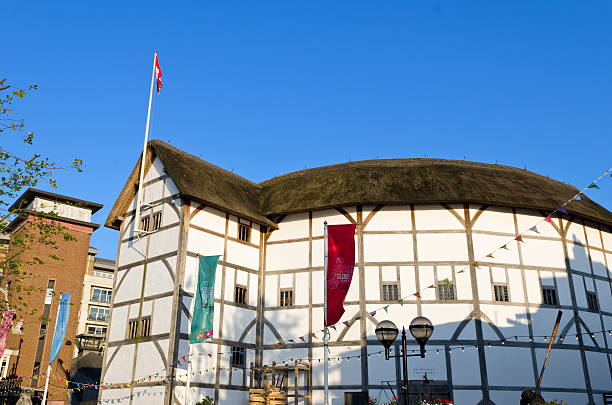
The relationship between the Rose and the Globe is chronological as well as spatial. The Rose was already established before the first Globe opened in 1599. The present Shakespeare’s Globe is a modern reconstruction near, but not on, the original Globe site. Walking from the Rose area toward the modern Globe should make those distinctions explicit: surviving archaeology, the documented location of a lost building, and a later reconstruction are different categories of evidence. They should not be blended into one vague atmosphere of “Shakespeare’s London.”
There is also a useful west-to-east logic. Beginning near the Rose allows the day to move from fragment to hypothesis to performance. The foundations ask what can be known. The Bankside streets show how the theatre district sat in the city. The reconstructed Globe demonstrates one serious modern answer to architectural evidence. The evening production then tests how a living company uses that space now. This order is editorially strong, but it remains subordinate to confirmed opening times.
Access to the Rose is not daily. At the source verification on 12 September 2026, the Rose Playhouse current programme stated that the site opens for specified activities and listed advance-booked guided Thursday visits on selected dates from 17 September to 29 October. Those dates are operational information, not an evergreen promise. Recheck the official programme for the travel date and do not build the day around entry until the visit is confirmed.
If the Rose is open only at a time that disrupts the preferred sequence, keep the archaeology but adjust the order. A confirmed Rose visit at mid-afternoon may require a shorter morning text session and a Globe visit earlier in the day. An early Rose appointment supports the more elegant west-to-east progression. No appointment means a different branch, not an invented “visit” to a closed site. The distinction is important for trust and for timing.
Use the text to connect bare evidence with live staging
The archaeology becomes more than local history when it is paired with the way Shakespearean plays create place. The Folger’s overview of Shakespeare’s theatre conditions explains that the plays had to work across outdoor playhouses, indoor theatres and other performance settings, and that relatively bare stages relied heavily on language to establish location and atmosphere. That principle offers a disciplined bridge between the Rose and tonight’s production.
Choose a passage in which the text names or constructs a place the stage cannot literally provide. It might be a battlefield, a storm, a court, a forest, a city wall or a night street. Ask where the audience receives the information: from a formal speech, a hurried exchange, sound, costume, a prop, or the reaction of people already on stage. Then ask what the chosen venue makes easy or difficult. In an open-air playhouse, visible sky and changing light may resist an announced night. Indoors, concentrated light and proximity may make silence, breath and small gestures more forceful.
A second passage should expose the social architecture of the stage. Look for an aside, a soliloquy, a public appeal, a trial, a council scene or an entrance that changes who controls the space. At the Rose, the surviving footprint can prompt questions about audience distribution and stage relation. At the modern Globe, the thrust platform and visible spectators make those questions immediate. In the Sam Wanamaker Playhouse, enclosure and close seating may alter the same speech’s temperature.
A third passage can focus on adaptation. Which characters are commonly combined? Which long report might be cut? Does the selected production advertise a shortened running time, a new framing device, actor-musicians, contemporary dress or another clear intervention? Do not decide in advance whether the choice is faithful. Instead, identify what the intervention must solve. A cut changes rhythm and emphasis. Doubling creates associations. A modern frame can redirect the audience’s first assumptions. Music can provide transitions that an unadorned text leaves open.
For plays that survive in materially different early versions, check whether the company names an edition, adaptation or conflated text. That question can matter greatly, but it should not become textual detective work for its own sake. The useful consequence is practical: a scene remembered from one edition may be absent, reordered or differently worded in performance. Prepare the group for variation rather than treating one printed text as a script the actors are obliged to reproduce.
This preparation works best as a conversation, not a lecture. The aim is to make the audience notice decisions without spending the evening checking them against a lesson. Three questions are enough:
- What does the production ask language to create? Listen for places, weather, time and offstage action that the building cannot show directly.
- How does the venue make the audience part of the scene? Notice direct address, shared light, entrances through the house and moments when spectators become witnesses.
- What has the production changed to make this play work now? Attend to cuts, casting, pace, music, design and the order in which information is revealed.
These prompts also prevent a common failure of specialist days: too much context delivered too early. A returning theatre patron may welcome close attention to textual variants and performance history, but the material should be chosen for this production. The day is not improved by proving that more scholarship was available.
Build backward from the curtain, not forward from breakfast
Once the interpretive thread is clear, calculate the day in reverse. Let the published curtain be C. The last optional stop should end well before C, and the group should be in the Globe precinct with enough time for security procedures, lavatories, programme collection, cloakroom questions where relevant, and unhurried movement to the correct entrance. The exact margin depends on current venue instructions and the group, but it should be written into the plan rather than treated as spare time.
For a typical evening, an editorial target of arriving in the immediate venue area 40 to 50 minutes before the curtain is sensible for a private group unfamiliar with that night’s arrangements. This is a planning judgment, not an official universal rule. Guests who need step-free routes, hearing support, extra time to settle, or a particular entrance should use a larger margin based on the venue’s instructions. Guests standing in the yard may also prefer an earlier approach, especially when weather affects clothing or the desired position.
Globe tour timing is more concrete. Shakespeare’s Globe states that group tours can be combined with a performance in either the Globe Theatre or Sam Wanamaker Playhouse. Its current guidance asks groups to arrive at least 15 minutes before a tour of approximately 50 minutes and warns that late arrival may prevent admission. See Shakespeare’s Globe group-visit guidance. Because this is operational information, confirm it again for the booked date.
That rule exposes a hidden transition cost. A 50-minute tour does not occupy 50 minutes in the itinerary. It needs an arrival margin, check-in, regrouping afterward and movement to the next place. In practice, reserve at least 80 to 90 minutes from the moment the group leaves the preceding stop to the moment it is genuinely free again, more for larger groups or slower walkers. A Rose visit carries the same principle: use the stated assembly time, not only the advertised duration.
Meals should be treated as pacing infrastructure rather than a separate attraction. The day needs a seated interval, water and enough food to sustain a long performance, but an elaborate multi-course commitment can consume the margin that the archaeology and text require. Place the principal meal where it helps the group: after the Rose if the visit begins early, or before the Rose if its only confirmed access is later. Avoid a distant reservation that forces a river crossing or cross-city return.
Likewise, do not place an attractive but unrelated museum between the Globe tour and the play merely because an hour appears open. One delayed admission, crowded gallery or slow exit can turn the final approach into triage. The final two hours should become progressively simpler: seated discussion, a short riverside orientation, refreshments, then entry. Complexity should decrease as the curtain approaches.
For visitors fitting this day into a larger trip, place the Shakespeare sequence within a longer London stay so that major monuments and museum ambitions do not spill into the performance day. Bankside can hold a full specialist programme on its own.
A workable sequence for a 7:30 p.m. performance
The following model shows the logic, not a claim that these exact visits operate every day. It assumes a 7:30 p.m. curtain, a confirmed late-morning Rose appointment and a confirmed mid-afternoon Globe tour. Replace every time with the actual booking and retain the buffers.
- 10:15 a.m. — Production briefing. Meet in a quiet, seated setting. Establish the selected play, venue, running-time information, access needs and three interpretive questions. Read two short passages rather than summarising the whole plot.
- 11:15 a.m. — Move to the Rose assembly point. Arrive according to the Rose’s stated instructions. The margin absorbs slow hotel departure, bridge congestion, weather and the time required to gather a private group.
- 11:45 a.m. to about 12:45 p.m. — Rose archaeology. Read the surviving plan, separate fabric from reconstruction, and place the playhouse in the entertainment geography of Bankside. Keep notes concise; the aim is to establish a physical vocabulary for the rest of the day.
- 1:00 p.m. — Seated meal and pause. Stay in Bankside or immediately adjacent streets. Allow a genuine hour, longer for guests who need a slower pace. Do not attach another formal visit to the meal.
- 2:15 p.m. — Bankside theatre geography. Walk the short sequence between the Rose area, the original Globe site vicinity and the modern Globe. Discuss why the reconstructed building is evidence-based interpretation rather than the original monument.
- 2:45 p.m. — Globe tour arrival margin. Reach the required meeting point at least 15 minutes before a 3:00 p.m. tour if that is the confirmed instruction.
- 3:00 p.m. to about 3:50 p.m. — Globe tour. Focus on the evening’s venue and production questions. Do not repeat a general Shakespeare biography already covered at the Rose.
- 4:00 p.m. — Seated synthesis. Compare the Rose footprint, original Globe location, reconstructed Globe and indoor Wanamaker conditions. Revisit one selected scene with the actual performance space in mind.
- 5:00 p.m. — Unstructured interval. Allow refreshments, lavatories, a change of layer for the open-air theatre, collection of anything stored locally, and private time. This is not empty schedule; it is the point at which attention is restored.
- 6:00 p.m. — Formal stopping time. No new admission, river crossing or optional cultural stop begins after this point. The group remains within easy reach of the correct venue entrance.
- 6:40 p.m. — Performance arrival. Follow the current instructions on the booking. Resolve access, bag and seating questions before the house becomes pressured.
- 7:30 p.m. — Curtain. The earlier day has supplied questions, not answers. The production now takes over.
If the Rose can be visited only at 3:00 p.m., reverse the middle of the day: hold the Globe tour in late morning, eat nearby, then attend the Rose. Afterward, use only a short west-to-east return with one synthesis stop. Do not attempt to recreate the original model by adding every missed discussion after 5:00 p.m. The later appointment reduces optional content.
If the performance begins at 7:00 p.m., shift the formal stopping time earlier rather than compressing the meal or arrival. For an 8:00 p.m. curtain, resist the temptation to add another institution. The extra half-hour is better used as resilience: a slower Rose visit, a longer seated comparison, or a calmer pre-performance interval.
When a tailored private day has a real function
The specialist value lies in selecting and coordinating evidence. A guide preparing for a particular production can decide whether the Rose should foreground audience architecture, commercial Bankside, textual setting, doubling, music or the contrast between indoor and outdoor playing. The route can then be timed around confirmed visits, the group’s walking pace and the venue’s arrival conditions. That is materially different from delivering a standard Shakespeare walk and hoping the evening happens to connect.
It is especially useful when the production has a strong adaptation concept, when the group already knows the canonical biography, when Rose access is limited, or when the party includes both serious theatre patrons and companions who need a clearer path into the material. The guide’s task is not to display more knowledge than the audience. It is to decide what the audience should encounter before the curtain and what should be left for the production to disclose.
The same preparation prevents operational errors. A private sequence can hold the Rose appointment, Globe tour check-in, seated pause and theatre arrival within one Bankside plan; it can also remove content when weather, access or fatigue changes. A vehicle may bring the group from a distant hotel or support a guest with mobility needs, but it should not be used to shuttle between close Bankside points where pedestrian access and traffic restrictions can make it slower. Once the group is established south of the river, the route is usually a walking and resting problem rather than a chauffeuring problem.
When the selected production calls for that combination of archaeology, textual preparation and confirmed timing, Orange Donut Tours can shape the day around the actual play rather than a reusable circuit. Inquire now to discuss the performance date, Rose access, Globe or Wanamaker conditions and the group’s preferred depth.
Readers comparing broader private options can also explore private London touring, but the Shakespeare day should remain narrow in purpose: each earlier encounter must improve the evening or make its arrival more reliable.
The Globe Theatre and Sam Wanamaker Playhouse need different preparation
When the evening is in the Globe Theatre
An open-air Globe performance makes the building’s relationship with the audience impossible to ignore. Spectators can see one another, weather remains perceptible, and the stage projects into a large shared volume. The preparation should therefore privilege public speech, crowd scenes, direct address and moments when the actors must create darkness, secrecy or distance without sealing the spectators off from the world outside.
Season also changes the opening image. A summer evening may begin in full daylight, while an autumn performance can move quickly into darkness. That difference affects how readily the production can create night, concealment or spectacle, even when the words and design remain the same. Use the travel date to frame the question, but let the actors show how they solve it.
At the Rose, pay particular attention to the relation between yard, galleries and stage rather than treating the footprint as a decorative plan. During the modern Globe visit, ask how a reconstructed thrust stage manages multiple doors, balcony levels, musicians and a standing audience. Before the play, read a speech that changes meaning when delivered to visible people rather than into darkness.
Physical pacing matters more here. A guest standing for the performance should receive a substantial seated period in the late afternoon. Even seated visitors may need layers for changing weather. The decision about clothing, water and arrival is part of the theatre experience, not an interruption to it. Check current venue guidance rather than relying on assumptions about umbrellas, bags or permitted items.
When the evening is in the Sam Wanamaker Playhouse
The Wanamaker branch should emphasise contrast. The day can still begin with the Rose, but the interpretive movement is from a large outdoor commercial playhouse toward an enclosed Jacobean-style room associated with candlelit performance. The central questions become proximity, acoustic detail, shared enclosure, artificial light and the heightened visibility of small gestures.
A passage of intrigue, overhearing, private counsel or moral scrutiny may be more useful than a large battle speech. Ask how an indoor room changes a whisper, an aside or a pause. Ask whether the selected play was originally associated with an outdoor public theatre, an indoor hall, court performance or several types of space. The point is not to assign a play to one “authentic” home but to show that early modern repertory moved across conditions.
Weather is less decisive once inside, but the pre-curtain margin remains. The entrance sequence, narrow circulation and specific seating access can take time for a group. Guests who expect the indoor playhouse to function like a modern West End auditorium should be prepared for a more historically inflected geometry and closer relationship to performers and other spectators.
When the group attends both spaces during one London stay
Do not duplicate the same day. Use the Globe performance to investigate public scale, shared daylight and audience address. Use the Wanamaker performance to investigate enclosure, illumination, sound and intimacy. The Rose can anchor either, but the selected passages and route commentary should change. A repeat visitor gains more from contrast than from hearing the same Shakespeare biography twice.
Branches for closed access, rain, late starts and reduced stamina
If the Rose is closed
A closed Rose does not justify pretending that an exterior pause equals an archaeological visit. State the limitation clearly. The replacement should be a map-led Bankside study using the official scheduled-monument record, a plan of the remains and the visible street geography. The group can identify the Rose area, trace the relationship to the original Globe site vicinity and then move to the modern Globe, but the guide should distinguish documented location from accessible fabric.
Use the time saved for depth, not random substitution. A seated session can compare the Rose plan with the modern Globe’s geometry, examine one scene’s demands, or discuss Henslowe’s commercial world at a level appropriate to the group. The resulting day is still valid, but its claim is different: it is a geography-and-reconstruction sequence rather than an archaeological-site visit.
If rain is persistent
Rain does not automatically cancel a Globe-focused day, but it changes the balance. Confirm which parts of the booked tour are exposed and what the evening performance requires. Move the text session indoors, shorten the exterior geography to the points that only make sense on site, and place the seated meal where it can absorb a weather delay. Keep dry layers and changing footwear needs in the plan.
Do not cross the river for a distant indoor substitute unless the forecast, access and performance time make that clearly safer. A nearby, Shakespeare-specific indoor discussion is more coherent than a major museum visited in haste. For travelers building a wider contingency beyond this theatre day, build a broader rain-contingency day separately.
If the day starts only three hours before the curtain
Choose one institutional anchor. If the Rose is open and the group’s priority is archaeology, visit it, then walk directly toward the Globe with one short comparison stop. Do not also attempt a full Globe tour. If the Rose is unavailable, use the confirmed Globe tour as the anchor and precede it with a concise text briefing. In either case, the last hour before the performance belongs to arrival, rest and venue procedures.
A three-hour branch should contain one question, one place and one synthesis. For example: How does language create setting? Rose plan or Globe stage. Then one passage before entry. Anything broader becomes a lecture squeezed against the curtain.
If the group’s stamina is limited
Reduce standing interpretation first. The distances within Bankside are modest, but repeated stops, hard surfaces, crowds and time on foot accumulate. Use a seated opening, a vehicle drop-off near the first confirmed appointment when appropriate, one continuous walk rather than several returns, and a long seated interval before the play. Confirm step-free access and entrance instructions directly with the venues.
Guests with hearing requirements should coordinate the specific performance, available support and auditorium position rather than assume a general solution. Review theatre-night planning for captioning and hearing access when that is part of the brief.
If the production itself changes
Casting changes, altered running times or revised access notes can affect the day without invalidating it. The archaeology remains stable; the production questions should be refreshed. If an understudy or replacement changes the casting pattern, avoid speculative interpretation. If the running time becomes longer, preserve the pre-curtain plan and reconsider only the post-performance return. If a matinee replaces an evening booking, this article’s order must be rebuilt rather than compressed into the morning.
Transition costs are the difference between a good plan and a rushed one
Bankside looks compact on a map, which makes its delays easy to underestimate. A private group does not move as a single point. People finish conversations, use lavatories, adjust clothing, wait at crossings, stop for photographs and arrive at the next entrance at different moments. The correct unit is not walking time between pins; it is the interval from the end of one activity to the moment the next can begin.
Several transitions deserve explicit allowances:
- Hotel to Bankside. The approach can involve bridge traffic, taxi drop-off limits, railway concourses or a walk from the nearest practical stopping point. Build from the group’s actual hotel and mobility, rather than a city-centre estimate detached from the actual starting point.
- Rose exit to meal. Archaeological interpretation often continues after the formal visit. Either finish the discussion before leaving or accept that the meal will start later. Do not book a tight table time on the assumption that everyone will disengage instantly.
- Meal to Globe tour. Paying, using facilities and regrouping can consume 15 to 20 minutes before anyone has moved. The official tour arrival margin must begin after that process, not during it.
- Tour end to free time. A 50-minute tour may conclude with questions, shop interest or a different exit point. Schedule the next formal element only after a realistic release time.
- Precinct to seat. The party may divide by entrance, accessibility route or seating area. Agree the handoff point before the final approach.
Transport can solve the first and last of these, but rarely the middle ones. A chauffeur is useful when a group starts far from Bankside, carries mobility equipment, needs a dependable post-performance pickup, or must connect directly to another fixed commitment. It does not improve a route that repeatedly asks a vehicle to enter congested or pedestrian-priority streets for very short hops. The premium choice is the one that reduces uncertainty, not the one that keeps a car visible.
A private guide also needs a clear handoff. Before leaving the group at the venue, confirm the correct entrance, performance start, meeting plan after the show if transport is arranged, and what happens if the performance runs later than expected. That final operational clarity should take less than a minute because the planning was done earlier.
The pre-curtain stopping rule
Every version of this day needs a declared point after which no new cultural content begins. For a 7:30 p.m. performance, 6:00 p.m. is a strong baseline. For slower walkers, complex access needs, a standing place or uncertain weather, move it to 5:30 p.m. The exact time can change; the rule cannot.
After the stopping time:
- No new admission begins.
- No one crosses the Thames unless the venue itself requires it, which it does not for the Globe or Wanamaker.
- No “quick” detour is accepted merely because it is nearby.
- Any unfinished interpretation is reduced to one sentence or carried into the post-performance conversation.
- The group remains within a simple, known route to the correct entrance.
This boundary is not an admission that the day was badly planned. It is what makes optional richness possible earlier. When the Rose visit runs long because the group has serious questions, the stopping rule absorbs the consequence by removing a later extra. When rain slows the street sequence, the rule prevents the delay from migrating into the theatre arrival. When a guest needs rest, it turns that need into the plan rather than a source of apology.
The rule also protects the quality of attention. Shakespeare’s plays demand listening, especially in spaces where spectators remain visible and the language carries much of the world. An audience that reaches the seat after hurried navigation, unfinished discussion and a last-minute queue will have less capacity for the opening scenes. The final margin is therefore interpretive, not merely logistical.
There is one further limit: stop explaining before the actors begin. A specialist day can make an audience more alert, but it should not pre-empt the production’s choices. Avoid predicting how a famous speech will be delivered or telling guests which interpretation they should prefer. The evening should retain surprise.
What to leave out, even when it is nearby
Bankside offers many temptations: river views, Tate Modern, Borough Market, Southwark Cathedral, historic pubs, bridges and additional performance sites. Some may belong in another London day, but proximity is not a sufficient reason to include them here. Each addition has a cost in walking, security, queuing, cognitive attention and the probability of arriving at the theatre with unfinished business.
Southwark Cathedral can be useful when the day’s theme genuinely concerns the medieval parish, burial, the river community or the longer history of Southwark. It should not be inserted as a picturesque interior. Borough Market can provide a practical food stop at the right time, but its crowds and choice can expand a simple break into an uncontrolled interval. Tate Modern offers excellent art, yet a rushed hour there usually interrupts rather than advances a Shakespeare sequence.
Nor does the day need a generic West End theatre survey. The point is not to compare every London auditorium. The relevant contrast is local and historical: archaeological Rose, lost original Globe, reconstructed Globe, indoor Wanamaker and the selected production. Wider theatre comparisons belong elsewhere unless the group is explicitly researching venue design.
A river cruise is another common overreach. It can be an elegant London experience, but here it introduces boarding times, weather exposure and a different narrative. Use the Thames as geography: a route of arrival, commerce and separation from the City. Do not turn it into a separate attraction on the same afternoon.
Likewise, avoid filling the late interval with shopping. A bookshop or programme purchase may happen naturally, but it should not become an appointment. The final hours work because choices narrow. The performance deserves an audience that has finished the day’s decisions.
How to tell whether the sequence has worked
The test comes during the play, not in the number of stops completed. A successful day produces recognition without requiring the audience to recite what it learned. The Rose’s footprint may make a crowded stage feel spatially legible. The Bankside walk may clarify why the theatre addresses a public across the river from the old City. A selected text passage may reveal how quickly language can create night, distance or political danger. The contrast between open air and enclosed playing may make a direct address feel newly specific.
The audience should also understand the limits of reconstruction. The modern Globe is a rigorous and imaginative building, but it is not the original Globe transported intact through time. The Rose is genuine surviving archaeology, but it is partial. A contemporary production uses historical conditions selectively and creatively. Holding those distinctions together is more valuable than claiming an uncomplicated encounter with “authentic Shakespeare.”
After the performance, three questions are enough for a return journey or next-morning conversation:
- Which moment used the audience or room most decisively?
- Where did language create something the stage did not show?
- Which production choice now looks different because of the Rose or Bankside geography?
Do not schedule a formal seminar after a long evening unless the group has asked for one. A brief exchange can preserve the connection; deeper analysis can wait. The day has already done its work if the production feels more dimensional and the route to it never became a race.
The handoff to the evening
The most persuasive version of this London day is not the busiest. It begins by asking what the booked play can gain from the Rose, the lost theatre district and the contrasting conditions of the Globe or Wanamaker. It secures the visits that can actually be confirmed, builds their full transition costs into the schedule, and ends formal touring early enough for the group to arrive with attention intact.
For a returning theatre patron, that structure turns familiar names into a sharper argument. The Rose supplies material limits. Bankside supplies commercial and urban context. The chosen text supplies problems of language and staging. The modern playhouse supplies one contemporary answer. The evening production remains free to surprise.
That is the standard for deciding what belongs: not whether a stop is Shakespearean, nearby or prestigious, but whether it helps this audience hear and see this performance more intelligently. Once that criterion is applied, the day becomes both richer and easier to control.
If you’re interested in any private tours of London, please reach out to us.
















 So if you are looking for the absolute best in London & surroundings with authentic local fully-licensed native guides whose English you can actually understand and with an exclusive and amazingly fun itinerary