A Tendered Cruise Call at Greenwich: Planning a London Shore Day

Updated
Make London the conditional plan, not the assumption
A tendered call at Greenwich can support an excellent London shore day, but it should not be planned like a coach departure from a fixed cruise terminal. The published arrival time describes the ship’s schedule. It does not tell you when your party will be ashore, reunited, through the landing process and ready to leave Greenwich. The useful sightseeing window begins only after those separate events have happened.
The sound planning choice is therefore to build two versions of the day. The first is a complete Greenwich day that remains worthwhile even if tendering starts late. The second adds central London only after a pre-agreed release point: the whole party is ashore, the rendezvous is complete, the return instructions are unchanged and the remaining margin still supports the chosen route. Central London is an upgrade to a functioning local plan, not the element that rescues an otherwise empty itinerary.
Before committing to admissions, lunch reservations or a Westminster meeting, confirm five operational facts: the ship’s assigned position or mooring; the exact tender landing; the ship’s all-aboard instruction and last tender time; whether ship time differs from local time; and the roster, mobility profile and communication plan for everyone leaving together. Record those facts in one shore brief rather than distributing them across several messages. A private guide or vehicle is most useful here when it is coordinated with that brief, not merely waiting somewhere in Greenwich on the basis of the scheduled arrival.
One further distinction protects the day from a common category error. Greenwich Ship Tier, the confirmed tender landing, Greenwich Pier for public river services and the group’s actual meeting point may be four different places. Treating them as one location can consume the very margin the itinerary depends on. The core task is not “How much can we see in London?” It is “At what verified moment can this group safely leave Greenwich, by which route, and when must the return sequence begin?”
What a Greenwich tender call changes
The Port of London Authority’s Port Information Guide, updated on 11 March 2026, lists Greenwich Ship Tier among the Thames cruise moorings. It also notes that local traffic control is typically used for large-vessel arrivals and departures there and directs users to current navigation notices. That places the ship within an active river system rather than alongside a self-contained terminal apron. It also explains why the final operational picture belongs to the ship, port and river authorities, not to a sightseeing schedule drafted weeks earlier.
A tender is the smaller craft that moves guests between the cruise ship and shore when direct docking is unavailable. Norwegian Cruise Line’s published tender explanation is a useful primary-source definition and says guests will be told onboard when tender booking is required. The exact system varies by line and call. Some passengers may receive priority, some may need a tender group or allocation, and independent parties may not be on the first movement ashore. The itinerary should never convert “ship arrives at 07:00” into “guide begins at 07:15” without a ship-specific basis.
A tender operation introduces several handoffs that a fixed-terminal day does not have:
- The vessel must reach its assigned position and be cleared for the operation.
- The ship must begin moving guests ashore under its own sequence.
- Each member of the private party must land, identify the correct meeting point and join the roster.
- The group must move from the tender landing to a public pier, vehicle collection point or first Greenwich visit.
- On return, the group must reverse the process early enough to meet the ship’s tender and onboard requirements.
None of those stages is inherently a problem. The risk appears when they are compressed into one optimistic “disembarkation time.” A ten-person family can lose more time waiting for its last two members than it spends walking between Greenwich landmarks. A guide standing near Greenwich Pier cannot solve a rendezvous arranged at a different landing. A river departure that looks convenient on a timetable may cease to be useful if the group reaches the pier after boarding has closed. The remedy is to name each handoff and give it a decision rule.
Draw the map with separate operational pins
Greenwich is compact enough to feel simple once the party is together, yet its riverfront contains several distinct functions. The ship’s river mooring is not a visitor meeting point. The tender landing is the point confirmed by the ship or its local operation. Greenwich Pier is the public passenger pier at King William Walk. A road vehicle may need a different collection point again, chosen for legal access, walking distance and the group’s mobility rather than for visual convenience.
Thames Clippers’ official Greenwich Pier page gives the King William Walk address, identifies eastbound and westbound River Bus patterns, tells passengers to consult the current timetable and describes step-free, ramp-assisted boarding. Those details make the pier a credible route node, but they do not establish it as the cruise tender landing. The distinction must remain visible in the shore brief: “land here, meet here, board public river service here” should be three separate lines whenever they are three separate places.
For a private party, the meeting point should be defined in words that work without local knowledge. A business name alone can fail if there are multiple entrances. “By the river” is too broad. A useful instruction names the side of a building or monument, the nearest street or pier reference, and what the guide will be holding or wearing. It should also include a secondary point for anyone who is diverted by staff or exits through another gate. The meeting arrangement must be approved against the ship’s landing information rather than chosen from a general map.
The route out of Greenwich should begin only when the roster is closed. “Closed” means the named shore lead has counted every participant, confirmed that no one has returned to the ship, identified any mobility or health change, and told the group which clock governs the return. A couple travelling independently can make this check in seconds. A multi-generational family or corporate party may need a written list, two mobile contacts and a rule that no subgroup leaves the meeting point without notifying the lead.
The four times that belong on one page
- Scheduled ship arrival: useful context, but not a shore-departure promise.
- Confirmed or estimated tender start: an operational update, still not the time the whole party will be ashore.
- Group-ready time: the moment the roster is complete at the agreed meeting point. This is the true start of the excursion.
- Return requirement: the ship’s stated all-aboard and tender instructions, plus the excursion’s own earlier arrival target.
Keep ship time and local time explicit. Norwegian Cruise Line’s boarding-times guidance, for example, tells guests at ports of call to be back onboard no later than one hour before scheduled departure, warns that shipboard time may differ from local port time and says missed-ship rejoining expenses fall to the guest. That is a line-specific published policy, not a universal Greenwich rule. It demonstrates why the ship’s notice for this call outranks a general web itinerary and why “departure at 18:00” is not the same as “reach the tender at 18:00.”
Build the day backward from the return
Start with the latest moment the party intends to be physically present at the confirmed tender return point. That target should precede the ship’s final permitted time by a margin appropriate to the group and the day. Then work backward through the shore-side stages: walk from the vehicle or public pier, possible security or queueing, a road or river journey from central London, the time needed to assemble after the final visit, and a contingency allowance that is not already spent in the base schedule.
This backward method prevents double-counting. A plan that says “allow 45 minutes for traffic” and then uses every one of those minutes for a late museum exit has no traffic allowance. A plan that schedules the last public boat as the return option has no service-recovery allowance. A plan that reaches Greenwich exactly at the last tender time has confused the deadline with a target.
Use three thresholds rather than one:
- Release threshold: the latest group-ready time at which central London still begins. After it, the day stays in Greenwich.
- Turn threshold: the time at which the party leaves its westernmost point, even if the current visit or meal is incomplete.
- Recovery threshold: the point after which the primary return route is abandoned for the preselected alternative.
These thresholds should be expressed as clock times only after the ship has issued its day-specific instructions. Before then, write them as relationships. For example: “Central London proceeds only if the party is together with at least the agreed number of hours before our Greenwich arrival target.” That structure survives a schedule revision more gracefully than a day built around a nominal 08:00 start.
The return target should also reflect group behaviour. Six adults who stay together and walk briskly need a different assembly allowance from three generations with a stroller, a cane and separate interests. Premium planning is not the promise of speed; it is the refusal to hide predictable friction. The party organiser should know which member sets the movement pace, where the vehicle or pier handoff happens and who has authority to shorten the final stop.
River, road or a controlled combination
The Greenwich-to-central-London choice is not a contest between a scenic boat and a comfortable car. It is a comparison between different forms of uncertainty, access and recoverability. The most suitable route can change between the outbound and return legs, and it can change again when the group-ready time is known.
Public river service
A westbound river service offers a coherent passage through London’s geography. The party sees the city develop along the Thames rather than entering it through traffic, and Greenwich Pier sits naturally beside the historic town centre. For a group interested in the river as part of the visit, the journey can carry interpretive value rather than functioning as dead transfer time. Our separate guide to river-versus-road planning across London explores that wider choice.
The constraints are operational. Public service runs to a timetable, passengers must reach the correct pier and departure, and a missed sailing may impose more delay than the group can absorb. Service patterns, capacity, weather and river operations require same-day checking. Step-free, ramp-assisted boarding at Greenwich is helpful, but “step-free” should not be treated as proof that every guest will find the gradients, motion, boarding pace or onward pier equally easy. Confirm the whole chain for the actual group.
River transport is strongest when the group can arrive at Greenwich Pier with more than one acceptable sailing available and when the landing delay has not already consumed the central-city window. It is weakest when the itinerary depends on one specific departure, one exact central arrival and a hard admission immediately afterward. A public boat is a transport option, not an extension of the ship’s tender system; the two should never be joined in the plan as though one waits for the other.
Private road transport
A dedicated vehicle keeps the party together and allows point-to-point changes. It can collect at an agreed legal location, carry mobility aids and weather layers, and move directly to the first central stop rather than requiring another pier-to-attraction transfer. If tendering runs late, the route can be shortened before departure. If the group abandons Westminster, the vehicle can support a nearer City or Tower plan without first returning to a fixed river stop.
Road transport exchanges timetable risk for traffic and access risk. Central London curb space is not guaranteed, stopping restrictions matter, and the fastest map route can deteriorate because of congestion, works, closures or an incident. A vehicle also has to be genuinely positioned for the return; “the driver will meet us later” is not a recovery plan unless the location, contact method and alternative collection point are known.
Road works best when the group values cohesion, has mobility equipment, needs direct transfer between separated sites, or wants a route that can contract in stages. It does not justify scheduling to the minute. A chauffeur can provide continuity and communication, but cannot guarantee road conditions or the tender connection. The benefit is controlled coordination: one dispatch contact, a known vehicle, a named pickup and the ability to change the destination before the group is committed.
A hybrid route
A one-way river journey can be worthwhile when it is treated as sightseeing and the other leg carries the stronger recovery plan. An outbound river trip may introduce London beautifully while a prearranged road return avoids dependence on a final public sailing. The reverse can work when road access gets the party quickly to a central start and several earlier river services remain available for the return. Neither pattern should be chosen by aesthetic preference alone.
The controlling question is what happens after the first failure. If the outbound river service is missed, can the group take a road route without losing the timed visit? If the return vehicle is delayed, is there an earlier public river alternative that still reaches Greenwich comfortably before the tender target? If the answer requires the last possible boat, a sprint between piers or an unverified pickup, the hybrid is decorative rather than resilient.
How far west should the party go?
Central London is not one destination. The Tower of London and the City are materially closer to Greenwich than Westminster and the West End in route terms, even when all are described as “London.” A shore plan should therefore expand westward in stages rather than begin with a wish list of icons.
Greenwich only is the base plan. It protects the tender return, reduces transport handoffs and offers maritime, architectural and scientific content within a compact district. Readers deciding whether Greenwich merits that depth can use this Greenwich half-day framework as supporting context.
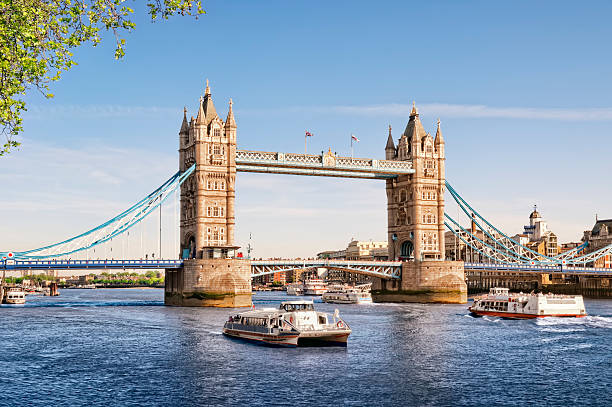
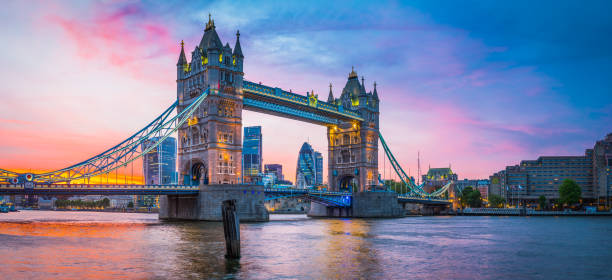
Greenwich plus the Tower or riverside City is the first central extension to test. It limits the westward reach and can pair the river story with the Tower, St Katharine Docks, Tower Bridge or a focused City walk. It still requires a defined return route and should not be filled with multiple hard admissions.
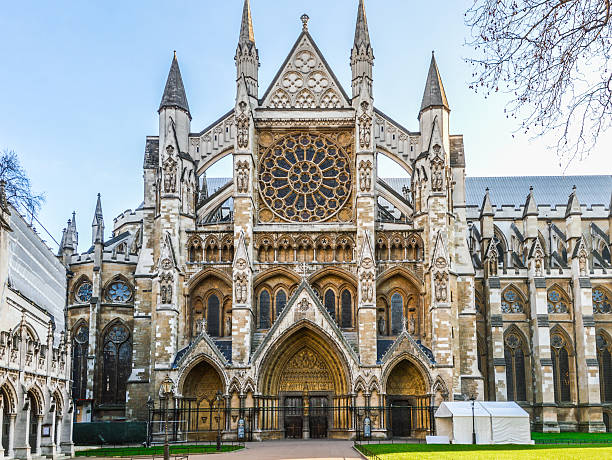
Greenwich plus Westminster demands an earlier completed landing and a larger return allowance. Westminster Abbey, Parliament Square, Whitehall and the riverfront can form a coherent visit, but the party has moved farther from the tender point and into an area where vehicle access and pedestrian congestion can complicate handoffs. A plan that also adds the West End, shopping or a long lunch usually spends flexibility that a tender day should retain.
Greenwich plus both Tower and Westminster should be treated as a high-condition plan, not a normal promise. It may be viable for a small, mobile party with an early group-ready time, minimal interior admissions and a well-controlled return. It is a poor template for a larger group, a tender priority that is unknown, or a call with a relatively early ship deadline. The fact that both districts appear on a London map does not make the cross-city sequence prudent.
A useful editorial rule is to protect one meaningful central focus rather than collect exterior glimpses. The Tower with historical interpretation, Westminster with political and ceremonial context, or a river-led city reading can each justify the transfer. Trying to prove that the party “saw London” by touching every famous district usually increases handoffs while reducing the quality of the visit.
A timing model that exposes false hours
Use a model to test the plan, but label every number as an assumption until the ship confirms it. Consider a purely illustrative call in which the published ship arrival is 07:00, the day’s onboard notice later states an all-aboard requirement of 17:00 and gives a separate final tender instruction. The organiser should not describe the excursion as a ten-hour day. The working calculation begins with the actual group-ready time and ends with the party’s earlier Greenwich return target.
Suppose the party is fully assembled at 09:00. Suppose its chosen return target is 16:00, leaving the ship’s later operational deadline untouched. The gross shore window is seven hours. From that, deduct the outward transfer, the return transfer, the walk or vehicle handoffs at both ends, meal time, admission processing and a contingency reserve. The hours remaining after those deductions are the visit, not the seven-hour gross figure.
If the group does not assemble until 10:15, the response should not be to accelerate every later segment. It should activate the pre-agreed scope reduction: perhaps Tower-side London instead of Westminster, or Greenwich only. The benefit of the model is not the sample clock time. It is the logic that a delayed start removes content before it removes the return margin.
The same model should be run with the slowest credible movement pace and with one route failure. Ask what happens if the party misses the intended public boat, if the vehicle reaches the pickup late, or if one member needs fifteen minutes before walking on. A feasible plan still works after one ordinary disruption. A fragile plan works only while every assumption is exact.
Timed admission should follow the tender, not command it
Hard admission times can improve a normal London itinerary and destabilise a tender day. The safest hierarchy is: ship instruction first, completed landing second, transport feasibility third, admission fourth. When an attraction offers flexible entry, a grace period, later availability or a reservation that can be released, that flexibility has operational value. When a missed slot would make the central extension pointless, it should be booked only with a realistic early-landing basis and a fallback that does not depend on a refund.
Greenwich itself can involve advance commitments. The Old Royal Naval College’s official group terms state that groups of at least ten adults qualify for group arrangements and that bookings must be confirmed 21 days before the visit. That makes the Painted Hall a useful example: a local attraction can be logistically easier than Westminster yet still require the organiser to understand group terms and cancellation exposure. “Stay in Greenwich” does not mean “no planning.” It means fewer transport dependencies.
For central London, avoid placing a hard entry immediately after the theoretical arrival of a river service or road transfer. Insert a real handoff interval. The group may need to leave the pier, find the guide, cross a security perimeter or walk from a legal drop-off. If the admission is the day’s intellectual centre, protect it by choosing the route and release threshold around it. If it is merely one item among many, let it go when the landing delay triggers the shorter plan.
Use three return buffers, not one vague cushion
A single line marked “buffer” hides where the plan can fail. Separate the return into three margins and do not spend one to cover another.
- Central departure margin: time to end the visit, gather the party, reach the collection point or pier and absorb a modest delay before the return journey begins.
- Transport contingency: time or route choice reserved for congestion, a missed public sailing, a service change or a switch between river and road.
- Tender-side margin: time after arriving back in Greenwich to walk to the confirmed landing, manage the group, join any queue and comply with the ship’s procedure before its stated deadline.
The final public sailing should not be the plan. The final ship tender should not be the target. Both are limits, and limits are where recovery options disappear. A party may decide that an earlier return feels conservative while looking at a timetable in the morning; after a service disruption or split group, that unused margin becomes the reason the day remains calm.
Return planning should also specify who makes the turn decision. In a private party, competing interests can create drift: one person wants another room at the museum, another has not finished lunch, and someone else assumes the vehicle will wait. Assign the shore lead or guide the authority to end the visit at the turn threshold. This is a coordination outcome, not a service flourish. It preserves the one connection that cannot be recreated locally.
Design the response before the failure occurs
The tender starts late
Do not keep the central plan and compress Greenwich, lunch and the return. Apply the release threshold. If the party is ashore after that point, remain in Greenwich or use the nearer Tower-side extension only if the revised arithmetic still holds. Notify any central guide, venue and vehicle immediately so that the shorter route begins cleanly rather than after a second period of uncertainty.
The group lands in separate waves
Keep the primary meeting point staffed and use the roster. The first arrivals should not travel to Greenwich Pier while the last arrivals are still looking for them. Set a communication fallback for phones without local data and identify one shipboard contact who can confirm whether an absent member chose not to come ashore. The excursion begins when the decision-maker closes the roster, not when the first guests become impatient.
The intended public river service is missed or altered
Check the next service against the release or recovery threshold rather than boarding it automatically. If the next departure destroys the admission or return margin, change mode or reduce scope. Current operator information and river notices matter more than the saved itinerary. The PLA guide’s navigation-notice links and the operator’s instruction to check the timetable are reasons to make this a live verification, especially after a berth, tide, navigation or service change.
The road route slows materially
Use a pre-agreed geographic contraction. Westminster can become Tower-side London; a two-stop central plan can become one focused visit; a central plan can become Greenwich. The driver and guide need the same hierarchy so the group does not debate options in traffic. A road delay is not recovered by using the tender-side margin.
A participant cannot maintain the planned pace
Shorten the walking chain before shortening the return. Move the collection point where legally possible, select the flatter Greenwich route and remove the hill to the Royal Observatory unless it is central to the party’s purpose. For a wheelchair-using or mixed-mobility group, this accessible Tower, Thames and Greenwich analysis provides a useful companion to the shore-day plan. Accessibility has to be checked across tender, pier, vessel, street and attraction, not inferred from one step-free statement.
The party misses the intended tender
Contact the ship or its designated port agent immediately using the numbers and instructions issued onboard. State the party’s location and composition accurately, follow the official direction and keep the group together. Do not assume another tender will run, do not rely on the ship delaying departure and do not start an improvised chase based on public vessel-tracking information. Cruise-line terms differ, but the potential cost and complexity of rejoining a ship are precisely why the day should not rely on the final movement.
The Greenwich-only day is a complete shore excursion
A fallback succeeds only when it has enough substance to feel chosen, not cancelled. Greenwich supports that because its maritime landscape, royal history, architecture, science and river geography are concentrated around the town centre. The key is to prepare a sequence at two depths: a low-friction riverside route and an expanded route that adds the hill or a substantial interior.
Low-friction riverside sequence
Begin around the Cutty Sark and the riverfront, orienting the group to Greenwich’s position downstream from central London and to the relationship between trade, navigation and the capital. Continue through the Old Royal Naval College grounds, where architecture and river frontage can carry the narrative even when an interior slot is unavailable. Add the Painted Hall when its group arrangements, opening conditions and the day’s landing time support it. The National Maritime Museum or Queen’s House can supply an indoor anchor, subject to current access and the party’s interests.
This version works well after a late landing because it limits transfers and can be shortened at several points without breaking the story. It also keeps the party near the confirmed return area. Lunch should be chosen for reliable pacing and geography rather than prestige alone: a long multi-course reservation is difficult to defend when the tender start is still uncertain. A private room or pre-agreed menu may help a larger group, but only when cancellation terms and the release threshold are understood.
Observatory and park sequence
The Royal Observatory and the higher ground of Greenwich Park introduce longitude, timekeeping, astronomy and a wide view back toward the city. They also introduce a climb and a longer return to the river. The hill should therefore be an intentional choice, not a default addition. For mobile adults with a stable window, it can become the intellectual centre of the day. For older parents, wheelchair users, small children or a group that landed late, the riverside institutions may offer more depth with less movement risk.
A road vehicle can sometimes reposition the group, but access and drop-off must be verified rather than assumed. The return clock still runs while the group descends, regathers and reaches the tender point. If the Observatory is essential, schedule it early in the local plan and finish nearer the river. If it is optional, define the latest time at which the group begins the climb.
Wet-weather and service-change version
Rain does not by itself force a central-London cancellation, but it amplifies every handoff: tender boarding, pier waiting, walking from drop-offs and keeping a large party together. A Greenwich indoor plan can reduce those exposures. Select one substantial interior, one architectural or riverside segment and a meal close to the return route. Keep a second indoor choice in reserve rather than trying to prebook a chain of admissions that becomes difficult to rearrange.
The local plan also protects against a change that affects river transport but not the ship’s tender, or vice versa. Those are separate systems. A public River Bus alteration may make road transport preferable while the tender continues. A delayed tender may make the public service irrelevant even if it operates perfectly. The fallback should respond to the failed component, not abandon the whole day automatically.
Group coordination is part of the route
A private cruise party often contains several planning profiles at once: the organiser who holds the documents, guests who expect the guide to know the ship procedure, one person with limited walking tolerance, and others eager to maximise the day. The route must convert those differences into simple instructions.
- Name one shore lead and one deputy.
- Keep a roster with mobile numbers, mobility notes and the ship or cabin contact required by the organiser.
- Give every participant the exact meeting point, fallback meeting point, ship-time convention and return target.
- Ask the guide and driver to acknowledge the same brief before the call.
- Use one group message for operational changes rather than parallel conversations.
- Count at every mode change: tender landing, public pier or vehicle, central stop and Greenwich return.
This is where coordinated private service earns its place. The material outcome is not a more polished greeting. It is that the guide, vehicle, party organiser and ship instruction are working from one route hierarchy. The guide knows when central London is released or cancelled. The driver knows the primary and alternative pickup. The organiser knows who makes the turn decision. The guests know that a shorter route is an intentional response to the day’s conditions, not an improvised disappointment.
Recheck whenever one of four triggers moves
The article’s planning logic is evergreen; the operational inputs are not. Recheck the plan after any substantive change to berth or mooring, tender procedure, tide or river notice, and public or road transport. Those triggers can alter different parts of the chain.
Berth or mooring change: confirm whether the tender landing, meeting point and vehicle or pier transfer remain valid. A change in the ship’s river position should not be translated into a new shore instruction without confirmation from the ship or local operator.
Tender change: replace assumptions about priority, grouping, first movement, final movement and landing location with the onboard notice. Recalculate the release threshold when the operation starts materially later than planned.
Tide or navigation change: consult the current official river information and the passenger operator’s live service advice. Do not infer that a ship tender change automatically means the public river service has changed, or the reverse.
Transport change: verify the selected public sailing, vehicle access, pickup and alternative route. If the primary return is no longer credible, shorten the day before leaving Greenwich or before moving farther west.
The final check should happen twice: once when the ship publishes its Greenwich instructions and again when the party is actually ashore. The first check prepares the day. The second authorises its scope. Between them, avoid non-refundable commitments whose value depends on an unconfirmed landing time.
The shore brief to hand to the organiser, guide and driver
- Ship: vessel name, assigned position, scheduled departure, ship-time convention and onboard contact instructions.
- Tender: confirmed landing, allocation or priority process, last tender instruction and the party’s earlier return target.
- Party: full roster, lead and deputy, mobile contacts, mobility requirements and any child or medical considerations relevant to movement.
- Rendezvous: primary point, precise visual description, fallback point and the time at which the roster decision is made.
- Scope: Greenwich base plan, central extension, release threshold and the order in which content is removed after delay.
- Outbound route: river or road, departure node, handoff allowance and alternative after a missed service or blocked pickup.
- Return route: turn threshold, primary mode, recovery mode, Greenwich arrival target and walk to the confirmed tender point.
- Admissions and meal: cancellation exposure, grace or flexibility, contact details and which reservation is surrendered first.
- Live checks: ship notice, PLA navigation information, public river service and road access.
- Missed-tender response: official ship or port-agent contact, instruction to keep the party together and acknowledgement that no return connection is guaranteed.
A Greenwich tender call rewards restraint more than speed. When the group lands early and the river or road plan is working, central London can be added with purpose. When the operation starts late, Greenwich can still deliver a coherent shore day without pretending that the lost hours remain available. The successful plan is the one that separates ship arrival, shore landing, group assembly, city movement and tender return—and gives each its own evidence, owner and margin.
For a party that wants the landing rendezvous, guide handoff, river or road choice, central-London scope and ship return margin designed as one operating plan, see private London cruise layover planning. Once the vessel details and ship deadlines are available, Inquire now.
If you’re interested in any private tours of London, please reach out to us.
















 So if you are looking for the absolute best in London & surroundings with authentic local fully-licensed native guides whose English you can actually understand and with an exclusive and amazingly fun itinerary













