London by River or Road: When a Thames Transfer Beats a Chauffeured Sightseeing Loop
Updated
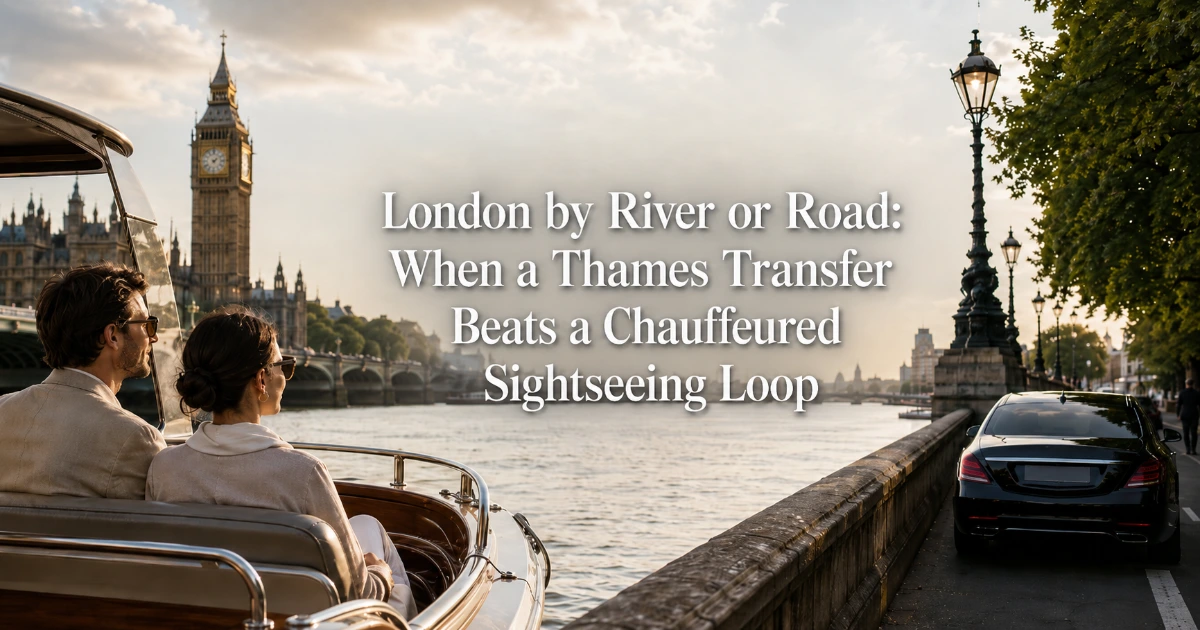
The Thames beats a chauffeured sightseeing loop when your day already runs along the river spine: Westminster, the South Bank, the Tower of London, Greenwich, or a City-side stop that naturally falls between them. It works because London traffic often turns short-looking cross-city drives into stop-start resets, while the river gives you movement, skyline context, and a seated pause in the same transfer. The clearest exception is just as important: choose the road when your hotel, lunch, theatre, mobility needs, or weather makes pier access slower than the drive itself.
The useful question is not whether a Thames boat is more atmospheric than a car. It is whether the river removes a transfer rather than adding one. In London, the winning plan is often a selective one: use the river for Westminster to the Tower, or the Tower to Greenwich, then use a chauffeur only where it protects the hotel return, dinner timing, or a non-river attraction. That is the article-specific rule: the Thames should be transport when it follows the city’s east-west grain, scenery when it earns a pause, and the day’s anchor only when the rest of the route stops fighting the pier map.
A non-obvious proof point appears at the Tower. Tower Pier is close enough to make the river logical, but the Tower does not greet you at the waterline; the pier-to-venue walk still has to be absorbed around the edge of the walls, with Tower Hill, Lower Thames Street and Tower Bridge traffic shaping the road alternative. This is why a river transfer can be elegant from Westminster, yet less persuasive if you first need a long taxi from Mayfair merely to reach a pier. For guests who want the river designed into a private day rather than bolted on, Orange Donut Tours can build that around Boat Cruise on the Thames without pretending every London transfer belongs on water.
Is a Thames transfer better than a chauffeured sightseeing loop?
A Thames transfer is better when it replaces a congested east-west move; a chauffeured loop is better when the day is fragmented, weather-exposed, or based far from a useful pier. Use three criteria before you choose: route alignment, pier-to-venue walk, and what happens after the stop. If all three support the river, the boat is not a decorative extra. It becomes the cleaner logistics choice.
Use the Thames as the default winner when:
- Your route links Westminster, London Eye, Embankment, Tower Pier, Canary Wharf, or Greenwich without a detour back toward Mayfair, South Kensington, or Covent Garden.
- You want one transfer that doubles as orientation, especially for first-time visitors who need to understand how Westminster, St Paul’s, the City, Tower Bridge and Greenwich sit in relation to one another.
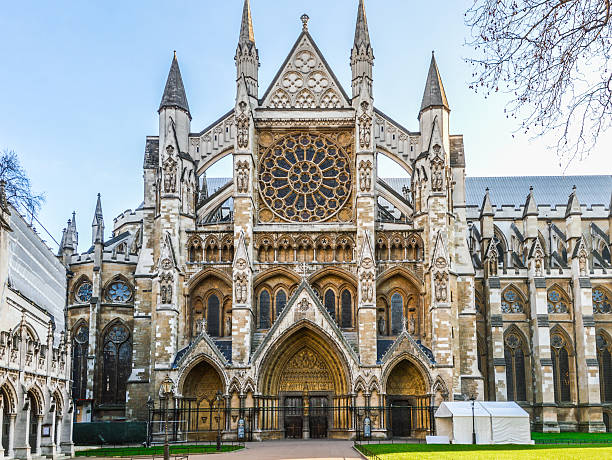
- Your group values a seated break between dense guiding blocks, such as Westminster Abbey and the Tower of London, rather than a car ride through traffic-light fatigue.
- The weather is dry enough, mild enough, or at least manageable enough that the pier approach will not flatten the mood before the boat even leaves.
Use a chauffeur as the runner-up when:
- Your day begins in Mayfair, Knightsbridge, South Kensington, Marylebone, or a hotel pocket where the first transfer to the pier would already consume the advantage.
- You are pairing a major sight with lunch, shopping, a theatre matinee, or a tightly timed dinner where a door-side return matters more than the view.
- Your travelers include older parents, small children, guests with limited mobility, or anyone who will experience the pier-to-venue walk as a tax rather than a pleasant transition.
- Rain, wind, heat, or cold would make the waiting time at the pier feel longer than a direct pickup.
The wrong fit is a decorative river add-on:
- A short Thames ride squeezed between unrelated stops often creates two extra transfers and no real comfort gain.
- A chauffeur is not automatically better either. Paying for a chauffeur does not help if the route is designed as disconnected cross-city hops.
- The famous thing to cut first is the forced “quick cruise” when the day already includes the British Museum, shopping in Bond Street, a West End dinner, and a hotel far from the river.
The counterintuitive correction is that Mayfair, despite being the preferred base for many high-end stays, can be a poor river-transfer base for a river-first morning. If your hotel is closer to Grosvenor Square or Park Lane than to Embankment, you may spend the first part of the day taking a car to take a boat. For a couple trying to keep the day composed, that extra stage can feel fussier than simply driving to the first proper stop.
Where the river genuinely improves the route
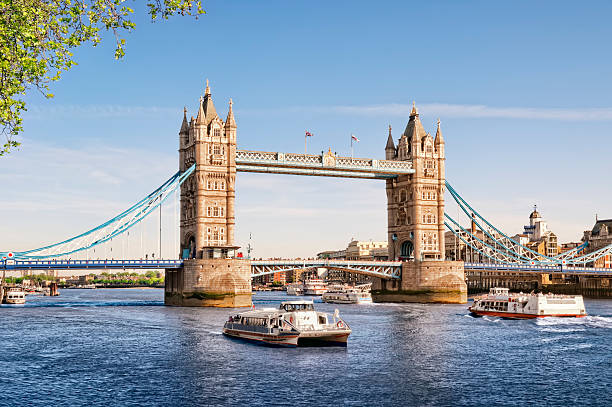
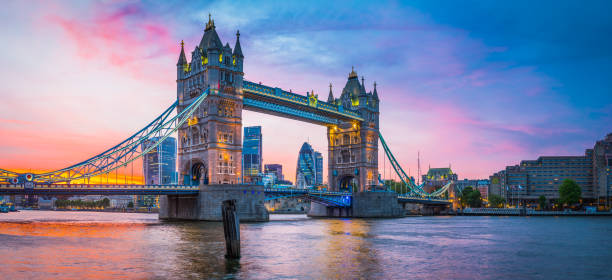
The river improves London most when it carries you between river-facing icons rather than rescuing a badly scattered plan. Westminster to the Tower by river is the clearest case because it turns a practical transfer into a geographic lesson. You move from Parliament and Westminster Bridge past the South Bank, the City skyline, St Paul’s across the waterline, and toward Tower Bridge without asking the chauffeur to crawl across central London’s traffic seams.
That does not mean every Westminster morning should end on a boat. If your Westminster block is focused on Parliament Square, Westminster Abbey, Whitehall, Horse Guards and the Churchill War Rooms, your first question is where your next meaningful stop sits. The river becomes persuasive when the next stop is the Tower of London, Tower Bridge, St Katharine Docks, or Greenwich. It becomes less persuasive when the next stop is the National Gallery, Covent Garden, the British Museum, or a Mayfair lunch.
The Tower to Greenwich route is the second strong river case. A road transfer to Greenwich can feel like leaving the sightseeing day to cross functional east London, while the Thames keeps the movement attached to the story of the city: docks, warehouses, naval architecture, river bends, and the widening sense that London is not only royal and governmental but commercial and maritime. The caution is Greenwich itself. If your real goal is the Old Royal Naval College, Cutty Sark, or a gentle riverside lunch, the river carries the plan well. If your goal is the Royal Observatory and the hill, the boat has not removed the climb; it has only delivered you to the district.
A third good use is a one-way Thames movement after a guided Tower visit. The Tower can be mentally dense: fortress, palace, prison, regalia, ravens, execution memory, and the practical rhythm of getting through the site. After that, a river leg can change the body language of the day. Instead of stepping back into a car while everyone reviews the same facts in a closed cabin, the group gets air, space, and a clean visual shift. For travelers considering a deeper Tower morning, Tower of London Private Tours pairs naturally with a river transfer only if the next stop stays east or river-led.
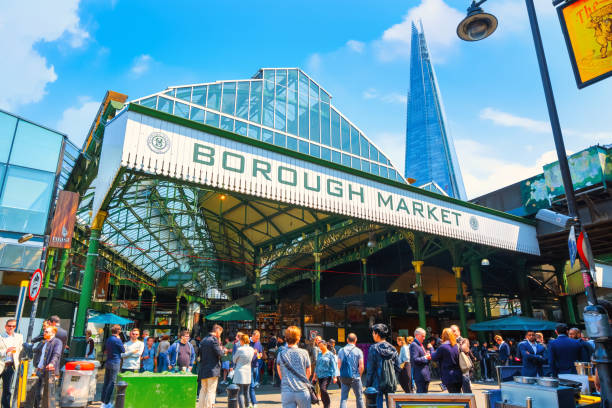
The river is also useful from a South Bank or London Bridge base, but the calculation changes. Hotels and restaurants around Bankside, Borough Market, London Bridge and Blackfriars can make the water feel close, yet not every pier is equally convenient for every venue. A walk from a hotel near Borough Market to London Bridge Pier may be pleasant in clear weather and irritating in driving rain. A lunch near the Shard is not the same as a lunch actually beside the pier. This is where the pier-to-venue walk matters more than the map screenshot.
If you are choosing between the Thames as transport, scenery, or the day’s anchor, use this hierarchy. Transport comes first: Westminster to Tower, Tower to Greenwich, or a one-way return from Greenwich when the timings line up. Scenery comes second: a river hour between two intense blocks, especially for first-time visitors or couples who want a calmer emotional tempo. The day’s anchor comes last: a private river-led experience is worth building around when the boat is the central celebration, not when it is being used to decorate an itinerary that belongs elsewhere. The existing ODT guide on when the Thames should anchor a full private day is the better next read when you already know the river is the main event; this guide is for deciding whether it should be a transfer at all.
When the road still wins
A chauffeured road transfer still wins when it protects timing, mobility, privacy, luggage, or the evening better than the river. London rewards selective driving, not automatic driving. The car is most valuable when it serves a specific stress point: a hotel pickup, a controlled return after a long site visit, a theatre-night plan, a family reset, or a route with attractions that do not sit on the Thames.
Start with hotel base. Mayfair, St James’s, Knightsbridge, Belgravia and South Kensington are comfortable places to stay, but they are not all river bases. A chauffeur from Claridge’s, The Connaught, The Berkeley, The Lanesborough, or a South Kensington hotel can put you directly at Westminster Abbey, the Churchill War Rooms, the V&A, Kensington Palace, or the National Gallery without first threading down to a pier. The river may still belong later in the day, but using it immediately can create a staging transfer that feels unearned.
Covent Garden is another subtle case. It looks central and lively, and it is easy to imagine a river add-on nearby. In practice, a Covent Garden hotel or theatre-night plan often benefits more from a compact West End and Westminster sequence than from a boat that leaves you managing pier steps, bridge crossings, or return timing before dinner. If your evening ends at the theatre, the best comfort move is often to avoid a late east-west return from the river and keep the final sightseeing block close to the Strand, Trafalgar Square, or the hotel.
Road also wins for non-river cultural days. The British Museum, the Wallace Collection, the National Gallery, the Courtauld, the V&A and many Mayfair or Marylebone shopping routes are not improved by a Thames transfer unless the rest of the day naturally touches the river. You can spend more to hire a premium vehicle, but if the route is a chain of unrelated districts, the spend will not solve the design flaw. A car is comfort, not a cure for itinerary sprawl.
Mobility is the most practical road argument. Some piers are convenient, but they are still piers. There may be ramps, queues, uneven approaches, exposure to weather, and the simple reality that the boat stop rarely equals the venue entrance. A guest who can comfortably walk around Parliament Square may still find repeated pier approaches tiring once the day includes Tower cobbles, security lines, museum corridors or a post-lunch return. For older parents or multigenerational families, the chauffeur’s value is not glamour; it is the ability to remove repeated thresholds.
Road wins again when luggage or airport context enters the plan. A river transfer does not simplify bags, jackets, umbrellas, shopping purchases, or a post-checkout day unless it is part of a larger handled arrangement. For arrival days, departure days, or cruise-layover-style timing, the car usually carries the operational burden better. The Thames may still be a beautiful hour within the visit, but it should not be asked to behave like a luggage solution.
The premium version of this choice is not “boat or car all day.” It is guide-led sequencing with selective chauffeur support. For example, a private guide can lead Westminster and the Tower with a Thames transfer between them, while a chauffeur handles the hotel pickup, the final return, or a dinner connection. That kind of hybrid plan is often more comfortable than an all-day chauffeured loop and more precise than a self-managed river day. When your group needs both interpretation and logistics, Luxury Chauffeured London Private Tour can be used as support rather than as the whole shape of the day.
Weather, pier access and hotel base change the verdict
The river is the wrong tool when pier access or weather will slow the day. That sentence matters because many London plans overvalue the Thames in the abstract and undervalue the walk to the pier, the wait before boarding, and the exposed handoff after arrival. A boat can feel serene once you are moving; it can feel like a mistake if the approach is wet, windy, crowded, or badly timed.
Weather should not be treated as a binary “rain or no rain” question. London can produce light drizzle that barely matters, cold wind that makes a pier feel longer than it is, or a damp morning that is fine for adults but unpleasant for children who have already been promised a palace, a fortress, and lunch. Comfort-first planning asks what weather does to the waiting moments. A short wait at Westminster Pier in mild conditions can feel like part of the city. The same wait in sideways rain can turn the transfer into a mood tax.
Pier access is equally decisive. Westminster Pier sits by Westminster Bridge, which makes it useful after Parliament Square or a South Bank glance, but not automatically useful from every Westminster-adjacent venue. Tower Pier works well for the Tower of London and Tower Bridge, but the pier-to-venue walk still has to be paced, especially if the group has already spent the morning standing. Greenwich Pier is excellent for the riverfront attractions, but less complete as a solution if the day is really about the Observatory hill. Embankment and Blackfriars can be clever for certain hotel and City routes, yet they still require the plan to respect where the group is actually coming from.
Hotel base is the planning hinge many visitors ignore. A riverside hotel can make the Thames feel natural. A hotel near Westminster, the Strand, Bankside, London Bridge, or Canary Wharf may turn a boat into the simplest east-west movement of the day. A hotel in Mayfair, Knightsbridge, Belgravia, Marylebone or South Kensington often makes the chauffeur more valuable at the beginning and end, even if the river belongs in the middle. The mistake is choosing the transport mode before choosing the day’s first and last real locations.
Use official route information only for the parts that need confirmation, not as a substitute for judgment. The Uber Boat by Thames Clippers route map (https://www.thamesclippers.com/plan-your-journey/route-map) is useful for checking piers and service patterns, but a route map cannot tell you whether your family will resent the walk from hotel to pier, whether your lunch timing is too tight, or whether the day will feel calmer by ending with a chauffeured return. That is the difference between transport information and private-tour planning.
Season also changes the comfort logic without changing the core rule. In longer daylight, a late river transfer can feel expansive and still leave energy for dinner. In winter, the same transfer may need to sit earlier, because the day’s light and temperature can make a post-Tower boat feel less generous. On hot summer afternoons, the river can be a relief if the group is seated and shaded; it can also be a glare-and-wind problem if waiting areas are crowded and children are already tired. Weather does not cancel the Thames; it changes where the Thames belongs.
The body cost of London transfers
London does not exhaust travelers only through walking distance; it exhausts them through repeated transitions. A day can look elegant on paper and still ask the body to climb in and out of cars, cross bridges, stand at security, wait at kerbs, move through crowds, and absorb long interior visits. The river helps when it reduces those transitions. It hurts when it adds another threshold.
Take Westminster to the Tower. A road transfer can be physically easy once seated, but the route may involve stop-start traffic, a sense of being boxed away from the city, and a second re-entry into crowds at the next drop-off. A river transfer asks for pier movement and boarding, yet once underway it lets everyone sit, see, and breathe. That makes it valuable after a dense guided Westminster block, especially when the Tower visit will require attention, standing, and uneven surfaces.
Now take Mayfair to Greenwich. A river-first plan might require car to pier, waiting, boat, then the Greenwich walk. A chauffeur might be less romantic, but it may spare the group from staging the transfer twice. If the real goal is a private lunch, a specific Greenwich interior, or a family-friendly district visit, the smoother option may be the one that looks less theatrical. Comfort is not always the transport that photographs best.
The Tower itself illustrates why route design matters more than vehicle category. The Tower of London is not a single gallery where guests drift from room to room. It is a layered site with exterior movement, changing surfaces, site entrances, the Crown Jewels queue, river-facing views, and decisions about how much history to absorb. If you arrive by river already refreshed, the site can feel focused. If you arrive by river after a long pier approach, bad weather and an overstuffed morning, the same site can feel like one more demand.
Greenwich adds a different body cost. The riverfront is gentle, but the classic impulse to include the Observatory changes the day. The hill is not a reason to avoid Greenwich; it is a reason to be honest about who is traveling. A couple with good energy may welcome the climb and the view. A family with small children may need a slower riverside version. Older guests may prefer the Old Royal Naval College, Queen’s House, Cutty Sark area and a calm return rather than turning the district into a fitness test.
For comfort-first visitors, the best transport choice is often the one that removes the third difficult thing. If the day already includes a long interior sight and a timed meal, do not also force a complicated transfer. If the day already includes lots of walking, do not add an unnecessary pier walk for the sake of saying you cruised the Thames. If the day includes a celebration dinner, preserve the last hour before dinner more carefully than the middle of the day. London punishes plans that treat energy as infinite.
The mood cost: when the river calms the day, and when it flattens it
The Thames can preserve the mood of a London day when it creates a clean emotional shift between heavy sights. It can flatten the day when it becomes another appointment to make. This matters especially for couples and celebration travelers, because the difference between a memorable transfer and a strained one is often not the view; it is whether anyone feels rushed, damp, hungry, or late.
A mood-preserving decision is to use the river after a concentrated Westminster or Tower segment, then keep the next stop simple. For example, Westminster to Tower by river, followed by a guided Tower visit and a controlled return, lets the day breathe. The boat gives a sense of movement and occasion without stealing the main purpose of the day. It also gives couples a shared pause, which is more valuable than another twenty minutes of commentary shouted over traffic or another back-seat review of the itinerary.
A mood-killing mistake is to force the Thames between a hotel far from the river and a dinner that has no margin. Imagine a couple staying in Mayfair, trying to fit Westminster, a river transfer, the Tower, a return shower, and a tasting menu in one smooth day. The river may be beautiful, but if it makes the final ninety minutes before dinner anxious, it has failed the trip. For fine dining, theatre, or a proposal-adjacent evening, the final transfer should be the least dramatic part of the plan.
Food-and-wine travelers should be especially careful. Ikoyi near 180 Strand, for instance, is not a reason to build a Thames transfer unless the rest of the day supports it; the restaurant sits within a different timing logic than a Tower-to-Greenwich sightseeing arc. Use Ikoyi menu & reservations (https://www.ikoyilondon.com/) for the restaurant decision, then design transport around the meal rather than forcing the meal to rescue the transport. The Ritz is even more clearly a road-side, Mayfair-and-Westminster planning question; See the current three‑course lunch menu (https://www.theritzlondon.com/restaurant-three-course-lunch-menu) before you build a lunch-led day, because a timed lunch changes how much river you can responsibly include.
The river also changes the social rhythm of a private group. In a car, conversation often fragments: someone checks messages, someone asks about timing, someone watches traffic. On the boat, the group tends to look outward together. That can be a gift for families and small groups, provided the transfer is not over-explained. A good guide uses that stretch to orient, not to lecture. The point is to let the skyline do some of the work.
But privacy has limits. A scheduled public river service can be efficient and pleasant, yet it is not the same as a private boat. A private boat earns its cost when privacy, timing, celebration framing, or group cohesion matters. It does not earn its cost simply because a couple wants to move from Westminster to the Tower and has no privacy need. In that case, the better premium spend may be expert guiding, reserved site access where relevant, and a well-placed chauffeur return.
How to sequence a hybrid river-and-road day
The best London plan usually does not choose one mode for the whole day. It assigns the river to the one transfer it does better, then assigns the chauffeur to the moments where door-side support changes comfort. This is the hybrid model that works for discerning travelers: guide-led interpretation, a river transfer on the city’s east-west line, and selective road support at the edges.
One strong first-time sequence is hotel pickup by car, Westminster guided privately, river transfer from Westminster or nearby to Tower Pier, Tower of London visit, then chauffeur return or onward drive. This avoids the biggest mistake of a full chauffeured sightseeing loop: being driven past landmarks without enough time or context to understand them. It also avoids the opposite mistake of a self-managed river day: leaving the group to solve pier choices, timing, and site transitions while the guide value disappears.
A second sequence works for travelers who want Greenwich. Start with the Tower or City side, take the river east to Greenwich, keep Greenwich focused on the riverfront, then use a chauffeur for the return if energy, weather, or dinner timing demands it. The river here is not just scenic; it explains why Greenwich belongs in London at all. The road return can then spare the group from doing the same movement twice, especially if the hotel is west or dinner sits in Mayfair, St James’s, Soho, or Covent Garden.
A third sequence suits a lighter first day after a long-haul flight. Do not rush the Tower, Greenwich and Westminster into a single arrival-day burst. Instead, use a short Westminster or South Bank orientation, maybe a restrained river hour if weather and energy are good, then finish near the hotel. Jet-lagged guests rarely regret cutting the farthest stop; they often regret forcing one more transfer when the body has already crossed time zones. The river can be soothing on arrival, but only if it is not paired with a demanding venue.
For theatre nights, keep the finish west. A morning river transfer can work beautifully if the afternoon returns toward the West End with margin. A late river return before a show is less wise, particularly if dinner, changing clothes or hotel time is part of the evening. The West End, Covent Garden, Strand and St Martin’s Lane reward compact routing. The Thames should not pull a theatre day east unless the whole day has been designed to come back calmly.
For families, the hybrid model protects attention. Children can enjoy the river as movement, not as another narrated experience. Pair one major sight with one boat transfer, not three landmark interiors and a boat. Families who want the Tower should usually make the Tower the serious content block and let the river be the transition. Families who want Greenwich should keep the district simple rather than adding an Observatory climb, a museum, and a long return into one afternoon.
For older parents, the sequence should remove repeated changes of surface. A chauffeur can manage the hotel edges, while the river can provide a seated central pause if the pier access is suitable. But the choice must be made honestly. If the group will find the pier approach, boarding, standing wait, or post-boat walk tiring, choose the road without apology. A less picturesque transfer that keeps everyone composed is the more respectful plan.
This is also where private planning earns its keep. The value is not merely having a guide or a driver. It is having someone decide when not to use each. The right guide will know when a Thames moment clarifies the city, when a chauffeur protects the evening, when the Tower needs more time, and when Greenwich should be cut rather than compressed. For a broader look at chauffeur value beyond this river-specific decision, see ODT’s guide to the chauffeured London day.
What to stop forcing when the plan gets crowded
When the itinerary is crowded, cut the second long transfer before you cut the main sight. London days usually fail because too many good ideas are placed too far apart, not because the chosen sight was weak. If Westminster, the Tower of London and Greenwich all appear on the same day, the river can help. If the same day also includes the British Museum, Mayfair shopping, afternoon tea, or a theatre curtain, the issue is no longer transport. The issue is overreach.
Stop forcing Greenwich into a day whose real priorities are Westminster and the Tower unless the river is meant to be the day’s anchor. Greenwich is rewarding, but it is not a tiny add-on. It changes the eastward reach of the day, the return logic, and often the evening energy. The better cut is usually the farthest district, not the comfort around the core route.
Stop forcing a chauffeured “sightseeing loop” that promises everything from the Palace to the City in one pass. London landmarks are not evenly spaced photo stops. Westminster needs context. The Tower needs time. St Paul’s is not a drive-by if you care about it. The City’s lanes and the South Bank’s river edges are not improved by seeing them only through glass. A chauffeur should solve transitions, not replace the act of actually visiting.
Stop forcing a river ride when it creates a pier-to-sight mismatch. If the pier-to-venue walk is longer, wetter, more crowded, or more confusing than the road drop-off, the boat has become the scenic inconvenience. This is especially true around lunch or dinner, when even a small delay changes the tone. A beautiful transfer that makes everyone late is not beautiful in memory.
Stop over-prioritizing the “complete first visit” idea. A discerning first trip to London is not made by touching every district. It is made by choosing the few transitions that reveal the city’s shape. Westminster to Tower by river does that. Tower to Greenwich by river does that. A chauffeur from South Kensington to the British Museum to St Paul’s to Mayfair to Greenwich does not. It may be expensive, but it is not coherent.
The cut-first rule is simple: if a river leg does not replace a road leg, a guided context gap, or a needed rest, cut it. If a chauffeur leg does not protect timing, mobility, weather, or hotel return, shorten it. Spend should concentrate where it changes the felt day. In London, that usually means expert sequencing first, selective transport second, and decorative extras last.
Where premium spend actually changes the day
Premium spend changes the day when it buys precision, privacy, interpretation, or a calmer handoff. It does not change the day merely because a vehicle or boat is more expensive. The most refined London plans are often less maximal than cheaper-looking ones because they resist the urge to keep adding locations.
A private guide changes the day at Westminster and the Tower because context affects what you notice and how long you can stay engaged. Without context, Westminster can blur into institutions, and the Tower can become a crowd-managed fortress visit. With a guide, the route can be staged around the group’s attention, from Parliament Square to Whitehall, from Tower Green to the Crown Jewels, from Tower Bridge views to the next transfer. The benefit is not only knowledge; it is pacing.
A chauffeur changes the day when the pickup or return would otherwise create a comfort problem. Hotel-to-Westminster can be better by car from Mayfair. Tower-to-hotel can be better by car after a long visit. Greenwich-to-dinner can be better by car if the evening matters. A chauffeur also helps when coats, gifts, children’s items, umbrellas, cameras or mobility needs would make self-managed transfers feel clumsy.
A private Thames boat changes the day when the river is part of the occasion. Celebration travelers, multigenerational groups, executive groups, and couples marking a milestone may value privacy, controlled timing, and a river experience that does not depend on public-service rhythm. But it should still be placed in a route that makes sense. A private boat from a poorly chosen pier at a poor time is still a poorly chosen transfer.
Premium spend does not help when the itinerary refuses to choose. A full-day chauffeur, a private boat and a private guide cannot make Westminster, the Tower, Greenwich, the British Museum, Bond Street and a theatre evening feel unhurried in one day. The luxury move is not to buy your way out of London’s geography. It is to respect it.
The most natural conversion moment for Orange Donut Tours is precisely this mixed case: travelers who want the Thames, but not at the cost of hotel comfort, dinner energy or site depth. A guide-led day with selective chauffeur support can decide whether the river is transport, scenery or anchor, then remove the unnecessary transfers around it. For a private plan that uses the Thames only where it earns its place, Inquire now.
The planning verdict
Choose the Thames over a chauffeured sightseeing loop when the river carries the story and the logistics at the same time. Westminster to the Tower is the cleanest example. Tower to Greenwich is the richer eastward example. A South Bank, Bankside or London Bridge base can make the river feel natural if the next stop also belongs to the river. In these cases, the Thames does more than look good; it removes cross-city drag and gives the group a seated visual reset.
Choose the chauffeur when the day starts or ends away from the river, when the evening matters, when weather is poor, when the group’s mobility requires fewer thresholds, or when the attractions are inland. Mayfair, South Kensington, Knightsbridge, Marylebone and Covent Garden can all be excellent bases while still making the river a middle-of-day choice rather than a default transport mode. The chauffeur is not the enemy of the Thames; it is often the support that lets the river appear only where it works.
The best answer for many discerning travelers is therefore not river or road. It is river where London’s east-west waterline improves the transfer, road where the hotel, meal, theatre or body needs protection, and a guide to stop the day from becoming a sequence of beautiful but disconnected movements.
FAQ
Is the Thames faster than a chauffeur in London?
The Thames can be smoother than a chauffeur on river-aligned routes such as Westminster to the Tower or the Tower to Greenwich, but it is not automatically faster. The pier approach, waiting time and pier-to-venue walk must be counted before the river wins.
When should I use a Thames transfer instead of a car?
Use a Thames transfer when your route already follows the river and the boat replaces a road journey. It works best between Westminster, the Tower of London, Greenwich, Bankside, London Bridge or other river-adjacent stops.
When is a chauffeured London sightseeing loop the better choice?
A chauffeur is better when your hotel is far from a useful pier, the weather is poor, the group has mobility concerns, or the day includes inland sights such as the British Museum, National Gallery, V&A, Mayfair shopping or a West End theatre evening.
Does a Thames transfer work well with the Tower of London?
Yes, a Thames transfer can work very well with the Tower of London, especially from Westminster or toward Greenwich. The key caution is the pier-to-venue walk from Tower Pier, which should be paced into the visit rather than treated as invisible.
Is Greenwich better by boat or chauffeur?
Greenwich is often better by boat when the day is river-led and focused on the riverside district. A chauffeur may be better for the return, for a timed dinner, or for travelers who would find the Greenwich hill and repeated walking tiring.
Should a private London tour include both a boat and a chauffeur?
Many of the best private London days use both selectively. A guide can lead the main sights, the river can handle one east-west transfer, and a chauffeur can protect the hotel pickup, final return, dinner timing or mobility needs.
Is a private Thames boat worth it for couples?
A private Thames boat is worth it for couples when privacy, timing or a celebration moment matters. It is less persuasive if the boat simply duplicates a short public river transfer and the main need is actually site guidance or a smooth dinner return.
What should I cut first from an overpacked London river-and-road day?
Cut the transfer that does not replace real friction. If Greenwich turns a Westminster-and-Tower day into a rushed eastward push, cut Greenwich. If the river ride creates extra pier logistics without improving the route, cut the river ride.
If you’re interested in any private tours of London, please reach out to us.
















 So if you are looking for the absolute best in London & surroundings with authentic local fully-licensed native guides whose English you can actually understand and with an exclusive and amazingly fun itinerary













