Before the Curtain at the Liceu: Theatre History, Architecture and a Barcelona Opera Night

Updated
The opera night begins on La Rambla, not at the auditorium door
Gran Teatre del Liceu stands at La Rambla 51–59, near the seam between the Gothic Quarter and the Raval. That address is more than a convenient meeting point. It places the opera house inside the crowded commercial and theatrical corridor that made it a public institution, a bourgeois salon, a political symbol and, eventually, a reconstructed civic theatre. For an opera-focused couple, the most coherent day therefore stays close to this geography: begin with the older theatre district on the lower Rambla, move north through the social setting that produced the Liceu, pause before the evening becomes rushed, and enter the building early enough to read its surviving and reconstructed spaces before the music starts.
The fixed event is the performance. Everything else should be arranged backward from curtain time. The historical walk is not a preliminary attraction to collect; it supplies the social map. The architecture is not a decorative interlude; it shows how audiences were arranged, watched and heard. Archive material is not an excuse for a research marathon; a few well-chosen plans, posters or administrative records can make the rebuilt hall legible. The live opera then becomes the final interpretive act, when the horseshoe auditorium, tiers, boxes, proscenium and crowd are no longer abstractions.
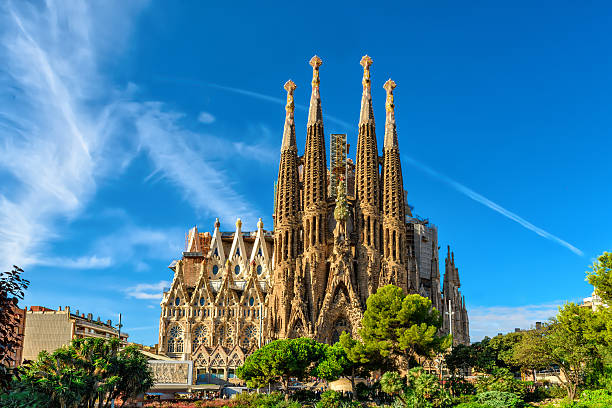
A useful route starts around Plaça del Teatre and the Teatre Principal, follows La Rambla past Plaça Reial and the side street leading to Palau Güell, and finishes at the Liceu. It is a compact urban sequence rather than a cross-city culture day. That distinction matters. A morning at Sagrada Família, a museum appointment, a long lunch and an opera can all fit on paper, yet the resulting evening often has no mental space left for the theatre itself. Place the Liceu inside a wider stay through a three-day Barcelona itinerary that keeps the opera night in proportion, rather than asking one day to carry every major landmark.
Read the Liceu as three theatres occupying one address
The clearest historical framework is not a list of famous singers. It is a sequence of construction, destruction and institutional change. The organisation began in 1837 as an amateur dramatic society in the former Montsió convent. A teaching mission followed, and by the mid-1840s the institution had secured the former Trinitarian convent site on La Rambla. The new theatre opened on 4 April 1847, with opera arriving days later in Donizetti’s Anna Bolena. The first Liceu was privately financed rather than built by a royal court. Wealthy shareholders received enduring rights to seats, while an auxiliary construction company obtained other parts of the complex, including commercial spaces and the private Cercle del Liceu.
This origin explains why the building cannot be separated from Barcelona’s nineteenth-century bourgeois order. Ownership, social display and artistic ambition were built into the institution from the start. The Liceu also competed with the Teatre Principal for programmes, premieres and singers. A short walk between their sites is therefore not incidental urban scenery; it recovers a rivalry between two audiences and two claims to civic authority. The official history of the Gran Teatre del Liceu records this development in unusually useful institutional detail.
The first hall lasted only fourteen years. A fire on 9 April 1861 destroyed the auditorium and stage. Shareholders decided to rebuild, and the theatre reopened in April 1862 with I Puritani. That rapid reconstruction produced the second Liceu, the building remembered through much of the city’s modern cultural history. It was not only an opera venue. Masquerade balls, business arrangements, courtship and conspicuous sociability filled the calendar and the public imagination. The hall’s social hierarchy was visible vertically: leading bourgeois and aristocratic families occupied boxes and stalls; smaller bourgeois households and committed music lovers sat higher; the working class was associated with the fifth tier. The architecture placed social difference in view while gathering all those groups around one stage.
The same symbolism made the Liceu a political target. On 7 November 1893, during Guillaume Tell, the anarchist Santiago Salvador threw two bombs into the stalls; one exploded, killing twenty people and injuring many others. The event should not be reduced to a dramatic anecdote. It belongs to the history of a theatre identified with concentrated wealth in a city marked by labour conflict, political violence and competing visions of modernity. The auditorium was a place of music, but also a diagram of power.
Institutional identity changed again during the twentieth century. The Generalitat nationalised the theatre during the Civil War. A public consortium was formed in 1980, and the old shareholder model gave way to public administration and a broader cultural mission. Then, on 31 January 1994, another fire destroyed the hall and stage. The decision to rebuild on the same site was immediate, while performances continued in other Barcelona venues. The third theatre opened on 7 October 1999 with Turandot, in a building that retained the historical appearance of the auditorium while adding modern stage infrastructure.
This makes authenticity at the Liceu more complex than “old” versus “new.” The La Rambla lobby and the Hall of Mirrors survived the 1994 fire; the auditorium is a faithful reconstruction with technical changes; the institution itself has moved from private shareholder theatre to public cultural project. A visitor who expects a perfectly preserved nineteenth-century monument will miss the point. The stronger reading is continuity through rebuilding: Barcelona repeatedly chose to restore the social and artistic function of the theatre, while changing who owned it, how it worked and whom it claimed to serve. For a parallel case in which Barcelona’s historic appearance is partly the product of later reconstruction and civic storytelling, see the guide to the Gothic Quarter’s rebuilt medieval image.
The horseshoe auditorium is a social instrument
The present Sala Gran is explicitly inspired by Milan’s Teatro alla Scala. It has a horseshoe plan, an orchestra level and five tiers, with a stated capacity of 2,292. Those facts describe more than style. A horseshoe gathers attention toward the stage while keeping substantial parts of the audience visible to one another. In the historical Liceu, that mutual visibility supported an evening in which attendance carried social meaning. The boxes offered separation, display and conversation; the upper levels produced different relationships to prestige, price, sound and sight.
The official description of the Liceu building identifies the auditorium as a post-fire reconstruction with improvements. It also preserves the 1909 conception of the proscenium: a large central arch, Corinthian columns and stacked proscenium boxes. The current velvet front curtain was designed by Antoni Miró and can open vertically or from the centre. Perejaume painted the eight ceiling oculi or medallions; five can retract to reveal part of the lighting equipment. Historical form and contemporary theatre technology are intentionally interlocked.
That combination is worth noticing before the performance, because once the overture begins the eye naturally moves toward the production. From the auditorium, first trace the curve of the tiers rather than looking only at the ceiling. Then compare the intimacy implied by the boxes with the technical scale hidden beyond the proscenium. The stage tower rises far above the visible opening and extends well below stage level. The orchestra pit is a movable platform. Much of the 36,000-square-metre building is devoted to stage and service areas, not to public rooms. The audience experiences an ornate historical image supported by a very large modern production machine.
Do not turn this into a promise of backstage discovery. Standard performance admission does not imply access to the stage house, workshops, private boxes or club rooms. The architectural value lies in understanding what remains invisible. The public hall is only one part of the apparatus required to alternate productions, move scenery and accommodate opera at scale. A couple who knows that before curtain will read the proscenium less as a picture frame and more as the threshold between civic spectacle and industrial theatre-making.
Seat choice can also be approached architecturally. The horseshoe means that location changes the angle through which one reads the stage and auditorium. A central seat foregrounds the production’s full visual composition; a lateral position can make the curve of boxes and the social geometry more palpable, while requiring closer attention to the official seat information for the specific production. Price alone is not a sufficient guide. The useful question is whether this evening is primarily about the staging, the voices, the room, or a balance of all three.
Verify access before building the day around it
The most important operational fact is also the easiest to overlook: a historical theatre is not necessarily available for a daytime tour. As checked on 22 October 2026, the Liceu’s official visitor regulations and frequently asked questions stated that there was currently no guided-tour service at the theatre. That status is volatile. It may change, but the itinerary should not assume a visit merely because older articles, third-party listings or memory suggest one.
Build the core plan so it still works without daytime building access. The La Rambla façade, the theatre-district walk, the institution’s documented history and the pre-performance access to public rooms can carry the sequence. When a guided visit is announced for the date in question, treat it as an enhancement and confirm exactly which spaces are included. “Guided visit” can mean a public-room route, an exhibition or a special format; it should never be translated into backstage access without explicit written confirmation.
The historical archive offers a different form of access. In 2011, the Society of the Gran Teatre del Liceu and the Universitat Autònoma de Barcelona agreed to open the archive to the public. The project covers more than 50,000 documents created from the institution’s foundation through the 1990s, including administrative papers, photographs, performance and dance posters, reconstruction plans and stage-design material. The UAB description of the Historical Archive of the Society of the Gran Teatre del Liceu also provides routes into digitised material.
“Open to the public” must be interpreted correctly. It establishes scholarly access; it does not prove that a visitor can walk in on an opera afternoon, request rare documents and leave an hour later. The depositary is the UAB Humanities Library on the Bellaterra campus, outside central Barcelona. A physical consultation therefore has its own travel and research conditions, which should be checked in advance. It belongs on a separate morning, a previous day or a dedicated study visit, not in the final hours before a performance. For the opera day itself, selected digitised items are usually the more proportionate tool.
Choose no more than three archive objects for the day. A reconstruction plan can clarify which parts of the building were remade. A historical seating or ownership document can illuminate the social hierarchy of the hall. A poster for a masquerade ball or a past production can show that the Liceu’s public identity extended beyond a modern opera season. The objective is not exhaustive research. It is to enter the auditorium with two or three precise questions that the building and performance can answer.
The Cercle del Liceu requires even stricter language. It is a private club historically housed within the complex, and references to its collections should not be treated as proof of visitor access. A confirmed invitation, appointment or separately published visit may justify including it. Without that confirmation, regard its rooms and collections as unavailable. Opera admission, a Liceu public event and club access are distinct things. That boundary prevents the day from being designed around a privilege that has not actually been secured.
Build the sequence backward from curtain time
The following structure uses relative time because performance start times, running lengths and intervals vary. Let T mean the published curtain time for the specific date. Confirm that time on the official performance page, not only on a calendar entry or restaurant message.
T minus six to five hours: settle the evidence first
Begin in a quiet setting with the short archive selection, the synopsis and the building history. For most couples, forty-five minutes is enough. Read the opera’s dramatic premise, identify the production team’s stated concept, and review the two or three Liceu documents chosen in advance. This is the moment for concentrated interpretation. Do not try to complete a composer biography, a full political history of Barcelona and a scene-by-scene musical analysis.
If a physical archive consultation or a confirmed special visit is central to the trip, place it earlier and end it at least five hours before curtain. That margin absorbs travel from Bellaterra or another appointment site, a proper meal, a change of clothing if desired and an unhurried return to Ciutat Vella. The afternoon should narrow toward the theatre rather than expand into additional obligations.
T minus five to four hours: make the substantial meal the stable anchor
Opera timings do not always align with Barcelona’s usual dinner rhythm. The safest solution is often a substantial late lunch, followed by a light pre-performance pause. This avoids forcing a lengthy meal into an early-evening slot that the kitchen may not serve comfortably. It also reduces the risk that a tasting sequence, delayed course or long discussion with the sommelier turns curtain time into a deadline.
When dinner before the performance is essential, choose a place that explicitly accepts the required early seating and is within a simple final approach to the Liceu. Treat the meal as a separate reservation with a declared departure time, not as a “dinner and show” package. For broader choices and neighbourhood tradeoffs, consult Barcelona’s fine-dining planning guide, then judge each option by the actual performance date and kitchen schedule.
T minus four to three hours: walk the theatrical Rambla
Start near Plaça del Teatre and the Teatre Principal. The point is not to tour every surviving venue. Use the location to establish that the Liceu entered an existing theatrical city and competed for prestige rather than appearing as an isolated monument. Walk north along La Rambla. At Plaça Reial, discuss the nineteenth-century city’s public rooms: cafés, arcades, promenades, clubs and theatres were different settings in which status became visible. Continue toward the Liceu, noting how the opera house is embedded in a continuous street wall rather than standing alone in a ceremonial square.
This route works because its evidence is spatial. The Teatre Principal gives the rivalry an address. La Rambla supplies the mixed crowd. The Liceu’s restrained street presence makes the scale of the interior less predictable. The transition from public promenade to lobby, staircase and auditorium becomes part of the evening’s drama. A guide should resist filling every metre with dates. Three anchors are enough: private financing and seat ownership, the two fires and reconstructions, and the hall as a visible social hierarchy.
T minus three to two hours: take one optional branch, or none
The best branch is the one that strengthens the Liceu story without creating another dominant subject. Palau Güell can work when the couple wants to compare the opera house’s public bourgeois display with a private urban palace commissioned by industrialist Eusebi Güell. It is close to La Rambla, but it is still a timed interior and a visually demanding one. Use it only with a confirmed entry that ends comfortably before the final theatre approach. The supporting guide on choosing Palau Güell after Barcelona’s major Gaudí sites helps decide whether that interior adds real value or simply repeats a theme already covered elsewhere in the stay.
The lighter branch is entirely outdoors: continue the Rambla walk, pause for the façade and entrance sequence, then sit somewhere calm to review the programme. Another alternative is no branch at all. For an opera-focused couple, unused time can be an asset. It allows conversation, a return to the hotel if geographically sensible, or a slow transition into evening clothes without turning the day into a logistical performance.
T minus two hours to ninety minutes: close the cultural programme
At this point, stop adding content. Finish any light meal, collect required belongings and make the final movement toward the theatre. If the hotel is in the Eixample, a planned transfer may be useful for clothing, weather or mobility; if the couple is already near the Liceu, walking is usually the more predictable transition. A private car has value when it resolves a real cross-city movement, but not as a vehicle for circling a dense central district in which the final metres may still be simplest on foot.
Bulky belongings are a hidden cost. The Liceu requires items that obstruct passage, including large bags, umbrellas, helmets and suitcases, to be left in the cloakroom. An opera day should not double as a luggage-transfer day unless storage and collection are already settled. Even a modest cloakroom queue can consume the margin intended for reading the public rooms.
T minus sixty to forty-five minutes: enter the Sala Gran building
The official guidance says that the Sala Gran opens one hour before the performance and recommends arriving at least thirty minutes before curtain. For this particular sequence, thirty minutes is a minimum rather than the ideal. Entering forty-five to sixty minutes early gives time for entry, cloakroom needs, wayfinding and the architectural reading that justifies the day. It also removes the most serious failure point: once a performance has begun, auditorium entry is not permitted until the first interval, if there is one.
When archive access, a special visit, curtain time and an important meal reservation all have to support one another, bespoke coordination becomes materially useful. The service is not the presence of more appointments; it is the removal of conflicts between them, with each confirmation tied to a realistic movement and stopping time. Inquire now when the opera night is a central celebration and the access sequence needs to be built around one fixed performance.
What the map does not show
On a map, the lower Rambla route is short. In practice, the hidden costs include crowds, crossings, clothing, weather, cloakroom handling, a delayed table and the mental effort of changing from historical analysis to social evening. These costs are not arguments for doing less by default. They are reasons to place the demanding material early and the easy, reversible material late.
Three transitions deserve explicit decisions. First, the archive: digital research in the city is low-friction; physical consultation in Bellaterra is a separate excursion. Second, the meal: a late lunch has a reliable end; a multi-course dinner before curtain may not. Third, the final approach: the Liceu metro station on Line 3 exits directly by the theatre, while a car journey introduces traffic and drop-off uncertainty. The best mode depends on the starting point, mobility and dress, not on a general preference for private transport.
Post-performance plans also need margin. Do not tie an important table to the advertised running time with a narrow connection. Applause, cloakroom collection, crowded exits and conversation can all extend the departure. A prudent editorial rule is to allow at least forty-five minutes after the expected finish before a reservation that cannot tolerate lateness, and more when the venue is outside the immediate Rambla area. If that margin produces an uncomfortably late meal, make lunch the celebratory culinary event and keep the post-opera plan light.
For couples staying farther north in the Eixample, dinner geography should follow the end of the night, not merely the beginning. A post-performance booking near the hotel can make the final transfer more coherent; a pre-performance meal near the Liceu can make arrival safer. Trying to achieve both with two major reservations turns the performance into the narrow middle of a hospitality schedule. The opera should remain the event around which the evening breathes.
Choose one branch, then know when the day is complete
An optional branch is useful only when it can be abandoned without penalty. It must have a clear latest start, a clear exit and no dependency on a chain of later reservations. That is why an exterior theatre-district walk is stronger than a cross-city museum, and why a nearby interior is acceptable only when its admission is confirmed and its finish time is controlled.
Branch one: the compact architecture layer
Add Palau Güell or another nearby interior only when the couple has not already spent the trip inside several visually dense Modernisme monuments. The interpretive link is patronage and social display, not “another masterpiece.” End the visit no later than three hours before curtain. Afterward, return directly to the Rambla area for a light pause. Do not add shopping, a market circuit and a cocktail stop simply because they are nearby.
Branch two: the theatre-history layer
Keep the route outdoors and spend more time on the Teatre Principal–Liceu relationship, the changing use of La Rambla and the distinction between the private club, public theatre and street. This branch is resilient because it has no admission dependency. It is also well suited to travellers who want cultural depth without another interior. In poor weather, compress it into a short sequence of two or three stops rather than moving the entire day elsewhere.
Branch three: the opera-study layer
Skip the extra site and use the time to prepare for the specific production. Read the director’s note, identify recurring musical motifs at a level appropriate to the listener, and establish where the work sits in the composer’s career. Then stop studying. The aim is not to arrive with every meaning predetermined. Good preparation creates recognition and curiosity; excessive preparation can make the live performance feel like a test.
When to stop adding to the day
- No new timed interior inside three hours of curtain. A delayed entry or slow exit should not endanger the performance.
- No cross-city cultural transfer inside four hours of curtain. The final part of the day should contract toward Ciutat Vella.
- Be within a simple fifteen-minute final approach by ninety minutes before curtain. This is an editorial planning margin, not an official theatre rule.
- Enter forty-five to sixty minutes early when architecture is part of the purpose. The official minimum recommendation is thirty minutes.
- If the optional branch starts late, remove it completely. Do not shorten every subsequent element to preserve a nonessential stop.
- If access is unconfirmed, treat it as unavailable. This applies to guided visits, archive consultation, the Cercle del Liceu and any private room.
These rules protect the sequence from the most common planning error: allowing the flexible part of the day to consume the fixed event. They also preserve enough attention for the building. Reaching the Liceu on time but mentally saturated is a partial failure; the goal is to arrive with curiosity still intact.
Use the hour before curtain as an architectural visit
Once inside, the public route can be read in layers. Begin with the La Rambla lobby. It survived the 1994 fire, so it carries material continuity that the reconstructed auditorium does not. Its eclectic Renaissance-derived language, often described in the nineteenth century as “Florentine,” creates a ceremonial threshold without revealing the full scale of the theatre. The marble staircase then directs the audience upward toward the Hall of Mirrors.
The Hall of Mirrors, formerly known as El Vergel, also survived the fire and was restored. It remains a gathering room rather than a corridor to be crossed quickly. Read the texts concerning art and music around the upper walls, but also watch how the room functions before a performance: people pause, meet, photograph and orient themselves. The historical Liceu was a place to see and be seen, and that social function survives even though the institution, dress expectations and audience are different.
There is no mandatory formal dress code for ordinary performances, according to the theatre’s current guidance; gala occasions may carry a formal suggestion. This matters because the social meaning of the room should not be confused with a rule requiring evening dress. A couple may choose formality because it suits a celebration, but the decision is personal rather than an admission condition. The useful standard is comfort, respect for the occasion and clothing that works with the day’s movement.
Inside the Sala Gran, first look back as well as forward. The tiers show how the room encloses its audience. The proscenium boxes, larger and more ornate, concentrate ceremonial attention near the stage. The Corinthian columns and central arch refer to the historical design, while the ceiling work by Perejaume and the movable technical elements belong to the rebuilt theatre. The room is convincing because it does not present reconstruction as a neutral copy; it combines remembrance with visible contemporary authorship.
Then examine the front curtain. Antoni Miró’s velvet design can open in two ways, a small fact that focuses attention on the transition from auditorium to stage. Before it moves, the curtain is the last architectural surface. When it rises or parts, the production replaces the theatre’s historical image with its own world. That moment is the proper culmination of the day’s sequence.
Avoid searching for the stage machinery from public areas or implying that hidden spaces will be revealed. The official building description makes the backstage scale clear: a stage tower rises high above the visible stage and extends below it; platforms and adjoining spaces support rapid changes and alternating productions. Knowing this is enough. The audience’s inability to see the full mechanism is part of theatre architecture, which turns extensive labour, engineering and rehearsal into a controlled visual event.
Operational details can also improve concentration. Operas are presented with surtitles in Catalan, Spanish and English, and most auditorium areas have individual digital screens for language selection. Confirm the arrangement for the chosen seat and production, especially when following the text is important. During the performance, photography, filming and audio recording are prohibited; devices should be silent without vibration. Before the lights go down and during intervals, photographs are permitted in historic public spaces such as the Hall of Mirrors under the current rules.
Let the specific opera change what the history means
A Liceu day should not be identical for every work. Bellini, Mozart, Puccini, Wagner and Janáček activate different parts of the institution’s history. Italian bel canto recalls the theatre’s early repertory and the arrival of Anna Bolena in 1847. Wagner connects to Barcelona’s intense Wagnerian culture and to a hall whose scale suited large music dramas. Puccini can bring the 1999 reopening with Turandot into view. A new production may foreground the modern technical theatre more than the reconstructed nineteenth-century image.
As of 22 October 2026, the official 2026/27 season page lists, among other runs, Bellini’s I Capuleti e i Montecchi from 30 October to 11 November, Mozart’s La clemenza di Tito from 25 November to 1 December, and Puccini’s La bohème from 30 December to 19 January. These date ranges are operational information and should be rechecked for the chosen performance, along with the exact start time, cast, running time and interval structure.
The interpretation should remain selective. For I Capuleti e i Montecchi, the day might emphasise the Liceu’s long relationship with Italian opera and star singers. For La clemenza di Tito, the focus could shift toward public ceremony, authority and the staging of political virtue. For La bohème, the conversation might contrast the work’s image of precarious artistic life with the bourgeois history of the auditorium in which it is performed. These are prompts, not claims about a production’s directorial concept unless the production materials support them.
Three workable versions of the day
The full study sequence
Use this when the Liceu is one of the trip’s principal cultural commitments. On a previous day or early morning, complete any physical archive consultation. On the opera day, review selected documents, take a substantial late lunch, walk from Plaça del Teatre to the Liceu, include one nearby branch only if it ends three hours before curtain, then enter the theatre one hour early. This version has the greatest interpretive depth, but it depends on disciplined limits. The archive and branch cannot both become major visits.
The city-and-performance sequence
This is the strongest fit for many couples. Begin four to five hours before curtain with the theatre-district walk, use digitised archive material in a quiet pause, have a light early meal or aperitif near the final route, and enter forty-five to sixty minutes before the performance. It requires no exceptional access and still turns the building’s history into something visible. It is also easy to place inside a broader Barcelona stay.
The shorter evening sequence
When the day already contains another major commitment, remove the archive session and optional interior. Meet near Plaça del Teatre about two and a half hours before curtain, walk the Rambla with three historical anchors, pause briefly, and enter at opening time. This is not a diminished version if the interpretation is precise. A concise route that leaves attention for the opera is better than an ambitious schedule that reaches the auditorium exhausted.
The Palau de la Música Catalana can be a valuable alternative when the main interest is Modernisme architecture, a daytime guided visit or a concert in a different acoustic and civic setting. It should not be added casually to the same opera day. Use the Palau de la Música choice guide to decide whether it belongs on another day rather than turning two major performance buildings into a rushed comparison.
The final measure of the plan is what you notice when the curtain moves
A successful Liceu day does not depend on rare access. It depends on sequence. The old theatre rivalry establishes La Rambla as a performance corridor. The shareholder origins explain why seats, boxes and social position mattered. The fires and reconstructions make the present room legible as an act of civic continuity rather than untouched survival. The archive contributes selected evidence. The pre-performance hour turns public rooms into the last visit of the day. Then the opera tests all that context against a live production.
For a celebration couple, the premium value is coordination with restraint: confirming what can actually be entered, placing the meal where it cannot compete with curtain, keeping the final route geographically compact, and knowing when to remove an optional stop. A private guide is most useful when that interpretation and timing are integrated, not when more content is added. The broader options for private Barcelona tours tailored around a fixed cultural evening can support that structure while leaving the performance, rather than the logistics, as the memory that closes the day.
If you’re interested in any private tours of Barcelona, please reach out to us.








 So if you are looking for the absolute best in Barcelona & surroundings with authentic local fully-licensed native guides whose English you can actually understand and with an exclusive and amazingly fun itinerary













