Barcelona’s Sants Transfer Day: What to Do When the Train Time Sits in the Middle of the Afternoon

Updated
For a Barcelona train out of Sants in the middle of the afternoon, the best plan is not a mini full day; it is a station-led half day: settle luggage, keep a generous Sants station buffer, use the nearby Eixample edge for one polished meal or one booked interior, then stop moving before the clock turns against you. This works because Sants sits close enough to the Eixample grid for a civilized short route, but far enough from the Gothic Quarter, Barceloneta and Park Güell that each extra crossing can turn into transfer anxiety. The clearest exception is simple: when luggage is awkward, mobility is mixed, or the train time is tight, the best plan is lunch plus a direct station transfer. The point is to let Sants, not sightseeing appetite, set the day.
A useful local cue appears before any attraction is named: the station sits on Barcelona’s western working edge, where Carrer de Tarragona, Plaça dels Països Catalans and Avinguda de Josep Tarradellas feel practical rather than postcard-like. That is good news on a transfer day. You do not need the most atmospheric base; you need a route that can be ended cleanly. The Eixample short route gives you Barcelona texture, shade breaks, reliable street geometry and easier vehicle movement without forcing a last-minute return from the old lanes or the beach.
This is a different problem from a late-train departure. With a true evening train, one last Gaudí interior or a longer dinner arc may have room to breathe; for that scenario, see Barcelona before a late train. A middle-of-the-afternoon train is less forgiving because it interrupts the lunch hour, the hotel-checkout rhythm and the city’s most ambitious sightseeing window at the same time.
What to do in Barcelona before an afternoon train from Sants
The most reliable answer is to choose one controlled Barcelona experience near the Eixample-to-Sants axis, then protect the station approach as if it were part of the tour. That controlled experience can be a proper lunch, a concise Modernisme walk, or one interior with tickets already fixed. It should not be a beach detour, a hilltop errand, a second Gaudí stop, or a wandering old-town farewell.
- Bags already handled, travelers still fresh: choose one Eixample-based experience, then return to Sants without adding another district. This is the smoothest version for couples and small groups who want the day to feel finished rather than merely filled.
- First-time visitors who have not seen Sagrada Família: consider one interior only if timed entry, guide pacing and the return route all support the Sants station buffer. The ticket time must serve the train, not the other way around.
- Families, older parents or mixed-mobility groups: make lunch the main event and keep the movement short. A relaxed meal followed by a direct station transfer often feels more premium than forcing one famous sight and arriving tense.
- Food-and-wine travelers with a serious lunch in mind: let the restaurant define the sightseeing limit. A long meal and a train transfer can work; a long meal, a Gaudí interior and Sants rarely remain elegant in the same short window.
The decision rule is blunt because the time placement is awkward. If the train leaves late enough to make a normal afternoon possible, you are not really solving this article’s problem. If the train sits in the middle of the afternoon, the last two hours before departure must belong to luggage, lunch digestion, station approach and calm boarding. Treat those as real travel time, not administrative scraps.
The mistake is treating the middle of the afternoon as empty time
A midday-to-afternoon Sants departure fails when travelers pretend the day has two clean halves. It does not. Hotel checkout compresses the morning, lunch pulls the city into a slower rhythm, and the train removes the part of the day when Barcelona sightseeing normally becomes expansive. The result is a strange planning illusion: there appears to be time for one more famous thing, but the usable, comfortable, low-risk time is much smaller.
Barcelona adds friction in ways that do not always show on a map. The Eixample grid looks simple, but block-scale walking is cumulative, especially with sun, crossings and small delays at every corner. The Gothic Quarter looks close to many hotels, yet its narrow lanes and edge-of-district vehicle access can make the exit feel less predictable. Barceloneta gives a seductive sense of sea air, but the beach-to-station return changes the mood from farewell to commute. Montjuïc has views and museums, but its slopes and segmented access are a poor match for a clock you cannot negotiate.
The counterintuitive correction is this: the Gothic Quarter is often the overvalued base for a Sants transfer day. It may be the emotional image of Barcelona, but it is not the easiest place to end a polished morning with bags, lunch timing and a rail departure all in play. If your route has to be narrowed, cut old-town wandering before you cut the station buffer. The old city rewards looseness; this day needs clean edges.
The body notices that difference before the itinerary does. A first-time visitor can enjoy a dense morning of lanes, façades and markets, then suddenly discover that the last transfer feels longer because everyone is warm, carrying a jacket, managing phone tickets and thinking about platforms. Barcelona does not need mountains to tire you out; it can do it with long blocks, bright light, crowded crossings and a final taxi that feels just a little later than it should.
The trip mood changes too. A good Sants transfer day leaves Barcelona feeling composed: one last meal, one clear story from a guide, one final architectural impression, no public repacking, no whispered clock-checking. A bad one makes the city feel shorter than it was. The final memory becomes a rushed exit from a district that deserved more space.
Where luggage shapes the day
Luggage decides the shape of the day before attractions do. The question is not only where the bags physically sit; it is whether the bags create a second errand, a second queue, or a second decision point between lunch and the train. On a Sants transfer day, each extra bag decision steals more calm than travelers expect.
- Hotel-held luggage works when the hotel is convenient to Sants or the Eixample route. This can be excellent if your morning begins at the hotel, continues into a nearby lunch or short walk, and returns to the hotel only once before the station. It becomes weaker if the hotel sits deep in the Gothic Quarter or near the waterfront, because the retrieval leg becomes a separate transfer.
- Driver-held luggage works when the vehicle is part of the day’s logic. It can make the morning feel seamless because there is no public luggage moment and no return-to-hotel loop. It is most valuable for families, celebration travelers, guests with shopping, or anyone who wants a hosted handoff from hotel to guide to Sants.
- Station-first luggage works only when it reduces decisions rather than adding them. If dropping bags at or near Sants means the rest of the day must orbit the station, accept that and choose a shorter Eixample or Plaça d’Espanya arc. Do not turn it into a storage strategy followed by a cross-city sprint.
The common mistake is using luggage storage as permission to overplan. Once bags are “handled,” travelers feel free to chase the missing sight. But luggage is only one layer of the transfer. You still have to manage ticket timing, traffic, bathroom stops, snacks, the group’s walking speed, and the mental switch from city mode to travel mode. Handling bags well buys calm; it does not create a full day.
For comfort-first visitors, the cleanest luggage plan is usually the one with the fewest reversals. Leave the hotel once, move through one nearby route, eat or tour, then go to Sants. If you must retrieve bags, retrieve them before the final city experience whenever possible, not after it. The worst pattern is a beautiful lunch followed by a hurried return to a distant hotel, followed by a second transfer to the station. That sequence makes even an excellent meal feel like a delay.
There is also a privacy consequence. Dragging bags through a hotel lobby, café doorway or crowded pavement at the end of a premium stay changes the feel of the trip. It makes the final hours look improvised. A discreet handoff, whether through hotel coordination or a planned vehicle, keeps the day from becoming a public logistics exercise.
The Eixample short route is the safest polished answer
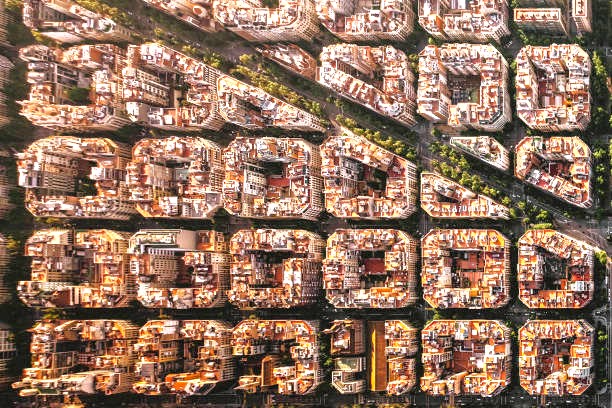
The Eixample short route wins because it gives Barcelona substance without making the station feel far away. It is not a generic “stay central” recommendation; it is a transfer-day route that uses the city’s geometry. The grid, broad crossings and clearer vehicle access make it easier to stop the day at the right moment than in the Gothic Quarter or on the beach.
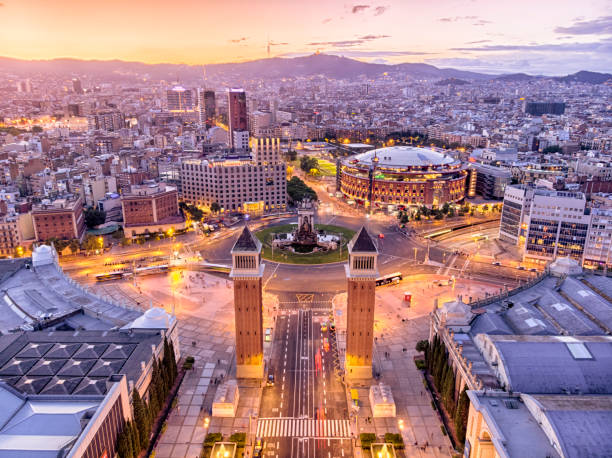
The best version keeps to the Sants-facing side of Eixample rather than drifting all the way into a full Passeig de Gràcia shopping-and-architecture program. Carrer de Tarragona and Plaça d’Espanya can function as the practical hinge, while the lower and central Eixample blocks give you cafés, restaurants, Modernisme façades and comfortable walking without requiring a deep old-town exit. If your hotel is closer to Rambla de Catalunya or Passeig de Gràcia, the route can still work, but it should be edited hard: one walk, one lunch, or one interior, not all three.
This is where a guide can make the day feel intentional rather than leftover. A short, well-led Eixample segment can explain why Barcelona’s grid matters, how Modernisme moved through apartment blocks rather than only monuments, and why a façade route may be more satisfying than another timed entry when the train is controlling the afternoon. For travelers who want a hosted but compact plan, Barcelona half-day private tours can be shaped around a narrower transfer window instead of pretending the day is open-ended.
The Eixample route also protects the group’s energy. Its pavements, corners and café rhythm make it easier to pause without losing the plot. In the old city, a pause can become a detour; near the waterfront, a pause can become a long return; on Montjuïc, a pause can require another vehicle move. In Eixample, the day can contract gracefully. That is the whole point.
Skip the temptation to make Passeig de Gràcia the automatic answer just because the buildings are famous. If you are already near it, use it selectively. If you are not, do not drag the group north only to come back west. A transfer day is not the time to prove you covered the greatest hits. It is the time to choose the route that still feels good when someone asks, “How long until Sants?”
When one interior is enough
One interior is enough when it has a fixed entry, a clear endpoint and a clean return to Sants. It is too much when it forces you to monitor the clock throughout the visit. This is the distinction that separates a polished final Barcelona experience from a famous stop squeezed into the wrong day.
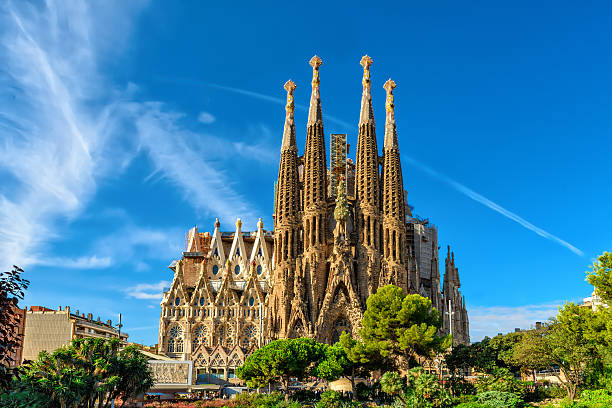
Sagrada Família is the strongest candidate only under strict conditions: you have not already visited, the entry time works without compressing lunch and the return to Sants is protected before you commit. Use Sagrada Família official tickets (https://sagradafamilia.org/en/tickets-individuals) as the governing fact, not as a detail to solve later. The basilica is not beside Sants; it sits on the other side of the Eixample rhythm, and the approach around Carrer de Mallorca can feel busy when every minute has a consequence.
If Sagrada Família is already done, or if the ticket window would make the afternoon nervous, choose a lighter Eixample interior or no interior at all. Casa Batlló and La Pedrera can make sense when the route is already centered around Passeig de Gràcia, but they should not be stacked. A transfer day with two Gaudí interiors usually creates exactly the blur discerning travelers are trying to avoid. For a deeper decision on the one-interior question, use Barcelona with one Gaudí interior before assigning the final morning.
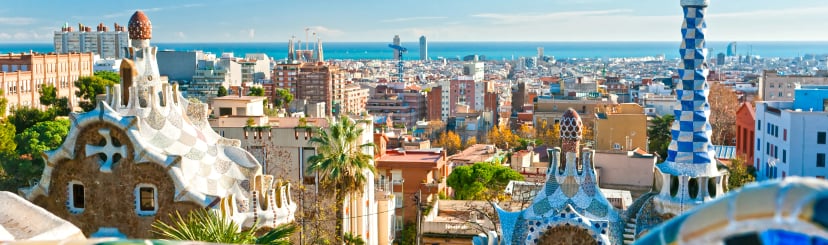
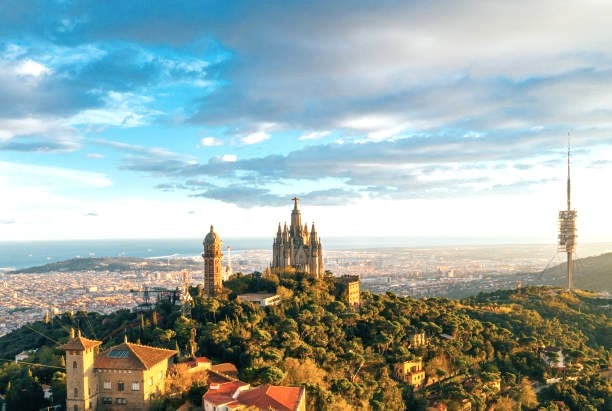
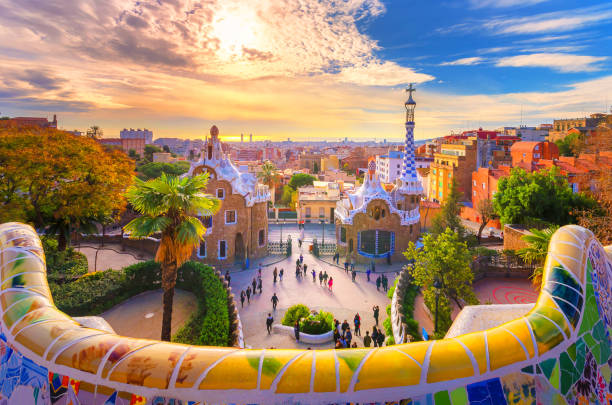
Park Güell is the famous thing to cut first on this specific day. Its official entry planning matters, and Park Güell official tickets (https://parkguell.barcelona/en/buy-tickets) should be respected, but the hill, access pattern and distance from Sants make it a poor fit for most middle-of-the-afternoon train windows. A chauffeur can make the hill easier; it cannot make the location stop being a detour. Save it for a morning when the park sets the clock rather than competes with the station.
The best interior on this day is not always the most important attraction in Barcelona. It is the one you can enjoy without dividing attention. If the group will spend the whole visit checking phones, the interior has already lost. Choose a façade walk and lunch instead. A good guide can make the city legible from outside when the timing is tight, and that restraint often produces a more elegant memory than a rushed ticket scan.
How to set the Sants station buffer
The Sants station buffer should be built backward from the train, then defended against every attractive extra. Do not start with “what can we still see?” Start with “when do we want to be inside the station with no unresolved decisions?” From there, work backward through the final transfer, luggage handoff, lunch or touring endpoint, and the group’s slowest realistic pace.
- The city-exit layer: decide where the final experience ends and how cleanly a vehicle or short walk can connect from there to Sants. A restaurant on the Sants-facing side of Eixample is stronger than a prettier table that requires a cross-city return.
- The luggage layer: know whether bags are with the hotel, the driver or the group before the last city stop begins. The final hour should not include a fresh luggage question.
- The station-entry layer: allow time for getting into Sants, orienting the group, managing bags, checking the departure information and moving without hurry. Long-distance rail travel is not the same as stepping onto the metro at the last second.
- The mood layer: preserve a small amount of unassigned time so the end of the day feels calm. This is especially important for families, older parents, travelers with mobility limits, and anyone connecting onward after several days of touring.
The practical rule is to cut from sightseeing, not from the station. If the route is running late, do not shave the Sants station buffer. Cut coffee, cut the last shop, cut the second façade, cut the interior. The buffer is what keeps the day from turning into a story about stress.
There are two signs the buffer is too thin. First, the plan depends on every service, street crossing and group member behaving perfectly. Second, the last city stop has no graceful exit. If a restaurant runs long, if a guide’s explanation becomes interesting, if a child needs a restroom, or if someone wants to buy water, the plan should still hold. If it does not, the plan is not premium; it is fragile.
This is also why the station should control the article before any attraction is named. Sants is not a decorative endpoint. It is the hard appointment. Once you accept that, the rest of the day becomes easier to edit. You stop asking whether a sight is “worth it” in the abstract and start asking whether it improves the final hours without weakening the departure.
Lunch can be the whole Barcelona answer
Lunch is often the smartest main event before an afternoon train from Sants. It suits Barcelona’s rhythm, gives the group a seated experience, and avoids the false drama of one more monument. For food-and-wine travelers, it can also be the most memorable ending: a good table, a short guided context walk, and a direct station transfer.
The key is matching the meal to the train window. A compact, well-chosen lunch near Eixample or the Sants-facing edge can make the day feel complete. A long tasting menu can also work, but only when the meal is the whole plan and the transfer is designed around it. Before anchoring a transfer day around a serious restaurant, look at the restaurant’s own information, such as an official menu (https://www.disfrutarbarcelona.com/en/menu), and confirm the current format directly when booking. Do not assume a celebrated meal can be squeezed into leftover time.
For families or multigenerational groups, lunch is often the humane choice. It removes the need to keep everyone interested in a final museum or interior and reduces the chance that the day ends with heat, hunger or walking resistance. The final impression becomes hospitality rather than extraction. That matters when Barcelona is one city in a longer Spain or Europe itinerary and everyone still has another destination ahead.
There is a spend judgment here too. A more expensive lunch does not automatically improve the transfer day if it makes the station approach tighter. The right meal is the one that leaves enough calm for Sants. Sometimes that is a destination restaurant; sometimes it is a quieter Eixample table with better timing. Paying for prestige while cutting the buffer is a bad trade.
When lunch is the plan, resist adding a major sight afterward. A short walk before lunch is usually better than a rushed walk after lunch. After the meal, the day should narrow toward the station. If the group still wants one final Barcelona note, make it coffee, a façade, or a guide’s compact story on the way to the car. Do not reopen the itinerary.
Where private logistics earn their cost
Private logistics earn their cost when they remove reversals, protect the Sants station buffer and let the last Barcelona hours feel curated rather than improvised. They do not earn their cost by turning a tight transfer window into permission to cross town. A chauffeur does not justify crossing town when the train buffer is tight.
The useful upgrade is control. A guide can pace a short Eixample route so it has a beginning, middle and end. A chauffeured vehicle can hold luggage, reduce street-level friction and make the hotel-to-lunch-to-Sants sequence feel calm. A planner can reject the attractive but risky addition before the group falls in love with it. For guests who want the vehicle to be part of the solution, not a decorative extra, a chauffeured Barcelona private tour is strongest when the route stays disciplined.
The upgrade is especially worthwhile for celebration travelers, families with children, older parents, private groups and travelers connecting to another city with important evening plans. In those cases, the value is not only comfort; it is emotional continuity. Nobody has to become the person who watches the bags, negotiates the taxi, checks the time, and tells everyone to leave. The private structure absorbs those frictions before they become the mood of the day.
For a bespoke transfer window, the strongest brief is not “show us as much as possible before the train.” It is “make the last hours in Barcelona feel finished, with the station protected.” That is where tailor-made planning is a better fit than a standard city tour. Orange Donut Tours can shape a private guide, vehicle, lunch stop and final handoff around the real constraint rather than stretching a normal itinerary until it almost breaks. For a short-stay optimization built around your train time, luggage and group pace, tailor-made Barcelona private touring is the natural next step. Inquire now
Premium spend does not help when the plan is geographically wrong. If the group wants Park Güell, Barceloneta, the Gothic Quarter and Sants in a compressed transfer window, paying more may make the car nicer but the day will still feel overextended. Spend where it changes the trip: hosted pacing, luggage control, cleaner pickups, better lunch geography and a calmer arrival at the station.
What to cut first when the plan starts to sprawl
Cut the farthest, least controllable or most body-taxing element first. On this day, the order of cuts matters more than the order of attractions. If the route starts to sprawl, remove Park Güell, the beach, Montjuïc, a second interior, old-town shopping and any stop that cannot be ended cleanly. Keep the meal, the luggage plan and the Sants station buffer.
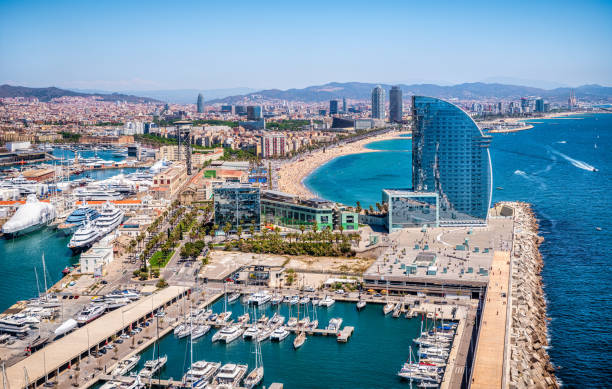
Barceloneta is the most tempting wrong add-on for many first-time visitors. It sounds light: sea air, a short stroll, maybe one drink. In practice, it moves the group away from the station axis and invites a slower mood just when the day needs to narrow. If you are staying near the waterfront, it may be logical. If you are not, do not make the beach carry the emotional burden of the farewell.
Montjuïc has the same problem in a different form. The views, museums and gardens are rewarding when they own a proper window. On a transfer day, the hill can turn into a sequence of short rides, slopes and decisions. Unless your lunch or hotel geography already supports it, Montjuïc is better saved for a day when it can be enjoyed without the train hovering over it.
The second interior is the cut that protects museum pacing. One interior can give the day a clear cultural center. Two interiors create comparisons, queues, audio fatigue and a late exit. The traveler consequence is not only tired feet; it is diminished attention. By the time the second ticket is scanned, the group is often thinking about bags and boarding rather than art or architecture.
The old-town souvenir errand is another quiet trap. A single shop becomes two, a lane becomes a wrong turn, and the vehicle pickup becomes less straightforward. If shopping matters, plan a specific Eixample or design-focused stop earlier in the stay. Do not make the final Sants window absorb open-ended browsing.
A calm sample arc without pretending it is a full day
A good Sants transfer day can be simple without feeling thin. The arc below is not a train-schedule template; it is the sequence logic that keeps the day from becoming a half-day itinerary wearing full-day expectations.
- Start with checkout and luggage clarity. Decide whether bags remain at the hotel, move with a driver, or are handled near Sants before anyone begins sightseeing.
- Use a short Eixample route as the cultural bridge. Let the guide frame the city through the grid, Modernisme façades and the relationship between residential Barcelona and its famous monuments.
- Choose either lunch or one interior as the anchor. Do not let both compete for the same emotional weight unless the train window is genuinely generous.
- Begin narrowing toward Sants before the group feels rushed. The best transfer days end the city portion while everyone still has patience, not after the first anxious clock check.
- Arrive at the station with enough calm to orient, refresh and board without drama. The station moment is part of the travel experience, not an afterthought.
This arc leaves room for personalization. Couples may prefer a quieter meal and a short architecture walk. Families may need a seated lunch and a no-museum promise. Food travelers may build around one serious reservation and skip the interior entirely. First-time visitors who missed Sagrada Família may accept a tighter cultural focus with no extra neighborhood. The structure stays the same because the constraint stays the same: the train sits in the middle of the afternoon, so the day must narrow earlier than instinct suggests.
For travelers connecting Barcelona to Madrid, Girona, France or another European city, this is often the difference between a polished transition and a day that feels lost to logistics. The right plan does not make Sants disappear. It makes Sants feel accounted for, so the last Barcelona memory can be lunch, architecture or a clear story rather than a scramble.
FAQ
What can I do in Barcelona before an afternoon train from Sants?
Choose one controlled experience near the Eixample-to-Sants axis: a good lunch, a concise Eixample walk, or one booked interior. Avoid beach detours, hilltop sights and old-town wandering unless your hotel and luggage plan make the return to Sants unusually simple.
Is Sagrada Família too risky before a middle-of-the-afternoon train from Sants?
Sagrada Família can work only if the official ticket time, guide pacing, luggage plan and return route all protect the Sants station buffer. If any of those pieces feels tight, skip it on transfer day and choose lunch or a shorter Eixample route instead.
Should I leave luggage at the hotel or take it to Sants first?
Use the option that creates the fewest reversals. Hotel-held luggage works when the hotel is convenient to the route and station. Driver-held luggage is often smoother for private touring. Taking luggage to Sants first works only if the rest of the plan stays close to the station axis.
How much buffer should I leave for Sants station?
Set the buffer backward from the train and include the final transfer, luggage handling, station orientation and group pace. Do not reduce that buffer to fit one more attraction. If the plan depends on perfect timing, it is too tight for a premium transfer day.
Is Eixample better than the Gothic Quarter before a Sants train?
For most afternoon Sants departures, Eixample is the better final route because it offers clearer street geometry, easier exits and a cleaner connection back to the station. The Gothic Quarter is more atmospheric, but its lanes and pickup edges can make the ending less predictable.
Is a chauffeur worth it for a Barcelona Sants transfer day?
A chauffeur is worth it when it handles luggage, reduces reversals and protects the station buffer. It is not worth it as an excuse to cross town for a risky extra sight. The vehicle should make a disciplined route calmer, not make an overpacked route look acceptable.
When is lunch plus a direct station transfer the best plan?
Lunch plus a direct station transfer is best when luggage is awkward, the group includes children or older parents, the train window is tight, or a serious meal is the day’s main pleasure. In those cases, forcing one more sight usually weakens the final impression.
If you’re interested in any private tours of Barcelona, please reach out to us.








 So if you are looking for the absolute best in Barcelona & surroundings with authentic local fully-licensed native guides whose English you can actually understand and with an exclusive and amazingly fun itinerary













