Barcelona for a Height-Sensitive Traveler: Gaudí Interiors, Ground-Level Views and Shared Rejoining Points

Updated
The myth: Barcelona’s height problem begins only at the top
A height-sensitive traveler does not necessarily struggle with Barcelona’s architecture because the city has towers. The harder truth is that discomfort can begin much earlier: on a steep approach whose horizon falls away behind you, beside a glazed edge, on an uneven path that makes balance feel uncertain, in a one-way vertical route, or in a crowd where the nearest calm exit is not obvious. A traveler may admire a skyline from a broad pavement yet dislike a tower stair. Another may tolerate an enclosed elevator but not an open terrace. Someone who is comfortable with height may still find Park Güell’s gradients and irregular surfaces tiring or destabilizing.
That distinction changes the plan. The useful question is not, “Can this person do heights?” It is, “Which combination of elevation, exposure, enclosure, incline, underfoot conditions and loss of control creates friction?” This is route planning, not diagnosis or medical guidance. The traveler defines the boundary. The group’s job is to make that boundary easy to state and easy to respect.
Barcelona is unusually good for this kind of shared day because much of its most important architectural meaning can be understood without a rooftop, cable car or panoramic edge. The Sagrada Família’s nave explains Gaudí’s structural imagination more clearly than a distant city view does. Avinguda de Gaudí turns the space between two monuments into an architectural axis. The Sant Pau Art Nouveau Site reveals Modernisme as a civic system of pavilions, gardens, light, craft and institutional reform. The Eixample can be read from pavement level through chamfered corners, façades and the relationship between private houses and the street.
The aim, then, is not to build a diminished itinerary around avoidance. It is to separate the day into a shared interpretive core, one optional branch at a time, and rejoining points that have their own value. Nobody should be parked in an anonymous waiting area while companions collect the “real” experience. A dignified alternative has content, a named place, a realistic duration and a clear next meeting.
- Vertical exposure: towers, roof terraces, elevated walkways, visible drops or open parapets.
- Forced continuation: one-way routes, a descent that must be completed on foot, or a branch from which the group cannot easily reverse.
- Incline and balance friction: steep streets, long uphill approaches, steps, escalators and uneven paving.
- Environmental pressure: wind, heat, dense visitor flow, noise and uncertainty about exits or meeting places.
- Group pressure: the fear of delaying everyone, wasting an admission, or appearing difficult after the day has begun.
Start with a shared core, not a shared endurance test
Imagine a private family group of four. One adult wants the Sagrada Família tower. A teenager considers Park Güell essential. A grandparent is comfortable walking on level streets but dislikes exposed heights and becomes less steady on irregular slopes. The common planning error is to force all three ambitions into one continuous sequence and decide that the sensitive traveler can “see how it feels.” That transfers the decision to the most pressured moment, often after the group has entered a controlled route or climbed part of a hill.
A stronger design settles four things in advance. First, name the non-negotiable shared experience. For most architecture-led first visits, that is the Sagrada Família nave rather than its tower. Second, choose no more than one meaningful optional branch in a half day. Third, give the alternative equal editorial seriousness: Sant Pau or an Eixample architecture walk, not an improvised coffee stop. Fourth, define both a primary and a fail-safe rejoining point.
The best rejoining points are not merely convenient. They are legible. They have a fixed name, a clear edge and enough public space for two parties to find each other without repeated calls. “Outside Sagrada Família” is poor because the basilica fills an entire block and visitor flows use different sides. “At the agreed corner of Plaça de Gaudí” is better. “At the information desk inside Sant Pau’s main entrance” is better still, because the official visitor route begins at a staffed, identifiable place.
There is also a social rule worth stating before the day: opting out is not a negotiation. A child, older relative or adult companion should not have to justify the same boundary twice. The guide or group lead can normalize the split by presenting it as two designed branches with a scheduled reunion, not one proper visit and one concession. That wording matters because it removes the pressure to perform bravery for the group.
Sagrada Família: the nave is the architectural event; the tower is an add-on
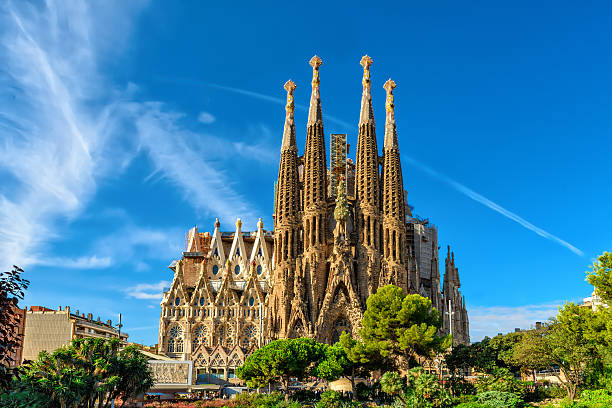
The Sagrada Família is the cleanest place to correct a widespread assumption: choosing the nave without a tower is not choosing half the basilica. The nave is where Gaudí’s structural language becomes intelligible at human scale. Branching columns distribute loads while evoking a forest canopy. Changes in shaft geometry and material help articulate hierarchy. Light enters through colored glazing and shifts the emotional register of the interior across the day. Vaults, hyperboloid openings and the upward spread of columns turn structure into the visible subject rather than hiding it behind decoration.
The tower adds a different experience: elevation, close contact with parts of the exterior fabric and a city outlook. It may be deeply rewarding for a companion who actively wants it. It is not required to understand the basilica’s central architectural argument. For a more detailed comparison of interpretive payoff and access implications, use the focused Sagrada Família towers-or-nave guide as a sibling planning resource.
Verified operational condition. The basilica’s official rules state that tower visitors go up by elevator and come down on foot. They also state that people with vertigo or a tendency to dizziness may not climb, and that towers can close because of adverse weather, breakdowns, maintenance or force majeure. The current official wording should be checked directly at https://sagradafamilia.org/en/rules-and-conditions-of-sale.
Route consequence. Do not describe the tower as “just an elevator.” The elevator is only the ascent. The return on foot, elevated environment, one-way logic and inability to guarantee operation all matter to a height- or balance-sensitive traveler. A companion’s tower ambition should therefore remain detachable from the shared morning. Reserve the basilica experience around the nave first; treat the tower as a conditional branch for eligible, willing participants.
The split works best after the group has already shared the interior’s strongest ideas. Enter together. Establish the basilica’s urban context from the exterior, then read the nave before anyone branches. Discuss how the columns transform as they rise, how light changes between façades, and how the interior mediates between geometry, symbolism and construction. This gives the group common material to talk about later. It also prevents the sensitive traveler from feeling that the tower party has departed before the “important” part.
Before the tower participants leave, agree a meeting procedure that respects the venue’s current circulation. Ask staff whether a specific interior meeting point is permitted under that day’s flow. If it is not, use an exterior point with a name and side: for example, one preselected corner of Plaça de Gaudí, followed by the fail-safe point at the lower end of Avinguda de Gaudí. Set a meeting window rather than a single minute, because tower access and exit flow can vary. The person staying below should have a complete sequence of nave, façade or urban interpretation rather than simply standing near the tower return.
A tower closure should not unravel the day. The ground-level architecture sequence remains intact, and companions can redirect the extra time toward the façades, Avinguda de Gaudí or Sant Pau. The support guide on weather-related suspensions, a ground-level architecture plan for suspended towers and cable cars, develops that contingency beyond this traveler-specific case.
How to split without leaving anyone in limbo
A good Sagrada Família branch has a beginning, an independent middle and a decisive reunion. It does not rely on “we will text when we are done,” because reception, battery level, crowds and mismatched exits can turn a small delay into uncertainty.
- Shared beginning: everyone enters together and receives the same core interpretation of the nave and façades.
- Optional branch: only willing and eligible companions proceed to the tower under the basilica’s current rules.
- Equal alternative: the non-tower party continues with a planned interior or exterior reading, ideally with a guide or another companion rather than alone.
- Primary reunion: a staff-approved interior landmark if current flow allows it.
- Fail-safe reunion: a named exterior corner and a latest meeting time, followed by a simple rule about who remains in place.
This structure also protects privacy. The guide need not announce why someone is not climbing. “We are taking the nave-and-façades branch” is enough. The tower party can pursue height; the other party can pursue structure, light and iconography. Both return with material worth sharing.
Avinguda de Gaudí turns a rejoining point into part of the story
The pedestrian axis between the Sagrada Família and the Sant Pau Art Nouveau Site is more than convenient connective tissue. Avinguda de Gaudí allows a mixed-preference group to move from Gaudí’s concentrated vertical monument to Domènech i Montaner’s spread-out civic campus without inserting another controlled interior or hill. Barcelona’s tourism information describes it as a public, open-access pedestrian avenue linking the two monuments, with limited traffic, Modernisme views, Pere Falqués street lamps and familiar neighborhood meeting points. The source is https://thisisbarcelona.com/architecture/urban-spaces-and-elements/avinguda-de-gaudi.
For a height-sensitive traveler, the avenue’s value is partly psychological: the route is legible. The destination is visible along an axis. There are multiple points at which the group can pause or stop without abandoning an admission-controlled experience. Companions returning from a tower branch can join at the Sagrada end, halfway along the avenue or at Sant Pau’s entrance. A delay does not require the waiting party to remain beside a gate.
Architecturally, the walk prevents the day from collapsing into a catalogue of isolated masterpieces. The Sagrada Família appears at one end as an unfinished vertical landmark; Sant Pau closes the axis with a more horizontal composition. In between, ordinary residential life, street furniture and small-scale commerce show how Modernisme sits inside the contemporary city. The traveler sees not only monuments but the urban frame that makes them legible.
Ground level is not friction-free. Pavement crowding, road crossings at the ends, sun and accumulated standing can still affect comfort. The route should have a chosen side, a likely pause and permission to shorten. A fixed reunion at the Sant Pau information desk is stronger than a vague agreement to meet “somewhere on the avenue.” The avenue is best used as a flexible buffer: it absorbs tower delays, gives the non-tower party meaningful content and keeps the day’s next shared anchor close.
Sant Pau is a full-value alternative, not a consolation
The Sant Pau Art Nouveau Site is the most persuasive answer to the question, “What can a height-sensitive traveler do while companions pursue an elevated branch?” It is close enough to Sagrada Família to support a shared architecture day, yet different enough to add information rather than repeat Gaudí. Designed principally by Lluís Domènech i Montaner, the historic hospital complex presents Modernisme as a coordinated civic environment: individual pavilions, gardens, circulation, ornament, daylight, ventilation and medical purpose are composed as one system.
Verified access conditions. Sant Pau’s official visitor page states that the entrance and all areas along the visitor route are spacious and accessible. It identifies ramps and elevators, two loan wheelchairs, indoor and outdoor rest areas, directional signage, room staff who can provide assistance and accessible toilets at different points. Current details are published at https://santpaubarcelona.org/en/prepara-la-teva-visita/.
Those facts matter, but they should not be overstated. Wheelchair accessibility is not identical to low-height exposure, and no general access page can predict every traveler’s response to a view, void, staircase or crowd. What Sant Pau offers is a more controllable rhythm than a tower or hillside park: multiple spaces, visible staff, stated rest opportunities and a visitor route supported by ramps and elevators. That makes it easier to pause, ask, redirect or stop without turning the entire visit into a failed attempt.
The interpretive value is substantial. At Sagrada Família, structure rises and gathers attention into a vast sacred interior. At Sant Pau, architecture is distributed across a campus. Brick, ceramic, mosaic, sculpture, stained glass and garden space support a theory of care in which beauty, light, air and orientation participate in the institution’s purpose. The complex also clarifies that Barcelona Modernisme was not simply Gaudí’s personal style. It involved other architects, workshops, patrons, engineers, craftspeople and public ambitions.
This makes Sant Pau especially useful for families. A younger traveler can follow repeated motifs across pavilions. An architecture specialist can compare ornament with functional planning. An older visitor can understand the hospital as an urban and social project rather than endure a route built around one dramatic viewpoint. The day gains a second author and a second model of Modernisme.
The most effective shared sequence is Sagrada Família nave, Avinguda de Gaudí and Sant Pau. If companions take a tower branch, the non-tower party can move slowly along the avenue and begin at Sant Pau; the tower party follows and reunites at the entrance information desk or another staff-confirmed point. If everyone stays together, Sant Pau becomes the place where the morning’s ideas are tested: vertical versus horizontal composition, singular monument versus pavilion network, sacred symbolism versus civic care, concentrated iconography versus a landscape of applied arts.
For travelers who want an architecture day with less Gaudí concentration, the Sant Pau, Eixample and Palau de la Música route is the natural alternative. In this day, Sant Pau is not a substitute imposed by fear. It is the site that makes the wider movement understandable.
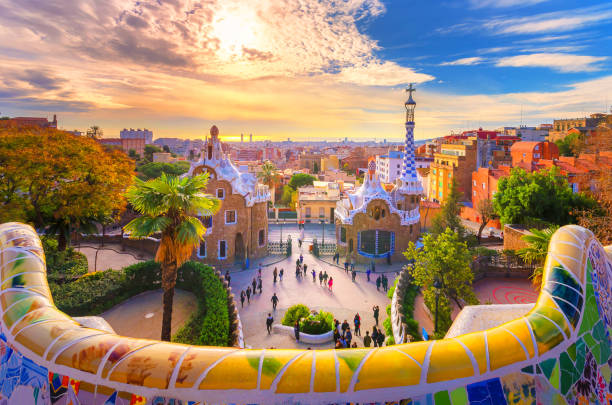
Park Güell: the hill is part of the decision before the park begins
Park Güell is often reduced to a visual question: does the traveler want the panoramic view? For height and balance planning, the approach may be more consequential than the viewpoint. The park occupies sloping terrain above Gràcia, and the city around it asks visitors to manage gradient before they reach the monumental elements. A traveler who is comfortable looking across Barcelona may still dislike the feeling of climbing a steep street, standing on an escalator exposed to the slope, or negotiating irregular ground while other visitors pass.
Verified approach conditions. Park Güell’s official sustainable-access page states that the walk from the Vallcarca and Lesseps metro stations takes about twenty minutes, identifies the H6 and D40 bus services, and warns that the park’s orography, steps and uneven paths can create difficulty for people with reduced mobility. It also notes an adapted route. The exact source is https://parkguell.barcelona/en/a-park-for-everone/sustainable-access.
The important editorial distinction is that an adapted mobility route and a low-exposure route answer different questions. A route may reduce steps while still involving a visible slope, elevated outlook, open-sided passage or long distance between comfortable stopping points. Conversely, a traveler who dislikes heights may walk well on an even gradient if the path feels enclosed and reversible. Do not infer one need from the other.
Park planning should therefore be divided into three separate decisions:
- Arrival: Which gate will be used, how much uphill walking precedes it, and does the chosen mode leave the group at the same entrance?
- Inside the park: Which elements are essential, where do height or balance triggers become likely, and can the traveler reverse course without crossing a one-way or crowded segment?
- Departure: Will both branches leave through the same gate, and what happens if one party exits earlier than expected?
The official accessibility guidance currently recommends the Carrer Marianao or Carretera del Carmel entrances for visitors with specific needs and describes suggested routes. Because access arrangements and conservation work can change, confirm the current map and disruptions shortly before the visit rather than relying on an old screenshot. The official accessibility page is https://parkguell.barcelona/en/accessibility.
For a group determined to include Park Güell, the strongest plan begins at a verified gate rather than at a metro station chosen by habit. A taxi or private vehicle can be useful when it removes the steepest approach and deposits the group at the agreed entrance, but that transfer does not solve the in-park question. It should be treated as one logistical tool, not as proof that the whole visit will feel comfortable. The guide still needs a current route, a clear threshold for turning back and a reunion point at the same named gate.
A partial visit can work when the traveler wants some Gaudí landscape without a long panoramic circuit. The group should identify the first meaningful interpretive cluster and make the decision to continue or exit there, before fatigue and pressure accumulate. Gaudí’s integration of structure with terrain, the use of local stone, viaduct logic, drainage, mosaic and the unrealized garden-city project can all be explained without chasing every viewpoint. The exact cluster will depend on the current route and the traveler’s trigger profile; it should not be promised from a static plan.
Skipping Park Güell is also a coherent architecture choice. Sant Pau provides comparable depth on Modernisme and the Eixample supplies Gaudí and his contemporaries at street level. The missed element is Gaudí’s landscape urbanism, not “Barcelona architecture” as a whole. Naming that tradeoff is more honest than implying that any one monument is compulsory.
When Park Güell should become a companion branch
Park Güell becomes a companion branch when the height-sensitive traveler would spend more energy managing the approach and escape route than understanding the architecture. In that case, keep the morning shared at Sagrada Família, then divide by purpose. One party travels to the park with the current gate, route and return time fixed. The other follows Avinguda de Gaudí to Sant Pau or continues into a ground-level Eixample sequence. Rejoin later at a named central point rather than asking the non-park party to wait near the hillside entrance.
The coordination burden is real. Two admissions, two routes, traffic between districts, uncertain exit times and one traveler’s non-negotiable boundary can turn a casual split into a day of messages. This is the point at which a bespoke private plan earns relevance: a guide can preserve shared interpretation before the split, give both branches substantive content, coordinate a conservative reunion window and keep transport tied to a specific access problem. The service matters because it protects the group relationship, not because a car makes every site accessible. Orange Donut Tours’ broader private Barcelona touring options provide the commercial context for that kind of coordination. Inquire now when the group needs one architecture day to hold both a low-exposure boundary and a companion’s tower or hill ambition.
Keep the branch proportionate. A height-sensitive traveler should not lose half a day so that others can add both a tower and a hill. Choose one vertical ambition, then return to shared ground. The reunion should lead into something everyone values, such as Sant Pau interpretation, a pavement-level Eixample walk or a meal chosen for access and conversation rather than for another view.
Eixample façades deliver Gaudí and Modernisme at street level
The Eixample is the day’s most adaptable low-exposure classroom because its architecture can be read from ordinary public space. On Passeig de Gràcia, the so-called Block of Discord places Casa Batlló beside Josep Puig i Cadafalch’s Casa Amatller, with Lluís Domènech i Montaner’s Casa Lleó Morera nearby. From the opposite pavement, the group can compare rooflines, windows, stonework, ceramic surfaces, balconies and competing ideas of the urban residence without committing to an upper-floor circuit.
That comparison provides information a sequence of Gaudí interiors can obscure. Modernisme was competitive and collaborative. Architects worked within the Eixample parcel, negotiated fashionable street frontage and drew on networks of decorative artists and crafts workshops. Casa Batlló’s fluid skin and mask-like balconies make one claim about transformation; Casa Amatller’s stepped profile and sculptural program make another; Casa Lleó Morera offers Domènech i Montaner’s different balance of structure, ornament and domestic prestige. The street itself becomes the comparative frame.
Farther along Passeig de Gràcia, La Pedrera can be interpreted from ground level as an argument about mass, movement, corner presence and the relationship between stone façade and city block. A height-sensitive traveler does not need to enter the roof to understand why the building disrupted expectations of a conventional apartment house. If an interior is desired, verify the current visitor route, elevator continuity, stairs, roof inclusion and exit options directly with the venue. “There is a lift” is not enough information when the traveler’s concern includes exposed spaces or a required walking descent.
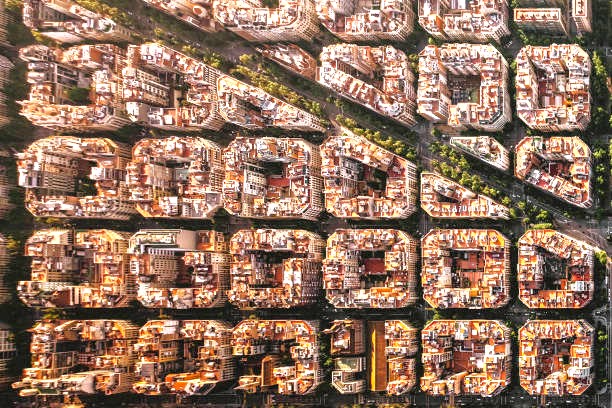
The Eixample grid adds another layer. Ildefons Cerdà’s chamfered corners widen sightlines and create oblique views of façades; long blocks reveal how architecture repeats, varies and meets the street. The supporting guide on Cerdà’s plan, chamfers and courtyards helps turn what might look like a flat transfer into urban interpretation.
Street-level does not mean effortless. Passeig de Gràcia can be crowded, crossings are frequent and long standing can undermine balance even on good paving. Build the walk as short lenses rather than a march: one stable viewpoint across the Block of Discord, one close façade detail, one chamfer explanation and one seated pause. Rambla de Catalunya can sometimes serve as a calmer parallel connector, but the exact choice should respond to works, heat and crowd conditions on the day.
A precise rejoining point matters here too. “Meet on Passeig de Gràcia” is unusable. Choose one corner, such as the agreed chamfer at Passeig de Gràcia and Carrer d’Aragó, and specify which side. The sensitive traveler can remain in active architectural space while companions complete an interior branch. If the interior party is late, the waiting party still has Casa Amatller, Casa Batlló and the street section to study rather than an empty foyer.
Height sensitivity, balance concerns and mobility limits should not be collapsed into one category
Some travelers have one narrow trigger: open heights. Others dislike enclosed lifts, downward views through gaps, steep descents or irregular paving. A person may use a cane and enjoy a broad rooftop; another may walk briskly yet refuse a tower. The plan becomes safer and more respectful when the group records the actual conditions rather than applying a broad label.
For an older parent, ask about distance, incline, standing time and confidence on uneven surfaces separately from height. The supporting article on Barcelona with older parents expands the pacing consequences of combining Sagrada Família, the Eixample and one hill. For a wheelchair user, pavement transitions, entrances, lifts and transfers require their own analysis; the wheelchair-focused architecture guide addresses that different, sometimes overlapping brief.
Children need an explicit exit permission before the branch starts. A young traveler who agrees to a tower from the pavement may feel differently inside a controlled route. The adult response should not be “but you said yes.” It should be the pre-agreed alternative. Teenagers may care more about staying with peers than admitting discomfort, so a companion split should be normalized for the whole group rather than assigned as a penalty.
Adults also benefit from neutral language. Ask, “Would you prefer the nave branch or the tower branch?” rather than, “Are you sure you cannot manage it?” A guide needs operational information, not a diagnosis. Useful details include whether the traveler wants to avoid all elevated spaces, only open edges, steep outdoor approaches, escalators, enclosed lifts, required stair descents, uneven surfaces or routes with no easy reversal.
Privacy should be planned along with movement. One person may be happy for the guide to tell the group why the route changes; another may prefer no explanation. The itinerary can simply present parallel options. Dignity is not an extra layer added after access. It is part of whether the plan works.
Three day shapes that keep the architecture shared
All together: Sagrada Família nave, Avinguda de Gaudí, Sant Pau and a short Eixample lens
This is the most coherent low-exposure architecture day for a first visit. Begin with the Sagrada Família nave and façades, omitting the tower. Walk the Avinguda de Gaudí axis at a measured pace, then visit Sant Pau using its stated accessible visitor route and rest points. After a substantial midday pause, add one compact Eixample comparison rather than another large admission.
The advantage is continuity. Everyone hears the same interpretation, no one waits, and the day moves from Gaudí’s sacred structure to Domènech i Montaner’s civic campus and then to the urban fabric that supported Modernisme. The tradeoff is clear: companions give up a panoramic component in exchange for a richer shared discussion. For many groups, that is not sacrifice but better architecture travel.
One vertical branch: shared nave, optional tower, reunion on the Gaudí axis
Enter Sagrada Família together and make the nave complete before splitting. Eligible companions take the tower branch. The other party continues with the interior and exterior at ground level, then proceeds toward the fixed reunion on Avinguda de Gaudí or at Sant Pau’s entrance. Once reunited, keep the rest of the day shared.
This shape works because the branch is contained inside the morning’s main monument and followed by a strong common site. It fails when the group adds Park Güell immediately afterward, creating two consecutive episodes in which the same traveler must opt out. One vertical ambition is usually enough for a day whose purpose is still togetherness.
One hill branch: shared Sagrada Família, Park Güell for some, Sant Pau and Eixample for others
Begin together at Sagrada Família, without a tower. After the nave, companions who prioritize Gaudí’s landscape work travel to Park Güell through a verified entrance and route. The height-sensitive party follows Avinguda de Gaudí to Sant Pau, with time for the complex rather than a holding pattern. Rejoin later at a specific Eixample corner or another centrally agreed location, allowing a buffer for the park’s exit and cross-city movement.
This is the most demanding coordination shape and should be chosen only when Park Güell has genuine importance for part of the group. Its benefit is intellectual: both branches study a different model of Modernisme. The park group sees architecture fused with terrain and infrastructure; the Sant Pau group sees architecture organized around care, gardens and pavilion planning. At reunion, the guide can compare the two rather than treating one as the lesser day.
The weak version sends one traveler alone to pass time while everyone else follows the headline itinerary. The strong version assigns a companion or guide, preserves interpretation on both branches and meets at a place with a shared afternoon purpose. Tailor-made coordination is most valuable here because the plan contains two live routes, not because it needs constant chauffeuring.
Bailouts should be designed before discomfort appears
A bailout is not an emergency script. It is a normal branch activated when the route no longer matches the traveler’s stated conditions. The earlier it can be used, the more dignity and architectural value it preserves.
- Before Sagrada Família entry: if the tower conditions are unacceptable, keep the nave reservation and remove the branch. Do not abandon the basilica.
- Before the tower split: if the traveler wants company, assign the companion before tower participants leave. Do not assume the non-tower visitor is content to continue alone.
- On the Park Güell approach: if incline, escalator exposure or underfoot conditions exceed the agreed boundary, stop before the group is committed to a long internal route. Redirect to Sant Pau or the Eixample.
- Inside Park Güell: if the traveler asks to stop, use the nearest appropriate staffed or mapped exit plan. Do not bargain for “one more viewpoint.”
- During an Eixample walk: if standing or crowd pressure increases, reduce the number of façades and preserve one good comparison from a stable viewpoint.
- After a delayed branch: protect the reunion. Drop the least important later stop rather than asking the waiting party to absorb the delay.
Communication should be equally simple. One person in each branch holds the meeting information. Both parties know the named point, the meeting window and the fail-safe rule. If messages fail, the stationary party stays at the agreed place while the moving party comes to them. A second point should be used only after a stated cutoff; otherwise two groups can chase each other across a district.
Weather can also alter the trigger profile. Wind may close towers, heat can make Park Güell’s gradients more taxing, and rain can change confidence on uneven surfaces. These are reasons to preserve modularity. The Sagrada nave, Avinguda de Gaudí, Sant Pau and a short Eixample segment can be recombined without pretending that all conditions are equivalent.
The emotional bailout is just as important. After a traveler opts out, the guide should move directly into the alternative’s content rather than repeatedly checking whether they regret the choice. The day recovers when attention returns to architecture: a column joint, a ceramic program, a hospital pavilion, a chamfered block. That is how an access-conscious plan remains culturally serious.
What to verify before reserving the day
The architecture and geographic logic in this guide are durable. Operational details are not. Tower rules, route closures, conservation work, entrance procedures, elevator availability, drop-off restrictions and visitor circulation can change. A specialist plan should verify the conditions that determine the branch, not merely confirm that the monument is open.
Sagrada Família
- Confirm that the desired admission type separates a basilica visit from any tower add-on.
- Read the current tower eligibility and safety language, including ascent, descent and closure conditions, at https://sagradafamilia.org/en/rules-and-conditions-of-sale.
- Ask whether a proposed interior rejoining point is compatible with current one-way flow.
- Choose an exterior fail-safe point by named side or corner, not by the phrase “outside the church.”
- Keep the tower optional on the day; weather or operations may remove it even when the group is willing.
Park Güell
- Confirm the entrance gate, arrival mode and walking segment before the group leaves the previous site.
- Review the official warning about orography, steps and uneven paths at https://parkguell.barcelona/en/a-park-for-everone/sustainable-access.
- Check the current accessibility map, suggested route and affected areas; an adapted route does not automatically remove height exposure.
- Agree the exact gate for early exit and reunion. Different branches should not assume they will naturally emerge together.
- Allow a conservative transfer buffer before the next shared reservation.
Sant Pau and Avinguda de Gaudí
- Review Sant Pau’s current access details, ramps, elevators, rest areas and visitor assistance at https://santpaubarcelona.org/en/prepara-la-teva-visita/.
- Use the entrance information desk as a candidate reunion only after confirming admission and circulation arrangements for both branches.
- Check street works or unusual access changes along Avinguda de Gaudí; its normal role as an open pedestrian connector is described at https://thisisbarcelona.com/architecture/urban-spaces-and-elements/avinguda-de-gaudi.
- Identify one seated pause and one place where the route can end without compromising the day.
The group brief
- Record triggers as conditions: open edge, enclosed lift, required descent, steep approach, escalator, uneven path, crowd pressure or inability to reverse.
- Decide whether the traveler wants a companion during every alternative branch.
- Choose one vertical ambition per day unless the sensitive traveler independently prefers more splitting.
- Set the primary meeting point, fail-safe point, meeting window and message-failure rule in writing.
- State which later stop will be dropped if a branch runs long.
This whole-chain approach is consistent with the logic of accessible tourism: infrastructure, information, services and coordination all shape whether a person can enjoy a visit. ISO 21902 frames accessible tourism across policy, strategy, infrastructure, products and services for people of varied ages and abilities; its overview is at https://www.iso.org/standard/72126.html. The practical lesson for Barcelona is that a ramp or elevator is one data point. The successful day also needs honest route information, an equal alternative and a reunion that does not depend on luck.
The architectural payoff of staying low
A well-designed low-exposure Barcelona day does not ask the height-sensitive traveler to accept less culture. It asks the planner to identify where the culture actually resides. At Sagrada Família, it resides in the nave’s structural forest, light and geometry as much as in any view. Between monuments, it resides in the urban axis of Avinguda de Gaudí. At Sant Pau, it resides in a campus where art, landscape and institutional purpose meet. In the Eixample, it resides in the argument between façades and in the city plan beneath everyone’s feet.
The group may still split. One companion may climb a tower; another may pursue Park Güell’s terrain. What makes the day shared is not identical movement. It is a common interpretive foundation, parallel branches with equal dignity and a planned return to conversation. The traveler who stays below should be able to explain something the tower party did not see, just as the tower party brings back a different spatial impression.
That is the standard to use when choosing every stop: not whether it appears on a universal list, but whether it gives this particular group a worthwhile experience without turning one person’s boundary into the day’s drama. Barcelona’s architecture is broad enough to support that standard. The city remains coherent from the ground, and the group remains together because rejoining was designed as carefully as arrival.
If you’re interested in any private tours of Barcelona, please reach out to us.
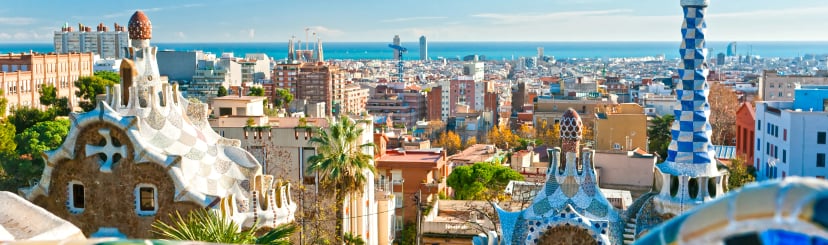







 So if you are looking for the absolute best in Barcelona & surroundings with authentic local fully-licensed native guides whose English you can actually understand and with an exclusive and amazingly fun itinerary