Barcelona Before Montserrat: Gothic Quarter, Eixample or a Lighter Food Evening

Updated
The verdict before Montserrat
Use your Montserrat departure as the anchor: choose Eixample with a lighter dinner the night before. It works because Barcelona’s most comfortable previous evening is not the most atmospheric one; it is the one that keeps your hotel return short, your walking surface predictable, and your morning from becoming a recovery exercise. The clearest exception is a first visit that has not yet touched the Gothic Quarter at all. In that case, a tightly edited old-town walk can be worthwhile, but it should end before dinner rather than become the dinner hunt itself.
The thesis is simple and very Barcelona-specific: before Montserrat, the city should narrow rather than expand. A walk from Plaça de Catalunya into Portal de l’Àngel, Carrer del Bisbe and Plaça Sant Jaume can look harmless on a map, yet it turns into a sequence of slow corners, photo stops, uneven paving and decision points just when the evening should be getting easier. If Montserrat is meant to be one of the meaningful days of the stay rather than a box to check, build the previous evening around that outcome. For the mountain day itself, Orange Donut Tours can shape a private Montserrat tour around timing, pace and the rest of your Barcelona stay.
The firm call is this: Eixample is the default winner before Montserrat, a short Gothic Quarter route is the runner-up when old-town context is still missing, and a late tapas route through the Gothic Quarter or El Born is the wrong fit when your morning starts early. That may sound counterintuitive, because the old town is the romantic answer and Eixample can feel too orderly by comparison. But the night before Montserrat is not the moment to maximize atmosphere at all costs. It is the moment to keep the city generous without turning the next morning into a negotiation with tired legs, late sleep and a heavier-than-needed dinner.
The three choices when tomorrow starts early
The right previous evening depends on three criteria: walking density, hotel-return simplicity and meal weight. The attraction quality is not the deciding factor, because all three choices can be beautiful in the right setting. The question is what each choice does to your body and mood after dinner, and whether the next morning still feels like an invitation to the mountain rather than the second half of a long city night.
Eixample lighter dinner: best when Montserrat is a priority, when your hotel is around Passeig de Gràcia, Rambla de Catalunya, Avinguda Diagonal or the upper side of the central grid, or when your group includes older parents, younger children, jet-lagged travelers or anyone who dislikes late-night crowd weave. This is the default winner because it gives you space, easier taxi access and fewer old-town micro-decisions.
Short Gothic Quarter heritage walk: best when this is your only chance to understand the city’s medieval core before leaving Barcelona, and when the walk is capped before dinner. Treat it as a guided hour or two, not an open-ended wander that spills into late dining.
Hotel-close lighter food evening: best when the day already included Sagrada Família, Park Güell, a museum, a market morning or a long arrival. It is not the least ambitious choice; it is the choice that preserves Montserrat as the next day’s emotional high point.
El Born with a short leash: useful only when you want a little old-town atmosphere but can resist turning the evening into a tapas crawl. It is close enough to the Gothic Quarter to feel atmospheric, but it can create the same late-night drift if dinner becomes a sequence of “one more stop.”
Here is the mistake to avoid: do not ask the evening to prove that you used every minute in Barcelona. The previous night before Montserrat should have a clean end. A couple can linger over one polished dinner; a family can walk a pleasant block after dessert; a food-and-wine traveler can have a focused tasting rather than a roaming route. The difference is not austerity. It is editorial discipline.
When the Gothic Quarter is too much before Montserrat
The Gothic Quarter is too much before Montserrat when the day has already included standing time, ticketed interiors or more than one cross-city move. The issue is not that the Gothic Quarter is “hard” in a dramatic way. The issue is Gothic Quarter walking density: narrow lanes, short sight lines, frequent pauses, uneven surfaces, crowd compression near the Cathedral, and repeated reorientation around Plaça del Rei, Carrer del Bisbe and Plaça Sant Jaume. A private guide can make those layers intelligible, but the neighborhood still asks the body to work in small increments.
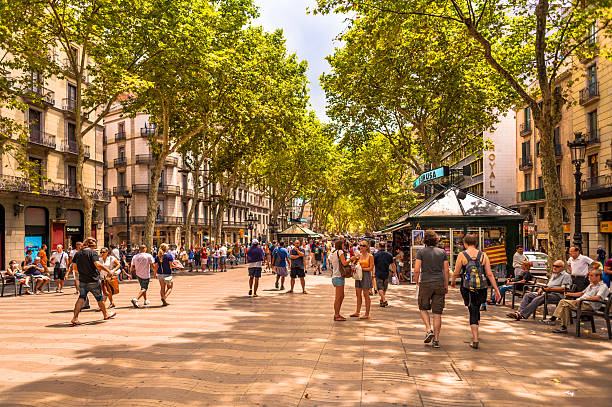
Barcelona does not usually tire visitors with one enormous climb before Montserrat; it tires them through accumulated friction. A few blocks from La Rambla into the Cathedral area can mean stepping around delivery carts, pausing for groups at corners, crossing between shadow and open paving, and changing pace every half-minute. That stop-start rhythm matters before a mountain day. It raises the background fatigue level even when the total distance looks modest, and it can make the next morning feel tighter than it needed to feel.
The counterintuitive correction is that the famous old-town evening is often overvalued the night before Montserrat. It can be wonderful on a first evening, after a later morning, or after a city day that has left plenty of energy. It is less valuable when it becomes the last thing between you and sleep. If you want the history, make the Gothic Quarter precise: Cathedral exterior context, the Roman wall edges, a few Jewish Quarter references if they matter to you, and a clear exit toward dinner. For a fuller old-town day, place the Gothic Quarter and Old Town private tour somewhere it can breathe rather than using it as a pre-Montserrat squeeze.
When the Gothic Quarter earns the evening anyway
The Gothic Quarter earns the previous evening when it is the missing piece of a short Barcelona stay. If your first day went straight to Gaudí, Montjuïc, the beach or a hotel reset after a flight, then leaving Barcelona for Montserrat without any sense of the medieval core can make the city feel strangely incomplete. In that case, the old town should be treated as a small, guided hinge: enough to understand how Roman Barcino, the Cathedral precinct and later civic spaces sit together, not enough to turn the night into a maze.
The best version begins at the edge, not in the middle. Start near Plaça de Catalunya or the top of La Rambla, enter deliberately, and avoid the temptation to zigzag every alley because each lane looks photogenic. A guide can keep the route from becoming a blur by choosing a few interpretive stops and ignoring the rest. The point is not to “cover” the Gothic Quarter. The point is to let the quarter give Barcelona historical weight before you leave the city for the mountain.
The wrong version is the unbounded version. It begins as a heritage walk, continues into El Call because it is nearby, detours toward Plaça Reial because the evening looks promising, and then turns into a dinner search because nobody wants to surrender the atmosphere. That is when the Gothic Quarter stops helping. The old town has a way of making every extra corner feel harmless until the group is standing, hungry, later than planned, with the next morning already narrowed.
If you choose the Gothic Quarter, decide before you begin where the evening ends. That end point might be a pre-booked dinner in Eixample, a taxi back to the hotel, or one specific restaurant near your base. It should not be “we will see.” The phrase sounds flexible, but before Montserrat it often means the most tired person in the group becomes the planner at the worst possible moment.
Why Eixample usually wins the previous night
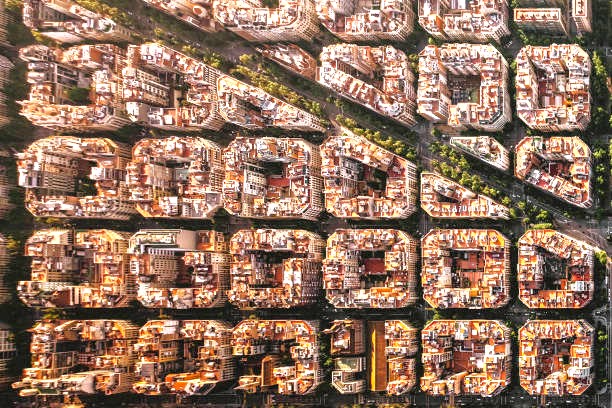
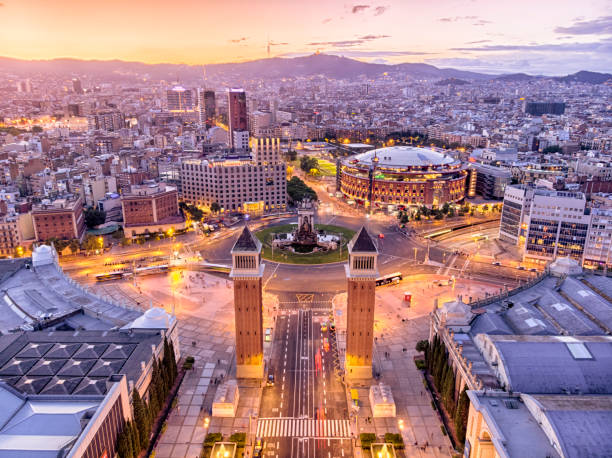
Eixample usually wins because it makes the evening legible. The blocks are larger, crossings are clearer, taxis are easier to meet, and the walk after dinner can be a short, graceful line rather than a tangle. Around Passeig de Gràcia, Rambla de Catalunya, Provença, Mallorca and the lower edge of Avinguda Diagonal, you can keep dinner, hotel return and a little architectural pleasure inside one calm radius. That is exactly what the night before Montserrat needs.
This is not an argument that Eixample is more interesting than the Gothic Quarter. It is an argument that Eixample is better at ending. The chamfered corners, wider sidewalks and regular grid let a couple or family decide when the night is finished without having to extract themselves from a dense pedestrian core. If the day has already included Sagrada Família or Casa Batlló, a short Eixample evening can also keep the city visually coherent rather than adding another historical register just because it is nearby.
The mood consequence matters. A previous evening in Eixample tends to make Barcelona feel composed rather than unfinished. You can have a serious meal or a lighter one, look up at a Modernisme façade, walk one or two blocks, and be back in the room before the group starts bargaining over whether to continue. That kind of ending changes how Montserrat feels in the morning. The mountain becomes a fresh change of scale, not the next obligation after an overextended city night.
Eixample is also where a private guide can make a short evening feel richer without making it longer. A brief Passeig de Gràcia or Consell de Cent arc can connect urban planning, Modernisme and daily city rhythm without requiring a full architectural day. If that is the kind of focus you want earlier in the stay, the Eixample private tour is the stronger place for it; on the night before Montserrat, borrow only the amount of Eixample that helps the evening land softly.
What a lighter food evening should actually mean
A lighter food evening before Montserrat does not mean eating poorly, skipping pleasure or choosing the blandest option near the hotel. It means choosing a meal that has a beginning and an end. The ideal dinner has fewer moves, fewer standing intervals, moderate wine, and no late pivot into “one more place.” Food pacing affects the next morning more than many travelers expect because Montserrat is not just a view. It is a day of transfers, walking, looking, listening and changing elevation.
For food-and-wine travelers, the best pre-Montserrat dinner is often a focused table rather than a route. A tapas walk can be excellent on a first night or a lower-stakes evening, but the night before the mountain it risks stretching time by design. Each stop restarts the social energy, each pour extends the conversation, and each transfer adds just enough motion to disguise how late it is getting. If you want a curated food experience, put the fuller Barcelona tapas private tour on a night when it can be the evening’s centerpiece rather than something that must stay disciplined.
Meal weight is not only about richness. It is about tempo. A long tasting menu can be beautifully paced and still end too late for a morning departure. A casual tapas route can seem light and still leave the group wired from movement. A hotel-close dinner can feel modest and yet produce the best next day because everyone sleeps earlier. The question is not whether the meal is “special enough.” The question is whether it supports the morning you actually chose.
There is a celebration exception. If Barcelona is marking an anniversary, milestone birthday or family gathering, the previous evening can carry more ceremony, but it should not carry more logistics. Choose the celebratory table near the hotel or in Eixample, keep the pre-dinner walk short, and resist adding a nightcap in another neighborhood. The memory will be better if Montserrat still feels luminous the next day.
El Born is the tempting middle, not the default
El Born is tempting because it seems to offer the best compromise: old-town texture without the full Gothic Quarter, dinner energy without committing to a nightlife plan, and a more relaxed feel around Passeig del Born, Santa Maria del Mar and the lanes toward the Picasso Museum. It can work, but it should not become the default before Montserrat. The area’s charm is precisely what makes it easy to overstay.
The useful version of El Born is narrow. Choose it for one pre-dinner stroll, one meal, or one focused historical thread around Santa Maria del Mar and the mercantile city. Do not ask it to be a Gothic Quarter substitute, a tapas route, a shopping wander and a late drink setting on the same night. Once you cross Via Laietana into that old-town grain, the evening starts to behave less like a schedule and more like a drift. That can be delightful on the right night. It is risky before an early departure.
El Born is a better fit when your hotel is already nearby or when the group has strong evening energy and a firm stopping point. It is a weaker fit for multi-generational travelers staying in Eixample, because the return can feel longer than the outward trip. It is also a weaker fit when anyone in the group is sensitive to noise, crowd weave or late meals. The neighborhood’s texture makes the evening feel alive; it can also make the evening feel longer than it looked on the plan.
Use El Born as seasoning, not structure. If you already had a full Barcelona day, let El Born go. If you missed old-town atmosphere entirely and dislike the density around the Cathedral, consider a short El Born walk instead of the Gothic Quarter, but keep dinner simple. The goal is not to deny the city’s evening life. The goal is to leave enough appetite for Montserrat’s change of scale.
What to avoid before an early departure
The first thing to avoid is the late tapas route that pretends to be light because the plates are small. Skip a late tapas route before Montserrat when the departure is early, the group is mixed in age, or the next day is one of the reasons you came to Barcelona. Small plates do not automatically create a lighter night. The route, standing time, extra pours and neighborhood changes are what make the evening heavy.
The second thing to avoid is adding a famous sight simply because it is still unchecked. Park Güell at the wrong end of the day, a second Gaudí interior, a late museum hour or an extra old-town detour can all make sense in another sequence. They do not make sense when the evening is supposed to protect a mountain day. Before Montserrat, the cut-first rule is simple: cut the extra site before you cut dinner calm. A calm dinner can still make the day feel complete; a rushed extra site often makes the whole evening feel shorter and more expensive.
The third thing to avoid is a hotel return that depends on everyone feeling energetic after dinner. Plans often look elegant at 4:00 p.m. and become brittle at 10:30 p.m. If your route requires a long walk back through the old town, a late taxi from a tight lane, or a metro transfer with tired children or older parents, the evening has already asked too much. Design the last movement first. If the last movement is easy, the rest of the evening can carry more pleasure.
The fourth thing to avoid is treating wine pacing as an afterthought. Catalonia rewards wine interest, and Barcelona has the range to support a serious food-and-wine stay, but the night before Montserrat is not the place to prove range. One excellent bottle, one measured pairing, or a single glass can be more useful than a comparative evening of regions and styles. You are not reducing pleasure; you are choosing where the pleasure belongs.
The body-and-mood test before you commit
Before choosing the previous evening, run one practical test: could the least energetic person in the group return to the hotel after dinner without needing another plan? If the answer is yes, the evening is probably right. If the answer depends on finding a taxi in a tight lane, crossing Via Laietana at the end of the night, persuading children to keep walking, or asking older parents to tolerate another ten minutes of uneven paving, the plan is carrying more risk than it admits.
This is where Barcelona’s beauty can mislead. The city often feels flat and walkable in the center, but the texture changes quickly: broad Eixample pavements, old-town stone, crowded crossings near La Rambla, quieter blocks above Gran Via, and denser turns around the Cathedral. The body notices those changes before the mind does. By the time a group admits it is tired, the evening may already be deep inside the least efficient part of the route.
The mood test is equally important. The night before Montserrat should leave the group feeling that Barcelona has been generous, not that the city is still asking for effort. A well-ended Eixample dinner can make the trip feel composed. A short Gothic Quarter walk with a clear exit can make the city feel layered. A late, roaming food route can flatten the next day before it begins because everyone wakes up with less curiosity than Montserrat deserves.
If you only have two Barcelona evenings
If you only have two Barcelona evenings and one of them comes before Montserrat, give the older, denser evening to the non-Montserrat night. That is the cleaner allocation. Put the Gothic Quarter, El Born or a fuller tapas route on the night when the next morning is not governed by a mountain departure. Use the pre-Montserrat evening for Eixample, a hotel-close dinner or a shorter old-town walk with a firm finish.
This matters because first-time visitors often try to make the night before Montserrat compensate for everything they fear missing in Barcelona. That instinct is understandable and usually wrong. The Gothic Quarter is not better because it is squeezed into a late slot. Tapas are not more authentic because they happen after the group is already tired. El Born does not become more local because the evening runs past the point of comfort. A shorter, better-placed experience will usually feel more memorable than a late collection of fragments.
If the stay is very short, the stronger move is to decide which Barcelona layer belongs before the mountain and which belongs after it. Gaudí and Eixample pair naturally with a lighter pre-Montserrat evening. The Gothic Quarter and El Born often work better when they do not have to compete with sleep. A serious food night deserves a night when it can be the plan, not a compromise squeezed between sightseeing and an early alarm.
The upgrade that matters is sequence, not just the car
The most valuable premium move before Montserrat is not simply paying for a nicer transfer. It is designing the previous day, evening and next morning as one connected arc. A private driver to Montserrat does not solve a poorly paced previous night. If the evening ran late, dinner was heavy, and the hotel return was messy, the car may make the road easier, but it cannot give the group back sleep, steadier energy or the sense that the mountain deserves attention.
Premium spend does not help when it is used to protect an overfilled evening instead of simplifying the evening itself. It does help when it removes avoidable seams: a guide who keeps the Gothic Quarter from sprawling, a dinner location chosen for both quality and return ease, a driver scheduled around the real departure rather than an optimistic one, and a day plan that does not put Montserrat after the city has already spent the group’s patience.
This is where Orange Donut Tours is most useful for discerning travelers. Montserrat should not be treated as an isolated day trip pinned onto a Barcelona stay. It should be placed inside the rhythm of the whole visit: which Gaudí day comes before it, whether the old town has already had proper attention, how late the previous dinner can be, and what kind of evening should follow the mountain. For a short stay, that sequencing is often the difference between a trip that feels abundant and one that feels crowded. Inquire now to have the Barcelona days shaped around the Montserrat anchor rather than built as separate fragments.
If you want the highest-value upgrade, ask for fewer transitions, not more access points. A tailored plan through tailor-made Barcelona planning can make the previous evening calmer, the departure cleaner and the mountain day more rewarding because it decides what not to include. That restraint is not a downgrade. It is the craft of making a short Barcelona stay feel like it has room.
If Gaudí or Sagrada Família is already in the day
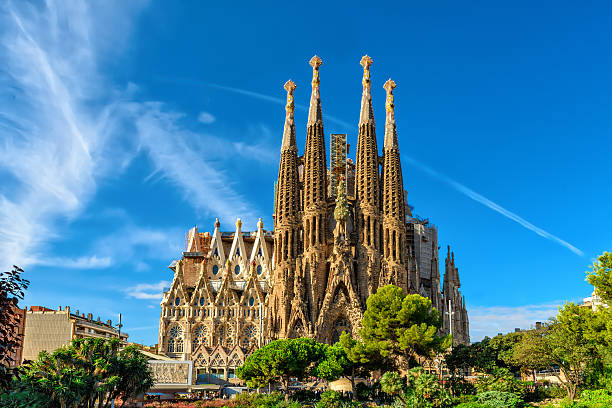
If the day before Montserrat already includes Gaudí, the evening should usually move toward Eixample or a hotel-close dinner, not the Gothic Quarter. Sagrada Família, Casa Batlló, La Pedrera and Park Güell each create a different kind of attention demand, but they share one consequence: they make visitors stand, look upward, process detail and manage timing. Adding old-town density afterward often turns a rich day into a compressed one.
Sagrada Família is the clearest example because tickets, entry timing and interior attention can shape the rest of the day. Use Sagrada Família official tickets (https://sagradafamilia.org/en/tickets-individuals) to confirm the operational details that matter for your actual date, then keep the evening from competing with the visit. The basilica already gives the day an emotional and visual peak. You do not need the Gothic Quarter to supply another one before Montserrat.
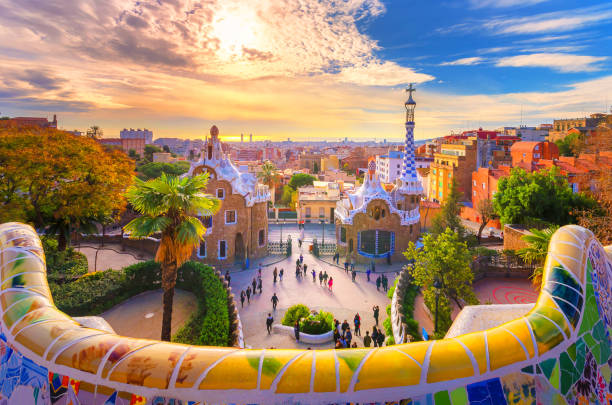
Park Güell is the other caution. It sits high enough and apart enough to make movement matter, especially if the day already includes another Gaudí stop. A late Park Güell add-on before Montserrat can turn the evening into a transfer problem, even when the visit itself is brief. If Park Güell matters, give it a cleaner place in the stay. If it is only there because the checklist feels incomplete, it is the kind of famous thing to cut before the mountain.
When Gaudí has already carried the day, a lighter Eixample dinner does not feel like retreat. It feels coherent. You stay in the same urban language, reduce the number of historical shifts, and let the evening end near the hotel. That makes the next morning less about recovering from Barcelona and more about seeing Catalonia beyond the city.
Hotel-base tweaks that keep the decision practical
Your hotel base can flip the advice at the margins, but it rarely changes the core logic. If you are staying in Eixample, do not leave the district for dinner the night before Montserrat unless there is a compelling reason. The grid gives you an easy finish, and the best use of the evening is to keep that advantage. A short walk along Rambla de Catalunya or a dinner near Passeig de Gràcia can feel like enough because the city has already given you architecture, scale and light without asking for much navigation.
If you are staying in or beside the Gothic Quarter, the old town becomes more defensible, but only because the hotel return is simpler. The route still needs boundaries. A short loop past the Cathedral, Plaça Sant Jaume and the Roman wall fragments can be satisfying; a wandering dinner search deeper into the lanes can still overrun the evening. The fact that the hotel is close does not make every corner equally useful.
If your Montserrat pickup is at or near the hotel, preserve that advantage the night before. Do not finish dinner across the old town from an Eixample base and then spend the last half-hour managing tired returns, jackets, cameras and water bottles. If the morning meeting point is closer to Plaça de Catalunya or Passeig de Gràcia, staying within that central band the night before reduces the small frictions that make early departures feel abrupt. The smoother morning begins with the previous night’s last block.
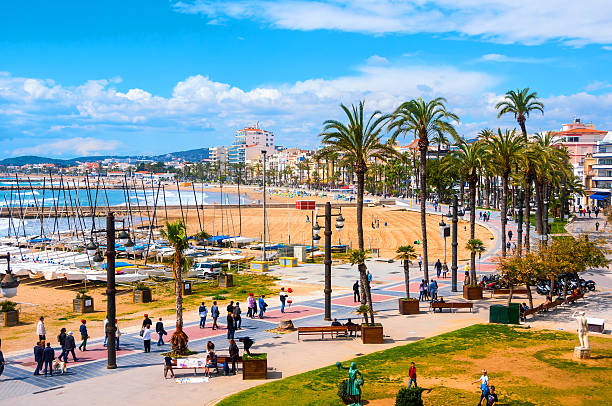
If you are staying near El Born, treat the neighborhood as your evening setting rather than a launchpad. Choose one dinner, keep the walk short, and avoid crossing back and forth over Via Laietana just to compare atmospheres. If you are staying by the beach or in Barceloneta, be especially careful. The seaside can feel restorative, but it may pull you away from the center and make the morning departure feel less direct, depending on where your pickup begins.
If you are still choosing where to base the trip, the question is not only which neighborhood is most beautiful. It is which base makes Gaudí days, old-town evenings and day trips feel least interrupted. For a broader stay-planning view, the guide to where to stay in Barcelona for a tailor-made first visit is the better place to compare Eixample, the Gothic Quarter and Gràcia. For this specific pre-Montserrat night, however, Eixample’s advantage is its ability to end cleanly.
For private groups, this is also where comfort becomes democratic. The strongest walker may not mind another detour, but the evening should be judged by the person who will feel the morning first. Before Montserrat, the best plan is the one that keeps the whole group moving at the same emotional speed.
The cleanest evening before Montserrat
The cleanest evening before Montserrat has three parts: one short walk, one dinner, one easy return. If you choose Eixample, that might mean a gentle architecture-led stroll, dinner within a few blocks of the hotel, and no second neighborhood afterward. If you choose the Gothic Quarter, it means a capped heritage walk, a planned exit and dinner somewhere that does not require more old-town wandering. If you choose a lighter food evening, it means accepting that the best dinner is the one that lets the group sleep well.
This is also the easiest way to decide what to cut when the trip is getting overpacked. Cut the late second stop. Cut the extra crossing from Eixample into El Born. Cut the “quick” Gothic Quarter add-on if the day already had a demanding interior. Cut the nightcap in a different district. Keep the evening that makes the next morning feel spacious. Montserrat is better when the previous night has not already used up the group’s curiosity.
After Montserrat, the decision changes. The return evening has its own logic because the body is tired in a different way and the city can either receive you gently or ask for too much. That is why the companion guide to after Montserrat from Barcelona treats Eixample dinner, El Born and the hotel reset as a separate choice. Before the mountain, the job is not recovery. It is preservation.
The final editorial answer is therefore deliberately restrained: choose Eixample with a lighter dinner unless the Gothic Quarter is the one essential Barcelona context you have not yet had. Keep El Born short if you use it at all. Refuse the late tapas route when tomorrow matters. The result is not a smaller Barcelona evening; it is a better Montserrat morning.
FAQ
Should you visit the Gothic Quarter the night before Montserrat?
Yes, but only if it is your only realistic chance to see the old town and the walk is kept short. End the Gothic Quarter before dinner rather than letting it become an open-ended evening route.
Is Eixample better than the Gothic Quarter before Montserrat?
For most pre-Montserrat evenings, yes. Eixample usually gives you easier walking, simpler hotel returns and better dinner pacing, while the Gothic Quarter adds more density and decision-making.
Is El Born a good evening choice before Montserrat?
El Born can work if you keep it to one walk or one dinner. It becomes a poor fit when it turns into a late tapas crawl or a second old-town route after a full day.
What should you eat the night before Montserrat?
Choose a focused dinner with a clear end, moderate wine and minimal movement between stops. The best meal is the one that lets the next morning begin without heaviness or delay.
Should you do tapas before an early Montserrat departure?
A seated tapas dinner can work, but a roaming tapas route is usually the wrong choice. Multiple stops, standing time and late pours make the evening heavier than the small plates suggest.
Does a private driver make the previous evening less important?
No. A driver can improve the Montserrat transfer, but it cannot undo a late night, heavy dinner or overfilled previous day. Sequencing still matters more than the vehicle alone.
What is the best previous evening for families before Montserrat?
Families usually do best with Eixample or a hotel-close lighter dinner. Keep the last walk short, avoid neighborhood changes after dinner and make the hotel return obvious before you leave.
Can you include Sagrada Família the day before Montserrat?
Yes, but keep the evening simpler afterward. Sagrada Família already asks for focused attention and timed planning, so Eixample or a lighter hotel-close dinner is usually stronger than adding old-town density.
If you’re interested in any private tours of Barcelona, please reach out to us.








 So if you are looking for the absolute best in Barcelona & surroundings with authentic local fully-licensed native guides whose English you can actually understand and with an exclusive and amazingly fun itinerary













