Paris After the Louvre Is Booked: Orangerie, Arts Décoratifs or a Tuileries Reset

Updated
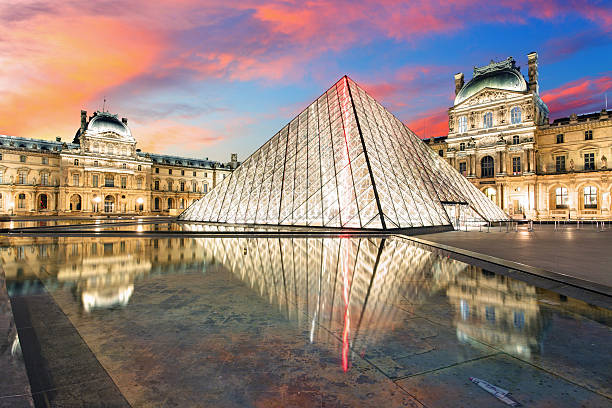
Once the Louvre is booked, the default post-Louvre move is a Tuileries reset, not another museum. That works in real Paris conditions because the Louvre exit into the Tuileries is the moment when feet, attention and dinner geography tell the truth: some travelers still have room for Monet, some have room only for air, chairs and a clean route west. The exception is clear: choose the Orangerie if the Louvre visit was focused rather than exhaustive and you want one concentrated final art experience; choose Arts Décoratifs only if design, fashion, furniture or objects are the reason you came.
In Paris, the choice after the Louvre is not a ranking of museums; it is a judgment about whether attention, walking load and evening logistics still have margin. The counterintuitive correction is that proximity can be misleading. Arts Décoratifs is right by the Louvre on the rue de Rivoli side, in the Marsan wing, but it can feel like a second serious interior rather than a light add-on. The Orangerie sits beyond the garden toward Place de la Concorde, which sounds farther, yet for the right traveler it can be a calmer, more finite experience than drifting back into another wing-like building.
This guide starts where a Louvre plan ends. If the Louvre itself is not yet shaped, begin with planning a curated Louvre day without museum fatigue and then return to this decision. If the Louvre is already fixed, resist the urge to prove seriousness by adding a second timed entry automatically. The better question is: after the Denon crush, the courtyards, the stone floors and the mental sorting of eras, what will make the rest of the day feel better rather than merely fuller?
What to do after the Louvre when the day still has hours left
The cleanest post-Louvre framework is a priority ladder: restore attention first, add one small museum only when attention remains, and let dinner timing cap ambition. This keeps the choice narrow. You are not deciding whether Orangerie, Arts Décoratifs or the Tuileries is “best” in Paris. You are deciding which one best serves the afternoon after the Louvre has already taken the lead role.
Default winner: Tuileries reset. Choose the Tuileries when the Louvre was a true visit, not a quick highlight stop. It is the most reliable answer for families, older parents, celebration travelers, couples with dinner ahead and anyone who needs the day to feel composed again. The gain is not cultural bragging rights; it is rhythm. You step into air, light, chairs, gravel paths and a route that can end naturally toward Concorde, the Right Bank hotels, a Seine crossing or an early return.
Best second museum: Orangerie. Choose the Orangerie when you still want art but need the experience to be finite, legible and emotionally different from the Louvre. It works especially well for travelers who care about Impressionism, Monet, the intimacy of a smaller collection and the feeling of one last focused encounter rather than another sprawling campaign.
Design-only runner-up: Arts Décoratifs. Choose Arts Décoratifs for travelers who light up at objects, interiors, fashion, craft, graphic design or decorative arts. It is not the lighter choice simply because it is adjacent to the Louvre. It can be superb for design travelers and frustrating for someone who only wanted “one more nearby museum.”
The trip-flattening choice: a second booking used as proof of culture. If the group is already quiet, hungry, footsore or dinner-conscious, the correct move is no second museum. A pause in the Tuileries may make the Louvre feel more memorable; a forced extra entry may make both places blur.
The comparison criteria are simple: remaining attention, physical load, subject fit, dinner geography and whether the option changes the mood of the day. Orangerie wins when attention is still available and you want one powerful art finish. Arts Décoratifs wins when the traveler’s reason is design rather than convenience. Tuileries wins when the body is done absorbing interiors and the evening still matters.
Before you rely on any museum sequence, check the official operating pages rather than repeating old advice from an itinerary note. For the Louvre, use the Louvre hours and admission page (https://www.louvre.fr/en/visit/hours-admission). For the Orangerie, check the official Orangerie visit page (https://www.musee-orangerie.fr/en/visit-orangerie). For Arts Décoratifs, confirm the current exhibition and practical details on the Musée des Arts Décoratifs opening hours and admission page (https://madparis.fr/Opening-hours-and-admission-fees-1534). These links matter because the best post-Louvre choice is often decided not by taste alone, but by the day of the week, late openings, temporary exhibitions, closures and the time you need to be seated for dinner.
Why the Louvre exit into the Tuileries tells you more than the map
The Louvre exit into the Tuileries is the most useful diagnostic point of the day because it turns abstract planning into visible evidence. A traveler who pauses at the Arc de Triomphe du Carrousel, looks west along the garden axis and asks for ten quiet minutes is not asking for another gallery. A traveler who starts talking about color, light and Monet may be ready for the Orangerie. A traveler who asks about interiors, couture, Lalique, chairs or how Paris became a design capital may deserve Arts Décoratifs, but only if that curiosity is genuine.
The map makes all three choices look easy. Orangerie, Arts Décoratifs and the Tuileries all sit close to the Louvre. The body experiences them differently. The Tuileries keeps you outside and lets you choose distance by the minute. The Orangerie asks you to continue west through the garden and enter one more museum near the Concorde edge. Arts Décoratifs pulls you back toward the rue de Rivoli side of the Louvre complex, which can feel efficient on paper but like a return to the same urban pressure if the group already needs release.
Paris makes the body keep score. A serious Louvre visit means security rhythm, stone floors, standing stops, escalator decisions, stairs, dense rooms, courtyard exposure and repeated micro-navigation. Then the Tuileries adds gravel, sun, wind or drizzle depending on the day. A cross-river detour toward the Left Bank adds bridge exposure at Pont Royal or the Passerelle Léopold-Sédar-Senghor. A metro transfer from Palais Royal–Musée du Louvre may be easy for locals but still feels like a reset cost for a small group dressed for dinner. These are not inconveniences to dramatize; they are the small accumulations that decide whether the afternoon remains elegant or becomes dutiful.
The mood changes just as much as the route. A second booking can make the day feel shorter because everyone starts watching the next entry time. A garden pause can make the same day feel larger because no one is performing punctuality. In the Tuileries, the group can split without drama: one person studies the sculpture, one sits by a basin, one makes a call, one watches the axis toward Concorde. That elasticity is hard to buy inside a museum and valuable after the Louvre.
The first cut, therefore, is not between Orangerie and Arts Décoratifs. The first cut is between more interior attention and a reset. If the group cannot decide, choose the Tuileries for twenty minutes before committing. The garden is not a consolation prize. It is the pressure valve built into the Louvre’s westward exit.
When Orangerie is the right second museum after the Louvre
The Orangerie is the right second museum when the Louvre has sharpened rather than spent the group’s attention. This usually means the Louvre visit was selective: a guided sweep of key works, a focused art-historical route, or a shorter family-friendly visit rather than a multi-hour attempt to cover everything. After that kind of Louvre, the Orangerie can feel like a graceful final chord: smaller scale, different light, a distinct emotional register and a clearer endpoint.
The Orangerie works because it does not ask the traveler to re-enter the Louvre’s encyclopedic logic. The Louvre can move from antiquity to Renaissance painting to French neoclassicism to Islamic art in one morning. That breadth is thrilling, but it is also why a second giant museum can flatten the day. The Orangerie narrows the field. It gives the afternoon one strong subject and one memorable spatial experience. For art travelers, that containment is the advantage.
The local route matters. From the Louvre exit into the Tuileries, Orangerie is not a random nearby add-on; it is the natural westward continuation of the garden. You pass the central paths and basins toward the Concorde end, with the Seine side on your left and rue de Rivoli to your right. That walk lets the eyes adjust before the next interior. It also gives the guide, parent or spouse a chance to read the group honestly. If the conversation has revived by the time you near the western end of the garden, the Orangerie may still pay off. If everyone is silent, the walk has already given you the answer: do not go in.
Choose Orangerie for couples who want the day to end on art rather than logistics, for first-time visitors who want Impressionism without crossing to the Musée d’Orsay, and for families with older children who can handle one compact second experience. It is also a strong choice when dinner is later, nearby enough, or intentionally light. The Orangerie is not the right choice when the group is hungry, when a serious tasting menu anchors the evening, or when the Louvre was already long enough that every new room will feel like homework.
There is a subtle difference between “small” and “easy.” The Orangerie is smaller than the Louvre, but it still requires entry, orientation, crowd patience and quiet attention. If the Water Lilies are the point, you want enough mental space to feel them, not merely photograph them. If the group arrives keyed up, rushed or dinner-anxious, the museum loses its advantage. The better move may be to keep the Orangerie for another morning or pair it with a different Impressionist question, such as the one explored in Marmottan or Orangerie in Paris.
My editorial rule is strict: do not book the Orangerie after the Louvre because it is famous and close. Book it because the group wants one bounded art experience that changes the day’s emotional temperature. When that condition is met, the Orangerie is the best second museum in this specific triangle. When it is not met, the garden beats it.
When Arts Décoratifs fits design travelers, and when proximity tricks you
Arts Décoratifs is the right post-Louvre move for design travelers, not for travelers who simply want the closest cultural backup. Its location near the Louvre is seductive: you are already there, the rue de Rivoli address looks efficient, and the museum shares the palace-world geography that first-time visitors recognize. But the visitor experience is not a short garden breath. It is another interior with its own collection logic, exhibition rhythm and object density.
For the right traveler, that density is exactly the point. Arts Décoratifs can give a design-led Paris day a sharper texture after the Louvre: furniture, glass, jewelry, textiles, advertising, decorative objects, fashion-adjacent material and the long conversation between taste, craft, industry and status. A guide can connect a Louvre morning of court power and patronage to the designed interiors and objects that shaped French domestic and public life. That is a very different reason to visit than “it is nearby.”
The museum fits collectors, architects, fashion-archive travelers, decorators, graphic-design travelers, and families with a teenager who notices objects more readily than paintings. It can also work for a shopping-and-style day if the Louvre was light or if the morning focused on the palace as context rather than exhaustive art history. For a broader design arc beyond this exact post-Louvre decision, the ODT guide to Paris for design collectors is a better planning companion.
The routing consequence is where many plans fail. Arts Décoratifs may be near the Louvre, but after a Louvre exit into the Tuileries it can feel like moving back toward the building you just left. The rue de Rivoli side has traffic, arcades, crossings and a more urban edge than the garden axis. If the group needs psychological release, that reversal matters. If the group is energized by objects and exhibitions, it may not matter at all. The same five or ten minutes can feel efficient to one traveler and claustrophobic to another.
Arts Décoratifs also carries a subject-fit risk. Paintings-first travelers may leave the Louvre with visual saturation and then find objects harder to absorb because the museum asks for a different kind of looking: detail, material, technique, chronology, design language. That is rewarding when expected and frustrating when used as filler. A premium plan should not use Arts Décoratifs as a holding pen between the Louvre and dinner. It deserves a reason.
There is one condition where Arts Décoratifs can beat Orangerie after the Louvre: when the traveler’s curiosity has already shifted from masterpieces to how Paris lives with beauty. If someone comes out of the Louvre asking about salons, patrons, interiors, luxury houses, the evolution of taste or the relationship between art and use, Arts Décoratifs can feel like a revelation. If the question is merely “what else is close,” it is overvalued. In that case, Tuileries first, Orangerie second, Arts Décoratifs later or not at all.
When the Tuileries is the smarter move than a second museum
The Tuileries is the smarter move when the Louvre has already done enough and the day needs air, not additional proof of taste. This is the answer many travelers resist because it sounds less ambitious. In practice, it is often the most polished choice. It lets the Louvre remain the achievement of the day instead of the first half of a museum endurance test.
The garden is not empty time. It has route value, mood value and decision value. Route value means you can move west toward Concorde and the 8th, south toward the Seine, north toward rue Saint-Honoré, or stay loose near the basins without committing to another interior. Mood value means the group can recover in public beauty rather than disappear into a hotel too early. Decision value means you can delay the final call: ten minutes in the chairs may reveal whether the Orangerie still sounds delightful or absurd.
The official Louvre gardens page (https://www.louvre.fr/en/explore/the-gardens) is worth checking because garden hours vary by season and practical details can change. That said, the evergreen planning point is simple: the Tuileries gives you a no-reservation reset at the exact place where the Louvre releases you. No cross-city transfer, no new entry ritual, no second cloakroom conversation, no need to keep the group moving at the speed of the most ambitious person.
Choose the Tuileries after a long Louvre morning with children, older parents, first-time visitors who still want to enjoy dinner, celebration travelers dressed for the evening, and food-and-wine travelers who have a serious reservation ahead. It is also the right move when the weather is tolerable and the group needs to feel Paris rather than consume another institution. The chairs around the basins are not a luxury product, but they may deliver more actual comfort than a paid entry when the nervous system is full.
There is one caution. The Tuileries can become too exposed if the weather is harsh, if the group needs real seating with service, or if mobility needs make gravel and distance awkward. In those cases, the reset may need to be shorter, closer to the Louvre edge, or replaced by a planned café or hotel return. Do not romanticize the garden at the expense of the person who is cold, overheated, or moving slowly.
This is also where the clearest “no” belongs: the best post-Louvre move is sometimes no second museum. That is not a failure of culture. It is a sign that the main event was allowed to land. A short Tuileries pause followed by a calm return can make travelers remember the Louvre with pleasure; a forced extra stop can turn the day into a checklist they later summarize as “we were exhausted.”
Dinner timing after the Louvre limits how much culture the afternoon can hold
Dinner timing is the ambition limiter after the Louvre because Paris evenings have their own geography. A post-Louvre museum choice that looks elegant at 2:00 can become irritating at 5:45 if the group still needs to return to the hotel, change, cross the river, meet a driver or arrive composed for a serious meal. The evening determines whether the extra booking pays off.
If dinner is on the Right Bank near the 1st, 8th or a palace-hotel orbit, the Tuileries is usually the easiest bridge. You can move west toward Concorde, north toward rue Saint-Honoré, or keep the afternoon close enough that a hotel reset remains possible. Orangerie may also work because it continues toward Concorde rather than dragging the group across town. Arts Décoratifs can work if dinner is nearby and the traveler truly wants design, but it is rarely worth adding as a default just because the address sits close to the Louvre.
If dinner is on the Left Bank, the calculus changes. A walk across Pont Royal after the Tuileries can be lovely when energy remains, but it is still a crossing, a shift in neighborhood rhythm and a commitment to keep moving. A Saint-Germain dinner after the Louvre and Orangerie may feel beautifully Parisian for a couple with late seating and strong stamina. For a family, older parents or anyone wearing new shoes, the same plan can feel like a slow leak of energy. The bridge is not the problem; the bridge after the Louvre, before dinner, after a second museum, is the problem.
If dinner is in Le Marais, the 9th, the 16th or another area that requires a real transfer, be conservative. The extra museum is not only its own duration; it also postpones the moment when the group can stop managing the day. Cross-city transfers can quietly eat the short stay because they arrive in small pieces: find the car, sit in traffic, reorient at the hotel, change, leave again, arrive less fresh than expected. For a deeper way to think about this, the ODT guide to Paris dinner geography around the Seine is useful after this article’s narrow museum decision is settled.
Food-and-wine travelers should be especially careful. A serious dinner asks for appetite, conversation and attention. If you use the afternoon to extract one more cultural stop from the schedule, you may pay for it at the table. The first course arrives, and the group is still mentally in museum logistics. The wine explanation feels long. The room feels too warm. The evening becomes something to get through. That is the hidden cost of overbuilding the post-Louvre window.
A practical rule: if dinner matters, stop adding timed entries earlier than you think. Orangerie belongs only if the Louvre was selective, the group is still lively and the dinner route is forgiving. Arts Décoratifs belongs only if design is the point and the evening can absorb the extra interior. Tuileries belongs whenever the dinner is part of the trip’s emotional purpose, not merely a meal at the end of a sightseeing day.
How a private guide changes the Louvre exit strategy before another booking is added
A private guide changes the post-Louvre decision less by adding access than by reading the exit moment accurately. The valuable skill is not saying “we can fit Orangerie too.” It is knowing whether the group should fit it at all. At the Louvre exit into the Tuileries, a guide can shorten the debrief, choose the right door, avoid unnecessary backtracking, and translate the group’s energy into a clean next move before another booking traps the afternoon.
For a couple, that may mean ending the Louvre with one final room rather than three, then using the garden to decide whether the Orangerie still has emotional space. For a family, it may mean leaving before the youngest traveler becomes the planner. For older parents, it may mean choosing the most comfortable route out rather than chasing the theoretical nearest exit. For design travelers, it may mean pivoting toward Arts Décoratifs because the conversation has naturally moved from paintings to objects. This is where private guiding earns its cost: not by stuffing the day, but by preventing the wrong next step.
If your Louvre morning would benefit from that level of pacing, start with Orange Donut Tours’ Louvre Private Tour and let the exit strategy be part of the design rather than an afterthought. The point is to decide at the right moment, with a guide who understands both the museum and the evening that follows. Inquire now.
Premium spend does not help when the problem is museum fatigue; buying another timed entry after the Louvre does not restore attention. Premium spend helps when it improves judgment, pacing, routing and the ability to cut something before the day gets heavy. A chauffeur may help if the afternoon requires a cross-city transfer, a hotel reset or older travelers who should not be asked to stand around while plans are renegotiated. A chauffeur does not make Arts Décoratifs lighter, Orangerie quieter, or an overpacked dinner evening less overpacked.
The best private plan therefore keeps the post-Louvre decision open until it has enough evidence. It may reserve Orangerie only when the group’s interests justify it. It may hold Arts Décoratifs for a design-led day. It may choose the Tuileries and a refined dinner return with no apology. Tailor-made touring is not the art of doing more; in this corner of Paris, it is the art of stopping at the exact point where the day still feels like a privilege.
The traveler-fit clusters that should decide the afternoon
Couples should usually choose the Tuileries or Orangerie, depending on the evening. If the trip has a romantic dinner, a Seine hour or a celebration later, the garden often does more for the mood than another interior. If the couple is art-led and dinner is late or flexible, Orangerie can give the afternoon a luminous finish. Arts Décoratifs is excellent only when design is a shared interest; otherwise one person may feel they are enduring a specialist detour.
Families should treat the second museum as an exception, not a mark of success. A child who handled the Louvre well may still have no appetite for another entry process. The Tuileries gives families a socially graceful release: space to sit, move, snack nearby, or decide whether the day has one more cultural beat. Orangerie can work with older children who respond to a finite experience, but it should be framed as one strong stop, not “more museum.” Arts Décoratifs can work with design-oriented teenagers, especially those interested in fashion or objects, but it is not a general family default.
Small groups need the clearest cut rule because split attention becomes more visible after the Louvre. If two people want Orangerie and four want air, the Tuileries should win unless the Orangerie is the declared purpose of the afternoon. Moving a group through another timed entry because a minority is ambitious can flatten the mood quickly. A private guide can sometimes split the rhythm: a brief garden pause, then the keenest travelers continue while others return or settle nearby. That only works when the logistics are designed, not improvised under fatigue.
Celebration travelers should protect the evening more than the itinerary. Anniversary dinners, milestone birthdays, proposals, private rooms and tasting menus all need margin. The afternoon should leave people feeling attractive, unhurried and conversational. A second museum after the Louvre may still be right, but only if it supports that feeling. If it turns the day into a sequence of entry times, it is stealing from the celebration.
Food-and-wine travelers should be especially wary of the “nearby museum” trap. The best dinner days in Paris often have a lighter afternoon because appetite and attention are part of the meal. If the Louvre is the cultural anchor and dinner is the sensory anchor, the Tuileries can be the hinge between them. Orangerie is the art-lover’s exception. Arts Décoratifs is the design-lover’s exception. The garden is the default because it lets the palate and conversation recover.
The cut-first rule for a post-Louvre afternoon
The first thing to cut after the Louvre is the stop you added because the map made it look harmless. This is usually the second timed entry, not the garden. A compact museum can still be too much if the Louvre was long, the dinner is important, or the group has already shifted from curiosity to compliance.
Cut Orangerie first when the traveler does not care about Impressionism, when dinner is early, when the Louvre route already included enough painting for the day, or when the only argument for it is “we are close.” Cut Arts Décoratifs first when design is not a live interest, when the group needs outdoor release, or when the exhibition schedule rather than the traveler’s taste is driving the decision. Cut the Tuileries only when the weather, mobility needs or timing make an outdoor pause genuinely impractical.
The most common planning mistake is treating the Louvre as the first museum of the day rather than the main museum of the day. That mistake creates a false appetite for “one more.” A better plan respects the Louvre as a heavy anchor even when the visit is curated. The exit is not dead time; it is part of the museum day. What you do there determines whether the afternoon clarifies the morning or competes with it.
There is also a status mistake. Some travelers worry that choosing the Tuileries looks less informed than booking another museum. In Paris, it can be the more informed choice. Local intelligence often means knowing when the elegant thing is a chair by the basin, a slow line of trees, a clean route to the hotel and a dinner that begins with everyone still present. You do not need another admission confirmation to prove the day was well designed.
If you remember one rule, make it this: after the Louvre, do not add culture that needs rescuing. Add Orangerie when it will feel complete. Add Arts Décoratifs when it answers a real design curiosity. Add the Tuileries when the day needs to breathe. If none of those options feels clearly right, stop. A private Paris itinerary should have enough confidence to leave a good afternoon unfilled.
FAQ
Should I visit the Orangerie after the Louvre?
Visit the Orangerie after the Louvre if your Louvre visit was selective, your group still has attention, and you want a compact art experience focused on a different mood. Skip it if the Louvre was long, dinner is soon, or the group is already footsore.
Is Arts Décoratifs worth visiting after the Louvre?
Arts Décoratifs is worth visiting after the Louvre for design, fashion, interiors, craft and object-focused travelers. It is not the best choice for someone who simply wants a nearby second museum, because it still asks for focused interior attention.
Is a Tuileries reset enough after the Louvre?
Yes, a Tuileries reset is often enough after the Louvre. It gives the group air, chairs, route flexibility and a calmer transition before dinner, which can make the Louvre feel more memorable than adding a forced second stop.
What is the best post-Louvre plan for families?
For families, the best post-Louvre plan is usually the Tuileries first, with Orangerie only if older children still have energy for one compact art stop. Arts Décoratifs works best for teenagers who are genuinely interested in design or fashion.
How much time should I leave between the Louvre and dinner?
Leave enough time for a garden pause, possible hotel return, transfer and a calm arrival. The exact buffer depends on dinner location, but the planning principle is firm: the more serious the dinner, the less you should force after the Louvre.
Is the Louvre and Musée d’Orsay too much in one day?
For many travelers, the Louvre and Musée d’Orsay in one day is too much unless the route is highly selective and dinner is very flexible. After a real Louvre visit, Orangerie is usually a more contained second museum than crossing into another major museum.
What if the Louvre is sold out?
If the Louvre is sold out, this exact guide is not the full replacement plan; it is a post-Louvre pacing guide. Orangerie, Arts Décoratifs and the Tuileries can still form a good art-and-garden afternoon, but the decision should be rebuilt around the new anchor.
Can a private guide decide between Orangerie, Arts Décoratifs and Tuileries on the day?
Yes, a private guide can help decide on the day if the plan leaves room for judgment. The guide’s value is reading energy at the Louvre exit, shortening routes, and cutting the wrong add-on before fatigue turns into frustration.
If you’re interested in any private tours of Paris, please reach out to us.



 So if you are looking for the absolute best in Paris & surroundings with authentic local fully-licensed native guides whose English you can actually understand and with an exclusive and amazingly fun itinerary













