Cocoa in London: Docklands Trade, Bean-to-Bar Craft and the Reality of Maker Appointments

Updated
London is unusually good at hiding the chain that made chocolate possible. The finished bar appears in a polished Mayfair cabinet, a market counter or a maker’s mould as though flavour began at the point of sale. It did not. Cocoa reached the city through systems of cultivation, coercion, shipping, warehousing, finance and consumption that connected tropical farms to the Thames. Contemporary bean-to-bar makers now ask buyers to look back along that chain, but a serious cocoa day has to do more than move from one attractive shop to another.
The most revealing sequence begins in Docklands, where trade infrastructure gives cocoa its historical scale, and then moves into central London to examine how present-day makers and specialists make decisions about origin, roast, texture, formulation and finish. The point is not to consume the greatest number of samples. It is to understand which stage of the chain each stop can genuinely illuminate, what remains inaccessible, and where a tasting earns its place because it answers a question that the preceding stop could not.
That distinction matters for serious tasters. A museum can explain the commercial system but cannot demonstrate a live tempering curve. A working maker may explain roast development but may not admit visitors to production. A specialist counter can compare origins and styles, yet it may be selling couverture made elsewhere rather than chocolate produced from beans on site. London becomes a coherent cocoa study only when those differences are made explicit.
Begin with the port, because cocoa arrived as trade before it became craft
Cocoa’s London story belongs within the wider history of the river and the empire. Warehouses, docks, customs systems, merchant capital and insurance allowed commodities from distant growing regions to be received, stored, priced and redistributed. Chocolate culture in drawing rooms, confectionery shops and later mass manufacturing depended on that less visible machinery. Starting in Docklands therefore changes the reader’s frame: cocoa is not merely an ingredient with tasting notes, but a commodity whose movement was organised by institutions and whose profits were entangled with imperial power.
The history must be stated without softening its conditions. London Museum’s account of London Dock explains that construction of the dock was partly funded by profits from the British trade in enslaved Africans. It also identifies cocoa among the luxury goods handled there, many shipped from parts of the British Empire. That evidence places cocoa inside a commercial landscape built not only on taste and novelty, but also on unequal control over land, labour, capital and routes of exchange.
A visit to the London Museum Docklands is valuable because the surviving dock environment helps restore physical scale. A chocolate bar is compact; the system behind it was not. Quays, warehouses and bonded storage translated distant harvests into inventory. Merchants and officials transformed agricultural products into taxable, financeable goods. The Thames connected ocean shipping with a metropolis whose consumers were increasingly accustomed to sugar, tea, coffee and cocoa arriving from elsewhere.
This is also where cocoa differs from a purely culinary subject. The historical question is not only when Londoners began drinking or eating chocolate. It is who controlled the route, where value accumulated, how raw material was classified, and which parts of the chain remained invisible to the final buyer. Those questions continue to matter in contemporary provenance language. A modern wrapper may name a country, cooperative, estate or exporter, but the label does not by itself reveal how price, risk and decision-making were distributed.
For travelers who have already studied London’s coffee history, compare cocoa with London’s coffee trade and roastery access. The two commodities share imperial and mercantile contexts, yet cocoa introduces a different production chain. Coffee is commonly roasted near the point of consumption and brewed immediately. Chocolate requires the maker to turn fermented and dried beans into a stable food through roasting, cracking, winnowing, grinding, refining, formulation, tempering and moulding. The historical port story therefore leads naturally into a technical study of transformation.
The provenance question is more demanding than “Where is this bean from?”
Origin matters, but “origin” can mean several different things. It may refer to a country large enough to contain many climates, genetic varieties and post-harvest practices. It may refer to a region, an estate, a cooperative, a fermentary, an exporter or a particular harvest lot. It may describe the source of cocoa beans, or merely the source of ready-made chocolate used by a chocolatier. A serious appointment begins by establishing which of those claims is actually being made.
The most useful provenance questions follow value and decision-making rather than stopping at geography:
- What is being sourced? Whole cocoa beans, cocoa mass, cocoa butter, couverture or finished chocolate each places the London business at a different point in the chain.
- Who handled fermentation and drying? Much of chocolate’s flavour potential is created or lost before beans ever reach Britain. A maker may choose the lot but cannot reverse poor post-harvest work.
- How precise is the named origin? Country-level language is less informative than a traceable producer group, estate, fermentary or lot, although greater precision is not automatically proof of fairer terms.
- Who carries price and crop risk? Direct-sourcing language can describe several commercial arrangements. The useful question is what relationship, pricing mechanism or quality feedback actually exists.
- Which decisions are made in London? Roast profile, recipe, particle size, conching or grinding time, tempering and format may all be local even when farming and post-harvest work happen at origin.
This line of inquiry prevents two common errors. The first is treating every small chocolate business as bean-to-bar. Many excellent chocolatiers buy couverture and concentrate on fillings, enrobing, moulding, decoration and flavour composition. The second is assuming that bean-to-bar automatically means transparent, ethical or superior. It describes control over a production stage, not a complete moral or sensory verdict.
Editorially, the most credible London cocoa day keeps both ideas in view. It respects confectionery skill where the maker begins with couverture, while reserving specific language for businesses that roast and process beans. It also asks for evidence behind broad claims without turning a tasting into an interrogation. Provenance is best understood as a chain of named responsibilities.
From bean to bar: the choices that change what you taste
The technical sequence gives a cocoa study its structure. Not every London stop will expose every stage, but understanding the sequence lets a traveler identify what a maker can plausibly demonstrate and which questions belong elsewhere.
Sourcing begins with flavour potential, not a finished flavour
Cocoa beans arrive with the effects of genetics, soil and climate, but also fermentation, drying, storage and transport. Fermentation is a post-harvest process at origin; it develops precursors that later roasting can reveal. Drying stabilises the beans for storage and shipment while influencing acidity and cleanliness. By the time a London maker receives a sack, a large part of the possible flavour range has already been set.
The maker’s sourcing decision is therefore partly agricultural, partly sensory and partly commercial. A lot may be chosen for fruit, floral, nut, spice or deep cocoa character; for consistency; for a relationship with a producer or exporter; or because it can support a particular recipe and retail price. Season and harvest variation mean that the “same” origin can behave differently over time. A thoughtful maker does not simply buy a country name. The maker buys material with a known or expected performance and then decides how much variation to preserve.
Roasting is interpretation under heat
Roasting reduces moisture, develops aroma, moderates some acidity and makes shells easier to separate. The central choice is not whether beans should taste “roasted,” but how heat and time should reveal or suppress what is already present. A lighter profile may retain brighter fruit or floral notes but leave more acidity or raw edges. A deeper profile may build nutty, caramelised or familiar chocolate tones while obscuring delicate aromatics. Neither is automatically more sophisticated.
LAND, a London bean-to-bar producer, states that it develops a different roasting profile for each bean variety rather than imposing one universal treatment. Its published process also names sourcing relationships including Ingemann and Uncommon Cacao. The value of LAND’s process account is not that it supplies a template every maker must follow, but that it makes two points visible: sourcing and roasting are connected, and technical decisions should respond to the character of a particular bean.
Cracking and winnowing decide what remains in the batch
After roasting, beans are cracked and the lighter shell is separated from the cocoa nib. This sounds mechanical, yet incomplete separation can affect texture and flavour. A workshop that lets participants crack and winnow is useful because it turns an abstract production term into a tactile distinction: shell, nib and waste are not interchangeable. It also shows why small-batch craft contains repetitive handling that is less photogenic than a finished bar.
Grinding and refining determine how flavour is carried by texture
Nibs become cocoa liquor or cocoa mass when ground finely enough for their fat to release and the mixture to flow. Sugar, and sometimes added cocoa butter or milk ingredients, are incorporated according to the recipe. Grinding and refining reduce particle size; conching, where used as a distinct stage, can alter texture, aeration and volatile flavour. In practice, equipment and terminology vary, and some small makers combine functions in stone grinders or melangers.
LAND says it stone-grinds nibs and sugar for about 72 hours to reach a particle size of roughly 15 to 20 microns. That specific statement is useful because it links time and equipment to a sensory result. Below the threshold at which particles feel obviously gritty, differences in smoothness can still shape how quickly flavour spreads, how sweetness registers and how the chocolate melts. Texture is not cosmetic. It is part of flavour delivery.
Recipe is a declaration of priorities
A percentage on a wrapper is not a quality score. In a dark bar, “70%” generally indicates the combined proportion of cocoa ingredients, which may include cocoa mass and added cocoa butter, with the remainder largely sugar and permitted minor ingredients. Two bars bearing the same percentage can therefore differ in bean origin, cocoa-butter content, roast, sugar type, particle size and processing. Milk chocolate introduces milk solids and additional formulation choices. White chocolate contains cocoa butter but no non-fat cocoa solids, so its relationship to origin is expressed differently.
The UK’s reserved descriptions matter here. GOV.UK guidance on food composition and labelling explains that certain cocoa and chocolate products must meet the Cocoa and Chocolate Products Regulations 2003. The rules prescribe minimum cocoa or milk solids for protected descriptions, restrict certain additions and require relevant labelling. Regulation does not tell a taster which bar will be compelling, but it establishes that terms such as “chocolate” are compositional categories rather than free-form marketing language.
Tempering is controlled crystallisation, not decorative theatre
Cocoa butter can crystallise in several forms. Tempering uses controlled heating, cooling and agitation to favour a stable crystal structure. When successful, a bar releases cleanly from its mould, has an even gloss, breaks with a clear snap and resists rapid bloom under suitable storage. Tempering does not improve weak beans or correct an unsuitable roast, but it determines whether the finished chocolate expresses the recipe in a stable, pleasant form.
This is one reason a live workshop can be more educational than a production-floor glimpse through glass. Tempering is a sequence of temperatures, movement and judgment; doing it, even in simplified form, reveals why apparently minor handling differences matter. Melt’s published bean-to-bar workshop in Notting Hill covers sorting, roasting, cracking, winnowing, grinding, stage-by-stage tasting, tempering and moulding. At the time verified for this guide, the maker listed the session as 1.5 hours, priced from £54.99 at 59 Ledbury Road, with participants taking home three 45-gram bars. Operational details can change, so the current listing should be checked directly on Melt’s workshop page before building a day around it.
Three London settings, three different kinds of proof
The city offers historical collections, working producers, guided workshops, market specialists and high-end chocolate houses. They are not interchangeable. Each setting can answer a different part of the cocoa question, and the quality of the day depends on assigning it the right role.
Docklands explains system and consequence
The London Museum Docklands is the place to establish trade geography, warehousing and the relationship between consumption and empire. Its contribution is interpretive rather than gustatory. A visitor should leave with a better understanding of why commodities accumulated along the Thames, how the city profited from their circulation, and why modern provenance claims deserve scrutiny. Tasting immediately and heavily after this material can be counterproductive; the history needs enough space to register before the day moves into craft.
A working maker explains transformation, but only within access limits
A bean-to-bar producer can clarify roast choices, machinery, batch scale, recipes and quality control. Yet “working maker” does not mean “open production floor.” Food-safety rules, insurance, staff capacity, machinery risk and production schedules all constrain access. Some sites offer fixed public workshops. Some can arrange a conversation or tasting by appointment. Some sell from a shop while production happens elsewhere. Others have no visitor programme at all.
The correct planning question is therefore not “Can we visit the factory?” It is “What form of access is currently offered, who leads it, which production stages are live or demonstrable, and what will remain off-limits?” A fixed workshop may deliver more substantive learning than a loosely promised private visit because its equipment, ingredients and teaching sequence are designed for guests.
A specialist counter explains selection and comparison
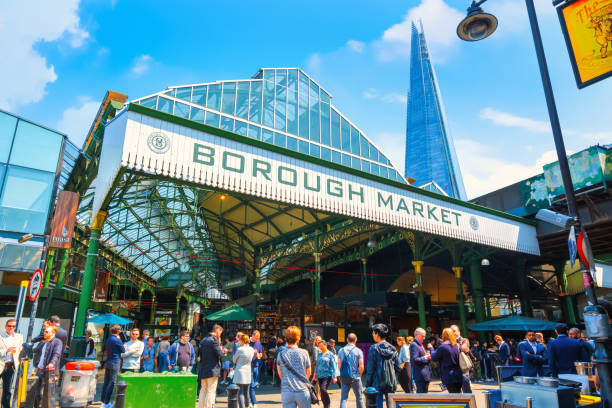
Borough Market can be useful when approached as a place to compare sourcing language, product type and retail interpretation rather than as an unlimited tasting hall. Borough Market identifies So Chocolicious as a Green Market specialist producing small-scale chocolates with Ghanaian chocolate sourced from farms participating in the Cocoa Horizons programme. That description, available on Borough Market’s So Chocolicious page, tells the reader something specific about the chocolate input and sourcing programme, but it should not be silently converted into a claim that beans are roasted on the stall or that production access is available.
A West End chocolate house adds another perspective: finished confectionery, service, presentation and often a broader range of ganaches, pralines, truffles or origin bars. Its value lies in showing what happens when chocolate becomes a composed product and a retail ritual. It may be the right ending for a day, but it should not be asked to stand in for port history or primary processing.
This difference between settings is the central local insight. London’s cocoa knowledge is distributed. The city rarely gives one visitor-facing site the archive, the production line, the comparative shelf and the polished tasting room. A strong day is built by connecting partial forms of evidence while being candid about the gaps.
Maker appointments are a question of scope, not prestige
Private access can materially improve a cocoa study, but only when the promised access is defined. The word “appointment” can describe anything from a reserved shop tasting to a technical conversation with a founder, a scheduled public workshop, a demonstration using guest-safe equipment or entry into a production area. Those experiences have very different educational value and operational risk.
Before committing time, establish the following:
- Location: Is the meeting at the production site, a retail shop, a teaching kitchen or a separate event space?
- Host: Will the session be led by a maker, chocolatier, retail specialist, educator or general staff member?
- Process coverage: Which stages can be seen, handled or discussed? “Bean-to-bar” in the description does not guarantee live roasting or grinding during the visit.
- Format: Is this a public class, a private booking, a guided tasting or an informal retail conversation?
- Group and age limits: Hot equipment, allergies, sharp tools and compact workspaces can shape who can participate.
- Timing: Does the appointment begin at a fixed hour, and how much margin is needed after Docklands or Borough Market?
- Photography and hygiene: Production areas may impose restrictions even when access has been approved.
- Purchasing expectations: Is the fee inclusive, is a minimum spend expected, or is the appointment educational without a sales obligation?
Serious travelers should also distinguish access from interruption. A small maker’s production day is economically valuable. An unscheduled request for a tour can force staff to choose between hospitality and making. Respectful planning means using the access format the producer has actually designed, or arranging a clearly bounded appointment in advance. Prestige is irrelevant if the visit disrupts the work and produces only a hurried explanation beside a till.
The planning need becomes acute when a private tasting day depends on verified maker access, a feasible movement sequence and informed product selection. This is the point at which specialist coordination can protect the substance of the day: confirming what the maker will actually offer, matching the appointment to the group’s knowledge, and preventing an ambitious route from collapsing into retail sampling. For a tailored discussion of that format, Inquire now.
A private service earns its place here through verification and interpretation, not through exclusivity for its own sake. It can be useful when a group wants the historical material translated into sharper questions for the maker, when dietary or mobility needs must be discussed before a workshop, or when a fixed appointment has to be reconciled with travel across London. The commercial value is in reducing uncertainty and improving the intellectual continuity of the route.
Travelers considering the wider format can explore a privately coordinated London day. The relevant test is whether coordination produces access or understanding that the group could not reliably assemble alone. A car, guide or reservation should not be added merely to make the day sound elevated.
A Docklands-to-central route that protects attention as well as time
The most coherent direction of travel is east to west: begin at the London Museum Docklands around West India Quay, move to the London Bridge and Borough Market area, then finish with one maker, workshop or chocolate house in central or west London. This follows the story from infrastructure to selection to finished craft. Reversing the sequence is possible, but a rich tasting early in the day can make later samples less legible and can reduce the emotional weight of the dock history.
Stage one: Docklands for context
Allow enough time for the museum to do more than provide a photogenic warehouse backdrop. The useful themes are river trade, warehousing, empire, labour, commodity movement and the making of a commercial city. Cocoa should be followed within that larger system rather than isolated from sugar, shipping and finance. A specialist guide can help connect dispersed displays, but the day should avoid pretending that every gallery is specifically about chocolate.
The output from this first stage should be a short set of questions, not a list of dates. Who controlled the commodity? Which transformations occurred at origin and which in London? What did the port make visible, and what did it conceal? How does a contemporary maker substantiate a better sourcing claim? These become the working questions for the rest of the route.
Stage two: Borough Market for retail evidence
From West India Quay, public transport can connect through Canary Wharf toward London Bridge; road travel may be preferable for a small group with mobility needs or a tightly fixed appointment, but central traffic can erase any theoretical time advantage. The choice should be made around the group and the booking rather than around an assumption that one mode is always superior.
At Borough Market, keep the stop focused. One specialist conversation and a small comparative purchase are enough. The purpose is to read product claims and distinguish a chocolatier’s work from bean-to-bar production. Useful observations include whether origin is named at country, region or producer level; whether the cocoa arrives as beans or chocolate; how fillings and inclusions alter the base; and whether staff can explain what is made by the business itself.
Market conditions also matter. Busy periods are poor moments for a long technical interview. A stallholder serving a queue cannot reasonably provide a private seminar. If a substantive conversation is central to the day, contact the business in advance and ask whether a quieter window or defined appointment exists. Otherwise, treat the market as a concise evidence stop and let the maker session carry the technical depth.
For a broader day centred on this part of London, place the cocoa study inside a broader London food-and-wine day. The cocoa route itself should remain narrower: adding cheese, wine, charcuterie and pastries may be enjoyable, but it dilutes sensory attention and makes provenance conversations harder to retain.
Stage three: choose one technical or finished-product conclusion
After Borough Market, the route should branch according to the main question.
- Choose a workshop when the priority is physical understanding of sorting, roasting, winnowing, grinding, tempering and moulding. A fixed class may require a direct transfer to Notting Hill or another teaching site, and its start time becomes the anchor for the whole day.
- Choose a bean-to-bar maker conversation when the priority is sourcing, roast development, machinery, recipe and batch variation. Confirm whether the meeting is at the production location and whether any process will be operating.
- Choose a specialist chocolate house when the priority is comparison among finished styles, fillings and service traditions. This is a tasting-led ending, not a substitute for production access.
Do not attempt all three merely because they are geographically possible on a map. A workshop can last ninety minutes before travel and discussion. A serious tasting needs pauses, water and note-taking. Chocolate is rich, sugar and fat accumulate, and palate fatigue arrives before enthusiasm does. Two principal tasting contexts in one day are usually sufficient: a market comparison plus a maker or house, or a workshop plus one restrained finishing sample.
The West End is a logical finishing area for many visitors because it can connect with an evening elsewhere in central London. Notting Hill makes sense when a workshop there is the non-negotiable appointment. The route should be built backward from that fixed point. A late-running museum visit is inconvenient; a missed maker session may be unrecoverable.
Tasting limits are part of the method
A cocoa study improves when tasting is treated as evidence rather than reward. The objective is to compare a small number of products under conditions that make differences perceptible. More samples do not automatically produce more knowledge.
A useful sequence moves from lower intensity to higher intensity and from simpler formulations to more complex ones. Begin, where available, with a plain dark chocolate that has a clearly stated origin. Compare another origin or roast style at a similar cocoa percentage. Add milk chocolate only if it helps answer a formulation question. Leave filled chocolates, spices, caramel, nuts and alcohol-based ganaches until later because inclusions can dominate the base chocolate.
Use small portions and let each melt rather than chewing immediately. Note aroma, the first flavour impression, acidity, bitterness, sweetness, texture, melt and finish. Avoid turning descriptors into a performance. “Red fruit,” “tea,” “nut” or “tobacco” can be useful shorthand, but the more important question is whether the observation connects to a production choice or origin claim. A bright acidity may relate to bean and fermentation character, but roast and recipe also shape it. A smooth texture may reflect refining, added cocoa butter or both.
Water and plain bread can reset the mouth, although complete neutrality is unrealistic. Coffee, wine, perfume, mint and strongly flavoured food can interfere with comparison. This is another reason not to fold cocoa into an overfilled market lunch. The best tasting window often comes after context and before the palate is burdened by a large meal.
Purchasing should be selective. Buy bars whose labels preserve the evidence you want to compare later: origin, producer or cooperative where stated, cocoa percentage, ingredients, batch or harvest information, and maker. Photographing the wrapper is useful, but keep the product itself away from heat. In warm weather, a rigid insulated pouch can matter more than an elaborate shopping bag.
Seasonality operates at origin, in the workshop and on London streets
Cocoa does not have one universal harvest season. Main and secondary crops vary by country and region, and the timing between harvest, fermentation, drying, shipment and London production means a newly arrived lot may not correspond neatly to the month of travel. Serious tasters should ask whether a bar reflects a particular harvest or batch, but they should not expect every retailer to have that information at hand.
London’s own calendar affects access more visibly. In the run-up to major gift periods, makers and chocolatiers may be occupied with production, packing and fulfilment. That can reduce the feasibility of bespoke conversations even while shop ranges expand. Fixed workshops may remain bookable, but private access should never be assumed. Quieter production periods may be better for technical discussion, subject to the maker’s schedule.
Temperature also changes the route. Hot weather makes long walks with purchases risky and can affect the condition of bars carried between stops. Very cold chocolate is not ideal for immediate tasting because aroma and melt are suppressed, while overheated chocolate can soften or bloom. Build in time for products to settle at a moderate room temperature, and do not leave purchases in a vehicle.
Market days and individual trading hours are operational details rather than evergreen truths. The So Chocolicious page and any workshop listing should be rechecked close to travel, especially around public holidays or seasonal closures. The underlying route remains valid; the exact counter or appointment may need to change.
How to read a London chocolate label without over-reading it
A wrapper is a compact claim, and each line should be interpreted at the right level.
- Cocoa percentage describes composition, not excellence. Compare ingredients and maker method before drawing conclusions.
- Single origin can indicate a country, region, estate, cooperative or lot. Look for the level of precision actually stated.
- Bean-to-bar usually indicates that the maker begins with cocoa beans, but the phrase is not a complete account of sourcing terms, labour or environmental impact.
- Direct trade needs context. Ask who traded with whom, how pricing was set and whether the relationship is ongoing.
- Craft or artisan may describe scale and attention, but neither word specifies process.
- Made in London can truthfully refer to confectionery made from purchased chocolate. It should not be treated as proof that beans were roasted in London.
The ingredients list often tells more than the front of the wrapper. Added cocoa butter can change melt and fluidity. Lecithin affects viscosity. Vanilla can round or standardise flavour. Milk powder type changes milk chocolate significantly. Inclusions can be central to the product rather than distractions, but they make origin comparison more difficult.
Label reading also reveals the division between legal category and editorial interpretation. Regulations set minimum compositional conditions for certain names. Makers then make aesthetic choices within those boundaries. A guide or specialist can help translate the label, but should not infer hidden ethical or quality claims from compliant wording alone.
Named London examples, used for the questions they can answer
The following entities are useful because they occupy different points in the chain. They should not be read as a ranked shop list.
London Museum Docklands
Use the museum to establish trade infrastructure, imperial context and the physical geography of warehousing. Its role is strongest at the start, before tasting. The important outcome is a sharper historical and ethical vocabulary for the rest of the day.
LAND
Use LAND’s published process as a case study in how a London bean-to-bar maker communicates sourcing and adapts roast and grinding decisions. A visit or conversation should be treated as a separate access question; a process page proves what the maker says it does, not that the production site is open to visitors.
Melt
Use Melt when a scheduled workshop aligns with the group’s objective. Its listed session is valuable because it covers multiple stages and gives participants a physical task. Confirm current price, duration, availability, age rules and accessibility before travel. A workshop is structured education, not unrestricted factory access.
So Chocolicious at Borough Market
Use the stall as a study in small-scale confectionery, Ghanaian chocolate sourcing language and market retail. Ask what arrives as chocolate and what is made by the business. Keep any conversation proportionate to trading conditions and verify current days and hours.
West End chocolate houses
Use one carefully selected house to examine finished style, service, filling technique and the relationship between brand, presentation and flavour. A house with a broad counter can support comparison, but several consecutive stops will create duplication. Choose according to the products that answer the day’s remaining question.
For a useful cross-category comparison, see how producer-access constraints differ in London gin. Distillation sites often organise visitor access around regulated equipment and scheduled tours, while chocolate makers may work in smaller spaces with production rhythms less compatible with drop-in observation. The comparison helps clarify why “at the source” means different things across food and drink.
What specialist coordination should change
A privately arranged cocoa day is justified when it changes the quality of access, the continuity of interpretation or the reliability of the route. It is not justified merely by adding more stops or private transport.
Before the day, coordination should verify the exact appointment format, the host’s expertise, the stages covered, dietary issues, group limits, photography policy and current price. It should also identify a fallback that preserves the intellectual purpose. If a maker cancels, the replacement should not be a random sweet shop; it should be a guided comparative tasting or specialist counter able to address sourcing and process.
During the day, a knowledgeable guide can carry questions from one setting to the next. The dock history can become a discussion of traceability. A label at Borough Market can lead to a distinction between couverture and bean-to-bar production. A workshop observation can be connected back to labour and value rather than treated as a novelty. That connective work is often more valuable than privileged entry.
Movement should serve the appointments. Public transport is often efficient between Docklands and London Bridge, while a pre-arranged vehicle may help a small group reach a fixed west-London session with less walking or manage purchases and mobility constraints. Neither mode should be promised as universally faster. The route needs a realistic buffer because London’s road and rail conditions vary, and a production appointment may have no late-entry flexibility.
The group’s level also matters. Beginners benefit from a workshop that makes the whole chain tangible. Experienced tasters may gain more from a producer conversation focused on lots, roast curves, recipes and texture. Families need an age-appropriate, hands-on format with clear allergy and heat-safety information. Collectors and buyers may prioritise shelf comparison, limited batches and storage. A good private plan narrows the field before the day begins.
Travelers who want to extend the same provenance discipline to another food can extend the provenance method to British farmhouse cheese. The comparison is instructive: cheese can often be linked to British farms and seasons within a shorter geography, while cocoa requires London consumers to understand a much longer, internationally divided chain.
A practical handoff for building the day
Start by choosing the question, not the shop. Decide whether the day is primarily about imperial trade, bean-to-bar technique, comparative tasting or confectionery craft. Keep Docklands as the historical foundation, then select one market stop and one substantive technical or finished-product conclusion. Two serious tasting contexts are enough.
Confirm every appointment in writing. Record the address, start time, host, duration, access type, stages covered, group limits, dietary information and cancellation terms. Ask directly whether the session includes live production, demonstration equipment or discussion only. Do not describe a shop visit as a factory tour, and do not assume that a maker who sells bean-to-bar chocolate receives visitors where it is produced.
On the day, carry water, neutral notes, a small notebook and suitable storage for purchases. Leave room between samples. Read ingredients and origin claims before tasting. At each stop, ask what evidence it contributes: history, sourcing, transformation, selection or finished craft. When two stops provide the same answer, remove one.
The result should feel less like a chocolate crawl and more like a compact study of London’s place in a global commodity. Docklands explains how cocoa entered the city’s systems of power and trade. Makers show how beans are interpreted through heat, friction, recipe and crystallisation. Specialists reveal how provenance is communicated, simplified or obscured at the point of sale. With access verified and tasting restrained, those pieces form a coherent day rather than a sequence of purchases.
If you’re interested in any private tours of London, please reach out to us.

















 So if you are looking for the absolute best in London & surroundings with authentic local fully-licensed native guides whose English you can actually understand and with an exclusive and amazingly fun itinerary













