London on a Rain Pivot: National Gallery, Wallace Collection or Churchill War Rooms Without Losing the Day

Updated
For most rainy London pivots, choose the National Gallery first, the Wallace Collection second, and Churchill War Rooms only when Westminster history is already the day’s spine. That order works because real London rain punishes transitions more than attractions: the Trafalgar Square to Westminster gap looks harmless on a map, but it becomes a damp, stop-start reset when umbrellas, security checks, wet coats, and lunch timing are added. The clearest exception is a group already based in Westminster, already holding Churchill War Rooms tickets, or actively choosing a wartime Whitehall story over an art-led day.
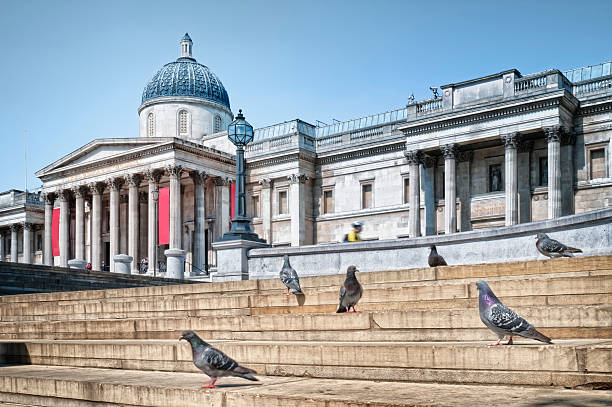
The point is not to hide indoors; it is to keep the day coherent. A good London rain pivot keeps one side of St James’s, Marylebone, or Whitehall from becoming a weary mid-day transfer. The non-obvious cue is the entrance logic: the National Gallery currently directs visitors through the Sainsbury Wing on Trafalgar Square, so the arrival itself is already a route choice, not just a museum choice; check the National Gallery official visiting page (https://www.nationalgallery.org.uk/visiting/plan-your-visit) before you go. If the morning began near Covent Garden, Charing Cross, the Strand, St James’s, or Mayfair, the National Gallery usually keeps the day intact. If the hotel, lunch, or shopping reset is closer to Marylebone, the Wallace Collection often gives a better day precisely because it is smaller. If Westminster and Whitehall are already the plan, Churchill War Rooms can be excellent, but it should not be treated as a soft rain shelter.
The rain-pivot matrix: base, mood, density, and meal plan
The best rainy-day choice is the indoor anchor that removes the least movement while preserving the strongest story. Compare these three places through four criteria: where you are starting, how much detail your group wants, what the day needs to feel like afterward, and whether lunch or dinner is pulling you east, west, or north.
National Gallery: default winner for a first rainy pivot. Choose it from Covent Garden, St James’s, the Strand, Trafalgar Square, Charing Cross, Leicester Square, or many Mayfair hotels. It suits couples, first-timers, families with mixed interests, and art-curious travelers who want a high-quality cultural day without committing to a long underground narrative. The advantage is not only the paintings; it is the ability to build a short, elegant route around Trafalgar Square, St Martin’s Lane, Piccadilly, or a Mayfair lunch without forcing a wet cross-city reset.
Wallace Collection: runner-up and often the better human choice. Choose it from Marylebone, Mayfair north of Oxford Street, Bond Street, Baker Street, or a day with shopping, lunch, or older-parent pacing in the mix. It is not a consolation prize. It is the best rain pivot when the group needs grace, seating rhythm, a smaller footprint, and a calmer arrival into Manchester Square. Confirm current visitor details through the Wallace Collection official visit page (https://www.wallacecollection.org/visit/).
Churchill War Rooms: best for Westminster, not for generic shelter. Choose it when the day is already about Westminster, Whitehall, wartime leadership, Parliament, or twentieth-century history. It is the wrong fit when travelers are tired, children are restless, or the group needs a light, restorative museum. The official Churchill War Rooms visit page (https://www.iwm.org.uk/visits/churchill-war-rooms) is the place to confirm current ticketing and visitor details before building the day around it.
National Gallery versus Churchill War Rooms is the fork that decides the day’s mood. The gallery gives an art-led, editable morning with more exit choices; the War Rooms gives a serious, immersive Westminster narrative that should own the route rather than trail behind it.
The overvalued move: adding a car to make every famous indoor stop “easy.” A chauffeur can reduce rain exposure at the edges, but it cannot make a dense museum feel lighter, shorten internal routes, or turn a mismatched history site into the right emotional note. Premium access or a car does not fix a poor match between museum density and traveler energy.
Why the National Gallery usually saves the day
The National Gallery usually wins because it gives the rain pivot a clear center without making the rest of the day feel smaller. Trafalgar Square is not cozy in rain, but it is strategically useful. From there, you can finish toward Covent Garden, St James’s, Piccadilly, or Mayfair without feeling as though the day has collapsed into logistics. A private route can start with a tight sequence of paintings, step outside only for a short transfer, and still leave room for lunch, tea, a hotel reset, or a theatre evening.
This is the strongest answer for travelers who woke up expecting a London walking day and then changed course. It does not require a complete change of identity. A Westminster exterior route can become a shorter context pass before or after the gallery. A Covent Garden morning can become an art morning with a nearby lunch. A Mayfair day can become a St James’s and National Gallery arc rather than a lurch toward a completely different neighborhood. For a guided version, National Gallery private tours work best when the guide curates a route through a few rooms, not when the visit becomes a dutiful march through every famous canvas.
The National Gallery is also the best option when the group contains different energy levels. One traveler may want Italian altarpieces, another may care more about Impressionism, and a teenager may need the visit to feel finite. That mix is easier to manage in a painting gallery with clear room-to-room choices than in an underground wartime site where the narrative presses forward and the visitor’s pace can be harder to lighten. The traveler consequence is simple: the National Gallery lets the group leave with a sense of completion before fatigue becomes the main memory.
The counterintuitive correction is that Westminster is not automatically the natural add-on. Many travelers see Trafalgar Square, Whitehall, Horse Guards, Downing Street, Westminster Abbey, and Churchill War Rooms as one compact cluster. In fair weather, that can work with disciplined sequencing. In rain, the Trafalgar Square to Westminster gap becomes a mood change: umbrellas open, pavements shine, crossings slow, photos become less satisfying, and the next entrance or security check feels like a second start. If the day is already working at the National Gallery, do not force Westminster just because it is famous and “nearby.”
National Gallery versus Churchill War Rooms is not an art-versus-history question; it is a mood-and-density question. The gallery can be edited. Churchill War Rooms asks for attention to corridors, rooms, maps, offices, decisions, and wartime pressure. The National Gallery gives you silence, scale, and exit choices. The War Rooms give you immersion, but less release. On a rain pivot, release matters because the day still has to carry lunch, dinner, and the return to the hotel.
When the Wallace Collection beats the major sight
Choose the Wallace Collection when the best rainy-day upgrade is calm rather than fame. This is the small-museum move that many first-time visitors resist until the weather and the group’s mood make the decision obvious. Hertford House on Manchester Square feels different from Trafalgar Square: less exposed, less ceremonial, more like entering a private London interior. That difference matters when travelers are wet, carrying shopping bags, managing older parents, or trying to preserve appetite for a good dinner.
The Wallace Collection is strongest from Marylebone, Mayfair north of Grosvenor Square, Bond Street, Baker Street, and hotel bases that can treat Manchester Square as a short, contained move rather than a destination requiring a whole new day. It is also useful after a Bond Street or Marylebone morning because it gives the plan a cultural anchor without dragging the group across the river, down to Westminster, or into the busiest museum corridors. For travelers comparing smaller interiors more broadly, London’s smaller museum day is the adjacent planning question; this rain-pivot article is narrower because it lets weather, hotel base, and meal timing decide.
The reason to choose the smaller museum over the major sight is not that the major sight is inferior. It is that a rainy London day magnifies every small piece of friction. Walking from a taxi drop-off into a busy square, drying coats, finding orientation, and managing a group through large public galleries can consume more energy than expected. At the Wallace Collection, the house scale, Manchester Square setting, and collection density create a different rhythm. You can choose a focused arc through French decorative arts, paintings, arms and armour, or the grander rooms without making the visit feel like a public endurance test.
This is especially true for celebration travelers. A birthday, anniversary, or multigenerational day often fails not because the museum was weak, but because the plan asked people to be heroic in poor conditions. The Wallace Collection lets the day feel composed. It pairs better with Marylebone lunch, a Mayfair afternoon, or a hotel return than a forced southbound push to Westminster. It also leaves more emotional room for dinner because the visit does not have to become the entire day’s achievement.
The wrong fit is the traveler who wants the capital-letter London moment. If someone has never seen the National Gallery, expects Trafalgar Square, and wants the sense of being in the middle of the city, the Wallace Collection may feel too tucked away for the main rain pivot. It is an excellent answer when the group values comfort, intimacy, and decorative depth. It is a weaker answer when the day needs a central London landmark to feel complete.
When Churchill War Rooms is the right rain pivot, and when it is not
Churchill War Rooms is the right rainy-day anchor when Westminster is already the story, not when the group merely needs to get indoors. Its strength is immersion. The experience belongs with Whitehall, Parliament, Downing Street context, wartime decision-making, and the machinery of government. It can be one of the most memorable indoor visits in London when the guide frames the surrounding district first and uses the site as the day’s climax rather than as a weather substitute.
That is why hotel base matters. From Westminster, St James’s, Victoria, or a river-adjacent hotel near Whitehall, the War Rooms can feel clean and purposeful. From Marylebone or South Kensington, it can feel like a destination that steals more of the day than expected. From Covent Garden, the choice is finely balanced: the National Gallery is easier, while Churchill War Rooms is better only if the group actively prefers history and is willing to accept a more compressed lunch or return plan. For a focused version, Churchill War Rooms private tours make most sense when the visit is tied to Westminster and Whitehall rather than bolted onto an unrelated museum day.
The main mistake is treating the War Rooms as restful because they are indoors. They are sheltered, but not light. The visitor moves through a highly detailed environment where the story is thick, the mood is serious, and the visual field is full of rooms, labels, objects, maps, and wartime atmosphere. For history-loving adults, that density is the point. For younger children, tired grandparents, or travelers who were hoping for a graceful art-and-lunch day, it can be too much. A rainy day does not make every indoor site equally comfortable.
The War Rooms also change the evening. A day that ends with Churchill can feel emotionally weighty, which may be exactly right before a quiet dinner or a serious conversation. It is less ideal before a playful theatre night, a celebratory tasting menu, or a family evening that needs the adults and children to rejoin the same mood. The body may be dry, but the mind can be full. That is a valuable outcome when chosen deliberately and a poor one when the site was chosen only because rain appeared.
The right way to use the War Rooms in rain is to cut, not add. Cut the long Westminster exterior sweep. Cut the South Bank bridge crossing unless the weather clears. Cut the idea that you must also do the National Gallery in the same serious dose. Let the War Rooms own the day’s intellectual weight, then move to lunch, tea, or a hotel return without pretending the group has endless bandwidth.
Which rainy-day London museum fits your hotel base?
Your hotel base should decide the rain pivot before your wishlist does. London is forgiving when the route is dry and loose. It is less forgiving when every transfer includes wet pavements, steamed-up car windows, Tube stairs, umbrella traffic, and the small irritation of arriving somewhere slightly depleted. The best rainy-day museum is often the one that prevents the second reset.
- Covent Garden, Leicester Square, Charing Cross, the Strand, and theatre-night bases: choose the National Gallery. It keeps the day central, gives you clear lunch options in multiple directions, and makes a West End evening easier. Do not spend the rain pivot pushing to Marylebone unless the Wallace Collection is already the emotional goal.
- St James’s, Green Park, Piccadilly, and southern Mayfair: choose the National Gallery unless the group is specifically history-led. The gallery gives you a strong cultural anchor and still leaves Mayfair, St James’s, or hotel time in reach. Churchill War Rooms can work from here, but only if the Westminster story matters more than the smoother art-and-lunch arc.
- Marylebone, Baker Street, Bond Street, and northern Mayfair: choose the Wallace Collection. This is the base where the smaller museum stops being an alternative and becomes the elegant answer. The route avoids a needless push through Oxford Circus or down to Westminster and keeps the day in a more manageable radius.
- Westminster, Whitehall, Victoria, and Parliament-area bases: choose Churchill War Rooms when history is the priority; choose the National Gallery when the group needs a lighter cultural day. The key is not distance alone. It is whether the day should feel like wartime government, European painting, or a shorter mixed route.
- South Kensington, Knightsbridge, and Chelsea: do not assume these three anchors are automatically better than the museums near your hotel. If the day has already been built around the V&A, Science Museum, or Natural History Museum area, switching to Trafalgar Square or Westminster may be unnecessary. Choose National Gallery only when the central London story is worth the transfer; choose Wallace if lunch or shopping is pulling north toward Mayfair and Marylebone.
- Bloomsbury, King’s Cross, and St Pancras: choose based on the next fixed point. If the evening is Covent Garden or Soho, National Gallery fits. If the day needs calm before a train or after arrival, a shorter route may be wiser than any of the three. If Churchill War Rooms is the dream, make it a dedicated half-day rather than an add-on.
The body consequence is real. Rain in central London does not merely wet your coat. It slows crossings, makes stone steps and kerbs feel more demanding, turns every entrance into a small sorting exercise, and makes the gap between “near” and “pleasantly near” wider. A group that could easily walk from Trafalgar Square down Whitehall in dry weather may feel surprisingly spent after doing it with umbrellas, damp shoes, and a lunch reservation ticking in the background. The right pivot reduces those small drains before they become the day’s dominant memory.
Lunch and dinner proximity can flip the answer
Meal geography can legitimately overrule museum fame on a rainy London day. A museum that looks “best” in isolation may be the wrong anchor if lunch is north, dinner is west, or the evening requires an easy theatre return. Rain makes meal timing less flexible because travelers are less willing to wander, browse, or kill time outside between reservations.
The National Gallery pairs best with lunches and dinners around St James’s, Piccadilly, Covent Garden, Soho, the Strand, and Mayfair. It is a strong choice when lunch is formal enough to matter but not so far away that the group arrives damp and rushed. If a classic St James’s or Piccadilly lunch is part of the day, you can even use the meal to set the route’s tone; for example, See the current three‑course lunch menu (https://www.theritzlondon.com/restaurant-three-course-lunch-menu) before deciding whether the museum should come before lunch, after lunch, or as a shorter pre-lunch focus. The menu link matters less as a restaurant endorsement than as a planning cue: a serious lunch shortens the museum day, and the route should admit that.
The Wallace Collection pairs best with Marylebone, Bond Street, and Mayfair lunches. It is particularly good when the day includes shopping, private appointments, or a hotel return north of Piccadilly. The Wallace also works when lunch should feel like a pause rather than a reward after a hard morning. That distinction is important for food-and-wine travelers. On a wet day, the meal is not only sustenance; it is the reset that decides whether the afternoon feels possible. For broader meal-led routing, a curated London food-and-wine day addresses the larger dining question; here, the rain pivot should stay tighter.
Churchill War Rooms pairs best with a Westminster or St James’s lunch planned deliberately, not hopefully. Whitehall can feel administratively grand rather than leisurely, and the wrong lunch placement can make the War Rooms feel like an isolated appointment. The best version is usually a concise Westminster context walk, War Rooms, then a planned move toward St James’s, Mayfair, or the hotel. The weakest version is War Rooms plus a vague promise that “we’ll find somewhere nearby” while everyone is wet, hungry, and carrying the emotional density of the site.
Dinner changes the pick even more. Before a West End theatre night, the National Gallery is usually the cleanest rainy-day answer because the return logic is obvious. Before a Marylebone or Mayfair dinner, the Wallace Collection can be the more polished choice. Before a serious tasting menu, avoid overloading the day with Churchill War Rooms plus a second dense cultural stop. A high-end dinner after a heavy museum day can feel diminished if the group arrives intellectually tired rather than pleasantly hungry.
What outdoor stops to cut first when rain changes the route
When London rain forces a pivot, cut outdoor symbolism before you cut the day’s main indoor anchor. The first things to remove are the stops that look essential in photographs but add the least comfort in poor weather: lingering in Trafalgar Square, a long Whitehall exterior sequence, Horse Guards Parade, a St James’s Park crossing, Buckingham Palace façade time, a South Bank bridge walk, and an unstructured Covent Garden wander. None is wrong in fair weather. All can become poor value when the trip needs a cleaner indoor story.
The cut-first rule is especially important around the Trafalgar Square to Westminster gap. If the National Gallery is the anchor, do not automatically add a damp procession down Whitehall simply because it is there. If Churchill War Rooms is the anchor, do not first spend the group’s patience on a long exterior prelude unless the guide is using it to frame the site. If the Wallace Collection is the anchor, do not add Bond Street, Oxford Street, and Mayfair shopping in a way that turns a calm museum day into a wet retail commute.
This is where London changes the body. Wet pavements around Whitehall and Trafalgar Square amplify standing time. Tube entries can add stairs, bottlenecks, and a new cycle of drying and regrouping. Taxis reduce exposure but can introduce their own drag when short central hops are slowed by one-way systems and kerbside drop-off compromises. The body starts to feel the day as a series of micro-interruptions: coat on, umbrella up, bag checked, glasses wiped, route renegotiated. None of those is dramatic. Together they explain why a famous outdoor add-on can make an otherwise excellent rainy day feel oddly tiring.
Rain also changes the trip mood. The right pivot makes London feel intimate: paintings, interiors, a planned lunch, a guide who edits the story, and a return that feels intentional. The wrong pivot makes the day feel shorter than it was: too many entrances, too many damp crossings, too much time spent deciding what to do next. The evening is the clearest diagnostic. If travelers reach dinner feeling composed, the pivot worked. If they arrive feeling as though the day was a sequence of evasions, the plan chased too many fragments.
How a private guide should pivot the story, not just the address
The real value of a private rain pivot is not swapping an outdoor stop for an indoor one; it is rewriting the day’s story arc quickly enough that the group never feels downgraded. A guide who simply says “it is raining, let’s go to a museum” has solved shelter but not the day. A better pivot changes the order, trims the exposed segments, reframes the theme, and protects the meal and evening plans that still matter.
For the National Gallery, that might mean turning a planned Westminster morning into a “power, patronage, and image” route: a short pass through Trafalgar Square context, a curated sequence of paintings, then a St James’s or Covent Garden lunch. For the Wallace Collection, it might mean replacing a broad shopping-and-sightseeing morning with a Marylebone interior story: private collecting, French taste, arms and armour for one traveler, painting for another, and a lunch that does not require a second neighborhood. For Churchill War Rooms, it might mean cutting the National Gallery entirely and making the morning about Whitehall, wartime decision-making, and the psychology of governing from underground rooms.
This is also where spend should be judged clearly. Paying for an expert guide can change the quality of interpretation, the edit, the route order, and the confidence of the pivot. A driver can improve comfort between hotel, museum, lunch, and dinner when the day includes mobility concerns or formal clothing. But paying more does not make three dense indoor visits wise, does not create attention span, and does not make a rainy Westminster exterior loop pleasant if the group is already tired. Premium planning earns its cost when it removes the wrong things, not when it simply adds polish to an overfilled day.
Weather-sensitive trips deserve flexible planning before the forecast forces a decision. Seasonal private London planning is useful when the itinerary needs a clear fair-weather version and a rain version that still feels intentional. For a tailor-made day, the handoff is simple: tell the planner your hotel base, your lunch or dinner commitments, your group’s museum tolerance, and whether the day should feel art-led, historic, or calming. Then the pivot can be designed before anyone is standing under an awning trying to decide. Inquire now
When the rainy day should become a guided half-day
A rainy London day should become a shorter guided half-day when the weather combines with low energy, a serious lunch, young children, older parents, or an evening commitment that matters more than one more museum room. The half-day is not a failure. It is often the more refined choice because it admits that the day’s goal has changed from coverage to quality.
Choose a half-day National Gallery pivot when the group wants one excellent cultural anchor before lunch or theatre. Choose a half-day Wallace Collection pivot when the travelers need calm, beauty, and a clean return. Choose a half-day Churchill War Rooms pivot when Westminster history matters but the group should not be asked to absorb another major sight afterward. The common thread is restraint: one strong indoor anchor, one planned meal or return, and no guilt about the outdoor pieces that were cut.
The full-day museum crawl is the rainy-day plan most likely to disappoint discerning travelers. It sounds efficient, but it often produces sameness: entrance, galleries, lunch, second entrance, more galleries, tired transfer, dinner. The higher-value plan is to let one indoor anchor carry the day and use the rest of the time for a meal, a hotel pause, a shorter neighborhood move, or a guided context walk if the weather briefly improves. On rain days, the best itinerary usually has fewer claims on the traveler.
FAQ
Which is best on a rainy day in London: National Gallery, Wallace Collection or Churchill War Rooms?
The National Gallery is the best default rainy-day pivot for most first-time visitors because it is central, highly editable, and easy to pair with Covent Garden, St James’s, Mayfair, or a theatre evening. Choose the Wallace Collection for Marylebone or calmer pacing, and choose Churchill War Rooms when Westminster history is already the main purpose of the day.
Is the National Gallery a good rainy-day plan in London?
Yes. The National Gallery is one of the strongest rainy-day choices because it gives the day a clear cultural center without forcing a long route afterward. It works especially well from Covent Garden, Charing Cross, the Strand, St James’s, and many Mayfair hotel bases.
When should I choose the Wallace Collection instead of the National Gallery?
Choose the Wallace Collection when you are based in Marylebone, Baker Street, Bond Street, or northern Mayfair, or when the group needs a calmer, smaller museum with easier pacing. It is also the better choice when lunch, shopping, or a hotel reset is already pulling the day north of Oxford Street.
Is Churchill War Rooms a comfortable rainy-day activity?
Churchill War Rooms is sheltered, but it is not a light or restful visit. It is best for history-focused adults and Westminster-based days. It is less suitable when children are restless, older travelers need a gentle rhythm, or the group wants a softer art-and-lunch day.
Which rainy-day museum is best if I am staying in Mayfair?
From southern Mayfair or St James’s, the National Gallery usually fits best. From northern Mayfair, Bond Street, or a Marylebone-facing hotel, the Wallace Collection often gives a smoother day. Churchill War Rooms is worth choosing from Mayfair only when Westminster history is the priority.
What outdoor London stops should I skip when it rains?
Cut the outdoor stops that add exposure without adding enough value: long Trafalgar Square lingering, Horse Guards Parade, a full Whitehall exterior sequence, St James’s Park crossings, South Bank bridge walks, and unstructured Covent Garden wandering. Keep one indoor anchor strong instead of trying to rescue every planned exterior stop.
Should a rainy London museum day be a full day or a half-day?
A half-day is often better when the group has low energy, a serious lunch, children, older parents, or an important evening plan. A full day can work for art or history lovers, but it should still be built around one main anchor rather than three dense indoor stops.
Do I need a car for a rainy museum day in London?
A car can help with hotel-to-museum transfers, mobility concerns, formal clothing, or a lunch that is awkward by Tube. It does not solve museum fatigue, poor sequencing, or the wrong match between Churchill War Rooms, the National Gallery, the Wallace Collection, and the group’s actual energy.
If you’re interested in any private tours of London, please reach out to us.















 So if you are looking for the absolute best in London & surroundings with authentic local fully-licensed native guides whose English you can actually understand and with an exclusive and amazingly fun itinerary













