One London Ceremony Morning: Westminster, St James’s and the Palace Buffer

Updated
Verdict: The best London ceremony morning is not a long stand at Buckingham Palace; it is a Westminster-first morning with the ceremony held as a 45- to 75-minute buffer through St James’s Park. That works because Westminster, St James’s Park and Buckingham Palace form one compact ceremonial arc, but a wrong palace rail position can still consume the day. The clearest exception is simple: if the full Changing the Guard view is the emotional purpose of the morning, give it the morning and let Westminster Abbey and lunch become secondary. The thesis is London-specific: ceremony should set the clock, not own the morning.
The most useful hinge is the St James’s Park approach. From Westminster Abbey, Storey’s Gate and Birdcage Walk let you drift toward Buckingham Palace without committing too early to the palace rail. That small routing choice is the difference between a morning that feels royal and a morning that feels trapped. It also keeps Parliament Square, Dean’s Yard, St James’s Park and The Mall in one legible sequence rather than treating the palace as an isolated crowd event.
This guide solves one planning problem: how to use a palace ceremony as a timing anchor while still having a worthwhile Westminster morning. It is not a live schedule page, and it should not be used as one. Check the official Household Division schedule (https://www.householddivision.org.uk/changing-the-guard-calendar) before you commit, then decide whether the ceremony deserves focus, atmosphere, or a clean cut. For a privately paced version of this decision, the natural starting point is private London touring built around what you actually want to remember.
The ceremony-morning matrix: anchor, atmosphere, or cut-first
The right plan depends on what the ceremony is supposed to do for the day. A family wanting pageantry, a couple with lunch at a grand hotel, and a first-time visitor who cares most about Westminster Abbey should not all stand in the same place for the same length of time. Use the ceremony as a planning tool, not as a fixed obligation.
The decision matrix
- Westminster Abbey first, ceremony as buffer: Best when the Abbey is the serious cultural stop and palace pageantry is a bonus. This is the winning plan for most first-time private mornings because the Abbey rewards guided depth, while open-air viewing remains unpredictable.
- Buckingham Palace ceremony first, Abbey later or shorter: Best when the group would regret missing the full guard change more than it would regret a lighter Abbey visit. This plan needs a larger standing buffer and a softer lunch commitment.
- St James’s Park atmosphere, no hard wait: Best when the schedule is uncertain, the group includes older parents or younger children, or weather makes standing unattractive. You keep the royal setting without betting the morning on a view.
- Cut the ceremony first: Best when Westminster Abbey, a time-sensitive lunch, mobility limits, or a high-value afternoon matters more than open-air spectacle. This is not a failure; it is often the more polished London choice.
The counterintuitive correction is that the palace rail is an overvalued base for comfort-first travelers. It looks like the obvious place to start, but it turns a flexible Westminster morning into a stationary crowd exercise. The better base is often the Westminster side, where you can make a serious Abbey visit, cross Parliament Square with context, and then let the St James’s Park approach decide how much ceremony the day has earned.
Which London mornings deserve ceremony focus?
A ceremony deserves focus only when three conditions line up: the official schedule confirms activity, your group genuinely values pageantry, and the rest of the morning has enough slack to absorb a view that may be partial. When any one of those conditions is weak, ceremony should become atmosphere rather than the main plan.
The schedule condition matters because ceremonial activity is not a traveler-controlled ticket slot. It can vary for operational, weather, state, or security reasons. Treat the official schedule as a go-or-soften signal, not as a guarantee that your particular pavement position will work. That distinction is important for premium travelers because the value of the morning is not just whether something happens; it is whether waiting for it improves or diminishes the rest of the day.
The group condition matters even more. Some travelers are thrilled by bands, guards, drill, uniforms and the sense that the monarchy is not only a museum subject but a working piece of London choreography. For them, holding a larger buffer can be worth it. Others mainly want a palace photograph and a sense of place before turning to Westminster Abbey, Whitehall, Churchill context, or lunch. For them, a long wait at Buckingham Palace is usually the wrong use of the morning.
The slack condition is where many polished itineraries quietly fail. If you also want a deep Westminster Abbey visit, a calm walk through St James’s Park, a reserved lunch, and an unhurried afternoon, the ceremony cannot be treated as a separate attraction bolted onto the morning. It must be the hinge between the Abbey and lunch. If the buffer displaces Westminster or makes lunch anxious, the ceremony has become too expensive in time even when the viewing itself is free.
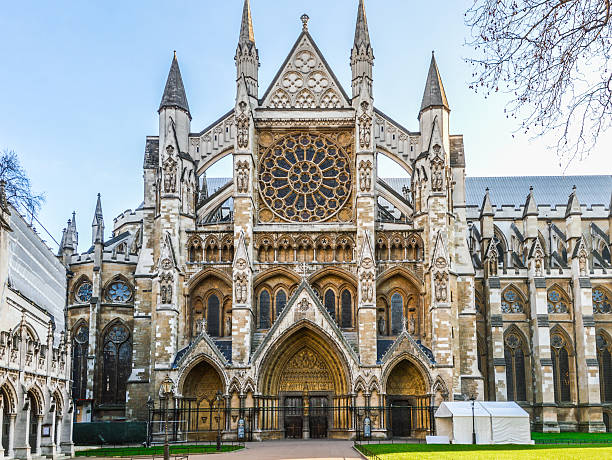
For first-time visitors, the best ceremony-focus mornings are usually those without a hard interior booking immediately afterward. A late-morning palace focus followed by a flexible St James’s or Mayfair lunch works better than a tight sequence that asks a group to leave a crowd, cross controlled streets, find a driver, and arrive composed at a serious reservation. For travelers who want the Abbey to carry the historical weight, pair the official Westminster Abbey entry times (https://www.westminster-abbey.org/visit-us/prices-and-entry-times) with a guide-led Abbey plan such as Westminster Abbey private tour and keep the palace buffer secondary.
The Westminster-first route that keeps the palace buffer useful
The strongest base route starts in Westminster because the morning has more substance when the Abbey, Parliament Square and St James’s Park do the work before the palace appears. Starting at Buckingham Palace can be right for ceremony devotees, but for many comfort-first travelers it turns the most historic mile of the morning into an afterthought.
A Westminster-first route has a useful internal rhythm. The Abbey gives the morning architecture, royal history, coronations, poets, scientists and state ceremony in one interior. Parliament Square then widens the frame from monarchy to government. Storey’s Gate and Birdcage Walk move the group out of the hardest pavement crush and into the park edge. St James’s Park gives air before the palace. By the time Buckingham Palace appears, it feels like a culmination rather than a queue.
The non-obvious advantage is that the St James’s Park approach lets the guide make a live judgment. If the ceremony build-up is promising, you can continue toward The Mall and the palace frontage. If the crowd is already too dense, you can pivot to a softer park-and-palace exterior, cross toward St James’s Palace or Clarence House context, or return toward Whitehall without losing the whole morning. A self-guided group often waits too long because it has no better plan in hand.
That routing also changes what the city does to the body. London is not a hill city in this pocket, but the morning is hard underfoot: Abbey floors, kerbs around Parliament Square, traffic-light pauses, security barriers, broad pavements with little seating, and long periods of standing if you chase a front-row palace view. The fatigue is not dramatic; it is cumulative. By the time lunch arrives, the group may not feel exhausted, but it can feel flattened, which is the enemy of a celebratory London day.
For this reason, cut the palace rail first when the morning is getting crowded. Do not cut the Abbey if the Abbey is your main historical stop. Do not cut the lunch buffer if lunch is part of the celebration. Do not cut the park approach if the group needs air. The rail is the least controllable piece of the plan, so it should not be the piece that forces every other compromise.
This is also where this article differs from a broader royal London day. If your goal is palaces across the city, including Kensington Palace or Hampton Court, you need a different strategy, and a full royal London day may be the better frame. A ceremony morning is narrower: Westminster, St James’s Park, Buckingham Palace, and the buffer that keeps them from colliding.
How much buffer should you hold for Buckingham Palace ceremony?
Hold 45 to 75 minutes of flexible buffer if the ceremony is a valued part of the morning, and closer to 90 minutes only when the ceremony itself is the reason for being there. Anything less treats the ceremony as a passing glimpse; anything more starts to steal the morning from Westminster and lunch.
- 25 to 35 minutes: Use this for atmosphere only. You may see movement, hear music, or catch a sense of ceremonial London, but you should not expect a settled view. This works when you are walking the St James’s Park approach and the group would be content with a partial moment.
- 45 to 60 minutes: Use this for a balanced first visit. It gives the route enough time to slow near the palace without turning the whole morning into a wait. This is often the most elegant buffer for couples, older parents with good mobility, and families who want pageantry but not crowd fatigue.
- 60 to 75 minutes: Use this when the group genuinely wants ceremony and can tolerate standing. It is a better fit when lunch is flexible, the weather is kind, and no one will resent the loss of extra Abbey or Whitehall time.
- 90 minutes or more: Use this only when the full ceremony view matters more than almost everything else in the morning. This is the wrong default for travelers who booked a private morning to avoid feeling managed by crowds.
The buffer should not be placed as dead time. It should be placed as a live band of choices between Westminster and Buckingham Palace. A good guide can use that band for a final Abbey exterior point, a Parliament Square context stop, a quieter St James’s Park angle, a palace-front attempt, or a graceful retreat toward lunch. The plan stays premium because the waiting time has interpretive and routing value, not because the pavement is private.
Premium spend does not remove public-crowd uncertainty around open-air viewing at Buckingham Palace; it improves the route around the ceremony, not the public viewing space itself. Paying for better guidance can change how you approach, when you give up, what you understand, and where the group goes next. It cannot buy a guaranteed front-row public view when streets, barriers, weather, security and crowds decide otherwise.
A chauffeur can help before and after the ceremonial pocket, especially for hotel pickup, lunch transfer, rain plans, and a smoother return after a West End evening. It is less useful for replacing the short Westminster-to-palace walk because road controls and one-way streets can make a car feel slower than feet in this exact zone. Use a car to reduce the day’s outer transfers, not to avoid every central London pavement. For a broader judgment on when driving actually helps, see the chauffeured London day guide or plan the service directly through luxury chauffeured London private touring.
Hotel geography should also shape the buffer. A Mayfair or St James’s hotel makes a ceremony morning easier because the release after Buckingham Palace can be short and dignified. A Covent Garden or South Bank base can still work, but the return may ask for a taxi decision at precisely the moment when roads and crowds are least cooperative. A South Kensington base is comfortable for families, yet it is not a reason to overextend the palace wait; save the transfer energy for the afternoon or evening. The morning feels more expensive when every choice creates a new crossing, a new driver call, or a new Tube-versus-taxi debate.
When ceremony should be atmosphere rather than the main plan
Ceremony should be atmosphere when the group would enjoy royal London but would not trade Abbey depth, lunch calm, or afternoon energy for a better chance at a view. This is the most underrated version of the morning because it gives visitors the emotional signal they wanted without letting a public event dictate the day.
Atmosphere can still feel complete. You can walk from the Abbey through Parliament Square, use Birdcage Walk as the park edge, pause on the Blue Bridge if the route needs air, and approach Buckingham Palace with context. You may hear music or see guards moving at a distance. You may see nothing formal at all. The point is that the morning still works because Westminster, St James’s Park and the palace are coherent even when ceremony becomes background.
This atmosphere-first version is especially good for families and multigenerational groups. Children often enjoy the first few minutes of movement more than a long wait. Older parents may prefer a slower park crossing and a better lunch arrival to a dense standing position. Couples on a celebration trip may care more about the day’s composure than about whether every ceremonial detail was visible. In each case, the St James’s Park approach keeps the mood lighter because the group keeps moving.
London mood is shaped by whether the day feels like it is shortening or lengthening. A clipped ceremony moment can make the morning feel satisfyingly dense: Abbey, park, palace, lunch. A long, uncertain wait can make the day feel smaller even though you technically saw more of one event. The best private mornings preserve the feeling that London is unfolding. The weakest ones make travelers feel they are guarding a pavement position while the city continues without them.
The cut-first rule is this: if you are already debating whether to shorten Westminster Abbey, rush lunch, or skip the park air, stop forcing the ceremony. Make it atmosphere, take the palace exterior, and let the morning continue. A ceremony that damages the route has failed its job, even if the band sounds magnificent.
What to do if the ceremony is not worth waiting for
If the ceremony is not worth waiting for, redirect the time into one of three better uses: deeper Westminster Abbey, a calmer St James’s Park and palace exterior, or a cleaner lunch handoff. Those options give you control back.
Go deeper at Westminster Abbey
Choose this when the group likes royal history, architecture, writers, scientists, coronation ritual, or church-state continuity. The Abbey is not a quick photo stop if you care about meaning. Extra time inside or around Dean’s Yard can be more valuable than an uncertain palace view, especially when a guide can connect the Abbey to the coronation route, Parliament, and the monarchy’s public role. This is the best pivot for first-time visitors who want the morning to carry historical weight.
Make St James’s Park the soft royal moment
Choose this when the group needs air, photographs, and movement. St James’s Park is not filler between Westminster and Buckingham Palace; it is the buffer that prevents the morning from becoming all stone and barriers. The lake, the Blue Bridge, Horse Guards side paths, and the approach toward The Mall give the morning a sequence of reveals. You still arrive at the palace, but you do not force the palace to do all the work.
Move cleanly to lunch
Choose this when the day’s pleasure depends on arriving composed rather than triumphant. If lunch is part of a celebration, the best upgrade may be ending the ceremonial chase early. For a classic grand-hotel handoff, check See the current three‑course lunch menu (https://www.theritzlondon.com/restaurant-three-course-lunch-menu) before building the morning around Piccadilly. For a more contemporary food-led plan that can follow a Westminster or Strand-side route, check Ikoyi menu & reservations (https://www.ikoyilondon.com/). Do not make either lunch carry the emotional burden of a morning that has already exhausted the group.
The restaurant point is not that every ceremony morning needs a famous lunch. It is that premium London days often fail at the seam between sightseeing and dining. If a guide keeps the palace buffer honest, the meal begins as part of the day rather than as recovery from it. That is a real quality difference for couples, birthdays, anniversaries, and food-and-wine travelers.
Where private guidance changes the Westminster and St James’s route
Private guidance changes this morning most when it turns a crowd-sensitive public event into a sequence of informed choices. The guide cannot control the ceremony, but can control the route logic, historical thread, stopping points, pace, and moment to abandon a weak plan.
In Westminster Abbey, guidance prevents context blur. Without it, the Abbey can become a list of famous names and chapels. With it, the coronation chair, Poets’ Corner, royal tombs, Lady Chapel, Scientists’ Corner and the working-church rhythm can be edited to suit the group. That matters because the ceremony outside Buckingham Palace is mostly visual and atmospheric; the Abbey is where explanation earns its time.
Between the Abbey and the palace, guidance prevents route drag. Parliament Square can either be a meaningful hinge or a traffic-light wait. Storey’s Gate can be a useful exit from the hardest Westminster pavement or a missed turn. Birdcage Walk can be a calm park edge or a long exposed line if the group has already over-waited. A guide reading the group’s energy can make these micro-decisions before anyone needs to ask for a bench.
Near Buckingham Palace, guidance prevents the most common premium-travel mistake: staying too long because leaving feels like losing. A public ceremony creates sunk-cost pressure. Once you have waited, it becomes psychologically harder to walk away, even if the view is poor and the group is fading. A guide can make the editorial call early: hold, shift, soften, or cut. That call is often the moment the morning is saved.
For travelers building several London days, this ceremony morning also needs to sit beside bigger choices. Do not pair it casually with the Tower of London, the British Museum, and a West End night unless the rest of the day is deliberately lightened. If Westminster is only one piece of a more ambitious first-day sequence, compare it with a Westminster, City and dinner sequence before adding more icons.
The traveler fit: who should hold the buffer, and who should let it go
The best ceremony buffer is traveler-specific. The same pavement wait can feel magical to one group and wasteful to another, so the planning answer should change with the party, not with a generic London checklist.
- Couples on a first London stay: Hold a moderate buffer if the ceremony adds romance and occasion, but protect the lunch or afternoon arc. A partial palace moment followed by a calm walk can feel more elegant than a long wait that leaves both people hungry and crowded.
- Families with children: Use the ceremony as movement and sound rather than a long stationary event. Children often remember the guards, music, park birds, palace gates and guide stories together; they rarely reward you for holding a rigid position too long.
- Older parents or mobility-sensitive groups: Keep the ceremony atmospheric unless everyone is comfortable standing. The morning’s enemy is not distance alone; it is standing without good seating, then asking the group to continue across Abbey floors, park paths, and lunch transfers.
- Royal-history travelers: Give more time to Westminster Abbey and use Buckingham Palace as living context. If your interest is monarchy as institution, the Abbey often gives more depth than the palace exterior. If your interest is pageantry as performance, then increase the ceremony buffer knowingly.
- Food-and-wine travelers: Treat lunch as a fixed quality point and make the ceremony flexible. A refined lunch after a clipped royal arc usually beats a perfect ceremony attempt followed by a rushed arrival.
- Celebration travelers: Decide what the celebration is supposed to feel like. If it should feel grand and ceremonial, hold the buffer. If it should feel smooth, intimate and unforced, let the ceremony become background.
There is no shame in choosing the softer version. London is unusually good at giving royal atmosphere without forcing every visitor into one official viewing pattern. St James’s Palace, The Mall, Horse Guards, the Abbey, Parliament, and the park all carry ceremonial meaning. Buckingham Palace is the visual climax, but it does not have to be the only point of the morning.
A sample morning when the palace buffer behaves
A strong ceremony morning is built in relative blocks, not fragile minute-by-minute promises. Use the schedule and Abbey entry information to set the day, then keep the middle flexible enough to respond to crowds, weather, and group energy.
Begin with Westminster Abbey as soon as the visit can be comfortably supported by the day’s opening pattern. Do not rush the first interior just because the palace is waiting. The Abbey is where the morning earns its authority, and a guide should edit rather than sprint: coronation, monarchy, national memory, and one or two details matched to the group. If children are present, the edit should be more visual. If older parents are present, the route should avoid unnecessary doubling back. If royal-history travelers are present, the Abbey deserves the morning’s best attention.
Leave the Abbey with enough slack to cross Parliament Square without turning every red light into stress. This is a practical point, not a scenic one. Westminster’s crossings and security edges can make a short map distance feel longer than it looks, especially when pavements are busy. The group should reach the St James’s Park side feeling ahead of the clock, not already late.
Use the St James’s Park approach as the decision band. If the ceremony is promising and the group is engaged, continue toward Buckingham Palace with a realistic expectation of a partial public view. If the area is too crowded, keep the park as the experience: lake, bridge, palace reveal, and context. If weather is unpleasant, shorten the open-air section and move toward lunch or a nearby interior plan. A private morning is not made better by proving endurance.
End with a planned release. The worst version of a ceremony morning is not a missed ceremony; it is a vague ending where everyone is tired, hungry, and uncertain how to reach the next part of the day. Decide in advance whether the handoff is lunch, a hotel pause, a Whitehall continuation, or a Mayfair/St James’s walk. If the weather is gentle and the group still has appetite for air, the adjacent Royal Parks strategy in St James’s, Kensington Gardens and Regent’s Park planning can help you decide whether to keep green space in the day rather than adding another interior.
For Orange Donut Tours, this is exactly where a bespoke guide earns the morning: not by promising a perfect palace view, but by keeping Westminster, St James’s Park, Buckingham Palace and the lunch handoff in proportion. If you want the ceremony folded into a private route rather than allowed to dominate it, Inquire now.
The final planning call
The best version of this morning is Westminster with a palace buffer, not palace waiting with Westminster squeezed around it. Make the Abbey the serious anchor, use the St James’s Park approach as the live decision band, and let Buckingham Palace provide the ceremonial climax if the city cooperates. When the ceremony starts to cost too much time, cut the wait before you cut the substance of the day.
This is a firm editorial call because London rewards proportion. The city gives you extraordinary public pageantry, but it does not make that pageantry private, predictable, or always worth the trade. The travelers who enjoy the morning most are usually the ones who know in advance what they are willing to sacrifice for ceremony and what they are not.
FAQ
Is Changing the Guard at Buckingham Palace worth planning a morning around?
It is worth planning around if your group genuinely values pageantry and can hold a flexible buffer without sacrificing Westminster Abbey or lunch. If you only want a palace photograph and a royal atmosphere, treat the ceremony as a bonus rather than the main plan.
How early should I arrive for the Buckingham Palace ceremony?
For a serious public-viewing attempt, hold a larger pre-ceremony buffer and accept that the view may still be partial. For a premium first visit that also includes Westminster, a 45- to 75-minute flexible buffer is usually more sensible than an all-morning wait.
Should I visit Westminster Abbey before or after the ceremony?
Visit Westminster Abbey before the ceremony when the Abbey is your main historical stop. Put the ceremony first only when the guard change is the emotional reason for the morning and you are comfortable making the Abbey shorter or later.
Can a private guide get us a better view of the ceremony?
A private guide can improve timing, route choice, context and the decision to hold or leave, but cannot guarantee a private or perfect view of an open-air public ceremony at Buckingham Palace.
What should I do if the ceremony is cancelled or looks too crowded?
Use the time for deeper Westminster Abbey, a calmer St James’s Park and palace exterior, or a cleaner lunch handoff. The morning still works if Westminster and the St James’s Park approach remain coherent.
Is this morning good for families with children?
Yes, if the ceremony is treated as movement, sound and atmosphere rather than a long stationary wait. Families usually do better with Abbey highlights, St James’s Park air, and a flexible palace moment than with a rigid rail-side plan.
Is Buckingham Palace itself open as part of this plan?
Usually this plan treats Buckingham Palace as an exterior and ceremonial stop, not an interior palace visit. Palace interiors are seasonal or date-specific, so confirm separately before trying to combine them with a ceremony morning.
What is the biggest mistake on a London ceremony morning?
The biggest mistake is letting the ceremony displace the parts of the morning that are more controllable: Westminster Abbey depth, the St James’s Park approach, lunch timing, and group energy.
If you’re interested in any private tours of London, please reach out to us.















 So if you are looking for the absolute best in London & surroundings with authentic local fully-licensed native guides whose English you can actually understand and with an exclusive and amazingly fun itinerary













