London with Older Parents for a White-Glove First Trip: Westminster, the Tower and One Museum Without Stair or Queue Fatigue

Updated
Yes: the London trio that genuinely works with older parents on a first trip is Westminster Abbey, the Tower of London, and the British Museum, but only if you treat Westminster as a compact walking morning, take a deliberate pause on the Horse Guards Road edge of St James’s Park, and refuse to turn the museum into a second marathon. That answer works in real London conditions because Westminster compresses well on foot, the Tower rewards selection more than brute-force duration, and the British Museum is the one big museum in this mix that can still function as a shortened, lift-forward third act.
The clearest exception is equally important. If anyone in your group is likely to resent cobbles, uneven surfaces, or the physical texture of a historic fortress, drop the Tower and keep Westminster Abbey plus the British Museum instead. The Tower is where this plan breaks first, not the Abbey. And if you have not yet fixed the broader order of London’s headline sights, the first-timer icon-order guide helps with that larger decision before you lock in a day like this.
My thesis for this particular London day is simple: elegance with older parents comes from choosing one hard transition, not from collecting more names. Walk Westminster while it is still readable, cross the city once with intent, and end in a museum that can absorb a shorter finish without making anyone feel hurried, inadequate, or trapped inside a schedule that belongs to younger legs.
Which London trio actually works with older parents on a first trip?
The workable answer is not just about famous places. It is about which mix gives you the best balance of walking surface, queue profile, transfer burden, places to sit, and mental freshness after lunch.
The day I would actually book: Westminster Abbey + Tower of London + British Museum. This wins when the Abbey is the one deep morning interior, the Tower is handled selectively, and the museum is capped at about an hour to ninety minutes rather than treated as another all-afternoon assignment.
The calmer runner-up: Westminster Abbey + British Museum + St James’s Park pause. This is better when one parent is steady but not enthusiastic about cobbles, standing lines, or long outdoor transitions between medieval buildings.
The version I would avoid: Westminster Abbey + Tower of London + Churchill War Rooms. It looks efficient because two of the sites sit near each other, but in practice it stacks dense interiors, not restful contrasts, and leaves too little daylight and too much historical weight by late afternoon.
The firm editorial judgment is this: for older first-time visitors who want one recognizably classic London day, the winning version is Abbey, Tower, British Museum, not because it squeezes in the most prestige, but because each site does a different job. Westminster supplies ceremony and story while the group is freshest. The Tower provides royal drama and the sense of historic London thickening around you. The British Museum offers a controllable finale with enough infrastructure to shorten gracefully if energy slips.
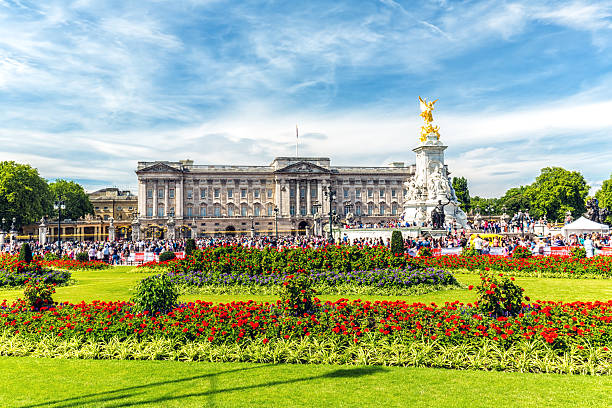
The counterintuitive correction comes early because it matters. The first thing I cut from this day is Buckingham Palace forecourt time and any attempt to build the morning around guard-watching. It sounds obligatory on a first trip, but for older parents it usually means more standing, more barriers, less shade, and more crowd choreography than reward. The Horse Guards Road edge of St James’s Park does more for the quality of this day than one more ceremonial tick on the list.
The route that feels elegant after lunch, not merely impressive on paper
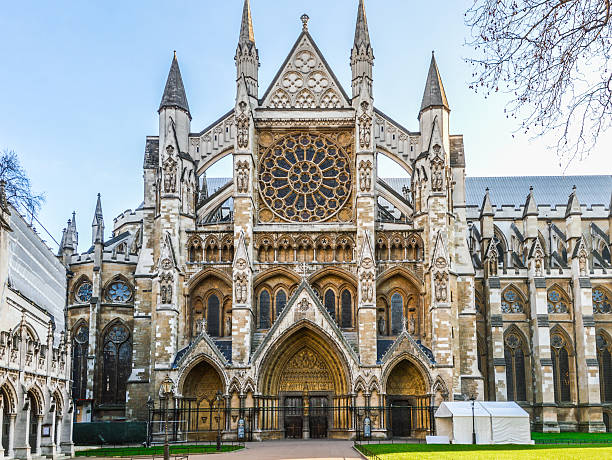
Start at Westminster Abbey. That is the right first move because the Abbey rewards concentration, and concentration is usually highest before London has extracted its small physical taxes: the curb steps, the crossings, the queue drag, the background noise, and the low-level fatigue of deciding what matters every ten minutes. Westminster Abbey’s official accessibility information notes that the North Door is step-free and advises visitors who find queueing difficult to speak to staff.
This is also where guided structure earns its keep. Westminster Abbey Private Tours are useful here not because older parents need a louder version of the facts, but because the route itself needs editing. Good pacing means not over-reading every chapel, not lingering in every lateral corner just because it exists, and not turning the Abbey into a piety test for tired travelers who simply wanted to feel its scale, monarchy, memory, and craftsmanship with dignity.
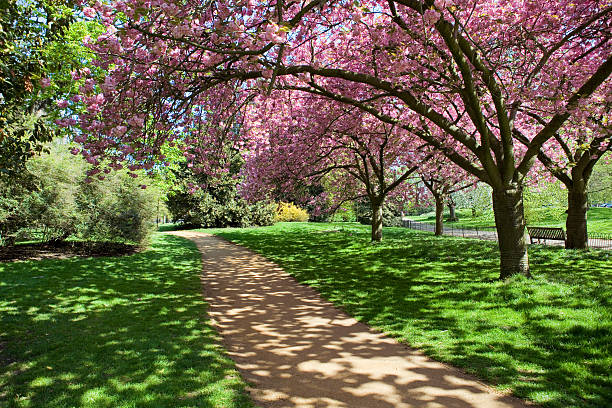
From the Abbey, move out into the open air before you ask anyone to absorb more history. The pause I like is not random; it is the Horse Guards Road edge of St James’s Park. This is the place where a Westminster-heavy morning stops feeling dutiful and starts feeling civilized. That edge gives you trees, benches, and a psychological exhale without demanding a second navigation decision. It is close enough to feel like continuation, but green enough to wash away the density of the Abbey interior. The Royal Parks’ information for Storey’s Gate Café on this side of the park notes indoor and outdoor seating, which is exactly why this zone works as a useful reset rather than a scenic detour.
If the family needs a proper midday table, take it seriously. Older parents do not usually benefit from turning lunch into a standing patch between attractions. A seated hour around St James’s or Piccadilly often pays back more than another landmark. If you are considering a more formal lunch, pause and ask the practical question first. See the current three‑course lunch menu before you decide whether that style suits your group better than a faster café pause.
The walking sequence inside Westminster should stay compact. Abbey first, then air, then park-side pause, then lunch. Do not scatter the morning across Parliament Square photos, bridge views, palace exterior ambitions, and church time all at once. Older parents usually enjoy Westminster more when it behaves like one readable precinct rather than four competing priorities. Whitehall has grandeur, but it also has noise, crossings, and a subtle pressure to keep moving. St James’s Park gives you the opposite feeling: that the day is under control.
There is also a dignity issue here that younger planners sometimes miss. Older parents do not necessarily want to announce fatigue; they often want not to have to mention it. A well-timed pause on the park edge solves that elegantly because it looks like part of the day, not a concession. No one needs to declare a need for rest. The family simply sits down, has coffee or lunch, watches the park traffic rather than traffic lights, and resumes with more goodwill than they would have after another twenty minutes of pavement debate.
After lunch, go east. This is the point in the day where many first-time itineraries become careless. They assume that because everything is “central London,” the next transition is trivial. It is not. London’s center is not tiring because distances are heroic; it is tiring because the city keeps making you restart. A river edge, a major road, a station approach, a security line, a fresh orientation problem: each one is manageable by itself, but older parents feel the cumulative reset long before younger travelers admit they do.
That is why the Tower belongs after Westminster, not before it. The morning is when you want the concentrated interior experience of the Abbey. The afternoon is when a partly outdoor historic site with distinct payoff points works better. At the Tower, you can take the temperature of the day quickly. If everyone is engaged, you do the Crown Jewels and a clean, selective circuit. If someone is tiring, you shorten. Either way, the site still feels complete in a way the Abbey or a museum rarely does when trimmed.
Keep Westminster walkable, then spend the car on the eastbound jump
Use a car for the district change, not for the Westminster cluster. That is the most important transport decision in this article.
A private car is unnecessary once the day is concentrated in central Westminster.
Within Westminster itself, the friction is not the raw mileage between points. It is the stop-start rhythm of crossings, security edges, and ceremonial streets. Loading in and out of a vehicle for tiny hops around Parliament Square, Whitehall, or the Horse Guards Road edge of St James’s Park usually makes the day feel more procedural, not smoother. In that compact zone, walking is the polished choice because it preserves continuity. You see one place become the next without breaking the family’s attention every seven minutes.
The premium spend changes the day only when it removes the hardest transition. If you are debating how much transport to buy into this itinerary, read the chauffeured London day guide first. Then apply the principle precisely: the Luxury Chauffeured London Private Tour earns its cost on the eastbound move from Westminster to the Tower, on the later transfer from the Tower to Bloomsbury, or on the final return to the hotel. It does not earn its cost by idling while you cover short Westminster stretches that are simpler on foot.
This is also why I rarely recommend the Tube for this specific day with older parents unless the family actively enjoys it. The Tube can look efficient on a map while still charging too much in hidden effort: escalators, platform waiting, crowd compression, and the little disorientation that comes from surfacing somewhere new and realizing the walk is not over. For younger travelers this is texture. For older parents on a first trip, it is often the moment the day stops feeling hosted.
The Tower’s own official accessibility page explains why this eastbound hop deserves special handling. Historic Royal Palaces notes that the Tower is a historic building with difficult stairs, cobbles, uneven ground, and limited wheelchair access; it also identifies taxi or coach drop-off on Lower Thames Street, just a short walk from the entrance. The same official page points to outdoor bench seating with backs and arm rests on Tower Green and outside the White Tower opposite the New Armouries Café, plus indoor seating in the café. Those are the details that change an older-parent visit from theoretically possible to genuinely manageable.
At the Tower, route discipline matters more than aspiration. Tower of London Private Tours are valuable because the site tempts families into accidental overreach. You do not need every staircase, every tower chamber, and every interpretive panel to feel that you have seen the Tower of London. With older parents, the point is to secure the emotional core of the site while keeping enough strength for the finish: Crown Jewels if that matters most, Tower Green, exterior views that carry the fortress atmosphere, and one or two story-rich interiors rather than a completionist crawl.
At the Tower itself, the mistake is entering with a “while we’re here, let’s also…” mindset. The right question is not what else you can squeeze out of the fortress; it is what version of the Tower will leave older parents with the feeling that they truly visited it. For some families that means the Crown Jewels and one story-rich circuit. For others it means more time outdoors in the courtyards, a slower walk through the core complex, and a deliberate seat before deciding whether one more interior space is worth it. The site rewards selectivity because its atmosphere is already doing so much work for you.
Notice, too, how different the Tower’s friction is from Westminster’s. Westminster tires through standing, crossings, and civic bustle. The Tower tires through surfaces, thresholds, and the persuasive pull of “just a little more.” Treating those as the same kind of walking is a planning mistake. They land differently in the body, which is why older parents can feel fine in Westminster and then suddenly much less fine once the Tower’s physical texture takes over.
There is another London-specific truth here. The Tower feels farther in the body than it does on the itinerary. That is because by the time you arrive, you have already spent energy in Westminster and at lunch. A good transfer interrupts that downward curve. A poor transfer accelerates it. That is why the right place for white-glove spending is the move east, not the meander within Westminster.
The British Museum is the right museum here, but only as a lift-forward finish
Choose the British Museum as the museum slot for this day, but only if you treat it as a selective final act rather than a second grand tour.
The British Museum wins this particular comparison because it can still feel substantial in a shortened visit and because its official accessibility material is unusually concrete. The museum states that it has two entrances, documents step-free access at the Montague Place entrance, notes that visitors with accessibility needs can speak to staff about skipping the queue, and lists multiple lifts, accessible toilets, and seating locations. Just as importantly, it also makes clear that some galleries and spaces do not currently have level or lift access. That is exactly the kind of honest access picture older-parent planners need.
If you want one page that grounds the decision, send the family the museum’s official accessibility information (https://www.britishmuseum.org/visit/accessibility-museum) before the trip. That is the page that confirms the museum can support a shorter, more controlled route without pretending the whole building is frictionless.
The non-obvious choice here is the entrance. For older parents, I would generally use Montague Place rather than treating Great Russell Street as the default arrival. The museum’s access guidance notes that Montague Place offers step-free access, that visitors with accessibility needs can alert staff if queue-skipping assistance is needed, and that the North lift sits immediately to the left inside. In practice, that means the museum begins as an orderly arrival rather than a forecourt production.
Inside, the British Museum is not the right third act because it is easy. It is the right third act because it is editable. The Great Court works as an orientation hub with lifts, cafés, toilets, accessible toilets, and places to sit nearby, so the family can shorten the visit without feeling they abandoned the site halfway through an obligation. That matters enormously with older parents. A museum that lets you conclude cleanly is worth more than a museum that demands one more room, one more staircase, one more landmark object, until the last hour of the day blurs into compliance.
My preferred short route is not a highlights stampede. It is one strong lane of attention plus a few anchor objects. Think in terms of one civilization zone, one or two famous works that matter personally to the family, and then out. If your parents love Egypt, do Egypt. If they are more captivated by the classical world, do one carefully chosen Greek or Roman stretch and stop there. The point is not to prove that you can navigate the whole museum. The point is to end the day with curiosity still alive.
If energy is average rather than exceptional, keep the British Museum route on the most forgiving logic the building offers. Arrive through Montague Place, orient in the Great Court, choose one main strand, and stay near the lifts rather than wandering upward simply because the collection is famous on every floor. The museum’s map and text alternative make clear that the main entrance lifts, Great Court lifts, North lift, South lifts, and West lift serve different ranges of floors, which is another reason open-ended drifting is a poor strategy here. A short museum finish should feel planned, not improvised.
There is a practical mood benefit to ending in the museum rather than starting there. Late in the day, older parents often enjoy the psychological permission to leave once they have seen enough. Museums are better at providing that permission than ceremonial outdoor zones, where the family can feel oddly unfinished. The British Museum, by contrast, lets you say, “we’ve seen our section, let’s go,” and the sentence sounds complete. That is a small but powerful difference in multigenerational travel.
I would also resist the impulse to make the museum responsible for every educational hope in the trip. This is not the day to cover the entire ancient world. It is the day to give older parents one final stretch of meaningful looking without forcing them into the museum behavior that exhausts even art lovers: constant choices, too many room numbers, and the feeling that every wrong turn costs both time and pride. A shorter route through the British Museum often leaves families more likely to return another day, which is a much better outcome than “finally done.”
This is where London-specific maturity matters. Many first-timers treat the British Museum as a free-for-all because admission is broad and the collection is enormous. For older parents, that scale is not an invitation to do more. It is a reason to decide more firmly. The museum’s own access information is telling you this by naming lifts, quiet areas, seating, and the galleries with limited lift or level access. In other words, even the institution expects you to route intentionally. If you want the longer comparison of British Museum versus other museum choices elsewhere in the trip, the museum-comparison guide goes deeper. For this exact older-parent day, though, the British Museum remains the one museum I trust as a shortened closer.
What to cut before this day starts feeling dutiful
Cut standing rituals and duplicate intensity before you cut the seated pause. That is the single best mistake-prevention rule for this London day.
The iconic pairing that is too much for most older first-time visitors is the Tower of London and the British Museum as two full, box-ticking visits on the same day. One of them has to be edited, and the museum should be the one edited first. The museum is the more elastic site; the Tower is the more physically specific one. Once you understand that, the whole day becomes easier to design.
If one parent turns out to be fascinated by the Tower in a deep way, believe the evidence in front of you and drop the museum. Do not protect the itinerary from reality. Protect the travelers. The Tower can easily grow into a proper half-day because even a selective visit includes security, courtyards, uneven surfaces, lines that may move unevenly, and the temptation to keep adding one more story-rich corner. When older parents are truly enjoying it, the best premium move is not to push onward heroically. It is to bank the win and keep the evening open.
Churchill War Rooms are the overvalued swap on this exact day. They are close to Westminster, so they can look like the low-friction museum choice. For older parents, nearness is misleading. The experience is immersive, but it is another dense interior after the Abbey, and it lacks the psychological lift that comes from daylight, bigger volumes, and easier exit logic. By the time a family reaches the War Rooms after Westminster, the atmosphere can feel absorbing in the wrong way: impressive, yes, but heavy, compressed, and harder to shorten elegantly.
Another thing to stop forcing is the belief that every first London day needs both ceremony and panorama. You do not need to add a Thames cruise, Tower Bridge interior, or a dome climb to make this day feel complete. In fact, these add-ons often flatten the mood because they introduce one more timetable or one more physical demand just when the family should be enjoying the fact that they have actually seen London, not merely sampled it.
If you need the even calmer version, the runner-up route is strong, not second-rate. Westminster Abbey, a serious pause at the Horse Guards Road edge of St James’s Park, lunch, and then a curated British Museum visit is a beautiful first London day for parents who love history but not medieval surfaces. It will feel less boastful and more humane. And humane is the better adjective for multigenerational travel than ambitious.
There is also an emotional consequence to cutting correctly. When you remove the wrong extra, the family stops negotiating. No one has to be the bad person who asks for a taxi, a café, or a hotel break. The day feels shorter not because the clock changed, but because the group is no longer carrying a private argument between duty and enjoyment. That mood shift is often the most valuable thing a well-routed day buys you.
Why this calmer London day leaves room for dinner and tomorrow morning
The real success metric for this itinerary is how everybody feels at six in the evening, not how many admission sites were technically logged.
London in this part of the city does not batter the body through one dramatic challenge. It does it through accumulation. You stand longer than expected outside one site. You cross more lanes of traffic than expected around another. You walk on old stone, then on cobbles, then on polished museum flooring. You queue for security, then for toilets, then for a café, then for a photo someone felt obliged to take. None of these is catastrophic. Together, they decide whether older parents are still curious by late afternoon or simply cooperating.
That is why benches, lifts, and calmer transitions matter more than the brochure version of “seeing the essentials.” At Westminster Abbey, step-free entrance logic and staff help around queue difficulty change the tone before the day begins. At the Tower, knowing where seating with backs and arm rests actually exists changes whether the site feels punishing or interesting. At the British Museum, lifts, accessible toilets, and the ability to enter via Montague Place change whether the last act feels manageable or like one obligation too many.
The mood consequence is just as real. A day routed this way still leaves enough appetite for London afterward. You can go back to the hotel, sit for a while, change, and actually want to go out again. That is the difference between making a thoughtful dinner reservation and cancelling it because the family has become politely finished with one another. If the evening matters, keep the museum short, keep Westminster humane, and let the car solve the hardest jump rather than asking older parents to perform one more piece of urban competence for its own sake.
This matters for the next morning as much as for the evening. Families often underestimate how much a badly packed London day can leak into tomorrow: breakfast starts later, the museum day that was meant to feel leisurely already begins with recovery, and the trip quietly becomes a sequence of catch-ups. A calmer first classic day helps the rest of the stay because it proves that London can be absorbed without constant overreach. That confidence changes how the whole family approaches the remainder of the trip.
This is also where the commercial value of private pacing becomes easiest to feel without a hard sell. The benefit is not abstract comfort. It is getting back the part of the trip that travelers actually remember: the sense that London was gracious to them, not something they survived. Rather than padding the late afternoon with another famous name, decide whether lunch should be the formal moment or dinner should be. For a classic midday table, you can See the current three‑course lunch menu (https://www.theritzlondon.com/restaurant-three-course-lunch-menu). If the plan is to stay lighter at midday and save ambition for evening, review Ikoyi menu & reservations (https://www.ikoyilondon.com/) and protect that reservation by refusing one more attraction after the museum.
That is the right point to hand the planning off. If you want this day built around your parents’ pace, your hotel, your lunch style, and the point at which the car truly helps, Inquire now.
FAQ
Is Westminster Abbey, the Tower of London, and the British Museum really doable in one day with older parents?
Yes, but only in the edited version described here. Westminster Abbey should be the main morning interior, the Tower should be selective rather than exhaustive, and the British Museum should be treated as a short, controlled finish. If you try to do the Tower and the museum as full visits, the day usually stops being enjoyable.
Should we use a private car for the entire day?
No. The best use of a car is the long jump between districts and the hotel return, not the compact Westminster section. Once you are concentrated around the Abbey, Whitehall, and the Horse Guards Road edge of St James’s Park, walking is usually smoother and less disruptive than repeated short vehicle hops.
Why is the British Museum better than Churchill War Rooms for this particular day?
The British Museum is easier to shorten without disappointment and has clearer lift, seating, and entrance infrastructure for a selective finish. Churchill War Rooms may look easier because they are near Westminster, but they add another dense interior when many older parents benefit more from a museum with more air, more exit options, and a clearer route strategy.
What should we cut first if my parents start tiring after lunch?
Cut the museum first, or cut it down to a single targeted loop. Do not cut the seated pause and then try to rescue the day by pushing onward. If the Tower is going especially well and energy is still good, keep the Tower and skip the museum. If the Tower feels physically taxing, leave after the core sights and head back west or to the hotel.
Is the Tower of London the wrong choice for some older travelers?
Yes. It is the first site to remove if someone dislikes uneven ground, historic stairs, cobbles, or the physical feel of old fortifications. The site is deeply rewarding, but it is not the gentlest major attraction in central London. That is why the calmer runner-up plan swaps more time into Westminster, St James’s Park, lunch, and the museum.
Should this be our first full day in London?
Usually yes, but not your arrival day after an overnight flight. This is a substantial city day even when well edited. It works best when everyone has slept properly, eaten breakfast, and can start with real attention. On a jet-lagged arrival day, choose something shorter, greener, and easier to abandon if fatigue lands early.
How much time should we allow at each stop?
As a planning rule, allow roughly seventy-five to ninety minutes for Westminster Abbey, at least an hour for the park pause and lunch combined, around ninety minutes to two hours at the Tower depending on interest and pace, and about an hour to ninety minutes at the British Museum if it remains the third act. Those are judgment ranges, not goals to max out.
Does a private guide really help older parents, or is this mostly about transport?
Both can help, but they help in different ways. In Westminster Abbey and at the Tower, the guide’s value is route editing, timing, and removing decision drag. Transport helps only at the right moments. The mistake is buying all-day vehicle coverage and assuming it solves a day whose real friction often lies in queues, surfaces, and poorly timed transitions.
If you’re interested in any private tours of London, please reach out to us.















 So if you are looking for the absolute best in London & surroundings with authentic local fully-licensed native guides whose English you can actually understand and with an exclusive and amazingly fun itinerary













