London’s Royal Summer Access: Buckingham Palace State Rooms, Windsor and the Ticket Windows That Shape the Plan

Updated
When a royal day fails before the first room
The vulnerable version of this day looks persuasive on a map. A traveler reserves Buckingham Palace late in the morning, sees that Windsor is west of central London, and adds the castle for the afternoon. The distances appear manageable. Both names belong to the same royal story. The failure arrives through a sequence of small assumptions: security takes longer than expected; the State Rooms visit cannot be shortened as freely as a museum visit; the one-way route continues through the garden; the onward journey begins from the visitor exit rather than from an imagined pickup at the forecourt; and the Windsor visit reaches its most time-sensitive component, St George’s Chapel, after visitor access has ended.
Nothing in that scenario requires a dramatic disruption. It is enough for each moving part to consume its normal share of the day. Buckingham Palace advises visitors to allow between two and two and a half hours, operates 15-minute admission slots, uses airport-style security and sends the summer route along roughly half a kilometre of garden path before the exit. Windsor Castle advises a further one and a half to two hours, sits at the top of a steep hill, and closes St George’s Chapel to visitors at 16:00. A schedule that allocates only the headline visiting times but not the approaches, screening, fixed admissions and internal closing times is already underfunded.
The planning task is therefore not “How many royal palaces fit into a day?” It is “Which access conditions must overlap for one coherent royal-history day to remain intact?” For first-time visitors, the answer usually begins with one principal interior, one secondary layer of context and a fallback that preserves the historical theme without pretending that every working palace opens on demand. The map matters only after the calendar and the admission rules have been read.
The official starting point is the Royal Collection Trust’s 5 June 2026 opening-times and closure list. It states plainly that the official residences are working royal palaces and that opening arrangements can change at short notice. That warning is not ceremonial wording. It is the condition that should govern the entire itinerary.
The four clocks behind one royal-history day
Buckingham Palace and Windsor Castle do not share a single opening regime. A useful plan tracks four separate clocks. The first is the seasonal calendar: whether the site opens at all on the chosen date. The second is the admission clock: the reserved entry time and the screening process attached to it. The third is the interior clock: the time at which a chapel, apartment or part of the route becomes unavailable even though the wider site remains open. The fourth is the transfer clock: the time needed to move from the actual end of one visitor route to the next entrance, including station access, interchange and disruption margin.
Those clocks can point in different directions. In July and August 2026, Buckingham Palace’s State Rooms are scheduled to open daily, while Windsor Castle follows a Thursday-to-Monday pattern. A Tuesday or Wednesday may therefore offer Buckingham Palace access but no standard Windsor Castle visit. In September, the Buckingham Palace State Rooms also move to Thursday through Monday, so the apparent date overlap improves, but the Palace closes earlier and its last admission moves earlier. The date that admits both sites is only the beginning; the available slots and the purpose of the Windsor visit still decide whether the pairing is sensible.
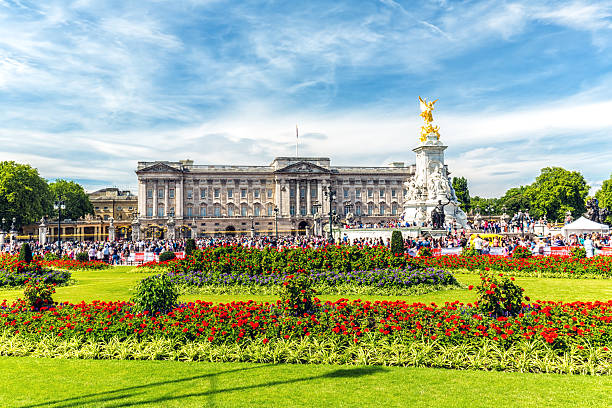
The dated 2026 position. The State Rooms at Buckingham Palace are scheduled to open from 9 July through 31 August, daily from 09:30 to 19:30 with last admission at 17:15. From 3 through 27 September, they are scheduled to open Thursday to Monday from 09:30 to 18:30 with last admission at 16:15. Windsor Castle is scheduled to open Thursday to Monday from March through October, 10:00 to 17:15, with last admission and gate closure at 16:00. These are published operating windows, not guarantees that every room or component will be available.
The same official schedule records a material 2026 change inside Buckingham Palace. The White Drawing Room is not accessible during the Summer Opening because of the Reservicing programme. The Ballroom and parts of the Music Room and Bow Room are obscured by hoardings, although visitors still pass through them. At Windsor, the Semi-State Rooms were listed as closed and scheduled to reopen in autumn 2026. For a traveler whose interest is specifically the classic decorative sequence, those details affect the value of the visit; “State Rooms open” is not the same proposition as “the familiar full circuit is visible.”
Verified fact. The dates, operating days, last admissions and named 2026 room restrictions above come from the official Royal Collection Trust schedule.
Editorial interpretation. A first visit should be judged by the strongest accessible narrative, not by the number of royal addresses collected. A reduced Buckingham Palace route can still be highly worthwhile, but it should not be sold to oneself as an unchanged version of a past summer opening.
Route judgment. Any day combining central London and Windsor should be built around the less flexible clock. If St George’s Chapel is essential, its visitor closing time carries more weight than a late Buckingham Palace admission. If the Buckingham Palace State Rooms are the once-only priority, the fixed Palace slot should not depend on a tight inbound rail connection from Windsor.
What a Buckingham Palace admission time really controls
The printed time is not merely a suggestion for joining a general queue. Royal Collection Trust says the Summer Opening operates in 15-minute slots and asks visitors who already hold admission to arrive at the time shown, rather than substantially earlier. This creates a narrow arrival obligation followed by a comparatively broad visit. It is a one-way experience with security at the beginning and the garden route at the end, so it does not behave like a gallery that can be entered early, sampled quickly and exited through the same door.
The Palace’s official practical information recommends two to two and a half hours. That allowance is not just for looking at pictures and furniture. It absorbs screening, orientation, the State Rooms sequence and the long garden exit. The Garden Café and other summer refreshments are at the end of the route, as are the Palace toilets and baby-care facilities. A party that arrives needing facilities, carrying unsuitable luggage or expecting a pause before the rooms may discover that the operational order is the opposite of what it assumed.
A listed last-admission time means that entry is permitted; it does not mean the slot is ideal for every purpose. Compare any late availability with the published closing time and the Trust’s recommended duration. A traveler who wants the fullest interpretive pace should normally choose earlier than the final slot, while a Windsor-first pairing may accept a later slot as part of an explicit tradeoff.
Baggage is a particularly consequential dependency. Bags larger than 45 by 20 by 30 centimetres cannot be taken into Buckingham Palace, and backpacks may not be worn inside. The official guidance points to nearby storage, including Victoria Station, but using it is a separate movement task before admission. A check-out day, airport arrival or hotel-change day should therefore not attach the Palace visit to luggage unless storage has already been resolved. The same principle applies to long umbrellas, pushchairs and other items that may need to be checked and reclaimed under the current rules.
The practical consequence is that the Palace booking controls more than the moment of entry. It fixes the latest safe time to finish any preceding activity, determines whether lunch can be leisurely or functional, and influences where a vehicle or onward route should meet the party after the one-way visit. It also determines whether Windsor is still meaningful. A 09:30 Palace admission can leave an afternoon, but the official visit allowance, garden exit and transfer must all be honored. A late Palace admission may suit a Windsor-first day in July or August, but it transfers the risk: any rail delay or overlong Windsor visit now threatens the fixed London slot.
For travelers comparing the wider palace landscape before committing, compare Kensington Palace, Hampton Court Palace and Windsor Castle by period, geography and depth. That comparison is useful before the seasonal State Rooms opening exerts its understandable pull.
Windsor is a stack of access conditions, not one opening time
Windsor Castle’s headline hours conceal several different experiences. The Castle precincts, the State Apartments, Queen Mary’s Dolls’ House and St George’s Chapel do not always share identical practical availability. The entire Castle or the State Apartments can close at short notice because Windsor remains a working royal residence. The Dolls’ House may have limited access on busy days. The Chapel closes to visitors at 16:00, is closed to visitors on Sundays and may be restricted during services or on especially busy days. A Castle admission can therefore remain valid while the element that mattered most to a particular traveler is unavailable.
The official Windsor Castle practical guidance recommends allowing one and a half to two hours and emphasizes the steep hill and long distances within the visitor route. That duration should be read as a minimum planning envelope for a substantive first visit, not as a promise that every party will complete the same content in the same time. Security screening, a one-way route and the physical approach all sit outside the simple act of studying the rooms. When a booking confirmation assigns an arrival time, use that time as the fixed obligation rather than treating the 16:00 gate closure as a floating window.
St George’s Chapel creates the most important internal deadline. A traveler interested in the Order of the Garter, royal burial, late medieval architecture or the continuity between monarchy and worship cannot treat the Chapel as an optional final room. It should be protected early enough that a queue, slower State Apartments pace or a temporary restriction does not erase it. Sunday requires an explicit decision: the Chapel is not open for ordinary sightseeing, although worshippers may attend services. Attendance at worship should never be presented as a workaround for sightseeing access.
Luggage again changes the route. Windsor’s official guidance says large backpacks and pushchairs are not allowed in the State Apartments and may be stored at the cloakroom, reached after a walk of roughly ten minutes from the Admission Centre that is largely uphill, with stairs near the entrance. Very large or heavy luggage may be admitted only at staff discretion if it can pass through screening, and the Trust strongly recommends leaving luggage at the airport or in central London when visiting en route. This makes Windsor a poor improvisation on a transfer day unless baggage handling is already solved.
The useful distinction is between site success and subject success. Site success means the party entered Windsor Castle. Subject success means the parts that justify the journey were available and received enough time for interpretation. A Sunday visit without the Chapel may still be excellent for decorative arts and royal residence history. It is not equivalent for someone whose central interest is the Chapel and royal burial. The planning form should record the desired components, not merely “Windsor Castle.”
Can Buckingham Palace and Windsor coexist on the same date?
They can, but coexistence is conditional rather than automatic. The combination is strongest when the date opens both sites, one visit has an early or late slot that creates a genuine block of time, the party is comfortable with a long day, and the historical purpose does not require maximum depth at both. It weakens quickly when the Chapel is essential, mobility slows the Windsor approach, luggage is present, an evening commitment is fixed, or the day falls close to engineering work and no alternate transfer has been prepared.
Windsor first, Buckingham Palace later
This sequence usually gives Windsor’s internal clocks priority. An early Castle arrival places the Chapel, State Apartments and hill before the day’s accumulated delay. In the main July and August Buckingham Palace window, a later Palace admission can then anchor the return to London. The advantage is interpretive: Windsor is not reduced to whatever remains before its 16:00 sub-closures. The weakness is operational: the Palace slot becomes a hard downstream appointment, so the Windsor departure must be governed by a pre-agreed threshold rather than by the feeling that there is time for one more room or a leisurely town pause.
A Windsor-first day should therefore have two departure times in mind. The preferred departure preserves a calm transfer and arrival at Buckingham Palace. The absolute departure is the point after which the Palace booking is at material risk. The gap between them is the contingency margin. It belongs to the itinerary even when no disruption occurs; it is not spare time waiting to be filled. If the party reaches the station ahead of plan, that margin has done its job.
Buckingham Palace first, Windsor later
This sequence protects the scarce seasonal State Rooms opportunity, especially when the earliest Palace admission is available. It is also geographically intuitive for travelers based in central London. Yet it is the more fragile choice for a full Windsor experience. The Palace’s recommended duration, the one-way garden exit, movement to Paddington, the rail journey and the uphill Castle approach all occur before Windsor’s last admission and the Chapel’s 16:00 visitor closing. A modest overrun in several places can leave the party technically admitted to Windsor but unable to see the component that justified the pairing.
For that reason, Buckingham-first works best only when Windsor is deliberately scoped: perhaps the State Apartments are the priority and the Chapel is not essential, or the party accepts a brisk, selective visit. It should not be described as two complete palace visits. For a first-time royal-history traveler seeking interpretation rather than names on a checklist, separate days normally produce a better intellectual return.
Separate days
Separate days are not an admission of poor logistics. They are often the choice that protects both the seasonal interior and the wider royal narrative. Buckingham Palace can then be paired with St James’s, The Mall, the Royal Mews or The King’s Gallery in central London, while Windsor receives a morning arrival and enough time for the Castle, Chapel and town context. Travelers deciding how Windsor should sit within a longer stay can decide whether Windsor belongs on arrival day or a separate London day before fixing the rest of the admissions.
- Combine the sites when both are open, a suitable early or late Palace slot exists, the party moves comfortably, luggage is absent, and one visit may be intentionally selective.
- Separate the sites when St George’s Chapel matters, the party wants full interpretation at both, there are access or mobility considerations, or a fixed evening makes the return unforgiving.
- Abandon the pairing when the only available slots rely on an unbuffered transfer, when current closure notices remove the desired interior, or when the date itself opens only one of the two sites.
The Westminster–Paddington transfer is a chain, not a single journey
The phrase “Buckingham Palace to Windsor” compresses several movements that fail in different ways. The Palace visit ends after a one-way interior and garden route. The party must then reach a useful central transport point, enter the Underground or road network, arrive at Paddington, find the correct National Rail departure, and account for the onward Windsor branch or whichever current rail plan is operating. At Windsor, station arrival is followed by the uphill approach and security. A timetable that measures only train-in-motion time understates the transfer.
Transport for London’s official Circle line route page lists both Westminster and Paddington and identifies Paddington as a National Rail interchange. That establishes a legible same-line piece of the central-London geometry, but it does not make the whole movement seamless. Westminster is a line-of-route reference, not the Palace’s visitor exit; the one-way route does not end on a Tube platform, and live service conditions can alter the best choice. Depending on the actual exit, party mobility, heat, road conditions and luggage, a road transfer to Paddington or a different station approach may be more rational than following the schematic line map.
The Paddington rail option commonly depends on a main-line movement toward Slough and an onward Windsor connection. That creates a transfer within the transfer. A delayed arrival at Slough, a platform change or a retimed branch service can consume a margin that looked generous when only the scheduled running time was considered. The operational lesson is not to add a universal number of minutes; it is to identify every handoff and decide which missed handoff would threaten the next fixed admission.
A dated example shows why the rail check belongs to the day, not merely to initial planning. National Rail’s engineering notice for Saturday 22 August 2026 records amended late-night Great Western Railway services from Paddington because of work between Southall and Hayes and Harlington, and separately notes a retimed Slough to Windsor and Eton Central departure. Those particular changes may not affect a daytime palace pairing, but the notice demonstrates the mechanism: engineering work can change the Paddington corridor and the Windsor branch independently. The correct inference is to check the exact travel period, not to treat one dated notice as a permanent timetable.
Road transport removes the rail interchange but not uncertainty. Central London congestion, restricted stopping locations and the gap between a palace façade and the operational visitor exit can all matter. A private vehicle is useful when it reduces walking, handles a known pickup point or provides a controlled fallback between sites. It is not a license to tighten the schedule. The material outcome is a cleaner handoff and a contingency option, not a claim that traffic can be defeated.
Build the day around thresholds, not optimistic estimates
A specialist itinerary distinguishes an estimate from a threshold. An estimate is how long the transfer may take under expected conditions. A threshold is the latest moment at which the party can leave one stage without placing the next fixed stage at unacceptable risk. The threshold is more useful because it converts a vague buffer into a decision. When the clock reaches it, the itinerary changes behavior: a café stop is dropped, the longer interpretation is concluded, or the fallback replaces the original second site.
For a Windsor-first plan, the threshold protects Buckingham Palace admission. It should include station access, the rail handoff, Paddington exit, the final approach to the Palace and security arrival. For a Buckingham-first plan, the threshold protects Windsor’s last admission and, if relevant, St George’s Chapel before 16:00. Because the Palace visit is one-way and officially allocated up to two and a half hours, the threshold cannot assume the group will reverse course or omit the garden exit when running late.
Three forms of margin deserve separate treatment:
- Access margin covers security, ticket checks, the correct entrance and any pre-arranged step-free or specialist route. It belongs immediately before each admission.
- Movement margin covers walking from the actual exit, station circulation, interchange and the approach at Windsor. It belongs between sites, not inside the nominal visit duration.
- Recovery margin is the time or alternative content that prevents one delay from destroying the entire day. It may take the form of a later flexible activity in St James’s, an unbooked meal window or a decision to keep Windsor on its own date.
This is the point at which tailored planning has a concrete purpose. Several dated admissions, their applicable amendment terms, a Windsor transfer and a party’s actual pace must be coordinated as one system rather than booked as independent attractions. A private guide can also carry the historical thread across the gap, so the transfer does not become dead time between two audio guides. When that level of coordination would materially reduce risk, Inquire now.
That service connection should remain proportionate. No guide or driver can guarantee that a working palace will keep every room open or that a railway will operate without disruption. The value lies in sequencing, monitoring, interpretation and knowing when to invoke the agreed alternative. Travelers who want the royal day integrated into a larger stay can explore private London touring rather than solving each admission in isolation.
Fallbacks should preserve the subject, not merely fill the hours
A credible fallback is chosen before the key interior becomes unavailable. It should answer the same historical question at a different site, preserve the same geography with a different medium, or deliberately change the day’s thesis. “Anything nearby” is not enough. For first-time royal-history travelers, the fallback should be easy to explain in one sentence: what story remains, what story is lost, and why the replacement is still worth the time.
If Buckingham Palace State Rooms are unavailable
The closest thematic fallback is to stay in the Buckingham Palace and St James’s geography while changing the type of access. The King’s Gallery offers rotating exhibitions drawn from the Royal Collection, while the Royal Mews interprets ceremonial movement, carriages and the working infrastructure of monarchy. Their schedules are separate from the State Rooms schedule, so each must be checked independently; neither should be assumed open because the Palace façade is accessible. Combined with The Mall, St James’s Park and exterior context around the working palaces, they can sustain a serious discussion of representation, ceremony and royal administration without claiming entry to the sovereign’s State Rooms.
This alternative preserves central-London efficiency and is especially useful when a Buckingham Palace closure is announced shortly before the day. It does not reproduce the spatial experience of the State Rooms. That loss should be stated plainly. The gain is a more focused look at the Royal Collection or the machinery of ceremonial travel, with less pressure to cross London or secure another major palace admission at the last moment.
If Windsor’s State Apartments or Chapel are unavailable
First decide whether Windsor still justifies the journey. If the Castle remains open but the Chapel is closed, the day may still work for visitors centered on the State Apartments, the Royal Collection and the castle as a continuing royal residence. If the entire Castle or the State Apartments close and the interior was the reason for traveling, a town-only visit is rarely an equivalent substitute for a first-time royal-history traveler. It may be pleasant, but it should be described as a different day.
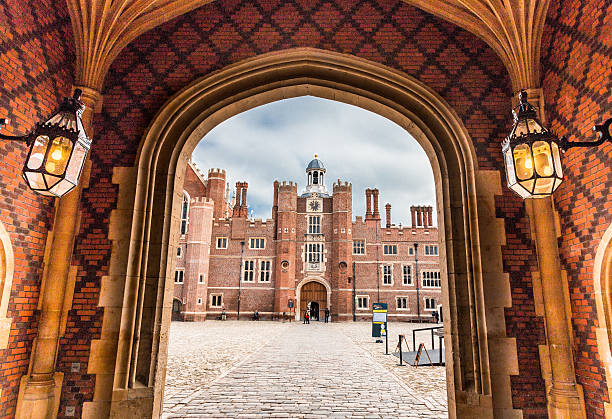
A central-London pivot is often cleaner than waiting in Windsor for access that will not return. Kensington Palace changes the period and emphasis toward royal domestic life, Queen Victoria and later monarchy. Hampton Court Palace changes it more decisively toward Tudor and Stuart court culture, architecture and gardens. Both require their own live availability check, and Hampton Court introduces another out-of-centre journey, so neither should be treated as an instant drop-in. Their value is as preselected alternatives with known admission options, not as names discovered after a closure message arrives.
For a more expansive royal sequence across several days, build a royal London itinerary without palace fatigue. The useful distinction is chronological and interpretive: Buckingham Palace for state representation and the modern working monarchy, Kensington for domestic and biographical strands, Hampton Court for court culture across earlier dynasties, and Windsor for the long continuity of fortress, residence and chapel.
If the transfer fails but both sites remain open
This is the fallback most often omitted. A missed train, prolonged security queue or delayed exit may make the second admission unrealistic even though nothing is officially closed. The correct response is not to chase the original plan until both visits are diminished. If the party is still in London, retain a central royal-history afternoon. If it is already at Windsor, protect the Castle visit and release the later London booking according to its terms rather than truncating the site that is actually accessible.
A fallback can also be temporal. Move Windsor to another day and use the recovered block for St James’s and Westminster; or keep Windsor fixed and shift Buckingham Palace to another available summer slot. This requires holding the broader trip with enough flexibility that one move does not create three new conflicts. The article on how to place a royal day within a three-day London itinerary is useful as a parent plan, particularly when a scarce seasonal opening competes with museums, the Tower and evening reservations.
Interpretive depth changes the timing decision
Two travelers can face the same schedule and require different answers. One wants to see the State Rooms because the summer opening is rare within the dates of the trip. Another wants to understand how royal ceremony, collecting, residence and worship operate across institutions. The first may accept a focused Palace visit and omit Windsor. The second may prefer Windsor on its own day, where the Castle precincts, State Apartments and Chapel can be read as parts of one long historical system.
Buckingham Palace rewards preparation because much of its meaning lies in function. The State Rooms are not simply decorated interiors; they are settings for reception, display and the performance of constitutional monarchy. The 2026 reservicing restrictions make this especially important. Where hoardings obscure parts of rooms or a major room is inaccessible, a visitor who understands the intended ceremonial sequence can still read what remains. A visitor expecting an uninterrupted visual spectacle may feel the difference more sharply.
Windsor’s strength is continuity across periods and uses. The physical ascent, fortified setting, royal apartments and collegiate chapel build a narrative that is difficult to compress without loss. The Chapel’s separate hours and Sunday status are therefore not minor practical notes; they determine whether the day can include the institutional and devotional strand that distinguishes Windsor from a purely residential palace.
This is why packing several palaces into a prestige checklist is usually counterproductive. Each site answers a different question. The better day sets an inquiry before it sets a route. It might ask how the monarchy stages public authority, how royal residence changes from fortress to ceremonial palace, how collecting supports representation, or how chapel and dynasty intersect. Once that question is clear, the site hierarchy becomes easier and the fallback can preserve meaning rather than merely preserve occupancy.
Party profile can make a nominally possible day unwise
The published hours apply to everyone; the usable hours do not. A party with older parents, young children, mobility needs, sensory sensitivities or a slower interpretive pace requires a different margin from two adults accustomed to city transport. That is not a reason to exclude either palace. It is a reason to stop treating the official visit duration as the total door-to-door commitment.
At Buckingham Palace, the summer route includes a gravel garden path of about half a kilometre, toilets are at the end rather than the start, and alternative arrangements for disabled visitors should be requested before booking through the specialist team. At Windsor, the Castle sits on a steep hill and the visitor route covers long distances. The site is described as accessible, but individual routes, parking or assistance needs still require advance coordination. A step-free route can change entrance procedure and timing; it should be part of the admission plan, not an adjustment attempted after arrival.
Children add operational details rather than merely a shorter attention span. Buckingham Palace requires pushchairs to be checked and offers baby carriers subject to availability. Windsor allows pushchairs around the grounds but not inside the State Apartments, where they must be left at the cloakroom. A family that needs feeding, toilets or equipment changes at predictable intervals should build those needs around the facilities actually available along each one-way route.
Heat and rain also change the transfer without changing the opening hours. Summer heat makes the garden exit, station walking and Windsor hill more consequential. Rain increases umbrella handling, slows groups and can make a nominally short outdoor connection unpleasant. These conditions do not justify invented universal buffers. They justify a party-specific threshold and a backup mode of movement.
For travelers whose wider London plan includes older parents or easier routing, the same principle should govern other icons: protect the constrained entrance, reduce unnecessary crossings and give one major interior enough time to be rewarding. The royal day is successful when the party can still interpret what it sees, not when it arrives at the final gate depleted.
A verification sequence for the week and the morning of the visit
The planning method can remain evergreen while every dated operational detail is allowed to expire. The source hierarchy matters. Royal Collection Trust controls the palace opening and closure information. The booked admission confirmation controls the selected time and any ticket-specific instructions. Transport for London and National Rail control live or planned network information. Hotel desks, mapping applications and third-party summaries may help with orientation, but they should not overrule the official source on a working-palace closure or a transport alteration.
When the trip is first booked
- Confirm that the chosen date sits inside Buckingham Palace’s current State Rooms season and on a Windsor Castle operating day.
- Read the room-specific notices, not only the site headline. Record whether the State Apartments, Chapel, Dolls’ House, Semi-State Rooms or named Buckingham Palace rooms affect the purpose of the visit.
- Reserve the less replaceable admission first, then test the second site against the full visitor duration and transfer chain. Do not reserve both merely because the booking engine offers times.
- Resolve luggage, mobility arrangements, pushchairs and any specialist access route before finalizing the sequence.
- Choose the fallback and note which part of the royal-history theme it preserves.
During the week before
- Reopen the Royal Collection Trust closure information and compare it with the booking confirmations. Working-palace use can produce short-notice changes.
- Check planned engineering work for the exact date and the relevant Paddington and Windsor services. A notice elsewhere on the corridor may alter the assumed interchange or frequency.
- Check Transport for London status and planned closures for the central approach, then identify one alternate route to Paddington or the selected pickup point.
- Review the latest arrival instructions, security rules and bag dimensions rather than relying on a screenshot saved months earlier.
- Reconfirm any step-free, specialist-sales or vehicle arrangements whose entrance or pickup instructions differ from the standard route.
On the morning
- Check the official palace pages again for same-day closure notices, especially when a major interior is indispensable.
- Check live rail and Underground status before leaving the hotel and again before committing to the cross-city transfer.
- Carry the admission confirmations and use the entrance and time stated on them.
- Restate the departure threshold and fallback to the whole party. A contingency is useful only when everyone knows when it takes effect.
The exact official sources used for this plan are the Royal Collection Trust opening schedule, the Buckingham Palace practical page, the Windsor Castle practical page, Transport for London’s Circle line route and the dated National Rail engineering notice linked above. The first three establish access and visitor-route constraints. The TfL page establishes the Westminster–Paddington line geometry. The National Rail notice illustrates why a journey-specific engineering check remains necessary. None should be stretched beyond the claim it supports.
What remains true after the 2026 dates expire
The 2026 dates, room restrictions and engineering notice will age. The planning logic should survive them. Buckingham Palace’s State Rooms are seasonal rather than a year-round assumption. Both Buckingham Palace and Windsor Castle are working royal sites whose arrangements may change. Timed admission, security, one-way visitor routes and sub-site closing times can control the day more strongly than straight-line distance. Windsor requires a transfer chain and an uphill approach. A fallback should preserve the historical purpose rather than simply occupy an empty afternoon.
When a new season is published, replace the dates before changing the reasoning. Rebuild the overlap of operating days. Recheck the last admissions and any room-level restrictions. Test the current transport plan against the actual admissions. Reassess whether a combined day still offers enough interpretation. The answer can change from year to year, and even between two dates in the same month.
The most reliable first-time plan is often one major royal interior per half-day, with the second half anchored nearby or left flexible. A same-day Buckingham Palace and Windsor pairing can be made coherent, particularly with Windsor first and a later Palace slot during the longer summer window, but it should be selected because the clocks align and the party accepts the tradeoff. It should never be the default simply because both names are prestigious.
At a substantive article update, after an official source correction, or during final trip confirmation, reopen the Royal Collection Trust pages and the transport sources. Replace any affected date or rule before relying on the plan. Verify the exact date, the specific interior, the printed admission time, the current security and baggage rules, and the live route. The seasonal window is the invitation; the recheck is what turns it into a workable day.
If you’re interested in any private tours of London, please reach out to us.















 So if you are looking for the absolute best in London & surroundings with authentic local fully-licensed native guides whose English you can actually understand and with an exclusive and amazingly fun itinerary













