Chartwell After Westminster: Where Churchill’s Story Needs a Country Day from London

Updated
Verdict: Chartwell is worth a separate country day from London after you have already seen Westminster; it is not a sensible same-day extension to a full Westminster programme. Westminster establishes Churchill as a public figure operating through Parliament, Whitehall and the wartime state. Chartwell reveals the private working life behind that public role: the house, study, studio, hillside and domestic scale that the city cannot supply.
That order works because Westminster and Kent demand two different operating modes. From the Paddington side of Hyde Park, a guest must first cross toward Westminster, absorb security and queue time, then leave the capital again for Westerham. What looks on a map like “one more Churchill stop” becomes repeated loading, waiting and narrative interruption. Churchill’s London explains authority; Chartwell explains the person who had to live with it.
The clearest exception is a first London visit with only two or three full days, or a traveler whose interest is mainly wartime command rather than character, home and landscape. In that case, stay in the city, see Westminster properly, and save Chartwell for a return. A concentrated route through Westminster, Whitehall and the Churchill War Rooms will deliver more than a rushed country detour.
Is Chartwell worth a day trip from London after Westminster?
Yes—when the purpose is to complete a Churchill story rather than collect another famous address. Chartwell earns the journey for repeat visitors, serious history travelers, couples and small groups who want interpretation beyond the wartime headline, and families with older children who respond to a real house and landscape better than to another sequence of galleries. It is less persuasive for travelers who dislike country houses, want only military history, or resent giving a large share of one London day to the road.
The decision turns on a simple distinction. Westminster is institutional. Parliament Square, the Abbey, Whitehall, the Cenotaph and the rooms beneath King Charles Street show the public machinery around Churchill: monarchy, legislature, government, remembrance and wartime command. Chartwell is personal and productive. It shows how a political identity was maintained through writing, painting, collecting, gardening, building and the deliberate management of a country-house setting.
That is why the strongest sequence is not “more Churchill in one day.” It is a change of scale on the following day. In Westminster, a guide should make the state legible. At Chartwell, the same interpretive thread should make the individual legible. The movement from public corridor to private hillside is the argument of the itinerary, not dead time between two attractions.
The overvalued default most readers should reconsider is combining the Churchill War Rooms and Chartwell simply because both carry Churchill’s name. The War Rooms require concentration, narrow corridors, standing, audio or guided interpretation and a substantial emotional register. Chartwell then asks for a road transfer, a slower domestic eye and enough unhurried time to notice how rooms, paintings and views work together. Put them back to back and one of the two becomes a summary.
Our editorial call is firm: see Westminster first, sleep in London, then give Chartwell its own country day. That sequencing produces the clearest historical payoff while keeping London as the best base.
The London-base matrix: two days beat one compressed day
Remain based in London and treat Chartwell as a dedicated outward-and-return journey. A Kent overnight is rarely necessary unless the trip already includes another Kent objective, while a same-day Westminster-and-Chartwell combination usually spends too much attention on transitions and too little on either place. A hotel near St James’s or Westminster may simplify the city chapter; a hotel on London’s west side may lengthen it. Neither location makes the full same-day combination a better idea.
Best fit: London base, Westminster one day, Chartwell the next
Historical payoff: This arrangement gives both places enough room to answer different questions. The first day can end after Whitehall and the War Rooms, leaving time for a hotel pause or an unhurried London evening. The second begins at the hotel with the institutional frame already established.
Operational effect: The Kent drive becomes a bridge between two chapters, not a scramble to make an entrance window. There is also room to absorb an ordinary delay without cutting the studio, garden or final rooms of the house.
Who should choose it: This is the strongest arrangement for travelers who care about historical depth and still want a composed city stay. It also gives the guide room to correct assumptions. Westminster often leaves visitors thinking mainly in terms of speeches, Cabinet decisions and national symbols. On the drive to Chartwell, the questions can shift toward work habits, self-fashioning, money, land, family space and the role of painting.
Compromised fit: London base, Westminster and Chartwell on the same day
Historical payoff: Uneven. This can work only for a repeat visitor who has already seen Westminster Abbey and Parliament Square, is willing to keep the city portion to a short exterior walk or a tightly focused War Rooms visit, and accepts that Westminster will function as a preface rather than a full chapter.
Operational effect: Security at the War Rooms, pavement time along Whitehall, vehicle rendezvous restrictions near government buildings, a possible wait before clearing central traffic, and the final approach through Westerham all create small delays that accumulate. The felt consequence is a heavier walking load around Westminster, queue drag below Whitehall and two transfer resets before the estate visit.
Who should choose it: Only a specialist repeat visitor with no fixed theatre, tasting-menu or departure commitment that evening. Do not describe this version as “Westminster plus Chartwell.” It is more honest to call it “a short Westminster preface followed by Chartwell.” If the city chapter cannot be kept genuinely short, reject the combination.
Narrow exception: one night in Kent
Historical payoff: Strong only when Chartwell is part of a broader Kent sequence rather than the sole reason for changing hotels. An overnight may suit a family gathering, a celebration with a country base or another commitment that already pulls the itinerary out of London.
Operational effect: Moving hotels introduces packing, luggage handling and a second check-in, which can cost more usable time than it saves. It is not required simply to make Chartwell comfortable.
Who should choose it: Travelers already continuing through Kent. For a private London stay, the better use of premium service is usually a waiting chauffeur and a controlled return to the same hotel. The traveler keeps one base, the guide preserves the interpretive thread, and the day can contract or expand with weather and energy.
This matrix also clarifies who should cut Chartwell first. If the stay is short, Westminster Abbey is still unseen, the Tower is a priority, or the group already has a long-distance day to Bath, Oxford or the Cotswolds, Chartwell is the extra country day—not a substitute for the first London essentials. The broader question of how many outward journeys a stay can support is covered in how many days to give a bespoke London trip.
What Westminster establishes—and where its story stops
Westminster establishes Churchill’s public world most effectively when it is read as a compact power corridor, not as a checklist of unrelated monuments. The sequence should move from constitutional permanence to wartime pressure, then stop before the day turns into a generic war-sites roundup.
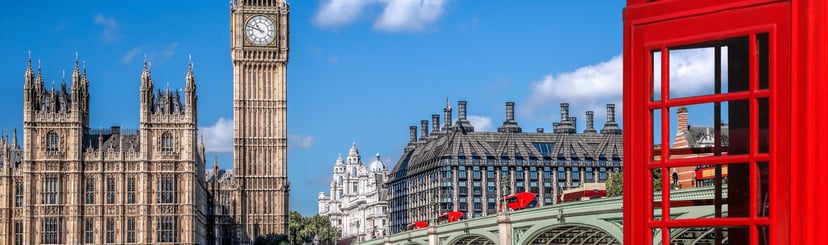
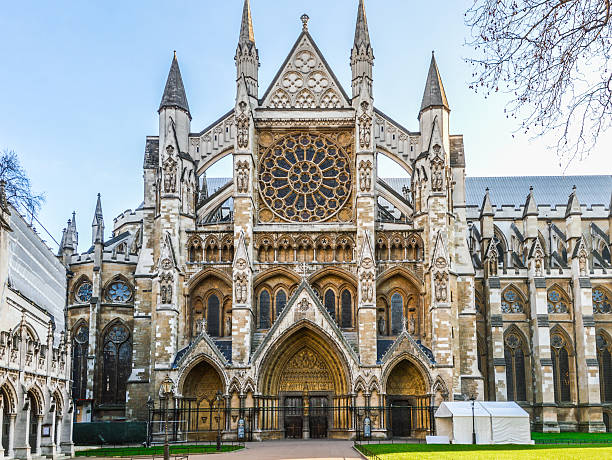
Begin with the spatial relationship between Westminster Abbey, Parliament Square and the Palace of Westminster. The point is not to attach Churchill to every façade. It is to understand the inherited institutions within which a political career had to operate: Crown, Parliament, church, party and public ceremony compressed into a few streets. A guide can use the square to show how national memory is staged in stone without beginning a biography lecture.
From there, Whitehall supplies the administrative spine. The Cenotaph gives remembrance a physical center; the guarded entrance to Downing Street marks the continuing executive corridor; the façades along the street communicate how close departments, military command and political offices sit to one another. The walk is geographically short but interpretively dense. Without a clear theme, visitors hear a sequence of names. With one, they understand why decisions made in enclosed rooms could be projected so quickly into national ritual.
The sharpest hinge is at Clive Steps and King Charles Street, where the Churchill War Rooms move the story underground. Above ground, Whitehall looks composed and ceremonial. Below it, the spaces are compressed, operational and intentionally protected. This contrast establishes the wartime apparatus far better than another exterior photo stop. Travelers who want a dedicated visit can consider Churchill War Rooms private tours rather than trying to absorb the rooms as a hurried add-on.
Westminster’s limitation is equally important. It can show office, government and crisis, but it cannot show how Churchill constructed a private environment in which to write, paint, entertain, recover and continue working. Even the biographical material at the War Rooms remains framed by the city and the war. It explains the statesman through documents, objects and institutional context. It does not let the landscape participate.
This is where planners often make the wrong cut. They add more London war history—another museum, another memorial, another military object—when the better next chapter is a change of evidence. Chartwell adds domestic rooms, personal work, curated possessions and the Kent horizon. Those are not softer details. They answer different historical questions.
Editorial no: do not force Westminster Abbey, a full Whitehall walk, the Churchill War Rooms, lunch, Chartwell and a West End performance into one day. The result looks comprehensive on paper and feels abbreviated in person. Cut the same-day combination before cutting the interpretive depth of either place.
What Chartwell uniquely adds to Churchill’s story
Chartwell adds the evidence of a life being made, not merely commemorated. Its value lies in the relationship between house, workroom, studio, garden and view, all of which bring Churchill’s private disciplines and self-presentation into the same physical frame.
The house changes the scale first. In Westminster, Churchill is encountered through national institutions and carefully preserved wartime rooms. At Chartwell, visitors move through domestic proportions and personal arrangements. The useful question is no longer “What happened here?” at every threshold. It is “What kind of working identity was this place designed to support?” That question keeps the visit from becoming either celebrity house-tour trivia or a compressed life story.
The study and writing spaces matter because they make intellectual labor visible. Churchill’s public image can seem effortless when seen only through speeches and photographs. A country house filled with books, papers, work surfaces and chosen objects restores the sense of production: words had to be drafted, histories assembled, correspondence managed and political thought sustained outside formal office. A strong guide uses the room to connect public output to private routine without reciting publication lists.
The painting studio provides the most important counterpoint. Painting is not a decorative footnote to be mentioned after politics. It changes how visitors read attention, control and recovery. The studio also gives the estate a second center of gravity away from the formal rooms. The physical movement from house to studio is part of the interpretation: visitors leave a domestic setting before entering a space organized around another form of work.
The landscape completes the argument. Chartwell’s hillside position and long views across the Weald of Kent make distance from London physically apparent. The capital’s stone corridors give way to terraces, garden routes and open prospect. That contrast is not merely scenic. It helps explain why a country setting could function as retreat, workplace, stage for guests and a visible statement of continuity.
The site also makes material choices easier to discuss. Walls, paths, planted areas, ponds, pictures and practical improvements reveal a person engaged with the making of place. Visitors do not need a catalogue of every feature. They need a guide who selects the details that sharpen the public-private contrast already established in Westminster.
For couples and small groups, this makes Chartwell unusually conversational. The best moments often come after a room, when the group can compare what the object or view changes about the figure they thought they knew. For families with older children or teenagers, the studio and grounds can interrupt the rhythm of interior interpretation. For younger children, however, the historical return may not justify the road unless the day is deliberately lighter and the garden element is treated as central rather than incidental.
Repeat visitors gain the most. They are less anxious about missing London icons and more able to accept that the payoff is cumulative rather than spectacular at every minute. Chartwell does not need to outperform Westminster as a sight. It needs to answer the questions Westminster leaves open.
The Kent journey consumes more of the day than the map suggests
Plan on the Kent journey taking roughly three to four hours of the day in total once both road legs, central-London pickup, traffic variation and the final approach near Westerham are treated honestly. In an eight- to nine-hour plan, that is roughly a third of usable time. The drive may run better, but a premium itinerary should be built around a credible range rather than an optimistic map estimate.
The outbound leg begins before the car is moving freely. Hotels around Mayfair, Marylebone, South Kensington or the Paddington side of Hyde Park all require different approaches toward south or southeast London. A vehicle collecting near Westminster may still lose time reaching a clean route out of the center. Guests should not be asked to walk several blocks with coats and bags to save a few theoretical minutes unless road restrictions make a particular rendezvous materially better.
Once beyond the dense center, the journey is not difficult, but it remains variable. The edge of London, the motorway arc and the roads around Westerham can each alter arrival. The last turn toward Mapleton Road is the moment to shift the conversation from national politics to the household and landscape. A guide who uses the drive well can prepare the visit; a guide who fills it with another hour of biography will exhaust the subject before arrival.
Public transport can reduce some exposure to central traffic, but it introduces a station-to-estate transfer and a fixed return structure. There is no station at the gate. For independent travelers, rail plus taxi can be entirely workable with advance planning. For a private day built around guide continuity, weather flexibility and a controlled evening return, a waiting car usually justifies itself because it removes the handoff between train, taxi, belongings and site timing.
The body experiences this day differently from a normal museum day. Westminster may involve security lines, standing in the Abbey, pavement time around Parliament Square and Whitehall, then confined movement through the War Rooms. Adding a long car transfer immediately afterward creates stiffness rather than rest. At Chartwell, the estate sits on a slope, and the house, studio and broader grounds do not form one flat, indoor circuit. Travelers who are comfortable walking in central London can still find the sequence tiring because the exertion is broken into queues, sitting and uneven outdoor movement.
The mood also changes when the transfer is badly placed. A same-day dash makes the country house feel like an appendix to London, and every delay is interpreted as time being stolen from the visit. A dedicated day reverses that feeling. The road becomes the threshold between public and private worlds, the group arrives with one clear purpose, and the return can be quiet rather than anxious. This is what makes the day feel shorter even though the mileage is the same.
Weather strengthens the case for margin. Rain may shift emphasis toward the house and studio; clear conditions invite a longer garden circuit; wind or wet paths may make an older traveler prefer a more compact route. A waiting chauffeur provides a dry, warm fallback and allows the guide to shorten or reorder the visit without initiating a new transport search. Confirm current opening, access arrangements and any mobility support directly when booking, because estate conditions and available routes can change.
For travelers deciding whether a car is useful elsewhere in the stay, the logic is different inside London and on the Chartwell day. The city often rewards walking and the Tube between well-clustered sights; Chartwell rewards door-to-door continuity. The distinction is explored further in when a chauffeured London day is actually worth it.
How to build the Chartwell day without flattening it
Build the day around one coherent arc: departure, interpretive transition, house, a measured pause, studio and grounds, then a conservative return. Do not treat every available minute as an invitation to add another Kent stop.
- Confirm the estate entry before fixing departure. Current opening and access should determine the day’s clock, not an old sample itinerary.
- Leave London with the Westminster chapter already complete. The guide should need only a concise recap, not a fresh explanation of Parliament, Whitehall and the war.
- Use the outbound drive to change the question. Move from “How did Churchill govern?” to “How did he work, recover and construct a private setting?”
- Give the house enough attention to establish domestic scale. Avoid racing room to room in order to “save time” for a second attraction.
- Keep lunch functional and well placed. A long formal meal can consume the margin needed for the studio, gardens or a calm return.
- Let the studio and landscape supply the second movement. They are not optional decoration after the main house; they are part of what makes the journey worthwhile.
- Return to London with no brittle evening deadline. A flexible dinner near the hotel is a better default than a fixed curtain time.
For most groups, around three hours at Chartwell is the minimum useful visit once the house, studio and a selective outdoor route are included. Four hours is more comfortable when the garden matters, the group reads labels closely, or lunch is taken without hurry. Less can still be meaningful for a traveler with limited mobility, but the route must be edited in advance rather than shortened reactively after fatigue appears.
Older parents and travelers with mobility constraints should prioritize the house and the most consequential exterior views, then decide whether the studio and lower garden routes are worth the additional movement. The private advantage is not pretending the estate is effortless. It is choosing the route before the group is tired, arranging the closest practical vehicle access, and preserving seated pauses without making anyone feel they are holding up a public group.
Families need a different edit. With teenagers, the contrast between underground War Rooms and open country house can be productive, especially when the guide frames painting, writing and place-making as active choices rather than “more facts about Churchill.” With younger children, the day should include generous outdoor time and fewer room-by-room explanations. A family that has already struggled through two long museum days should not use Chartwell as a third.
Food-and-wine travelers should resist the temptation to make the country day prove itself with an elaborate lunch. The meal should support the historical arc, not become a second destination with its own dress, timing and reservation pressure. Save the most ambitious meal for a separate London day, when a late start or long service does not reduce time at the estate.
Celebration travelers may still choose Chartwell because the day has personal meaning, but the celebration should be built around privacy and pacing rather than excess. A thoughtful guide, a vehicle that waits, a well-timed lunch and a return that leaves room for champagne at the hotel will usually feel more considered than adding flowers, multiple stops and a rigid evening booking.
When a broader day-trip comparison is still unresolved, use private day trips from London to decide whether Chartwell’s specialist historical payoff is stronger for your group than a more panoramic country day.
The London return should not carry the weight of another major event
Keep the evening after Chartwell flexible unless the group is comfortable accepting a conservative return and a substantial buffer. A West End performance, formal tasting menu or nonrefundable celebration dinner can turn every patch of traffic into a source of anxiety, which changes the mood of the estate before the group has even left it.
A serious London meal is better placed on the Westminster day or another city evening. For example, travelers considering a formal central-London lunch can See the current three‑course lunch menu (https://www.theritzlondon.com/restaurant-three-course-lunch-menu) and schedule it when they are already in the city, rather than using it as a prelude to the Kent drive. The point is not that lunch is unimportant; it is that location and service length must agree with the day’s main purpose.
After Chartwell, a destination dinner can work only when the reservation policy, menu length and travel buffer are understood. Check Ikoyi menu & reservations (https://www.ikoyilondon.com/) before deciding that the return can support a highly structured evening. For another long-form option, See the official Harmonie tasting menu (https://www.alainducasse-dorchester.com/menus/Harmonie-Menu-October-2025.pdf), then confirm the live offering for your date and place it on a separate evening if the format is substantial.
These direct source checks are useful because prestige labels alone do not reveal how much of the evening a meal will command. The safest Chartwell return is a good dinner near the hotel, room-service flexibility, or an arrangement that can absorb a later arrival. The result is a calmer final hour at the estate and a less brittle drive back into London.
The stop to cut—and the upgrade that keeps the story coherent
Cut the extra attraction first, not the time at Chartwell. The most common overplanning error is to add a village walk, another house, a garden or a central-London monument because the driver day appears to have unused gaps. Those gaps are the margin that protects the visit from traffic, weather, slower walking and genuine interest.
A brief look at Westerham may fit if the route and timing align, but it should not become a promised second chapter. The central question is whether Chartwell completes Westminster. Once another attraction demands its own interpretation, reservation or substantial walking, the day loses its specialist focus.
The strongest private version of this sequence is not defined by a luxury vehicle or constant commentary. It is defined by one historical question carried from Westminster into Kent, with transport arranged so that the question is never displaced by logistics.
On the Westminster day, the guide identifies the public frame: Parliament, Whitehall, the Cenotaph, the War Rooms and the language of national leadership. On the Chartwell day, the guide returns to selected ideas rather than starting over. A room, painting or view can then answer something raised the day before. That recognition is the intellectual reward of the sequence.
The waiting chauffeur performs a different job. The vehicle holds the day together when weather changes, walking needs to be shortened, lunch runs long or the group wants ten quiet minutes before returning. It also keeps the hotel-to-estate and estate-to-hotel movements under one plan, which matters more than an impressive specification sheet.
Premium spend earns its cost in three places. First, a knowledgeable guide can preserve one argument across two days instead of giving separate site commentaries. Second, a waiting chauffeur prevents transport handoffs and gives the group a controlled refuge for coats, umbrellas and fatigue. Third, flexible scheduling allows the house, studio and grounds to be rebalanced according to weather and mobility rather than according to a group timetable.
Premium spend does not help when it buys a larger car or a more elaborate lunch but leaves Chartwell with the same compressed visit. A high-spec vehicle cannot remove London traffic, and a prestige meal cannot restore the hour it consumes. The right upgrade is continuity; the wrong upgrade is ornament.
Likewise, paying for multiple guides without a shared brief can reduce coherence. A London guide who ends at the hotel and a Kent specialist who begins with a fresh introduction may each be excellent, yet the traveler still experiences a narrative reset. When one guide cannot cover both days, the handover should include the questions already established, the objects or themes emphasized in Westminster, and the traveler’s level of prior knowledge.
The same judgment applies to skip-the-line language. Timed planning and reserved access can reduce uncertainty where available, but no product should be sold as if it makes the road disappear or guarantees an empty house. The premium promise should be a better-shaped day, not magical immunity from ordinary conditions.
This is the natural planning handoff for a tailor-made stay: choose the depth of the Westminster chapter, decide whether one guide or a coordinated pair should carry the interpretation, set a realistic Kent travel band, and protect the return evening. Review private tours in London or Inquire now to shape the two-day Churchill sequence around your hotel, interests, walking comfort and evening commitments.
FAQ
Is Chartwell worth a day trip from London?
Chartwell is worth a day trip for travelers who want to understand Churchill beyond wartime command and public office. It is especially rewarding after Westminster because the house, studio and landscape answer questions the city cannot. It is less worthwhile on a very short first visit when the trip still lacks London’s essential sights.
Can you visit the Churchill War Rooms and Chartwell in one day?
You can, but it is usually a compromised specialist day rather than a full visit to both. Keep the Westminster portion short, reserve enough time for the Kent road journey, and avoid a fixed theatre or formal dinner afterward. A full Abbey, Whitehall and War Rooms programme should be separated from Chartwell.
How much of the day does the journey from London to Chartwell take?
Allow roughly three to four hours for the two road legs and sensible buffers, depending on hotel location and traffic. That planning range includes central-London pickup and the approach near Westerham. It does not mean every drive will take that long, but it prevents an optimistic estimate from compressing the visit.
How long should you spend at Chartwell?
Around three hours is a useful minimum for the house, studio and a selective outdoor route. Four hours is more comfortable when gardens, paintings, lunch or slower walking matter. A shorter visit can work for limited mobility if the route is edited in advance.
Should you travel to Chartwell by train or private car?
Rail plus taxi can work for independent travelers, but it requires a station-to-estate transfer and a fixed return plan. A private car is the stronger fit when guide continuity, weather flexibility, mobility support and a controlled hotel return matter. There is no useful rail arrival at the estate gate.
What should you see in Westminster before visiting Chartwell?
Prioritize the relationship between Parliament Square, Westminster Abbey, Whitehall, the Cenotaph and the Churchill War Rooms. The objective is to establish Churchill’s public and institutional world. Do not add a generic list of war sites simply to make the theme feel more complete.
Is Chartwell suitable for older travelers or limited mobility?
It can be, but the estate should be planned as a selective route rather than assumed to be flat and effortless. Prioritize the house and key views, decide whether the studio and wider grounds justify the additional movement, and confirm current access arrangements when booking.
Can you plan a West End show or tasting menu after Chartwell?
You can, but it is not the preferred default because the return from Kent is traffic-sensitive. A flexible dinner near the hotel preserves the final part of the visit. Keep a major performance or long tasting menu for another evening unless the return plan includes a generous buffer and acceptable cancellation risk.
If you’re interested in any private tours of London, please reach out to us.
















 So if you are looking for the absolute best in London & surroundings with authentic local fully-licensed native guides whose English you can actually understand and with an exclusive and amazingly fun itinerary













