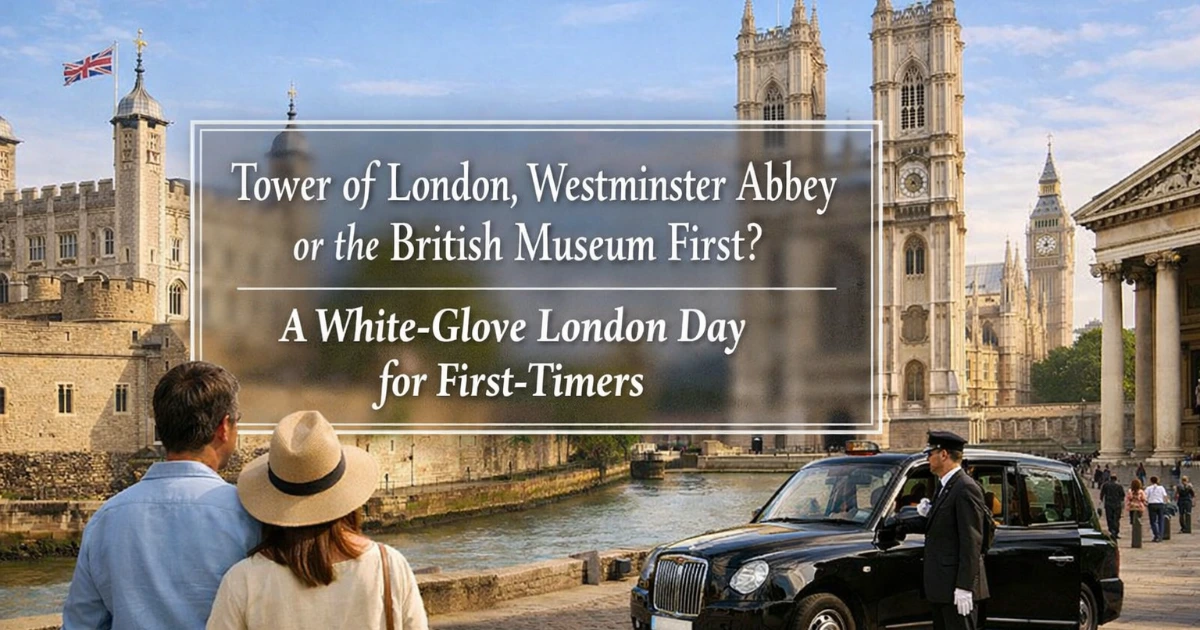
Tower of London, Westminster Abbey or the British Museum First? A White-Glove London Day for First-Timers
Updated
Start at the Tower of London on your first full London day unless you wake up truly jet-lagged, under-slept, or weather makes an indoor morning far more appealing. The Tower is the best opener because it absorbs the longest eastbound move while your patience is still intact, then lets the rest of the day drift back toward the West End instead of away from it.
The reason is physical, not symbolic. London looks compact on a hotel concierge map, yet a west-first opening has a habit of turning ceremonial minutes into tiring ones. The stretch from Parliament Square to Tower Hill is exactly the sort of transfer that feels longer after you have already queued once, and once that happens people start spending the afternoon on transport decisions instead of on London. Our planning view is simple: the first icon should carry the hardest geography before fatigue compounds.
The clearest exception is a foggy first morning when your body wants a central, indoor, flexible beginning. In that case the British Museum can absolutely go first, especially if you reach it early from Great Russell Street and visit selectively rather than heroically. Westminster Abbey should not lead the day for most jet-lagged first-timers.
That is the thesis of this guide. In London, your opening stop is not a beauty contest between three famous places; it is a decision about queue tolerance, east-west drag, and what kind of evening you want left when the sightseeing ends. If you are still choosing your hotel base, our guide to where to stay in London is worth reading first, because a Mayfair, Westminster, Covent Garden, or South Kensington start changes how much that first cross-city move asks of you.
How the three contenders behave on a real first day
The ranking is clearer once you judge these sights by day performance rather than reputation.
Use four criteria:
- Which stop should absorb your longest east-west move while you are freshest.
- Which queue feels most punishing if it becomes your second queue rather than your first.
- Which interior still works when attention span, hunger, and jet lag are imperfect.
- Which choice leaves you closer to dinner, theatre, or your hotel instead of stranded at the wrong edge of central London.
Default opener: Tower of London. It wins because the far-eastern position is a strategic asset first thing in the day. You do the hardest directional move once, use your highest line tolerance on the site that benefits from an assertive start, and then spend the rest of the day sliding west.
Best exception: British Museum. It moves into first place when you need a softer landing. A focused early arrival via Great Russell Street is central, indoor, forgiving, and easier to shorten without making the day feel like a failure.
Usually the weaker lead: Westminster Abbey. The Abbey is moving, important, and absolutely worth seeing, but it is rarely the best first chess move. Starting there front-loads ceremony while postponing the harder geographic work, and for tired bodies that is the wrong order.
That does not mean Westminster Abbey is “third best” as an attraction. It means it is usually third best as the first move on day one. This article is about sequence, not prestige. If the Abbey is your emotional priority, or you have a fixed reason to be in Westminster early, the answer changes. But the default ranking above is the one that most often preserves both the body and the mood of a first London day.
Tower of London or British Museum first in London? Start with the Tower when your morning is usable.
The Tower of London is the right first stop whenever you are awake enough to make a proper start and you want the rest of the day to get easier, not harder.
The best argument for leading with the Tower is that Tower Hill only feels “out of the way” once. If you go there first, the eastbound stretch is done while you still have curiosity, caffeine, and tolerance for waiting. If you leave it for later, it becomes the day’s unfinished business, and unfinished business in London has a way of expanding. A museum stop in Bloomsbury or a ceremonial stop in Westminster can lull people into thinking they have already “started London,” when in fact the hardest directional move is still ahead.
This matters even more if you are sleeping in Mayfair, St James’s, Covent Garden, or South Kensington. From those neighborhoods, an east-first opening asks something substantial of the morning, but it asks it once. The reward is that your later lunch, second visit, or hotel return can all angle westward. The day begins to feel like a controlled glide rather than a series of resets. If you start west and postpone the Tower, you often end up doing the exact opposite: walking, queuing, moving east, and then trying to reconstruct your evening from the wrong side of the map.
There is also a line-tolerance argument. The Tower is one of the few big London icons where an intentional start can make the entire rest of the day breathe more easily. You do not need a militarized dawn start or a marathon inside the walls. You do need purpose. Arrive in that first window of the day, know what you are prioritizing, and avoid treating the fortress as a vague “see what happens” stop. A focused Tower of London and Crown Jewels private tour helps because the value is not only historical interpretation; it is in removing drift. The site is dense enough that wandering without a plan often creates the same fatigue as seeing “more,” only with less satisfaction.
Why starting east calms the rest of the map
London’s geography is not dramatic in the way Lisbon or Granada is dramatic. It works on accumulation. One security line. One station staircase. One pavement squeeze. One transfer that looked trivial in the app. Then another. The city rarely knocks you down with a single climb; it wears you down by making you restart. That is why opening with the far-eastern heavyweight is so effective. The Tower asks for standing, scanning, outdoor exposure, and decision-making. Those things are manageable first. They are much less charming after you have already stood around in Westminster or spent ninety minutes in a museum.
Starting east also turns the Thames into a deliberate one-way choice rather than a decorative distraction. After the Tower you can continue west by car, by cab, or even by boat if that genuinely suits the day. What you are not doing is bouncing between Westminster, the South Bank, and the City because the map tricked you into thinking you had time for “one more view” before heading east. The right opener removes unnecessary crossings before they even start.
This is one reason our default first-day design often places the Tower in the morning and treats Westminster as the later emotional anchor if the Abbey is on the agenda at all. The Tower benefits from being attacked early. Westminster benefits from being approached once the day has rhythm. Those are different virtues, and London rewards you when you honor them.
Who should hesitate before Tower first
The Tower is not the best opener for every body. If you landed yesterday from a long overnight flight, barely slept, and already feel as though your knees are half a beat behind your enthusiasm, the Tower can feel harsher than it deserves. Families with very young children, travelers managing mobility limitations, and older relatives who are still finding their London footing sometimes do better with a gentler central start and a dedicated Tower day later. Likewise, if the real point of the day is Westminster and St James’s rather than a full east-west swing, forcing a Tower lead just to obey a ranking is unhelpful.
But the key nuance is this: the Tower is not “hard” because it is east. It becomes hard when it is delayed. Used as the opener, it is decisive. Delayed until lunch or mid-afternoon, it often becomes the stop that steals the evening. That is the real consequence affluent first-timers care about. A monument should not ruin the dinner you booked, the theatre ticket you bought, or the calm return to a beautiful hotel you expected from day one.
When the British Museum should lead the day instead
The British Museum should go first when your body needs a central indoor start, your morning is compromised by jet lag, or you want a high-quality opening that can be shortened without emotional disappointment.
The British Museum’s advantage is not that it is “easier” in some generic sense. Its advantage is that it is adjustable. A good Tower morning wants decisiveness and energy. A good British Museum morning wants selectivity. That is a better fit when sleep debt is real, the weather is ugly, or your group includes one person who loves museums and another who wants London to arrive more gradually. A focused British Museum private tour can be one of the most elegant first-day tools in London precisely because it edits aggressively.
The important comparison here is Great Russell Street arrival versus late-morning entry pressure. Reach the museum early, enter with a plan, and the British Museum feels calm, central, and civilized. Drift in later, after breakfast has stretched and the city is fully awake, and the same stop can become a sponge for other people’s timing mistakes. This is why the museum is such a good exception case and such a mediocre compromise. It is excellent as a deliberate first move on a tired morning. It is much less persuasive as the thing you slide into once the morning has already been lost.
That early-versus-late difference is more important than many first-timers realize. Great Russell Street is not merely an address detail. It is part of how the museum behaves. Arriving there early keeps the visit on your terms. Arriving into the late-morning swell means you are already reacting rather than choosing. And because the museum is so mentally dense, reactive visiting feels especially expensive. The galleries blur, the group spreads out, and lunch starts getting pushed later than anyone wanted.
Why the museum works for a tired body
For tired travelers, the museum solves two first-day problems at once. First, it gives you a major London experience without asking you to start the day with the farthest directional move. Second, it offers more built-in permission to be selective. Nobody feels that they have “failed London” because they did not exhaust the British Museum in one pass. That psychological flexibility matters. It lets you spend 75 to 90 strong minutes, leave while you still feel sharp, and move into lunch or a second stop without the nagging sense that you quit early.
This is especially valuable for couples who plan a serious dinner, for celebration travelers who want to look and feel good by evening, and for multigenerational groups where the strongest and slowest walkers should not be judged by the same standard at 10:00 in the morning. The museum can also absorb a weather wobble with more grace than the Tower. Rain and wind do not ruin the day here; they simply strengthen the case for a selective indoor opening.
The museum is also a useful first stop when your hotel is already central and you want to keep the morning compact. From Mayfair, Soho, Covent Garden, or Bloomsbury itself, the psychological burden of reaching Great Russell Street is much lower than committing immediately to Tower Hill. That does not make the museum the default winner. It makes it the best correction when the body, weather, or group chemistry argues against a more assertive start.
When the British Museum should trail, not lead
The British Museum is not a magic fixer for every late morning. If you know you will not get moving early, it can make more sense to save the museum for later in the trip or use it as a carefully curated later-day stop rather than insisting it must rescue day one. London punishes salvage operations. A museum entered too late can flatten the appetite, blur the afternoon, and leave Westminster or Tower plans feeling token.
If you are fully rested and you care deeply about the Tower, do not talk yourself into a museum-first day just because the address looks convenient. Convenience on a London map is often false comfort. The museum should lead when its specific strengths answer your specific weakness that morning. Otherwise, let it be the elegant second-day play that it often is.
Why Westminster Abbey is usually better second than first
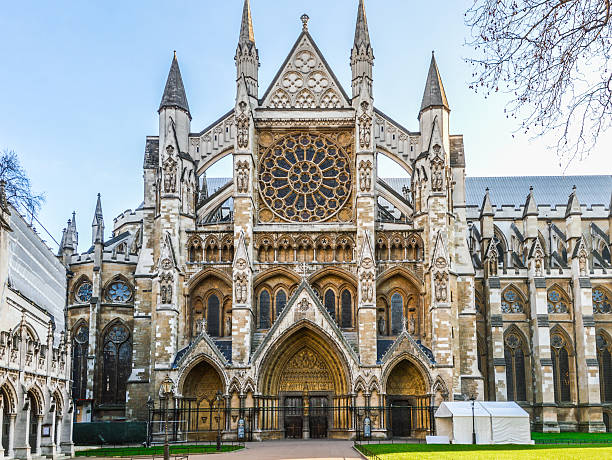
Westminster Abbey is usually stronger as the second major stop or as the emotional center of a west-central day, not as the first move on your first full day.
This is the part many first-timers resist, because Westminster feels like the “official” start of London. Big Ben, Whitehall, the Abbey, the ceremonial skyline: surely that is where the city should begin. Emotionally, yes. Logistically, often no. Starting there rewards symbolism before it resolves geography. And on day one, geography tends to win.
The practical problem is not the Abbey itself. The problem is what people do once they have been to the Abbey. They linger around Parliament Square, wander Whitehall, debate whether to walk St James’s Park, consider the South Bank, and only then remember that the Tower is still east at Tower Hill. By that stage the day has already spent attention on a cluster that feels complete in itself. The later transfer east can then feel like a second day crammed into the first. That is why Parliament Square to Tower Hill is such an important planning hinge. It is not impossible. It is just a noticeably worse move after one queue and one round of sightseeing than before either has happened.
The Abbey also asks for a particular kind of energy. Even travelers who love it often underestimate how much it rewards alertness. It is not just a building to glance through. It is a place of memory, monarchy, burial, and national storytelling. You get more from it when your concentration has settled and the group has found its rhythm. That is why the Abbey can be wonderful after lunch or as the day’s second serious interior. By then everyone knows whether they want reverence, detail, or simply the atmosphere of the space. Used too early on a tired morning, it can feel like a duty stop, which is unfair to one of London’s most resonant interiors.
A well-structured Westminster Abbey private tour is often most valuable exactly there: not as a brute-force first attack, but as a way to make the Abbey count once you are in the right mental gear for it.
When Abbey first actually makes sense
Westminster Abbey should lead only when the rest of the day is intentionally staying west-central or when the Abbey is the day’s non-negotiable priority. If you have dreamed about it for years, have a meaningful personal connection to the site, or simply care much less about the Tower than the average first-timer, then by all means put the Abbey first. Just be honest about the consequence: you are probably giving up the idea of a satisfying Tower interior on the same day.
That is the correction many affluent travelers appreciate once it is stated plainly. The mistake is not loving Westminster. The mistake is trying to make Westminster first, Tower second, and British Museum third all look equally sensible in one polished day. They are not. If the Abbey leads, the cleanest version of the day usually remains west of the City: Westminster, St James’s, perhaps a measured lunch, maybe Bloomsbury if museum energy remains, and then an easy slide back to Mayfair or Covent Garden. That is a fine day. It is simply a different day from a Tower-led one.
For emphasis, Westminster Abbey should not lead the day for most jet-lagged first-timers, because tired brains get less out of it and tired bodies resent the later eastbound catch-up.
And for the question in this title, that distinction matters. The Abbey is not the wrong stop. It is often the wrong opener.
What changes when you wake up sharp versus foggy
Your first answer should come from the morning you actually have, not the morning you hoped the flight would give you.
If you are fully rested
Lead with the Tower. Make that the main interior of the morning. Move west afterward. If the Abbey matters, place it second with a measured lunch in between and keep the British Museum for another day unless you truly mean to do only a highly selective museum pass. The rested version of day one works because you are spending your best physical and mental window on the stop that benefits most from assertive timing and the hardest geography. You are also ending closer to the West End, which is a better place to be if dinner, theatre, or a polished hotel return matters.
On a rested morning, the temptation is to add too much because everything feels possible. Resist that. Feeling strong at 10:00 does not make London short. It simply makes a Tower-first day viable. Use that viability wisely and the day feels efficient rather than overstuffed.
If you are jet-lagged
Lead with the British Museum or keep the entire day west-central. A selective museum visit, followed by a proper lunch and then Westminster if energy allows, is a far more civilized first day than pretending you can brute-force the Tower, the Abbey, and Bloomsbury on the back of poor sleep. This is also where families, grandparents, and celebration travelers do best: the morning asks less of the body, and the afternoon still retains options.
If you are heavily jet-lagged but emotionally attached to the Tower, the answer is not to jam it in later. The answer is to move it to the next morning and let it be the star when you are more human. That is one of the most important cut-first decisions in London. The city rewards deferral when deferral is strategic. It punishes false optimism.
For emphasis once more: Westminster Abbey should not lead the day for most jet-lagged first-timers. On a foggy morning, the Abbey asks for attention that many travelers do not yet have, and the later catch-up move east is exactly the sort of thing that turns wonder into grumpiness.
When a chauffeur materially improves the day, and when it does not
A chauffeur earns the fee when the car is solving distance, handoffs, weather, or group fatigue. It does not earn the fee just because a fine vehicle exists.
The real test is simple. Ask whether the car is carrying the day’s hardest directional burden or merely polishing short central hops. The strongest case appears when your hotel start and your sightseeing order create a true east-west split. This is where the hotel pick-up radius around Mayfair and Westminster becomes useful rather than decorative. If a driver collects you there, carries you east to Tower Hill, waits or reappears at the right moment, then returns you west for lunch, the Abbey, or a hotel pause, the service is doing genuine work. It is removing the part of London that feels fiddliest, not simply substituting one mode for another.
The same is true for travelers staying in South Kensington or families with older relatives. Add rain, wind, celebration clothes, a theatre booking, or one traveler who walks more slowly than the rest, and the value compounds. The advantage is not only comfort. It is continuity. A white-glove day feels calmer because nobody is repeatedly reassembling the group at kerbs, station gates, or the wrong side of a busy junction. In that circumstance, chauffeured London touring can expand what comfortably fits into day one.
It also helps when the group includes small children and the adults are trying to keep tempers flat. London is manageable with a pram or with grandparents, but “manageable” is not the same as graceful. Door-to-door handling between a farther-eastern opener and a westward afternoon prevents the low-grade frictions that make expensive trips feel oddly cheap.
The middle ground is often the smartest spend. A private guide plus one or two well-timed cab legs can outperform an all-day car when the plan has one meaningful east-west move but no need for constant door service. That is often true for couples and agile small groups who want expert handling without turning every ten minutes of central London into a loading exercise.
The point where premium spend stops helping
There is, however, a very clear line where extra spend stops delivering. Paying for a chauffeur all day does not materially improve a compact Westminster–Bloomsbury–Covent Garden plan with one interior and a measured lunch. In that kind of central-only day, you are often buying a series of very short moves that can be handled just as elegantly on foot, with one or two ordinary cabs, and without the stop-start awkwardness of loading into a vehicle for distances the city barely deserves.
The same caution applies if you are trying to use a car to rescue an overpacked plan. A chauffeur cannot make three heavyweight interiors feel restful. A car can smooth transfers; it cannot rewrite how much standing, looking, queuing, and concentrating London asks of you. Private planning is most valuable when the sequence is already wise. Then the guide and car preserve the wisdom. They do not substitute for it.
A private guide is equally important in this equation. The guide’s real job on day one is not to drown you in dates. It is to shape selection, protect timing, and make confident decisions when the city presents too many almost-good options. That combination—good order first, guide second, driver only where the map truly warrants one—is where premium travel in London begins to justify itself.
That is exactly the kind of first-day sequencing Orange Donut Tours can tailor: the right lead icon, a measured second act, and transport that serves the plan instead of inflating it.
If you want a first day built around the right opener, realistic timing, and a car only where it truly changes the experience, Inquire now.
What to cut first when the day starts to bloat
Cut the third heavyweight interior before you cut lunch, patience, or the evening.
This is the rule many first-time London visitors need to hear plainly. You can touch the orbit of all three headline sights in one day if you insist. You should not expect to do Tower of London, Westminster Abbey, and the British Museum as three full interior experiences on a first day and still feel as though London treated you well. The city is too dispersed for that to feel generous. One main interior and one meaningful secondary anchor is the better standard. Two major interiors is possible if the order is right and the morning is strong. Three is what to cut first.
The first thing many travelers sacrifice when a day overfills is lunch. That is usually a mistake. A proper pause is not lost time in London; it is what keeps the second half of the day from turning sour. If you decide on a museum-led morning and want a civilised midday interlude, you might even browse a celebratory option like See the current three‑course lunch menu (https://www.theritzlondon.com/restaurant-three-course-lunch-menu) before you commit. If dinner is the real event, especially for couples or food-and-wine travelers, it can be smarter to keep lunch light, protect the afternoon, and save your focus for something like Ikoyi menu & reservations (https://www.ikoyilondon.com/) once you know the sightseeing order is not stealing the night.
This is not a restaurant detour. It is a day-shape point. London changes mood through handoffs. A day with too many resets—security, entrance, cloakroom, restroom, transport, map check, queue, repeat—starts to feel bureaucratic. A day with one decisive main sight, one well-placed second act, and a proper pause feels shorter than it is. That difference is what preserves the evening, whether your prize is a long dinner, a West End curtain, or simply arriving back at the hotel before you feel spent.
If your stay is long enough that you genuinely want all three interiors, split the ambition rather than intensifying day one. Our 3-day London plan is the place to think about spacing big icons across multiple days. This guide is intentionally narrower: it is about which stop should lead, not how to force every headline into a single polished morning.
That is also why the default winner here remains the Tower. It does the most valuable strategic work first. The British Museum is the intelligent exception when the morning itself is compromised. Westminster Abbey is the wonderful stop people most often overvalue as an opener. Once you accept those three statements, the rest of the day becomes much easier to design.
FAQ
Should first-time visitors start with the Tower of London or Westminster Abbey?
Start with the Tower unless the Abbey is the emotional reason for the day and you are willing to keep the rest of the day west-central. The Tower absorbs the hardest eastbound move while your patience is highest. Westminster Abbey is richer when you arrive settled, not when you are still proving you can function in London.
Is the British Museum the best first stop if I am jet-lagged?
Very often, yes. The museum is central, indoor, and easier to shorten gracefully. The key is to arrive early from Great Russell Street and visit selectively. If you do not expect an early start, the museum becomes less helpful as a rescue plan and may be better on another day.
Can I do the Tower of London, Westminster Abbey, and the British Museum in one day?
You can pass near all three, but a satisfying full interior visit to all three on day one is rarely the gracious version of London. A better standard is one heavyweight interior and one meaningful second act. Two major interiors can work if the morning is strong and the order is clean. Three is the first thing to cut.
Does staying in Mayfair or Westminster change which sight should go first?
It often strengthens the case for Tower first. From Mayfair or Westminster, the eastbound leg to Tower Hill is one substantial move that is easiest to absorb early. After that, the rest of the day can come back west toward lunch, the Abbey, the hotel, or the evening. Those neighborhoods also make a chauffeur more valuable once the day includes a true east-west split.
When is a chauffeur actually worth it for this day?
A chauffeur is worth it when the car is carrying a meaningful part of the strategy: hotel pick-up, Tower first, westward return, family or older relatives, poor weather, celebration clothes, or a theatre or dinner commitment later. The service is less persuasive when the day is compact and central. In that case, you may be paying premium rates to eliminate walks that are neither long nor unpleasant.
When would Westminster Abbey go first?
Westminster Abbey should go first only when it is the day’s non-negotiable priority or when you are intentionally building a Westminster, Whitehall, St James’s, and perhaps Bloomsbury day that does not ask for a real Tower visit. Once you add the Tower back into the same day, Westminster first usually becomes the move that makes the rest of the map worse.
What is the best first stop for families, older relatives, or travelers guarding a big evening?
For tired families, grandparents, or anyone with a serious dinner or celebration later, the British Museum is often the safer opener because it is central and editable. For energetic school-age children who are awake early and excited, the Tower can be excellent as a decisive first move. The key is not age alone. It is whether the group has the morning sharpness for a more assertive east-first start.
Should rain automatically push me to the British Museum first?
No. Rain strengthens the case for the museum when you are already tired or when the group would resent outdoor exposure. But weather alone should not override the entire geography of the day. A well-dressed Tower-first plan can still be the better call if the rest of the day depends on resolving the eastward move early.
If you’re interested in any private tours of London, please reach out to us.
















 So if you are looking for the absolute best in London & surroundings with authentic local fully-licensed native guides whose English you can actually understand and with an exclusive and amazingly fun itinerary













