When Water Changes the Alhambra: Seasonal Flow, Fountain Operations and a Granada Visit That Still Works

Updated
The water story begins before the palace rooms
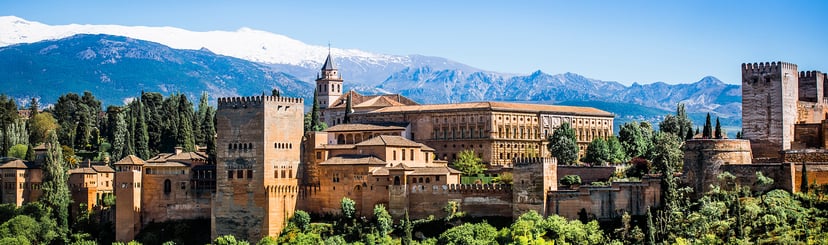
Long before a visitor reaches the Court of the Myrtles or hears water in the Generalife, the Alhambra’s hydraulic story has already crossed a valley, climbed by carefully chosen gradients and entered a palace-city built on a hill. In the thirteenth-century phase associated with Muhammad I, water from the Darro was directed into channels serving the elevated royal landscape. A scholarly account of this system traces the diversion toward the Acequia del Tercio for the upper Generalife gardens and toward the Acequia Real, which entered from the Generalife side and continued across the palace-city. The engineering decision was foundational: the Alhambra could become not merely a fortified residence with water added to it, but an urban and ceremonial environment organized through water.
The historical sequence matters because it prevents a common mistake. Visitors often treat fountains as independent ornaments, judging the visit by whether every jet is high, every channel is audible and every basin appears full. The Alhambra asks for a wider reading. Water had to be captured, conveyed, divided, stored, released and maintained before it could become reflection, sound, cooling sensation, garden irrigation, ritual association or courtly display. The scholarly proceedings paper on the hydraulic landscape is useful precisely because it places the visible courts inside that larger territorial system.
This origin also explains why seasonal conditions do not produce one simple version of the monument. A dry summer may place pressure on supply and conservation, but it does not automatically tell you what any particular fountain will be doing. A silent outlet may reflect maintenance rather than scarcity. A reduced flow may be a protective setting, a temporary intervention or part of a broader operational decision. A pool can remain interpretively powerful even when it is less animated. Conversely, abundant regional water does not guarantee that every hydraulic feature will operate during a visit.
For a first-time architecture traveler with one consequential Alhambra entry, the useful question is therefore not, “Will the fountains be on?” It is, “What conditions are verified, which water effects are most important to my route, and how should the visit be sequenced if one of those effects is reduced?” That approach protects the meaning of the day without pretending that a living conservation site can offer a fixed theatrical performance.
What “water changes” actually means at the Alhambra
Water changes the Alhambra at several scales, and each scale can vary independently. The supply network is the first: the historic acequias and internal conduits make distribution possible. The operational layer is the second: valves, pipes, cleaning cycles, conservation work and localized interventions determine what runs at a particular moment. The environmental layer is the third: heat, evaporation, humidity, wind and recent weather alter sound, reflection and the physical stress placed on materials. The visitor layer is the fourth: crowd movement, timed access and the order in which courts are encountered can make the same hydraulic condition feel either coherent or disappointing.
The official Patronato describes water arriving through two acequias and a canal along the Darro valley before being distributed through internal conduits to pools, ponds, fountains and ornamental channels. It also notes that drought seasons can create supply problems. That is the durable fact to carry into planning: the palace complex depends on a distributed system, and that system can be affected by environmental pressure. The Patronato’s account of the value of water in the Alhambra supports the connection between historic infrastructure and present vulnerability.
Editorially, it is helpful to separate four outcomes that travelers sometimes collapse into one:
- Reduced flow: water is present, but jets, rills or outlets are quieter or lower than expected.
- Temporary stoppage: a feature is not operating during a particular period, possibly because of cleaning, repair or a localized technical issue.
- Restricted access: the hydraulic feature may be operating, but the route or viewpoint used to understand it is partially closed.
- Weather-altered perception: strong sun, wind, rain or temperature changes modify reflection, sound and comfort even when the system itself is functioning.
None of these outcomes makes the Alhambra meaningless. They do, however, change where an informed visit should spend time. The distinction is especially important in the Court of the Myrtles, the Court of the Lions and the Generalife, because each uses water differently. A route built around “seeing fountains” is fragile. A route built around supply, geometry, surface, sound, movement and symbolism remains legible under more conditions.
Water was infrastructure before it became image
The Acequia Real and the Generalife water sequence are not background engineering to be mentioned once and forgotten. They are the premise of the architecture. Bringing water to an elevated royal compound required control of source, gradient and distribution. Once inside, water could be directed toward domestic needs, cultivation and highly composed spaces. The transition from channel to court is part of the historical intelligence of the site: practical water becomes visible power, then intimate atmosphere.
That transformation is easy to miss because modern visitors meet the finished effects in reverse. They first see a mirror-like pool, a carved fountain or a garden channel, and only later hear that an acequia made it possible. A better interpretive sequence starts with the territorial act. Water is taken from a river landscape, carried across distance and made available on the hill. It is then divided into smaller systems that can serve both use and representation. The palace does not merely display wealth through expensive materials; it displays the ability to order a scarce and mobile resource.
This does not justify reducing every water feature to a single message of domination. Nasrid water carried overlapping associations: cultivated abundance, refreshment, ordered nature, poetic image, courtly refinement and the sensory promise of garden life. In an Islamic palace context, water could evoke gardens of repose and plenitude without every pool or channel functioning as a literal diagram of paradise. The safest and richest reading is cumulative. Water joins architecture, planting, inscription, light and sound to create an environment in which political authority appears cultivated rather than merely defended.
The practical system and symbolic system therefore reinforce each other. A ruler who can bring water to a hilltop residence can also stage stillness in a reflecting pool, distribute sound through a courtyard and turn irrigation into aesthetic sequence. This is why seasonal reduction should be interpreted rather than dramatized. Lower flow may diminish one sensory register, but the channels, basins, thresholds and axial relationships still reveal what water was meant to do.
For travelers who want to carry this theme beyond a first visit, a second Alhambra visit focused on water, restoration or court life offers a useful next step. On a first visit, however, the objective is not exhaustive hydraulic archaeology. It is to recognize the system early enough that each major court becomes evidence rather than an isolated photo stop.
The Court of the Myrtles: water as surface, distance and authority
In the Court of the Myrtles, the long pool is not simply a pleasant center. It organizes distance. The water establishes a controlled interval between the viewer and the Comares façade, stretching the court and making the architecture appear again as reflection. When the surface is calm, the tower and portico can seem doubled; when wind or circulation disturbs it, the reflected image breaks into fragments. Both conditions reveal something useful. Stillness emphasizes order and symmetry. Movement reminds the visitor that the architectural image depends on a living surface rather than polished stone.
This is one reason the Court of the Myrtles can remain powerful under reduced hydraulic animation. Its principal effect is not a tall jet. It is the presence, proportion and placement of the water plane. If the pool is available but less visually pristine than expected, look along its long axis rather than judging it from the nearest edge. Notice how the myrtle hedges compress the water laterally, how the porticoes frame the ends and how the reflected façade changes as you move. The court teaches through controlled viewpoints.
If the pool is drained, screened or inaccessible because of maintenance, the loss is real and should not be minimized. Yet the court still preserves the geometry that made reflection possible. The basin’s footprint, the opposing façades and the relation between low horizontal water and vertical tower remain readable. An expert explanation can reconstruct the intended effect without claiming that imagination is equivalent to seeing it. This distinction matters: interpretation should recover spatial logic, not pretend an intervention has no consequence.
Season and time of day also alter the court without changing its infrastructure. Strong summer light can flatten some decorative detail while intensifying contrast between shade, white surface and dark openings. Overcast conditions may soften reflections and make plasterwork easier to study. Wind can erase the ideal mirror but reveal the pool’s materiality. The route judgment is therefore simple in practice: when the surface is calm and available, give the long axis time; when it is disturbed or under intervention, shift attention toward façade, threshold and the court’s measured proportions.
The Court of the Lions: water as center, circulation and conservation problem
The Court of the Lions presents a different hydraulic idea. Here, the fountain is a center from which space is understood. The basin and twelve lion figures form the visual and hydraulic focus, while channels in the marble floor connect the court to the surrounding halls. Water is not primarily a distant reflecting plane. It is a distributed presence that links center, axes, rooms and movement. Even before a visitor knows the technical history, the layout communicates that the court is organized around controlled flow.
Because the fountain is sculptural as well as hydraulic, its conservation requirements are unusually visible. The Patronato’s restoration record describes a functional system that has required periodic repair or modernization of pipes, as well as cleaning of the fountain and lions. It also identifies water and humidity, daily thermal changes that can exceed 20 degrees Celsius, and seasonal humidity variation among the factors affecting the material. The official restoration account for the Fountain of the Lions makes an important planning point: maintenance is not an interruption to the monument’s authenticity. Maintenance is part of keeping a water-bearing marble ensemble intelligible and physically stable.
A visitor should therefore resist two opposite errors. The first is to treat any reduced operation as evidence of neglect. The second is to romanticize conservation so completely that the missing sensory effect no longer matters. The fountain’s flow contributes sound, movement and the reading of connected channels; its absence changes the encounter. At the same time, a temporary reduction may be exactly what responsible stewardship requires.
If water is visibly circulating, watch how the center relates to the four sides rather than remaining fixed on the lions. Follow the channels toward the adjacent halls and notice how the low floor-level movement contrasts with the dense vertical surfaces of columns, arches and ornament. If flow is reduced, move closer to the marble channels where permitted and read them as an architectural drawing. Their direction still shows how water binds the court together. The carved basin, lion bodies and channel junctions preserve the logic of distribution even when sound is faint.
For a first-time visitor, this court often carries the greatest expectation and therefore the greatest risk of disappointment. A well-sequenced visit prepares for it by establishing the Alhambra’s hydraulic vocabulary beforehand. After the Acequia Real story, the Court of the Myrtles and smaller channels elsewhere, the Court of the Lions becomes the concentrated center of a larger system. Without that preparation, it can be reduced to a single operational question: “Is the fountain running?”
The Generalife: where supply, cultivation and theatrical water meet
The Generalife is essential because it places palace water in a garden and productive landscape. The Acequia Real sequence and the upper supply associated with the Acequia del Tercio show that the Generalife was not merely a scenic annex. It participated in the hydraulic structure that made the elevated royal environment possible. Water here is experienced through channels, planting, terraces, shade, views and movement between enclosed and open spaces.
The Patio de la Acequia is the most recognizable setting, but the interpretive value of the Generalife should not depend on the vigor of its jets. The long channel establishes an axis, separates and connects the planted sides, and gives the garden a temporal quality: water is encountered as something that passes through rather than simply occupies a basin. When outlets are active, the space becomes more animated and acoustically layered. When flow is reduced, the channel’s direction and the garden’s dependence on distribution become easier to discuss without the spectacle dominating attention.
Seasonal planting also changes the balance of the experience. Blossoms, leaf density, irrigation needs and shade are not constant, and the gardens are maintained landscapes rather than preserved medieval tableaux. That does not make them historically irrelevant. It means the Generalife should be read as a continuing negotiation between inherited structure, later cultivation, conservation and present visitor access. The durable elements are relationships: channel to path, water to planting, enclosure to outlook, and cultivated garden to the drier surrounding hills.
When water effects are strong, allow the Generalife to carry more of the visit’s sensory weight. Pause for sound and changing sightlines rather than moving quickly from one photogenic point to another. When effects are reduced, shift the emphasis toward hydraulic direction, garden geometry, shade management and the contrast between the estate and the palace courts. This is also the moment to explain that supply problems in drought conditions concern a whole system, not just individual fountains.
Travelers for whom gardens are a primary interest can extend the theme through a Granada garden route linking the Generalife with Carmen de los Mártires. For a single Alhambra day, however, the Generalife should remain connected to the palaces in the visitor’s mind. It is the place where hydraulic engineering becomes cultivated landscape most clearly.
Season is a pressure, not a promise
Granada’s seasonal climate makes water planning relevant, especially in summer, but month alone cannot predict what a visitor will see. AEMET’s 1981–2010 climate normals for Granada Base Aérea record mean daily maximum temperatures of 30.2 degrees Celsius in June, 34.2 in July and 33.5 in August. Mean monthly precipitation for those months is listed as 11, 2 and 3 millimetres respectively. The AEMET climate normals for Granada Base Aérea give credible context for why heat, evaporation and dry-season management deserve attention.
Climate normals are not a forecast for a specific visit, and they are not a direct gauge of reservoir conditions, acequia supply or fountain settings. They describe long-term averages at a meteorological station. A rainy spring, a heat wave, a maintenance programme and a conservation decision can each alter the practical picture. The correct use of climate data is therefore modest: summer is predictably hot and usually dry enough that visitors should plan for heat exposure and should not assume abundant water display. It is not evidence that a particular court will be dry.
Winter brings a different set of variables. Cooler temperatures can improve walking comfort and make long study of façades easier, while shorter daylight and seasonal operating hours compress the day. Rain may enrich the wider landscape but also create slippery surfaces, altered access or a less comfortable Generalife sequence. Shoulder seasons can offer milder conditions, yet maintenance can occur at any time. No season eliminates the need to verify.
The best seasonal planning therefore uses two clocks. The first is the climatic clock: expected heat, daylight and rainfall pattern. The second is the operational clock: current opening times, access notices, maintenance and any published information about affected features. The first helps shape expectations months ahead. The second should control the final route in the days before entry.
For a broader summer plan that integrates shade and lower-city hours, Granada in high summer supports this article. Its role is different: this guide is about interpreting variable water conditions, while the summer guide handles the full-day burden of temperature and exposure.
Why fountains stop, slow or disappear from the route
A responsible article cannot diagnose an individual fountain from a visitor’s photograph or from silence alone. Several categories of cause are plausible, and only official information can establish which one applies on a given date.
- Water availability: drought or supply pressure may require conservation or adjusted operation across the system.
- Preventive conservation: stone, marble, pipes and joints may need protection, inspection or controlled drying.
- Cleaning: basins, outlets and sculptural elements can be temporarily taken out of normal operation.
- Repair or modernization: hidden hydraulic components may require work even when the visible fountain appears intact.
- Access management: visitors may be diverted away from a feature because of work in the surrounding court, not because the water system has failed.
- Weather response: unusual heat, cold, wind or rain can change operation or visitor circulation.
The material consequence varies. A low jet in a garden channel may reduce sound but leave the spatial sequence intact. A drained reflecting pool removes a central optical effect. A closed passage can sever the expected connection between palace zones and force a different narrative order. The route should respond to the consequence, not merely to the label “maintenance.”
Conservation work also reveals a deeper truth about water architecture: the element that gives life to the court can also contribute to material stress. The Fountain of the Lions record makes this explicit through its attention to water, humidity and thermal variation. Hydraulic heritage is not preserved by leaving water untouched. It is preserved by managing the contact between moving water, mineral surfaces, pipes, climate and use.
That management can frustrate a visitor who has planned for years, particularly when the affected feature is iconic. The honest response is not to promise compensation through vague claims that “the rest is just as good.” It is to identify what has been lost, then deliberately redirect attention to surviving evidence. A silent fountain changes the sensory field. It does not erase the court’s geometry, inscriptions, thresholds, carved surfaces or relationship to the wider distribution system.
The planning moment where bespoke sequencing matters
A fixed ticket, variable water conditions and several palace zones create a coordination problem rather than a simple sightseeing choice. The value of a private guide is concrete here: verify the latest official information, decide which hydraulic effects deserve priority, prepare the visitor for any intervention before reaching the affected court and preserve the timed Nasrid Palaces entry while changing the interpretive order around it. That is expert interpretation joined to operational control, not a promise of privileged access or guaranteed fountain performance.
For travelers designing the visit around a single major entry, planning Granada around a fixed Alhambra slot clarifies what should remain flexible elsewhere in the day. Those who need the Alhambra and Generalife sequence tailored to verified conditions can also review private Alhambra and Generalife touring. The relevant outcome is a coherent architectural reading even when the site’s operating state differs from the imagined version.
That is the natural point to Inquire now: not because every visit needs elaborate intervention, but because one high-stakes first visit can benefit from a sequence designed around the ticket, current access, heat and the water features that are actually available.
A condition-based route for one consequential visit
The Nasrid Palaces entry time is the immovable point around which most first visits must be built. Water conditions can change emphasis, but they should not lead a traveler to jeopardize a fixed palace slot. The useful sequence is therefore conditional rather than rigid.
When water features appear broadly operational
Use the Generalife and palace courts as successive chapters. Begin with the territorial idea of water arriving from the Darro landscape and entering the elevated complex. In the Generalife, read channel, garden and cultivation. In the Court of the Myrtles, read water as surface and reflected authority. In the Court of the Lions, read water as a central distributor linking floor, fountain and surrounding rooms. This order builds from supply to landscape, from landscape to image, and from image to concentrated courtly mechanism.
If the timed palace slot requires a different physical order, keep the conceptual order in the explanation. The guide or traveler can introduce the Acequia Real before the palaces, then return to the Generalife as the expanded garden expression of the same system. The objective is coherence, not forcing the site into an impractical march.
When the Generalife has reduced flow
Do not abandon it automatically. Keep the Generalife if paths and gardens are accessible, but shorten pauses dedicated solely to fountain display. Spend more time on the direction of the channel, the relation between water and planting, and the estate’s position across from the palace complex. Then transfer the sensory emphasis to the Court of the Myrtles or any smaller operating rills encountered elsewhere.
When the Court of the Lions is affected
Prepare the visitor before entering. Explain the fountain’s hydraulic and spatial role outside the court, then use the available view to study basin, lions, floor channels and the four-sided distribution. Give additional time to the Court of the Myrtles, the Comares sequence and the carved surfaces of adjacent halls. This is not a claim that one court replaces another; it is a route decision that prevents the affected court from becoming the visit’s emotional endpoint.
When the Court of the Myrtles pool is affected
Shift from reflection to architecture. Use the basin footprint to explain the lost mirror effect, then study the long axis, myrtle borders, porticoes and Comares massing. Look for other water surfaces in the route to demonstrate reflection at a smaller scale. The visitor should leave knowing why the pool matters, not merely that it was unavailable.
When access changes more than water
If a closure breaks the expected circulation between zones, protect the timed palace entry first and reorganize the explanatory sequence. Avoid adding distant viewpoints or lower-city stops merely to fill time unless they support the same interpretive task. A disrupted Alhambra route is tiring enough without converting it into an improvised city marathon.
How to verify conditions without chasing certainty that does not exist
The Alhambra’s operational information should be checked close enough to the visit to influence decisions, but no website can guarantee the exact sensory state of every feature at the moment you arrive. The aim is informed flexibility.
Verification note dated 1 August 2026: the official hours page listed daytime complex opening from 08:30 to 18:00 between 15 October and 31 March, and from 08:30 to 20:00 between 1 April and 14 October. Because hours and access rules are operational facts, they should be checked again for the actual travel date on the official opening-hours and rates page.
Use a three-stage check rather than one hurried search:
- At booking: confirm the exact ticket product, the Nasrid Palaces time and the areas included. Record any name or identification requirements displayed during booking.
- Several days before: review official hours, access notices and conservation announcements. Check the forecast for heat, rain and wind, because weather can affect comfort and the quality of reflection even without an operational change.
- On the day: look for posted diversions or instructions at entry and accept that a localized adjustment may appear after the earlier check. Re-sequence interpretation rather than attempting to force the original plan.
The most important recheck triggers are a substantive update to an official page, a source correction, unusual weather, a published maintenance notice or any change to opening and access arrangements. A drought headline without site-specific operational information is not enough to determine the route. Likewise, a social-media image of a running fountain is not evidence that the feature will operate during a later visit.
When asking a guide, concierge or planner about conditions, request the source and date of the information. “Usually running in summer” is not verification. A useful answer distinguishes what the Patronato has published, what is inferred from weather and what remains unknown. That separation is a sign of responsible planning.
What to do when hydraulic effects are reduced
A fallback route should not be a miscellaneous list of Granada attractions. It should preserve the intellectual task of the visit: understanding how the Nasrid palace-city used material, surface, garden and controlled environment to shape authority and experience. When water is reduced, the route can deepen adjacent evidence.
Stay longer with surfaces that water was meant to animate
In the Nasrid Palaces, look at how plaster, tile, wood and marble respond to changing light. Water’s reflectivity normally adds movement to these surfaces; without it, the materials themselves become more legible. Study the lower tiled zones, carved plaster above, timber ceilings and transitions between dark rooms and bright courts. The absence of one sensory layer can reveal another, provided the visit slows down rather than rushing in disappointment.
Use thresholds to reconstruct climate and movement
Notice where narrow passages open into courts, where shade gives way to sun and where a low water channel would have accompanied the transition. The Alhambra’s environmental intelligence is not contained only in fountains. Enclosure, orientation, vegetation, air movement and sequencing all contribute to comfort and ceremony. Water strengthens those effects but does not create them alone.
Read inscriptions and ornament as part of the same courtly programme
Water often receives attention because it moves. Inscriptions and repeated geometric systems can become visual background. A reduced-flow visit is an opportunity to reverse that hierarchy. The court’s authority is constructed through language, pattern, material and spatial control together. For deeper preparation, the Alhambra’s historic color, glaze and painted plaster provides a supporting lens that is especially useful when reflections are weak.
Keep the Generalife for cultivated landscape
If paths remain open, do not assume quiet channels make the gardens dispensable. Read irrigation logic, plant structure, terraces and the relation between cultivated ground and surrounding terrain. The Generalife still explains why water supply mattered at the scale of an estate.
The fallback succeeds when the visitor can say exactly what changed and exactly what remained available. “The fountains were off, so we looked at decoration” is too vague. “The Court of the Lions lost part of its sound and movement, so we followed the marble channels, studied the distribution from center to halls and used the Court of the Myrtles to understand water as reflection” is an interpretive recovery.
When the lower city becomes the right continuation
There are circumstances in which the best response is not to spend every spare minute on the Alhambra hill. Severe heat, meaningful access disruption or a shortened visit may make a lower-city continuation more valuable than attempting to compensate through additional walking. The key is to choose places that extend the historical argument.
The Madraza and Corral del Carbón can support a reading of Nasrid Granada beyond the royal enclosure, while the Alcaicería area introduces the commercial city that existed in relation to court culture. The Royal Chapel and cathedral quarter shift the timeline toward the Christian conquest and the remaking of Granada’s center. These are not substitutes for the Court of the Lions or Generalife; they explain different political and urban systems. That distinction should remain explicit.
If the Alhambra route is completed but reduced hydraulic effects leave the traveler wanting more garden experience, Carmen de los Mártires can offer a lower-pressure continuation on or near the hill, subject to its own current access and opening conditions. If energy is the limiting factor, a more compact Realejo or cathedral-quarter sequence may be wiser. Transport can be useful only where it solves the real movement problem: reducing an exposed uphill return, managing limited mobility or connecting a timed entry to a lower-city continuation. It should not be added as ceremonial padding.
A true fallback also protects the rest of the day. In high heat, forcing an extra viewpoint after a long palace visit may reduce attention without restoring the missing water experience. A shaded interior, a measured lunch or a quieter study of the lower city can preserve comprehension. For travelers whose Alhambra access changes more dramatically than expected, a Granada plan that remains worthwhile without Alhambra entry offers the more complete contingency.
The editorial judgment is straightforward: continue the theme when possible, change the theme when necessary, and never disguise a major loss as an equivalent exchange. Granada’s lower city can enrich the day, but it should be presented honestly as another chapter rather than a replacement palace.
Season-by-season consequences for route design
Late spring and summer
Heat exposure becomes a primary operational dependency. Earlier movement through open garden areas may improve comfort, but the fixed Nasrid Palaces time still governs. Shade, hydration planned within current site rules and a realistic walking pace matter more than adding another overlook. Reduced fountain activity should be interpreted against the dry-season context without assuming a cause. If the Generalife is visually quieter, its shaded passages and planted structure may still justify the route, while the Court of the Myrtles can carry more of the water-as-surface theme.
Autumn
Temperatures may moderate, but the official seasonal-hours change on 15 October is a practical dividing line under the schedule verified on 1 August 2026. Shorter complex hours compress the available buffer around a timed palace entry. Autumn weather can also be less predictable than a simple “cooler season” label suggests. Check rain and wind because they affect both walking surfaces and reflection.
Winter
Shorter daylight and the 18:00 daytime closing under the verified seasonal schedule make sequence discipline more important. Cooler air can support slower architectural study, but rain or cold may reduce the appeal of extended garden pauses. Water conditions should still be checked; winter is not a guarantee of full flow. When weather limits the Generalife, invest more interpretive time in the palace interiors and keep a lower-city continuation compact.
Early spring
Planting and milder temperatures can strengthen the Generalife experience, yet seasonal transition does not remove maintenance risk. The official schedule verified for this article shifts to the longer 20:00 closing from 1 April. That extra daylight can create more flexibility after a palace slot, but it should not encourage overfilling the day. Water, gardens and ornament are best understood with enough time to notice transitions.
These seasonal notes are planning tendencies, not predictions. The decisive information remains date-specific: official operations, access and weather. A traveler who checks all three will be better prepared than one who chooses a supposedly ideal month and assumes the site will perform accordingly.
The meaning of a “successful” water-focused visit
A successful visit does not require every fountain to operate at an imagined maximum. It requires the traveler to understand how water moved from landscape to palace-city, how different courts assigned it different architectural roles, and how present conservation keeps that system from being frozen into spectacle.
By the end of the route, three distinctions should be clear. First, supply is not the same as display: the historic network made the palace possible, while current operation determines what is visible. Second, symbolism is not separate from engineering: abundance, repose and courtly order become convincing because water was actually controlled and distributed. Third, conservation is not the enemy of experience: repair, cleaning and adjusted operation can diminish a moment while protecting the material that makes future interpretation possible.
This standard is demanding but fair. It acknowledges disappointment when a key effect is absent. It also gives the visitor enough structure to continue. The Court of the Myrtles can be read through axis and reflection, or through the architecture that anticipates reflection. The Court of the Lions can be read through sound and circulating water, or through the channels and sculptural center that make circulation legible. The Generalife can be experienced through animated fountains, or through the channel, planting and territorial logic that the water serves.
For first-time architecture travelers, that is the durable reward: not a checklist of running features, but a way of seeing the Alhambra as an integrated hydraulic, architectural and cultivated environment.
Recheck before the visit, then let the route respond
Use the historical framework early, but keep the operational conclusion late. Before travel, verify the ticket and timed palace entry. Several days before, review official hours, access notices, conservation information and the weather forecast. On arrival, accept posted changes and adjust the order of explanation rather than chasing a version of the site that may not be available.
The article’s evidence was reviewed on 1 August 2026. Its historical interpretation is designed to remain useful, but hours, access and fountain operation can change. Recheck after any substantive official update or source correction, and always recheck for the actual date when unusual heat, rain, drought conditions or maintenance are reported.
The Alhambra does not become a lesser architectural work when water conditions change. It becomes a different interpretive problem. The visitor who knows the system’s origin, distinguishes supply from display and carries a credible fallback route can still understand why water is one of the monument’s governing ideas—whether it arrives as sound, reflection, a narrow channel, a quiet basin or the visible trace of a temporarily interrupted flow.
If you’re interested in any private tours of Granada, please reach out to us.



 So if you are looking for the absolute best in Granada & surroundings with authentic local fully-licensed native guides whose English you can actually understand and with an exclusive and amazingly fun itinerary













