Granada Without an Alhambra Ticket: Royal Chapel, Albayzín and Gardens That Still Justify the Stop

Updated
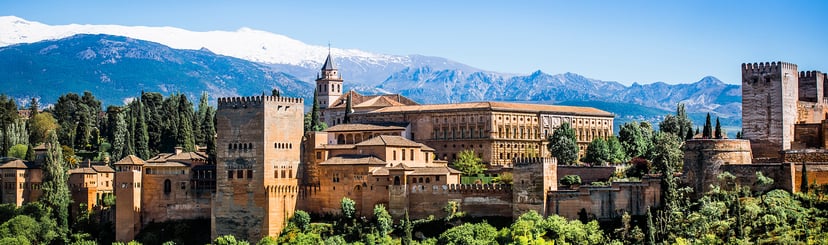
Granada without an Alhambra ticket can still justify the stop if you treat it as a royal-city, hill-neighborhood and garden day rather than a consolation prize. It works because Granada’s most useful substitutes sit in a tight but uneven triangle: the Royal Chapel and Cathedral quarter are low and central, the Albayzín gives the Alhambra back to you as a view and urban history, and Carmen de los Mártires offers garden relief near the Alhambra slope without requiring palace access. The clearest exception is a first visit built mainly around the Nasrid Palaces: if that was the reason you added Granada, move the city, shorten it, or reorder Andalusia rather than pretending the loss is minor.
The practical hinge is Plaza Nueva. From there, Carrera del Darro gives a graceful, mostly low approach along the river, while Calderería Nueva, Cuesta de San Gregorio and the lanes toward San Nicolás turn the day into a climb; meanwhile the Alhambra hill rises separately above Cuesta de Gomérez. That map reality is why a good no-ticket plan is not “see everything outside the walls.” It is a controlled route that lets the Royal Chapel carry the morning, uses one Albayzín view carefully, and keeps the Sabika-side garden stop from becoming a second hill workout.
Start by checking the official Alhambra ticket site (https://tickets.alhambra-patronato.es/en/) and, if you are still exploring legitimate ways to frame the day, compare the adjacent advice in Best Alhambra tours in Granada when tickets are hard to get. But the article below is not a workaround guide. Its job is to answer the harder planning question: when the Alhambra is unavailable or badly timed, can Granada still earn its place in a private Andalusia itinerary?
Should you still go to Granada without Alhambra tickets?
Yes, Granada can still be worth the stop when your trip values layered history, neighborhood texture, gardens, views and a measured evening; no, it should not be treated as an equal substitute for the Alhambra on every first visit. The difference is not prestige. It is whether the day still has a center of gravity. Without that center, travelers often add Sacromonte, every viewpoint, every church near the Cathedral and a last-minute “outside the Alhambra” loop, then wonder why the city felt scattered.
Use three scenarios rather than asking whether Granada is “worth it” in the abstract:
- Keep the full stop if you already sleep in Granada, have a flexible dinner plan, and would enjoy the Royal Chapel, Cathedral quarter, Albayzín lanes and one garden stop even without entering the palaces.
- Compress the stop if Granada sits between Seville, Córdoba or Málaga and you can make the day a focused Royal Chapel, Albayzín viewpoint and Realejo or garden route without chasing every substitute.
- Move or shorten Granada if the Alhambra was the primary reason for the detour, your route adds a difficult transfer, or your group includes guests who will resent a hill-heavy replacement day.
The counterintuitive correction is this: the famous sunset at Mirador de San Nicolás is often overvalued as the rescue move. It is beautiful, but it is also the moment when the Albayzín can become congested, uphill and slow to exit. If the day already includes the Royal Chapel and a garden above Realejo, San Nicolás should be a considered choice, not a reflex. For some couples it is perfect; for older parents, young children or celebration travelers dressed for dinner, it can make the evening feel like a recovery project.
Granada’s municipal tourism office is unusually direct about the no-ticket problem and warns travelers to use the official channel rather than suspicious last-minute offers; its no-Alhambra-ticket guidance (https://turismo.granada.org/en/what-do-if-there-are-no-alhambra-tickets-official-website) is worth reading before you pay more simply because someone says access is “still possible.” Premium spend cannot create ethical or guaranteed Alhambra access when tickets are unavailable. What money can buy is a better decision: whether to keep Granada, how to reduce walking strain, and how to turn the day into something coherent rather than apologetic.
That decision should happen before you book the rest of the day. Couples may accept a more atmospheric plan because the city still gives them views, gardens and a strong evening. Families often need clearer proof that the day will not become a climb disguised as culture. Small groups need a route that does not split the fast walkers from the slower guests. Celebration travelers need the afternoon to leave room for clothes, photos and dinner. A successful no-ticket Granada plan is therefore less about replacing one monument and more about refusing the wrong version of the city.
The replacement day that feels intentional, not apologetic
The best base plan is Royal Chapel and Cathedral quarter first, Albayzín second, and Carmen de los Mártires or Realejo later if the group’s energy still supports a climb. This sequence matters because it begins with the strongest indoor historical anchor while attention is fresh, moves into the hill neighborhood before the day has frayed, and leaves gardens or a lower Realejo finish as a choice rather than a burden.
In a private, tailor-made day, the morning belongs to the historic center. The Royal Chapel sits beside the Cathedral, the old silk-market streets of the Alcaicería, Calle Oficios and the Madraza area. This is not just convenient geography; it changes the psychology of the day. The group starts with a clear story of conquest, dynasty and the remaking of Granada after 1492, instead of beginning with a view of the palace they could not enter. That distinction matters for first-time travelers because the morning feels like Granada on its own terms.
The middle of the day is where many no-ticket plans go wrong. Travelers try to recreate the Alhambra through accumulation: more lanes, more viewpoints, another courtyard, one more church, then Sacromonte because it is nearby on the map. The cut-first rule is simple: if the day is losing shape, cut Sacromonte before cutting the Royal Chapel or the Albayzín. Sacromonte has its own power, but it adds another slope, another taxi decision and another exit problem. It is not the cleanest replacement for the Nasrid Palaces.
For a comfortable private route, treat the Albayzín as one controlled ascent and one descent, not a wandering maze. Enter from Plaza Nueva or the Darro side, use Carrera del Darro and Paseo de los Tristes for context, then climb with purpose toward a viewpoint that suits the group. San Nicolás is the famous option; San Cristóbal or quieter edges can work better when the goal is perspective rather than applause. For travelers who want that neighborhood to be the focus rather than a garnish, the dedicated Albayzín private tour is the cleaner next step.
Then decide whether gardens still add value. Carmen de los Mártires, on the Sabika-side edge above Realejo, works when the group wants green space, views and a slower final act without buying into a fiction that it replaces the Generalife. It is a different kind of payoff: not the Alhambra’s royal garden architecture, but a shaded, layered pause near the hill that lets the day breathe. Check the municipal page for Carmen de los Mártires (https://turismo.granada.org/en/node/5974) before you plan around it, because garden access and schedules are the kind of details that should be confirmed close to travel.
Lunch should be treated as a planning tool, not a filler slot. A long lunch before the Albayzín makes the climb feel heavier; a rushed snack before the Royal Chapel can make the morning feel transactional. The cleanest pattern is usually a serious but not drawn-out lunch near the center or lower Darro, followed by one uphill chapter. When the group is food-and-wine oriented, save the deeper culinary energy for the evening and keep the afternoon route disciplined.
Royal Chapel first: the city sight that can carry the morning
The Royal Chapel is the strongest substitute anchor because it gives the day a decisive narrative rather than a list of consolation stops. It is not a miniature Alhambra, and it should not be sold that way. Its value is different: it explains the Catholic Monarchs, the burial choice, the post-conquest city, and the reason Granada’s center feels so compressed with royal, ecclesiastical and civic meaning.
That is why the Royal Chapel should come before the Albayzín for most no-ticket days. In practical terms, it starts low in the city, close to hotel pickups in Centro and Realejo, and avoids asking the group to climb before they have a reason to care. In interpretive terms, it gives the Albayzín sharper contrast later. The morning story becomes: here is the Christian royal project that remade Granada; now we move uphill into the older urban fabric that still holds the shape of Islamic Granada. Without that order, the day can feel like sightseeing fragments.
Use the official Royal Chapel cultural visit page (https://capillarealgranada.com/en/cultural-visit/) for current visitor information rather than relying on a hotel printout or a generic attraction listing. This is a living religious site as well as a monument, so a private plan should allow for the possibility that worship, closures or crowd movement may alter the exact rhythm. The right guide earns their fee here by translating the politics and symbolism without making the visit too long, not by stuffing the morning with every nearby church.
A focused Royal Chapel and Cathedral-quarter block usually pairs well with the Alcaicería only if the stop stays short. The Alcaicería is useful for explaining Granada’s commercial memory and the texture of the old center, but it should not become a shopping drift when the day is already compensating for lost palace access. Families and small groups often do better with a crisp pass through the lanes, a stop in the Madraza area if context supports it, and then a move toward lunch or the Darro rather than another hour of souvenir browsing.
For travelers whose disappointment is really about missing historical depth, not just missing a famous building, this is where private guiding changes the outcome. A good guide can connect the tombs, the Cathedral quarter, Calle Oficios, the old administrative core and the later Habsburg ambition into one arc. That is why a no-ticket Granada morning often belongs with a Royal Chapel and Cathedral private tour rather than a generic city walk. The more focused the morning, the less the afternoon has to overcompensate.
Albayzín second: use the view, but do not let the hill run the day
The Albayzín is essential in a no-ticket Granada plan because it lets travelers understand the Alhambra as a city-facing presence rather than only as an interior monument. It also brings the largest comfort risk. The neighborhood rewards curiosity but punishes vague routing: narrow lanes, uneven paving, dead-end-feeling turns, exposed climbs and taxi limitations can turn a romantic idea into a slow uphill negotiation.
The official UNESCO listing names the Alhambra, Generalife and Albayzín, Granada (https://whc.unesco.org/en/list/314) together, and that matters editorially. If you cannot enter the Alhambra, the Albayzín is not an unrelated substitute; it is part of the same historic landscape, facing the palatine city across the Darro valley. The traveler consequence is clear: one well-explained viewpoint from the Albayzín can be more meaningful than three disconnected “best views” because it restores the relationship between palace, river, hill and city.
Do not build the afternoon around every famous Albayzín lane. Build it around the exit. A route that climbs from Carrera del Darro toward San Nicolás and then descends toward Plaza Nueva is very different from one that continues toward Sacromonte, then asks the group to find dinner in Realejo or Centro. On a map, the extensions look close; in the body, they feel like another stage. This is where Granada does something very specific to travelers: it converts short distances into calf work, heat load and decision fatigue.
That body cost is manageable when the guide controls the ascent and uses taxis only where they actually help. A taxi can save energy before or after the climb, but it cannot make the tightest Albayzín lanes behave like a boulevard. Guests still need shoes, patience and a tolerance for uneven ground. The best plan does not pretend otherwise. It puts the climb in one contained chapter and avoids the common error of combining San Nicolás, Sacromonte caves, Paseo de los Tristes, a garden above Realejo and a late dinner as if they were all the same neighborhood.
The mood cost matters too. A no-ticket day should make Granada feel calmer, not smaller. When the Albayzín is paced well, the view of the Alhambra becomes a generous pivot: the palace remains part of the story, the disappointment softens, and the group has enough energy to enjoy the evening. When the Albayzín is overstuffed, the mood changes. The day starts to feel like a chase for compensation, and even a good dinner begins with everyone negotiating shoes, stairs and taxis.
Carmen de los Mártires and Realejo: gardens that justify the stop when the palace is out
Carmen de los Mártires is the garden stop that most naturally belongs in this pivot, but only if it is chosen for atmosphere and routing rather than as a Generalife replacement. The garden sits near the Alhambra environment, above the Realejo side, which makes it emotionally useful: you can be close to the hill, see the city, and still avoid making the whole afternoon about a monument you could not enter.
The best use is late afternoon after the Royal Chapel and Albayzín, or as a softer alternative when the group should not take another steep neighborhood route. This is especially true for couples on a celebration trip and for families who need the day to loosen after a history-heavy morning. A garden pause gives the group a different kind of memory: not the pressure of the ticket you missed, but the sensation of Granada opening into greenery, birdsong, water, terraces and views. That matters because a salvaged city day needs emotional variety, not just historical substitutes.
There is a mobility caution. Carmen de los Mártires can reduce cultural fatigue, but it does not eliminate Granada’s slopes. Reaching it from Realejo or the Alhambra side still requires a hill decision, and the return should be planned before the group is tired. If your hotel is near Campo del Príncipe, Realejo can make the finish feel graceful. If your hotel is near Gran Vía de Colón or the station area, the route needs a cleaner transfer plan. Do not end a premium day with everyone improvising down from the Sabika edge.
Realejo is the useful buffer when the garden is too much or the schedule tightens. Campo del Príncipe, Calle Molinos and the lower lanes toward the center let the afternoon taper without another major climb. This is where the no-ticket plan becomes more adult: instead of forcing one more famous stop, you make the day feel complete by exiting well. The quieter finish is often better for food-and-wine travelers who care about arriving at dinner with appetite and attention intact.
If gardens are a real priority, not just a patch for a failed ticket, plan them deliberately through Carmen de los Mártires gardens private tour. That distinction keeps expectations honest. Carmen de los Mártires can make Granada feel generous without the Alhambra, but it cannot supply the interior palace sequence that many first-time visitors imagined.
When to avoid hill overload
Avoid hill overload when the substitute plan asks the same people to do the Royal Chapel, Albayzín, Sacromonte, Carmen de los Mártires and a late dinner in one day. That is not a clever rescue. It is a scenic way to exhaust the group. Granada’s hills are not merely a fitness issue; they shape timing, patience, clothing, shoe choices, taxi availability and whether the evening feels festive or merely survived.
The first warning sign is route duplication. If you climb from Plaza Nueva to San Nicolás, descend to the Darro, then later climb again toward Carmen de los Mártires, you have used two separate hill systems in one day. That can be fine for energetic travelers in mild weather. It is rarely wise for multigenerational families, guests with knee concerns, or a celebration group that wants photos, lunch and dinner to feel unforced. In those cases, pick one high moment: Albayzín view or Sabika-side gardens, not both at full length.
The second warning sign is viewpoint stacking. San Nicolás, San Cristóbal, Sacromonte and the Alhambra-side terraces do not become more meaningful because you collect them. One view with a guide who explains the Darro valley, the palace ridge, the Cathedral mass and the old city fabric beats four stops with rising irritation. This is a firm editorial call: for a no-ticket first visit, one excellent view is enough unless the traveler came specifically for photography or hill neighborhoods.
The third warning sign is a dinner plan that has no geography. Granada’s evening rhythm is one of the city’s pleasures, but it does not fix a badly routed day. If dinner is in Realejo, finish low or descend there with intention. If dinner is near Plaza Nueva or the Cathedral quarter, do not push the group deep into Sacromonte beforehand. If you are using a restaurant from the MICHELIN Guide selection (https://guide.michelin.com/us/en/andalucia/granada/restaurants), the afternoon should be lighter, not more ambitious, because a serious dinner is part of the day’s value rather than an afterthought.
For comfort-first visitors, the most elegant cut is often the one no one brags about: remove the second viewpoint, keep the Royal Chapel, keep one Albayzín perspective, and let the garden or Realejo finish happen only if the day still has ease. That choice preserves the mood of the trip. The group leaves Granada feeling that the city gave them a meaningful day despite the ticket problem, instead of feeling that they spent the day proving they were not disappointed.
When to change the trip order instead of salvaging the day
Change the trip order when the Alhambra was the reason Granada entered the itinerary and the replacement day would create more regret than reward. This is the honest exception. Some travelers should still come; others should not spend a precious Andalusia night pretending that the Royal Chapel, Albayzín and gardens solve a different desire.
Move Granada later if your wider route allows another chance at official Alhambra availability without damaging the rest of the trip. This can make sense on a Madrid, Córdoba, Seville and Granada sequence when the Granada night is still flexible. It can also make sense if you have a private driver day that can be reassigned without turning the journey into backtracking. The useful question is not “Can we technically still stop?” It is “Will the stop feel like the reason we crossed Andalusia?” If the answer is no, revise.
Shorten Granada if you are already sleeping there but cannot access the Alhambra and do not have the appetite for a full substitute day. A half-day Royal Chapel, Cathedral quarter and one Albayzín view can be a dignified pivot. It lets you keep the hotel, keep the evening, and avoid throwing good energy after a lost ticket. Travelers often resist this because they feel they must “get value” from the city. In practice, the shorter plan can feel more premium because it refuses padding.
Reroute away from Granada if the stop requires a long transfer, a rushed lunch, luggage friction and a late arrival elsewhere, all without the Alhambra. This is particularly true when Granada was being forced as a same-day detour from the coast or another city. A private vehicle can make the roads smoother, but it cannot turn a compromised cultural goal into the right use of a day. In some itineraries, Córdoba, Úbeda and Baeza, the Costa Tropical or a calmer Seville day may produce a better trip than a no-ticket Granada push.
For travelers still deciding how many nights the city deserves, the broader time question is handled in how many days in Granada for a tailor-made Andalusia trip. The important point here is narrower: without Alhambra access, Granada should earn its time through the city day you will actually enjoy, not through guilt about what you hoped to see.
Where private planning changes the outcome
Private planning helps most when the decision is still honest: salvage the day if Granada has enough value for your group, or reroute if it does not. It should not be used to dress up false certainty about tickets. The best planner or guide adds value by reading the group’s mobility, lunch timing, hotel location, dinner geography and tolerance for hills, then building a day that does not keep reopening the original disappointment.
Where paying more helps: interpretation, route discipline, private pickup timing, taxi coordination, a calmer lunch choice, a guide who can connect the Royal Chapel to the Albayzín without overloading dates, and the confidence to cut a famous stop when it would flatten the afternoon. Paying more can also help with family dynamics. A guide can tell when teenagers need the Albayzín to become a view and a story rather than another lecture, or when older parents should descend before the lanes start to feel like a test.
Where paying more does not help: it does not create legitimate Alhambra tickets out of nothing, it does not remove all hills from the Albayzín, and it does not make Sacromonte a light add-on after a full city day. The premium decision is sometimes restraint. A carefully guided Royal Chapel morning, a selective Albayzín climb and a garden or Realejo finish can feel more exclusive than an overbuilt route with a luxury vehicle waiting at every possible edge.
For Orange Donut Tours, the planning handoff is straightforward: if you want Granada salvaged, it should be salvaged with taste; if the city should be moved, it should be moved before the day becomes expensive theater. A tailor-made plan can combine the historic center, Albayzín and gardens, or it can advise you to keep hunting official Alhambra access for another date instead. For that kind of candid private planning, Inquire now.
The most useful private version of this day usually draws from focused historic-center guiding and tailor-made private tours of Granada, then adds or removes Albayzín and Carmen de los Mártires based on the group’s energy. The point is not to create a second-best Alhambra. The point is to let Granada stand on the strongest day it can still offer.
That strongest day usually ends with a feeling of proportion. You saw the royal burial city before the lanes blurred, you faced the Alhambra from the Albayzín without chasing every angle, and you either used the garden as a quiet release or left it aside because the city had already given enough. This is the difference between a salvage plan and a denial plan. One acknowledges the lost ticket and builds a truthful Granada around it; the other keeps adding stops until everyone can feel the original problem under the itinerary.
FAQ
Is Granada worth visiting if I cannot get Alhambra tickets?
Granada is worth visiting without Alhambra tickets if you will enjoy the Royal Chapel, Cathedral quarter, Albayzín views, Realejo and gardens as a focused city day. It is less worth it if the Alhambra was the main reason for adding Granada and your route requires a difficult transfer.
What should I see in Granada without an Alhambra ticket?
Prioritize the Royal Chapel and Cathedral quarter, one well-routed Albayzín climb or viewpoint, and Carmen de los Mártires or Realejo if the day still has enough energy. Do not try to replace the Alhambra by adding every nearby hill neighborhood.
Can a private guide get Alhambra tickets when they are sold out?
A private guide can help you check legitimate channels and make better planning decisions, but no guide should promise ethical or guaranteed Alhambra access when official availability is gone. Be careful with vague last-minute claims that sound too convenient.
Is the Royal Chapel a good substitute for the Alhambra?
The Royal Chapel is not a substitute for the Alhambra’s Nasrid Palaces, but it is the strongest anchor for a no-ticket Granada day because it gives the morning a clear historical narrative and keeps the route low before the Albayzín climb.
Should I still go to the Albayzín if I missed the Alhambra?
Yes, the Albayzín usually belongs in the plan because it restores the relationship between the palace hill, the Darro valley and the old city. Keep it to one controlled climb and one meaningful view unless your group specifically wants a hill-neighborhood day.
Should I add Sacromonte when I do not have Alhambra tickets?
Add Sacromonte only if your group has the energy for another hill and the evening logistics are simple. If the day already includes the Royal Chapel, Albayzín and gardens, Sacromonte is usually the first major addition to cut.
Is Carmen de los Mártires worth visiting without the Alhambra?
Carmen de los Mártires can be worth visiting without the Alhambra because it gives the day a green, slower finish near the palace hill. It works best when treated as a garden pause, not as a replacement for the Generalife.
Should I shorten my stay in Granada if I cannot visit the Alhambra?
Shorten Granada if your stay was built almost entirely around the Alhambra or if a full substitute day would strain the group. Keep the stay if the historic center, Albayzín, gardens and evening food culture are enough to make the city feel worthwhile.
If you’re interested in any private tours of Granada, please reach out to us.



 So if you are looking for the absolute best in Granada & surroundings with authentic local fully-licensed native guides whose English you can actually understand and with an exclusive and amazingly fun itinerary













