Granada in High Summer: Alhambra Shade, Lower-City Hours and the Viewpoint to Save

Updated
Put the Alhambra early, move deliberately into a lower-city midday pause, and save one Albayzín viewpoint for dusk; that is the strongest high-summer Granada day. The day should be reorganized around shade before adding any extra viewpoint. It works because Granada’s heat is amplified by stone, slopes and exposed transitions: the climb from Plaza Nueva through the Cuesta de Gomérez, the river-level pull of Carrera del Darro, and the final lift into the Albayzín all spend energy before you realize it. The clear exception is a fixed noon or late Nasrid Palaces entry: in that case, stop trying to complete Granada around it, shorten the morning, and save the viewpoint for another day or a cooler evening. High-summer Granada is planned by shade thresholds, not by proximity on a map.
This is not a generic “avoid midday” rule. It is a Granada-specific routing rule. Both the Alhambra and the Albayzín sit above the lower city; both are worth your time; neither is kind to a full-day checklist when the pavement radiates heat. A private day can feel wonderfully fluent here, but only when the guide and transport are used to change the order, shorten exposed walking, and place the lower-city hours where they actually help. Orange Donut Tours’ seasonal private planning for Granada is strongest when it treats the afternoon as a design constraint, not an empty space to fill.
The counterintuitive correction is this: the most beautiful base or add-on can be the one that makes the day worse. Sleeping high in the Albayzín may sound atmospheric, and adding Sacromonte after the Alhambra may look efficient on a wish list, but both can turn a good summer day into a negotiation about steps, taxis and tired children. In high summer, the premium move is not to see more hills; it is to choose the hill that matters, place it at the right hour, and leave the rest with dignity.
The heat-smart Granada sequence that actually fits the city
The strongest high-summer sequence is one hill in the morning, a deliberately flatter middle, and one viewpoint only when the light and the group are ready. That usually means Alhambra first, Realejo or the Cathedral-quarter edges for the lower-city hours, then a saved Albayzín view in the evening. The lower-city pause is not a compromise; it is the hinge that lets the Alhambra remain the day’s memory rather than the day’s exhaustion.
There are four practical patterns worth considering, and the correct one depends less on taste than on the Alhambra time slot, group mobility and dinner ambition.
- Best base day: Alhambra early, lower-city midday pause, Realejo or Cathedral-quarter time in the late afternoon, then a single Albayzín viewpoint at dusk.
- Late Alhambra slot: Keep the morning light in the lower city, enter the Alhambra when the ticket requires it, and cut the viewpoint unless the group still has real energy after a reset.
- Family or mixed-age day: Shorten the Alhambra route before anyone is depleted, use a hotel or lunch pause, and choose either the Albayzín view or a relaxed dinner, not both.
- Food-and-wine day: Keep the viewpoint brief and late, or replace it with a lower-city evening if a formal reservation matters more than another climb.
The best base day suits first-time visitors who want the Alhambra to feel complete without letting it consume the evening. It also suits couples and small groups who have one full day and want the classic Alhambra-against-the-hill view without turning the entire day into a climb. The late-slot version is not inferior; it is simply less forgiving. Once the Nasrid Palaces time sits in the middle of the heat, you need to remove pieces rather than pretend the rest of the city will still fit.
The family version is the one many travelers resist until they are already tired. It asks you to cut earlier, not later. Children rarely object to seeing less if the day still has a pool, ice cream, shade, a clear dinner plan, or a short evening view. They do object when adults keep adding “just one more” lane, mirador or church after the Alhambra has already used the group’s attention span. The food-and-wine version is similar for adults: a long formal dinner and a high viewpoint can coexist only when the middle of the day has been genuinely restorative.
Where the Alhambra belongs in high summer
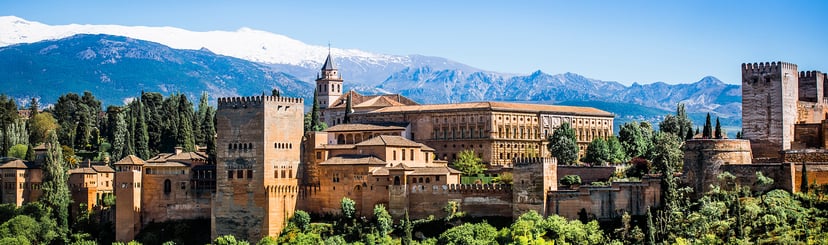
The Alhambra belongs as early as your ticket and group rhythm allow, because it is the one Granada site that deserves fresh feet, fresh attention and the day’s best concentration. The palaces, courtyards, water, gardens and fortifications reward slow looking; they do not reward arriving already worn down by the Albayzín. Confirm ticket details and timed-entry requirements on the official Alhambra site (https://www.alhambra-patronato.es/), then build everything else around that fixed point rather than treating it as one stop among many.
Even an early Alhambra is not magically cool. The Generalife gives garden shade in places, the palaces give interior pauses, and the Partal area can feel gentler than exposed city streets, but the complex still involves slopes, stone, security rhythms, viewpoint temptation and long transitions. The mistake is to imagine “Alhambra shade” as continuous cover. In reality, the shaded moments work best when they are protected by a calm entry, an unhurried guide, and no unnecessary pre-Alhambra climb.
The route into the Alhambra matters. A traveler looking at a map may see Plaza Nueva, the Puerta de las Granadas and the Cuesta de Gomérez as a charming approach. It is charming, but in high summer it is also an uphill start before the visit has begun. For a fit couple staying nearby, that walk can be part of the pleasure if done early and without rushing. For a family with a stroller, older parents, a celebration group in dressier shoes, or anyone carrying camera gear, it may be the first unnecessary energy leak of the day.
A private Alhambra plan should therefore ask a practical question before it asks a cultural one: where should the walking begin? Sometimes the answer is a carefully chosen drop-off near the correct access point; sometimes it is a short guided ascent that introduces the forested approach; sometimes it is a hotel-to-site transfer that saves the group for the palaces themselves. The value of an Alhambra and Generalife private tour is not only explanation. It is also the ability to pace the explanation so the exposed parts do not become dead time and the shaded parts are used for context, not recovery.
Inside the visit, the guide’s job is not to make the Alhambra shorter by rushing it. The better move is to remove false urgency. You need enough time to understand the Nasrid Palaces, the defensive logic of the Alcazaba, the garden intelligence of the Generalife, and the way water and prospect shape the whole hill. You do not need to turn every overlook into a photo stop or every path into an endurance test. In high summer, the Alhambra feels richer when the interpretive pauses happen where the body can actually listen.
If the only available Alhambra entry is later, the day flips. Do not put a full Albayzín wander before it. Do not add Sacromonte because “it is nearby.” Use the morning for a soft lower-city introduction: a short Realejo orientation, a shaded coffee, the Cathedral-quarter edges, or simply a hotel morning that lets the Alhambra remain the day’s main act. A late Alhambra slot can still be excellent, but only if the rest of the day admits that the heat has already taken a portion of your usable energy.
Why lower-city hours matter more than adding another hill
Lower-city hours matter because they turn the hottest part of a Granada day from a liability into a controlled pause. The lower city gives you shorter transfers, flatter walking, easier taxi access, more restaurant flexibility and the option to return to the hotel without retracing a steep route. In a city where the Alhambra, Albayzín and Sacromonte all compete for height, the flatter middle is not dull; it is what keeps the second half of the day usable.
For many travelers, the right lower-city midday pause sits around Realejo, Puerta Real, the Cathedral-quarter edges, or a hotel close enough that returning does not feel like a defeat. Realejo is especially useful because it can connect an Alhambra morning to a lower dinner arc without forcing the group across the Darro and up into the Albayzín too soon. Campo del Príncipe, the lanes above it, and the lower Realejo approaches give texture without the same penalty as a midday viewpoint climb.
The body consequence is real. Granada asks the calves and lower back to work before the mind has caught up: cobbles underfoot, uneven old-town lanes, short stair bursts, sunlit plazas, and repeated small rises that do not look dramatic on a map. Add heat, a palace visit, children asking how much farther, and a late dinner culture, and the physical cost compounds. A lower-city midday pause lets feet cool down, hydration catch up, and shoulders drop before the evening view asks for one more lift.
The mood consequence is just as important. When the middle of the day is protected, the evening feels chosen rather than survived. Couples are less likely to cancel the view out of quiet fatigue. Families stop treating every staircase as a referendum on the plan. Small groups spend less time negotiating who wants a taxi, who wants shade, and who still wants photographs. The city feels more generous when the route leaves room for appetite and conversation.
This is also where hotel geography becomes more than a booking detail. A beautiful high Albayzín stay can be memorable, but in high summer it can turn every pause into a return-leg question. A lower Realejo or Centro base may not sound as romantic on paper, yet it often makes the day calmer because the hotel reset is not another climb. If your hotel is high, treat it as an evening asset rather than a midday refuge unless transport is straightforward and the group is comfortable with the access pattern.
Lower-city hours should not become filler shopping or a second sightseeing loop. The Alcaicería, the Cathedral surroundings and the Royal Chapel area can work if they are brief, shaded where possible, and placed as a bridge to lunch or the hotel. They become draining when they are used to “use up” the afternoon after the Alhambra. In high summer, the right lower-city hour is the one that makes the evening better; the wrong one is the extra block that makes everyone want to abandon the viewpoint.
Which viewpoint should you save in Granada in summer?
The viewpoint to save is the Alhambra-from-the-Albayzín moment, usually around Mirador de San Nicolás or a nearby guided pause, but it should be saved for dusk rather than collected at midday. The view is powerful because it completes the Alhambra visit from across the valley. It is also popular, exposed, and attached to uphill movement. Treat it as the closing note, not a box to tick immediately after the palaces.
Mirador de San Nicolás is the classic choice because it gives the cleanest emotional payoff: the Alhambra seen whole, with the Sierra Nevada behind it when visibility cooperates. The problem is not the view; the problem is timing and access. Reaching the area after a hot Alhambra morning can mean crossing from the lower city, entering the Albayzín’s lanes, managing uneven surfaces, and then planning a return in the dark or after dinner. That is why the viewpoint belongs after a real pause, not after a heroic “we are already out” march.
There is a smarter way to think about it. If you want one Granada viewpoint in high summer, save San Nicolás or a quieter nearby Albayzín angle for the late-day window, and let a guide shape the approach so the climb does not swallow the group. A dedicated Albayzín viewpoint day can go deeper on lanes, tea streets, small squares and the logic of the hillside; on an Alhambra day, you usually need the distilled version.
Sacromonte is the first famous add-on to cut when the day is getting too full. It has a strong identity, cave-house history, flamenco associations and views of its own, but it sits farther along the hill rhythm and creates a more demanding return if the group is already warm or hungry. San Miguel Alto is even more demanding and belongs to travelers who actively want the climb or have arranged the movement carefully. It is not the default reward after a palace morning.
Save an Albayzín or Sacromonte viewpoint for another day when you have a noon or late Alhambra slot, a formal dinner reservation, young children, older relatives, a stroller, dress shoes, or a group that is already splitting between “one more view” and “please take me back.” This is the honest editorial call: in high summer, a second hill after the Alhambra is often overvalued. The view is not less beautiful tomorrow; the mood tonight may be much better if you stop.
For couples celebrating an anniversary or a milestone, the answer can flip if the view is the emotional center of the day. In that case, shorten the lower-city sightseeing, reserve energy after the Alhambra, and build the evening around the mirador plus dinner. The key is to admit what the day is about. A celebration day can afford one dramatic finish. It cannot afford three dramatic finishes, all uphill.
Family and mixed-age pacing: one hill, one reset, no icon stacking
With children or mixed-age relatives, the high-summer rule is one major hill, one real reset and no stacking the Alhambra, Albayzín and Sacromonte in the same day. This is not lowering the standard; it is protecting the part of Granada everyone will remember. The Alhambra already asks for attention, walking and restraint. Adding two more hillside identities after it usually creates a body problem first and a mood problem soon after.
The age-band split is practical. Preschool children need shorter interpretive bursts, shade, snacks and a return plan that does not depend on coaxing them through steep lanes at sunset. Primary-school children can often handle the Alhambra well if the story is paced and the afternoon includes a true reset, but they are the first to turn a viewpoint climb into a negotiation. Teenagers may tolerate more walking, yet they often do better with a clear evening reward than with a vague promise of “amazing views” after hours of history.
Stroller families should be especially conservative. Granada’s hill neighborhoods are not a place to assume smooth wheeling: cobbles, steps, narrow lanes and crowded corners can turn the stroller into something adults carry. If a stroller is essential, plan the Alhambra access and the lower-city pause carefully, then make the viewpoint optional. A carrier may help in some moments, but it does not change the heat load on the adult wearing it.
The reset window should be named before the day begins. That may be a hotel return, a long lunch, a quiet café, a pool break where available, or simply a shaded indoor hour with no cultural ambition. The important thing is that it is not treated as a failure. In high summer, the pause is the part of the plan that allows the evening to happen. Without it, the last part of the day becomes a series of bargains: one more lane, one more photo, one more taxi, one more complaint.
Weather pivots should also be decided calmly. If the heat feels sharper than expected, if a child is flushed, if an older traveler is moving more slowly, or if the day has a dusty, heavy quality, cut the viewpoint first and keep dinner easy. If a short rain or wind shift appears, the Albayzín’s polished stones and steps can become more awkward, not less. The safer pivot is lower-city time, an earlier dinner, or a softer second-day viewpoint plan rather than forcing the hill because it was promised.
The cut order for families is simple: first cut Sacromonte, then cut the second viewpoint, then shorten the lower-city sightseeing, and only then reduce the Alhambra itself if the children are truly fading. The Alhambra is the reason Granada is in the itinerary for many first-time families; the rest should serve that, not compete with it. Families planning a broader stay can pair this article with the Granada with kids plan for a deeper mixed-age version.
How private sequencing changes comfort more than adding transport
Private sequencing changes the day by reducing bad decisions before they happen: the wrong approach into the Alhambra, the extra lane after lunch, the viewpoint at the wrong hour, the return route nobody wants to admit is too much. A guide who knows Granada’s slope logic can move interpretation into shaded pauses, compress exposed stretches, and help a family or small group decide what to cut before the day turns sour.
Transport helps at the edges, especially for arrivals, hotel returns, higher viewpoints, dinner transfers and travelers who should not spend energy on approach walks. But a vehicle does not make the Alhambra flat, the Albayzín smooth, or Sacromonte close when the group is tired. Premium spend does not help when it simply adds a car to a day that is still too long; a chauffeur does not remove the need to shorten hill walking and protect midday energy.
This is where many high-end plans go wrong. They buy comfort but keep the same overloaded sequence. The result is a day with better seats between the same mistakes. A stronger private plan uses a chauffeur, taxi or drop-off only where it changes the walking load or return logic. It does not pretend a driver can wait inside every lane, erase every stair, or make a late viewpoint feel gentle after a full palace morning.
For travelers considering a chauffeured layer, the useful question is not “Is it luxurious?” but “Which transitions become easier?” The approach to the Alhambra may improve. The return from the Albayzín after dusk may improve. A dinner transfer may improve. The interior walking, the palace pacing, and the need for a lower-city midday pause remain. A more detailed transport lens sits in the chauffeured Granada day guide, but the summer verdict is firm: buy routing relief, not permission to overpack.
A private guide also changes the social temperature of the day. In couples, one person no longer has to be the navigator, ticket-watcher and energy manager. In families, the guide can read when interpretation should become a story, when a child needs a break, and when the adult desire for one more historical layer has exceeded the group’s patience. In celebration groups, the guide can keep the day elegant by making cuts feel intentional rather than disappointing.
When the day has been shaped around the Alhambra, the lower-city pause and one saved view, the planning handoff becomes much easier: tell us your Alhambra slot, hotel location, dinner ambition, mobility constraints and whether the viewpoint is essential or optional. Orange Donut Tours can then build the route around the actual heat and hill problem rather than adding services to an already crowded wish list. For tailor-made help, see private tours in Granada or Inquire now.
Dinner after a hot Alhambra day should not become a second climb
Dinner works best when it is treated as the reward for a well-edited day, not as another logistical test. After a high-summer Alhambra visit and a saved viewpoint, the evening should be easy to reach, easy to enjoy and easy to leave. That may mean a Realejo dinner, a lower-city tapas route, a hotel-adjacent reservation, or a destination meal with a clear transfer plan. What it should not mean is wandering uphill while everyone is hungry because the day left dinner geography until the end.
Food-and-wine travelers often have a different regret risk: they protect the monuments and then under-plan the evening. If a formal meal matters, check current restaurant information directly rather than relying on old notes. The MICHELIN Guide selection (https://guide.michelin.com/us/en/andalucia/granada/restaurants) is useful for orientation, while a restaurant’s own menu page, such as Arriaga – Menú (https://arriagarestaurante.com/menu/), is the better place to confirm the shape of a specific dinner before committing your evening. Those links should guide confirmation, not dictate the day’s rhythm.
The practical question is whether dinner can absorb the viewpoint or should replace it. A relaxed tapas evening in Realejo can follow a brief Albayzín view if the group has paused properly. A long tasting-style dinner should make you more conservative: keep the view short, arrange the return, or skip the hill and let the meal be the finale. In Granada, a good evening is often the result of what you did not force between the Alhambra and the first glass of wine.
Do not dismiss the lower city for dinner just because the Albayzín view is famous. A lower-city evening can feel more local, less performative and easier on a group that has already had its visual climax. Realejo in particular gives a useful bridge between the Alhambra day and the dinner hour: close enough to feel connected to the hill, low enough to avoid turning the meal into a return-leg problem. The best summer dinner plan is the one that everyone can still enjoy after walking, listening and looking all day.
The cut-first rule when Granada starts to feel too full
When a high-summer Granada day starts to feel crowded, cut the farthest hill first and the Alhambra last. This rule prevents the most common regret: saving the globally important site but arriving too tired to appreciate it, then pushing the evening view until it feels like an obligation. Editing early keeps the day feeling curated rather than incomplete.
- Cut Sacromonte first if the Alhambra and one Albayzín view are already in the day. Sacromonte deserves context and energy; it rarely improves a tired summer evening as an add-on.
- Cut the second viewpoint next if San Nicolás or another Albayzín view is already planned. More views do not create a better day when the walking cost is rising.
- Shorten shopping and lower-city wandering if those hours are stealing the actual pause. The lower-city midday pause should cool the day down, not become a second itinerary.
- Keep dinner geography simple if the group includes children, older travelers or anyone who has already asked about taxis. A graceful return is part of the experience.
- Protect the Alhambra interpretation unless the group is genuinely unwell or the slot itself makes a shorter visit necessary. Granada should not become a race through its most important place.
The reverse order is what causes trouble: travelers keep every hill, preserve every view, add a restaurant across town, and then compress the Alhambra because the day has become too long. That is backwards. The Alhambra is the anchor; the lower-city pause is the stabilizer; the viewpoint is the saved flourish. Everything else earns its place only if those three elements still feel good.
There is one final exception. If you are staying three nights, traveling without children, comfortable with hills, and intentionally building a slower Granada stay, the Albayzín and Sacromonte can have their own day or evening. That is when the famous lanes stop being an add-on and become the point. In that version, the high-summer Alhambra day stays cleaner, and the viewpoint day earns more time, more patience and a better return.
FAQ
What is the best time to visit the Alhambra in Granada in high summer?
The best practical time is as early as your ticket and group rhythm allow, because the Alhambra deserves fresh attention and the approach is easier before the day has accumulated heat. If your Nasrid Palaces slot is later, keep the morning light and remove other hills rather than forcing a full city route before entry.
Should I visit the Alhambra and the Albayzín on the same summer day?
Yes, if the Alhambra is early, the middle of the day includes a real lower-city pause, and the Albayzín is limited to one late viewpoint. No, if your Alhambra slot is at noon or later, your group has mobility concerns, or you are also trying to add Sacromonte and a formal dinner.
Which Granada viewpoint is best to save for evening?
The Alhambra-from-the-Albayzín view, usually around Mirador de San Nicolás or a nearby guided angle, is the viewpoint to save for evening. It gives the strongest visual conclusion to an Alhambra day, but it should not be treated as a midday add-on after the palaces.
When should I save Sacromonte for another day?
Save Sacromonte for another day when you have children, older relatives, a late Alhambra slot, a serious dinner reservation, or limited tolerance for hills in heat. Sacromonte is better when it has its own context and return plan rather than being added after a full Alhambra day.
Is Realejo a good area for a lower-city midday pause?
Yes. Realejo works well because it can connect an Alhambra morning with a lower, more manageable afternoon and evening. It gives you texture, lunch options and easier returns without forcing the group immediately across the Darro and up into the Albayzín.
Can a chauffeur solve Granada’s summer hills?
A chauffeur can improve approaches, returns and certain transfers, but it cannot remove the walking inside the Alhambra, the uneven surfaces of the Albayzín, or the need to protect midday energy. Use transport to reduce bad transitions, not to justify adding more hills.
Is Granada in high summer suitable for families?
Granada can work very well for families in high summer if the day has one main hill, one reset window and a clear cut order. With younger children or strollers, keep the Alhambra as the anchor, make the viewpoint optional, and avoid stacking the Alhambra, Albayzín and Sacromonte in one day.
What should I cut first if my Granada day is too full?
Cut Sacromonte first, then any second viewpoint, then nonessential shopping or lower-city wandering. Keep the Alhambra well paced, protect the lower-city midday pause, and treat the evening view as a saved flourish only if the group still has energy.
If you’re interested in any private tours of Granada, please reach out to us.



 So if you are looking for the absolute best in Granada & surroundings with authentic local fully-licensed native guides whose English you can actually understand and with an exclusive and amazingly fun itinerary