Granada for Garden Travelers: Generalife, Carmen de los Mártires and the Viewpoint Question

Updated
Garden travelers in Granada should make Generalife the anchor, then choose either Carmen de los Mártires or one carefully chosen viewpoint, not both by default. That works because the city’s best garden route is shaped by hills, timed Alhambra entry, and the physical cost of moving between the Sabika hill, Realejo, and the Albayzín. The clearest exception is a second full day after the Alhambra: when you have slept well, reserved enough time, and want a softer private garden mood, Carmen de los Mártires can become the second chapter rather than an add-on.
The article-specific rule is simple: in Granada, a garden day succeeds when landscape rhythm matters more than attraction quantity. The non-obvious hinge is that the Generalife end of the Alhambra is already high and slightly detached from the city below; descending toward Paseo de los Mártires or the Alhambra forest is a different bodily experience from crossing into Plaza Nueva, climbing the Albayzín, and trying to finish at Mirador de San Nicolás. That is why a refined route starts with an Alhambra and Generalife private visit and then edits the rest of the day with unusual restraint.
The planning answer: Generalife first, then one calm second move
The best base plan is Generalife as the garden anchor, followed by either Carmen de los Mártires for a second garden mood or one viewpoint for a visual ending. Generalife carries the historical weight of the day because it is part of the Alhambra landscape, while Carmen de los Mártires offers a later, more private, more romantic garden language on the Realejo side of the hill. The viewpoint question is separate: it can complete the route if it is one chosen outlook, or flatten the day if it becomes a search for every famous angle.
This is the correction many polished Granada plans miss: the Albayzín is not automatically the best garden-day finale. It is magnificent, but it asks for stairways, lanes, local traffic limits, and a mood shift away from garden contemplation into neighborhood navigation. A garden traveler who tries to do Generalife, Carmen de los Mártires, Mirador de San Nicolás, tea streets, Sacromonte, and dinner in one elegant arc usually gets a day that looks rich on paper and feels scattered by early evening.
- Choose Generalife plus Carmen de los Mártires when the trip priority is garden contrast, quiet pacing, and a softer descent through the Alhambra and Realejo edges.
- Choose Generalife plus one viewpoint when the group wants the Alhambra to be seen from both within and across the valley, but has no appetite for a second garden walk.
- Choose Generalife only, with lunch or a hotel reset afterward when older parents, young children, warm weather, or a tightly timed Nasrid Palaces entry make the day vulnerable to fatigue.
- Choose Carmen de los Mártires as the second garden on another day when the first Alhambra day is already carrying tickets, interpretation, lunch, and an evening plan.
For source-backed orientation, the Patronato de la Alhambra y Generalife (https://www.alhambra-patronato.es/en) is the official reference for the monument, while the official Gardens, Generalife and Alcazaba ticket page (https://tickets.alhambra-patronato.es/en/producto/gardens-generalife-and-alcazaba/) is the place to confirm what a garden-focused entry covers before you build the day around it. Use those links for practical confirmation, not as a substitute for route judgment: the issue is rarely whether the gardens are worth seeing, but how much city your group can carry around them.
Should garden travelers in Granada see Generalife, Carmen de los Mártires and a viewpoint in one day?
Some travelers can see all three, but the better editorial answer is that one garden plus a view is often stronger than two gardens when the Alhambra visit is already substantial. This is not because Carmen de los Mártires lacks merit; it is because Generalife and the Alhambra already demand attention, movement, timed transitions, and historical focus. Adding a second garden and then chasing a viewpoint often turns a contemplative day into a sequence of arrivals and departures.
The route also changes the body more than a map suggests. Granada’s high-value places are not arranged like a flat museum district: the Alhambra sits above the city, the Realejo drops away on one side, the Darro valley separates the Alhambra from the Albayzín, and the most famous viewpoints sit on slopes that punish casual overconfidence. A traveler who feels fresh at the Patio de la Acequia may feel very different after descending, waiting for a vehicle, climbing again, and trying to stay elegant for dinner.
If you are planning a celebration, a family trip, or a small group with mixed stamina, resist the pressure to make the garden day prove how much of Granada you saw. The stronger plan lets Generalife do the intellectual and sensory work, then chooses one second mood: Carmen for another garden, San Nicolás or a lower Albayzín outlook for a view, or Realejo for a softer return toward the hotel. That kind of editing feels less spectacular in a spreadsheet and better in real life.
Why Generalife is the anchor for garden travelers
Generalife should be the anchor because it is not just a garden stop; it is the landscape key to understanding the Alhambra. The water channels, terraces, framed views, and movement between architecture and planting make sense only when treated as part of the palatine city rather than as a pleasant green extension. A guide-led visit can connect the courtly retreat, the sound of water, the Nasrid palaces, and the wider Sabika hill in a way that a rushed garden loop cannot.
For many travelers, Generalife also solves a sequencing problem. If the Alhambra is the centerpiece of the Granada stay, treating its gardens as secondary usually leads to regret: people spend their best focus inside the palaces, then wander the gardens when legs and attention are both dropping. A garden traveler should reverse the mental hierarchy. The palaces are essential, but Generalife deserves fresh perception, especially if your interest is landscape, water, shade, and the relationship between a ruler’s retreat and the city below.
The practical implication is to avoid treating Generalife as a “while we are there” item. Plan it as part of the Alhambra visit, not as a detachable garden you can casually reinsert after lunch. The official Alhambra pages describe the monument and its managed entry framework, but the traveler consequence is more important than the wording: your ticket timing, palace slot, security checks, and walking route influence whether Generalife feels contemplative or squeezed.
This is where private guiding earns its place. The benefit is not simply having someone explain dates or point out decorative motifs. It is having the garden read in motion: when to pause, when to keep walking, how to connect water engineering to political display, and how to avoid spending the group’s best energy in transitional spaces. Garden travelers do not need every fact; they need the right facts at the right threshold.
How Carmen de los Mártires differs from Generalife
Carmen de los Mártires differs from Generalife because it changes both period and mood. Generalife is the courtly, Nasrid, Alhambra-connected garden; Carmen de los Mártires is a later carmen landscape, more private in feeling, with a romantic garden language that belongs to a different Granada. The official Granada tourism page describes a series of garden areas there, including French, English, palm, landscape and Nasrid-courtyard elements, which is exactly why it should not be sold as a second Generalife.
That difference matters for travelers. If Generalife gives you the discipline of water, axis, terrace, and courtly retreat, Carmen de los Mártires gives you a looser walk with pond, shade, outlook, and a mansion-garden atmosphere on the edge of the Realejo and Alhambra high ground. The payoff is mood rather than monumentality. It works beautifully when the group wants to linger, breathe, and let the day become less formal after the Alhambra.
The risk is making Carmen de los Mártires responsible for too many jobs. It should not be forced to stand in for the Alhambra, replace the Albayzín, supply every viewpoint, and fill the entire late afternoon. Its value is most legible when the guide frames it as a different kind of Granada garden: domestic rather than palatial, romantic rather than dynastic, quieter rather than historically central. For a tailored version, the dedicated Carmen de los Mártires Gardens private tour belongs when you want that contrast to be the point, not a quick box after the main event.
Use the official Granada tourism page for Carmen de los Mártires (https://turismo.granada.org/en/node/5974) for the basic site identity, then make the planning decision through route logic. A garden can be close to the Alhambra and still be the wrong addition if your group has already lost the capacity to notice small changes in shade, sound, and proportion. Carmen is strongest when the day still has enough quiet left to receive it.
Generalife to Carmen de los Mártires: the hinge most visitors underestimate
Generalife to Carmen de los Mártires is the micro-route that decides whether the plan feels graceful or labored. On a map, the two gardens look naturally related because both sit around the Alhambra high ground. In the body, the transition requires attention: you are moving around the Sabika hill, away from the main Alhambra experience, toward Paseo de los Mártires and the Realejo edge rather than simply drifting from one garden gate to another.
The smooth version keeps the transition quiet. You finish Generalife without rushing, avoid unnecessary backtracking through the busiest parts of the Alhambra approach, and let the descent or transfer work as a change of register. The clumsy version treats Carmen as a quick nearby stop after the group is already tired, then adds an Albayzín viewpoint because the day still looks unfinished. That is how a garden route becomes a hill-management exercise.
One useful test is whether the second garden can be given real time without stealing from lunch, rest, or the evening. If the answer is no, cut Carmen before cutting the quality of Generalife. A shorter garden day that preserves attention is more rewarding than a longer route where everyone remembers only the logistics. The garden traveler’s regret is rarely “we did not see enough foliage”; it is “we stopped seeing what made each place different.”
Hotels also change this hinge. A Realejo stay may make Carmen feel natural because the route can soften toward the hotel. A Centro or Cathedral-quarter stay can still work, but the return becomes more of a deliberate reset. An Albayzín stay complicates the calculation: the view may be close to your evening base, but using that as an excuse to add another climb after Generalife and Carmen can turn proximity into fatigue.
When one garden plus a view beats two gardens
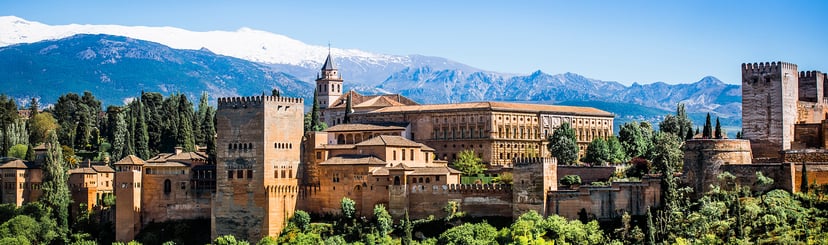
One garden plus a view beats two gardens when the group wants an emotionally complete Granada day without turning the afternoon into a second scholarly visit. Generalife gives the internal landscape: water, architecture, and controlled views from within the Alhambra world. A viewpoint gives the external comprehension: the Alhambra seen across space, with the Sabika hill, the city, and the Sierra Nevada or sky behind it when conditions allow.
This combination is particularly strong for first-time Granada travelers who love gardens but do not want the day to become too specialized. It lets the Alhambra remain central, gives the landscape a visual ending, and avoids asking Carmen de los Mártires to compete with Generalife in the same memory slot. It is also better for families and mixed-generation groups, because a view can be short and decisive while a second garden asks for a slower mode of attention.
The strongest one-garden-plus-view plans are selective. They do not chase every mirador from San Nicolás to San Cristóbal, Sacromonte, and hidden lower terraces. They choose the view that fits the group’s stamina and the day’s route. The UNESCO page for Alhambra, Generalife and Albayzín, Granada (https://whc.unesco.org/en/list/314/) is useful here because it makes visible the relationship between the palatine city and the residential hill across the Darro; the travel decision is whether your day needs to cross that relationship physically or simply understand it well.
- Generalife plus San Nicolás works when the group wants the classic across-the-valley view and accepts that the Albayzín finale may be busy, sloped, and logistically assertive.
- Generalife plus a lower Albayzín view works when you want the Alhambra across the Darro without committing the whole group to the highest, most famous lookout.
- Generalife plus Carmen works when garden contrast matters more than the postcard angle, and the group can still absorb a quieter second landscape.
- Generalife plus Realejo works when the day needs to return gently toward food, hotel time, or an unforced evening rather than another climb.
The viewpoint question: San Nicolás, lower Albayzín, or no Albayzín at all?
The viewpoint question is not whether the Albayzín is worth seeing; it is whether it belongs on the same garden day. Mirador de San Nicolás is the famous answer because it gives the Alhambra frontally and theatrically from the opposite hill. The official tourism page for Mirador de San Nicolás (https://turismo.granada.org/en/mirador-san-nicolas-viewpoint) can help orient the landmark, but a luxury garden plan should ask a harder question: does the group still have the patience for a climb, crowds, and a new neighborhood rhythm?
For some travelers, San Nicolás is absolutely right. Couples who want a strong visual ending, photographers who accept the bustle, and first-time visitors with one evening in Granada may prefer the directness of the view. For others, especially families, older parents, or guests who have already walked the Alhambra in warm conditions, a lower Albayzín angle or no viewpoint at all can be the more elegant decision. The view should complete the day, not demand a second day’s worth of energy.
Private routing helps most when it prevents the false binary between “do the Albayzín fully” and “skip the view entirely.” A guide can decide whether to approach from a manageable drop-off, keep the walk descending where possible, or choose a less punishing angle near the Darro and Carrera del Darro. That is also where an Albayzín private tour belongs as a separate, intentional experience rather than a final-hour afterthought tacked onto a garden day.
The honest cut is this: if the group has already seen the Alhambra deeply and has dinner plans that matter, stop forcing the Albayzín just because a view appears in every Granada conversation. A viewpoint can be the right ending, but it is not a moral obligation. Granada is a city where the famous view can either sharpen the memory or consume the last good hour of the day.
How season changes the route, not just the flowers
Season changes a Granada garden route by changing exposure, pace, and the time of day when people can still notice detail. This should not become a weather summary. The useful question is how spring growth, summer heat, autumn softness, or winter light affects the order of Generalife, Carmen de los Mártires, and any viewpoint.
In spring, the temptation is abundance. Gardens feel more generous, views can be clear, and travelers want to keep adding stops because everything sounds alive. The planning discipline is to preserve the anchor: give Generalife a full, unhurried role, then decide whether Carmen or a viewpoint adds a different sensation. Spring is the season when two gardens can work best, but it is also the season when over-enthusiastic plans become strangely breathless.
In summer or warm shoulder periods, the body becomes the editor. Exposed paths, uphill lanes, and the reflective stone around the Alhambra can make late additions feel heavier than they looked at breakfast. The best route often places Generalife and the Alhambra early, keeps the second move shaded or short, and avoids treating the Albayzín climb as a casual sunset reward. If the group wants seasonal adjustment rather than a fixed template, seasonal Granada private planning should shape the day before the itinerary is packed.
Autumn can support the richest pacing because the city often allows longer attention without the same heat load. Carmen de los Mártires may belong more comfortably here, especially if the day can breathe between the Alhambra and the second garden. Winter changes the equation again: lower sun and clearer silhouettes can make a viewpoint very rewarding, while garden detail may be subtler. In winter, one strong garden plus one well-timed view can feel more complete than two gardens competing for reduced daylight and attention.
The season also changes the trip mood. A route that fits the light and temperature leaves the evening with appetite and curiosity; a route that ignores the season makes Granada feel longer than it is. The difference is not only physical. It affects whether the day ends with conversation about water, terraces, and the Alhambra’s setting, or with a quiet group negotiating how quickly to get back to the hotel.
Hotel base can help, but it should not write the garden day
Your hotel base changes the route, but it should not override the garden logic. A Realejo hotel makes Carmen de los Mártires feel more natural because the day can soften toward the neighborhood after the Alhambra, especially if the group descends through the Alhambra forest or returns along the high edge rather than crossing the city again. A Centro hotel near the Cathedral or Plaza Bib-Rambla asks for a clearer reset, because the end of the garden route is not the same as the end of the day.
An Albayzín hotel is the most seductive and the most dangerous planning variable. It can make a viewpoint feel convenient because the group is already sleeping on that side of the Darro, but it can also create a false sense that another climb is harmless. The lanes above Carrera del Darro and around Cuesta del Chapiz are part of the city’s beauty; they are also why a tired group may stop enjoying the last hour. In Granada, proximity is not only distance. It is gradient, surface, traffic access, and how much attention remains.
That is why a garden route should be written from the Alhambra outward, not from the hotel backward. If the stay is in Realejo, add Carmen only when the garden contrast still has room. If the stay is in Centro, decide how the return will feel before adding the Albayzín. If the stay is in the Albayzín, treat the viewpoint as a separate neighborhood pleasure unless it genuinely completes the Generalife day.
The mood test: decide the afternoon feeling before adding stops
The best Granada garden plan begins by choosing the afternoon feeling: contemplative, visual, social, or restorative. Contemplative means Generalife plus Carmen de los Mártires, with enough silence between them for the second garden to register. Visual means Generalife plus one viewpoint, where the Alhambra is understood from inside and then from across the valley. Social means Generalife followed by Realejo or Centro time, perhaps with tapas later rather than another formal site. Restorative means Generalife only, then hotel shade, lunch, or a hammam-style evening.
This mood test prevents the common mistake of stacking compatible-looking places that produce incompatible emotions. Generalife asks for interpretation and close looking. Carmen asks for slower wandering. San Nicolás asks for arrival, openness, and tolerance for other people wanting the same view. Realejo asks for release back into the city. None of these moods is wrong, but asking the group to move through all of them in a single afternoon makes the day feel shorter, not richer.
The city has a particular way of compressing mood. A short taxi wait near the Alhambra, a crowded pause at Plaza Nueva, a climb into the Albayzín, and a late return across the Darro can make a beautifully designed morning feel distant by dinner. The calmer plan does not avoid Granada’s texture; it lets each texture arrive when the group can still enjoy it. That is the difference between a garden day that feels tailored and a garden day that feels assembled.
Food-and-wine travelers should protect appetite as carefully as stamina
Food-and-wine travelers should not let the garden route steal the appetite and sociability that make Granada evenings rewarding. A long Alhambra morning, a second garden, and an Albayzín viewpoint can push dinner into the realm of recovery rather than pleasure. That matters in Granada because the evening often has its own informal rhythm: a drink, a tapa, a walk back through Realejo or Centro, and the feeling that the day still has some generosity left.
The best garden plan for food-and-wine travelers often ends earlier than the ambitious sightseeing plan. Generalife plus Carmen can work if lunch is unrushed and the return is easy. Generalife plus a viewpoint can work if the view is chosen and reached without turning the group into hill climbers just before dinner. Generalife plus every tempting add-on is where the evening starts to lose texture. You may still dine well, but the conversation becomes logistical rather than alive.
This is one reason private planning should ask about the evening before designing the afternoon. A group with a serious dinner, a celebration toast, or a tapas-and-wine night should not spend the late afternoon proving endurance. The garden route should hand the evening a group that is still observant, not one that has converted the day’s beauty into a need for immediate rest.
Where private guiding changes the day, and where it cannot save a bad plan
A private guide changes a Granada garden day by connecting landscape, architecture, and viewpoint pacing into one readable sequence. The value is especially clear at the Alhambra, where Generalife, the Nasrid Palaces, the Alcazaba, and the hill itself can become separate fragments without a strong interpretive line. A good guide knows when to slow the group for water, shade, and proportion, and when to move before attention drains away.
The service upgrade is also logistical. Private touring can coordinate the order of entry, adapt the route to older parents or children, decide whether Carmen de los Mártires belongs after Generalife, and prevent the Albayzín from becoming a late-day endurance test. It can make vehicle support more intelligent, especially around hotel returns, Realejo edges, and hilltop drop-offs where walking every meter is not the point of the day.
But premium spend has limits. Private transport cannot make a garden day satisfying if it becomes a viewpoint chase. A chauffeur can reduce some walking, and a guide can smooth timing, but neither can turn three different hill moods into one calm experience if the plan is designed to collect rather than understand. The more discerning upgrade is not “add more”; it is “let the right second move be enough.”
That is the natural moment to hand the plan to a specialist. If you want Generalife interpreted as landscape, Carmen de los Mártires judged by mood rather than proximity, and the Albayzín view chosen only when it improves the day, Inquire now. The right private route should feel like one composed Granada day, not a premium vehicle carrying you between too many good ideas.
A calmer sequence for couples, families, small groups and celebration travelers
The calmest sequence starts with the garden that carries the most meaning, then protects the group’s best hours from route sprawl. For couples, that may mean Generalife and the Alhambra in the morning, a thoughtful pause, then a single view or Carmen de los Mártires depending on whether the desired mood is visual drama or quiet intimacy. A celebration day should not be engineered like a scavenger hunt; it should leave enough space for lunch, conversation, and the evening plan.
Families need a different filter. Children may enjoy water, paths, and open garden movement more than dense palace interpretation, but they do not become more patient because the next garden is beautiful. For family pacing, Generalife plus one short second move is usually stronger than two gardens plus an Albayzín finish. If the group includes older parents, the same rule applies for different reasons: fewer transitions, fewer slopes, and a better chance that the Alhambra remains the day’s achievement rather than the day’s first exhaustion.
- Couples should consider Generalife plus one view if the day is leading into a dinner or flamenco evening, and Generalife plus Carmen if the afternoon can stay slow.
- Families should cut the second garden first when children begin to fade; one remembered garden is better than two negotiated gardens.
- Small groups should plan around the least mobile guest, because Granada’s hills make group stamina converge downward as the day goes on.
- Celebration travelers should protect the evening by refusing the urge to make every scenic stop part of the formal plan.
If you are comparing this focused route with a fuller garden-led day, the related private Granada gardens day is useful as the broader companion piece. The distinction matters: this article solves the narrower question of whether Generalife, Carmen, and a viewpoint belong together, while the broader guide helps when gardens are the central architecture of a high-end stay.
What to cut first when the plan starts to swell
Cut viewpoint chasing first, then the second garden, and only then reduce the quality of Generalife. This hierarchy may feel counterintuitive because viewpoints are short and flexible, but they often create the worst late-day drag: extra transfer, a new hill, a crowded plaza, and another mood shift. A single viewpoint can complete the route; a chain of viewpoints often becomes the part of the day everyone privately wishes had been simpler.
The second cut is Carmen de los Mártires when it has no time to be itself. If you can only give it a quick walk after the Alhambra, lunch pressure, and an impending Albayzín climb, save it. Carmen is not a consolation prize for people who “still need another garden”; it is a different garden language that needs room. Skipping it under poor conditions is not a failure of taste. It is the editorial discipline that keeps Generalife from being diluted.
- Do not cut the interpretive quality of Generalife if gardens are your reason for shaping the day this way.
- Cut the second viewpoint when the group has already seen the Alhambra from one good angle.
- Cut Carmen when it becomes a pass-through rather than a pause.
- Cut the Albayzín finale when dinner, family stamina, or warm-weather exposure would make the climb feel like a demand.
The practical sign is conversation. When people stop noticing planting, water, walls, and views, the garden route is over even if the itinerary is not. A premium plan should notice that threshold and end before the city starts making the group smaller, quieter, and less receptive.
What to check before booking a garden-focused Granada day
Check the Alhambra framework first, because Generalife is attached to the monument’s ticketing and route logic rather than to a free-floating garden plan. Confirm current entry conditions through the official Alhambra sources, and avoid building a private day around assumptions about access, timings, or palace order that may not hold for your date. This article is intentionally evergreen in its recommendations; operational details should always be checked close to travel.
Then check the group’s route tolerance. Ask how many slopes the day can reasonably absorb, where the hotel is, whether the evening has a fixed reservation, and whether the Albayzín is already planned for another time. If you already have a dedicated Albayzín walk or viewpoint evening, do not force it onto the garden day. If you have only one Granada day, choose the view carefully and let the garden work remain focused.
Finally, check what kind of memory you want. Generalife creates a memory of water and architecture. Carmen de los Mártires creates a memory of private garden atmosphere and Realejo-side quiet. A viewpoint creates a memory of the Alhambra as landscape. The best plan is not the one that contains all three, but the one that gives the chosen memory enough space to last.
FAQ
Is Generalife enough for garden travelers in Granada?
Yes, Generalife can be enough if the Alhambra visit is substantial and the rest of the day includes lunch, rest, or one view. It is the garden anchor because it connects landscape, water, architecture, and the Alhambra’s historical setting in one place.
Is Carmen de los Mártires worth adding after Generalife?
Carmen de los Mártires is worth adding when you have time for a slower second garden and want a different, more romantic Granada mood. It is not worth forcing if it becomes a rushed stop between the Alhambra and an Albayzín climb.
Which is better for garden lovers: Generalife or Carmen de los Mártires?
Generalife is the better anchor for garden lovers because it is central to the Alhambra landscape and carries the strongest historical payoff. Carmen de los Mártires is the better second garden when the group wants quiet atmosphere rather than another major monument.
Should I go to Mirador de San Nicolás on the same day as Generalife?
Go to Mirador de San Nicolás on the same day only if the group still has energy for the Albayzín and wants the classic view across to the Alhambra. If the day is already full, choose a lower viewpoint or save the Albayzín for a separate route.
What should I cut first: Carmen de los Mártires or the viewpoint?
Cut viewpoint chasing first if you are tempted to add several lookouts. If the choice is one well-placed view versus a rushed second garden, one garden plus a view is often the stronger Granada day.
Does a chauffeur make a Granada garden day easier?
A chauffeur can reduce some transfer strain and make hilltop logistics smoother, but it cannot rescue an overpacked garden and viewpoint plan. The real comfort upgrade is choosing fewer stops and sequencing them with better judgment.
How does season affect a Generalife and Carmen de los Mártires route?
Season affects the route by changing heat exposure, daylight, and how much attention the group can sustain. Spring can support two gardens, summer usually needs fewer exposed moves, autumn often allows the most flexible pacing, and winter can make one garden plus a clear view feel complete.
Is this a half-day or full-day garden plan?
Generalife with the Alhambra is usually best treated as the core of a serious half-day or more, depending on your entry and interpretation. Adding Carmen de los Mártires or an Albayzín viewpoint pushes the plan toward a fuller day that needs careful pacing.
If you’re interested in any private tours of Granada, please reach out to us.



 So if you are looking for the absolute best in Granada & surroundings with authentic local fully-licensed native guides whose English you can actually understand and with an exclusive and amazingly fun itinerary













