The Seville Departure Window: Arenal, Plaza de España and Santa Justa Timing

Updated
Verdict: use Arenal as the default departure-window base, keep Plaza de España as the optional move, and treat the Santa Justa buffer as the non-negotiable. This works because Seville’s final morning is shaped less by attraction count than by hotel checkout, luggage, heat, old-town walking rhythm, and the taxi reset toward the station. The clearest exception is simple: when your train is close, bags are already in hand, weather is heavy, or anyone is tired, the best plan is a café in or near Arenal followed by a direct transfer to Santa Justa.
Seville’s departure day is won by turning one last chapter into a clean handoff, not by squeezing a sightseeing list between breakfast and the platform. The non-obvious hinge is pickup geography: Arenal gives you river-edge atmosphere and taxi-friendly edges near Paseo de Colón and Puerta de Jerez, while deeper Santa Cruz lanes and a late Plaza de España detour can make the same morning feel compressed. If you are also planning the first side of the trip, the mirror problem is covered in the Seville arrival-day plan; this guide solves the opposite question: what deserves the final window before Santa Justa.
The departure window is a sequence, not a spare morning
A Seville departure window should be planned as a sequence of handoffs: checkout, luggage control, one meaningful stop, a pause, transfer, and the Santa Justa buffer. The mistake is treating it as a free half-day. A free half-day invites one more monument, one more crossing, one more lunch idea, and one more optimistic estimate. A departure sequence asks a better question: what can you do that still leaves the station part of the day feeling orderly?
Arenal is the strongest default because it gives the final morning a recognizable Seville texture without pulling you too far from the transfer line. You can make a last pass by the river, the Maestranza side, Plaza del Cabildo, or the Cathedral edge without committing to the tighter internal rhythm of a major monument. The area sits between the old ceremonial center and the Guadalquivir, so the morning can feel specific rather than like waiting-room time. It also lets a guide or driver choose a practical handoff point instead of forcing a car into the narrowest part of the historic core.
The counterintuitive correction is that Plaza de España is not the automatic “best final sight” before a train. It is famous, photogenic, and often emotionally satisfying, but it is also an added move away from the old-town hotel rhythm and into a large open space. If luggage is unresolved, if the day is hot, or if your group has already seen the big monuments, Arenal is more useful than a last-minute dash to Plaza de España. The better final stop is not the grandest one; it is the one that keeps your body, bags, and timing in the same plan.
Santa Justa also changes the psychology of the morning. It is not a picturesque old-town station where you can drift in at the last minute from a nearby square. The station sits beyond the historic core’s emotional center, so the final transfer feels like a real reset. That reset is easy when you have decided where the sightseeing ends. It becomes irritating when the morning has no clean stopping point.
A departure-day matrix for Arenal, Plaza de España and Santa Justa
The best choice depends on three criteria: where the luggage is, how much heat and walking your group can absorb, and whether Plaza de España is still missing from the trip. Use this matrix as the decision frame before adding detail.
Arenal as the final chapter: best when you want one meaningful Seville layer before Santa Justa without making the morning depend on tickets, long queues, or a second transfer. It suits couples, small groups, families with older children, and travelers staying around Santa Cruz, the Cathedral, El Arenal, Triana, or the river. It works especially well when the hotel can hold bags until pickup or when a driver can coordinate luggage before the walk begins.
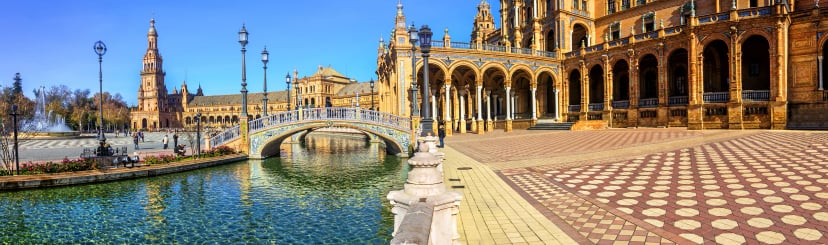
Plaza de España as the final move: best when luggage is already controlled, the weather is manageable, the group has not yet seen it, and the train time leaves enough space for a generous station buffer. It is a worthwhile upgrade for first-time visitors who would regret leaving Seville without that view, but it should be treated as the one move, not an add-on after Arenal. For travelers making it a planned highlight rather than a scramble, Plaza de España private planning can place it in a calmer part of the stay.
Café and direct transfer: best when the window is short, the weather is sharp, the luggage is awkward, or your next city matters more than one final photo. This is not a failure of ambition. It is the safest choice when the real objective is to leave Seville with the trip still feeling composed.
Two major stops before Santa Justa: usually the overreach. Premium spend does not help when it is used to add a second major stop before Santa Justa. A private transfer does not justify adding a second major stop before the train.
This framework is deliberately strict because departure mornings punish soft plans. Arenal plus Santa Justa can feel elegant. Plaza de España plus Santa Justa can feel rewarding. Arenal plus Plaza de España plus a timed lunch plus luggage retrieval is where the day starts to fray. The apparent gain is one more stop; the real cost is a shorter fuse for everyone in the party.
Why Arenal is the cleanest last chapter before Santa Justa
Arenal works because it gives you Seville’s river-and-monument edge without forcing a full monument day. It is a good final base if you want to remember the city through movement rather than through another ticketed interior. The area can hold a short guided walk, a coffee, a light lunch, a last look toward the Cathedral, or a measured river pause, and then release you toward Santa Justa without a complicated emotional or logistical exit.
The practical strength is its shape. Arenal sits close to Paseo de Colón, the Maestranza, the Cathedral perimeter, and the riverfront, so your final chapter can be shortened or lengthened without changing the whole plan. If a traveler slows down, you cut a side street. If the café lasts longer than expected, you skip the extra loop. If the hotel calls about bags, the transfer can happen from a clearer edge rather than from inside a lane where cars, pedestrians, and luggage all compete for space.
It is also a better mood fit for many departure days. After two or three days of Alcázar, Cathedral, Santa Cruz, Triana, and restaurant reservations, the last morning does not need another grand claim. It needs a remembered texture: orange trees, river light, the curve of the bullring exterior, a last look down toward the Guadalquivir, or the shift from the Cathedral’s scale into a quieter café. That kind of ending travels well. It gives the next train ride a sense of closure instead of leaving everyone replaying whether you should have left earlier.
Arenal is not ideal for everyone. Travelers who never reached Plaza de España may feel they have left a major visual chapter unfinished. Families whose children need open space rather than commentary may do better with a short Plaza de España visit if the bags are handled. Guests staying far from the old core may not gain enough from crossing back into Arenal just to leave again. But when the brief is “one meaningful final chapter before Santa Justa,” Arenal is the most forgiving base.
The cut-first rule here is to avoid turning Arenal into a miniature greatest-hits tour. Do not bolt on the Alcázar, Cathedral interior, and a shopping mission just because they are nearby on a map. The area’s value on departure day is not density; it is controllable texture. If your wider Seville stay still needs the river, Triana, and Plaza de España in a fuller sequence, move that ambition to a dedicated day such as a private Guadalquivir day rather than using the train morning to solve it.
How luggage changes the plan before Santa Justa
Luggage is the planning factor that turns a beautiful departure idea into either a smooth handoff or a slow irritation. With bags stored at the hotel or handled by a driver, Arenal and Plaza de España remain possibilities. With bags in your possession, the plan should shrink immediately. Rolling luggage through old-town paving, curbs, hotel lobbies, café thresholds, and taxi pickup points changes the body cost of the morning.
The issue is not just the weight of the bags. It is the way bags remove flexibility. Without luggage, you can pause in a shaded street, step into a small shop, adjust the walk around a slow family member, or change pickup points. With luggage, every pause becomes a storage question, every threshold becomes a maneuver, and every extra block feels like a tax. Seville’s old-town rhythm is pleasant when you are walking freely. It becomes much less charming when one person is managing a suitcase and another is checking the time.
For hotel-held luggage, the best plan is to keep the morning close enough to the hotel or to a clear pickup edge that retrieval does not become a second outing. This is where Arenal performs well: a traveler staying near the Cathedral, Santa Cruz, the Alfonso XIII side, or the river can often enjoy a compact final route and then reconnect with bags without restarting the day. For Triana stays, the Puente de Isabel II crossing can be lovely without bags and tiresome with them; decide early whether the final chapter belongs on the Triana side or the Arenal side, not both.
For driver-held luggage, the plan can be more polished, but not infinitely larger. A chauffeur can remove the bag problem, reduce waiting, coordinate pickup, and make the station transfer calmer. A chauffeur cannot make Plaza de España closer to Arenal, make a hot open square shaded, or make a second major stop emotionally lighter. This is the spend judgment that matters: pay for smoother handoffs, not for a more overloaded final morning. For travelers who want that support, chauffeur-led Seville planning is strongest when it controls bags and pickup points rather than encouraging extra sightseeing.
For luggage in hand, the safest choice is a café and direct transfer. That sentence is intentionally plain because it prevents the most common departure-day mistake. If the bags are with you, the morning’s job is no longer to “use the time well” in the sightseeing sense. It is to keep the group comfortable, avoid street-level friction, and arrive at Santa Justa with enough energy for the next city.
When Plaza de España is worth the move
Plaza de España is worth the move before Santa Justa when it is the one missing Seville image, luggage is solved, the weather is not punishing, and the station buffer remains generous. Under those conditions, it can be the most emotionally satisfying final stop. It gives first-time visitors a large, legible farewell: ceramic provinces, bridges, water, scale, and the edge of María Luisa Park. It photographs well, it reads quickly, and it does not require the same interpretive depth as the Alcázar or Cathedral.
The move becomes weaker when travelers treat it as “just a quick look.” Plaza de España is large, exposed, and slightly separate from the Arenal-to-station flow. You can make it short, but you cannot make it disappear from the route. The transfer reset matters: Arenal to Plaza de España is one move; Plaza de España to Santa Justa is another. If those two moves are separated by luggage retrieval, a snack, and group photos, the final morning starts to feel shorter than it looked on paper.
It is a good choice for families when open space is more useful than commentary. Children and teenagers often respond better to the scale of the plaza than to another church façade or narrow-lane history walk. It is also strong for celebration travelers who want a final photograph before leaving Andalusia, provided the plan is staged with care. In those cases, the plaza is not a filler stop; it is the chosen ending.
It is a poorer choice for heat-sensitive travelers, older parents who need shade and seating, or anyone whose final morning already includes checkout stress. Plaza de España can feel magnificent in the right window and strangely punishing in the wrong one. The city does not ask for much climbing here, but it asks for exposure: open surfaces, broad approaches, and the psychological drag of knowing you still need to cross back into departure mode.
The cleanest Plaza de España sequence is not Arenal first, then plaza, then lunch, then bags, then Santa Justa. It is hotel checkout, luggage control, Plaza de España as the single named stop, then station transfer. If you want Arenal too, make Arenal the plan and save Plaza de España for another day or a better-positioned sequence.
What fits before Santa Justa without making the train feel risky?
Before Santa Justa, the best-fit activities are short, elastic, and easy to end. They do not require a fixed entry slot, a long interior route, or a second neighborhood reset. The aim is not to fill every minute; it is to create a final chapter that can contract without embarrassment.
- A guided Arenal walk: best for travelers who want context without a museum-length commitment. The guide can shape the route around the Cathedral edge, the Maestranza exterior, the river, or quieter streets depending on weather and walking speed.
- A river-edge pause: best when the group wants Seville to feel slower at the end. The Guadalquivir side gives a sense of place without requiring a long crossing or a formal visit.
- A café or light lunch near the pickup line: best when checkout has already introduced enough movement. This can be the whole plan, not merely a fallback.
- Plaza de España as the single final sight: best when it has not yet been seen and the logistics are already clean.
- A short shopping errand only if it is pre-defined: best when you know exactly what you are collecting and where. A vague “last wander for gifts” is how a calm morning turns into a clock-checking exercise.
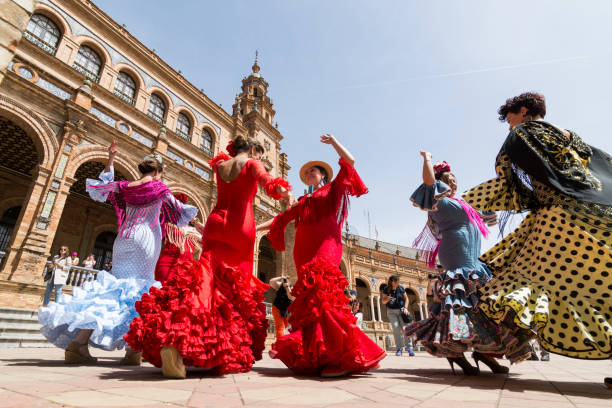
What usually does not fit is a major monument with internal timing, a deep Santa Cruz wander, or a flamenco layer before a station-bound train. Teatro Flamenco Triana and Museo del Baile Flamenco are names worth knowing for a Seville stay, but they belong in a different rhythm from a Santa Justa departure window. Use the official pages for Teatro Flamenco Triana (https://www.teatroflamencotriana.com/en/home/) and Museo del Baile Flamenco (https://museodelbaileflamenco.com/index.php/el-museo/) to confirm current venue information when planning an evening; do not turn a final rail morning into a show-and-station puzzle unless your departure is much later and the rest of the day is deliberately built around it.
The same restraint applies to the Alcázar and Cathedral. They can be extraordinary on a properly planned day, but they are poor pressure valves. If something runs long, you cannot simply “trim” the emotional and physical weight of a major interior. That is why the departure window should lean toward Arenal, a chosen Plaza de España move, or a café-and-transfer plan rather than trying to extract one last monument from the city.
The Santa Justa buffer decides whether the final stop feels elegant or risky
The Santa Justa buffer is the time you protect for the transition from Seville-as-city to Seville-as-departure. It is not the taxi duration. It includes luggage retrieval, loading, traffic variability, station orientation, group pace, platform access, bathroom stops, and the small human delays that appear when everyone is technically “almost ready.” If the buffer is thin, even a beautiful final stop will feel retrospectively unwise.
Build the buffer backward from the experience you want at the station. A comfort-first traveler should not be arriving with the same intensity as a commuter. You want enough space to enter Santa Justa, orient yourself, manage bags, check the platform information, and absorb a minor delay without transferring stress to the next city. That is especially important on multi-city Andalusia routes, where the departure day may be followed by Granada, Córdoba, Madrid, or a longer onward connection. If Granada is next, the logic in the Seville-before-Granada pacing guide is relevant: the day before and the day of travel should not both be heavy.
The buffer also has a mood function. When the station transition is rushed, the final memory of Seville becomes a sequence of small anxieties: who has the passports, where are the bags, why is the taxi not here, which entrance is easiest, how far is the platform. When the buffer is protected, the final memory is allowed to stay in the city: a last coffee, a river glimpse, a well-timed goodbye. That difference matters for travelers who are spending real money on a tailored Andalusia trip. The value is not only comfort; it is preserving the shape of the journey.
Use the buffer as the decision tool when plans compete. If adding Plaza de España weakens the Santa Justa buffer, cut Plaza de España. If a longer Arenal lunch weakens the buffer, shorten lunch. If hotel checkout takes longer than expected, skip the extra walk. The buffer is the editor of the morning.
How private planning changes the morning, and how it does not
Private planning is most useful on a Seville departure morning when it coordinates hotel checkout, guide time, luggage handling, pickup geography, and the Santa Justa buffer. It is less useful when it simply encourages a more ambitious list. The best private version of this day often looks deceptively simple from the outside: a guide meets after checkout, the route stays close to the right edge of the city, the driver knows where and when to collect bags, and the transfer to Santa Justa begins before the morning becomes tight.
That coordination matters because the friction points are small but cumulative. A guide can shorten commentary when heat rises, avoid a lane that slows the group, choose a café near the pickup direction, and make Arenal feel intentional rather than like leftover time. A driver can remove luggage drag, reduce uncertainty at checkout, and keep the station transfer from becoming a last-minute search for a taxi. A planner can decide in advance whether Plaza de España belongs in the morning at all.
The limit is equally important. A private guide cannot make a tired group curious again by adding one more stop. A driver cannot turn two major sights and a station transfer into a restful plan. Premium service is valuable when it removes avoidable friction; it is poor value when it disguises overplanning. The strongest use of spend is to make one final chapter feel unhurried, not to force a second chapter into the gap.
For a departure morning that needs checkout, guide time, luggage control, and the Santa Justa buffer to work as one sequence, tailor-made Seville planning is the right place to start. Share the train window, hotel location, luggage situation, and whether Plaza de España is still missing from the trip, then Inquire now.
Three clean sequences for the final Seville morning
The strongest departure-day plans are built from one primary chapter and one transfer, not from several small bets. These three sequences cover the most common comfort-first scenarios.
Sequence one: Arenal, café, Santa Justa. This is the default. Check out, leave luggage at the hotel or with the driver, meet a guide for a compact Arenal walk, pause for coffee or a light lunch, retrieve bags if needed, and transfer to Santa Justa with the buffer intact. It suits travelers who have already seen Plaza de España or who would rather leave with a calmer old-town memory than one more photo.
Sequence two: Plaza de España, direct station handoff. This is the chosen-exception plan. Check out, solve luggage first, go to Plaza de España as the single final sight, keep the visit focused, and transfer directly to Santa Justa. It suits first-time visitors, families, and celebration travelers when the plaza is still a genuine priority.
Sequence three: café and direct transfer. This is the safest plan when the window has narrowed. Check out, sit somewhere comfortable near the pickup direction, keep bags under control, and transfer early enough that Santa Justa does not feel like a race. It suits travelers with tired bodies, tight onward plans, or a trip that has already delivered its Seville highlights.
Notice what is absent from all three sequences: no “quick” Alcázar, no deep Santa Cruz wander after checkout, no Plaza de España after a long Arenal lunch, no flamenco detour, no open-ended shopping search. That absence is not a lack of imagination. It is the discipline that lets the final morning feel designed.
What Seville does to the body on a departure day
Seville can make a short distance feel longer when timing, heat, bags, and old-town surfaces combine. The historic core rewards slow walking, but departure days rarely allow the same looseness as a normal morning. A few extra blocks through Santa Cruz, a crossing from Triana, a sun-exposed stretch near Plaza de España, or a suitcase dragged over uneven paving can shift the group from appreciative to impatient before the train has even entered the story.
This matters for older parents, children, and travelers who are continuing to another city the same day. The body does not experience “one last stop” as an abstract bonus. It experiences shade, seating, bathrooms, bag weight, heat load, and whether the next transfer begins from a calm place. A plan that looks modest on a map may still be demanding if it asks the group to check out, walk, stand, cross, retrieve bags, and reassemble for the station.
The body-friendly solution is not to avoid Seville. It is to choose the part of Seville that gives the most return for the least reset. Arenal usually does that. Plaza de España can do it when treated as the only move. A café and direct transfer can do it when the real need is composure. The wrong solution is pretending that a private car erases the walking and waiting that happen before the car appears.
What Seville does to the trip mood before the next city
A well-cut departure window lets the trip leave Seville with a finished sentence. An overpacked one makes the city feel like a set of unfinished errands. That mood difference is easy to underestimate when planning from home, where the final morning appears as a blank rectangle between breakfast and a train. In the city, that rectangle contains checkout emotion, last photographs, children asking what happens next, adults checking messages, and the quiet pressure of onward travel.
Arenal creates a good final mood because it can feel like a farewell rather than an obligation. Plaza de España creates a good final mood when it is chosen early and protected from clutter. Santa Justa feels better when it is entered as the next chapter, not as the emergency exit from an overextended morning. The goal is to board the train with the group still speaking gently to each other, still liking the city, and still ready for the next part of Andalusia.
The mood weakens when every member of the group is carrying a different private concern: one person wants the plaza photo, another wants lunch, another is worried about bags, another is watching the time, and the guide is trying to hold the plan together. That is why the editorial verdict is firm: choose one final chapter, then leave cleanly.
What to cut first when the window shrinks
When the departure window shrinks, cut the most distance-dependent element first. In most cases, that means cutting Plaza de España unless it is the sole purpose of the morning. If the bags are awkward, cut all sightseeing and choose a café and direct transfer. If the heat is heavy, cut open-space exposure. If the group is tired, cut commentary before you cut the buffer. If the hotel checkout becomes slow, cut the extra loop rather than eating into Santa Justa time.
Do not cut the station buffer first. That is the false economy. It preserves the illusion of a richer morning while moving stress into the most consequential part of the day. A short Arenal walk with a proper transfer feels better than a longer walk that ends with everyone rushing. A missed Plaza de España photo is disappointing; a rushed station arrival can sour the whole onward journey.
The safest choice is a café and direct transfer. That option should stay visible in the plan from the beginning, not appear only as a reluctant failure. For discerning travelers, restraint is often the premium move: fewer handoffs, fewer avoidable frictions, and a cleaner departure from a city that rewards being remembered calmly.
FAQ
What is the best area for a last morning before Santa Justa in Seville?
Arenal is the best default area because it offers a meaningful final Seville chapter near the river, Cathedral edge, Maestranza side, and practical pickup routes without forcing a major monument or a long detour before Santa Justa.
Is Plaza de España worth visiting before a train from Seville?
Plaza de España is worth visiting before a train only when luggage is already handled, the weather is manageable, the group has not seen it yet, and the Santa Justa buffer remains generous. Otherwise, Arenal or a café and direct transfer is the better plan.
How should I plan the Santa Justa buffer?
Plan the Santa Justa buffer as more than the drive to the station. It should absorb luggage retrieval, loading, station orientation, group pace, platform access, and small delays so the final stop does not make the departure feel risky.
What should I do with luggage on a Seville departure day?
Keep luggage at the hotel, with a coordinated driver, or under a simple direct-transfer plan. If bags are in your possession, reduce the plan immediately; rolling luggage through old-town streets or Plaza de España weakens the morning.
Can a private transfer make it possible to add more sightseeing before Santa Justa?
A private transfer can improve comfort, luggage handling, pickup timing, and the station handoff, but it should not be used to justify a second major stop before the train. It buys calm, not unlimited capacity.
Should I visit the Alcázar or Cathedral on departure day?
Usually no. The Alcázar and Cathedral deserve their own properly paced window. They can work only with a much later departure, pre-planned entry, controlled luggage, and a preserved Santa Justa buffer.
What if I am staying in Triana rather than Arenal?
If you are staying in Triana, decide whether the final chapter belongs on the Triana side or across the river in Arenal. Do not make luggage cross Puente de Isabel II twice just to force both neighborhoods into the departure window.
Is flamenco a good idea before leaving from Santa Justa?
Flamenco is usually better planned for an evening or a non-departure day. Teatro Flamenco Triana and Museo del Baile Flamenco are important Seville references, but they should not be squeezed into a station-bound morning unless your departure is much later and the whole day is planned around it.
If you’re interested in any private tours of Seville, please reach out to us.





 So if you are looking for the absolute best in Seville & surroundings with authentic local fully-licensed native guides whose English you can actually understand and with an exclusive and amazingly fun itinerary













