Seville in an Andalusia Loop: Start Here, End Here or Use It as the Soft Landing?

Updated
For a first private Andalusia loop, Seville usually works best as the starting city and soft landing, not as a rushed middle stop. It gives you the easiest first handoff, the clearest first full monument day, and enough evening life to make the trip feel open rather than already demanding. The exception is Granada: if your Alhambra timing, Málaga exit, or hill-heavy Granada stay is already fixed, let that decision govern the loop and place Seville around it, not the other way round.
The city-specific thesis is simple: Seville earns its place in an Andalusia loop when it absorbs arrival friction and protects the Alcázar-Cathedral day from being treated like a transfer errand. The non-obvious hinge is the Santa Justa-to-hotel arrival handoff. A car can meet you cleanly at the station, but many stays in Santa Cruz, El Arenal, or around the Cathedral still end with a short final walk, a luggage handoff, or a careful old-town drop. That small transition is exactly why Seville is a strong first city: the first day can be light, local, and useful instead of pretending you are ready for Córdoba, Granada, and a palace morning at once.
Orange Donut Tours usually reads Seville less as “another stop” and more as the place that decides the emotional temperature of the loop. Start here when you need orientation and a civilized first evening. End here when the trip has already spent its legs in Granada, Ronda, or road country. Use it as a day-trip base for Córdoba, Jerez, and Cádiz when the day has a clear purpose. Do not use Seville as a base for Granada or Ronda unless there is a very specific reason and you accept the fatigue cost.
The placement matrix: start, finish, soft landing, or base
The best role for Seville depends on what you need the city to solve: arrival, recovery, day-trip reach, or monument focus. The comparison is not about which city is more beautiful; it is about which day of the loop can carry walking, heat, luggage, timed entries, and a proper evening without flattening the next morning.
Start in Seville when: this is your first Andalusia city, you arrive by train or flight, and you want the Alcázar, Cathedral, Santa Cruz, and Arenal to land with energy. This is the default winner for first-time, comfort-first travelers.
End in Seville when: Granada, Ronda, or a white-village leg has already spent the group’s legs and you want a flatter final city with a lighter river or Triana evening. This is the strongest runner-up for celebration travelers and older families.
Use Seville as the soft landing when: you need one gentle night before Córdoba, Jerez, Cádiz, or Granada, but you are not trying to “do Seville” in the same arrival window. This works only if the first evening stays deliberately modest.
Use Seville as a day-trip base when: the trip includes Córdoba, Jerez, or Cádiz and you prefer one hotel, cleaner luggage logic, and private day design. This is not the right logic for Granada or Ronda unless you are accepting a long, compromised day.
The controlling criteria are energy, transfer logic, monument timing, and evening preservation. Seville wins the start position because the first day can be useful without being hard: arrival, hotel settle, one Arenal or river walk, and dinner. It wins the final position when the loop needs a graceful exhale after Granada’s slopes or Ronda’s road time. It loses when planners treat it as a magic base for every famous Andalusia name. A chauffeur helps with selected legs, but it does not erase poor sequencing.
For travelers who want the whole Seville stay shaped around private guiding, transfers, and a multi-city rhythm, tailor-made Seville planning is the more relevant next step than trying to force a fixed itinerary into the loop.
What is the best way to place Seville in an Andalusia loop?
The best way to place Seville is to give it either the first real city day or the final recovery role, then stop asking it to do both jobs in the same short stay. Seville’s central monuments are close enough on a map to tempt overpacking, but the city rewards a cleaner sequence: one gentle arrival, one strong guided monument morning, one slower evening, and then a deliberate decision about Córdoba, Jerez, Cádiz, Granada, or the next hotel.
The mistake is assuming that Seville’s old town is “easy” because the Alcázar, Cathedral, Archivo de Indias, Arenal, and Santa Cruz sit near one another. They are near, but the day still has hard edges: timed entries, security lines, sun-exposed approaches, stone paving, and the mental load of dense history. The official Real Alcázar site (https://alcazarsevilla.org/) and the Seville Cathedral official site (https://www.catedraldesevilla.es/en/) are useful checks for live visit details, but the planning judgment is not just about tickets. It is about whether your group reaches those tickets rested enough to care.
Starting in Seville is especially strong if you are arriving from Madrid, Barcelona, Lisbon, or a long-haul flight connection. The city lets the first evening be meaningful without becoming a forced tour: a short walk around El Arenal, a gentle look toward the Cathedral exterior, perhaps a river-side orientation if the hotel geography cooperates. That is very different from arriving and immediately trying to transfer to Granada, climb toward an Alhambra-area hotel, and hold a fixed palace slot in your head.
The counterintuitive correction is that Triana is not always the easiest soft landing, even though it can feel more relaxed than the Cathedral quarter. If your next morning is Alcázar-Cathedral focused, staying or dining too far across the river can add a small but real crossing penalty at exactly the wrong time. The Puente de Triana is atmospheric; it is not a substitute for keeping the first monument morning clean. Triana belongs beautifully in the plan when it has a purpose: ceramics, market texture, flamenco context, a river evening, or a dinner geography that does not fight the next day.
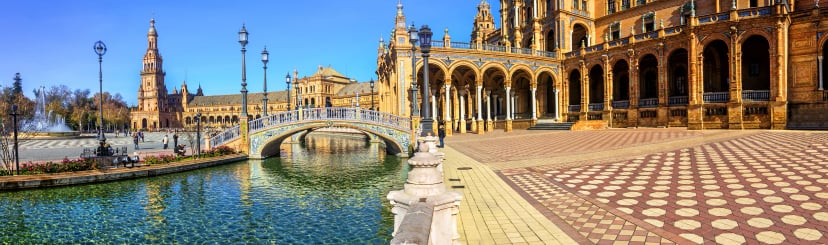
The cut-first rule is equally firm: when the loop is tightening, cut the “extra Seville add-on” before you cut rest around the Alcázar, Mezquita, or Alhambra. A quick Plaza de España stop after a long train, a rushed Triana walk before an early Córdoba day, or a late Cathedral attempt after a Jerez return can make the whole city feel smaller than it is. Seville is not shortchanged by removing one extra sight; it is shortchanged when its best day is placed after fatigue has already won.
When Seville should start the trip
Seville should start the trip when you want Andalusia to begin with orientation, not endurance. This is the strongest choice for couples, first-time visitors, families with older parents, and travelers who prefer a polished first day without making the opening feel sterile. The city gives you a proper sense of arrival before asking for the full concentration that Córdoba’s Mezquita or Granada’s Alhambra deserves.
The opening sequence should be restrained. After the Santa Justa-to-hotel arrival handoff, the first day should usually be hotel settle, one contained old-town or river orientation, and dinner. A private guide can be useful for a short orientation if the group is fresh, but the higher-value guide day is usually the first full morning, when the Real Alcázar, Cathedral, Giralda context, Santa Cruz, and the Archivo de Indias edge can be made coherent rather than merely adjacent. For a more detailed monument-led day, half-day, full-day, and multi-day private touring is a better fit than trying to patch separate short visits together.
Starting here also makes the Córdoba decision cleaner. If Córdoba is included, you can decide whether it belongs as a day from Seville, a rail stop between cities, or an overnight. The Mezquita-Catedral rewards a fresh mind; it should not be treated as a lunch detour after a crowded Seville monument morning. The official Mezquita-Catedral visit page (https://mezquita-catedraldecordoba.es/en/organiza-la-visita/entradas-y-horarios/) is the right place to confirm live visit conditions, but the sequencing principle is evergreen: do not put Córdoba on the back of a mentally dense Seville morning unless the day is deliberately light afterward.
Starting in Seville is also useful because it teaches the rhythm of the region. Andalusia is not a single-speed destination. Morning matters. Midday can be slow. Evenings stretch later. A Seville start lets the group learn that rhythm in a city where a hotel reset is plausible and a dinner return is not automatically a hill climb. That makes the later Granada and Ronda decisions more honest.
Choose Seville as the first city if your group includes anyone who dislikes hard starts, tight transfer windows, or mystery logistics. A well-built Seville opening makes the rest of the loop feel shorter because everyone understands the pacing from day one: guided morning, shaded or interior pause, selective evening, and a clear next-day handoff.
When Seville should be the final recovery city
Seville should be the final recovery city when the trip has already spent its hardest physical energy elsewhere. This is often true after Granada, after a Ronda or white-village leg, or after several hotel moves where every check-in has become a small negotiation. Ending in Seville lets the last impression be flat enough, social enough, and logistically simple enough to feel like a conclusion rather than a retreat.
The recovery value is physical. Granada asks for hill judgment: Alhambra approaches, Albayzín viewpoints, dinner returns, and the temptation to add Sacromonte when legs are already tired. Ronda and the white villages ask for road patience, uneven streets, exposed viewpoints, and a day that can feel longer than its map line. Seville, by contrast, can finish with Arenal, the river, a measured Triana crossing, or a Cathedral-quarter stroll without making the group climb for every reward.
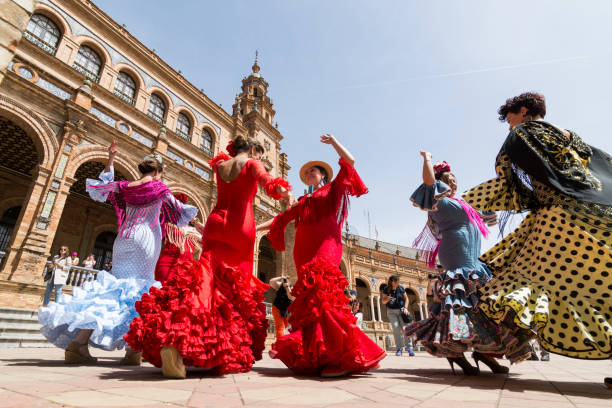
The recovery value is also emotional. A trip that ends with a hard road day can feel abruptly over; a trip that ends with one Seville evening can feel complete. Teatro Flamenco Triana belongs in this final-city logic when the evening is planned as an arc rather than an afterthought: context on the Triana side, dinner geography that does not strand the group, and a return that respects the river crossing. Check the Teatro Flamenco Triana official site (https://www.teatroflamencotriana.com/en/home/) for venue information and current show details, then build the evening around where your hotel actually is.
Ending here works especially well for celebration travelers who want the last night to carry atmosphere without the pressure of a major monument the next morning. The final day can be a lighter Seville day: one interior if needed, one shaded neighborhood, perhaps Plaza de España only if it fits the route rather than as a compulsory finale. The city mood is calmer when the last evening is not being used to compensate for a poorly paced week.
Use Seville as the finish if you have already placed Granada early or mid-loop, if your departure is from Seville or by rail via Santa Justa, or if the group will enjoy one final evening with food, flamenco, and an easier walk home. Avoid ending here if the only reason is symmetry. A loop that looks neat on paper can still feel wrong if it forces the Alhambra into a bad slot or turns Córdoba into a tired transfer stop.
When Seville works as a soft landing, not the main stay
Seville works as a soft landing when the first night needs to reduce travel strain without pretending to solve the whole city. This is the right role for travelers arriving late, families who need the first evening to stay flexible, or couples who want the trip to begin gracefully before moving toward Córdoba, Jerez, Cádiz, or Granada. It is not the right role if you expect to cover the Alcázar, Cathedral, Triana, Plaza de España, and a serious dinner before the loop has even started.
A good soft landing has a narrow brief. The hotel handoff should be clean. The first walk should stay near the hotel’s real geography: Arenal if you are near the river and bullring quarter, Santa Cruz if the hotel is in the old lanes, Puerta de Jerez if you need a broader orientation and easier taxi logic, or Triana only if crossing the river makes sense for dinner or flamenco. The soft landing fails when travelers treat the first evening as found time and use it for everything they were afraid to cut.
The best soft-landing version is arrival, reset, one texture-rich walk, and an early enough dinner to make the next morning useful. That might mean a quiet Cathedral exterior moment, an Arenal river edge, or a short Santa Cruz orientation that does not become a maze. If the next day is Córdoba, protect the morning. If the next day is Granada, protect the transfer and the Alhambra timing. If the next day is Jerez, protect appetite and pace rather than starting the trip with a late, heavy night.
Soft landing also helps with trip mood. It gives the first night a sense of place without creating the pressure to “achieve” Seville immediately. Travelers wake up feeling that the loop has begun, not that they are already behind. That mood matters more than many planners admit; it is often the difference between a private trip that feels tailored and a private trip that feels like a sequence of expensive appointments.
The soft-landing role should usually be one night or one light first day before a fuller Seville stay later. If Seville is your only deep city in Andalusia, do not reduce it to this role. Give it a first full day with a licensed city guide and enough unstructured evening to let the city breathe.
When to use Seville as a day-trip base
Use Seville as a day-trip base for Córdoba, Jerez, and Cádiz when you want fewer hotel changes and the day has a clear theme. Do not use it as a default base for every Andalusia name. The right base day begins with the question “what is this day for?” rather than “how many famous places can we reach?”
Córdoba is the cleanest day-trip candidate when the Mezquita is the point and the rest of the day is designed around it. From Seville, Córdoba can work by rail or with a driver, but the best choice depends on luggage, hotel location, mobility, and whether the day continues elsewhere. Rail can be elegant when the group is compact and luggage-free; a driver can be valuable when the day needs door-to-door comfort, a private guide handoff, or a smoother lunch and return rhythm. For a route-specific next step, private Córdoba day from Seville is the relevant planning path.
Jerez works from Seville when sherry, horses, or a food-and-wine arc is the point. It should not be casually bolted onto a heavy Seville monument day. A sherry-focused day has its own rhythm: transfers, tastings, lunch, and a return that should not be forced into a major late-night plan unless the travelers genuinely have the stamina. Cádiz works when the trip needs sea air and a change of texture rather than another palace, but it also needs honesty about return energy. The day should not end with an ambitious Cathedral interior or a second formal tasting menu unless the rest of the trip is intentionally slow.
Granada is the poor day-trip base candidate from Seville for most discerning travelers. The Alhambra is not merely a sight to reach; it is a timed, layered, hill-adjacent day that dictates the rest of Granada. Use the official Alhambra ticket site (https://tickets.alhambra-patronato.es/en/) to confirm the visit structure, then plan around that reality. If Granada matters, stay there or make it a transfer day with proper margins. A private Granada plan can be excellent, but as a Seville out-and-back it often costs too much energy for too little city texture. When Granada must be coordinated from Seville, private Granada planning from Seville should be treated as a special-case design, not the default loop logic.
Ronda is also usually the wrong Seville base day for comfort-first travelers. The road, the viewpoint energy, the uneven town fabric, and the desire to include white villages can turn a “scenic day” into a long return with little appetite for Seville afterward. Ronda works better as a transfer, a dedicated countryside day with realistic limits, or a stop that is not competing with a major monument the next morning. Seville should not be used as a base for Granada or Ronda when the traveler’s real goal is a calm premium loop; the distance and fatigue change the quality of the next day.
The body cost: what Seville does to walking, heat, and transfers
Seville is easier on the body than Granada but more demanding than its flat map suggests. The old town turns short distances into zigzags; Santa Cruz lanes are beautiful but not efficient; the Cathedral and Alcázar area concentrates stone, sun, and standing time; and a river crossing to Triana is small until it sits at the end of a long evening.
The city asks for pacing in three places. First, the arrival transfer: Santa Justa is straightforward, but the last hotel approach can be shaped by pedestrian lanes, loading zones, and old-town access. Second, the monument cluster: Alcázar, Cathedral, Giralda context, Archivo de Indias, and Santa Cruz are close enough to combine but dense enough to tire travelers who expect a casual stroll. Third, the evening geography: Arenal, Santa Cruz, Triana, and the river can all work, but not all from the same hotel on the same night without adding unnecessary return friction.
Heat matters, but even outside high summer the body cost is real. Standing in exposed approaches, walking on hard surfaces, and moving through crowded old-town lanes makes the day feel heavier than the step count alone. The practical answer is not to hide in a car all day. It is to use the car where the car actually helps and to let walking win where the city is best read on foot.
A chauffeur can improve luggage days, station arrivals, hotel-to-hotel transfers, Jerez and Cádiz days, and certain countryside routes. A chauffeur does not fix a poor city order if the Alhambra or Mezquita day is placed badly. Premium spend does not earn its cost when it is used to rescue an overpacked sequence instead of designing a better one. In central Seville, a licensed guide often changes the day more than a car does because the guide reduces mental fatigue, protects the narrative, and knows when to stop adding.
The body-smart Seville day has fewer “while we are nearby” decisions. It is better to do the Alcázar and Cathedral with context, pause intelligently, and keep one evening alive than to add Plaza de España, Triana, and a late flamenco show because each sounds individually reasonable. The combined effect is what matters.
The mood cost: what makes the loop feel calm or shorter
Seville changes the mood of an Andalusia loop by deciding whether evenings feel earned or leftover. A well-placed Seville stay gives the trip social warmth, food rhythm, and a sense of arrival. A poorly placed Seville stay makes every night feel like recovery from a planning mistake.
The calm version begins with a clear role. If Seville starts the loop, the first evening should create orientation without trying to impress too hard. If Seville ends the loop, the last evening should be coherent: perhaps Triana with flamenco context, Arenal with a river edge, or Santa Cruz only if the group still enjoys old-town intimacy. If Seville is the base, day trips should return to evenings that are intentionally light. A long Jerez or Cádiz day followed by a forced late-night plan can make the next morning feel borrowed from the trip rather than part of it.
The flattened version is easy to recognize. The group returns from Córdoba and still feels obliged to “see something in Seville.” The Granada transfer is placed after a late flamenco night. The Ronda day returns too late for dinner to feel relaxed. The first full Seville day starts with a hotel change. None of these choices is catastrophic alone, but together they make a premium trip feel oddly cheap in energy terms.
Good planning protects the city’s emotional pacing. Seville’s evenings are one of its strengths, but not because every evening must be full. A softer river walk, a well-located dinner, or a single flamenco-focused night can do more for the trip than a list of additional sights. This is where private planning earns its keep: not by adding access everywhere, but by deciding which moments deserve space.
Which legs need a driver, and which days need a licensed guide?
The driver is most valuable on transfer-shaped days; the licensed guide is most valuable on meaning-shaped days. Confusing those two roles is one of the easiest ways to overspend without improving the trip.
Use a driver for arrivals, luggage, countryside, and days where door-to-door timing changes comfort. The Santa Justa-to-hotel arrival handoff is a good example: the driver is not there to make the old town disappear, but to make the transition controlled. Jerez and Cádiz can also justify a driver when the day includes tastings, coastal pacing, or a return designed around dinner. White-village or Ronda days need driver judgment even more, though that does not automatically make them good Seville-base days.
Use a licensed city guide for Seville’s Alcázar and Cathedral day, Córdoba’s Mezquita, and Granada’s Alhambra. These are not merely logistical visits. They are dense, layered monuments where interpretation, pacing, and entry timing shape whether the day feels rich or exhausting. In Seville, a guide can make the Alcázar-Cathedral-Santa Cruz relationship legible and prevent the group from wandering into detail fatigue. In Córdoba, a guide keeps the Mezquita from becoming a photo stop. In Granada, a guide helps the Alhambra day respect both the timed palace logic and the body cost of the hill.
The cleanest premium design often pairs both, but not all day long. A driver may handle the transfer and handoff; the guide may own the monument and walking narrative; the rest of the day may need no more service than a well-placed lunch and a disciplined return. That is the difference between a private trip that feels smoother and one that simply feels staffed.
When the loop has multiple moving parts, Orange Donut Tours can shape the driver-guide split around the actual sequence rather than a generic sightseeing day. That is the right moment to Inquire now.
A sequence walkthrough for the three strongest loop shapes
The strongest Seville loop shapes are not fixed itineraries; they are sequencing patterns. Use them to decide where Seville belongs, then adjust the days around hotel geography, ticket timing, season, and traveler stamina.
Pattern one: Seville first, Córdoba as a focused day, Granada later
This is the cleanest first-time pattern when Seville is the emotional and logistical start. The first day is arrival and orientation. The first full day belongs to Seville’s monuments with a guide. Córdoba follows as a focused Mezquita day, either from Seville or as a move onward depending on luggage and hotel plan. Granada comes later, with the Alhambra treated as the trip’s most timing-sensitive day rather than a flexible add-on.
The traveler consequence is confidence. Nobody is asked to understand Andalusia while tired. Seville gives context, Córdoba deepens the Islamic and Christian layering, and Granada arrives when the group is ready to give the Alhambra its due. This pattern is especially good for first-time visitors who want the trip to build in intensity rather than peak before they have settled.
The risk is overusing Seville as a base after it has already done its opening job. If the plan adds Jerez, Cádiz, Ronda, and Granada all from Seville, the city stops being a smart start and becomes a holding pen. Use the Seville start, then move when the loop asks to move.
Pattern two: Granada first or mid-loop, Seville last
This pattern works when Granada’s Alhambra timing is fixed or when the trip is designed to end with a lower-friction city. Granada carries the hill and palace intensity earlier. Córdoba may sit before or after depending on rail logic. Seville becomes the final recovery city, with one strong guided day if not already visited and one evening designed around Arenal, Triana, or the river.
The traveler consequence is relief. After Granada’s slopes and the mental focus of the Alhambra, Seville gives the group a flatter finish. This is particularly helpful for older parents, multigenerational travelers, and celebration trips where the last night should not depend on everyone still having hill energy.
The risk is underestimating Seville’s own density. A final Seville stay should not become a warehouse for everything skipped earlier. Choose one major monument day, one atmospheric evening, and one lighter final window. If the departure is from Santa Justa, keep the last morning close to hotel and station logic rather than sending the group across the city for a symbolic final stop. For additional departure-day thinking, Seville departure-window planning is the supporting guide to use.
Pattern three: Seville as the soft landing before the real loop begins
This pattern works when the arrival day would otherwise damage the first real touring day. Seville takes the first night lightly: hotel, gentle walk, dinner, and sleep. The next day may be Córdoba, Jerez, Cádiz, or a move toward Granada, but the soft landing is not judged by how much it covers. It is judged by whether the group wakes up ready.
The traveler consequence is a calmer start for people who dislike being processed through a trip. It is also useful for families, couples on a celebration trip, or travelers arriving after complex connections. The city gives them Andalusian texture without demanding that they perform enthusiasm on command.
The risk is regret if Seville never receives a full day later. A soft landing is not a substitute for Seville. It is a pressure valve. If the loop includes only one night in Seville, make peace with that limited role and do not pretend it has delivered the city’s monuments. If Seville matters to the trip, give it real time.
What to stop forcing when the Andalusia loop is too full
When the loop is too full, stop forcing Seville to be both base and finale. Give it one job, then cut the add-ons that fight that job.
Cut the late extra monument first. A rushed Cathedral or Alcázar visit after a transfer is rarely the premium version of the day. Cut the second river crossing if Triana is not the point of the evening. Cut the decorative Plaza de España stop if it creates heat drag or sends the group away from dinner geography. Cut the “quick Ronda day from Seville” if the next morning is Granada, Córdoba, or departure. Cut the Granada out-and-back unless there is a hard constraint and a private plan has been built around it.
Also stop forcing one hotel to solve every Andalusia leg. A single Seville hotel can be elegant for Córdoba, Jerez, and Cádiz. It becomes less elegant when the traveler really wants Granada, Ronda, and mountain or white-village texture. Comfort-first travel is not always about fewer hotel changes; sometimes it is about placing the hotel where the next morning begins naturally.
The best private loops often look less ambitious on paper than they feel in person. They leave one night unburdened. They put the Alhambra and Mezquita on days that can absorb them. They avoid treating Seville’s old town as a container for spare hours. They accept that premium service is most powerful before the day becomes overloaded, not after.
FAQ
Should Seville be the first stop in an Andalusia itinerary?
Yes, Seville is usually the best first stop for a first-time Andalusia itinerary because it handles arrival gently and gives the Alcázar-Cathedral day fresh energy. It is especially strong when you arrive by train at Santa Justa or by flight and want a meaningful first evening without a hard transfer onward.
Is Seville better at the start or end of an Andalusia loop?
Seville is better at the start when you need orientation and a clean first monument day. It is better at the end when Granada, Ronda, or road-heavy days have already used the group’s energy and you want a flatter recovery city with strong evening options.
Can Seville work as a soft landing for Andalusia?
Yes, Seville works very well as a soft landing if the first night stays light: hotel handoff, a short Arenal, Santa Cruz, or river walk, and dinner. It stops working when travelers try to cover the Alcázar, Cathedral, Triana, Plaza de España, and flamenco before the trip has properly begun.
Should I base in Seville for Córdoba?
Seville can be an excellent base for Córdoba when the Mezquita is the focus and the day is kept coherent. Rail or driver can both work, depending on luggage, hotel location, mobility, and whether you want door-to-door comfort or a simpler station-to-station day.
Should I base in Seville for Granada?
Usually no. Granada is too dependent on Alhambra timing, hill logistics, and city texture to work well as a casual Seville day trip. If Granada matters, stay there or design it as a transfer with proper margins rather than a long out-and-back.
Should I base in Seville for Ronda?
Usually no for comfort-first travelers. Ronda from Seville can be scenic, but the road time, uneven streets, viewpoints, and return fatigue often make it a poor base day if the next morning matters. It works better as a dedicated countryside day with limits or as part of a transfer plan.
Which Seville day needs a private guide most?
The Alcázar and Cathedral day benefits most from a licensed private guide because the value is interpretation, pacing, and knowing what not to add. A driver can help with transfers and day trips, but central Seville’s main monument day is usually improved more by expert guiding than by more vehicle time.
Where does Jerez fit if Seville starts or ends the loop?
Jerez fits best as a focused day from Seville when sherry, horses, or food-and-wine pacing is the point. It should not be attached to a heavy Seville monument day or followed by an overplanned night unless the rest of the loop is deliberately gentle.
The planning verdict
Start in Seville if this is your first Andalusia trip and you want the loop to open with confidence. End in Seville if Granada, Ronda, or road country has already carried the physical strain and you want the last nights to feel social, flatter, and easier to finish well. Use Seville as a soft landing only when you are disciplined enough not to turn that first evening into a miniature city guide. Use it as a day-trip base for Córdoba, Jerez, and Cádiz, but not as the default base for Granada or Ronda.
The highest-value Seville planning is not about adding more. It is about deciding which day deserves a driver, which day deserves a licensed guide, which evening should remain light, and which famous stop should be left out so the important monuments are not rushed. That is how Seville becomes the hinge of an Andalusia loop rather than another overfilled box on the itinerary.
If you’re interested in any private tours of Seville, please reach out to us.





 So if you are looking for the absolute best in Seville & surroundings with authentic local fully-licensed native guides whose English you can actually understand and with an exclusive and amazingly fun itinerary













