How to Spend Your First Day in Seville After a Train or Flight: A White-Glove Arrival Plan for a High-End Andalusia Stay
Updated
The best first-day shape after a train or flight
The best first day in Seville after a train or flight is not a conquest of monuments. It is a controlled arrival: shorten the transfer chain, settle fast, make your first outing hinge on Puerta de Jerez and the shaded edge into Santa Cruz, disappear indoors for a real midday reset, then finish with either Triana or Plaza de España only after your energy proves it can handle one more move. That order works because Seville magnifies bad sequencing more than many first-time visitors expect. Heat and glare build quickly on the exposed cathedral side, the old town is compact but still effortful when you are carrying travel fatigue, and one overreaching noon push can flatten the mood of your entire stay before dinner even begins.
The clearest exception is the traveler arriving by train in cooler weather, with a prompt hotel check-in and unusually strong energy. That guest can get away with a more ambitious late-morning or early-afternoon sweep, especially if staying close to María Luisa Park or already on the Santa Cruz edge. But even then, the arrival-day thesis for Seville remains the same: your first public-facing hour should lower the city’s friction, not test your resilience. At Puerta de Jerez, one fork sends you toward the fully exposed cathedral apron; the other lets you slip toward the Murillo Gardens side and into Santa Cruz with a softer start. That tiny routing choice often decides whether Seville feels seductive or punishing.
This guide solves that one planning problem only: how to spend your first day in Seville without sacrificing the evening you came for. It is not a generic Seville in one day article, and it is not a monument checklist disguised as advice. If your arrival includes bags, uncertain room readiness, a celebratory dinner, older parents, children, or simply no appetite for logistics after landing, thoughtful airport-arrival planning can matter before any museum or monument ever does.
Three arrival-day shapes, scored by shade, walking load, and dinner readiness
The default winner for a first day in Seville is Santa Cruz reached through Puerta de Jerez, with a strict midday hotel break and one late choice afterward. The runner-up is Plaza de España as a late-afternoon finish, especially for travelers who want something visually grand without committing to a full monument day. The wrong fit for most arrivals is Triana first, not because Triana is weak, but because opening with a river crossing and a district change usually adds more effort than payoff before you have recovered.
Three workable shapes for day one
- Default winner - Santa Cruz from Puerta de Jerez: best for first-timers, couples, multi-generational groups, and anyone arriving before mid-afternoon who wants Seville to feel immediate yet forgiving.
- Runner-up - Late Plaza de España finish: best for travelers staying near the park zone, photographers, celebration trips, and families who want one clear visual set piece after a long indoor break.
- Wrong fit for most arrivals - Triana first: useful only if your hotel is already there or you are arriving unusually fresh; otherwise the district works better after the city cools and your legs are no longer negotiating both travel and sightseeing at once.
The comparison criteria should be explicit, because good arrival advice in Seville is not about prestige. It is about heat load, walking texture, number of transitions, how easy it is to retreat if you hit a wall, and whether the plan still leaves you presentable and pleasant by dinner. Santa Cruz wins because it gives you atmosphere without forcing a major commitment. Plaza de España comes second because it shines when timed well but punishes bad timing. Triana falls back to third because it is stronger as a mood-rich evening district than as the first problem your body has to solve.
For comfort-first travelers, that hierarchy is more useful than a neutral list of options. You do not need to see the most famous thing first. You need the first thing that lets Seville open up without extracting too much from you. On arrival day, emotional tone is part of logistics. A calmer first neighborhood makes the city feel coherent, while a jumpy first sequence can make even a beautiful itinerary feel strangely hard.
Before midday in Seville after a train or flight: unload, shorten the transfer chain, and aim for Puerta de Jerez
Before midday, the right move is administrative, not heroic. Get from airport or station to hotel with the least possible friction, change clothes if you need to, drink water, eat lightly, and decide whether you are truly ready for a short exploratory outing or only ready for lunch and a room key. Many arrival days go wrong because travelers treat the transfer as something that happens before the trip begins. In Seville, the transfer is already part of the trip. It shapes how much sun you take on, how much patience you still have, and whether the city meets you as pleasure or as work.
That difference starts with where you are coming from. Sevilla Airport sits about ten kilometers northwest of the city, while Sevilla Santa Justa is already within the urban grid on Avenida Kansas City. The official Aena airport page (https://www.aena.es/en/sevilla.html) makes the airport’s road-and-transfer logic explicit, while the official Adif Santa Justa page (https://www.adif.es/w/51003-sevilla-sta.-justa) confirms the station as the city’s primary rail gateway. The consequence is simple: airport arrivals have a larger logistics tax before the day even begins; rail arrivals usually do not.
Puerta de Jerez is the smart hinge because it is not only a landmark zone; it is a decision point. It touches the cathedral side, the gardens side, the hotel corridor around San Telmo and Alfonso XIII, and public transport links that make retreat easy if energy drops. That matters less as trivia than as reassurance: this is one of the few places where a first-time visitor can stand, look around, and still have multiple graceful exit options if the day needs to shrink.
If your room is not ready, resist the instinct to improvise a long exposed walk to prove the day has started. Use hotel storage, take lunch in a cool interior, and treat the first outing as a measured preview rather than a performance. Seville rewards travelers who begin with control. It is a city whose pleasures deepen when you arrive into them at the right speed.
Your hotel position matters more on day one than it will on day two. A romantic address deep inside the old lanes can be glorious once you are settled and maddening while you are still negotiating arrival. That does not make those hotels wrong. It means you should price their charm honestly against suitcase friction, porter coordination, and how quickly you can reach a room, a shower, and a chair. On your first day in Seville, the right lodging experience is the one that turns into rest fastest, not the one that wins a map screenshot.
Why Santa Cruz wins the first neighborhood decision
Santa Cruz is the best first neighborhood in Seville because it lets you feel the city’s texture without turning your arrival into an endurance event. You get layered lanes, frequent shade, glimpses of courtyards, quick route corrections, and a constant sense that you are already somewhere specific. Just as important, Santa Cruz is easy to shrink. If you are doing well, you can stretch the wander. If you are fading, you can pivot to a café, a short taxi, or a hotel break without the day feeling spoiled.
The smartest arrival-day route is shade-first, not postcard-first. From Puerta de Jerez, drift toward the Jardines de Murillo edge and let Santa Cruz absorb you gradually rather than stepping directly into the broad cathedral-side exposure around Avenida de la Constitución and Plaza del Triunfo. That is the routing proof many generic guides miss. The city is telling you how to arrive if you pay attention: cooler edges first, open stone later. On a map, the difference looks minor. In the body, it is the difference between a pleasant first hour and a first hour that quietly spends your evening.
Santa Cruz also handles mixed-energy groups better than it gets credit for. Couples can turn it romantic without effort. Families can keep it short and sensory instead of instructional. Small groups can spread out slightly without anyone feeling lost. Older parents often do better here than in wider, sunnier sweeps because the neighborhood offers more stopping points and less psychological pressure to keep marching toward the next grand object. That is why Santa Cruz is not merely charming on day one; it is operationally kind.
There is also a mood reason to choose it. Seville needs an entry that feels intimate before it feels monumental. Santa Cruz delivers that first. It lets you hear footsteps on stone, turn a corner into stillness, and arrive into the city’s cadence before the biggest landmarks begin demanding attention. If you decide later that you want a guided version with more context and less route guesswork, Santa Cruz private touring makes more sense the next morning than on the hour you land.
Santa Cruz also wins because it does not force you to declare what kind of traveler you are on minute one. It can be historical without requiring a formal visit, pretty without feeling flimsy, and convenient without feeling generic. That flexibility is rare and valuable on arrival day. You do not yet know whether the trip wants to become a food weekend, a monument-heavy stay, a family holiday, or a slower Andalusian city break. Santa Cruz lets the answer emerge without punishing the uncertainty.
Triana belongs later, when the city opens back up
Triana is not the wrong district. It is the wrong opening move for most arrival days. That is the important distinction. First-time visitors often push it to the front because it feels vivid, local, and food-friendly. All of that is true. What is also true is that Triana usually asks more of you at the beginning of the day than Santa Cruz does. You are adding a river decision, a bridge crossing, and a distinct district change before you know how your body is actually responding to travel.
Those river crossings matter more than they look on a map. Whether you cross via the Puente de San Telmo side or the Isabel II bridge side, you are committing to exposure, movement, and another layer of navigation. On a fully rested afternoon, that is enjoyable. On arrival day, it can feel like a second chapter before the first one has settled. Triana is stronger once the city has started to glow again, when ceramics, market edges, riverside light, and dinner all belong in the same emotional register.
This is the counterintuitive correction many travelers need: Triana is often overvalued as a first-afternoon base simply because it sounds more atmospheric than the old-town core. In practice, the glamour of choosing the “local” district first can produce a flatter day. You spend more time transitioning, more time in open light, and more of your early energy on the mechanics of getting there. For a same-day arrival, that is not sophistication. It is leakage.
The exception is real and worth naming. If your hotel is already in Triana, or if you arrive by train with light bags, mild weather, and a simple early check-in, staying local can be the better decision. In that case, do not force Santa Cruz just because it won the general comparison. Have a gentle lunch, walk the river at an unhurried pace, and let Triana introduce the city in its own way. Good arrival planning is about reducing the day’s worst friction, not obeying a universal script.
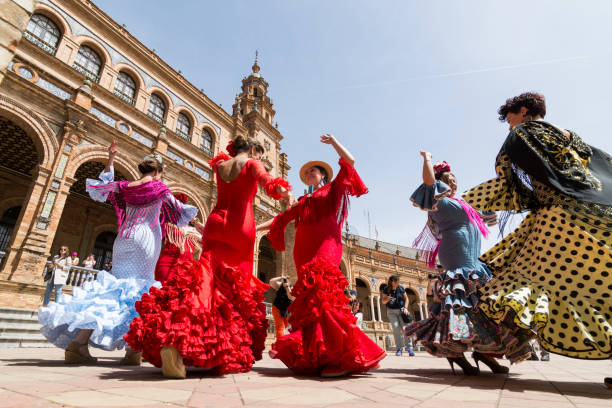
Plaza de España fits as a controlled late-afternoon stretch, not a noon march
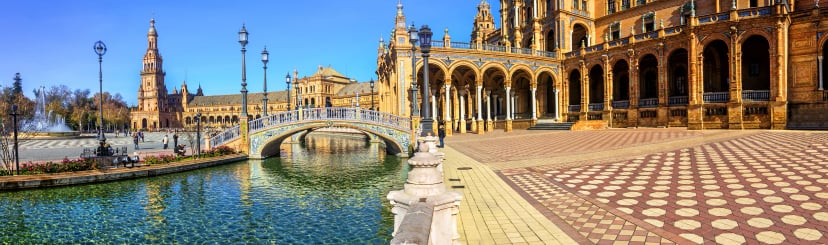
Plaza de España works best on arrival day when you treat it as a finish, not as a launch. The plaza is visually generous and emotionally immediate, which is exactly why people place it too early. They want the cinematic reveal while their energy is still high. But Seville’s real challenge is not getting excited in the first hour. It is staying pleased with your own choices by the fifth.
The approach matters here. María Luisa Park can offer a softer lead-in, with tree cover and a more forgiving rhythm, but the plaza itself opens out again. That open geometry is part of its magic and part of its cost. On a cool-season arrival, the cost may be modest. In warmer conditions, or after a delayed flight, an early Plaza de España push can land like a heat invoice you only notice later, when dinner conversation becomes shorter and the room suddenly feels more attractive than the city.
This is why Plaza de España belongs after the reset window. If you have already checked in, showered, rested, and judged the day honestly, then the plaza becomes a controlled visual statement rather than a rash expenditure of energy. Forty-five minutes to a little over an hour is often enough. The point is not to extract everything from it. The point is to enjoy it while still having enough left for the evening to matter.
Used that way, the plaza is excellent for celebration travelers, photographers, and families who want one unmistakable Seville scene without the full weight of a monument program. Used badly, it becomes part of the classic first-day mistake: too much open walking, too much pride in “making the most” of arrival, and not enough respect for the way Seville accumulates fatigue quietly before it shows up all at once.
When an airport or station pickup changes the quality of the day
An arrival pickup changes the quality of the day most clearly when you are landing at the airport, least clearly when you are arriving at Santa Justa with light bags, and somewhere in between for everyone else. That is the honest judgment. Premium transport is not a virtue in itself. Its value comes from what it removes: search stress, language friction at the wrong moment, luggage decisions, sun exposure before check-in, and the small but surprisingly expensive pauses between each of those steps.
The airport case is easy to justify. Aena’s official airport material emphasizes that Sevilla Airport sits outside the center and is approached by road, taxi, and bus rather than by simply stepping into the historic core. By contrast, Santa Justa is already part of the city and requires a shorter final handoff. So airport arrivals face a larger early logistics burden than rail arrivals do, which is why a meet-and-go service materially changes the day for more travelers than an elaborate in-city chauffeur plan does.
Pickup earns its cost most decisively for travelers arriving after a poor travel night, families carrying more than one person’s needs, guests with celebratory wardrobe concerns, travelers with mobility sensitivities, and anyone whose hotel location is charming on paper but awkward with luggage. It also helps when the room will not be ready and you want a clean handoff to storage, lunch, and a first-hour neighborhood without improvising the sequence on the curb. In those cases, the service is not about luxury theater. It is about preserving decision-making capacity.
For travelers whose main problem is that first handoff, not the whole day, a targeted arrival solution often beats overbuying transport later. For broader routing questions beyond day one, the separate guide on a chauffeur-led Seville day goes deeper. But for the arrival day itself, the quality swing usually comes from the first transfer, not from having a car on standby every hour afterward.
Station pickup can still be worthwhile, but the threshold is higher. If you are stepping off an AVE from Madrid or Córdoba with one small bag and a hotel already expecting you, Santa Justa is often simple enough that spending heavily on the transfer buys only a slightly smoother ten or fifteen minutes. If, however, you are managing a family arrival, multiple cases, a mobility concern, or a same-night formal plan, then even the shorter Santa Justa handoff can be worth protecting. The measure is not distance alone. It is how much precision the rest of the day requires from you.
Where paying more stops helping inside Seville
Once you are inside Seville’s compact historic core, paying for a car adds little between Santa Cruz, El Arenal, the cathedral edge, and much of central old town. That plain sentence matters because premium travelers are often told that more service is automatically better service. In central Seville, it often is not. The distances are short, the lanes are old, the drop-off logic is imperfect, and a waiting vehicle can sometimes create more choreography than comfort.
This is the mildly corrective local point that many high-end itineraries skip. The car can feel wonderfully reassuring on the way in, then oddly redundant once you are settled. You may wait for positioning, walk anyway from the nearest practical point, and still need to negotiate narrow streets on foot. Meanwhile, a well-chosen eight- or ten-minute walk through Santa Cruz can be both easier and more enjoyable than a stop-start transfer that promises relief but delivers mostly process.
Where extra spend still helps is different: airport collection, bag handling, difficult hotel approaches, a precise handoff to Plaza de España or farther-flung dinner plans if someone in the party is struggling, and fully customized day-two or day-three sequencing when you are combining districts with bigger transitions. Arrival day rewards selective spending, not blanket spending. Buy the part that protects your weakest point, and leave the rest alone.
The iconic first-day push to cut first
Trying to do the Alcázar, the cathedral, Santa Cruz, Triana, and Plaza de España on the day you arrive is overambitious after travel. That is the iconic first-day push to reject. It sounds efficient because the map seems compact and the names cluster attractively. In practice, it stacks queue drag, exposed walking, bridge crossings, timed-entry pressure, and mental switching costs on top of a body that has not yet proven what it can do that day.
Seville adds fatigue in layers. There is the visible layer: sun, stone, distance, and standing. Then there is the hidden layer: waiting for a room, finding lunch, deciding whether to press on, crossing back because someone needs a break, recalibrating dinner time, managing children or older parents who are trying not to slow the group, and discovering that what looked like “just one more thing” actually requires another twenty to thirty minutes of movement. That is what the city does to the body. It is not usually one dramatic hill or one brutal transfer. It is cumulative load.
The smartest cut-first rule is this: cut the noon monument commitment before you cut the evening. On arrival day, a graceful Santa Cruz walk, a real hotel break, and one good late choice beat a frantic attempt to justify the airfare with landmark volume. If the schedule starts to wobble, cut Plaza de España first if it is merely decorative, cut Triana first if it requires a cross-river detour, and cut timed interiors first if they pin you to the hottest or least flexible part of the day. What you should not cut first is the pause that keeps everyone pleasant by dinner.
This is also what the city does to the trip mood. A protected evening makes Seville feel generous, flirtatious, and easy to love. A blown evening makes the same city feel strangely demanding. Travelers remember their first night more than they think. If that first night becomes room service and recovery because the afternoon was planned like a challenge, the trip begins in a minor emotional debt that did not need to exist.
A white-glove arrival sequence that works in real time
The most reliable first-day sequence in Seville has five moves: transfer, settle, Santa Cruz preview, midday reset, and one evening finish. It sounds almost too restrained when written that plainly, but that is the point. Arrival-day planning should look modest on paper and feel luxurious in the body. The reward is not that you saw the most. The reward is that the city begins in the right register and the rest of the stay opens from strength rather than from overcorrection.
Move one is the handoff into the city. From the airport, go straight to the hotel and do not insert sightseeing between curb and check-in unless the room situation forces it. From Santa Justa, the same rule usually applies, though rail arrivals can compress this phase more easily. Change what needs changing, deal with bags, and give everyone a moment to become presentable. This stage often takes longer than travelers budget, which is why arrival days collapse when they are planned too tightly.
Move two is a short first outing centered on Puerta de Jerez and Santa Cruz. This is when Seville should first feel like Seville, not like transit. Keep the route soft-edged and opportunistic. Enter the neighborhood from the shadier side, stroll without a checklist, and let the goal be orientation rather than accomplishment. You are teaching your body the city’s rhythm. This is where a guide can quietly earn the fee: not by adding volume, but by choosing lanes, pauses, and order so you never have to keep asking whether you are doing too much.
Move three is the midday reset window, and it should be real. In Seville, that usually means two or three protected hours in the middle of the day for a room break, a shower, a nap, or simply time with the curtains partly closed and no civic ambition at all. That window is not lost time. It is the hinge that turns a punishing arrival into a civilized first evening. Skipping it is the most common way affluent travelers accidentally design a day that feels cheaper than it was.
Move four is the evening choice. If you come out of the break curious and fairly lively, choose Triana for food, river mood, and a more social landing. If you come out wanting one visually satisfying last stretch before dinner, choose Plaza de España and keep it contained. If you come out only half-recovered, stay closer to your hotel and accept that restraint is the premium decision. This is also the right moment to bring tomorrow into view. If your second day will be the fuller monument day, the dedicated full private Seville day guide should govern what you save for later.
Move five is the handoff into the night. Dress, dine, and stop while still ahead. The ideal first day in Seville ends with a feeling of unfinished appetite rather than heroic exhaustion. If your arrival includes older parents, children, or a celebration dinner you really do not want to miss, this is the moment when expert help becomes less about sightseeing and more about protecting shade, timing, pickup logic, and the emotional tone of the trip. Inquire now
This sequence also adapts well to different travel personalities without changing its core logic. Couples can make the Santa Cruz portion slower and more atmospheric. Families can shorten the first outing and lengthen the reset. Small groups can split after the break, letting some choose Triana while others keep the evening closer to the hotel. Celebration travelers can preserve wardrobe, hair, and mood by treating the reset as part of the occasion rather than as dead time. The order stays the same because Seville’s friction stays the same even when your style changes.
Read as a sequence, the plan may seem almost conservative. Lived in real time, it feels unusually generous. You arrive, the city greets you, you withdraw before it drains you, and you return for the part that matters most. That is what a white-glove arrival plan should do. It should make Seville feel like it has been waiting for you rather than testing you.
Dinner, drinks, and the handoff into day two
The right dinner on your first night in Seville is usually one meaningful reservation or one easygoing neighborhood meal, not both. Arrival days get blurry when travelers try to stage-manage drinks in one district, dinner in another, and a late walk after that. Pick the evening tone that matches the body you actually have. If Santa Cruz was your first neighborhood and energy is moderate, stay close and keep the evening elegant but easy. If the reset worked beautifully and you want a livelier shift, let Triana or the river edge handle the night.
For celebration travelers and food-and-wine visitors, the practical question is not only where to eat but how demanding the booking is after travel. A long tasting menu can be glorious on the first night, but only if your arrival has been protected. If you want a composed fine-dining finish, check the current menu structure directly at abantalrestaurante.es/menu (https://abantalrestaurante.es/menu/). If an older note, concierge message, or outdated browser memory sends you toward ispal.es, use Ispal’s current official pages at restauranteispal.com (https://restauranteispal.com/book-table/) to confirm the latest booking route before you plan the evening around it.
The larger judgment is this: first-night dining in Seville should reward the arrival strategy you chose, not expose its weakness. A reservation that requires a rushed cross-city transfer, a very late seating, or a long formal progression after a poor flight can turn refinement into self-sabotage. Better to arrive at dinner slightly eager than visibly depleted. The city offers plenty of chance to go bigger tomorrow. On a first night, the real luxury is not maximalism. It is being fully present for the table you chose.
That is why the first day and the second day should talk to each other. If tonight leans toward Triana, tomorrow can lean back toward monuments or Plaza de España. If tonight stays close and gentle, tomorrow can be the fuller public day. The best onward bridge is the guide on your second day in Seville, because a protected arrival only pays off if the next day starts from strength rather than from repair.
FAQ
Is Santa Cruz or Triana better for a first afternoon in Seville?
Santa Cruz is better for most first afternoons because it asks less of a travel-tired body while still feeling unmistakably Sevillian. Triana is excellent later, especially for dinner and evening atmosphere, but it usually works better after you have checked in, rested, and decided you still want one more district change.
Should I go to Plaza de España on the day I arrive?
Yes, but only as a late-afternoon or early-evening finish if your energy supports it. Plaza de España is more rewarding when it is the day’s single visual set piece after a real indoor break, not when it becomes part of an overpacked noon march.
Is airport pickup worth it in Seville?
It is often worth it from the airport and less often worth it from Santa Justa station. The airport arrival has more logistics to solve before the trip feels started, so pickup can materially improve the day for travelers with luggage, children, older parents, celebration plans, or low tolerance for uncertainty right after landing.
Can I do the Alcázar and cathedral on the day I arrive?
You can, but it is rarely the best first-day decision unless you arrive unusually early, check in smoothly, and feel genuinely strong. For most discerning travelers, timed interiors on arrival day create pressure in exactly the part of the day that should stay flexible.
What is the best first-day plan if I arrive at Santa Justa?
Go to your hotel, settle, and then aim your first outing toward Puerta de Jerez and Santa Cruz rather than forcing a full sightseeing sweep. Rail arrivals are easier than airport arrivals, but they still benefit from the same sequence: short first outing, midday break, one late finish, and dinner before the day starts to drag.
What should I do if my hotel room is not ready?
Store bags, eat lunch somewhere cool, and delay the real sightseeing start until you can travel lighter and feel less provisional. The mistake is to fill the waiting time with an exposed monument push that leaves you overheated and under-rested before the room is even yours.
Is a car useful once I am already in the historic center?
Usually not for short hops between Santa Cruz, El Arenal, and the cathedral side. In Seville’s compact center, a car often adds process more than comfort. Spend more on the arrival handoff or on a custom day with larger transitions, not on unnecessary in-core repositioning.
What is the single smartest thing to protect on my first day in Seville?
Protect the evening. If you keep enough energy for a calm, enjoyable dinner and a pleasant first night walk or drink, the city will feel welcoming from the start. If the evening gets sacrificed to midday overreach, the whole trip can begin with a recover-not-enjoy mentality that is hard to undo. It usually improves the next morning as well, because you wake up curious instead of compensating.
If you’re interested in any private tours of Seville, please reach out to us.





 So if you are looking for the absolute best in Seville & surroundings with authentic local fully-licensed native guides whose English you can actually understand and with an exclusive and amazingly fun itinerary