Listening to Baroque Seville: Cathedral Organs, Convent Music and the Soundscape of Sacred Power

Updated
Baroque Seville presents a historical contradiction. Its churches still make power visible: gilded retables rise like walls of light, choir stalls turn carved wood into hierarchy, iron grilles divide privileged spaces from public ones, and monumental organ cases occupy architecture on the scale of façades. Yet most travelers meet these buildings in relative silence. The eye receives abundance while the ear receives absence.
That silence can mislead. Seville Cathedral and the city’s convents were not designed as galleries in which music occasionally happened. They were institutions whose days were divided by sung offices, Mass, processions, devotions, endowed anniversaries and feast-day ceremonies. Plainchant, polyphony, organ, wind instruments, bells and spoken liturgy did different kinds of work. Sound marked rank, intensified selected moments, carried texts through large interiors and turned a patron’s money into recurring public memory.
The interpretive problem is therefore demanding: how can a visitor recover Baroque Seville’s sacred soundscape when no historical performance is taking place, without pretending to hear what the evidence cannot supply? The answer is to treat buildings, instruments, scores, ceremonial books and financial records as parts of one system. The organ case alone is not the sound. A score alone is not the performance. A convent grille alone is not proof of what crossed it. Read together, however, these objects reveal an acoustic institution whose authority was produced through timing, placement, labor and patronage as much as through musical style.
A cathedral built to be heard as well as seen
Begin inside Seville Cathedral with the relationship among choir, crossing and organ cases. The great choir is not a decorative enclosure added to an otherwise open hall. It was the working center of a clerical body: a place for the ordered performance of the Office, for chant, for ceremonial movement and for the musicians who enlarged selected celebrations. The two monumental organ cases stand beneath arches flanking the choir stalls, embedding instrumental sound within this institutional core rather than treating it as an effect imported from a distant gallery.
The Cathedral’s official organ history makes a crucial distinction between what a visitor sees and what survives from the Baroque period. Since the beginning of the twentieth century, the two cases have sounded as one instrument built by Aquilino Amezua in 1901, operated from one console through an electrical connection. The official account describes roughly one hundred stops distributed across four manuals and pedal, with sound projected from the case on the side of the Antigua and the case on the side of San Francisco. The present instrument is therefore impressive evidence of continuity, adaptation and scale, but it is not an untouched Baroque organ.
That distinction changes the visit. It prevents the common mistake of hearing any present organ tone, or imagining one, and calling it “the Baroque sound of Seville.” The cases occupy historically meaningful positions, but the mechanism behind them belongs to a later technological settlement. Their value for interpretation lies partly in the fact that the Cathedral repeatedly renewed its instruments while preserving the central importance of organ sound around the choir.
The official chronology lists earlier instruments on both sides. Among the eighteenth-century predecessors were organs by Diego de Orío, dated 1725, Francisco Ortiguez, dated 1733, and Jordi Bosch, dated 1779. These dates do not describe one stable object lasting through the century. They reveal a sequence of construction and replacement. Organ history here is a history of institutional maintenance: contracts, technical ambitions, changing tastes, repairs, rival cases and decisions about how much sonic force the Cathedral required.
The placement also had an acoustic purpose. A study of seventeenth-century Cathedral music notes that the two organs faced one another and could support polychoral practice. In some works, instruments could reinforce or even stand in for vocal forces; the institution normally maintained a principal organist and a second organist associated with the other organ. This does not mean every feast produced a symmetrical exchange between two equally staffed lofts. It means the architecture made contrast, alternation and distributed support available within the choir’s ceremonial zone.
Look, then, not only at the pipes but at the direction in which the cases address the interior. Sound in a cathedral is never merely “large.” It has origins, paths, reflections and listeners. A case turned toward the choir helps singers orient to instrumental support; opposing sources can clarify antiphonal gestures; elevated pipes project over screens and furniture; the stone volume lengthens resonance, which can magnify sonority while also blurring rapid detail. The exact result depends on registration, ensemble size, liturgical occupancy and the historic instrument in use, none of which can be reconstructed simply by standing beneath the cases. The architecture provides conditions, not a recording.
For travelers deciding how to sequence the monument, the acoustic reading belongs inside the Cathedral visit rather than after it. The practical question of whether to climb first or remain at floor level is treated in the Cathedral-and-Giralda sequencing guide; the music-history question requires enough unhurried time at the choir to understand that the building’s central obstruction was once a center of coordinated sound.
The organ cases are a palimpsest, not a time machine
Baroque interpretation often fails by treating survival as completeness. Seville’s paired cases tempt the visitor to imagine an intact eighteenth-century sound world because their visual rhetoric is so persuasive. They are large, balanced and architecturally commanding. Yet an organ is not its case. It is wind supply, chests, action, pipework, tuning, stop disposition, console, maintenance history and the skill of the player. Change any of these, and the sounding identity changes even when the outer furniture remains.
The most useful question is therefore not “What did this exact organ sound like in 1733?” The available evidence does not authorize a single answer across decades of rebuilding. Ask instead: “Why did the Cathedral continue to invest in major organs on both sides of the choir, and what ceremonial possibilities did that arrangement preserve?” This turns an impossible demand for sonic replication into a historically defensible inquiry about function.
One function was support. Organ tone could sustain chant, underpin polyphony, replace missing forces in some circumstances or articulate liturgical transitions. Another was differentiation. Registers allowed an organist to vary weight, color and projection, though the exact stop lists and voicing of successive instruments must be established from organological records rather than inferred from the current machine. A third was spatial authority. When sound emerged above and beside the choir, the institution made its internal order audible to clergy and lay listeners beyond the enclosure.
The cases also joined sound to image. Their scale announced that music was not incidental expenditure. Carved and architectural surfaces framed pipework as a visible sign of breath, mechanism and abundance. Even in silence, they tell the visitor that the Cathedral devoted prime spatial territory to an expensive technology requiring builders, tuners, organists and long-term care. Sacred power was not only proclaimed by iconography; it was maintained by skilled labor hidden behind façades.
This is why the later Amezua instrument should not be treated as an embarrassment to a Baroque narrative. It is evidence that the institution kept translating an older spatial concept into new technology. The electrical connection of 1901 allowed one player to command both cases as a single instrument. Historically, earlier organs could have more independent identities. The difference is interpretively rich: the same paired visual arrangement could support distinct regimes of control, from separate instruments and personnel to a unified console.
A visitor who hears the current organ during worship or another authorized use should listen with two dates in mind. The sound belongs to the living Cathedral and to the instrument’s modern construction and later interventions. The placement belongs to a much longer history. That layered hearing is more accurate than nostalgia, because it respects both continuity and replacement. It also makes the silence of an ordinary visit productive: the cases become evidence of choices rather than props for an imagined soundtrack.
The choir was an institution of rank, training and discipline
The word “choir” creates confusion because it can mean a group of singers, the enclosed architectural space where clergy sat, or a broader liturgical body. In Seville Cathedral, all three meanings overlap. The stalls organized people by office and status. Chant ordered the daily cycle. The capilla de música supplied trained singers for polyphony. The seises represented a specialized system of boy choristers and education. Organists and ministriles added instrumental resources. To hear the Baroque Cathedral historically, one must hear an organization before hearing a style.
The Cathedral’s account of its choral tradition states that Gregorian chant formed part of solemn daily worship before the Gothic building was complete, while polyphony was reserved for more notable feasts. It also traces a permanent ensemble of ministriles from the sixteenth century and their incorporation into the music chapel during the seventeenth. This matters because the soundscape was layered: routine chant and occasional magnificence belonged to the same institution, but they did not carry equal cost or ceremonial weight.
The historical ensemble was also gendered. The Cathedral’s polyphonic chapel used male voices, with boys supplying upper parts and adult singers taking lower ranges; the present mixed choral arrangement belongs to a much later history. Projecting a modern concert choir backward would erase the structures through which voices were recruited, trained, paid and promoted. It would also obscure the contrast with female convents, where women cultivated serious musical practice inside enclosure and under different economic conditions.
Seventeenth-century personnel records expose the relationship between artistic ambition and financial capacity. Juan María Suárez Martos’s study of music in seventeenth-century Seville Cathedral reports that the salaried singers reached about twenty during Alonso Lobo’s tenure, then declined to roughly twelve under Luis Bernardo Jalón and about nine under Diego José de Salazar. Polychoral music for eight or more voices could therefore be performed by fewer singers even as the written number of parts increased. At points of acute shortage, documents record the inability to perform certain works as intended. The score’s grandeur and the payroll’s reality did not always coincide.
The instrumental body was comparatively stable early in the century. The same study describes a group of approximately ten ministriles in the first decades, including cornetts, sackbuts and bajones, while noting that numbers later fell and that instrumental fashions entered Seville Cathedral cautiously. The bajón became particularly important for supporting polychoral textures; violins and related modern orchestral instruments were not yet permanent Cathedral appointments during most of the seventeenth century. This conservatism is evidence against a cinematic image of “Baroque music” as one standardized European orchestra placed beneath every retable.
Personnel movement also mapped prestige. Masters and singers arrived from other ecclesiastical centers, maintained connections with Madrid and Portugal, or left Seville for posts elsewhere. Francisco de Santiago brought experience shaped by the Carmelite convent in Madrid and by courtly musical networks; Carlos Patiño, trained in Seville, later became an important adviser from the Royal Chapel. These movements show the Cathedral as a node in a professional system rather than an isolated Andalusian school.
Yet the institution’s authority was vulnerable. A powerful chapter could commission music and attract talent, but recruitment became harder as the century advanced. Salaries that once appeared generous lost purchasing power; musicians could obtain supplementary income through outside festivities; economic contraction reduced the number of voices available. Sacred power sounded confident because a large organization rehearsed confidence, not because its resources were unlimited.
Baroque solemnity did not replace the Renaissance overnight
It is tempting to enter a seventeenth-century church and listen for an immediate stylistic break: old polyphony gives way to dramatic Baroque contrast, and a new age begins. Seville’s records resist that clean sequence. Ceremonial books show that sixteenth-century repertory, especially music associated with Francisco Guerrero, remained central well into the seventeenth century. Older works continued to answer liturgical needs because institutions preserve useful repertory even while commissioning new music.
The ceremony book of Sebastián Vicente Villegas, examined in the Cathedral music study, presents written vocal polyphony as a high degree of solemnity but only one option among many. Organ, plainchant, improvised fabordón and contrapuntal practice were frequently used. By 1687, the ceremonial of Adrián de Elossu distinguishes music performed “a papeles,” from separate parts and associated with newer multi-choir writing, from singing “por el libro,” using large choir books at the facistol and often drawing on older repertory. The difference was material, spatial and ceremonial, not simply a contest between obsolete and progressive taste.
A large choir book gathered singers around one object. Separate partbooks or sheets allowed forces to divide more flexibly through space. The notation technology therefore affected bodies: where singers stood, what they could see, how many copies were required and how readily choirs could answer one another. Music “on paper” is not a disembodied composition. The format of the paper helps organize the performance.
The composers named in Seville’s seventeenth-century succession make the continuity visible. Alonso Lobo’s surviving work remains closely tied to Renaissance technique. Francisco de Santiago could write in older styles, for double choir and for soloist with divided choirs. Later in the century, Alonso Xuárez and Diego José de Salazar show stronger harmonic and concerted tendencies. A Cathedral service might therefore combine chant of great antiquity, a sixteenth-century motet, an improvised practice and a newer polychoral work. “Baroque Seville” is best understood as an institution managing several musical times at once.
This layered repertory also changes how one reads visual art. A Baroque retable may stand before music composed generations earlier; a Gothic architectural shell may host a newly endowed seventeenth-century ceremony; a Renaissance polyphonic book may remain active under a Baroque master. Style labels are useful, but liturgical institutions do not rebuild themselves at the boundary of an art-historical period. For a complementary study of how older and newer sacred languages coexist in painting, the Murillo-and-Zurbarán route offers a visual parallel.
Scores are evidence, but not the whole performance
Seville’s musical archive gives the subject unusual depth. The Biblioteca Virtual de Andalucía record verifies the 1994 Catálogo de libros de polifonía de la Catedral de Sevilla, prepared by Herminio González Barrionuevo, José Enrique Ayarra Jarne and Manuel Vázquez Vázquez. At 858 pages, the catalogue is itself a reminder that “the music” is not a handful of famous pieces but a large body of books, works, attributions, liturgical uses and physical evidence requiring specialist description.
The Cathedral’s overview describes a music archive of about three thousand works, including music gathered in polyphony books and a much larger body transmitted in loose parts. The seventeenth-century study, working with historical inventories, also emphasizes loss: it estimates that only about a third of the works by Cathedral masters mentioned in those records survive. What remains is substantial, but survival is selective. Frequently renewed pieces, works tied to superseded ceremonies and music no longer considered part of the living repertory were especially vulnerable.
This is why absence must be handled carefully. A missing score does not prove that a ceremony was silent. A surviving score does not prove that it was performed every year, with the forces modern editors prefer, in the exact location a present-day ensemble would choose. The archive preserves traces from different stages of use: original composition, copying, adaptation, repertory renewal and later cataloguing.
To move from paper to historical interpretation, build an evidence chain:
- Start with the liturgical function. Identify whether a work or musical instruction belongs to Mass, the Office, a Salve, a procession, an anniversary or another devotion.
- Locate the ceremony. Cathedral, chapel, choir, convent church and street procession impose different spatial relations among performers, clergy and listeners.
- Identify the material format. A facistol book suggests a different physical arrangement from loose parts written for separated choirs.
- Check the personnel and budget. The number of written voices is not the number of available singers; instrumental reinforcement and hired musicians may change the result.
- Find the patronage mechanism. An endowment can explain why a ceremony recurred, why a particular chapel mattered and why music was attached to one feast rather than another.
- State the limit. When instrumentation, placement or performance practice remains uncertain, describe the range of plausible practice rather than selecting the most theatrical option.
The Archivo de la Catedral de Sevilla is thus an acoustic map in documentary form, but it is not necessarily a casual sightseeing stop. Its importance for the traveler lies in the authority it gives to interpretation. Ceremony books, chapter acts, fabric accounts, inventories and music manuscripts allow a guide or scholar to connect visible architecture with documented use. Even when the reader never enters an archive room, the archive should discipline every confident statement made inside the church.
Patronage turned money into recurring sound
Baroque sacred music was not financed only through a general institutional budget. Individual celebrations could be endowed by patrons who specified feast, frequency, location and ceremonial form. In Seville Cathedral, the most important seventeenth-century musical endowments included celebrations for Corpus Christi and the Immaculate Conception. Mateo Vázquez de Leca and Gonzalo Núñez de Sepúlveda appear as major benefactors, while the Chapel of the Antigua became a particularly important location for Marian devotion and the Salve.
An endowment did more than purchase one impressive occasion. It could make sound recur after the donor’s death. Money entered the Cathedral’s legal and financial structure; that structure scheduled clergy and musicians; the ceremony attached a name, intention or devotional priority to the liturgical calendar. Patronage therefore converted private wealth into public repetition. A painting fixes memory in an object. An endowed Salve fixes memory in time, requiring a community to perform it again.
The Salve at the Chapel of the Antigua shows how place and recurrence reinforce one another. The devotion was already established before the seventeenth century and could receive new funding for additional observance. Processions made station at the chapel; Marian feasts concentrated attention there; music distinguished the moment from ordinary movement through the building. The chapel’s visual prestige and its sound were mutually sustaining.
Patronage also shaped repertory without determining it completely. A donor could finance solemnity, but the chapter, master of chapel and ceremonial officers still decided how institutional norms were met. Available singers, inherited music, current composition and the hierarchy of the feast all affected what was performed. The result was neither pure artistic freedom nor a simple purchase order. It was negotiation among devotion, prestige, law, money and musical labor.
The economic record introduces a second historical tension. Seville remained committed to magnificent ceremony while the city endured severe seventeenth-century crisis. Suárez Martos records a high point of music expenditure in 1612 and a marked fall by 1653, after the catastrophe of 1649. The exact ducat figures matter less to a modern visitor than the documented contraction: fewer singers, recruitment difficulties and pressure on the institution’s capacity to realize demanding works. For many years music still represented a substantial share of Cathedral fabric expenditure, which confirms both its importance and its cost.
Sound, then, did not merely celebrate power. It exposed power’s maintenance burden. Every multi-choir work required voices; every organ required care; every procession required coordination; every endowed office required revenue that could survive inflation, taxation, epidemic and demographic loss. The Baroque effect of abundance rested on administrative persistence.
This is one reason a sacred-sound reading adds information beyond a conventional monument tour. Visual magnificence can appear timeless. Accounts and payrolls restore time: they show expansion, shortage, substitution and compromise. The visitor begins to see that a reduced ensemble or reused sixteenth-century book was not a failure of “Baroque spirit” but a rational response within an institution balancing inherited obligations and changing means.
Santa Paula and the gendered economy of convent music
The convent of Santa Paula shifts the inquiry from the Cathedral’s public male hierarchy to an enclosed female institution. The comparison must be made carefully. Convent music should not be romanticized as a hidden realm of free artistic self-expression, nor reduced to passive devotion. Women’s musical skill had real institutional value, but that value operated within vows, family strategies, dowries, visitation, enclosure and the needs of a religious community.
A sharply documented episode comes from 1624. The scholarly record on musician nuns at Santa Paula reports that Manuel Sarmiento de Mendoza, a canon of Seville Cathedral and visitor of the city’s female convents, informed the Cathedral chapter that Santa Paula lacked musicians. Two highly skilled sisters wished to enter without paying a dowry. The chapter instructed him to investigate the convent’s condition; the surviving evidence does not establish whether the sisters were ultimately admitted.
The uncertainty is essential. It would be easy to turn the episode into a satisfying story in which talent overcomes economic barriers. The document does not permit that ending. What it does prove is more interesting: musical competence could be weighed against dowry in decisions about profession, and a convent’s ability to sustain its musical life could depend on the arrival of women already trained to sing or play.
The phrase “lacked musicians” also reveals fragility. A Cathedral could recruit across a wide ecclesiastical network, pay salaries and maintain offices designed for professional continuity. A convent depended more heavily on the skills present within a changing community and could supplement them for particular occasions when records and rules permitted. The profession, illness, death or departure of a small number of musically trained nuns could alter the institution’s capacity. Santa Paula’s soundscape was therefore not an automatic product of monastic routine; it was a human resource problem.
A second historical record, from 1633, praises Margarita, a professed nun at Santa Paula, as an exceptional singer and accomplished instrumentalist. The testimony comes from Manuel Correa del Campo, a Cathedral singer and composer, who placed her within a wider network of admired women musicians in Iberian convents and courts. His admiration confirms high skill and external reputation, but it also reaches us through a male clerical musician writing within the evaluative language of his period. The evidence demonstrates recognition; it does not give unrestricted access to Margarita’s own account of her work.
Architecture shaped how such skill could be present and concealed at once. The Junta de Andalucía’s study of Seville’s sound spaces treats choir furniture and church configuration as parts of musical history, including the smaller facistols associated with female convents. In single-nave convent churches, high and low choirs, screens and grilles could separate the enclosed community from the public nave while still permitting liturgical coordination and partial audibility. The arrangement made gendered boundaries acoustic: listeners might hear voices whose bodies remained unseen.
That separation should not be described as a mystical aesthetic effect without context. Grilles enforced enclosure. Choir positions organized surveillance, access and participation. A beautiful disembodied sound could be experienced by a lay listener precisely because the women producing it were subject to spatial restriction. The same architecture that enabled their voices to contribute to public worship also controlled their visibility and movement.
The comparison with the Cathedral is therefore not “men had power, women had spirituality.” Both institutions joined music to hierarchy, finance and discipline. The differences lay in office, mobility, payment, enclosure and the social meaning of recruitment. Cathedral musicians could build careers among institutions. Convent musicianship could influence admission and dowry negotiations, but it was embedded in religious profession and community obligation. Both produced sacred authority; they did so through unequal structures.
Architecture organized who could hear whom
Once organ cases, choir stalls and convent grilles are treated as acoustic evidence, Seville’s sacred interiors cease to be neutral containers. Architecture distributed sound among groups with different rights and positions. Clergy in the choir, celebrants at the altar, musicians near books or organs, nuns behind enclosure and laypeople in the nave did not occupy one undifferentiated audience space.
At the Cathedral, the choir enclosure could interrupt modern sightlines while creating historical zones of action. Sound crossed boundaries that the eye could not. A chant initiated within the choir might be heard beyond it; organ pipes above the stalls could project over carved screens; a procession altered the center of attention as it moved toward a chapel or through a portal. The building’s vastness did not dissolve hierarchy. It magnified the consequences of placement.
At a convent, the relation could be more asymmetrical. The public church and enclosed choir participated in one liturgy while remaining socially divided. The listener’s inability to see a singer was not accidental stagecraft. It resulted from the institutional design of enclosure. To call the sound “ethereal” without naming that structure turns governance into atmosphere.
The same caution applies to echo. Long reverberation is often treated as proof that composers wrote specifically for a building’s acoustics. Sometimes spatial writing does respond to architecture, and Seville’s divided-choir repertory clearly pursued effects of alternation and mass. Yet a modern visitor cannot infer compositional intention from one clap or a phone recording in an empty nave. Historic services included people, textiles, screens, open or closed doors, furniture and changing positions. Acoustics are conditions tested by practice, not a single permanent number waiting in the stone.
A stronger comparison lies between visual and acoustic address. A retable presents images toward a congregation. An organ case presents pipes while concealing the machinery that activates them. A grille displays the boundary it enforces. A choir book gathers authorized singers around legible notation while remaining unreadable to distant listeners. Each object manages access differently: to image, mechanism, body or text.
This perspective also explains why sacred sound cannot be treated as background for art. Music changed the temporality of seeing. During a Salve, a chapel was not simply one more object on a route; it became the focus of a recurring action. During Corpus Christi, processional movement linked interior and street. During the Office, repetition made the choir a daily workplace rather than a historic sculpture installation. Sound activated architecture by giving places appointed moments.
Travelers building a broader art-historical day can use the focused sacred-art route as a supporting framework. The music-history layer adds a different question at each stop: not only what an object represents, but what institutional action once occurred around it, who was permitted to perform, and who paid for the recurrence.
How to read a silent church without inventing a performance
A silent visit can be intellectually honest and musically rich. The aim is not to fill every absence with imagined choirs. It is to distinguish four levels of statement: what survives, what documents record, what historical practice makes plausible and what remains unknown.
Describe the surviving object precisely
Say that two organ cases flank the Cathedral choir and that the present unified instrument dates from the early twentieth century. Do not call the current instrument “the Baroque organ.” Say that Santa Paula preserves a conventual spatial structure relevant to enclosed musical practice. Do not assume every visible furnishing occupied the same position throughout the seventeenth century without documentation.
Attach sound only to a documented function
Plainchant belonged to daily liturgy; polyphony intensified selected feasts; organ and improvisatory practices offered additional levels of musical treatment; endowed ceremonies tied music to Corpus Christi, the Immaculate Conception and the Salve. These claims are supported by ceremonial and financial records. A vivid story about one exact motet sounding at one exact moment requires stronger evidence.
Use conditional language for performance details
Opposing organs made antiphonal and polychoral support possible. Separate parts made spatial division easier. A bajón could reinforce lower lines; an organ might replace a missing vocal force in some cases. “Could,” “sometimes” and “the records indicate” are not evasions. They mark the boundary between evidence and reconstruction.
Do not let a modern recording erase historic difference
A recording can teach the ear to distinguish plainchant from multi-choir polyphony or the color of a cornett from that of a modern trumpet. It cannot reproduce the exact historical event when performed by different forces, with different instruments, in a different acoustic setup and under studio conditions. Use recordings as comparative tools, not portals.
Read silence as a change of use, not as original emptiness
The quiet encountered during cultural visiting hours is a present condition layered over a building made for recurring worship. It may help one inspect architecture, but it should not be projected backward. Conversely, the existence of historical music does not entitle the visitor to turn a functioning sacred space into an acoustic experiment. Interpretation can remain verbal, visual and documentary.
This method produces a more serious kind of listening. The visitor notices the distance between cases, the enclosure of the stalls, the location of a chapel, the size of a facistol, the directional logic of a grille and the administrative names behind a feast. The absent sound becomes structured rather than romanticized.
A three-part Seville reading for music-history travelers
The most coherent way to approach this subject is not to accumulate churches. It is to move through three kinds of evidence: a major public institution, an enclosed female community and the documentary systems that connect space to use.
First: Seville Cathedral as a machine of ceremonial scale
At the Cathedral, concentrate on the choir and organ relation before allowing the immense retable, tombs and side chapels to fragment attention. Identify the two cases. Mark the difference between their long spatial history and the Amezua instrument. Look for the physical separation between clergy, musicians and lay movement. Then connect that architecture to the graded practices recorded in ceremonial books: chant, organ, improvised techniques, polyphony and divided choirs.
The key outcome is conceptual. The Cathedral did not add music to architecture. It organized people, money, notation and machinery so that architecture could become ceremonial sound. That insight will make later chapels more legible, because the visitor will ask why one location received a recurring Salve or a richly endowed feast.
Second: Santa Paula as a study in enclosure and musical value
At Santa Paula, the emphasis changes from monumental scale to institutional boundary. The 1624 episode should guide the reading: a community reported a shortage of musicians; two skilled sisters sought admission without dowry; the outcome is unknown. From there, examine how choir position and grilles could allow female voices to participate in worship while preserving enclosure. The ethical task is to acknowledge artistry without turning restriction into picturesque mystery.
This comparison reveals that “sacred music in Seville” was not one profession. It included salaried male Cathedral offices, boy training, instrumental families, enclosed women with valued skills and outside musicians engaged for particular needs. Sound circulated among institutions, but people did not circulate with equal freedom.
Third: the archive as a test of every attractive claim
The archival layer may be encountered through catalogues and scholarship rather than physical access. Use it to ask whether a statement rests on a score, a ceremonial rubric, an account, an inventory or later tradition. The source type matters. A payroll can establish staffing. A ceremony book can establish liturgical use. A score can establish written forces. None alone can recreate the event.
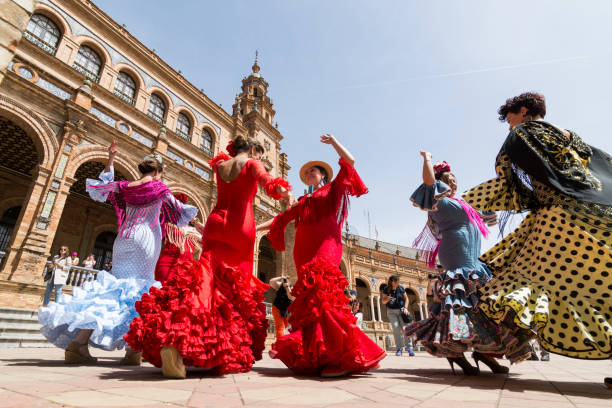
For travelers who also plan live flamenco, the two sound worlds should remain distinct. A tablao performance is not an acoustic afterlife of Cathedral polyphony, and sacred music should not be used as a decorative prelude to flamenco. The archive-to-performance flamenco sequence provides an alternative model for connecting evidence to living art without collapsing separate histories.
Private interpretation becomes materially useful at this point. The value is not privileged access to a performance that may not exist. It is the ability to hold several evidence types together in real time: to point from a case to an organ chronology, from a choir book to a ceremonial practice, from a chapel to an endowment, and from a grille to the gendered conditions of profession. A general monument narrative can identify the objects; a music-history specialist can explain why their relationships matter. Travelers arranging private Seville tours should ask specifically for expertise in liturgy, music history or early modern religious institutions rather than assuming every Cathedral visit covers these questions.
What sacred power sounded like
Seville’s Baroque soundscape was powerful because it made hierarchy recurrent. The chapter occupied ordered stalls; the daily Office disciplined time; exceptional polyphony graded solemnity; organs turned wind and mechanism into monumental projection; processions carried sound from one institutional focus to another; patrons secured remembrance by financing repetition; convent walls allowed women’s voices to be heard under conditions that restricted their bodies.
It was also powerful because it could absorb older music. Francisco Guerrero’s sixteenth-century repertory remained useful in a seventeenth-century ceremonial world. Newer multi-choir works did not erase chant or improvisation. The Cathedral’s authority came partly from presenting continuity and innovation as parts of one order. The past could sound present because the institution kept copying, teaching and assigning it.
Yet this power was never effortless. Economic crisis reduced personnel. Musical offices were difficult to fill. Instruments required replacement. Repertory disappeared when it ceased to serve living needs. Convents negotiated the value of skilled entrants. The soundscape depended on bodies that aged, money that lost value, paper that wore out and administrators who decided what deserved renewal.
That vulnerability is the interpretive payoff. Baroque magnificence becomes more convincing, not less, when its infrastructure is visible. The organ case ceases to be a symbol of generalized grandeur and becomes the façade of a maintained machine. The choir stalls cease to be carved décor and become the seating plan of an institution. The convent grille ceases to be atmospheric and becomes a regulator of audibility and access. The score ceases to be silent genius and becomes one instruction within a negotiated event.
A serious visit therefore does not require a concert. It requires disciplined attention to relationships that remain visible when the musicians are absent. That is the moment when specialist interpretation changes the experience: one no longer enters “another ornate church,” but a former and continuing field of coordinated voices, money, rules, bodies and memory. To shape a private reading around those connections, Inquire now. When the building is quiet, which form of power are you still able to hear?
If you’re interested in any private tours of Seville, please reach out to us.





 So if you are looking for the absolute best in Seville & surroundings with authentic local fully-licensed native guides whose English you can actually understand and with an exclusive and amazingly fun itinerary