Itálica Before Lebrija: A Seville Day Through Roman Mosaics and Their Afterlives

Updated
What does Itálica teach that a palace floor cannot?
What changes when you look at Roman mosaics in the excavated houses of Itálica before you encounter them underfoot in the Palacio de la Condesa de Lebrija? The answer is not simply that one setting is ancient and the other is modern. It depends on whether you notice the street outside a house, the sequence of thresholds within it, the angle from which a patterned floor was first seen, the rooms that remain unexcavated, and the twentieth-century decisions that later turned displaced pavements into the organizing fabric of a Sevillian palace.
This is why the order matters for a collector or decorative-arts traveler. Itálica, beside Santiponce northwest of Seville, supplies the grammar: urban block, entrance, peristyle, circulation route, reception room, more restricted chamber, pavement border and central image. The Lebrija palace then becomes a study in what happens when Roman material is acquired, extracted, restored, reframed and made to converse with a sixteenth-century house, Sevillian tilework, transferred architectural elements and the taste of an early twentieth-century collector. Reversing the sequence is possible, but it changes the question. You begin with display and must reconstruct context afterward rather than seeing context before display.
The day therefore asks for two different kinds of attention. At Itálica, the task is archaeological: how much of a building is known, how firmly can a room be identified, and what does the pavement contribute to a hierarchy of spaces? At Lebrija, the task is historical and museological: what can acquisition records establish, what remains disputed, and what belongs to the modern installation rather than to the Roman room? The most responsible version of the route keeps those categories separate without making the palace feel secondary. Its power lies precisely in being a later act of authorship.
Travelers still deciding whether Itálica belongs in the day at all should first compare Itálica with Carmona by archaeological scale and day length. This article assumes the Roman site has already won that choice and focuses on a narrower problem: how to pair it with Lebrija without treating every palace mosaic as if it had been found in a securely documented room at Itálica.
Make the two buildings the day’s only fixed commitments
The route works best when Itálica and the Palacio de la Condesa de Lebrija are the only non-negotiable visits. That sounds restrained for a full day, yet each anchor asks the visitor to switch interpretive systems. The morning is outdoors and spatial. The afternoon is indoors and archival. Between them sits a road transfer, a change from Santiponce’s archaeological landscape to central Seville, and enough time for lunch without letting lunch become the event that compresses the palace into its final admission window.
For the cooler-season schedule verified for 21 September through 31 March, the official Itálica visitor information lists Tuesday through Saturday opening from 09:00 to 18:00, with Sundays and public holidays from 09:00 to 15:00 and ordinary Mondays closed. It also distinguishes individual visitors, who do not require a reservation, from groups of ten or more, which do. Those are operational facts, not a promise that every house, mosaic or path will be exposed exactly as expected: conservation, weather and site management can alter what is visible. Confirm the current page before the visit, especially outside the cited seasonal window.
The palace publishes a later opening hour, so the natural order is not manufactured for narrative convenience. Itálica can begin at or soon after 09:00; Lebrija opens at 10:00 and normally remains available into the afternoon. Site-first sequencing uses the hours when the archaeological ground is often easiest to read and leaves the sheltered interior for later. It also prevents the palace from planting a misleading expectation that Roman mosaics were conceived as a continuous decorative carpet across a noble house of the kind visible today.
A sensible working envelope is roughly two to two and a half hours at Itálica, a transfer allowance that is longer than the pure driving time, and at least seventy-five to ninety minutes for a mosaic-led palace visit. These are editorial planning ranges, not official durations. A specialist who wants to inspect borders, repairs, orientation and documentary uncertainty may use more. The schedule should flex by cutting optional layers, not by accelerating the two anchors until they become photo stops.
At Itálica, begin with the house before the image
Streets and thresholds are evidence
Itálica’s mosaics become more intelligible when the visit starts one scale larger than the tessera. The visible sector of the city preserves broad, orthogonally arranged streets and substantial plots associated with the Hadrianic expansion usually called the Nova Urbs. That urban framework matters because a pavement was commissioned for a location within a building, and the building occupied a position within a planned neighborhood. Before identifying birds, planets or mythological protagonists, look at the width of the street, the relation between façade and entrance, and the distance from the doorway to the principal courtyard.
Then follow the sequence of access. A Roman house did not reveal every room equally. The approach could control who saw a central image, whether a visitor received a long axial view, and whether a chamber was reached directly from a peristyle or through a smaller passage. Mosaic design participates in that choreography. A border may mark a threshold; a central panel may be oriented toward an entrance; a U-shaped arrangement may accommodate dining couches; a geometric field may sustain movement rather than demand a fixed viewpoint. These are interpretive possibilities to test against the surviving plan, not labels to apply automatically.
That distinction is especially important at Itálica because the impressive houses can tempt visitors to imagine complete biographies for unnamed owners. Scale, imported or costly materials, technically ambitious pavements and privileged urban positions support an argument for affluent patronage. They do not normally reveal the patron’s identity. A good guide should be able to say, in effect, “this house expresses elite resources and social display” without inventing the family that paid for it.
Use the House of the Birds and the Planetarium as contrasting lessons
The House of the Birds offers a strong first exercise because its plan allows the pavement to be read as one component of a residence organized around a peristyle. The mosaic that gives the house its modern name arranges numerous bird species around a central area that is largely lost. The immediate temptation is iconographic—identify the birds, admire naturalistic variety, discuss the appeal of cataloguing the living world. The more useful first question is architectural: from which doorway did the composition become legible, and how did that view relate to the room’s position around the courtyard?
Do not force a precise room function when the physical evidence does not require one. “Reception space,” “dining room” and “private chamber” can sound authoritative while concealing the degree of inference. Instead, rank what you know. The pavement belongs to a defined room in a known house plan. Its orientation can be compared with the access. Its expense and imagery participate in domestic display. The exact social use of the room may remain open. This graded language is more informative than a confident but brittle label.
The Planetarium mosaic prompts a different reading. Its named figures associate the seven planetary divinities with the days of the week: Saturn, the Sun, the Moon, Mars, Mercury, Jupiter and Venus. Here the central attraction is a compact intellectual program, but the same discipline applies. First locate the mosaic within its building and ask how a viewer entered the space. Then consider the pattern as a system of ordered time, divine personification and learned recognition. Only after that should the visitor dwell on individual faces or attributes. The sequence protects the work from becoming a detached emblem reproduced on a postcard.
Taken together, the two houses show why “Roman mosaic” is not a single decorative category. One pavement can build abundance through a field of species; another can organize cosmic and calendrical knowledge through a geometric scheme. Their effects depend on scale, approach and room. The collector’s gain is not merely a larger list of motifs. It is a sharper sense of how a floor could structure attention.
The House of Hylas is the caution against false certainty
The Hylas pavement is the day’s most useful check on overconfident reconstruction. The myth concerns Hylas, companion of Heracles, drawn away by water nymphs. Yet the scholarly value of the example lies as much in the room as in the scene. The study of the Itálica Hylas mosaic places the pavement in a room on the north side of the house, approached through a small passage rather than opening directly from the peristyle. That access pattern supports discussion of a more restricted chamber, but it does not convert hypothesis into certainty.
The house was not completely excavated, and published reconstructions have had to address uncertainties in entrance, orientation and the broader arrangement of rooms. That incomplete state is not an inconvenience to be brushed aside. It is part of the evidence. A surviving mosaic can be richly legible while the building around it remains partially known. When a plan is restored on paper, the drawn line may represent a wall found in excavation, a plausible continuation, or a proposed symmetry. Those are different levels of knowledge.
For the Lebrija visit later, remember this Hylas lesson: a named myth does not guarantee a fully recovered architectural context. Even at the excavation site, where walls and pavements appear together, certainty varies by room. Once a mosaic has been lifted, dispersed or reinstalled, the burden of proof grows. “From Itálica” may establish a site-level origin while leaving the exact house, room, orientation or discovery circumstances less secure.
Do not assume every rich pavement belonged to a conventional house
The building associated with the Neptune mosaic is a useful complication. Its thermal installations and scale have encouraged interpretations beyond an ordinary private residence, including semi-public or associative use. The point for this itinerary is not to settle that debate in a few minutes. It is to notice that a spectacular floor does not identify the building type by itself. Water imagery in a bathing context may be strongly suggestive, yet architecture, hydraulic systems, circulation and excavation history must work together.
This is also where patronage becomes more nuanced. Private wealth, civic ambition, corporate association and social hospitality could overlap in Roman urban buildings. A collector looking only at technique or iconography can miss the institutional question: who controlled the space, who was admitted, and what behavior did the room support? Itálica is valuable because those questions can still be asked against walls, drains, courtyards and streets rather than against an isolated panel alone.
Carry a field method, not a list of famous pavements
Before leaving Santiponce, reduce the morning to a repeatable five-part record. This is more useful at Lebrija than trying to memorize every mythological name.
- Findspot: Is the pavement still where it was excavated, or are you looking at a gap, a replacement, a protected surface or a displaced panel? Use “in situ” only when the relationship is clear.
- Plan: Which walls, doorways and adjacent spaces are physically attested? Which parts of the plan are reconstructed or unexcavated?
- Approach: From where would an ancient viewer have entered, and is the image or pattern oriented toward that point?
- Use: Does the pavement itself suggest furniture placement, circulation or a focal zone? Treat room names as arguments with evidence, not as captions immune to revision.
- Patronage: What can scale, material and workmanship reveal about resources and social display, and what remains unknown about the commissioner?
This method changes the quality of observation. A photograph tends to flatten a floor into a rectangle. Standing in the house restores sequence: threshold, border, field, emblem, wall, adjoining room. It also clarifies what has been lost. A missing central panel is not just an absence; it changes the visual hierarchy of the room. A protective covering may be disappointing on the day, but it is also evidence that archaeological display is contingent and conservation-led.
Use a simple vocabulary of confidence. “Documented” should mean supported by excavation or records. “Probable” should mean the interpretation fits several kinds of evidence. “Possible” should remain a live option among others. “Modern” should identify restoration, reconstruction or reinstallation rather than imply falsity. This vocabulary is particularly valuable for couples or small groups in which one traveler cares most about design and another about history: it gives both a shared way to distinguish visual response from provenance claim.
It also prevents a familiar error at Lebrija. When an ancient mosaic fits a current room beautifully, the fit can feel like proof of original purpose. It is not. Modern installation can be highly intelligent, aesthetically persuasive and historically important while still being modern. The palace deserves to be understood on those terms, not praised by pretending it is a surviving Roman residence.
The Santiponce–central Seville transfer has an interpretive cost
The road between Itálica and central Seville is short enough to encourage optimistic scheduling and variable enough to punish it. The official M-170A timetable valid from 1 September 2026 connects Plaza de Armas with Itálica. Its route diagrams allocate approximately twenty-six minutes outbound and thirty-five minutes inbound, while explicitly warning that times are approximate and subject to traffic. The timetable also varies by weekday, Saturday, Sunday and public holiday, with some express services making only marked stops.
Those diagram totals are not the full transition. Add the wait for the chosen departure, the walk within or from Plaza de Armas, and the final movement to Calle Cuna. Add a margin for the cognitive shift as well. Moving directly from an exposed archaeological site into a densely furnished palace can produce visual saturation. A quiet lunch or a short pause with notes is not wasted time if it lets the group identify what it is carrying forward: room orientation, degrees of certainty and the difference between original context and later display.
Public transport is entirely workable for an independent visitor who is comfortable building the afternoon around a fixed return service. Its cost is reduced control. Missing a bus does not merely delay arrival; it can force the palace visit toward the last admission period. A prearranged vehicle is materially useful when the group wants to remain longer at a house whose pavement is exposed, when mobility makes terminal transfers inefficient, or when a guide is maintaining one continuous interpretive thread across both sites. The advantage is coordination, not ceremony.
This is the point at which private service becomes relevant for the intended collector audience. The value is not a polished pickup by itself. It is the ability to confirm both access windows, decide in real time whether an additional house at Itálica is worth the minutes it consumes, carry maps or notes through the transfer, and arrive at Lebrija with enough margin to examine the ground floor rather than simply enter before closing. Expertise and movement solve the same problem only when they are planned together.
At Lebrija, read the collector’s decisions as a second history
The palace is a modern setting for ancient material
The Palacio de la Condesa de Lebrija is a historic Sevillian house, not an archaeological reconstruction of a Roman domus. Its own history of the palace states that Regla Manjón Mergelina, Countess of Lebrija, bought the property in 1901 and restored it over thirteen years. It describes her acquisition of Roman mosaics and archaeological objects from multiple periods and cultures, as well as the incorporation of transferred architectural decoration, including Sevillian tiles from a ruined convent and a coffered ceiling from a palace in Marchena.
That mixture is central to the visit. The ground floor presents antiquity through the eye of a collector who was also shaping a residence. Ancient pavements, Renaissance and later architecture, reused tilework, sculpture, furniture and family history coexist. The installation is therefore evidence of at least two moments: Roman production and twentieth-century collecting. In some rooms there are additional moments—extraction, restoration, adaptation to a new perimeter, and subsequent conservation.
Rather than asking whether the palace is “authentic,” ask which history is authentic at each layer. The tesserae can be ancient. The assemblage can be a documented expression of Regla Manjón’s taste and archaeological commitments. The room can belong to an earlier Sevillian house altered over centuries. The relationship among those elements can be modern. All can be historically significant without being contemporaneous.
This makes Lebrija more than a decorative coda to the morning. It is a case study in how private collecting transformed the afterlife of archaeological material in Seville. For a broader treatment of the city’s aristocratic interiors, use Lebrija’s place within a focused Seville palace sequence. On this day, however, resist comparing façades, staircases and salons for their own sake. The palace is here because its floors test what Itálica taught.
Los amores de Zeus needs an archival label, not a legend
The large pavement generally known as Los amores de Zeus is the pivotal object because it binds Itálica, extraction history, ownership, scholarship and palace display. A simple caption might call it an Itálica mosaic acquired by the countess and installed in her house. That is a useful starting point, but it does not convey how contested the narrative around its 1914 discovery, removal and disposition became.
The archival study of Rodrigo Amador de los Ríos, Itálica and the Countess of Lebrija revisits an accepted story of institutional conflict. It identifies three important mosaics in the episode, discusses illicit excavation, official orders, extraction and allocation, and argues from correspondence that Amador de los Ríos did not simply denounce the countess or oppose her acquisition in the way later accounts sometimes claimed. The authors report a substantial body of letters between him and Regla Manjón and use that documentary record to reconstruct a more complicated relationship.
The visitor does not need to adjudicate every archival dispute in the palace. The practical lesson is that provenance is not a single line reading “Itálica, 1914.” It is a chain of questions: who found the work, under what authority, who controlled extraction, how ownership was established, what restoration followed, when the piece entered the palace, and how later historians narrated those events. Different documents may answer different links in that chain.
This is also why the article’s route avoids saying that every Roman floor in Lebrija comes from a securely identified Itálica room. Some objects have stronger site associations than room-level contexts. Some stories have been repeated more confidently than the surviving documentation warrants. The responsible pleasure of the visit comes from holding visual conviction and documentary caution together. A mosaic can be magnificent even when the exact original setting remains partly unrecoverable.
Reinstallation changes what the eye thinks it knows
At Itálica, you asked how the doorway, walls and pavement worked together. At Lebrija, ask who made them work together now. Start at the current threshold. Does the principal image face the way you naturally enter? Does the border terminate neatly against present walls? Are there changes in tessera size, mortar, level or pattern that might indicate restoration or adjustment? Do not announce an intervention unless documentation or a specialist confirms it; use the visual question to identify what deserves explanation.
Next, separate three forms of fit. Physical fit concerns whether the surviving pavement occupies the room’s dimensions. Visual fit concerns color, symmetry and the relationship to surrounding architecture. Historical fit concerns whether evidence links the mosaic to an original ancient room of comparable function. A reinstalled work can achieve the first two brilliantly while the third remains unknown. Confusing these categories is how a persuasive palace arrangement becomes an invented Roman interior.
Then consider the collector’s composition. Regla Manjón did not place mosaics in a neutral white gallery. She used floors to structure movement through a house rich in other historical materials. That choice changes viewing distance and bodily behavior: visitors traverse or skirt pavements, experience them beneath columns and arches, and encounter one room after another as a sequence. The installation restores something a wall-mounted fragment loses—the sense that mosaics belong to architecture—even as it creates a new architecture around them.
For decorative-arts collectors, this is the most fertile comparison of the day. Itálica demonstrates that a floor’s meaning depends on an original building plan, however incomplete our knowledge of that plan may be. Lebrija demonstrates that a later patron can create a powerful secondary setting that becomes historically important in its own right. The two sites should not be collapsed into a before-and-after story of loss. They are two different archives: one in soil and masonry, the other in objects, rooms and collecting records.
Choose the palace format that serves the mosaics
The palace’s published visitor information should be checked close to the date. Its official visit page states daily opening from 10:00 to 18:00 for September through June, a shorter summer day in July and August, and a final admission forty-five minutes before closing. The current visit page contains inconsistent summer closing references—14:30 in one block and 15:00 in another—so summer travelers should confirm directly rather than build a transfer around the later time. It also advertises a capacity-limited free Friday visit at 10:00 for the ground floor, without reservations and without groups.
For this itinerary, the ground floor is the essential layer because that is where the mosaic argument is concentrated. A fuller house visit may add upper rooms, family collections and the lived history of the residence, but it should not be allowed to displace the core comparison. Confirm what the selected admission includes and whether any upper-floor component is timed or guided. Commercial formats can change, and a generic reference to “visiting the palace” is not precise enough when one part of the building matters much more to the day’s purpose.
The Friday free period is not automatically the best choice. Limited capacity can introduce a queue, and a fixed 10:00 start conflicts with the site-first logic unless Itálica is moved to another day. A collector who has traveled specifically for the mosaics usually gains more from a confirmed afternoon entry with adequate time than from reorganizing the sequence around free admission. Price is not the only cost; lost context is one too.
Ask in advance about photography restrictions, group size, language and the degree of interpretation included. Those details affect how closely a visitor can compare maps, notes and individual pavements. Do not assume that a general house commentary will address excavation history or contested provenance at specialist depth. Bringing a prepared interpretive framework—whether independently or with an expert guide—keeps the mosaic questions visible within a collection that can otherwise pull attention in many directions.
A day plan that leaves room for evidence
The following structure is deliberately elastic. It uses verified opening patterns and the published transport diagram, but it does not claim a tested door-to-door journey or guarantee current exposure of individual mosaics.
- 08:30–09:00, depart central Seville: Leave early enough to be at Itálica near opening. By public transport, work backward from a specific M-170A departure at Plaza de Armas and note the day-of-week table. By private vehicle, preserve a traffic margin rather than treating the map estimate as an appointment.
- 09:00–09:25, establish the urban frame: Begin with the street grid, plot scale and one complete approach from street to peristyle. Delay close iconographic discussion until the group can describe how a house is entered.
- 09:25–10:30, compare two domestic programs: Use the House of the Birds and the Planetarium, or the best currently exposed equivalents, to compare room position, orientation, border and central subject. Record what is physically visible and what depends on a plan or reconstruction.
- 10:30–11:15, add the uncertainty case: Use the House of Hylas scholarship, or another incompletely known building, to make uncertainty explicit. If the relevant area is inaccessible, discuss the published plan rather than implying that you saw more than was available.
- 11:15–11:45, one optional layer: Choose either the Neptune building for the private-versus-semi-public question or the amphitheater for urban scale. Do not do both merely because they are famous. The mosaics, not monument counting, govern the morning.
- 11:45–13:30, return and pause: The exact window depends on transport. Keep lunch geographically simple and avoid a reservation so tight that a late bus or road congestion erases the palace margin. Use ten minutes to label notes as documented, probable, possible or modern.
- 14:00–15:30, Lebrija ground floor: Start with the house’s collecting history, then examine the principal mosaics through the five-part field method. Save the Los amores de Zeus archival issue until the group has first observed how the palace installation shapes the encounter.
- 15:30 onward, stop or add one low-demand continuation: A walk through central Seville is enough. Another major palace weakens rather than strengthens the comparison. A prebooked evening performance can follow later, but it should be treated as a separate cultural chapter, not as a third proof in the mosaic argument.
On a three-day stay, this specialist day works best when the Alcázar and cathedral are not competing for the same morning. Place the mosaic sequence inside a balanced three-day Seville plan so that the city’s headline monuments retain their own pace and Itálica is not reduced to an add-on after a long palace visit.
Use a shorter branch when conditions narrow the morning
A reduced version can still preserve the argument. Keep one house with a legible plan, one pavement with a clear visual program, and one example of uncertainty. In practice, that may mean the House of the Birds, the Planetarium and a concise Hylas discussion using the published plan. Omit the amphitheater unless someone in the group considers it indispensable. Its scale is impressive, but it does not answer the day’s central question as directly as a domestic threshold does.
The shorter branch is appropriate when heat, rain, walking tolerance, a late start or partial site access makes the full circuit unrealistic. It is not permission to rush. Spend less time crossing the site and more time tracing a single sequence accurately. For mobility-specific planning, review an Itálica route built around shared access and terrain constraints before committing the group to the house circuit described here.
At the palace, shorten by declining the upper-floor layer rather than by skimming every ground-floor mosaic. Select two: one that can be discussed through iconography and one that raises a provenance or installation question. The objective is comparative depth. A visitor who can articulate why the current room is not the original Roman context has learned more than one who has photographed every floor without distinguishing ancient scheme from modern setting.
When the sequence has to reverse
Ordinary Monday closure at Itálica is the obvious failure point. The correct response is usually not to force a same-day substitute and declare the itinerary complete. Visit Lebrija as a collecting-history study, then schedule Itálica for another morning. Without the site, the palace remains worthwhile, but the central comparison is unfinished.
A same-day reversal can make sense if Itálica has a temporary later opening, if morning conditions make the exposed site unsuitable but improve later, or if a confirmed palace appointment cannot move. In that case, state openly that the method has changed. At Lebrija, begin by separating ancient object, modern installation and claimed provenance. Write down three predictions about the original context: likely viewing axis, degree of room access and whether the border suggests furniture or circulation. At Itálica later, test those predictions against houses where walls and thresholds survive. The reversal becomes an experiment rather than a compromised imitation of the preferred order.
Do not reverse simply because the palace is closer to the hotel or because an early interior feels comfortable. Convenience alone creates a hidden cost: the group meets ancient material through the collector’s frame before learning how much architectural evidence can survive at a site. For a general visitor that may be acceptable. For the decorative-arts collector described in this brief, sequence is part of the content.
Weather can also require a harder decision. Rain may make paving and uneven ground less legible or less comfortable; intense sun can shorten sustained observation on exposed paths. If the site visit becomes a dash between shelters, separate the anchors across two days rather than pretending that physical presence equals archaeological reading. The day succeeds through attention, not through checking both names.
Use two anchors, then stop
The stopping point is concrete even though the scholarship is not: complete one archaeological anchor and one collecting anchor. At Itálica, the archaeological anchor should be a house whose plan, access and pavement can be discussed together. At Lebrija, the collecting anchor should be a mosaic whose current installation and documentary history can be separated. Once both are secure, additional monuments are optional and should face a high bar.
This protects the afternoon from a common form of dilution. Casa de Pilatos, Las Dueñas or the Alcázar may be nearby in itinerary terms, but adding another palace encourages a generic comparison of patios, tiles and noble interiors. That is a different article and a different day. The distinguishing value here lies in moving from excavation context to collecting context while the morning’s spatial memory is still fresh.
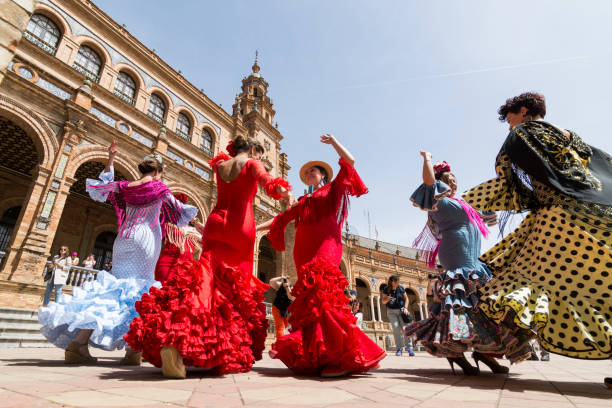
It also keeps the evening from inheriting the afternoon’s overload. The supporting cultural choices in central Seville—Teatro Flamenco Triana, Museo del Baile Flamenco and Casa de la Memoria among them—operate on their own schedules and offer different relationships between performance, interpretation and sightlines. Add one only when it has been selected for an independent reason and there is a substantial break after the palace. Do not describe flamenco as an atmospheric reward for having completed an archaeology syllabus. It deserves a separate frame.
For some collectors, the correct ending is simply to return to the hotel with plans, photographs where permitted, and one unresolved provenance question to research. That unresolved question is not a failure of the day. It is evidence that the visitor has stopped treating a mosaic as a self-contained image and begun to ask what kind of knowledge survives around it.
Decision recap for collectors
Choose Itálica before Lebrija when the objective is to understand Roman mosaics as architecture rather than as portable pictures. The morning should establish street, house, threshold, room and viewing direction. The House of the Birds and Planetarium can demonstrate contrasting decorative programs; the Hylas scholarship should introduce uncertainty; the Neptune building can complicate the assumption that every grand pavement belonged to a standard private residence. The site is most valuable when it teaches how to rank evidence.
Use the transfer as a real planning constraint. The M-170A provides a viable public connection, but its published minutes are approximate and do not include waiting, walking or the final approach to Calle Cuna. A coordinated private route becomes worthwhile when the group needs confirmed access, continuous specialist interpretation, mobility-aware movement or the freedom to adjust the site circuit without endangering the palace visit. This is the natural point to consider a tailor-made private Seville tour built around archaeological and collecting context.
At Lebrija, change the governing question. Do not ask only what the mosaic depicts. Ask how it reached the palace, which links in the provenance chain are documented, what remains debated, how restoration and reinstallation shape perception, and how Regla Manjón’s collecting created a historically meaningful new setting. Treat Los amores de Zeus as both a Roman work and an archival problem. Do not extend a secure site-level origin into an invented room-level certainty.
Keep the day to those two anchors. If site conditions, closure or a late transfer remove the time needed for careful palace study, split the visits rather than compress them. The reward is a rare kind of continuity: not the fiction of seeing Rome unchanged, but the ability to follow a pavement from domestic design and archaeological evidence into collecting, dispute and renewed architectural life. When those layers need to be interpreted across Santiponce and central Seville within confirmed access windows, Inquire now
If you’re interested in any private tours of Seville, please reach out to us.





 So if you are looking for the absolute best in Seville & surroundings with authentic local fully-licensed native guides whose English you can actually understand and with an exclusive and amazingly fun itinerary













