How to Plan a Private Seville Day: Alcázar, Cathedral, Santa Cruz and Triana Without Midday Burnout

Updated
Start with the order that actually works
The best private Seville day for first-time visitors runs Real Alcázar first, Cathedral and Giralda second, Santa Cruz as the shaded lunch-and-slower-walk middle, and Triana only later in the day. That order wins because Puerta de Jerez is the hinge between the palace side of the center, the Cathedral precinct, and the river; use that hinge well and Seville feels composed, use it badly and the same monuments feel hotter, longer, and oddly more rushed. The exception is simple: if your real priority is a long Triana lunch, ceramics browsing, or a riverfront social afternoon, do not pretend you are also planning the ideal icons day. Split the goals, or cut one of the monuments.
That is the central Seville thesis: this city rewards compression around Puerta de Jerez and punishes decorative wandering before lunch. First-timers often assume that the Cathedral, Santa Cruz, the Alcázar, and Triana are all close enough to improvise because the map looks compact. The map is not the problem. The problem is how queue drag, reflective paving, the Giralda climb, old-town stop-start walking, and one unnecessary river crossing combine into a day that feels twice as long by 4:00 p.m.
For travelers who prefer a private, tailor-made day rather than a monument marathon, the goal is not to “fit” Seville. It is to protect attention for the places that deserve it and leave the city with enough appetite for the evening. That is exactly why a tailor-made Seville day tends to outperform a generic checklist here: Seville is less about distance than about sequence, and sequence is where comfort is won or lost.
What is the best order for Alcázar, Cathedral, Santa Cruz and Triana in one day?
The best order is Alcázar, then Cathedral and Giralda, then Santa Cruz for lunch and a gentler middle stretch, then Triana once the monument pressure is over. In practice, this means using your freshest hours for the most controlled interior visits, keeping the Giralda climb before the day is heavy, and turning Santa Cruz into a recovery zone rather than another thing to conquer.
Think of the route as a small matrix of effort, exposure, and payoff rather than a sightseeing list. The palace and Cathedral belong to the same morning orbit around Plaza del Triunfo and Puerta de Jerez. Santa Cruz absorbs lunch, shade, and slower curiosity without demanding another major ticketed commitment. Triana works best when crossing the river no longer threatens the rest of the day.
Route-order matrix
- 1. Real Alcázar first: best for attention, coolest decision-making, and the least wasted queue anxiety.
- 2. Cathedral and Giralda second: best for keeping the climb purposeful instead of punitive.
- 3. Santa Cruz third: best for lunch, shade, and a slower middle when the old town should feel textured rather than demanding.
- 4. Triana fourth: best for river energy, food, ceramics, and a strong finish once the must-see pressure is gone.
Even when ticket times force a slight variation, keep the same logic rather than inventing a new day. If the Cathedral reservation lands first, move directly from Cathedral to Alcázar and keep Santa Cruz and Triana later. If the Giralda climb is off the table, the route still wants the two major monuments grouped together before lunch. The rule is not about rigidity for its own sake. It is about avoiding a broken middle, because once Seville splits into two unfinished monument blocks with a river crossing in between, the day almost always feels longer than it needed to.
The popular Seville sequence that becomes a mistake once heat matters
The popular mistake is Cathedral first, a loose Santa Cruz wander second, lunch whenever you happen to get hungry, Alcázar later, and Triana “if there is still time.” It sounds reasonable because the Cathedral feels like the obvious headline stop and Santa Cruz seems adjacent and photogenic. In reality, that order spends your best energy on exposed approach walking and unscripted meandering, leaves the palace for the more tiring part of the day, and turns Triana into an obligation instead of a pleasure.
The second common error is starting in Santa Cruz because it looks charming on paper. Santa Cruz is lovely, but it is not where your coolest, clearest hours earn the highest return. Those lanes are for deceleration, lunch, and conversation after you have already done the two structured visits. Use the morning there, and you burn prime time on low-stakes decisions: which lane, which courtyard, which shop, whether to stop, whether to keep moving. By the time you finally reach the monument entrances, Seville has already spent more of you than you expected.
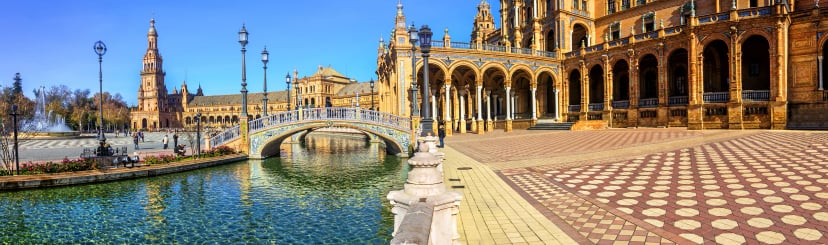
If the day starts to feel overpacked, cut the extra add-on before you cut the middle pause. That often means dropping a bonus detour such as Plaza de España, or shrinking Triana to one focused stretch instead of a full neighborhood deep dive. The worst fix is to “save time” by skipping lunch or rushing Santa Cruz. In Seville, hunger and heat compound each other faster than most first-timers predict.
There is one more version of the mistake worth naming clearly: the “we will just pop back to the hotel for a rest” version. Unless your hotel is right around Puerta de Jerez, Arenal, or the Santa Cruz edge, the midday reset often costs more than it restores because it adds another transfer, another re-entry decision, and another moment where the day can lose momentum. In Seville, a well-chosen long lunch is usually a better reset than a badly timed hotel detour.
Start with the Real Alcázar while your attention is still fresh
The Real Alcázar belongs first because it rewards alertness, not endurance. This is the visit where details matter, where your guide can connect rooms, patios, and gardens before the city is noisy in your head, and where a well-handled timed entry prevents the morning from dissolving into ticket stress. If you are booking independently, use the official Alcázar visit page (https://alcazarsevilla.org/prepara-la-visita/) as your reference point for current access details rather than trusting copied summaries elsewhere.
There is also a route reason that matters just as much as the monument reason. Starting at the Alcázar keeps you on the south-eastern side of the old center, close to Puerta de Jerez and close to the Cathedral follow-up without forcing a big reset. Exit logic matters in Seville. Coming out near Patio de Banderas or the palace edge leaves you in position to move a short distance to Plaza del Triunfo and the Cathedral orbit while your day still feels compact. For travelers who want this visit interpreted rather than merely ticked, Real Alcázar private touring is the natural anchor.
This is also where an honest traveler-fit correction belongs. If gardens and palace texture are not actually a priority for you, or if young children in your party only have patience for one major ticketed monument, then the Alcázar should still go first but perhaps not in full. A shorter, well-framed palace visit beats the common mistake of forcing the full visit after lunch, when even beautiful courtyards begin to feel like one more thing to finish.
Put the Cathedral and Giralda second, not last
The Cathedral and Giralda work best immediately after the Alcázar because the two major visits then share one concentration block rather than splitting your day into fragments. This is not about doing things fast. It is about keeping the hardest structured decisions in one window while you are still mentally generous. Once lunch happens, Seville’s appeal shifts toward drifting, sitting, and social rhythm. That is exactly why the Giralda is rarely a good late-afternoon idea for comfort-first travelers.
The official Cathedral schedules page notes that cultural visits begin at the Giralda access control, which is a useful clue when you are building the day rather than a minor operational footnote. Check the Cathedral’s official schedules page (https://www.catedraldesevilla.es/en/cultural-visit/schedules-and-rates/) before you go, but the planning lesson is evergreen: this is a timed, energy-sensitive stop, and it is cleaner when approached from the palace side before lunch than when squeezed in after Santa Cruz wandering or a river detour. If the Cathedral is a centerpiece for your day, Seville Cathedral private touring makes the most sense when paired directly with the palace half.
The tougher judgment is this: if you are wavering about the Giralda climb, skip the climb before you sacrifice the whole rhythm of the day. Not every traveler needs every ascent. Celebration travelers in dress shoes, multi-generational groups, and anyone already carrying heat fatigue often gain more from finishing the Cathedral well and arriving at lunch intact than from forcing a climb they will barely enjoy. The wrong decision is not skipping the climb; the wrong decision is keeping the climb and then dragging the rest of the day behind it.
Use Santa Cruz as the middle of the day, not as the headline act
Santa Cruz should be the softer middle of the day because that is when its narrow lanes, shady pockets, and small pauses do their best work. After two major monuments, travelers need a stretch of Seville that asks less and gives more. This is where lunch belongs, where you can choose a table instead of a queue, and where the city starts feeling lived in rather than managed. The quarter is not a box to tick. It is the buffer that keeps the day from breaking.
Using Santa Cruz this way also solves a pacing problem that first-timers often misread. The district looks close to everything, but walking it is slow in a way that is hard to quantify in advance. Lanes narrow, traffic pauses, photos happen, shop windows catch attention, and the route you thought would take ten minutes becomes twenty-five. That slowness is a problem in the morning when you still need to make timed entries. It becomes an asset once the must-do visits are behind you. If you want the neighborhood interpreted without turning it into another forced march, Santa Cruz private touring belongs in this middle slot.
Santa Cruz is also where lunch materially improves the day, not just aesthetically but physically. A seated meal here protects the river crossing later, stabilizes kids and older travelers, and gives couples and celebration parties a chance to enjoy the city without checking the clock every few minutes. A quick standing snack rarely gives the same return. Seville punishes under-lunching more than over-lunching if you are still planning to cross to Triana afterward.
Cross to Triana only when the river helps the mood instead of fighting the plan
Triana belongs later because the river crossing is not just a line on the map; it is a mental and physical reset. Once you cross, the day changes character. You are no longer in the compact monument circuit around Plaza del Triunfo, Calle Santo Tomás, and Puerta de Jerez. You are choosing a neighborhood afternoon or evening atmosphere. That is excellent when the heavy lifting is done. It is wasteful when you still owe yourself the Giralda climb or a serious palace visit.
The bridge choice itself has consequences. If your Triana goal is Altozano, Mercado de Triana, or the heart of the quarter, Puente de Isabel II lands more cleanly. If your plan includes an easier pickup, a smoother handoff to a car, or a finish that leans toward Plaza de Cuba and a cleaner exit, Puente de San Telmo can be the tidier option. Those are the kinds of small Seville realities that do not matter in a brochure and matter a great deal in a real day. Timing the Giralda climb and the Triana crossing badly multiplies sun exposure and can drain the evening before dinner even starts.
Triana is still worth including, but only when you are honest about why you are crossing. If you want ceramics, a different neighborhood texture, or a river-facing close to the day, then go deliberately and enjoy it. If you are crossing only because every first-trip list says you should, make Triana the first thing you cut. The quarter is far more satisfying as a strong last act than as a dutiful checkbox. When it is the point, Triana private touring helps keep the crossing purposeful rather than vague.
The later placement also improves what Triana feels like. Walk into the quarter too early and you are still mentally inside the monument checklist, glancing back toward the center and measuring whether you should already be somewhere else. Arrive later and Calle Betis, Altozano, or a stop near the market can feel like a reward instead of a compromise. That difference in mood is not decorative. It is the difference between ending the day in a neighborhood and ending it in transit.
What Seville does to the body by early afternoon
By early afternoon, Seville magnifies small mistakes in a very physical way. Stone underfoot reflects heat. Short distances feel longer because the old center is full of stop-start decision points. Queues do not just take time; they take posture, focus, and hydration. A climb that would feel satisfying at 11:00 can feel heavy at 3:30. A bridge that looks scenic on the map can feel like one walk too many when lunch was late or too light.
That is why “everything is close” is one of the least useful sentences in Seville planning. Yes, the icons are geographically close. No, they are not friction-free. Plaza del Triunfo can bottleneck. Avenida de la Constitución can feel more exposed than travelers expect. The passage from the monument core to a bridge approach can turn into an energy leak if you have already spent the day darting in and out of shade. Seville’s body cost is cumulative rather than dramatic, which is exactly why first-timers often miss it until it is too late.
The cleanest cut-first rule is this: protect the seated middle and cut the optional load around it. That may mean shortening Triana, skipping the Giralda climb, or refusing to bolt on Plaza de España simply because the car can reach it. What you should not cut first is the meal, the shaded drift through Santa Cruz, or the chance to sit before crossing the river. Those are not indulgences. They are the structural supports that keep the day usable.
Families and multi-generational groups feel this body cost even sooner because the city rarely exhausts everyone at the same speed. One traveler is ready for the Giralda, another needs shade, another wants a proper lunch, and another is still browsing every shopfront. Good private routing is what keeps those differences from becoming arguments. Bad routing turns normal variation inside the group into visible friction by mid-afternoon.
What Seville does to the mood by late afternoon
By late afternoon, Seville stops being a monument problem and becomes a mood problem. A well-sequenced day leaves travelers feeling as if the city has opened in layers: palace, Cathedral, neighborhood, river. A badly sequenced day leaves them feeling that Seville was all effort, all logistics, and somehow shorter than it should have been. This matters most for couples, celebration trips, and food-and-wine travelers who care about how the evening feels, not just how many sites they covered.
Seville also runs later than many visitors’ internal clocks, especially if they have arrived from northern Europe or North America. If you flatten yourself by mid-afternoon, dinner begins to feel like an assignment rather than a pleasure. That is why the best private day is not the one that squeezes the most walking out of the center. It is the one that leaves enough reserve for a pre-dinner rest, a civilized aperitif, or a proper late table without resentment.
This is the hidden reason the route order matters so much. The city can feel either elegant or punishing without changing a single attraction. What changes is whether the hardest block happens when curiosity is high and the easiest block happens when the body starts to bargain. Get that right, and Seville feels generous. Get it wrong, and even beautiful places start to blur into heat management.
There is a social consequence too. When Seville is routed well, the late afternoon feels expansive: you still have patience for a drink, for a conversation that runs long, for the extra ceramics stop, for deciding whether to linger on a terrace or head back to change. When Seville is routed badly, the smallest decision starts to feel irritating. That is why comfort-first planning is not softness. It is what allows the city’s famously relaxed evening rhythm to feel seductive rather than exhausting.
Pay more for one guide or one car at the hinge points, not for pointless rescue later
Premium spend is most worthwhile in Seville when it simplifies the hinge points of the day: one guide who can carry the thread from the Alcázar through the Cathedral into Santa Cruz, one driver who prevents a sloppy reset when you are done with the old center, one set of reservations that keeps lunch from becoming a search exercise. In other words, pay for continuity. That is where private touring changes the experience from a stitched-together outing into a composed day.
Premium spend does not help when the route itself is wrong. A more expensive car still does not save a badly sequenced walking day. It can shorten one exposed approach, and it can make the exit to Triana or dinner cleaner, but it cannot undo the decision to leave the Giralda climb for the hottest stretch or to cross the river twice because the plan was never properly edited. If you want the transport piece to earn its keep, chauffeured Seville touring makes sense as a bridge between day phases, not as a substitute for route discipline.
The strongest commercial judgment here is simple. If you are spending on only one upgrade, spend first on expert sequencing and only second on additional transport. In Seville, the guide who knows when to move, when to sit, and when to stop forcing one more sight usually earns more value than the extra vehicle hour. Once that logic is clear, the next step is also clear: if you want the palace, Cathedral, lunch, and Triana to feel like one elegant day instead of four competing errands, Inquire now.
The ideal spend pattern is therefore selective rather than maximal. Use one guide to hold the story together through the palace, Cathedral, and Santa Cruz, then use a car only when it truly prevents a clumsy transition, such as a pickup near Plaza de Cuba after Triana or a clean transfer toward dinner. That is a very different philosophy from throwing transport at every block of the day. Seville usually rewards fewer, better handoffs.
A private Seville day blueprint that stays realistic
The most realistic version of this day is built in blocks rather than minute-by-minute promises. Start with the Alcázar and treat it as the interpretive core. Move directly to the Cathedral and decide in advance whether the Giralda climb is essential for your party or simply nice to have. Let Santa Cruz absorb lunch and your slower middle stretch. Cross to Triana only when all that remains is enjoyment, browsing, or a softer neighborhood finish.
This blueprint works because it respects Seville’s actual transitions. It keeps the heavy visits in one compact monument orbit. It turns the old-town maze into a recovery tool instead of a time sink. It reserves the river crossing for the part of the day when changing districts feels liberating rather than annoying. Most important, it leaves the evening intact, which is the part many first-time travelers accidentally sacrifice in pursuit of daytime efficiency.
The route in practical blocks
- Block one: Real Alcázar with enough time to absorb it properly.
- Block two: Cathedral immediately after, with a pre-decided yes or no on the Giralda climb.
- Block three: Lunch and a slower Santa Cruz circuit with real sitting time.
- Block four: One deliberate crossing to Triana for neighborhood texture, ceramics, food, or a river close.
- Cut first if needed: the extra add-on, not the lunch block and not the post-monument pause.
For couples and celebration travelers, this blueprint has another advantage: it creates a day that still has shape even if lunch runs long or the conversation gets good. Because the big monuments are already done, an extra glass of wine in Santa Cruz or a slower finish in Triana does not break the logic of the day. For families and small groups, the same structure makes it easier to adjust without drama. You can shorten Triana, skip the climb, or head back earlier and still feel that the city made sense.
If you are trying to add Plaza de España, shopping, or a second museum-quality stop to this same day, the answer is usually no. Not because those things are unworthy, but because they pull against the logic that makes this particular route feel good. The day becomes memorable when it is edited hard enough to keep its shape.
If dinner matters, design the day backward from dinner energy
If dinner is part of why you came to Seville, route the day backward from how you want to feel at the table. That means not over-lunching, not over-crossing the city, and not arriving back at the hotel wrecked. Many visitors make the opposite mistake: they build the whole day around the monuments, then discover that the late reservation they were excited about now feels too far away, too formal, or too late for their energy level. A good Seville day should leave you ready for dinner, not proud that you survived until dinner.
That is also why Triana should usually be the last neighborhood move, not a middle complication. If you end the day west of the river with enough reserve, a drink, a riverside pause, or a clean pickup to dinner can feel natural. If you are planning a serious meal, review the menu and location early rather than treating dinner as an afterthought; abantalrestaurante.es/menu (https://abantalrestaurante.es/menu/) is a useful example of the kind of evening that rewards having protected your appetite. For broader restaurant planning, our Seville fine-dining guide helps you choose the table before you overbuild the daytime route.
The bottom line is not that every Seville day should end in a tasting menu. It is that the city’s evening reward is part of the day’s value. If your afternoon design destroys that reward, the route was not actually successful, no matter how many landmarks you managed to include.
Hotel location affects this more than many travelers expect. If you are staying near the Cathedral or around Puerta de Jerez, you can often finish the day without another complicated transfer. If you are farther out, treat the journey back as part of the design and not as an afterthought. The best dinner plans are the ones that acknowledge where the day ends, not the ones that assume you will magically recover from one more cross-city reset.
FAQ
Can you really do the Alcázar, Cathedral, Santa Cruz, and Triana in one day without rushing?
Yes, but only if the route is edited and the order is disciplined. The workable version is Alcázar first, Cathedral second, Santa Cruz as the seated middle, and Triana later. The version that feels rushed is usually the improvised one, where travelers burn time before the ticketed visits, cross the river too early, or keep adding “just one more” stop. One day is enough for a strong first look. It is not enough for every add-on people are tempted to stack around it.
Is it better to do the Cathedral before the Alcázar?
Usually no. The Cathedral-first plan often sounds intuitive, but it tends to spend your best morning energy on exposure and queue mechanics rather than on the palace visit that rewards freshness more. Doing the Alcázar first also keeps the Cathedral in the same monument block around Plaza del Triunfo and Puerta de Jerez. That compressed orbit is one of the main reasons the day feels manageable rather than scattered.
Should you cross to Triana before lunch?
Usually no, unless Triana lunch is the actual priority of the day and you are willing to cut one of the major icons or shrink Santa Cruz. Crossing before lunch often creates two problems at once: you interrupt the compact monument circuit too early, and you make the river feel like a commuting task rather than a satisfying transition. For most first-time travelers, Triana works better once the Cathedral and Giralda are already behind them.
Is the Giralda climb worth it for comfort-first travelers?
It can be, but it should never be treated as compulsory. The better question is whether the climb still fits your party after the palace visit and before lunch. For some travelers it is a highlight; for others it is the moment that knocks the rest of the day sideways. If anyone in your group is already wary of heat, stairs, or late-afternoon fatigue, decide early that skipping the climb is acceptable. Protecting the whole day is often the smarter call.
Where does a private guide change the day most?
A private guide changes the day most at the transitions: timed entry planning, the move from the Alcázar to the Cathedral, the decision about whether the Giralda still makes sense, the choice of where Santa Cruz should slow down, and the judgment about whether Triana is still worth crossing to that day. In Seville, those decisions matter more than reciting facts at every corner. The real luxury is not extra explanation alone; it is having someone keep the route honest.
Does hiring a chauffeur solve the fatigue problem?
Not by itself. A car is helpful for cleaner starts, easier pickups, and avoiding one badly chosen exposed stretch, especially if your party has mobility concerns or a dinner reservation away from the center. What it does not do is repair a poor route order. If the day still leaves the Giralda for late afternoon, or bounces you across the river before and after lunch, the vehicle will feel like an expensive patch rather than a meaningful improvement.
What should you cut first if the day is starting to feel too full?
Cut the optional extension before you cut the middle pause. In practical terms, that usually means shortening Triana, skipping the Giralda climb, or refusing to add Plaza de España to this route. The thing to preserve is the seated lunch and slower Santa Cruz stretch, because that middle is what makes the second half of the day possible. The instinct to cut lunch to save time is one of the fastest ways to make Seville feel harsher than it needs to.
If you’re interested in any private tours of Seville, please reach out to us.





 So if you are looking for the absolute best in Seville & surroundings with authentic local fully-licensed native guides whose English you can actually understand and with an exclusive and amazingly fun itinerary













