Giverny from Paris by Season: When Monet’s Garden Deserves a Full Day

Updated
Verdict: Giverny deserves a full day from Paris in late spring, early summer, and early autumn when Monet’s garden is the reason for the outing, not a filler between monuments. It works because Giverny is not a quick museum stop: the westward exit from Paris, the Vernon and Gare Saint-Lazare rail hinge, and the return-to-dinner window from Giverny all reshape the day. The clearest exception is a very short Paris stay, an edge-of-season visit, or a traveler who wants Monet indoors more than a garden day outdoors.
Giverny is strongest when you let it change the rhythm of a Paris trip instead of trying to compress it into a half-day errand. A garden that asks you to notice light, water, planting, and distance should not be wedged between a Louvre morning and a Left Bank dinner. Orange Donut Tours treats a private Giverny day from Paris as a seasonal full-day choice because the gain is not only what you see in Normandy; it is what the plan saves you from doing badly back in Paris.
The non-obvious planning cue is Gare Saint-Lazare. Many visitors picture Giverny as “outside Paris” in a vague pastoral sense, but the rail route runs through the Right Bank station associated with Normandy trains, then onward toward Vernon before the final connection to the village. A chauffeured day changes the comfort and continuity of that movement, but it does not change the basic truth: Giverny belongs to a westward day, not to a cross-city museum sprint. Confirm current operating details through the official Monet Foundation page (https://fondation-monet.com/en/giverny-2/), then judge the day against your season and your evening, not against a photograph of one perfect bloom.
Is Giverny worth a full day from Paris by season?
Giverny is worth a full day from Paris when the season gives the garden enough presence to justify a slower day outside the city. That does not mean chasing fragile bloom predictions. It means asking whether the garden, the house, the water garden, the village pause, and the return to Paris will feel like the day’s purpose rather than a costly detour from museums, food, or first-time landmarks.
The strongest windows are late spring, early summer, and early autumn. Late spring and early summer give the day its fullest garden logic: longer light, a sense of abundance, and enough outdoor interest to make the travel feel earned. Early autumn suits repeat visitors and couples especially well because the day can feel calmer and more reflective, with less pressure to see every Paris headline in the same week. High summer can still work, but only if you build the day around shade, water, and an unambitious evening. The edge of the open season is the vulnerable zone: the visit may still be worthwhile for serious Monet travelers, yet it is often not the best use of a short Paris stay.
The first counterintuitive correction is that the expensive upgrade is not always the correct upgrade. A private car can spare you station transfers, align pickup with your hotel, and give the guide more control over the return. A private car cannot make a weak seasonal fit feel like the best use of a short Paris stay. If the garden is not your priority, or if the date sits at the edge of the season, spend the day in Paris and make Monet a museum question instead.
Highest priority: late spring and early summer for garden travelers
Late spring and early summer are the strongest answer for travelers who came to see a living garden, not just Monet’s name on an itinerary. This is when a full day can feel coherent from breakfast to evening because the garden has enough variety to slow the group without making anyone ask why they left Paris. The better plan is to give the house and gardens room, keep lunch relaxed, and return with enough margin for a simple evening near the hotel.
Strong priority: early autumn for couples and repeat visitors
Early autumn works well when you want atmosphere without the pressure of peak garden expectation. It is particularly good for couples who have already seen the Louvre, Orsay, or the main Seine axis, because Giverny gives the trip a change of register. The day feels less like checking off a famous place and more like choosing a quieter Paris-adjacent memory.
Conditional priority: high summer if you protect energy
High summer can be beautiful, but it is not automatically easy. Heat, sun exposure, and visitor volume can make the body feel the day before the mind is done with it. For high summer, the correct move is a cleaner route, lighter lunch, more shade, and a dinner plan that does not ask you to cross Paris again.
Low priority: edge season, first-time pressure, and non-garden travelers
Giverny drops in priority when your Paris stay is short, your museum list is still untouched, or your group includes people who like art but do not enjoy gardens. In those cases, a Paris garden or museum day gives more control. The Musée de l’Orangerie, Musée Marmottan Monet, Rodin’s garden, the Tuileries, and the Luxembourg Garden can all serve different kinds of Monet or garden interest without taking the whole day out of the city.
The full-day cost is the evening it changes
The real cost of Giverny is not just the round trip; it is the shape of the evening after you return. This is the planning point many guides understate. A Paris day is not only a list of daytime attractions. It is a chain of energy, transfers, meals, clothing, weather exposure, and neighborhood decisions. Giverny changes that chain because it takes you west, slows the middle of the day, and returns you at the moment when many travelers are trying to dress for dinner, meet friends, or reach another arrondissement.
With rail, the day begins before the train. You need to get from your hotel to Gare Saint-Lazare, often from the Left Bank, the 8th, Le Marais, or a palace-hotel area that may not be as close to the station as it feels on a map. Then comes the train toward Vernon, followed by the last connection to Giverny. None of this is inherently difficult for an independent traveler, but each step consumes attention. For a couple, that attention can change the mood from “garden day” to “logistics day.” For a family, it can turn the return into a negotiation over snacks, bathrooms, and who is tired first.
With a private car, the day becomes more continuous. Pickup can happen at the hotel, the guide can keep the group oriented, and the westward departure can be managed without a station reset. The route still has Paris realities: the Périphérique, the western edge of the city, the A13 corridor, and the fact that a return near Porte Maillot or Porte de Saint-Cloud is not the same as already being dressed for dinner in Saint-Germain. The comfort improvement is real, but it should be used to create a better day, not to add more stops just because the car is waiting.
Paris does something specific to the body after an out-of-city garden day. You sit, then walk slowly, then stand in rooms and garden paths, then sit again, then re-enter a city of river crossings, hotel lifts, crowded pavements, and dinner timing. A traveler who could happily walk the Tuileries in the morning may feel very different after a sunlit afternoon in Giverny and a return through the western approaches of Paris. That is why the return-to-dinner window from Giverny should be treated as part of the tour design, not as an afterthought.
Paris also does something to the mood. A Giverny day can leave a couple unusually calm if the evening remains close, unforced, and softly paced. The same day can feel flattened if it ends with a rushed change of clothes, a taxi across town, and a formal dinner that starts with everyone pretending not to be tired. The mood-preserving decision is to make the evening local to your hotel or to one familiar corridor. The mood-killing mistake is to schedule a second headline after the garden because “we are already out.”
For travelers comparing Giverny with Versailles, Champagne, or Normandy, the cleaner overview is in private day trips from Paris. For this article’s narrower question, the answer is stricter: Giverny earns the day only when the garden and the evening can both survive the plan.
The traveler-fit clusters: who should choose Giverny, and who should stay in Paris
Giverny is best for travelers who value a seasonal mood, a slower interpretive day, and a change from central Paris density. It is weaker for travelers who are still missing their first art museums, who dislike gardens, or who need every day to deliver multiple headline sights. The difference is not taste alone; it affects pacing, conversation, and the evening you still want after the return.
Garden travelers: choose the full day and stop apologizing for it
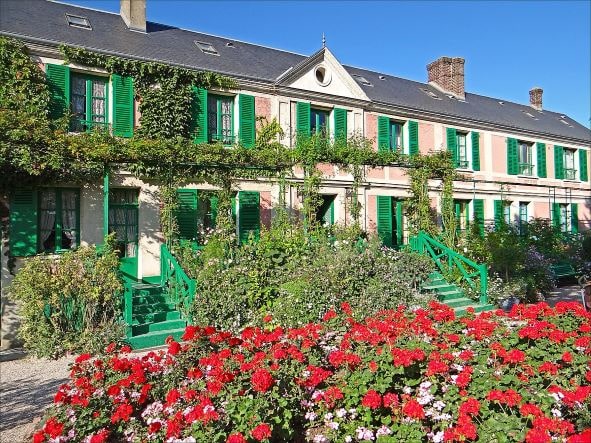
Garden travelers should give Giverny a full day in the right season. The point is not efficiency; it is attention. The house, the Clos Normand, the water garden, and the village context reward a pace that would be wasteful in a conventional sightseeing day but meaningful here. A guide can connect the planting, the viewpoints, the controlled approaches to water, and the later Paris museum experience without turning the outing into a generic Monet biography.
The cut-first rule for this traveler is simple: do not add a second major destination just to make the day look more substantial. Giverny already asks for a different pace. If you overload it, the garden becomes the pretty middle of a tiring transfer day rather than the reason the day exists.
Couples: choose Giverny when the evening can remain intimate and close
Couples should choose Giverny when the day can become a shared pause rather than a logistical endurance test. The best version is not theatrical. It is a morning departure, a garden visit that leaves room for conversation, a lunch that does not become the point of the day, and a return that keeps dinner within easy reach. If your dinner is near Saint-Germain, the 8th, Le Marais, or your hotel, design the day so the evening begins with a clean transition rather than a cross-city scramble.
The romantic mistake is to imagine that more famous names create a better day. Giverny plus a late Louvre visit plus a far-flung tasting menu will not feel richer for most couples; it will feel like three moods competing for one body. If the celebration hinges on a serious dinner, let Giverny be the gentle daytime choice and keep the evening simple.
Repeat visitors: choose it when Paris no longer needs to prove itself
Repeat visitors are often the best Giverny audience because they do not need the day to compete with Notre-Dame, the Louvre, Montmartre, and the Eiffel Tower. They can leave Paris without feeling they are losing Paris. That makes the full-day structure easier: a garden, a village, a guide’s context, and a well-timed return can feel like the right amount rather than a missed opportunity.
For repeat visitors, Giverny also prevents museum saturation. A Paris stay with too many indoor art blocks can blur, even when every museum is excellent. A seasonal garden day gives the eye a different task. It lets the Musée d’Orsay, the Musée de l’Orangerie, or Marmottan breathe elsewhere in the itinerary rather than stacking every Monet reference into one overexplained day.
Families and older parents: choose it only when slow outdoor attention suits them
Families should choose Giverny when the group can enjoy slow-looking, outdoor time, and a day with fewer conventional “events.” It can work beautifully for grandparents, adult children, and older kids who respond to gardens, painting, photography, or slower storytelling. It is harder with young children who need frequent novelty, shade breaks, and a clear sense of what happens next.
For older parents, the key is not only walking distance. It is the sequence of getting in and out of Paris, standing in garden areas, managing weather exposure, and returning without a second demand. A private design can reduce the number of decisions, but it should not pretend that a garden day is effortless. The right plan respects the body before it asks for one more view.
Food-and-wine travelers: choose Champagne instead if the cellar is the real desire
Food-and-wine travelers should be honest about the day they actually want. Giverny can include a pleasant lunch, but it is not a wine-country day. If the deeper wish is cellars, tastings, and a celebratory route east of Paris, compare the garden day with when a Champagne day earns its place. Official cellar experiences such as Champagne Taittinger visits in Reims (https://www.taittinger.com/en/visits-reims) belong to a different kind of full-day logic: appointments, tasting rhythm, Reims routing, and a return shaped by wine rather than gardens.
The practical consequence is clear. Do not choose Giverny and then try to make it behave like Champagne. Do not choose Champagne and then pretend it will deliver the quiet garden atmosphere of Giverny. A high-end Paris stay gets better when each day is allowed to be what it is.
When a Paris garden or museum day is the better choice
Skip Giverny in favor of a Paris garden or museum day when the season is weak for your interests, the stay is short, or your group wants Monet without the full-day journey. This is not a lesser choice. In the wrong conditions, it is the more intelligent one.
The strongest Paris substitute for late Monet is the Musée de l’Orangerie. Its Water Lilies rooms sit in the Tuileries area, near Place de la Concorde, which means the visit can pair with a gentle garden walk, a Right Bank or Left Bank lunch, and a return to the hotel without surrendering the whole day. The Musée de l’Orangerie’s official Water Lilies page (https://www.musee-orangerie.fr/en/node/197502) is useful for understanding why this is not merely a backup plan: it is a different way of seeing Monet, enclosed, architectural, and controlled by museum light rather than weather.
Musée Marmottan Monet is the better Paris choice when the traveler wants Monet depth without a Normandy day. Set in the 16th arrondissement, away from the densest museum corridors, it can feel more focused than a broad Louvre or Orsay session. The Musée Marmottan Monet official site (https://www.marmottan.fr/en/) is the direct place to confirm the museum’s current program and collection information. In planning terms, Marmottan is useful because it lets you build a Monet-centered day without the Vernon connection, the westward road day, or the late return.
A Paris garden day is also the better choice when the goal is outdoor calm but not necessarily Monet. The Luxembourg Garden suits a Left Bank stay because it keeps you near Saint-Germain, Odéon, and the Latin Quarter. The Tuileries suits a Right Bank museum day because it sits between the Louvre, the Orangerie, and Place de la Concorde. The Rodin Museum garden can give sculpture, shade, and a softer museum rhythm without demanding a full escape from the city. These options do not replace Giverny as a living artist’s garden, but they may serve the trip better when the broader Paris stay is already compressed.
This is where seasonal planning matters. A traveler with five nights in Paris can place Giverny in the right weather and energy slot more easily than a traveler with three nights and fixed museum reservations. If your wider calendar is still unsettled, use seasonal Paris planning to decide whether the day should be a garden escape, a museum-first day, or a lighter neighborhood route. The best Giverny decision is rarely made in isolation; it depends on what the rest of Paris is asking of you.
The firm editorial call is this: if you have only two or three meaningful Paris days and you have not yet seen the city’s essential museums or river axis, Giverny should be skipped unless gardens are one of your top reasons for traveling. It is too specific, too seasonal, and too day-shaping to be treated as a universal add-on. A city Monet day or a Paris garden day will give many short-stay travelers a better result.
The return-to-dinner window from Giverny should control the design
The return-to-dinner window from Giverny should be planned before you add lunch, a museum, or an evening reservation. This is the single planning move that most improves the day. It asks one practical question: when you re-enter Paris, will the group still have enough time and ease to enjoy the evening, or will the day end in a rushed transfer?
A strong private day usually avoids cross-city errands before departure. It does not ask a Left Bank guest to collect someone in Le Marais, stop near the Louvre, and then exit west. It does not pretend that a palace hotel near Avenue Montaigne automatically makes the return effortless if dinner is across the river and everyone needs to change. It treats hotel location, road access, rail choices, lunch length, and dinner neighborhood as one linked chain.
The cleanest rhythm is a purposeful morning departure, a garden visit with enough interpretation but not too much lecture, a lunch that does not steal the day, and a return designed around your evening neighborhood. If dinner is in the 8th, a western return can work well. If dinner is in Saint-Germain, the plan should account for the Seine crossing and the extra city layer after the out-of-town drive. If dinner is in Le Marais, avoid pretending that the return ends when you pass the Périphérique; the last city segment still matters.
This is also where private planning earns its cost. The value is not simply that someone drives you. It is that the day is designed backward from the point when tiredness usually appears. A guide can adjust the amount of house context, garden time, lunch duration, and return margin so the wider Paris stay stays intact. A chauffeur can reduce transfer drag, but the itinerary has to be restrained enough for that comfort to matter.
If Giverny is the day you want, but you also care about dinner energy, hotel timing, and the rest of the Paris stay, Orange Donut Tours can shape the route around the garden and the return rather than forcing a fixed template. Inquire now.
What to cut first when the Giverny day gets overloaded
Cut the second headline first. Giverny does not need another major destination to justify the day in the right season. The easiest way to weaken it is to add a famous stop that changes the outing from a garden day into a transfer performance.
The first thing to drop is a second Monet museum on the same day. Seeing the Fondation Claude Monet and then trying to add the Orangerie or Marmottan before dinner sounds thematically neat, but it often dilutes both. Giverny is about outdoor perception, the relation between house and garden, and the physical setting that fed the paintings. The Orangerie and Marmottan deserve their own museum attention. Put them on another day, or use them instead of Giverny when the season or trip length argues against leaving Paris. For a broader city art plan, use Paris art-day planning rather than stacking art until no one remembers what they saw.
The second thing to drop is an overlong lunch. A refined lunch can be pleasant, but the meal should not consume the garden’s best mental space or push the return into a worse evening. Giverny’s value lies in the garden and the interpretation around it. A lunch that turns the day into a restaurant detour may please at the table and still make the return feel heavier than it needed to be.
The third thing to drop is the idea of a late, formal, faraway dinner unless that dinner is the true priority of the day. A special dinner after Giverny can work if the day has been designed around it from the start. It fails when the dinner is added as a separate ambition. Couples should be especially careful here: the garden’s softness can disappear quickly if the return becomes a race to shower, dress, cross town, and perform enthusiasm.
The fourth thing to drop is the belief that a luxury vehicle allows a maximalist itinerary. A better car improves comfort, privacy, and continuity; it does not make the day longer, cooler, or more seasonal. Paying more changes the experience when it reduces decision fatigue, aligns guide and driver, and keeps the return civilized. It does not earn its cost when it is used to cram Giverny, a second site, a long lunch, and a major dinner into one day.
How to make Monet context useful without turning the day into a biography
The best Giverny guiding explains how to look, not just what Monet did. Travelers do not need a generic life story repeated beside every flower bed. They need help understanding why the garden is arranged as an experience: how the house, the Clos Normand, the water garden, the bridge, and the changing surfaces of water create a different kind of attention from a museum wall.
That distinction matters because many travelers arrive with the paintings already in mind. They may have seen Water Lilies in Paris, New York, London, or elsewhere; they may know enough biography to understand that Giverny was Monet’s home. What they need in the garden is not a lecture that could have happened in a car. They need a guide to slow the eye, point out the relation between controlled design and painterly looseness, and explain why the garden is not merely a subject but a working environment for seeing.
The Fondation Claude Monet visit should therefore be paced in layers. The first layer is orientation: where the house sits, how the garden areas relate, and how the route should unfold. The second layer is looking: what changes when you move from the more structured garden spaces toward the water garden. The third layer is restraint: knowing when to stop explaining so the traveler can experience the place quietly. That restraint is especially important for couples and repeat visitors, who often choose Giverny precisely because they do not want another dense museum day.
The Paris connection should be made sparingly. Link the garden to the Orangerie if the traveler has seen or will see the Water Lilies rooms. Link it to Marmottan if the traveler wants deeper Monet continuity. Link it to Orsay only if Impressionism sits prominently in the wider itinerary. The guide’s job is to make those connections useful, not to turn a seasonal garden day into an art-history seminar with flowers in the background.
This is also why the official source matters but should not replace judgment. The official Monet Foundation page can confirm practical visit information; it cannot tell you whether the day belongs in your Paris stay. That decision depends on season, group temperament, hotel location, dinner plans, and how much museum attention the rest of the trip already demands.
A season-by-season planning ladder for private touring
A season-by-season Giverny plan should rank the day by trip value, not by a promise of specific flowers. Gardens are living places, and exact bloom timing is not something a responsible planner should sell as certainty. The more reliable question is how the season changes comfort, mood, and the opportunity cost inside a Paris stay.
Spring: best when the trip can flex around the garden
Spring is a strong Giverny season when your itinerary has enough flexibility to place the day well. The benefit is freshness and anticipation; the risk is assuming one specific display will define the visit. A spring Giverny day works best when it is not competing with a long list of first-time Paris essentials. Give it space, confirm official details, and avoid putting it after a late night or before a demanding museum day.
Early summer: best for the classic full-day version
Early summer is often the easiest season for the classic full-day version because daylight, garden fullness, and visitor expectations align. The practical move is to avoid making lunch too heavy and to keep the return evening within a familiar neighborhood. This is the period when a private Giverny day can feel most naturally complete without adding anything beyond the garden, house, village pause, and return.
High summer: best only with shade, restraint, and a lighter evening
High summer asks for restraint. The day can still be memorable, especially around the water garden, but the group will feel sun, heat, and visitor density more sharply. Do not pair high-summer Giverny with a hard-charging city evening. If you are traveling with older parents, children, or anyone sensitive to heat, place the day carefully and keep the dinner plan forgiving.
Early autumn: best for repeat visitors and softer Paris stays
Early autumn is excellent for travelers who want the garden without the fever of high-season expectation. It suits repeat visitors, couples, and travelers who are using Paris as a refined base rather than a first-time checklist. The return can feel gentler if the evening is kept close, and the day can sit well between museum blocks because it changes the visual rhythm of the trip.
Late autumn and winter: usually choose Paris instead
Late autumn and winter usually point back to Paris rather than Giverny. When the garden is outside its meaningful visitor season or the official operation does not support the visit you imagined, the smarter choice is an indoor Monet or Impressionist day. Orangerie, Marmottan, Orsay, or a lighter museum-and-garden combination in the city will usually create a better use of limited travel days.
The priority ladder is therefore not a weather chart. It is a trip-design tool. Put Giverny high when the season, group, and evening support a garden day. Move it down when Paris museums, first-time landmarks, food-and-wine plans, or the body’s energy have a better claim on the day.
How Giverny should sit inside a short Paris stay
Giverny belongs inside a short Paris stay only when it is one of the trip’s defining choices. It should not be added because it is famous, because a spare day appeared, or because someone feels a Paris itinerary needs a countryside escape. In a three-night stay, every full day is expensive in attention. Spending one outside Paris must solve a real desire.
For a four- or five-night stay, Giverny becomes easier to justify. You can place it after a dense museum day to change the rhythm, or before a lighter neighborhood day so the return does not collide with another major obligation. You can also use it as the quiet middle of a celebration trip: city arrival, museum or Seine day, Giverny, then a more formal dinner or shopping day later. That order keeps the garden from becoming the day that steals energy from everything around it.
For a first visit, the question is sharper. Have you already given Paris its own day by the Seine, its museum day, and its neighborhood time? If not, Giverny may be premature. The city’s internal geography is already demanding: Left Bank versus Right Bank routing, museum reservations, cross-city transfers, and the way a single taxi from the 16th to Le Marais can eat the margin you thought you had. A full day outside the city should make the trip clearer, not more brittle.
For a repeat visit, the answer often flips. Giverny can become the day that prevents Paris from feeling like a remix of previous trips. It gives a purpose to leaving the city, a reason to slow down, and a natural contrast to restaurants, galleries, and evening plans. The return still matters, but the opportunity cost is lower because the traveler is not sacrificing first-time Paris essentials.
The narrow rule is this: choose Giverny when you would still be happy with the day if the evening were simple. Skip it when the only way to justify leaving Paris is to add more after it. A day that needs extra decoration to feel worthwhile is not the right Giverny day.
FAQ
What is the best season to visit Giverny from Paris?
Late spring, early summer, and early autumn are the strongest seasons for a full-day Giverny visit from Paris. Do not plan around a guaranteed bloom; plan around whether the garden, daylight, weather exposure, and return evening make the day feel worthwhile.
Is Giverny worth a full day from Paris?
Yes, Giverny is worth a full day when gardens, Monet, and a slower seasonal outing are central to your trip. It is not worth a full day when you have a very short Paris stay, little interest in gardens, or unfinished museum and city priorities.
Should I visit Giverny or stay in Paris for Monet museums?
Choose Giverny when you want the living garden and the change of pace outside Paris. Stay in Paris when you want Monet indoors, better weather control, and a day that can include the Orangerie, Marmottan, or another museum without a full-day journey.
Can Giverny be done as a half-day from Paris?
It can be rushed as a half-day, but that is rarely the best version for discerning travelers. The transfers, garden pace, and return make more sense when Giverny is treated as the main event rather than squeezed between two Paris obligations.
Who should skip Giverny?
Skip Giverny if your Paris stay is only two or three days, if your group does not enjoy gardens, if mobility or heat exposure is a concern, or if your real priority is a city museum, fine lunch, or Champagne cellar day.
Does a private car make Giverny from Paris more worthwhile?
A private car can make the day smoother by reducing station transfers, aligning pickup with your hotel, and improving the return. It does not make a weak season, uninterested group, or overpacked evening into the right choice.
How should I plan dinner after Giverny?
Plan dinner close to your hotel or in a neighborhood that fits the return route. Avoid a formal dinner across Paris unless the whole Giverny day has been designed around that reservation and the group has enough time to change and recover.
Is Giverny better than Versailles for a day trip from Paris?
Giverny is better when the priority is gardens, Monet, and a softer seasonal day. Versailles is better when the priority is palace scale, royal history, and a more monumental day trip. The right choice depends on your season, interests, and how much energy you want to preserve for the evening.
If you’re interested in any private tours of Paris, please reach out to us.




 So if you are looking for the absolute best in Paris & surroundings with authentic local fully-licensed native guides whose English you can actually understand and with an exclusive and amazingly fun itinerary













