Paris as a First France Base: Champagne, Giverny or Normandy Before You Move On

Updated
Start by protecting the city day each excursion displaces: Champagne is the best Paris-base splurge when you want one polished celebration day before moving on, Giverny is the right seasonal culture day when the garden is genuinely in play, and Normandy should usually become an overnight rather than a same-day Paris add-on. This works because Paris is not just a hotel address; Left Bank versus Right Bank routing, museum reservation pressure, dinner geography, and rail-station resets all compete for the same short stay. The clearest exception is a three-night first visit: if you have not yet given Paris one coherent city arc by the Seine, the Louvre or Orsay, and a neighborhood evening, keep the stay city-focused and save the excursion for another trip.
The non-obvious correction is that the most famous outing is not always the best use of a Paris base. A hotel near the Champs-Élysées can make Champagne feel close on a map, yet the practical hinge for many Champagne plans is still eastward movement toward Gare de l’Est or a chauffeured exit across the périphérique; Giverny often points toward Saint-Lazare and Vernon-Giverny; Normandy pulls the day far beyond the normal radius of a relaxed city stay. In other words, the decision is not “Which place is most beautiful?” It is “Which outside day can carry a specific role without making Paris feel smaller?”
For travelers using Paris as the first France base before Burgundy, Provence, the Loire, the Riviera, or a rail move to another capital, the default order is simple: choose Champagne for a celebration day, choose Giverny by season and mood, and treat Normandy as the place that deserves a night unless your personal connection to D-Day history is strong enough to justify the distance. If you want help turning that judgment into a privately paced route, Orange Donut Tours can frame the day inside a wider Paris stay through private Paris touring rather than treating the excursion as a trophy detached from the itinerary.
Should Champagne, Giverny or Normandy be a day trip from Paris before you move on?
The right Paris-base excursion is the one that has a job in the trip, not merely a famous name. Champagne works when the job is celebration, hospitality, cellars, and a return that still allows a composed evening. Giverny works when the job is seasonal softness, art context, and a lighter day between heavier museums. Normandy usually fails as a Paris day trip when the job is deep historical understanding, because the distance turns too much of the day into transit.
The decision ladder
- First choice for a meaningful splurge: Champagne. Choose it when the day has a reason to feel ceremonial: anniversary, birthday, proposal trip, family milestone, or a food-and-wine thread that will continue elsewhere in France. It earns the Paris-base slot because the outward journey and return can feel like part of the occasion, especially if you avoid overloading the night after.
- Runner-up when the calendar cooperates: Giverny. Choose it when the garden is in season and your Paris stay needs air after museums or shopping. It is a gentler choice than Champagne, but it is also more vulnerable to weather, garden timing, and the disappointment of visiting for the name when the seasonal payoff is thin.
- Wrong fit for most same-day comfort plans: Normandy. Choose Normandy as an overnight when you care about the D-Day beaches, Bayeux, the American Cemetery, or a wider coastal story. A same-day trip can be done, but it often leaves the most thoughtful travelers wishing they had slept closer to the coast.
- The choice that quietly beats all three on a short stay: stay in Paris. If the outside day would remove your only unhurried Left Bank morning, only Seine evening, or only Louvre-Orsay decision window, the more discerning choice is restraint. A glamorous outing can still be the wrong Paris-base choice.
The comparison criteria are not scenery, prestige, or how often a place appears in guidebooks. Use four filters: what the excursion replaces in Paris, how cleanly it returns you to the evening, whether the season or subject is strong enough to carry a full day, and whether extra spend changes the outcome. This is especially important for couples and small groups. The wrong outside day does not just cost time; it changes the emotional temperature of the stay. A day that begins with anticipation can end with everyone negotiating dinner fatigue in the back of a car.
Champagne belongs inside the Paris stay when it is a celebration day
Champagne is the strongest day-trip candidate from Paris when the outing has a celebratory purpose. It is not just a wine region; from a Paris base it can become a carefully paced day of cathedral scale, chalk-cellar atmosphere, and hosted tastings that feel distinct from a city food-and-wine afternoon. That is why Champagne is the default winner for couples, milestone travelers, adult families, and small groups who want one outward day that still feels connected to Paris elegance rather than a separate mini-trip.
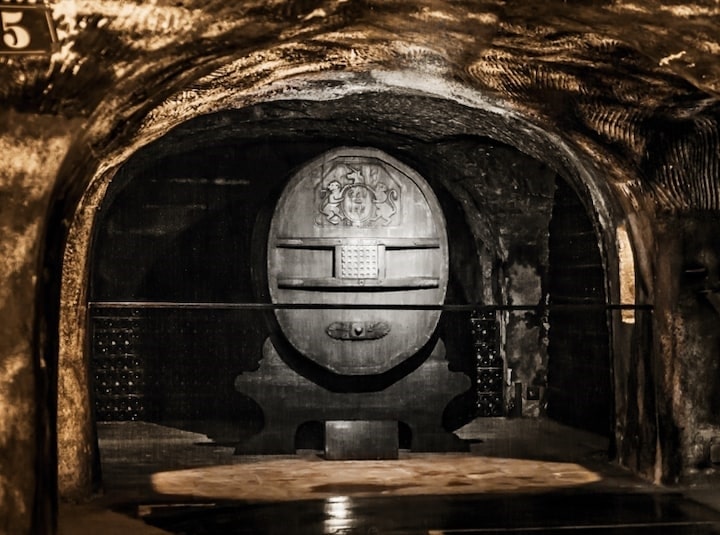
The practical advantage is that Champagne can carry a full day without demanding that you understand every village, grower, or tasting-room distinction. A good day does not need to chase the maximum number of houses. It needs a clear arc: depart Paris cleanly, anchor the morning in Reims or Épernay, give the cellar visit enough space to feel unhurried, add a meal that does not turn the afternoon into a rush, then return before the evening collapses. Named Reims anchors such as Champagne Taittinger visits in Reims (https://www.taittinger.com/en/visits-reims) or Ruinart 4 Rue des Crayères (https://www.ruinart.com/en-us/maison---4-rue-des-cray%C3%A8res-4ruedescrayeres.html) are useful not because you must choose those exact houses, but because they show what gives the day its weight: the physical experience of the chalk cellars, not simply a glass of Champagne at lunch.
The Champagne mistake is trying to make the day prove too much. Reims Cathedral, one large house, a smaller producer, a long lunch, a vineyard viewpoint, and an ambitious Paris dinner may all sound plausible in separate conversations. Together, they create a day that loses its refinement. The more discerning version usually cuts one ambition early. If a special dinner is fixed in Paris that night, cut the second cellar or the vineyard detour. If the cellar day is the celebration, let dinner be close to the hotel or along the same bank of the Seine rather than forcing a cross-city reset.
Champagne also suits travelers who are moving on to a less wine-centered part of France. If your next base is Provence for art and villages, Normandy for history, or the Riviera for sea air, Champagne may be the cleanest place to place the wine-and-hospitality moment without distorting the later trip. If you are continuing to Burgundy or Bordeaux, however, the value calculation changes. A Champagne day can still be delightful, but it may no longer be the best use of Paris if your wider itinerary already contains two or three serious wine days.
This is where a private approach earns its place naturally. The point is not simply being driven to a famous house; it is choosing how many tastings, how formal the cellar time should feel, whether Reims Cathedral belongs in the same arc, and how much of the evening you are willing to spend on return logistics. A private Champagne excursion from Paris should be designed around the day’s role: toast, wine education, family celebration, or a graceful pause before a rail move. Those are different days, even when the map looks similar.
Giverny belongs by season, not by checklist
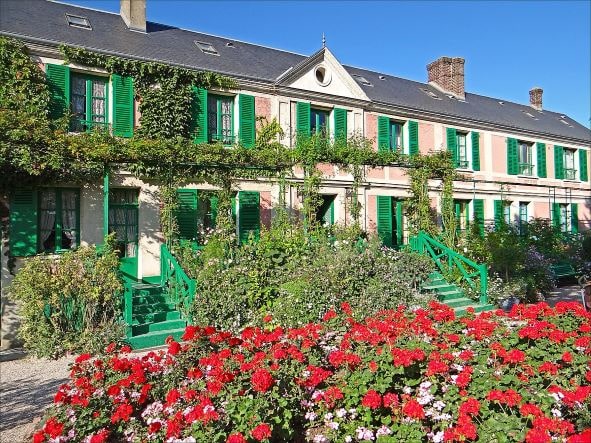
Giverny belongs inside a Paris stay when the season makes Monet’s garden the main event and the rest of the day stays intentionally light. It is the best runner-up to Champagne because it changes the texture of the trip: fewer grand interiors, more color and air, and an art story that does not require another museum floor. But Giverny is also the most season-dependent of the three choices, so it should not be treated as an automatic day trip every month of the year.
The honest rule is that Giverny should be chosen for the garden you will actually meet, not for the name Monet. Spring can make the Clos Normand feel fresh and forward-moving; early to midsummer can bring the water-garden logic closer to the paintings many travelers have in mind; later garden weeks can feel softer and less obvious. Weather, bloom rhythm, and closure periods matter enough that travelers should confirm current visit details on the official Monet Foundation page (https://fondation-monet.com/en/giverny-2/) before building the day. The season does not need to be perfect, but it does need to be part of the decision.
Giverny’s practical gift is that it can give Paris back some breathing room. After a Louvre morning the previous day, a serious shopping route through Avenue Montaigne and Saint-Germain, or a late dinner near the 8th, Giverny can feel like a reset rather than an achievement test. It asks less of the body than a full Normandy day and less of the palate than Champagne. The consequence is mood: travelers often return with enough energy for a simple Left Bank dinner, a short Seine walk, or a quiet hotel evening instead of feeling that they have crossed a whole region and must now recover.
The routing still matters. Independent travelers often think of Giverny as “easy” because it sits west of Paris, but the day can fragment if the hotel, station, local transfer, and garden timing do not line up. Saint-Lazare to Vernon-Giverny can be straightforward, yet the last piece from station to village is where the day can feel either charming or inconvenient depending on weather, mobility, and group size. A private car reduces the number of seams, but it does not make a poor-season garden more compelling. Paying more improves comfort and timing here; it does not manufacture the reason to go.
Giverny is best for couples who want a quieter shared day, art travelers who already plan to see Orsay or the Orangerie, and families who need a cultural outing that does not feel like another lesson. It is weaker for travelers who want a major meal, cellar hospitality, or a dense historical narrative. If the garden is the point, keep the rest of the day subordinate. Add a village lunch or a small art-context stop if it fits, but avoid turning Giverny into a multi-stop Normandy-lite excursion. For deeper seasonal help, the companion guide to Giverny from Paris by season is the better next read; for a privately paced version, use a private Giverny day from Paris as the planning route.
Normandy needs an overnight when the subject matters
Normandy should usually sit after Paris as an overnight, not inside the Paris stay as a single-day excursion. This is the firmest judgment in the guide because the cost is not only distance; it is the way distance compresses meaning. The D-Day beaches, Bayeux, coastal villages, and Mont-Saint-Michel are not all the same trip, and they do not become more coherent because Paris is your first hotel.
A same-day Normandy plan from Paris can make sense for one traveler type: someone with a powerful personal reason to stand at a specific site and no possible way to add a night. That might be a family military connection, a once-only chance to visit Omaha Beach, or a traveler who understands that the day will be long and chooses it anyway. For everyone else, the overnight is not indulgence; it is the difference between a history day and a transport day with history attached.
The route consequences are obvious once you stop looking at the national map and start looking at the day itself. Paris to the Normandy landing-beach area pulls you west on a long axis toward Caen, Bayeux, and the coast. Once there, the sites are not stacked like Paris museums around the Seine. Omaha Beach, the American Cemetery, Pointe du Hoc, Arromanches, and other possible stops spread the day across roads, parking pauses, wind exposure, and interpretive decisions. A guide can make those decisions better; a driver can make the movement cleaner. Neither can turn a geographically large subject into a compact Paris afternoon.
This is where premium spend has a hard limit. A private car reduces friction but does not erase the fatigue of a very long day. It can remove train changes, luggage worries, and the anxiety of finding the right coastal route. It can also give a family privacy for a subject that may be emotional. But it cannot give you the late afternoon in Bayeux, the slower cemetery visit, and the next morning’s clarity if you insist on returning to Paris the same night.
The mood cost is different from Champagne and Giverny. Champagne can end in a satisfied hush; Giverny can end with garden calm. Normandy can end with a kind of flattened seriousness if the return is too late and dinner is still expected to carry the evening. For couples, the mood-preserving decision is to put Normandy after Paris and sleep closer to the coast. The mood-killing mistake is to schedule a heavy D-Day day trip, return late, and then expect a celebratory Paris dinner to feel effortless.
If Normandy is non-negotiable and your itinerary cannot hold an overnight, make the day narrower rather than grander. Choose the D-Day beaches or Mont-Saint-Michel, not both. Choose a focused thread over a highlights sweep. Keep the Paris day before it lighter than you think necessary, and do not schedule a Louvre night, Montmartre climb, or tasting menu after the return. For route-specific help, compare the fuller day-trip versus overnight logic in the Normandy day trip or overnight guide; for a privately handled route, start with private Normandy planning from Paris.
The return evening is the hidden sorter
The return evening often decides whether an outside day belongs inside the Paris stay. Outbound excitement is easy to overestimate; the harder question is what happens when the group re-enters the city and still has dinner, luggage, children, parents, or a next-day train to manage. A Champagne return can support a quiet dinner near the hotel or a short Right Bank-to-Left Bank move if the day has been edited well. A Giverny return can leave enough energy for Saint-Germain, the Tuileries edge, or a modest Seine walk. A Normandy return usually asks for surrender: food close by, no extra monument, and no expectation that Paris will sparkle on command after hours on the road.
This is especially relevant for hotels around the 8th arrondissement, Saint-Germain, Le Marais, and the Louvre/Tuileries corridor. These bases all work beautifully when the day is planned from the hotel outward. They work less well when the evening requires a second city crossing after the regional return. A couple staying near Rue du Faubourg Saint-Honoré may find Champagne with a quiet return almost seamless, while dinner across the river after a late Normandy arrival can make the same address feel inconvenient. A family in Saint-Germain may enjoy Giverny because the day can end softly; the same family may find a late coastal return too much before packing for the next base.
Use the evening as a stress test. If you would not want to add a bridge crossing, a taxi wait, a dress change, and a long dinner after the excursion, do not pretend the day can hold them. The more expensive version of a weak sequence is still a weak sequence. A good Paris-base excursion should either give the evening back or knowingly spend it; it should not leave the whole group pretending they are less tired than they are.
The Paris day you should not sacrifice first
The first thing to cut is not always the excursion; it is the weakest duplicated ambition. If you already have Versailles, a major museum day, and a Seine evening, adding Champagne may still work. If you have only two full Paris days, adding any outside trip can turn the city into a series of transfers. The priority is to keep at least one Paris day that has a clean beginning, middle, and evening without feeling like a staging area for tomorrow.
Paris does a particular thing to the body. It looks walkable because so many major sights cluster around the river, but a high-quality day still involves hard surfaces, museum floors, bridge crossings, security lines, taxi holds, and the small fatigue of changing mental registers. Moving from the Louvre to Saint-Germain, then back toward the 8th for dinner, can be delightful when it is the day’s design. It becomes tiring when it is squeezed between an early station departure and a late return from outside the city. The same travelers who happily walk the Tuileries and Pont Royal in the morning may feel the strain sharply after a full regional day.
Paris also does something to the mood of a trip. A short stay needs at least one evening that does not feel earned by endurance. That may be a Left Bank dinner after Orsay, a quiet route from Île de la Cité toward the Seine, or a palace-hotel lobby pause before a serious meal. If every evening follows a major outing, the city starts to feel like a backdrop instead of the first base. The most polished itineraries often leave one night almost under-scripted, especially for couples and celebration travelers.
The cut-first rule is this: if the excursion removes your only unscheduled Paris evening, your only museum decision window, or your only neighborhood walk, cut the excursion before you cut the city. Champagne is worth protecting when the celebration is central. Giverny is worth protecting when the season is strong and Paris needs a soft counterweight. Normandy is worth protecting when history is central enough to earn an overnight. If none of those conditions is true, the best decision is to keep Paris city-focused and save the excursion for another trip.
This is also where trip length changes the answer. A four- or five-night Paris base can usually hold one outside day without damaging the city experience. A three-night first stay often cannot, unless the traveler has been to Paris before or plans a return. Use the guide to how many days to give Paris if your question is really about whether the base is long enough before you compare Champagne, Giverny, and Normandy.
Choose the private excursion by itinerary role, not by fame
A private excursion earns its cost when it solves the role of the day more precisely than a standard outing can. That means you should brief the day according to what it must protect: a celebration mood, a garden season, a family history thread, a smoother return, or a calmer transition before moving on. The more specific the role, the easier it is to cut the wrong extras and spend where comfort actually changes the day.
For Champagne, spend on a cleaner arc: fewer tastings, better pacing, the right cellar tone, and a return that does not turn the evening into a negotiation. For Giverny, spend on timing, weather flexibility, and keeping the garden from becoming a rushed name-check. For Normandy, spend on privacy, interpretation, and the possibility of sleeping in the region if the subject is important. The wrong spend is symbolic: a higher-end vehicle attached to an overpacked plan, a famous add-on that steals the best hour of the day, or a cellar sequence that leaves no appetite for the meal you actually cared about.
The best private planning conversation should therefore begin with a cut, not an addition. Ask which Paris day the excursion replaces. Ask what the evening after must feel like. Ask whether the trip continues to another region where the same theme will appear more naturally. Champagne may be less necessary before Burgundy; Giverny may be less necessary in poor garden weeks; Normandy may be less successful without an overnight. These are not downgrades. They are the choices that keep a high-end itinerary from becoming a collection of famous names.
When the role is clear but the logistics feel like the problem, that is the moment to bring the plan to a specialist rather than keep adding research tabs. Paris-base excursions involve station geography, driver timing, guide fit, meal pacing, and the return mood in a way that generic day-trip lists rarely solve. Inquire now to shape Champagne, Giverny, Normandy, or a city-focused alternative around the actual trip you are taking before you move on.
How to place the excursion before the next France base
The best sequencing is to place the outside day where it supports the next move rather than competes with it. Champagne generally belongs in the middle of a Paris stay or on the final full day only if the next morning is not too early. Giverny belongs after heavier city content, when the garden can create contrast. Normandy belongs after Paris as a transfer into the region when possible, not as a boomerang back to the same hotel.
When Paris is the first base before Provence or the Riviera
Choose Champagne if you want the trip to begin with a hosted, celebratory France moment before the south changes the tone. It pairs well with a later Provence or Riviera stay because the themes do not duplicate too much. Giverny works if the Paris stay is art-led and you want a softer day before a train south. Normandy is usually the weakest fit here unless it is a personal-history priority, because it pulls the itinerary north and west before the trip moves south.
When Paris is the first base before Burgundy, Bordeaux or the Loire
Be more selective with Champagne if the next base is already wine-led. The region may still be the right celebration choice, but it should not be automatic. Giverny can be the better Paris-base excursion because it adds garden and Impressionist context instead of another tasting day. Normandy should move after Paris only if the wider route can absorb a westward overnight; otherwise it creates a geographic detour that competes with the main France arc.
When Paris is the first base before Normandy
Do not waste Normandy by day-tripping to it from Paris and then going back later. Move to Bayeux, Caen, or another well-placed Normandy base when the time comes, and use the Paris stay for the city or Champagne. If you have one free Paris-base day before the Normandy transfer, Giverny can sometimes make sense as a gentler westward-feeling art day, but it should not delay the overnight if the D-Day story is the purpose of the next base.
When Paris is the first base before another European capital
Choose the excursion that gives France a distinct memory before the trip changes countries. Champagne is strongest here because it supplies a sense of occasion and regional identity without needing a second hotel. Giverny is the quieter art-and-garden version. Normandy is the choice only if history is more important than preserving a lighter Paris rhythm before the international move.
FAQ
Is Champagne, Giverny or Normandy the best day trip from Paris?
Champagne is the best day trip from Paris when the day has a celebration or food-and-wine role. Giverny is best when the season makes Monet’s garden worth the full outing. Normandy is usually better as an overnight, especially if the D-Day beaches or Bayeux matter to you.
Should I visit Champagne before leaving Paris?
Yes, visit Champagne before leaving Paris if you want one polished celebration day and your wider France itinerary does not already contain several serious wine days. Keep the evening after Champagne light so the day ends with pleasure rather than transfer fatigue.
When is Giverny worth adding to a Paris stay?
Giverny is worth adding when the garden season is central to the experience and your Paris stay needs a gentler cultural day. It is weaker when the garden is closed, the weather looks poor, or you are adding it only because the name Monet feels obligatory.
Is Normandy too far for a day trip from Paris?
Normandy is not impossible as a day trip from Paris, but it is too far for most comfort-focused itineraries that want depth, calm, and a good evening return. If D-Day history matters, an overnight near Bayeux, Caen, or the coast usually gives the subject the time it deserves.
What should I cut first if my Paris itinerary is too full?
Cut the outside excursion first if it removes your only coherent Paris city day, only unhurried Seine evening, or only major museum window. Keep Champagne when celebration is central, keep Giverny when the season is strong, and keep Normandy when it can become an overnight.
Does a private car make Normandy easy as a Paris day trip?
A private car makes Normandy simpler, more private, and less logistically stressful, but it does not remove the length of the day. The fatigue of a same-day return remains the main reason discerning travelers should consider an overnight.
Can I combine Giverny and Normandy in one day from Paris?
You should avoid combining Giverny and Normandy in one day from Paris unless you accept a shallow, road-heavy itinerary. Giverny works best as a garden-and-art day; Normandy works best with historical focus and, ideally, an overnight.
How many outside day trips should a first Paris stay include?
Most first Paris stays should include no more than one outside day trip unless the stay is five nights or longer. A short Paris base needs time for the river, at least one major museum decision, one neighborhood evening, and enough slack that the city does not feel like a station between excursions.
If you’re interested in any private tours of Paris, please reach out to us.



 So if you are looking for the absolute best in Paris & surroundings with authentic local fully-licensed native guides whose English you can actually understand and with an exclusive and amazingly fun itinerary













